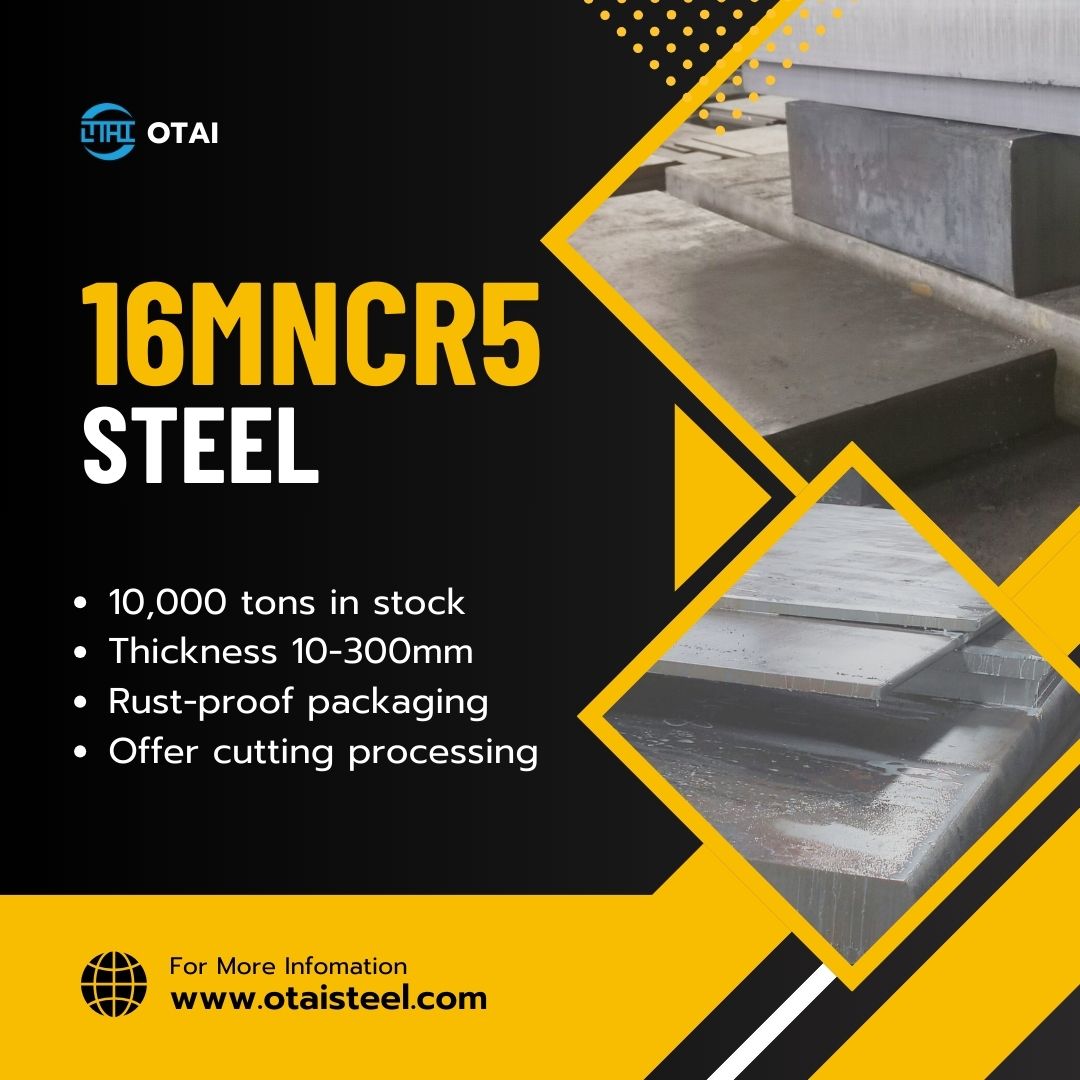
 16MnCr5 Steel Equivalent: How to Match the Right Grade Across Standards
Choosing the correct equivalent to 16MnCr5 steel matters more than many buyers expect. Different countries use different standards, yet engineers still need consistent carburizing performance, surface hardness, and core toughness. A wrong substitution can lead to premature wear, cracking, or unexpected heat-treatment issues.
This article explains 16MnCr5 steel equivalents, compares major international grades, and shows how to select the right alternative for gears, shafts, and precision mechanical parts.
🔍 What Is 16MnCr5 Steel?
16MnCr5 is a low-carbon case-hardening alloy steel defined under EN 10084. Manufacturers widely use it for components that require:
-
A very hard, wear-resistant surface
-
A tough, shock-resistant core
-
Stable performance after carburizing and quenching
Engineers commonly select this grade for automotive gears, transmission shafts, bushings, and bearing components.
🧪 Why Steel Equivalents Matter in Real Projects
Many projects source materials globally. However, 16MnCr5 is not always available under the same name in other regions. Buyers often need an equivalent grade that:
-
Matches chemical composition
-
Delivers similar case depth
-
Achieves comparable surface hardness (58–62 HRC)
-
Responds predictably to carburizing
Selecting a true equivalent avoids redesign, requalification, and heat-treatment failures.
🌍 Major 16MnCr5 Steel Equivalents by Standard
Below is a practical comparison of commonly accepted equivalents to 16MnCr5 steel.
📊 16MnCr5 Steel Equivalent Chart
| Standard | Equivalent Grade | Country / System | Notes |
|---|---|---|---|
| EN 10084 | 16MnCr5 | Europe | Original designation |
| DIN | 1.7131 | Germany | Same composition and use |
| AISI / SAE | 5115 | USA | Very close carburizing behavior |
| ASTM | 5115 | USA | Often used for gears |
| JIS | SCM415 | Japan | Excellent case-hardening response |
| GB (China) | 20CrMn | China | Slightly higher carbon |
| ISO | 16MnCr5 | International | Matches EN |
These grades perform similarly in case-hardening applications, provided heat treatment follows proper control.
⚙️ Chemical Composition Comparison
Chemical balance plays a key role in carburizing depth and hardness stability.
📊 Typical Composition Comparison (%)
| Grade | C | Mn | Cr |
|---|---|---|---|
| 16MnCr5 | 0.14–0.19 | 1.00–1.30 | 0.80–1.10 |
| AISI 5115 | 0.13–0.18 | 1.10–1.40 | 0.70–0.90 |
| SCM415 | 0.13–0.18 | 0.60–0.90 | 0.90–1.20 |
All three grades support deep carburizing and strong wear resistance, which explains why engineers treat them as functional equivalents.
🔥 Heat Treatment Behavior of 16MnCr5 Equivalents
Equivalent grades must behave similarly during heat treatment. Fortunately, these steels show very comparable responses.
After Case Hardening:
-
Surface hardness: 58–62 HRC
-
Core hardness: 28–35 HRC
-
Typical case depth: 0.6–1.2 mm
Manufacturers can carburize, quench, and temper these grades using nearly identical process windows, which simplifies production planning.
🏗️ Applications Using 16MnCr5 and Its Equivalents
Industries rely on 16MnCr5 equivalents where surface durability and fatigue resistance matter most.
Common Applications:
-
⚙️ Automotive gears and pinions
-
🔩 Transmission and drive shafts
-
🛠️ Bushings and sleeves
-
🚜 Agricultural machinery components
-
🏭 Industrial gearbox parts
When heat treatment follows the correct specification, these equivalents deliver comparable service life and wear resistance.
🔧 How to Choose the Right 16MnCr5 Steel Equivalent
When selecting an equivalent grade, engineers should focus on performance, not just the name.
Practical Selection Tips:
-
Match carbon range for carburizing depth
-
Confirm chromium content for wear resistance
-
Align heat-treatment capability, not just chemistry
-
Verify application history (gears vs shafts vs bushings)
This approach avoids costly trial-and-error in production.
🏅 Company Advantages – Why Otai Special Steel?
At Otai Special Steel, we help customers select true functional equivalents, not risky substitutions.
-
🔹 Large stock of 16MnCr5 and equivalent grades
-
🔹 Heat-treatment guidance for carburizing applications
-
🔹 Chemical analysis and UT testing
-
🔹 Custom cutting and processing
-
🔹 Global supply experience for automotive and machinery clients
We focus on performance consistency, not just material labels.
❓ FAQ – 16MnCr5 Steel Equivalent
Q1: Is AISI 5115 a true equivalent to 16MnCr5?
Yes. AISI 5115 offers very similar carburizing behavior and mechanical performance.
Q2: Can SCM415 replace 16MnCr5 in gears?
Yes. Many automotive manufacturers use SCM415 as a direct substitute.
Q3: Does an equivalent steel need identical composition?
No. It must deliver equivalent heat-treatment and service performance, not identical chemistry.
Q4: Are all equivalents suitable for deep case hardening?
Most listed grades support deep carburizing, but process control remains essential.
Q5: Can Otai help confirm the best equivalent for my project?
Absolutely. We help match application, heat treatment, and performance requirements.