Skip to Content

About: Jack Otai

Recent Posts by Jack Otai

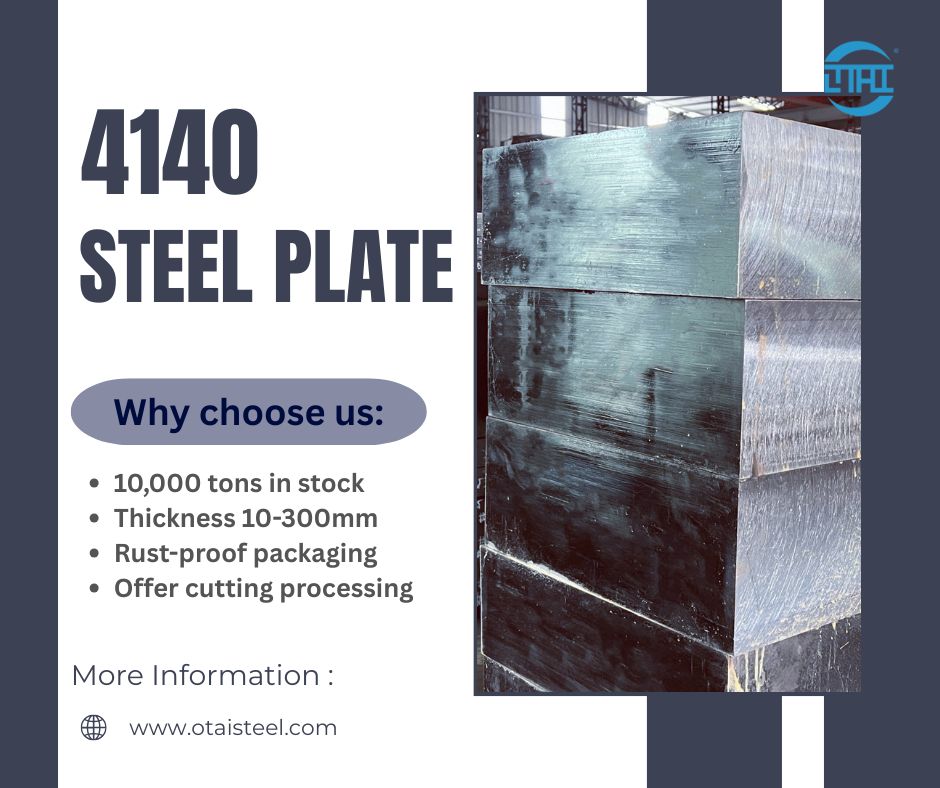
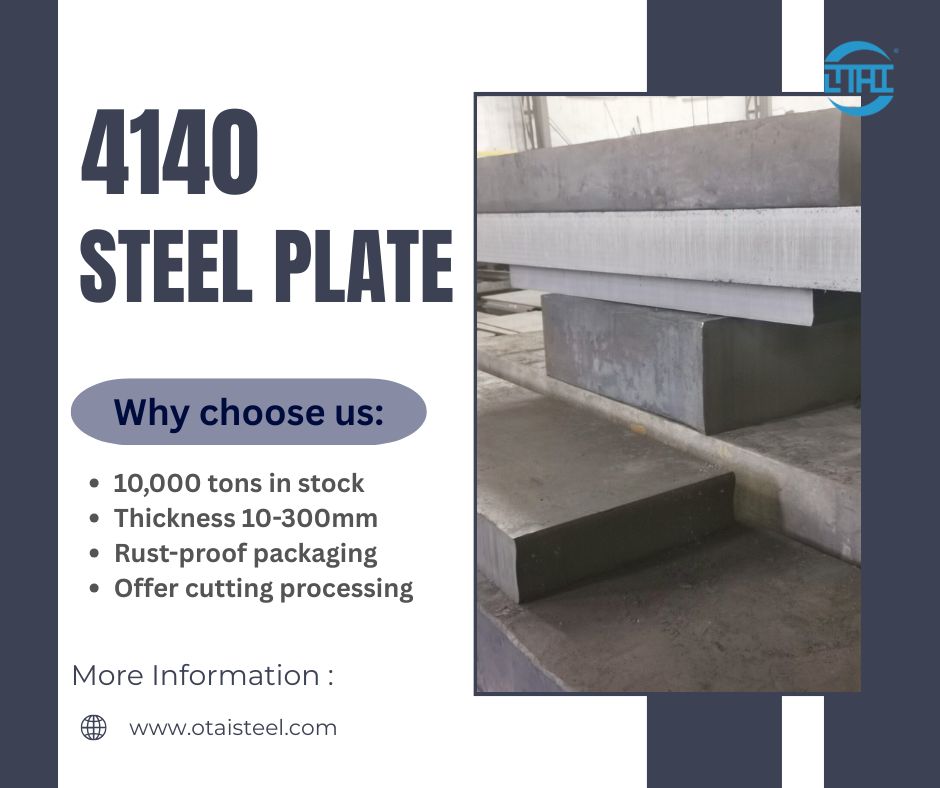
What Is the Difference Between 4140 and 8620 Steel?

What Is the Difference Between 4140 and 8620 Steel?What Is the Difference Between 4140 and 8620 Steel: Strength, Hardness, and Application Insights

🔍 Introduction

Understanding what is the difference between 4140 and 8620 steel is essential for engineers, buyers, and manufacturers who need to select the right alloy for performance-critical applications. Both steels are widely used in industries such as automotive, oil & gas, and heavy machinery, but they serve very different purposes due to their composition and heat treatment behavior.

This article provides a detailed comparison of 4140 vs 8620 steel properties comparison, including chemical composition, hardness, strength, machinability, and real-world applications.


⚙️ Overview of 4140 and 8620 Steel

🔩 4140 Steel

4140 is a chromium-molybdenum alloy steel known for its high strength, toughness, and good fatigue resistance. It is typically used in quenched and tempered condition.

🔧 8620 Steel

8620 is a low-carbon nickel-chromium-molybdenum alloy steel designed for carburizing. It offers a hard surface and tough core after heat treatment.

Key Difference:
4140 is a through-hardening steel, while 8620 is primarily a case-hardening steel.


🧪 Chemical Composition Comparison

To understand the difference between 4140 and 8620 chemical composition, let’s compare their key elements:

Element 4140 Steel (%) 8620 Steel (%)
Carbon (C) 0.38–0.43 0.18–0.23
Chromium (Cr) 0.8–1.1 0.4–0.6
Molybdenum (Mo) 0.15–0.25 0.15–0.25
Nickel (Ni) 0.4–0.7
Manganese (Mn) 0.75–1.0 0.7–0.9

Insight:

  • 4140 has higher carbon → higher strength and hardness
  • 8620 contains nickel → improved toughness and carburizing response

📊 Mechanical Properties and Strength

When comparing 4140 vs 8620 hardness and strength, the differences become clear:

Property 4140 Steel 8620 Steel
Tensile Strength 850–1100 MPa 600–850 MPa (core)
Hardness (Q&T) 28–50 HRC 20–30 HRC (core)
Surface Hardness Not typical 58–62 HRC (after carburizing)
Toughness High Very high (core)

Conclusion:

  • Is 4140 stronger than 8620 steel? Yes, in through-hardened condition
  • 8620 excels in surface hardness after carburizing

🔥 Heat Treatment Differences

The 4140 vs 8620 carburizing vs quenching difference is one of the most important distinctions.

4140 Steel

  • Quenching and tempering
  • Uniform hardness throughout
  • No carburizing required

8620 Steel

  • Carburizing + quenching
  • Hard outer layer (case)
  • Soft, tough core

This makes 8620 ideal for components requiring wear resistance on the surface and impact resistance inside.


⚖️ When to Use 4140 vs 8620 Steel

Choosing correctly depends on application requirements.

Use 4140 Steel When:

  • High strength is required throughout the part
  • Components experience heavy loads
  • Wear is not limited to the surface

Use 8620 Steel When:

  • Surface wear resistance is critical
  • Core toughness is needed
  • Parts require carburizing

This directly answers when to use 4140 vs 8620 steel in practical engineering scenarios.


🏭 Applications Comparison

Understanding applications of 4140 and 8620 steel comparison helps clarify their roles.

4140 Steel Applications

  • Shafts
  • Bolts and studs
  • Oil & gas drilling components
  • Heavy-duty structural parts

8620 Steel Applications

  • Gears and pinions
  • Camshafts
  • Bearings
  • Automotive transmission components

🛠️ Machinability and Weldability

The 4140 vs 8620 machinability and weldability comparison is also important for manufacturing.

Property 4140 Steel 8620 Steel
Machinability Moderate Good (before carburizing)
Weldability Fair (requires preheat) Better
Formability Lower Higher

Insight:
8620 is easier to machine and form before heat treatment, making it ideal for complex parts.


💰 Cost and Availability Considerations

When evaluating 4140 vs 8620 cost and availability:

  • 4140 is widely available and cost-effective
  • 8620 may be slightly more expensive due to alloying elements (Ni) and carburizing process

However, total cost depends on:

  • Heat treatment requirements
  • Machining complexity
  • Production volume

🧭 Choosing Between 4140 and 8620 Steel

To make the best decision when choosing between 4140 and 8620 steel, consider:

  1. Load type (uniform vs surface contact)
  2. Wear conditions
  3. Required hardness profile
  4. Manufacturing process
  5. Budget constraints

Simple rule:

  • Choose 4140 for strength
  • Choose 8620 for surface hardness + core toughness

⚠️ Common Mistakes in Material Selection

  1. Using 4140 where surface wear resistance is critical
  2. Choosing 8620 without proper carburizing
  3. Ignoring heat treatment costs
  4. Overlooking machinability differences

Avoiding these mistakes ensures better performance and cost efficiency.


🏆 Company Advantages

At Otai Special Steel, we supply both 4140 and 8620 steel with reliable quality and fast delivery:

  • Over 10,000 tons of inventory available year-round
  • Full size range from 6mm to 300mm
  • Precision cutting and customized heat treatment services
  • Advanced inspection including ultrasonic testing (UT) and chemical analysis
  • Third-party inspection support such as SGS
  • Rich experience supplying global industrial clients

We help customers select the right material based on application, performance, and cost.


❓ FAQ

1. Is 4140 stronger than 8620 steel?

Yes, 4140 has higher strength in quenched and tempered condition.

2. Why is 8620 used for gears?

Because it provides a hard wear-resistant surface and a tough core after carburizing.

3. Can 8620 replace 4140?

Not directly. It depends on whether surface hardness or overall strength is required.

4. Which steel is easier to machine?

8620 is easier to machine before heat treatment.

5. Which is more cost-effective?

4140 is generally cheaper, but total cost depends on processing and application needs.

0 0 Continue Reading →

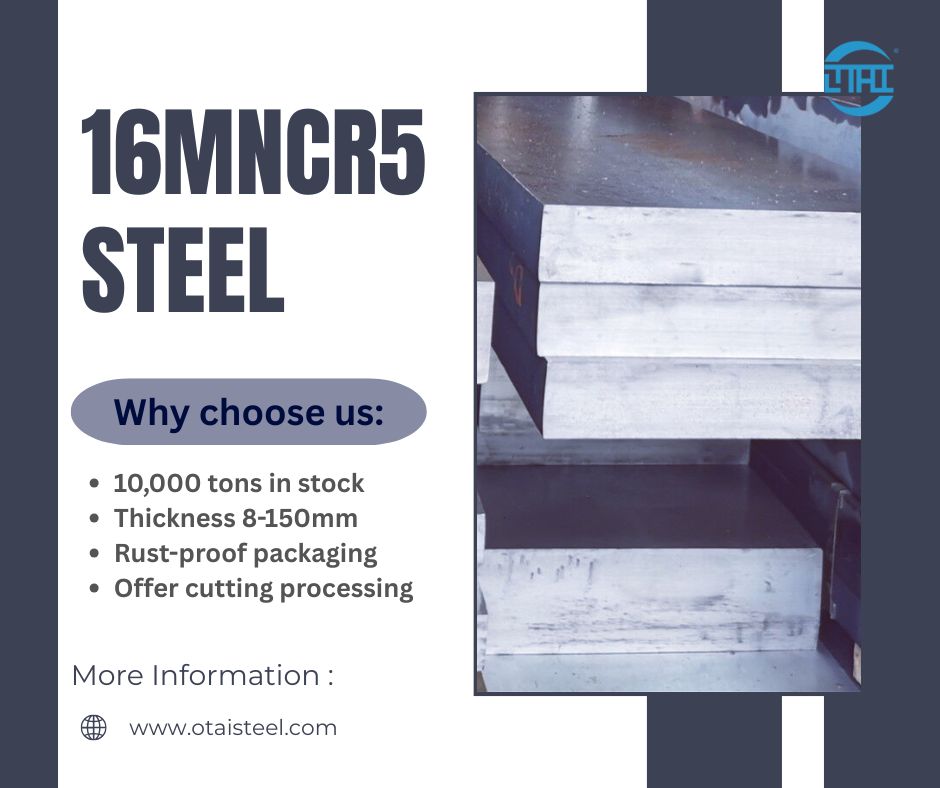
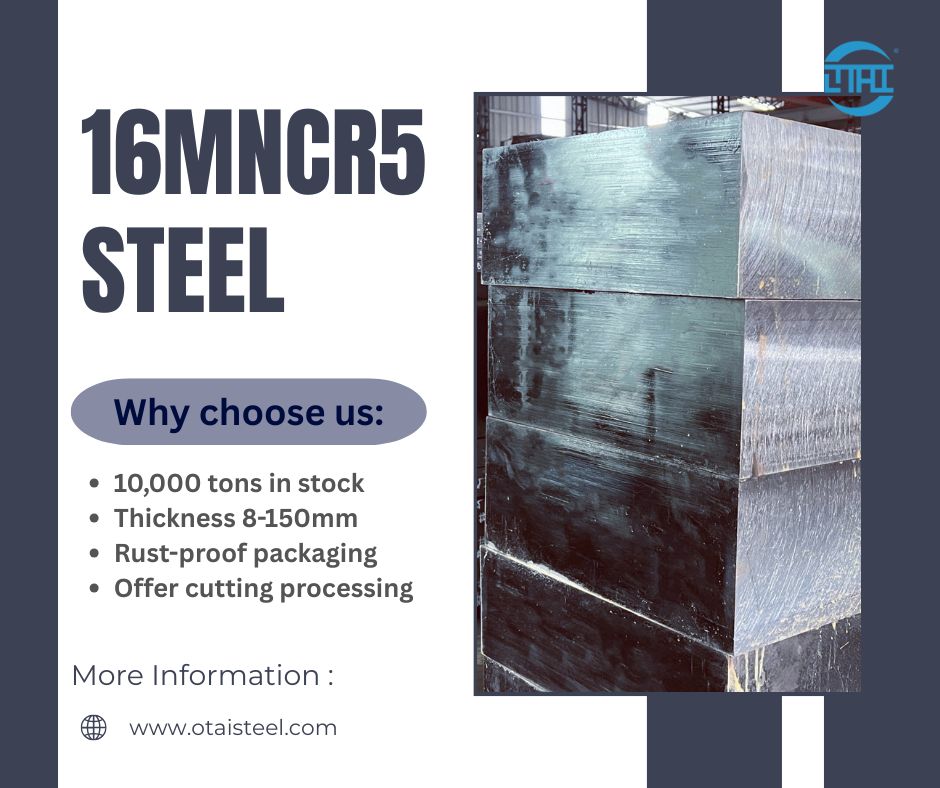
16MnCr5 Material Equivalent: Global Grades and Practical Selection Insights

16MnCr5 Material Equivalent: Global Grades and Practical Selection Insights16MnCr5 Material Equivalent: Global Grades and Practical Selection Insights

🔍 Introduction

When sourcing case-hardening steel for gears, shafts, or automotive components, understanding 16MnCr5 material equivalent becomes essential. Buyers often face challenges when switching between European, American, or Asian standards, especially when material availability, certification, or pricing varies across regions.

This article breaks down the international equivalents of 16MnCr5 steel, compares chemical compositions and properties, and provides practical guidance to help engineers, purchasers, and trading companies confidently select substitute materials without compromising performance.


⚙️ What Is 16MnCr5 Steel?

16MnCr5 is a low-carbon alloy steel widely used for carburizing applications. It belongs to the EN 10084 standard and offers excellent wear resistance after case hardening while maintaining a tough core.

Typical applications include:

  • Automotive gears
  • Transmission shafts
  • Camshafts
  • Heavy-duty mechanical components

It is especially valued when surface hardness and core toughness must be balanced.


🌍 16MnCr5 Material Equivalent Grades Across Standards

Understanding the 16mncr5 material equivalent grade across global standards helps ensure compatibility in procurement and design.

Equivalent Grades Table

Standard Grade Country/Region
EN (DIN) 16MnCr5 (1.7131) Europe
ASTM/AISI 5115 USA
SAE 5115 USA
JIS SCM415 Japan
GB 16CrMnH China
ISO 16MnCr5 International

These grades are widely recognized as 16mncr5 equivalent in ASTM standard and other systems, although slight differences in composition may exist.


🧪 Chemical Composition Comparison

To better understand 16mncr5 equivalent chemical composition comparison, let’s examine the key elements:

Grade C (%) Mn (%) Cr (%) Notes
16MnCr5 0.14–0.19 1.0–1.3 0.8–1.1 Standard EN grade
AISI 5115 0.13–0.18 0.7–0.9 0.7–0.9 Slightly lower Mn
SCM415 0.13–0.18 0.6–0.85 0.9–1.2 Higher Cr range
16CrMnH 0.13–0.19 1.0–1.3 0.8–1.1 Very close match

From this table, you can see that 16mncr5 equivalent steel properties remain consistent across most alternatives, especially after carburizing treatment.


📊 Mechanical Properties and Performance

After carburizing and quenching, 16MnCr5 exhibits:

  • Surface hardness: 58–62 HRC
  • Core tensile strength: 800–1100 MPa
  • Excellent fatigue resistance
  • High wear resistance

These properties make it interchangeable with many 16mncr5 steel equivalent in USA grades in gear manufacturing and automotive systems.


⚖️ 16MnCr5 vs 20MnCr5: Key Differences

Many buyers compare 16mncr5 vs 20mncr5 difference when selecting materials.

Property 16MnCr5 20MnCr5
Carbon Content Lower Higher
Core Strength Moderate Higher
Toughness Better Slightly lower
Application Medium load parts Heavy-duty gears

Practical insight:
Choose 16MnCr5 when toughness and machinability matter. Opt for 20MnCr5 when higher strength is required.


🧭 How to Choose the Right Equivalent Material

Selecting the correct what is the equivalent of 16mncr5 steel depends on several factors:

1. Application Requirements

  • For gears → AISI 5115 or SCM415
  • For automotive shafts → 16CrMnH

2. Heat Treatment Compatibility

Ensure the substitute supports:

  • Carburizing depth requirements
  • Similar hardenability

3. Supply Availability

In some regions, 16mncr5 equivalent material in DIN standard may be harder to source, making ASTM or GB grades more practical.

4. Certification Requirements

Always verify:

  • Mill test certificates (MTC)
  • Chemical composition reports
  • Third-party inspection

🏭 Practical Applications and Industry Use Cases

Automotive Industry

Used for:

  • Transmission gears
  • Differential components

Equivalent grades like AISI 5115 are widely adopted globally.

Heavy Machinery

  • Gearboxes
  • Industrial drive systems

Oil & Gas Equipment

  • Wear-resistant precision components

Using a 16mncr5 cross reference material chart ensures smooth substitution during global sourcing.


⚠️ Common Mistakes When Using Equivalent Materials

  1. Ignoring composition differences
    Small variations in Mn or Cr can affect hardenability.
  2. Skipping heat treatment verification
    Even equivalent grades require process validation.
  3. Assuming full interchangeability
    Not all equivalents perform identically under extreme loads.
  4. Overlooking supplier quality control
    Material reliability depends heavily on testing and processing.

🏆 Company Advantages

At Otai Special Steel, we provide reliable solutions for global buyers looking for 16MnCr5 and its equivalents:

  • Large inventory of over 10,000 tons available year-round
  • Full size range from 6mm to 300mm thickness
  • Precision cutting and customized heat treatment services
  • Strict quality control including ultrasonic testing (UT) and chemical analysis
  • Support for third-party inspections such as SGS
  • Extensive export experience serving leading international companies

We help customers quickly match the correct equivalent material while ensuring stable quality and cost efficiency.


❓ FAQ

1. What is the closest equivalent to 16MnCr5 in the USA?

AISI 5115 is the most commonly used equivalent and offers similar carburizing performance.

2. Can 16MnCr5 be directly replaced by SCM415?

Yes, in most applications, SCM415 is a suitable substitute, but heat treatment parameters should be verified.

3. Is 16MnCr5 suitable for high-load gears?

It works well for medium-load gears. For higher loads, consider 20MnCr5.

4. Does equivalent material always guarantee the same performance?

No. Performance depends on heat treatment, processing, and quality control, not just composition.

5. How do I ensure the quality of equivalent steel?

Always request MTC reports, perform chemical testing, and consider third-party inspection for critical applications.

0 0 Continue Reading →

What “4140 Steel Group” Really Means

What “4140 Steel Group” Really MeansWhat “4140 Steel Group” Really Means

When buyers search for 4140 steel group, they usually want more than a simple grade name. They want to know how 4140 steel is classified, what similar steels belong to the same group, and whether it truly fits their application and budget.

4140 steel belongs to a medium-carbon chromium-molybdenum alloy steel group. This group focuses on strength, toughness, and heat-treating flexibility rather than extreme hardness or corrosion resistance.


🔩 What “4140 Steel Group” Really Means

The term 4140 steel group refers to steels that share:

  • Similar alloying systems

  • Comparable mechanical behavior

  • Overlapping applications

  • Related standards across regions

4140 sits inside the Cr-Mo alloy steel family, which engineers use when carbon steel no longer meets strength or fatigue demands.


🧱 Classification of 4140 Steel

From a metallurgical and standards perspective, 4140 steel fits into several overlapping classifications.

📌 Standard-Based Classification

Classification System Group Description
AISI / SAE Chromium-Molybdenum alloy steel
ASTM Low-alloy steel
ISO / EN Quenched and tempered alloy steel
Industry usage Medium-strength engineering steel

This grouping explains why engineers often replace 4140 with equivalent Cr-Mo grades when supply or standards differ.


⚙️ Alloy Steel Family Around 4140

4140 steel does not stand alone. It belongs to a broader alloy steel group with similar chemistry and performance.

🔬 Common Steels in the Same Group

Steel Grade Key Difference
4130 Lower carbon, higher toughness
4140 Balanced strength and toughness
4145 Higher carbon, higher strength
4340 Added nickel for superior toughness
42CrMo4 European equivalent

Engineers often move within this group to fine-tune strength, hardness, or impact resistance.


🔥 Heat Treatment Behavior of the 4140 Steel Group

Steels in the 4140 steel group respond very well to quenching and tempering.

🔧 Typical Heat-Treating Features

  • Deep hardenability due to chromium and molybdenum

  • Uniform hardness across thick sections

  • Stable mechanical properties after tempering

This predictable behavior makes the entire group popular for shafts, gears, and load-bearing components.


📊 Mechanical Property Range Within the Group

Although properties vary, steels in the 4140 group generally operate within a well-defined performance window.

📏 Typical Property Range (Quenched & Tempered)

Property Typical Range
Tensile strength 850 – 1100 MPa
Yield strength 650 – 900 MPa
Hardness 26 – 40 HRC
Impact toughness Moderate to high
Fatigue resistance Excellent

This balance explains why designers repeatedly return to this group for mechanical parts.


🏗️ Common Applications of the 4140 Steel Group

The 4140 steel group targets applications that require both strength and damage tolerance.

🏭 Typical Industrial Uses

  • Transmission and drive shafts

  • Forged gears and pinions

  • Hydraulic cylinders

  • Tool holders and fixtures

  • Structural bolts and studs

  • Oil and gas mechanical parts

In these roles, failure resistance matters more than extreme hardness.


🆚 4140 Steel Group vs Carbon Steel Group

Many buyers hesitate between alloy steel and carbon steel.

⚖️ Practical Comparison

Aspect Carbon Steel 4140 Steel Group
Strength Moderate High
Hardenability Limited Excellent
Section thickness Restricted Thick sections possible
Fatigue resistance Lower Higher
Cost Lower Moderate

Once loads increase or sections thicken, the 4140 steel group becomes the safer option.


🌍 International Equivalents Within the Group

4140 steel belongs to a global family, making sourcing flexible.

🌐 Common Equivalents

Standard Equivalent Grade
EN 42CrMo4
DIN 1.7225
GB 42CrMo
JIS SCM440

This equivalency allows buyers to switch suppliers without redesigning components.


🏅 Company Advantages – Otai Special Steel

At Otai Special Steel, we supply the full 4140 steel group with consistent quality and stable inventory.

  • Over 10,000 tons of alloy steel in stock

  • Thickness range from 6 mm to 300 mm

  • Pre-hardened, Q&T, or annealed conditions

  • UT testing and chemical analysis available

  • Experience supporting international OEMs and trading companies

We help customers select the right grade inside the group—not just the cheapest option.


❓ FAQ – 4140 Steel Group

Q1: Is 4140 steel considered a high-alloy steel?
No. It belongs to the low-alloy Cr-Mo steel group.

Q2: Can I replace 4140 with 4340?
Yes, but 4340 costs more and targets higher toughness requirements.

Q3: Why do engineers prefer the 4140 steel group?
Because it offers a reliable balance of strength, toughness, machinability, and cost.

Q4: Does the entire group heat treat the same way?
Yes, with minor adjustments for carbon and alloy content.

Q5: Is 4140 steel suitable for heavy sections?
Yes. Its hardenability supports thick plates and large diameters.

0 0 Continue Reading →

Improving the Corrosion Resistance of 16MnCr5 Steel

Improving the Corrosion Resistance of 16MnCr5 SteelImproving the Corrosion Resistance of 16MnCr5 Steel

16MnCr5 steel is a widely used medium-carbon alloy steel, recognized for its strength, toughness, and wear resistance. It finds application in demanding industries like automotive, aerospace, and heavy machinery. One of the critical factors influencing its performance in various environments is its corrosion resistance. While 16MnCr5 steel is not a stainless steel, it still offers a reasonable level of corrosion resistance, making it suitable for applications where moderate exposure to corrosive elements is expected.

In this article, we will explore the corrosion resistance of 16MnCr5 steel, how it performs in different environments, and ways to enhance its resistance to corrosion.


🏗️ What is 16MnCr5 Steel?

16MnCr5 steel is an alloy that includes manganese (Mn) and chromium (Cr), which are critical for enhancing the strength, toughness, and wear resistance of the material. The steel’s composition typically includes:

  • Carbon (C): 0.14% – 0.20%

  • Manganese (Mn): 0.60% – 0.90%

  • Chromium (Cr): 0.80% – 1.10%

  • Silicon (Si): 0.15% – 0.35%

  • Phosphorus (P): ≤ 0.025%

  • Sulfur (S): ≤ 0.025%

This chemical composition makes 16MnCr5 steel ideal for parts that need to withstand high mechanical stress, such as gears, shafts, and bearings. However, while chromium helps improve its resistance to corrosion, 16MnCr5 is not completely immune to it. Understanding how 16MnCr5 steel performs in corrosive environments is essential when choosing this material for specific applications.


🔧 Corrosion Resistance of 16MnCr5 Steel

The corrosion resistance of 16MnCr5 steel is moderate compared to stainless steel. While it resists mild corrosion to some extent due to the presence of chromium, it is susceptible to rusting and corrosion when exposed to aggressive conditions, such as saltwater, acidic environments, or high humidity.

1. Chromium’s Role in Corrosion Resistance

  • The chromium content in 16MnCr5 steel (0.80% – 1.10%) plays a significant role in its corrosion resistance. Chromium forms a thin, protective oxide layer on the surface of the steel, which acts as a barrier against corrosive elements. However, this layer is thin and can break down under harsh conditions, such as exposure to chlorides or acidic substances. While 16MnCr5 steel offers better corrosion resistance than low-carbon steels, it does not compare to stainless steel alloys, which have much higher chromium content (typically 10% or more) and offer superior corrosion resistance.

2. Manganese and Silicon Contributions

  • Manganese and silicon contribute to the strength and toughness of 16MnCr5 steel, but they do not significantly improve its corrosion resistance. Manganese helps the steel resist cracking and improve hardenability, while silicon acts as a deoxidizer during steelmaking, but neither element provides additional corrosion protection.

3. Environmental Impact on Corrosion

  • 16MnCr5 steel can experience rusting when exposed to moisture, oxygen, and contaminants like salts or acids. The level of corrosion depends on the environment. For instance, components exposed to saltwater, such as those in marine or coastal environments, are at a higher risk of pitting and rust formation. In more neutral environments, 16MnCr5 steel offers moderate resistance to surface corrosion but may require additional protection in harsh conditions.


🔨 Improving the Corrosion Resistance of 16MnCr5 Steel

Although 16MnCr5 steel offers reasonable corrosion resistance for many applications, there are ways to enhance its ability to withstand corrosive environments.

1. Surface Coatings

  • Surface coatings are one of the most effective ways to protect 16MnCr5 steel from corrosion. Options like galvanizing, chrome plating, or phosphate coatings can provide an additional layer of protection against corrosion. These coatings act as barriers to moisture and chemicals, preventing the steel from rusting and degrading over time.

2. Heat Treatment

  • Heat treatment methods such as carburizing can improve the surface properties of 16MnCr5 steel, making it harder and more resistant to wear. However, heat treatment does not significantly improve corrosion resistance. Combining heat treatment with surface coatings may offer better results in corrosive environments.

3. Stainless Steel Cladding

  • For applications in highly corrosive environments, engineers may choose to use 16MnCr5 steel in conjunction with stainless steel cladding. The cladding provides an outer layer of stainless steel, which offers superior corrosion resistance, while the inner core retains the strength and toughness of 16MnCr5.

4. Environmental Control

  • Limiting the exposure of 16MnCr5 steel to harsh environments can also help reduce its rate of corrosion. In applications where the material is exposed to high humidity, salt or acidic substances, ensuring proper storage and maintenance can extend the life of the material and maintain its integrity.


🏗️ Applications of 16MnCr5 Steel

Despite its moderate corrosion resistance, 16MnCr5 steel excels in applications where strength, wear resistance, and fatigue resistance are more important than corrosion resistance. Some common applications of 16MnCr5 steel include:

1. Automotive Industry

  • 16MnCr5 steel is often used for gears, axles, crankshafts, and suspension components in vehicles. These parts must endure high mechanical stress, and 16MnCr5 steel provides the necessary strength and toughness.

2. Industrial Machinery

  • 16MnCr5 steel is used for shafts, bearings, and pulleys in industrial machinery. The steel’s toughness and wear resistance make it ideal for heavy-duty components exposed to continuous friction and mechanical stress.

3. Heavy Equipment

  • In heavy equipment used in construction and mining, 16MnCr5 steel is used for gears and crankshafts that require high strength and fatigue resistance.

4. Gears and Shafts

  • The steel’s combination of hardness and fatigue strength makes it ideal for gears and shafts exposed to high loads and constant friction.


📊 Comparison of 16MnCr5 Steel with Other Materials

To highlight how 16MnCr5 steel compares with other materials in terms of corrosion resistance and key properties, here’s a quick comparison:

Material Carbon (C) Manganese (Mn) Chromium (Cr) Corrosion Resistance Applications
16MnCr5 Steel 0.14% – 0.20% 0.60% – 0.90% 0.80% – 1.10% Moderate Automotive parts, gears, shafts, industrial machinery
AISI 1045 Steel 0.45% 0.60% – 0.90% Low General engineering, shafts
AISI 4340 Steel 0.38% – 0.43% 0.60% – 0.80% 0.70% – 0.90% Moderate Aerospace, heavy machinery
EN 19 Steel 0.38% – 0.43% 0.60% – 0.90% 0.80% – 1.10% Moderate Heavy-duty machinery, automotive components
AISI 4130 Steel 0.28% – 0.33% 0.60% – 0.90% 0.80% – 1.10% Low to Moderate Aerospace, military, automotive

🏆 Why Choose Otai Special Steel for Your 16MnCr5 Steel Needs?

At Otai Special Steel, we provide high-quality 16MnCr5 steel that meets international standards for strength, toughness, and wear resistance. We also offer custom cutting, heat treatment, and packaging services to meet your specific requirements. If you need enhanced corrosion resistance, we can apply surface coatings or recommend other treatments to improve performance in corrosive environments.

Advantages of Working with Otai Special Steel:

  • Top-Quality Materials: We provide 16MnCr5 steel that meets the highest industry standards for strength, wear resistance, and toughness.

  • Customization: We offer custom cutting, heat treatment, and machining to meet your exact specifications.

  • Competitive Pricing: We offer high-performance steel at competitive prices, ensuring excellent value.

  • Fast Delivery: With a vast inventory, we guarantee fast and reliable delivery to meet your project deadlines.


Frequently Asked Questions (FAQ)

Q1: Is 16MnCr5 steel resistant to corrosion?

  • A1: 16MnCr5 steel offers moderate corrosion resistance due to its chromium content. However, it is susceptible to corrosion in harsh environments, such as saltwater or acidic conditions. Additional surface treatments can improve its resistance.

Q2: How can I improve the corrosion resistance of 16MnCr5 steel?

  • A2: Surface coatings such as galvanizing, chrome plating, or phosphate coatings can significantly enhance the corrosion resistance of 16MnCr5 steel.

Q3: What applications benefit from 16MnCr5 steel’s corrosion resistance?

  • A3: 16MnCr5 steel is suitable for automotive components, industrial machinery, and gears that need to withstand moderate exposure to corrosion. However, it is better suited for environments where corrosion is not a primary concern.

0 0 Continue Reading →

Why 4140 Steel Shows Good Fracture Toughness

Why 4140 Steel Shows Good Fracture ToughnessWhy 4140 Steel Shows Good Fracture Toughness

In real industrial environments, components rarely fail because of simple overload. Instead, cracks initiate, grow, and finally cause sudden fracture. That is why engineers care deeply about the fracture toughness of 4140 steel, not just its tensile strength or hardness.

4140 steel delivers a rare balance: high strength with reliable resistance to crack propagation. This combination makes it a preferred material for shafts, gears, pressure-containing parts, and heavy-duty machinery.


🔍 What Does Fracture Toughness Mean for 4140 Steel?

Fracture toughness describes a material’s ability to resist crack growth once a crack already exists. In practical terms, it answers a critical question:

Will this part fail suddenly, or will it tolerate damage and give warning?

For 4140 steel, fracture toughness depends strongly on:

  • Heat treatment condition

  • Strength level (hardness)

  • Section thickness

  • Operating temperature

Unlike brittle steels, properly treated 4140 steel absorbs energy and slows crack propagation.


⚙️ Why 4140 Steel Shows Good Fracture Toughness

4140 steel combines chromium and molybdenum with medium carbon content. This alloy design creates a tough martensitic or tempered martensitic structure after heat treatment.

Key contributors include:

  • Chromium improves hardenability and crack resistance

  • Molybdenum reduces temper embrittlement

  • Controlled carbon content maintains toughness

As a result, 4140 steel resists catastrophic fracture even under dynamic loading.


📊 Typical Fracture Toughness Values of 4140 Steel

Engineers often express fracture toughness as K<sub>IC</sub>, measured in MPa·√m.

📏 Typical Fracture Toughness Ranges

Heat Treatment Condition Hardness (HRC) Fracture Toughness (MPa·√m)
Annealed 18 – 22 80 – 100
Quenched & Tempered (Low strength) 28 – 32 70 – 85
Quenched & Tempered (Medium strength) 32 – 36 55 – 70
Quenched & Tempered (High strength) 38 – 42 40 – 55

As strength increases, fracture toughness decreases. Engineers must balance these two properties carefully.


🔥 Effect of Heat Treatment on Fracture Toughness

Heat treatment plays the dominant role in controlling the fracture toughness of 4140 steel.

🔧 Practical Heat Treatment Insights

  • Lower tempering temperatures raise strength but reduce toughness

  • Higher tempering temperatures sacrifice some strength to gain crack resistance

  • Uniform quenching reduces internal stress and improves toughness

For critical parts, engineers often select 30–36 HRC as the best compromise.


🧪 Fracture Toughness vs Hardness: Finding the Right Balance

Many failures occur because designers push hardness too far.

⚖️ Practical Trade-Off

Design Goal Recommended Hardness
Maximum wear resistance 38 – 42 HRC
Balanced strength & toughness 30 – 36 HRC
High impact resistance 26 – 30 HRC

For rotating shafts and pressure-loaded components, fracture toughness matters more than peak hardness.


🏗️ How Fracture Toughness Impacts Real Applications

The fracture toughness of 4140 steel directly influences component reliability in demanding environments.

Common Applications Where Toughness Matters

  • Shafts → Prevents sudden torsional fracture

  • Gears → Reduces crack propagation at tooth roots

  • Oil & gas components → Handles pressure fluctuations safely

  • Heavy machinery → Absorbs shock loads and vibration

  • Structural pins and bolts → Maintains integrity under fatigue

In these applications, toughness often defines service life more than tensile strength.


❄️ Temperature Effects on Fracture Toughness

4140 steel maintains good toughness at room temperature. However, toughness decreases as temperature drops.

Temperature Considerations

  • Room temperature → Stable and predictable behavior

  • Sub-zero conditions → Reduced fracture toughness

  • Cryogenic environments → Not recommended without modification

For low-temperature service, engineers often specify controlled chemistry and higher tempering temperatures.


🆚 4140 Steel vs Higher-Strength Alloy Steels

📊 Toughness Comparison Overview

Steel Grade Strength Level Fracture Toughness Trend
4140 Medium–High Excellent balance
4340 Very High Higher toughness at same strength
Tool steels Very High Lower toughness
Carbon steels Medium Lower crack resistance

4140 steel remains a cost-effective choice when toughness and strength must coexist.


🏅 Company Advantages – Otai Special Steel

At Otai Special Steel, we understand that fracture toughness starts with consistent material quality.

  • Large stock of 4140 steel plates and bars

  • Thickness range from 6 mm to 300 mm

  • Controlled chemistry for stable heat treatment response

  • UT testing and chemical analysis available

  • Experience supplying critical load-bearing components

We help customers choose hardness levels that protect both performance and safety.


❓ FAQ – Fracture Toughness of 4140 Steel

Q1: Is 4140 steel considered tough or brittle?
4140 steel is tough when properly quenched and tempered. Brittle behavior only appears at excessive hardness or poor heat treatment.

Q2: Does higher hardness always mean lower fracture toughness?
Yes. Increasing hardness improves strength but reduces resistance to crack growth.

Q3: What hardness gives the best fracture toughness for 4140 steel?
Around 28–32 HRC provides an excellent toughness–strength balance.

Q4: Can 4140 steel handle impact loading?
Yes. Its fracture toughness makes it suitable for moderate to high impact conditions.

Q5: Is fracture toughness more important than tensile strength?
For safety-critical parts, fracture toughness often matters more than peak strength.

0 0 Continue Reading →

16MnCr5 Material Hardness in HRC: Values, Distribution, and Engineering Applications

16MnCr5 Material Hardness in HRC: Values, Distribution, and Engineering Applications16MnCr5 Material Hardness in HRC: Values, Distribution, and Engineering Applications

Understanding 16MnCr5 material hardness in HRC is essential for engineers working with case-hardening steels. This material offers a unique combination of a hard surface and a tough core, which makes it highly suitable for demanding mechanical components such as gears, shafts, and transmission parts.

The hardness of 16MnCr5 steel is not fixed. It varies depending on heat treatment, especially carburizing, quenching, and tempering. This flexibility allows engineers to tailor performance according to specific application needs.

🛠️ What Influences 16MnCr5 Material Hardness in HRC?

Several key factors determine 16MnCr5 material hardness in HRC:

  • Heat treatment process: The most critical factor affecting hardness
  • Surface carbon content: Increased through carburizing
  • Cooling rate: Faster quenching leads to higher hardness
  • Tempering temperature: Adjusts hardness and toughness balance
  • Material section size: Larger sections may reduce uniform hardness

Because 16MnCr5 steel is designed for case hardening, its hardness distribution differs significantly between the surface and the core.

⚙️ Typical 16MnCr5 Material Hardness in HRC

The 16MnCr5 material hardness in HRC varies under different conditions:

Condition Hardness Notes
Annealed 140 – 180 HB Soft, easy to machine
Normalized 170 – 220 HB Improved structural uniformity
Quenched & Tempered 28 – 45 HRC Balanced mechanical properties
Carburized Surface 58 – 62 HRC High wear resistance
Core (after treatment) 30 – 45 HRC Tough and impact-resistant

In most industrial uses, engineers rely on carburized 16MnCr5 steel to achieve optimal hardness and durability.

🔬 Hardness Distribution: Surface vs Core

A defining feature of 16MnCr5 material hardness in HRC is its gradient structure:

Layer Hardness (HRC) Function
Surface Case 58 – 62 Resists wear and abrasion
Transition Zone 45 – 55 Distributes stress
Core 30 – 45 Provides toughness and shock resistance

This hardness gradient allows components made from 16MnCr5 steel to withstand both surface wear and internal stress.

🔧 Heat Treatment Impact on Hardness

The 16MnCr5 material hardness in HRC depends heavily on the heat treatment route:

Process Temperature Range Effect on Hardness
Carburizing 880 – 930°C Increases surface carbon content
Diffusion 820 – 860°C Ensures uniform carbon distribution
Quenching Oil cooling Forms hard martensitic structure
Tempering 150 – 200°C Reduces brittleness, stabilizes hardness

Lower tempering temperatures result in higher hardness but reduced ductility, so engineers must balance these properties carefully.

🧰 Recommended Hardness for Different Applications

Selecting the correct 16MnCr5 material hardness in HRC is crucial for performance:

Application Recommended HRC Engineering Reason
Automotive Gears 58 – 62 Maximum wear resistance
Transmission Shafts 30 – 40 Strength with good toughness
Bearings 58 – 62 Surface durability under friction
Industrial Machinery 28 – 45 Balanced performance

Matching hardness with application requirements improves service life and reduces failure risk.

💡 Common Challenges in Achieving Target Hardness

Achieving stable 16MnCr5 material hardness in HRC requires careful process control. Common issues include:

Problem Cause Solution
Uneven Hardness Poor furnace temperature control Improve temperature uniformity
Distortion Rapid or uneven cooling Optimize quenching method
Surface Cracks Excessive stress after quenching Apply proper tempering
Shallow Case Depth Insufficient carburizing time Extend carburizing duration

Monitoring these factors helps maintain consistent hardness across batches.

🌍 Advantages of 16MnCr5 Hardness Characteristics

The flexibility of 16MnCr5 material hardness in HRC offers multiple advantages:

  • High surface hardness for wear resistance
  • Tough core for shock absorption
  • Excellent fatigue performance under cyclic loads
  • Adjustable properties through heat treatment
  • Reliable operation in heavy-duty environments

These advantages make 16MnCr5 steel one of the most widely used case-hardening steels in modern industry.

🏆 Company Advantages

At Otai Special Steel, we provide 16MnCr5 steel with precise hardness control and stable performance for global customers:

  • Large Inventory: Over 10,000 tons available for immediate delivery
  • Customized Heat Treatment: Carburizing, quenching, and tempering tailored to your requirements
  • Strict Quality Control: UT testing and hardness inspection for every batch
  • Global Supply Experience: Reliable export service with consistent standards
  • Competitive Pricing: Cost-effective solutions without compromising quality

🤔 FAQ

Q1: What is the typical 16MnCr5 material hardness in HRC after carburizing?
A1: The typical 16MnCr5 material hardness in HRC reaches 58–62 HRC on the surface after carburizing.

Q2: What is the core hardness of 16MnCr5 steel?
A2: The core hardness is generally 30–45 HRC, ensuring good toughness and resistance to impact.

Q3: Can hardness be adjusted in 16MnCr5 steel?
A3: Yes, the 16MnCr5 material hardness in HRC can be adjusted by modifying heat treatment parameters such as tempering temperature and carburizing time.


0 0 Continue Reading →

UK Equivalent of 4140 Steel: Properties and Selection Guide

UK Equivalent of 4140 Steel: Properties and Selection GuideWhen sourcing materials internationally, identifying the correct UK equivalent of 4140 steel is essential for ensuring compatibility in performance and standards. Since 4140 steel belongs to the ASTM/SAE system, engineers often look for its closest British Standard (BS) or EN equivalent.

🛠️ What Is 4140 Steel?

4140 steel is a chromium-molybdenum alloy steel known for its high strength, toughness, and fatigue resistance. It performs exceptionally well after quenching and tempering.

Industries widely use 4140 steel in shafts, gears, bolts, and heavy-duty mechanical components.

⚙️ UK Equivalent of 4140 Steel

The most recognized UK equivalent of 4140 steel is:

Standard Equivalent Grade
EN (Europe/UK) 42CrMo4 (1.7225)
BS (Older Standard) EN19

🔬 Chemical Composition Comparison

To verify the UK equivalent of 4140 steel, comparing chemical composition is essential:

Element 4140 Steel (%) 42CrMo4 (%)
Carbon (C) 0.38 – 0.43 0.38 – 0.45
Manganese (Mn) 0.75 – 1.00 0.60 – 0.90
Chromium (Cr) 0.80 – 1.10 0.90 – 1.20
Molybdenum (Mo) 0.15 – 0.25 0.15 – 0.30
Silicon (Si) 0.15 – 0.35 0.15 – 0.40

🔧 Mechanical Properties Comparison

The performance of the UK equivalent of 4140 steel closely matches the original grade:

Property 4140 Steel 42CrMo4
Tensile Strength 850 – 1000 MPa 850 – 1100 MPa
Yield Strength 650 – 850 MPa 650 – 900 MPa
Hardness (HRC) 28 – 32 (Q&T) 28 – 34 (Q&T)
Toughness Excellent Excellent
Fatigue Strength High High

These similarities allow engineers to confidently use the UK equivalent of 4140 steel in most applications.

🧰 Heat Treatment Compatibility

4140 steel supports similar heat treatment processes:

Process 4140 Steel 42CrMo4
Austenitizing 850 – 880°C 840 – 880°C
Quenching Oil Oil or polymer
Tempering 200 – 600°C 200 – 650°C

Both materials respond well to quenching and tempering, offering flexibility in property control.

🔩 Applications of 4140 Steel

4140 steel is widely used in:

  • Automotive components (shafts, crankshafts)
  • Oil and gas equipment
  • Heavy machinery parts
  • Construction and mining equipment

These applications require high strength and durability.

💡 Key Differences to Consider

Although the UK equivalent of 4140 steel is highly similar, some differences remain:

  • Slight variations in chemical composition ranges
  • Different certification standards (ASTM vs EN/BS)
  • Regional availability and supply chain differences
  • Minor differences in heat treatment practices

Engineers should always verify specifications before substitution.

🌍 Advantages of Using UK Equivalent Grades

Using the UK equivalent of 4140 steel offers several benefits:

  • Easier sourcing in European and UK markets
  • Reduced lead times for international projects
  • Comparable mechanical performance
  • Compatibility with global engineering standards
  • Cost optimization through flexible procurement

These benefits support efficient global manufacturing.

🏆 Company Advantages

At Otai Special Steel, we supply both 4140 steel and its UK equivalent with strict quality control and reliable performance:

  • Large Inventory: Over 10,000 tons ready for fast delivery
  • Custom Processing Services: Cutting, heat treatment, and machining
  • Strict Quality Control: UT testing and full chemical verification
  • Global Export Experience: Trusted supplier worldwide
  • Competitive Pricing: Cost-effective solutions with consistent quality

🤔 FAQ

Q1: What is the UK equivalent of 4140 steel?
A1: The most common steel is 42CrMo4 (EN 1.7225), also known as EN19 in older British standards.

Q2: Can 42CrMo4 fully replace 4140 steel?
A2: Yes, in most cases, 42CrMo4 can replace 4140 steel due to similar properties.

Q3: Are there differences between UK and ASTM standards?
A3: Yes, there are minor differences in composition ranges and certification requirements, but performance remains very similar.


0 0 Continue Reading →

16MnCr5 Heat Treatment Process: From Carburizing to Final Performance

16MnCr5 Heat Treatment Process: From Carburizing to Final Performance

The 16MnCr5 heat treatment process plays a critical role in achieving the ideal combination of surface hardness and core toughness. As a widely used case-hardening steel, 16MnCr5 steel responds exceptionally well to controlled thermal processing, making it suitable for demanding mechanical components.

🛠️ What is the 16MnCr5 Heat Treatment Process?

It typically includes carburizing, quenching, and tempering. This sequence enhances surface hardness while preserving a ductile core.

The goal is to create:

  • A hard outer case for wear resistance
  • A tough core for impact resistance

This structure makes 16MnCr5 steel ideal for gears, shafts, and transmission parts.

⚙️ Complete 16MnCr5 Heat Treatment Process Steps

The standard 16MnCr5 heat treatment process follows these stages:

Step Temperature Range Purpose
Preheating 650 – 700°C Reduce thermal stress
Carburizing 880 – 930°C Increase surface carbon content
Diffusion 820 – 860°C Even carbon distribution
Quenching Oil cooling Achieve high surface hardness
Tempering 150 – 200°C Improve toughness and reduce stress

Each step in the 16MnCr5 heat treatment process must be carefully controlled.

🔬 Microstructure After Heat Treatment

The 16MnCr5 heat treatment process produces a unique microstructure:

Layer Microstructure Function
Surface Case Martensite High hardness and wear resistance
Transition Zone Mixed structure Gradual property change
Core Ferrite + Pearlite Toughness and ductility

This gradient structure ensures both durability and mechanical reliability.

🔧 Mechanical Properties After Heat Treatment

Property Typical Value
Surface Hardness 58 – 62 HRC
Core Hardness 30 – 45 HRC
Tensile Strength 800 – 1100 MPa
Fatigue Strength Excellent
Wear Resistance High

These properties make 16MnCr5 steel suitable for high-load applications.

🧰 Key Parameters to Control

To optimize the 16MnCr5 heat treatment process, you should focus on:

  • Carburizing Time: Determines case depth
  • Temperature Uniformity: Ensures consistent hardness
  • Cooling Rate: Affects final microstructure
  • Component Size: Larger parts require longer soaking time
  • Atmosphere Control: Prevents oxidation and decarburization

Precise control ensures high-quality results.

🔩 Common Issues and Solutions

During the 16MnCr5 heat treatment process, some challenges may arise:

Issue Cause Solution
Distortion Uneven cooling Use proper fixturing and quenching
Surface Cracks Excessive stress Adjust quenching and tempering
Uneven Hardness Temperature variation Improve furnace control
Decarburization Poor atmosphere control Use protective atmosphere

Addressing these issues improves product quality.

💡 Applications After Heat Treatment

The optimized 16MnCr5 heat treatment process supports various applications:

  • Automotive gears and transmission systems
  • Shafts and pinions
  • Bearings and bushings
  • Industrial machinery components

These applications benefit from high wear resistance and fatigue strength.

🌍 Advantages of 16MnCr5 Heat Treatment Process

  • Excellent surface hardness after carburizing
  • Strong and tough core structure
  • High fatigue resistance under cyclic loads
  • Good dimensional stability
  • Wide industrial applicability

These features make 16MnCr5 steel a reliable engineering material.

🏆 Company Advantages

At Otai Special Steel, we provide 16MnCr5 steel with optimized heat treatment solutions to meet your exact requirements. Our advantages include:

  • Large Inventory: Over 10,000 tons ready for fast delivery.
  • Advanced Heat Treatment Services: Carburizing, quenching, and tempering support.
  • Strict Quality Control: UT testing and full property inspection.
  • Global Export Experience: Reliable service for international clients.
  • Competitive Pricing: Cost-effective solutions with stable quality.

🤔 FAQ

Q1: What is the main purpose of the 16MnCr5 heat treatment process?
A1: It aims to create a hard surface and a tough core for improved wear resistance and durability.

Q2: What hardness can be achieved after treatment?
A2: The process typically achieves 58–62 HRC on the surface.

Q3: Why is carburizing necessary for 16MnCr5?
A3: Carburizing increases surface carbon content, allowing high hardness without sacrificing core toughness.


0 0 Continue Reading →

4140 Steel 42CrMo4: Equivalent Grades, Properties, and Industrial Applications

4140 Steel 42CrMo4: Equivalent Grades, Properties, and Industrial Applications

When comparing 4140 steel 42CrMo4, engineers often want to know whether these two materials are interchangeable. The answer is yes—these steels are considered equivalent grades under different standards, but slight differences in specifications and processing can affect performance.

Understanding them helps you select the right material for global sourcing and engineering applications.

🛠️ What Are 4140 Steel and 42CrMo4?

4140 steel is defined under the ASTM/SAE system as a chromium-molybdenum alloy steel. It offers excellent strength, toughness, and fatigue resistance.

42CrMo4 steel is the European equivalent under EN/DIN standards (EN 1.7225). It provides similar mechanical properties and heat treatment response.

Both materials belong to the same alloy steel family and are widely used in demanding applications.

⚙️ 4140 Steel 42CrMo4 Equivalent Comparison

Standard Grade
ASTM / SAE 4140
EN / DIN 42CrMo4 (1.7225)
JIS SCM440
GB (China) 42CrMo

These grades share similar composition and performance, making them interchangeable in many cases.

🔬 Chemical Composition Comparison

The chemical composition of 4140 steel 42CrMo4 is very similar, with slight variations:

Element 4140 Steel (%) 42CrMo4 (%)
Carbon (C) 0.38 – 0.43 0.38 – 0.45
Manganese (Mn) 0.75 – 1.00 0.60 – 0.90
Chromium (Cr) 0.80 – 1.10 0.90 – 1.20
Molybdenum (Mo) 0.15 – 0.25 0.15 – 0.30
Silicon (Si) 0.15 – 0.35 0.15 – 0.40

The slightly higher chromium and molybdenum content in 42CrMo4 steel can improve hardenability.

🔧 Mechanical Properties Comparison

The performance of 4140 steel 42CrMo4 is nearly identical after heat treatment:

Property 4140 Steel 42CrMo4 Steel
Tensile Strength 850 – 1000 MPa 850 – 1100 MPa
Yield Strength 650 – 850 MPa 650 – 900 MPa
Hardness (HRC) 28 – 32 (Q&T) 28 – 34 (Q&T)
Toughness Excellent Excellent
Fatigue Strength High High

These properties make both steels suitable for high-load applications.

🧰 Heat Treatment Behavior

Heat treatment plays a key role in the performance of 4140 steel 42CrMo4:

Process 4140 Steel 42CrMo4 Steel
Austenitizing 850 – 880°C 840 – 880°C
Quenching Oil cooling Oil or polymer
Tempering 200 – 600°C 200 – 650°C

Both materials respond well to quenching and tempering, offering flexibility in mechanical properties.

🔩 Applications of 4140 Steel 42CrMo4

The similar characteristics of 4140 steel 42CrMo4 support a wide range of applications:

  • Automotive components (shafts, crankshafts)
  • Oil and gas equipment
  • Heavy machinery parts
  • Construction and mining equipment

These applications require high strength and durability.

💡 Key Differences Between 4140 Steel and 42CrMo4

Although they are equivalent, small differences exist:

  • 42CrMo4 steel may have slightly higher hardenability
  • 4140 steel is more commonly used in North America
  • 42CrMo4 steel is widely used in Europe
  • Standards and certification requirements may differ

You should always verify specifications before substitution.

🌍 Advantages of Using Equivalent Grades

Using 4140 steel 42CrMo4 interchangeably offers several benefits:

  • Enables global sourcing flexibility
  • Reduces procurement delays
  • Maintains consistent mechanical performance
  • Supports international engineering projects
  • Improves cost efficiency

These advantages are essential in modern manufacturing.

🏆 Company Advantages

At Otai Special Steel, we supply both 4140 steel and 42CrMo4 steel with strict quality control and reliable performance. Our advantages include:

  • Large Inventory: Over 10,000 tons available for immediate delivery.
  • Custom Processing Services: Cutting, heat treatment, and machining support.
  • Strict Quality Control: UT testing and full chemical verification.
  • Global Export Experience: Trusted supplier for international clients.
  • Competitive Pricing: Cost-effective solutions with stable quality.

🤔 FAQ

Q1: Are 4140 steel and 42CrMo4 the same?
A1: Yes, they are considered equivalent grades with very similar properties.

Q2: Can 42CrMo4 replace 4140 steel?
A2: Yes, in most applications, 42CrMo4 steel can replace 4140 steel.

Q3: Is there any difference between them?
A3: Only minor differences in composition and standards, which may slightly affect performance.


0 0 Continue Reading →

16MnCr5 Hardening: Process, Parameters, and Performance Optimization

16MnCr5 Hardening: Process, Parameters, and Performance Optimization

The 16MnCr5 hardening process is essential for achieving a hard, wear-resistant surface while maintaining a tough core. As a case-hardening steel, 16MnCr5 steel responds exceptionally well to carburizing and quenching, making it a top choice for gears, shafts, and high-load components.

🛠️ What is 16MnCr5 Hardening?

16MnCr5 hardening typically refers to a carburizing-based heat treatment process. During this process, carbon diffuses into the surface layer, followed by quenching and tempering.

This method creates:

  • A hard outer case for wear resistance
  • A tough inner core for impact resistance

This combination makes 16MnCr5 steel ideal for dynamic and high-stress applications.

⚙️ 16MnCr5 Hardening Process Steps

The standard 16MnCr5 hardening process includes several controlled steps:

Step Temperature Range Purpose
Carburizing 880 – 930°C Enrich surface with carbon
Diffusion 820 – 860°C Even carbon distribution
Quenching Oil cooling Increase surface hardness
Tempering 150 – 200°C Reduce brittleness

You must control each step precisely to achieve consistent results.

🔬 Surface Hardness After 16MnCr5 Hardening

The 16MnCr5 hardening process produces high surface hardness:

Property Typical Value
Surface Hardness 58 – 62 HRC
Core Hardness 30 – 45 HRC
Case Depth 0.8 – 1.5 mm (typical)

This hardness profile provides excellent wear resistance and fatigue strength.

🔧 Factors Affecting Hardening Results

Several factors influence the outcome of 16MnCr5 hardening:

  • Carburizing Time: Longer time increases case depth
  • Temperature Control: Ensures uniform carbon diffusion
  • Quenching Medium: Oil quenching reduces distortion
  • Component Size: Larger parts require longer soaking time
  • Surface Condition: Clean surfaces improve carbon absorption

Proper control of these factors ensures consistent hardness and performance.

🧰 Common Hardening Defects and Solutions

During 16MnCr5 hardening, some issues may occur:

Problem Cause Solution
Distortion Uneven cooling Improve fixturing and quenching
Cracking Excessive hardness or stress Optimize tempering process
Uneven Hardness Poor temperature control Ensure uniform furnace conditions
Shallow Case Depth Insufficient carburizing time Increase carburizing duration

You should monitor process parameters carefully to avoid defects.

🔩 Applications of 16MnCr5 Hardened Steel

The 16MnCr5 hardening process makes the material suitable for:

  • Automotive gears and transmission parts
  • Shafts and pinions
  • Bearings and bushings
  • Heavy-duty machinery components

These applications require high surface hardness combined with core toughness.

💡 Advantages of 16MnCr5 Hardening

Using the 16MnCr5 hardening process offers several advantages:

  • Excellent wear resistance
  • High fatigue strength
  • Strong core toughness
  • Good dimensional stability
  • Reliable performance under cyclic loads

🏆 Company Advantages

At Otai Special Steel, we supply high-quality 16MnCr5 steel with professional hardening and heat treatment support. Our advantages include:

  • Large Inventory: Over 10,000 tons available for fast delivery.
  • Custom Heat Treatment Services: Carburizing, quenching, and tempering tailored to your needs.
  • Strict Quality Control: UT testing and hardness inspection for every batch.
  • Global Supply Experience: Reliable export service worldwide.
  • Competitive Pricing: Cost-effective solutions with consistent quality.

🤔 FAQ

Q1: What is the typical hardness after 16MnCr5 hardening?
A1: It is typically achieves 58–62 HRC on the surface.

Q2: What is the best quenching method for 16MnCr5?
A2: Oil quenching is commonly used to reduce distortion and achieve uniform hardness.

Q3: Why is carburizing important for 16MnCr5?
A3: Carburizing increases surface carbon content, allowing the steel to achieve high hardness while maintaining a tough core.


Jack Tan


📧 jack@otaisteel.com

📱 WhatsApp: +8676923190193

0 0 Continue Reading →


Recent Comments by Jack Otai