Skip to Content

Category Archives: Blog

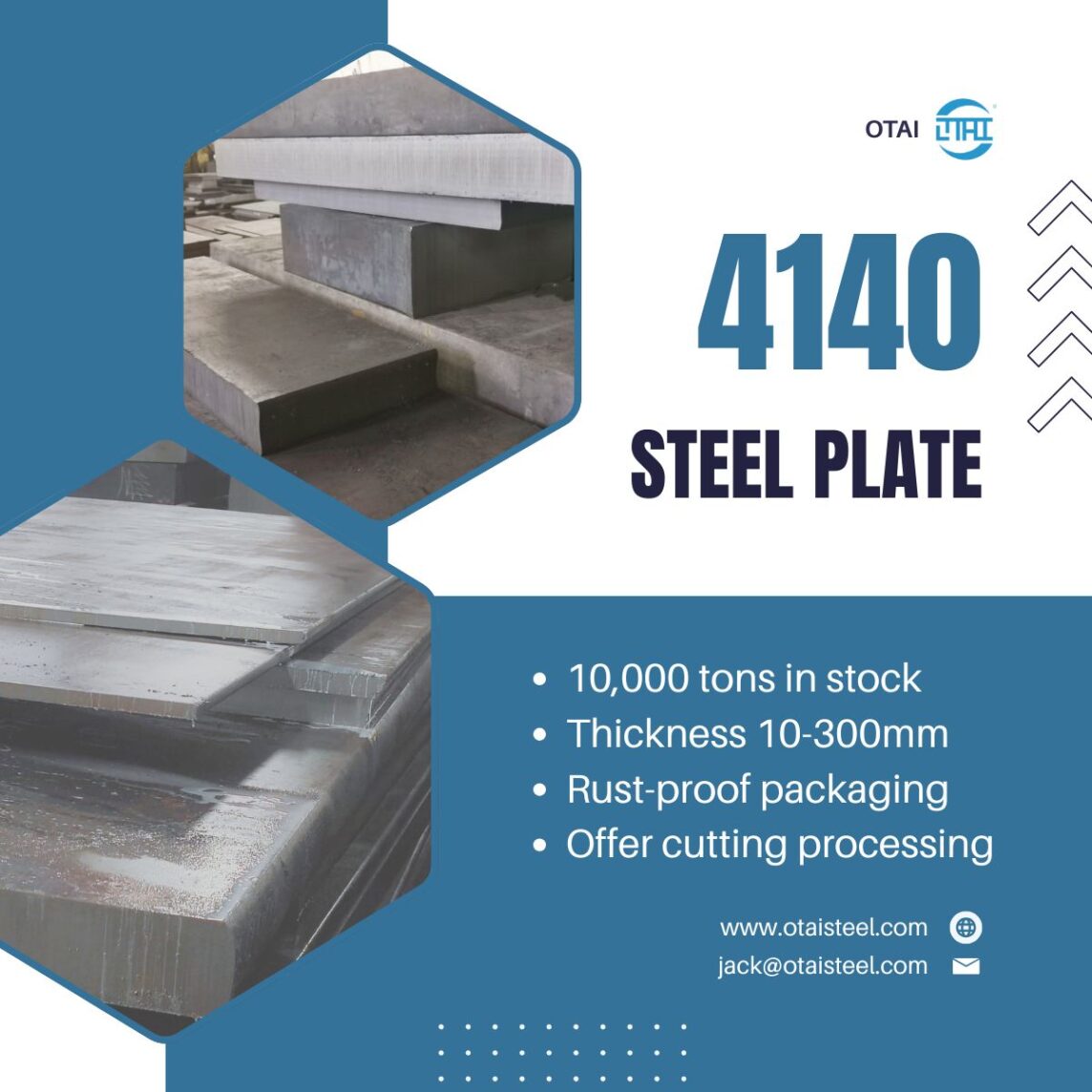
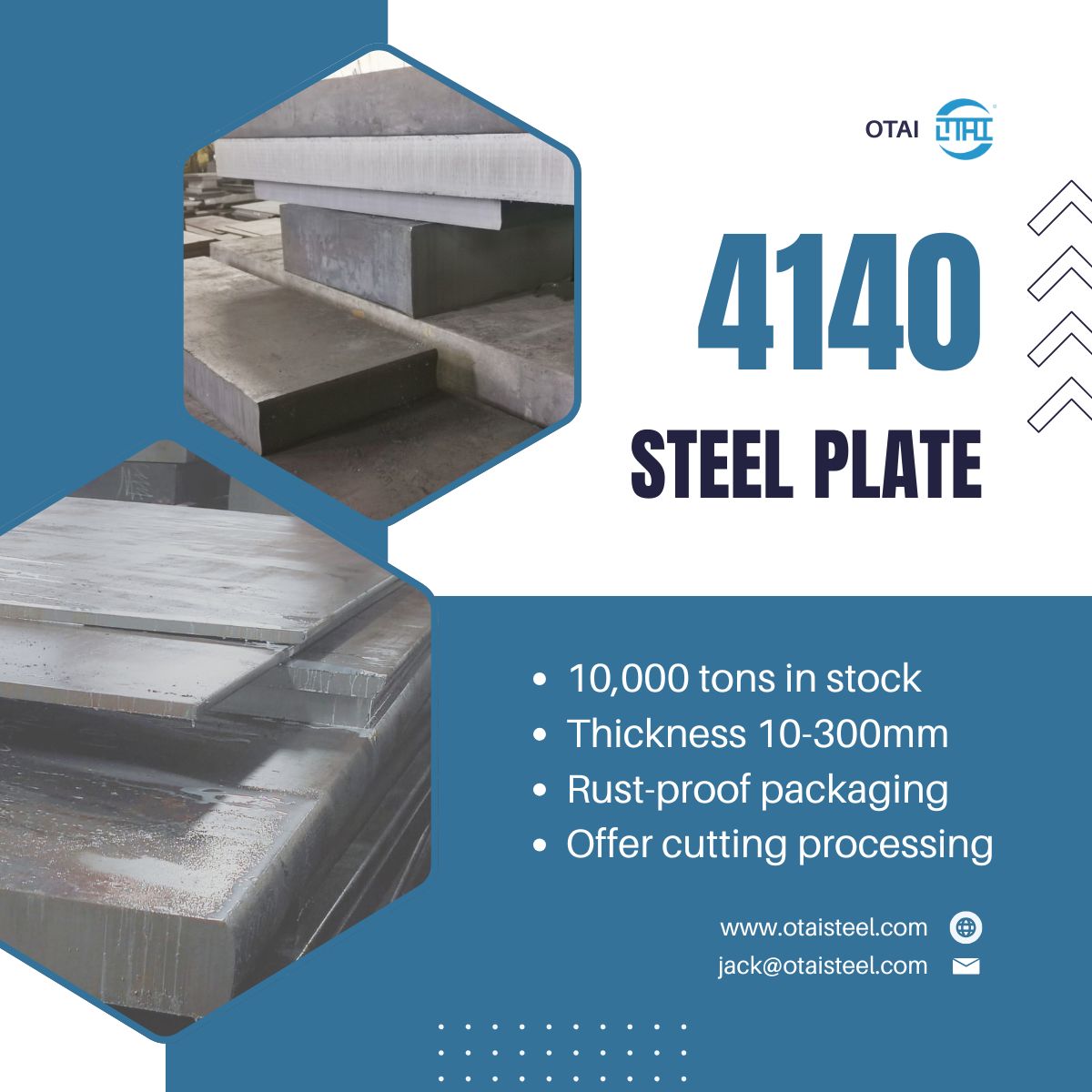
Why Brisbane Industries Use 4140 Steel

Why Brisbane Industries Use 4140 SteelWhy Brisbane Industries Use 4140 Steel

When engineers and buyers search for 4140 steel in Brisbane, they usually focus on three things: stable availability, consistent quality, and predictable mechanical performance. Brisbane supports strong industries such as mining, construction equipment, energy, and heavy manufacturing, all of which rely heavily on alloy steels that can handle high stress.

Because of that, 4140 steel remains one of the most requested chromium-molybdenum alloy steels in the Brisbane market. Below, we break down what buyers need to know before sourcing it.


🔍 What Is 4140 Steel and Why Brisbane Industries Use It

4140 steel is a low-alloy chromium-molybdenum steel that delivers an excellent balance of strength, toughness, and machinability. Engineers in Brisbane prefer it because it performs well under dynamic loads and repeated stress.

Key reasons Brisbane industries choose 4140 steel:

  • Strong load-bearing capability

  • Good fatigue resistance for rotating parts

  • Flexible heat-treatment options

  • Reliable performance in harsh environments

Mining equipment, hydraulic systems, and heavy machinery across Queensland rely on this steel every day.


⚙️ Typical Forms of 4140 Steel Available in Brisbane

Buyers in Brisbane often require 4140 steel in different product forms depending on the application.

📊 Common Product Forms

Product Form Typical Use
4140 Steel Plate Machine bases, structural components
4140 Round Bar Shafts, axles, pins
4140 Flat Bar Wear parts, brackets
4140 Steel Tube Hydraulic cylinders, mechanical tubing

Most Brisbane projects demand tight dimensional control, especially for machining-intensive components.


🧪 Chemical Composition of 4140 Steel

The performance of 4140 steel comes from its carefully balanced alloying elements.

📊 Chemical Composition (Typical)

Element Content (%) Contribution
Carbon (C) 0.38–0.43 Strength and hardness
Chromium (Cr) 0.80–1.10 Wear resistance
Molybdenum (Mo) 0.15–0.25 Toughness and heat resistance
Manganese (Mn) 0.75–1.00 Hardenability
Silicon (Si) 0.15–0.35 Strength stability

This chemistry allows Brisbane manufacturers to specify 4140 steel confidently for demanding service conditions.


🔥 Mechanical Properties Relevant to Brisbane Applications

The mechanical properties of 4140 steel depend heavily on heat treatment.

📊 Mechanical Properties by Condition

Condition Yield Strength (MPa) Tensile Strength (MPa) Typical Use
Annealed ~415 ~655 Machining, forming
Normalized ~655 ~965 Structural parts
Quenched & Tempered 850–1100+ 1000–1600 Mining and heavy-duty components

For Brisbane’s mining and construction sectors, quenched and tempered 4140 steel often provides the best balance of strength and toughness.


🏗️ Common Applications of 4140 Steel in Brisbane

4140 steel supports many local industries across Brisbane and greater Queensland.

  • Mining equipment → Pins, bushings, drill components

  • Construction machinery → Shafts, wear plates, brackets

  • Hydraulic systems → Rods, cylinders, connectors

  • Manufacturing → Tooling, fixtures, machine parts

  • Energy sector → Structural and pressure-related components

Because engineers can adjust hardness through heat treatment, the same steel grade suits multiple applications.


🔧 Machinability and Heat Treatment Considerations

In its annealed state, 4140 steel machines smoothly with standard tooling. As hardness increases, machinists typically switch to carbide tools.

Common heat-treatment options include:

  • Annealing for machining ease

  • Normalizing for balanced strength

  • Quenching and tempering for high-load service

Brisbane workshops often prefer pre-hardened 4140 steel to reduce lead time and machining costs.


📦 Availability Expectations in the Brisbane Market

Local stockholders may limit sizes or conditions, especially for thicker plates or special heat treatments. Many Brisbane buyers therefore work with international suppliers who maintain large inventories and ship reliably to Australia.

This approach ensures:

  • Shorter project delays

  • Stable mechanical properties

  • Consistent documentation


🏅 Company Advantages – Why Engineers Source from Otai Special Steel

Otai Special Steel supports Brisbane customers with stable supply and engineering-focused service, not just material sales.

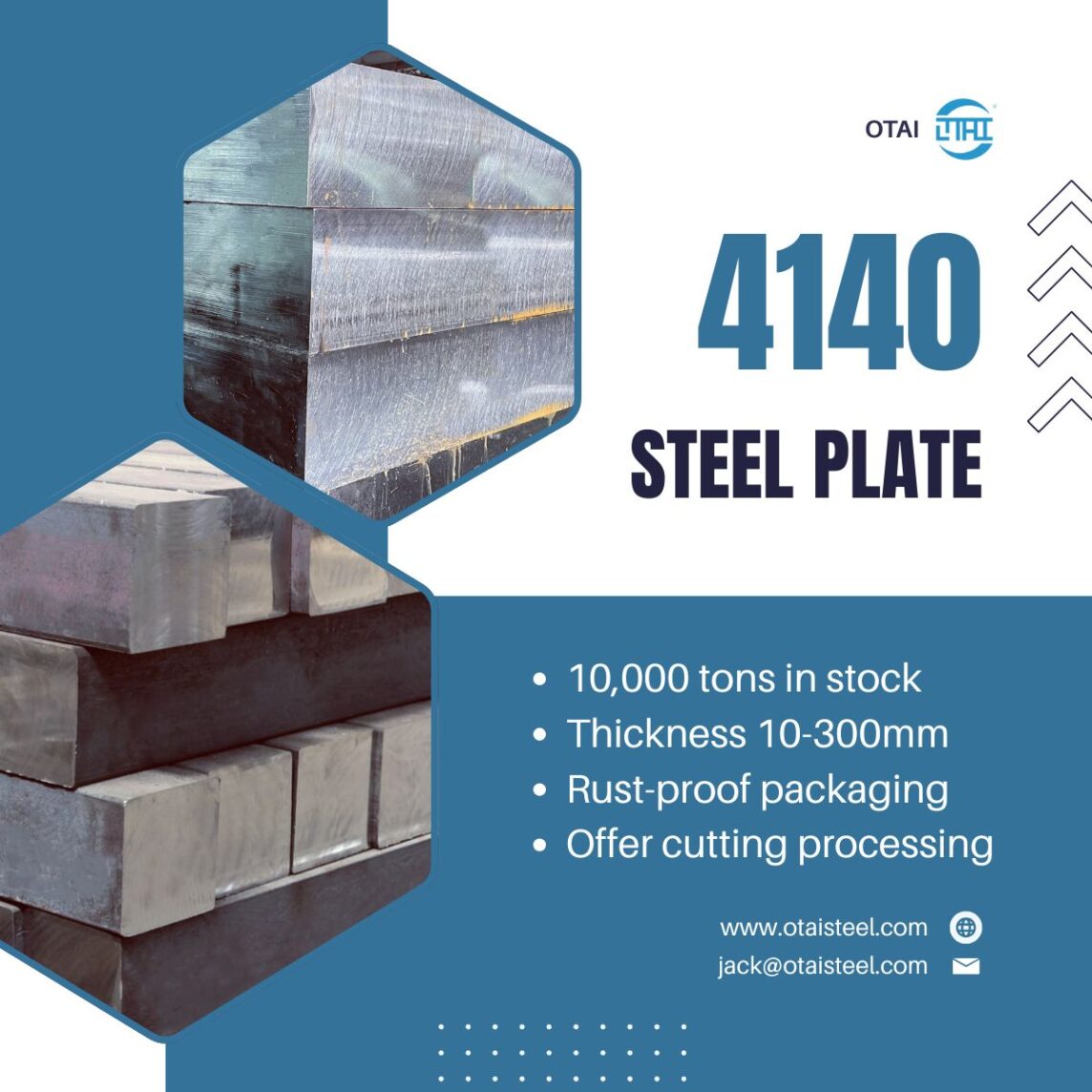
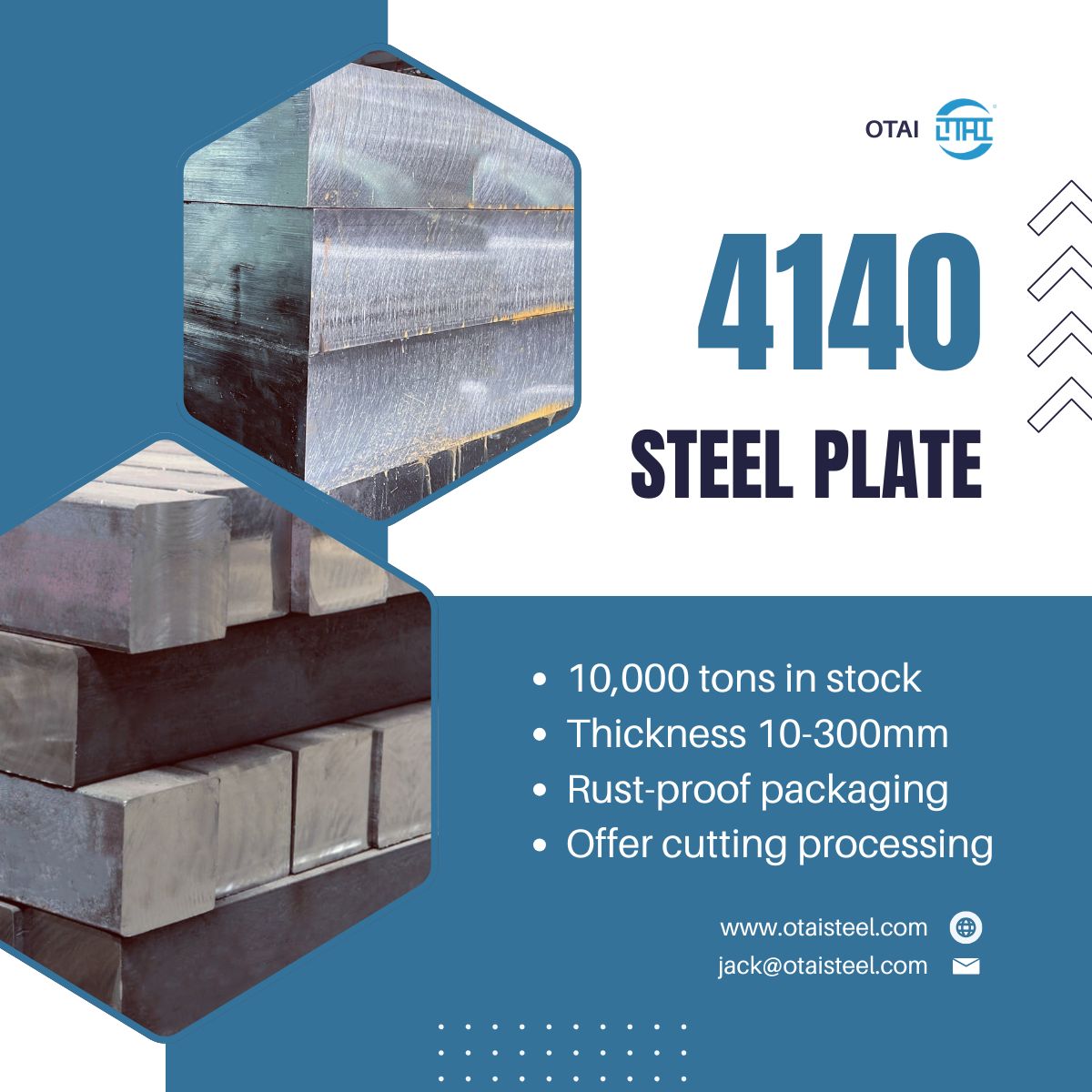
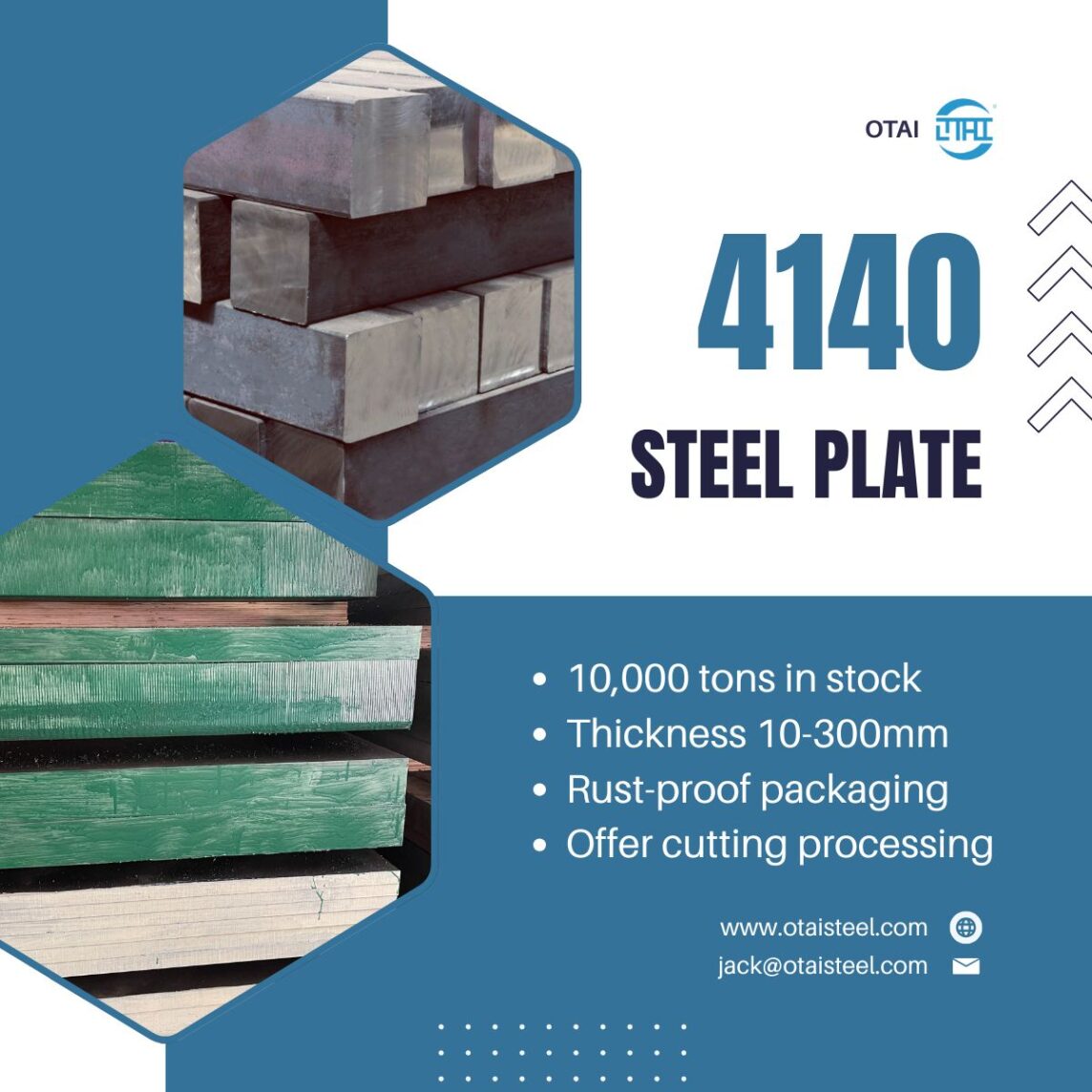
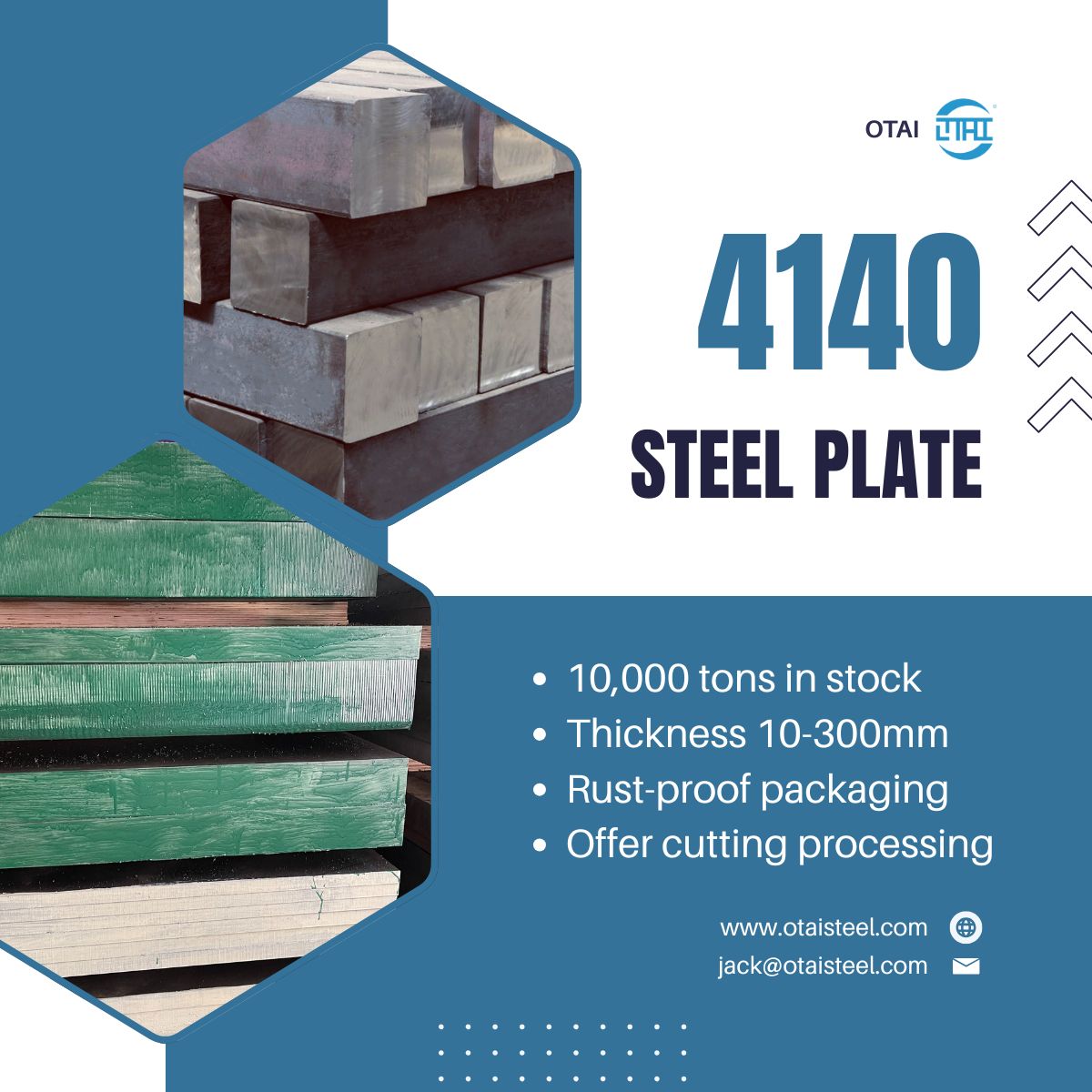
  • Large Inventory: Over 10,000 tons of 4140 steel plates, bars, and tubes

  • Wide Thickness Range: 6 mm to 300 mm available year-round

  • Flexible Processing: Cutting, heat treatment, and custom sizing

  • Quality Control: UT testing, chemical analysis, SGS inspection

  • Global Experience: Trusted by Thyssenkrupp, Borealis, Schlumberger

For Brisbane projects that cannot risk inconsistent material, Otai provides reliability from order to delivery.


❓ FAQ – 4140 Steel Brisbane

Q1: Is 4140 steel readily available in Brisbane?
Local availability exists, but size and condition options may be limited. Many buyers supplement supply through overseas stockists.

Q2: Can Brisbane workshops machine quenched and tempered 4140 steel?
Yes. Most workshops handle it well using carbide tooling and proper cutting parameters.

Q3: Is 4140 steel suitable for mining applications in Queensland?
Absolutely. Its strength, toughness, and fatigue resistance suit mining environments.

Q4: Does 4140 steel resist corrosion?
It offers moderate resistance but requires coatings or surface protection in corrosive environments.

Q5: Can Otai supply 4140 steel to Brisbane directly?
Yes. Otai ships to Australia regularly with full documentation and quality assurance.

0 0 Continue Reading →

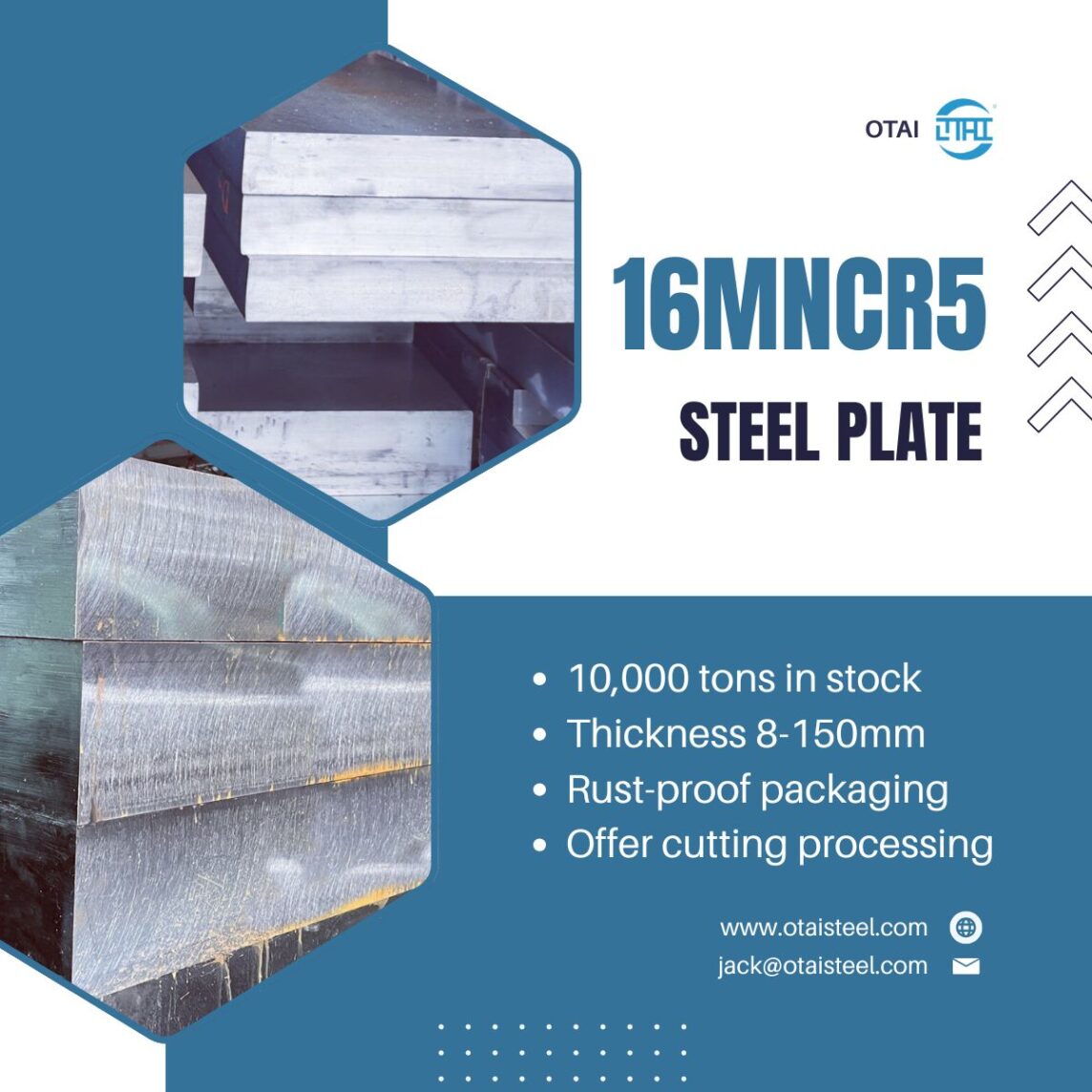
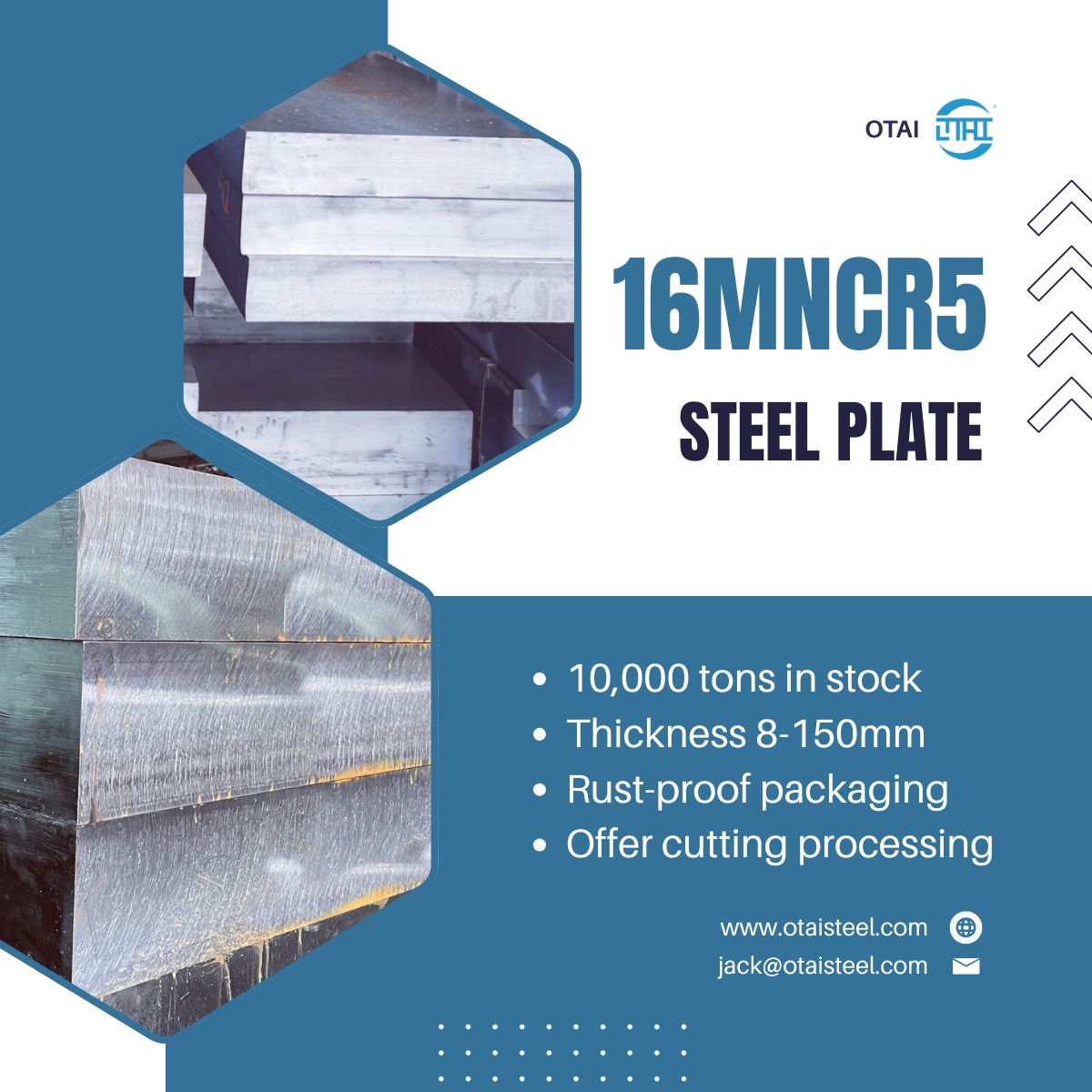
Standard Chemical Composition of 16MnCr5

Standard Chemical Composition of 16MnCr5Standard Chemical Composition of 16MnCr5

When buyers ask about the chemical composition of 16MnCr5, they rarely want a textbook definition. Instead, they want to know how the chemistry affects hardness after carburizing, core toughness, machining behavior, and long-term reliability. This article focuses on exactly that—practical meaning, not abstract metallurgy.

16MnCr5 is a low-carbon alloy steel designed for case hardening applications, especially gears, shafts, bushings, and automotive components. Its composition allows the surface to achieve high hardness while the core remains tough and shock-resistant. That balance explains why manufacturers across Europe and Asia rely on it for high-load, wear-sensitive parts.

Below, we break down the chemical composition of 16MnCr5 and explain what each element actually does for your parts.


🔍 Standard Chemical Composition of 16MnCr5

The table below shows the typical chemical composition of 16MnCr5 according to EN 10084.

Element Content (%) Practical Effect
Carbon (C) 0.14 – 0.19 Enables deep carburized case without brittle core
Silicon (Si) ≤ 0.40 Improves strength without hurting toughness
Manganese (Mn) 1.00 – 1.30 Boosts hardenability and impact resistance
Chromium (Cr) 0.80 – 1.10 Increases wear resistance and fatigue strength
Phosphorus (P) ≤ 0.025 Kept low to avoid brittleness
Sulfur (S) ≤ 0.035 Controlled to maintain machinability

This chemical composition of 16MnCr5 gives the steel its signature ability: a hard surface with a tough, ductile core after case hardening.


⚙️ What Each Alloying Element Really Does

🧪 Carbon (C): The Case-Hardening Foundation

Carbon content stays intentionally low. That design choice allows deep carburizing without sacrificing core toughness. After heat treatment, the surface reaches high hardness while the center absorbs shock loads instead of cracking.

🔩 Manganese (Mn): Strength and Consistency

Manganese improves hardenability and ensures uniform properties through thicker sections. It also helps counteract sulfur’s negative effects, which improves reliability in mass production.

🛡 Chromium (Cr): Wear and Fatigue Resistance

Chromium plays a key role in surface durability. It increases resistance to wear and contact fatigue, which matters in gears, cams, and transmission components.

🧱 Silicon (Si): Structural Stability

Silicon strengthens ferrite and improves elastic limits. It supports dimensional stability during heat treatment without making the steel brittle.


🔥 How Chemical Composition Supports Case Hardening

The chemical composition of 16MnCr5 directly supports carburizing and quenching processes.

Property Result After Case Hardening
Surface hardness 58 – 62 HRC
Case depth Uniform and controllable
Core hardness ~30–35 HRC
Impact resistance High
Distortion risk Low when processed correctly

This balance makes 16MnCr5 ideal for high-cycle, high-contact components.


🏭 Typical Applications Driven by Composition

Because of its chemistry, 16MnCr5 performs best in parts that demand wear resistance on the outside and toughness inside:

  • Automotive transmission gears

  • Industrial gearboxes

  • Shafts and pinions

  • Bushings and sleeves

  • Mechanical drive components

Manufacturers choose this steel when surface failure would be catastrophic, but brittle fracture must still be avoided.


🔄 16MnCr5 vs Carbon Steels: Why Composition Matters

Compared to plain carbon steels like C15 or C20, 16MnCr5 offers:

  • Deeper and more uniform carburized layers

  • Higher fatigue strength

  • Better dimensional control after heat treatment

  • Longer service life under cyclic loads

Those advantages come directly from its manganese and chromium content, not from processing alone.


🧰 Machinability Before Heat Treatment

Thanks to its controlled sulfur content and balanced chemistry, 16MnCr5 machines well in the annealed condition. Shops can turn, mill, and drill it efficiently before carburizing, which lowers overall production cost.


📌 Key Purchasing Notes for Buyers

When sourcing based on the chemical composition of 16MnCr5, buyers should always confirm:

  • Heat number traceability

  • Chemical composition reports (ladle analysis)

  • Compliance with EN 10084

  • Suitability for intended carburizing depth

Small deviations in composition can significantly affect case hardness and fatigue life.


🏢 Company Advantages – Why Buyers Choose Otai Special Steel

  • Large inventory of alloy and case-hardening steels

  • Stable chemical composition with strict internal control

  • UT testing and chemical analysis available

  • Customized cutting and heat treatment support

  • Experience serving automotive and industrial clients worldwide

We focus on consistency, not just compliance.


❓ FAQ – Chemical Composition of 16MnCr5

Q1: Why does 16MnCr5 keep carbon so low?
Low carbon ensures a tough core after carburizing while still allowing high surface hardness.

Q2: Does chromium replace nickel in this steel?
Chromium improves wear and fatigue resistance, but it does not fully replace nickel’s toughness contribution.

Q3: Can small composition differences affect performance?
Yes. Even minor variations can change case depth, hardness response, and fatigue life.

Q4: Is 16MnCr5 suitable for induction hardening?
It works best with carburizing. Induction hardening limits achievable case depth.

0 0 Continue Reading →

What Does Fracture Toughness Mean for 4140 Steel?

What Does Fracture Toughness Mean for 4140 Steel?What Does Fracture Toughness Mean for 4140 Steel?

In real industrial environments, components rarely fail because of simple overload. Instead, cracks initiate, grow, and finally cause sudden fracture. That is why engineers care deeply about the fracture toughness of 4140 steel, not just its tensile strength or hardness.

4140 steel delivers a rare balance: high strength with reliable resistance to crack propagation. This combination makes it a preferred material for shafts, gears, pressure-containing parts, and heavy-duty machinery.


🔍 What Does Fracture Toughness Mean for 4140 Steel?

Fracture toughness describes a material’s ability to resist crack growth once a crack already exists. In practical terms, it answers a critical question:

Will this part fail suddenly, or will it tolerate damage and give warning?

For 4140 steel, fracture toughness depends strongly on:

  • Heat treatment condition

  • Strength level (hardness)

  • Section thickness

  • Operating temperature

Unlike brittle steels, properly treated 4140 steel absorbs energy and slows crack propagation.


⚙️ Why 4140 Steel Shows Good Fracture Toughness

4140 steel combines chromium and molybdenum with medium carbon content. This alloy design creates a tough martensitic or tempered martensitic structure after heat treatment.

Key contributors include:

  • Chromium improves hardenability and crack resistance

  • Molybdenum reduces temper embrittlement

  • Controlled carbon content maintains toughness

As a result, 4140 steel resists catastrophic fracture even under dynamic loading.


📊 Typical Fracture Toughness Values of 4140 Steel

Engineers often express fracture toughness as K<sub>IC</sub>, measured in MPa·√m.

📏 Typical Fracture Toughness Ranges

Heat Treatment Condition Hardness (HRC) Fracture Toughness (MPa·√m)
Annealed 18 – 22 80 – 100
Quenched & Tempered (Low strength) 28 – 32 70 – 85
Quenched & Tempered (Medium strength) 32 – 36 55 – 70
Quenched & Tempered (High strength) 38 – 42 40 – 55

As strength increases, fracture toughness decreases. Engineers must balance these two properties carefully.


🔥 Effect of Heat Treatment on Fracture Toughness

Heat treatment plays the dominant role in controlling the fracture toughness of 4140 steel.

🔧 Practical Heat Treatment Insights

  • Lower tempering temperatures raise strength but reduce toughness

  • Higher tempering temperatures sacrifice some strength to gain crack resistance

  • Uniform quenching reduces internal stress and improves toughness

For critical parts, engineers often select 30–36 HRC as the best compromise.


🧪 Fracture Toughness vs Hardness: Finding the Right Balance

Many failures occur because designers push hardness too far.

⚖️ Practical Trade-Off

Design Goal Recommended Hardness
Maximum wear resistance 38 – 42 HRC
Balanced strength & toughness 30 – 36 HRC
High impact resistance 26 – 30 HRC

For rotating shafts and pressure-loaded components, fracture toughness matters more than peak hardness.


🏗️ How Fracture Toughness Impacts Real Applications

The fracture toughness of 4140 steel directly influences component reliability in demanding environments.

Common Applications Where Toughness Matters

  • Shafts → Prevents sudden torsional fracture

  • Gears → Reduces crack propagation at tooth roots

  • Oil & gas components → Handles pressure fluctuations safely

  • Heavy machinery → Absorbs shock loads and vibration

  • Structural pins and bolts → Maintains integrity under fatigue

In these applications, toughness often defines service life more than tensile strength.


❄️ Temperature Effects on Fracture Toughness

4140 steel maintains good toughness at room temperature. However, toughness decreases as temperature drops.

Temperature Considerations

  • Room temperature → Stable and predictable behavior

  • Sub-zero conditions → Reduced fracture toughness

  • Cryogenic environments → Not recommended without modification

For low-temperature service, engineers often specify controlled chemistry and higher tempering temperatures.


🆚 4140 Steel vs Higher-Strength Alloy Steels

📊 Toughness Comparison Overview

Steel Grade Strength Level Fracture Toughness Trend
4140 Medium–High Excellent balance
4340 Very High Higher toughness at same strength
Tool steels Very High Lower toughness
Carbon steels Medium Lower crack resistance

4140 steel remains a cost-effective choice when toughness and strength must coexist.


🏅 Company Advantages – Otai Special Steel

At Otai Special Steel, we understand that fracture toughness starts with consistent material quality.

  • Large stock of 4140 steel plates and bars

  • Thickness range from 6 mm to 300 mm

  • Controlled chemistry for stable heat treatment response

  • UT testing and chemical analysis available

  • Experience supplying critical load-bearing components

We help customers choose hardness levels that protect both performance and safety.


❓ FAQ – Fracture Toughness of 4140 Steel

Q1: Is 4140 steel considered tough or brittle?
4140 steel is tough when properly quenched and tempered. Brittle behavior only appears at excessive hardness or poor heat treatment.

Q2: Does higher hardness always mean lower fracture toughness?
Yes. Increasing hardness improves strength but reduces resistance to crack growth.

Q3: What hardness gives the best fracture toughness for 4140 steel?
Around 28–32 HRC provides an excellent toughness–strength balance.

Q4: Can 4140 steel handle impact loading?
Yes. Its fracture toughness makes it suitable for moderate to high impact conditions.

Q5: Is fracture toughness more important than tensile strength?
For safety-critical parts, fracture toughness often matters more than peak strength.

0 0 Continue Reading →

16MnCr5 Equivalent Grade: Global Standards, Comparisons, and Material Selection

16MnCr5 Equivalent Grade: Global Standards, Comparisons, and Material Selection16MnCr5 Equivalent Grade: Global Standards, Comparisons, and Material Selection

In global engineering projects, materials are often sourced from different countries and standards. As a result, understanding equivalent grades becomes essential for ensuring compatibility and performance. Many engineers search for 16mncr5 equivalent grade to identify suitable substitutes across international standards.

16MnCr5 is a low-carbon chromium alloy steel widely used for case-hardening applications. It is known for its excellent combination of surface hardness and core toughness after carburizing and heat treatment. However, different countries use different naming systems, making it important to understand the international equivalents of 16MnCr5 steel.


🔍 Overview of 16MnCr5 Steel

16MnCr5 is defined under the European standard EN 10084, which specifies case-hardening steels used in mechanical engineering.

The material is designed for carburizing processes, enabling it to achieve a hard, wear-resistant surface while maintaining a tough core. This makes it ideal for gears, shafts, and transmission components.

When sourcing globally, engineers often need to identify the what is equivalent to 16MnCr5 steel in other standards such as AISI, DIN, JIS, and GB.


🌍 16MnCr5 Equivalent Grade Chart

The 16MnCr5 equivalent grade in different standards is summarized in the table below:

Standard Equivalent Grade
EN 16MnCr5
DIN 1.7131
AISI / SAE 5120
JIS SCM420
GB (China) 20CrMnTi

This 16MnCr5 equivalent grade chart helps engineers quickly identify alternative materials when sourcing internationally.


⚙️ Equivalent Material Comparison

The 16MnCr5 equivalent material DIN AISI JIS grades share similar chemical compositions and mechanical properties, but slight differences may exist.

AISI 5120

  • Similar carbon and chromium content
  • Good hardenability
  • Widely used in North America

JIS SCM420

  • Comparable mechanical properties
  • Common in Japanese automotive applications

GB 20CrMnTi

  • Higher hardenability due to additional alloying elements
  • Widely used in heavy-duty gears in China

These materials can often replace 16MnCr5, but engineers should always verify specifications for critical applications.


📊 Chemical Composition Comparison

To better understand equivalence, the 16MnCr5 steel equivalent specification comparison includes key chemical differences.

Grade C (%) Mn (%) Cr (%)
16MnCr5 0.14–0.19 1.00–1.30 0.80–1.10
AISI 5120 0.17–0.22 0.70–0.90 0.70–0.90
SCM420 0.18–0.23 0.60–0.90 0.90–1.20
20CrMnTi 0.17–0.23 0.80–1.10 1.00–1.30

Although compositions are close, variations in manganese and chromium can slightly affect hardenability and mechanical performance.


🔩 Mechanical Properties Comparison

The 16MnCr5 steel equivalent specification comparison also includes mechanical properties after carburizing.

Grade Tensile Strength (MPa) Surface Hardness (HRC)
16MnCr5 800–1000 58–62
AISI 5120 850–1100 58–62
SCM420 850–1050 58–62
20CrMnTi 900–1200 58–63

All equivalent grades provide similar surface hardness after carburizing, making them suitable for high-wear applications.


🔁 Comparison with Similar Case-Hardening Steels

Engineers often compare 16MnCr5 vs 20MnCr5 vs 8620 comparison to determine the best material.

16MnCr5

  • Balanced hardenability
  • Widely used in Europe

20MnCr5

  • Higher carbon content
  • Slightly higher strength

AISI 8620

  • Contains nickel for improved toughness
  • Better performance in impact-loaded applications

Each material has specific advantages depending on the application requirements.


🏭 Applications of Equivalent Grades

The international equivalents of 16MnCr5 steel are widely used in similar applications across industries:

  • Automotive gears
  • Transmission shafts
  • Camshafts
  • Worm gears
  • Industrial gearbox components
  • Heavy machinery parts

These applications require high surface hardness and fatigue resistance.


🔍 How to Select the Right Equivalent Grade

When selecting the 16mncr5 equivalent grade, engineers should consider:

  • Required mechanical properties
  • Heat treatment process
  • Availability in the local market
  • Cost and supply stability
  • Certification and standards compliance

Even though equivalents exist, slight differences in composition or processing may affect performance in critical applications.


🌟 Company Advantages

At Otai Special Steel, we supply 16MnCr5 and its equivalent grades for global customers.

Our advantages include:

  • Over 10,000 tons of alloy steel inventory available year-round
  • Plate thickness range from 6 mm to 300 mm
  • Professional custom cutting and processing services
  • Strict ultrasonic testing (UT) quality control
  • Complete chemical composition inspection
  • Long-term cooperation with international companies such as Thyssenkrupp, Borealis, and Schlumberger

We help customers select the right equivalent materials for their specific applications.


❓ FAQ

1. What is the equivalent grade of 16MnCr5 in AISI?

The closest equivalent is AISI 5120.

2. Is SCM420 equivalent to 16MnCr5?

Yes, SCM420 is a commonly used equivalent with similar properties and applications.

3. Can 20CrMnTi replace 16MnCr5?

In many cases, yes, but it may offer slightly higher strength and hardenability.

4. Are all equivalent grades exactly the same?

No, they have similar properties but may differ slightly in composition and performance.

0 0 Continue Reading →

Normalized 4140 Steel Microstructure: Grain Structure and Heat Treatment Effects

Normalized 4140 Steel Microstructure: Grain Structure and Heat Treatment EffectsNormalized 4140 Steel Microstructure: Grain Structure and Heat Treatment Effects

In alloy steel processing, microstructure plays a decisive role in determining mechanical properties and performance. Many engineers and metallurgists study the normalized 4140 steel microstructure to understand how heat treatment influences strength, toughness, and machinability.

AISI 4140 is a chromium-molybdenum alloy steel widely used in structural and mechanical applications. When normalized, the steel develops a refined microstructure that improves uniformity and enhances mechanical properties.

Understanding the microstructure of 4140 steel after normalizing is essential for optimizing heat treatment processes and achieving consistent material performance.


🔍 What Is Normalizing in 4140 Steel?

Normalizing is a heat treatment process that involves heating the steel above its critical temperature and then cooling it in air.

The 4140 steel normalizing process and microstructure typically include:

  • Heating to 850 – 900 °C
  • Holding to achieve uniform austenite
  • Air cooling to room temperature

This process refines the grain structure and produces a more uniform microstructure compared to annealing.


🔬 Microstructure of Normalized 4140 Steel

The normalized 4140 steel microstructure ferrite pearlite consists mainly of:

  • Ferrite (soft and ductile phase)
  • Pearlite (lamellar structure providing strength)

This combination results in a balanced microstructure that offers both strength and toughness.

The grain structure of normalized 4140 steel is finer and more uniform compared to annealed steel, which improves mechanical performance.


⚙️ Effect of Normalizing on Microstructure

The effect of normalizing on 4140 steel microstructure includes several important changes:

Grain Refinement

Normalizing reduces grain size, leading to improved strength and toughness.

Uniform Distribution

Phases are distributed more evenly, reducing internal stress and improving consistency.

Improved Mechanical Properties

The refined microstructure enhances strength without significantly reducing ductility.

Reduced Segregation

Chemical segregation from previous processing is minimized.

These improvements make normalized 4140 steel suitable for further heat treatment or direct use in certain applications.


📊 Mechanical Properties of Normalized 4140 Steel

The microstructure directly influences mechanical properties.

Property Typical Value
Tensile Strength 850 – 1000 MPa
Yield Strength 600 – 800 MPa
Hardness 20 – 25 HRC
Elongation 15 – 20 %

The heat treatment microstructure of 4140 steel in the normalized condition provides a good balance between strength and machinability.


🔁 Normalized vs Annealed Microstructure

Understanding the normalized vs annealed 4140 microstructure helps in selecting the correct heat treatment.

Feature Normalized Annealed
Grain Size Fine Coarse
Microstructure Fine ferrite + pearlite Coarse ferrite + pearlite
Strength Higher Lower
Machinability Moderate Better
Uniformity High Moderate

Normalized steel has better mechanical properties, while annealed steel is easier to machine.


🔥 Microstructural Transformation During Normalizing

The transformation process in the 4140 steel normalizing process and microstructure includes:

  1. Heating transforms the structure into austenite
  2. Air cooling leads to transformation into ferrite and pearlite
  3. Faster cooling than annealing produces finer grains

This controlled transformation results in improved mechanical performance.


🏭 Industrial Applications

The normalized 4140 steel microstructure is suitable for many industrial applications where moderate strength and good machinability are required.

Typical applications include:

  • Shafts and axles
  • Forged components
  • Structural parts
  • Machine components
  • Pre-heat treatment materials

Normalized 4140 is often used as a base condition before further hardening processes.


🌟 Company Advantages

At Otai Special Steel, we provide high-quality AISI 4140 steel with precise heat treatment control, including normalizing processes.

Our advantages include:

  • Over 10,000 tons of alloy steel inventory available year-round
  • Plate thickness range from 6 mm to 300 mm
  • Professional heat treatment and processing services
  • Strict ultrasonic testing (UT) quality control
  • Complete chemical composition verification
  • Long-term cooperation with international companies such as Thyssenkrupp, Borealis, and Schlumberger

We ensure consistent microstructure and reliable performance for demanding applications.


❓ FAQ

1. What is the microstructure of normalized 4140 steel?

It mainly consists of fine ferrite and pearlite, providing a balance of strength and toughness.

2. Why is normalizing used for 4140 steel?

Normalizing refines grain size, improves uniformity, and enhances mechanical properties.

3. Is normalized 4140 steel stronger than annealed 4140?

Yes, normalized 4140 has higher strength due to its finer grain structure.

4. Can normalized 4140 be further heat treated?

Yes, it is often used as a starting condition for quenching and tempering processes.

0 0 Continue Reading →

16MnCr5 Material Chemical Composition: Standards and Performance Insights

16MnCr5 Material Chemical Composition: Standards and Performance Insights16MnCr5 Material Chemical Composition: Standards and Performance Insights

In alloy steel selection, chemical composition is the foundation that determines mechanical properties, heat treatment response, and overall performance. Many engineers and buyers search for 16mncr5 material chemical composition to ensure the steel meets application requirements.

16MnCr5 is a low-carbon chromium alloy steel widely used for carburizing applications. Its carefully balanced composition allows it to develop a hard, wear-resistant surface while maintaining a tough and ductile core after heat treatment.

Understanding the chemical composition of 16MnCr5 steel EN standard is essential for achieving consistent quality in industrial production.


🔍 Overview of 16MnCr5 Steel Composition

16MnCr5 is defined under the European standard EN 10084, which specifies case-hardening steels. The composition is designed to support carburizing processes and improve wear resistance.

The 16MnCr5 material composition specification EN 10084 ensures that the steel meets strict limits for each alloying element, guaranteeing stable performance in demanding applications.

The 16MnCr5 carbon chromium composition details make it particularly suitable for high-load components such as gears and shafts.


⚙️ 16MnCr5 Material Chemical Composition Table

The 16MnCr5 material chemical composition table below shows the standard range of elements:

Element Content (%)
Carbon (C) 0.14 – 0.19
Manganese (Mn) 1.00 – 1.30
Chromium (Cr) 0.80 – 1.10
Silicon (Si) ≤0.40
Phosphorus (P) ≤0.025
Sulfur (S) ≤0.035

This 16MnCr5 steel composition percentage is optimized to provide a balance between hardness, strength, and toughness.


🧪 Role of Alloying Elements

The 16MnCr5 alloy composition and elements each play a specific role in determining the material’s performance.

Carbon (C)

Carbon is essential for carburizing. It allows the surface to absorb additional carbon during heat treatment, resulting in high surface hardness.

The relatively low base carbon content helps maintain core toughness.


Manganese (Mn)

Manganese increases hardenability and tensile strength. It also improves the steel’s response to heat treatment processes.

It is a key element in the elements in 16MnCr5 case hardening steel.


Chromium (Cr)

Chromium enhances wear resistance, fatigue strength, and hardenability. It also supports the formation of a hard surface layer during carburizing.

The chromium content defines the strength characteristics in the 16MnCr5 carbon chromium composition details.


Silicon (Si)

Silicon acts as a deoxidizer during steel production and improves strength and elasticity.

Although present in smaller amounts, it contributes to overall material stability.


Phosphorus (P) and Sulfur (S)

These elements are controlled at very low levels in the chemical composition of 16MnCr5 steel EN standard.

Low phosphorus and sulfur improve toughness and reduce the risk of brittleness.


📊 Mechanical Properties Related to Composition

The chemical composition directly influences mechanical properties after heat treatment.

Property Typical Value
Tensile Strength 800 – 1000 MPa
Yield Strength 500 – 700 MPa
Elongation 10 – 15 %
Core Hardness 200 – 300 HB
Surface Hardness (carburized) 58 – 62 HRC

These properties highlight how the 16mncr5 material chemical composition enables both wear resistance and structural strength.


🔥 Heat Treatment and Composition Interaction

The composition of 16MnCr5 is specifically designed to perform well during carburizing heat treatment.

Typical process parameters include:

Process Temperature Range
Carburizing 880 – 940 °C
Quenching 780 – 850 °C
Tempering 150 – 200 °C

The 16MnCr5 alloy composition and elements allow the surface to harden while maintaining a tough core structure.


🔁 Equivalent Materials Based on Composition

Engineers often compare materials across international standards based on composition.

Standard Equivalent Grade
EN 16MnCr5
DIN 1.7131
AISI / SAE 5120
JIS SCM420
GB 20CrMnTi

These materials have similar 16MnCr5 steel composition percentage, making them suitable substitutes in many applications.


🏭 Industrial Applications

Because of its optimized composition, 16MnCr5 is widely used in industries requiring high wear resistance and fatigue strength.

Typical applications include:

  • Automotive gears
  • Transmission shafts
  • Camshafts
  • Worm gears
  • Industrial gearbox components
  • Heavy machinery parts

These applications rely heavily on the 16MnCr5 material composition specification EN 10084 to ensure performance and durability.


🌟 Company Advantages

At Otai Special Steel, we provide high-quality 16MnCr5 alloy steel with strict control of chemical composition.

Our advantages include:

  • Over 10,000 tons of steel inventory available year-round
  • Plate thickness range from 6 mm to 300 mm
  • Professional custom cutting and processing services
  • Strict ultrasonic testing (UT) quality control
  • Complete chemical composition inspection
  • Long-term cooperation with international companies such as Thyssenkrupp, Borealis, and Schlumberger

We ensure stable composition and reliable performance for global customers.


❓ FAQ

1. What is the chemical composition of 16MnCr5 material?

It includes approximately 0.14–0.19% carbon, 1.00–1.30% manganese, and 0.80–1.10% chromium, along with small amounts of silicon, phosphorus, and sulfur.

2. Why is chromium important in 16MnCr5 steel?

Chromium improves wear resistance, hardenability, and fatigue strength, especially after carburizing.

3. Is 16MnCr5 a low-carbon steel?

Yes, it is a low-carbon alloy steel designed for case-hardening applications.

4. How does composition affect heat treatment?

The balanced composition allows the surface to harden during carburizing while maintaining a tough core.

0 0 Continue Reading →

Rockwell C Hardness of 4140 Steel: HRC Values, Heat Treatment, and Applications

Rockwell C Hardness of 4140 Steel: HRC Values, Heat Treatment, and ApplicationsRockwell C Hardness of 4140 Steel: HRC Values, Heat Treatment, and Applications

When evaluating alloy steels for demanding applications, hardness is one of the most important mechanical properties. Engineers frequently search for the rockwell c hardness of 4140 steel to understand how this material performs under wear, load, and impact conditions.

AISI 4140 is a chromium-molybdenum alloy steel known for its excellent strength, toughness, and hardenability. Its hardness can vary significantly depending on heat treatment, making it highly versatile for different engineering requirements.

Understanding the 4140 steel hardness in Rockwell C scale helps engineers select the right condition for specific applications.


🔍 What Is Rockwell C Hardness?

Rockwell hardness is a widely used method for measuring material hardness. The Rockwell C (HRC) scale is specifically used for hardened steels and measures resistance to indentation.

Higher HRC values indicate greater hardness and wear resistance, while lower values indicate better ductility and machinability.

Knowing what is the hardness of 4140 steel in different conditions allows engineers to balance strength and toughness for optimal performance.


📊 Rockwell C Hardness of 4140 Steel

The rockwell hardness of 4140 steel HRC values vary depending on the heat treatment condition.

Condition Hardness
Annealed ~197 HB (≈ 10–15 HRC)
Normalized ~20–25 HRC
Quenched & Tempered 28–32 HRC
Hardened (oil quenched) Up to 50–55 HRC
Surface hardened Up to 55–60 HRC

These values show the wide hardness range achievable with proper heat treatment.

The maximum hardness of 4140 steel HRC typically reaches around 55 HRC in through-hardening conditions, and even higher on the surface with specialized treatments.


⚙️ Heat Treatment and Hardness Control

The heat treated 4140 steel hardness HRC depends on quenching and tempering processes.

Annealing

Produces low hardness for improved machinability.

Quenching

Rapid cooling increases hardness significantly by forming martensite.

Tempering

Reduces brittleness while maintaining strength and hardness.

The 4140 steel hardness after quenching and tempering is commonly adjusted to 28–32 HRC for structural applications, offering a good balance between strength and toughness.


📈 Hardness Conversion Chart (HRC vs HB)

Engineers often compare hardness values using different scales. The 4140 steel hardness chart HRC vs HB provides a useful reference.

HRC Approx. HB
10 ~200
20 ~235
30 ~285
40 ~375
50 ~515
55 ~600


🔩 Mechanical Properties vs Hardness

Hardness directly affects other mechanical properties of 4140 steel.

Hardness (HRC) Tensile Strength (MPa) Characteristics
20 – 25 ~850 Good machinability
28 – 32 900 – 1000 Balanced strength and toughness
40 – 50 1100 – 1300 High strength and wear resistance
50+ 1300+ Maximum hardness, reduced ductility

The 4140 steel hardness in Rockwell C scale must be selected carefully based on the application requirements.


🏭 Industrial Applications Based on Hardness

Different hardness levels are suitable for different industrial applications.

Low Hardness (Annealed)

  • Machined components
  • Pre-heat treatment parts

Medium Hardness (28–32 HRC)

  • Shafts
  • Structural components
  • Hydraulic parts

High Hardness (40–55 HRC)

  • Gears
  • Wear-resistant components
  • Tooling and dies

Understanding the rockwell c hardness of 4140 steel helps engineers match the material condition to the application.


🔍 Factors Affecting Hardness

Several factors influence the final hardness of 4140 steel:

  • Heat treatment temperature and cooling rate
  • Section thickness
  • Alloy composition
  • Surface treatment processes

Controlling these factors ensures consistent material performance.


🌟 Company Advantages

At Otai Special Steel, we supply high-quality AISI 4140 alloy steel tailored to meet specific hardness and performance requirements.

Our advantages include:

  • Over 10,000 tons of alloy steel inventory available year-round
  • Plate thickness range from 6 mm to 300 mm
  • Precision cutting and processing services
  • Strict ultrasonic testing (UT) quality control
  • Full chemical composition inspection
  • Trusted by global companies such as Thyssenkrupp, Borealis, and Schlumberger

We help customers achieve precise hardness control for demanding industrial applications.


❓ FAQ

1. What is the Rockwell C hardness of 4140 steel?

It typically ranges from 10 HRC (annealed) up to 55 HRC (hardened), depending on heat treatment.

2. What is the maximum hardness of 4140 steel?

The maximum hardness is usually around 50–55 HRC for through-hardened conditions.

3. What hardness is commonly used for 4140 steel?

A hardness of 28–32 HRC is commonly used for structural applications due to its balance of strength and toughness.

0 0 Continue Reading →

Steel 16MnCr5 Specifications: Standards, Properties, and Technical Data

Steel 16MnCr5 Specifications: Standards, Properties, and Technical DataSteel 16MnCr5 Specifications: Standards, Properties, and Technical Data

In modern manufacturing and mechanical engineering, selecting the correct material requires a clear understanding of its technical specifications. Many engineers and procurement professionals search for steel 16mncr5 specifications to ensure the material meets performance and quality requirements.

16MnCr5 is a low-carbon chromium alloy steel widely used for case-hardening applications. It offers an excellent combination of surface hardness and core toughness after carburizing and heat treatment. These characteristics make it ideal for gears, shafts, and high-load mechanical components.

Understanding the 16MnCr5 steel specifications EN standard helps ensure consistency in material performance across different industries.


🔍 Overview of 16MnCr5 Steel

16MnCr5 is defined under the European standard EN 10084, which covers case-hardening steels. The material is specifically designed to undergo carburizing, followed by quenching and tempering.

The 16MnCr5 steel standard EN 10084 specifications define requirements for:

  • Chemical composition
  • Mechanical properties
  • Heat treatment conditions
  • Inspection and testing

This standard ensures that manufacturers achieve reliable performance in demanding engineering environments.


⚙️ Chemical Specifications

The 16MnCr5 chemical and mechanical specifications begin with strict control of chemical composition.

Element Content (%)
Carbon (C) 0.14 – 0.19
Manganese (Mn) 1.00 – 1.30
Chromium (Cr) 0.80 – 1.10
Silicon (Si) ≤0.40
Phosphorus (P) ≤0.025
Sulfur (S) ≤0.035

These elements define the 16MnCr5 case hardening steel specifications, enabling effective carburizing and improved wear resistance.


📊 Mechanical Specifications

The 16MnCr5 material specifications and properties vary depending on heat treatment conditions, especially after carburizing.

Property Typical Value
Tensile Strength 800 – 1000 MPa
Yield Strength 500 – 700 MPa
Elongation 10 – 15 %
Core Hardness 200 – 300 HB
Surface Hardness (carburized) 58 – 62 HRC

These values reflect the ability of the material to provide a hard surface with a tough and ductile core.


🔥 Heat Treatment Specifications

Heat treatment plays a critical role in achieving the required performance defined in the 16MnCr5 technical data sheet specifications.

Process Temperature Range
Carburizing 880 – 940 °C
Quenching 780 – 850 °C
Tempering 150 – 200 °C

Carburizing increases the carbon content at the surface, while quenching and tempering optimize hardness and toughness.

These processes are essential to meet the 16MnCr5 case hardening steel specifications.


📐 Physical Properties

In addition to mechanical performance, the 16MnCr5 material specifications and properties include key physical characteristics.

Property Typical Value
Density 7.85 g/cm³
Thermal Conductivity 42 – 46 W/m·K
Specific Heat Capacity ~460 J/kg·K
Thermal Expansion Coefficient 11.5 – 13.0 µm/m·K

These properties are important for applications involving temperature variation and thermal stress.


🔁 Equivalent Material Specifications

Global projects often require identifying the 16MnCr5 steel equivalent specifications across different standards.

Standard Equivalent Grade
EN 16MnCr5
DIN 1.7131
AISI / SAE 5120
JIS SCM420
GB 20CrMnTi

These equivalents have similar chemical compositions and mechanical properties, making them interchangeable in many applications.


🏭 Typical Applications

Due to its excellent balance of hardness and toughness, 16MnCr5 is widely used in industrial applications.

Common uses include:

  • Automotive gears
  • Transmission shafts
  • Camshafts
  • Worm gears
  • Industrial gearbox components
  • Heavy machinery parts

These applications rely on the 16MnCr5 steel specifications EN standard to ensure consistent quality and performance.


🌟 Company Advantages

At Otai Special Steel, we provide high-quality 16MnCr5 alloy steel that meets strict international specifications.

Our advantages include:

  • Over 10,000 tons of steel inventory available year-round
  • Plate thickness range from 6 mm to 300 mm
  • Professional custom cutting and processing services
  • Strict ultrasonic testing (UT) quality control
  • Complete chemical composition inspection
  • Long-term cooperation with international companies such as Thyssenkrupp, Borealis, and Schlumberger

We ensure stable supply and reliable material performance for global customers.


❓ FAQ

1. What standard defines 16MnCr5 steel specifications?

The primary standard is EN 10084, which defines case-hardening steels.

2. What are the key properties of 16MnCr5 steel?

It offers high surface hardness after carburizing and a tough core, making it ideal for wear-resistant components.

3. What hardness can 16MnCr5 achieve?

Surface hardness typically reaches 58–62 HRC after carburizing and quenching.

4. What are the common equivalents of 16MnCr5?

Common equivalents include DIN 1.7131, AISI 5120, and JIS SCM420.

0 0 Continue Reading →

Stick Welding 4140 Steel: Techniques, Electrodes, and Best Practices

Stick Welding 4140 Steel: Techniques, Electrodes, and Best PracticesStick Welding 4140 Steel: Techniques, Electrodes, and Best Practices

Stick welding, also known as Shielded Metal Arc Welding (SMAW), remains one of the most popular welding methods in industrial repair and fabrication. However, welding alloy steels like 4140 demands special attention. Many welders and engineers search for stick welding 4140 steel to learn how to produce strong, crack-free welds.
AISI 4140 is a chromium-molybdenum alloy steel that delivers high strength, hardenability, and wear resistance. These properties excel in demanding applications, but they also raise the risk of cracking during welding unless you follow proper procedures.

Understanding how to stick weld 4140 steel is essential to ensure weld integrity and maintain mechanical performance.


🔍 Challenges of Stick Welding 4140 Steel

The main challenge in welding 4140 steel is its relatively high carbon content and alloying elements. These factors increase hardenability and can lead to the formation of brittle martensite in the heat-affected zone (HAZ).

Because of this, many welders ask can you stick weld 4140 steel without cracking. The answer is yes—but only with proper preheating, electrode selection, and controlled cooling.

Key challenges include:

  • Risk of hydrogen-induced cracking
  • Hard and brittle heat-affected zone
  • Residual stress after welding
  • Sensitivity to rapid cooling

Following a proper stick welding procedure for 4140 alloy steel is critical to overcome these issues.


⚙️ Chemical Composition of 4140 Steel

Understanding the composition helps explain its welding behavior.

Element Content (%)
Carbon (C) 0.38 – 0.43
Chromium (Cr) 0.80 – 1.10
Molybdenum (Mo) 0.15 – 0.25
Manganese (Mn) 0.75 – 1.00
Silicon (Si) 0.15 – 0.35

The relatively high carbon content increases hardness but also raises the risk of cracking during welding.


🔧 Best Electrodes for Stick Welding 4140 Steel

Selecting the best electrode for stick welding 4140 steel is essential for achieving a sound weld.

Common electrode choices include:

Electrode Type Application
E7018 Low hydrogen General repair welding
E8018-B2 Alloy electrode Higher strength welds
E9018-B3 Cr-Mo electrode Matching alloy properties

Low-hydrogen electrodes are preferred because they reduce the risk of hydrogen-induced cracking.

For most applications, E7018 is widely used due to its availability and good weld quality, although alloy electrodes provide better strength matching.


🔥 Preheating Requirements

Preheating is one of the most important steps in stick welding 4140 steel.

The preheat temperature for stick welding 4140 steel depends on the thickness of the material:

Thickness Preheat Temperature
< 25 mm 150 – 200 °C
25 – 50 mm 200 – 250 °C
> 50 mm 250 – 300 °C

Preheating slows down the cooling rate and reduces the formation of brittle structures in the heat-affected zone.


⚙️ Stick Welding Procedure

Following a proper stick welding procedure for 4140 alloy steel ensures strong and reliable welds.

Step-by-step process:

  1. Clean the base metal to remove oil, rust, and contaminants.
  2. Preheat the material to the required temperature.
  3. Use low-hydrogen electrodes and keep them dry.
  4. Apply moderate heat input to avoid overheating.
  5. Use multi-pass welding for thicker sections.
  6. Maintain interpass temperature during welding.
  7. Allow slow cooling after welding.

These steps significantly reduce the risk of cracking and improve weld performance.


🔩 Post-Weld Heat Treatment

Post-weld heat treatment is often recommended for 4140 steel.

The post weld heat treatment for 4140 steel typically includes stress relieving or tempering.

Process Temperature Range
Stress relieving 550 – 650 °C
Tempering 540 – 680 °C

This process reduces residual stress and improves the toughness of the weld area.


🏭 Applications of Stick Welded 4140 Steel

Because of its strength and durability, 4140 steel is widely used in welded components.

Common applications include:

  • Heavy-duty shafts
  • Oil and gas equipment
  • Hydraulic cylinders
  • Industrial machinery components
  • Structural repair work

Applying proper 4140 steel welding tips stick welding ensures these components perform reliably under heavy loads.


🌟 Company Advantages

At Otai Special Steel, we supply high-quality AISI 4140 alloy steel for global industrial applications.

Our advantages include:

  • Over 10,000 tons of steel inventory available year-round
  • Plate thickness range from 6 mm to 300 mm
  • Professional custom cutting and processing services
  • Strict ultrasonic testing (UT) quality control
  • Complete chemical composition testing
  • Long-term cooperation with international companies such as Thyssenkrupp, Borealis, and Schlumberger

We help customers achieve reliable performance in demanding engineering projects.


❓ FAQ

1. Can you stick weld 4140 steel?

Yes, 4140 steel can be stick welded successfully with proper preheating, low-hydrogen electrodes, and controlled cooling.

2. What is the best electrode for stick welding 4140 steel?

Common choices include E7018, E8018-B2, and E9018-B3, depending on strength requirements.

3. Why is preheating important when welding 4140 steel?

Preheating reduces cooling rate, prevents brittle microstructure formation, and minimizes cracking risk.

4. Is post-weld heat treatment necessary?

It is often recommended to relieve stress and improve weld toughness, especially for critical applications.

0 0 Continue Reading →

16MnCr5 Thermal Expansion Coefficient: Temperature Behavior

16MnCr5 Thermal Expansion Coefficient: Temperature Behavior16MnCr5 Thermal Expansion Coefficient: Temperature Behavior and Engineering Considerations

In mechanical engineering and industrial manufacturing, temperature changes can significantly affect the dimensional stability of materials. One important parameter that engineers consider is the coefficient of thermal expansion. Many professionals search for the 16mncr5 thermal expansion coefficient to understand how this carburizing alloy steel behaves under temperature variations.

16MnCr5 is a chromium alloy case-hardening steel widely used in automotive transmission systems, gears, and mechanical components. When these components operate in environments with fluctuating temperatures, their expansion and contraction must be carefully considered during design.

Understanding the thermal expansion coefficient of 16MnCr5 steel helps engineers ensure proper tolerances, prevent mechanical stress, and maintain reliable operation in high-performance machinery.


🔍 What Is Thermal Expansion Coefficient?

The coefficient of thermal expansion measures how much a material expands when the temperature increases. It describes the change in length per unit length for each degree of temperature change.

The calculation relationship is shown in the formula below:

16mncr5_thermal_expansion_formula

The 16MnCr5 coefficient of thermal expansion value indicates how sensitive the material is to temperature fluctuations during operation.


📊 Thermal Expansion Coefficient of 16MnCr5

The 16MnCr5 expansion coefficient in µm/m·K is similar to that of many low-alloy steels.

Typical values are shown below:

Temperature Range Coefficient (µm/m·K)
20 – 100 °C 11.5
20 – 200 °C 12.0
20 – 300 °C 12.5
20 – 400 °C 13.0

These values represent the thermal expansion of 16MnCr5 steel in temperature range commonly encountered in industrial machinery.

Because the expansion rate is moderate, the material maintains good dimensional stability in most engineering environments.


⚙️ Physical and Thermal Properties of 16MnCr5

To better understand the material behavior, it is useful to examine the 16MnCr5 physical properties including thermal expansion together with other thermal characteristics.

Property Typical Value
Density 7.85 g/cm³
Thermal Conductivity 42 – 46 W/m·K
Specific Heat Capacity ~460 J/kg·K
Thermal Expansion Coefficient 11.5 – 13.0 µm/m·K

These 16MnCr5 thermal properties make the steel suitable for applications involving moderate temperature variations.


🌡️ Temperature Effect on Material Expansion

Temperature has a direct influence on dimensional stability. As temperature increases, the atomic structure of the steel expands, resulting in increased material length.

The temperature effect on 16MnCr5 expansion becomes more noticeable in high-temperature environments such as industrial machinery or power equipment.

Several factors influence expansion behavior:

Temperature Range

Higher temperatures generally increase the expansion coefficient slightly.

Heat Treatment Condition

Although heat treatment changes hardness and strength, it has only a minor effect on the thermal expansion coefficient.

Alloy Composition

Elements such as chromium and manganese slightly influence expansion behavior, but the effect remains relatively small.

Because of these factors, the thermal expansion coefficient of 16MnCr5 steel remains relatively stable across typical industrial temperature ranges.


🔩 Engineering Design Considerations

Understanding the 16MnCr5 coefficient of thermal expansion value is important when designing precision mechanical components.

Engineers must consider expansion in situations such as:

  • Gear systems operating under temperature changes
  • Automotive transmission components
  • Industrial gearbox assemblies
  • High-speed rotating shafts
  • Machine tools and mechanical structures

If expansion is not considered, thermal stress may develop between connected components made from different materials.

Using accurate expansion data helps maintain dimensional accuracy and improve operational reliability.


🏭 Typical Applications of 16MnCr5 Steel

Because of its excellent combination of mechanical strength and thermal stability, 16MnCr5 is widely used in many industrial sectors.

Common applications include:

  • Automotive transmission gears
  • Gear shafts
  • Camshafts
  • Worm gears
  • Heavy-duty gearbox components
  • Industrial machinery parts

In these applications, the thermal expansion of 16MnCr5 steel in temperature range plays an important role in maintaining precise mechanical alignment.


🌟 Company Advantages

At Otai Special Steel, we provide high-quality 16MnCr5 alloy steel for global manufacturing industries requiring reliable materials and consistent performance.

Our advantages include:

  • Over 10,000 tons of alloy steel inventory available year-round
  • Plate thickness range from 6 mm to 300 mm
  • Professional custom cutting and machining services
  • Strict ultrasonic testing (UT) quality control
  • Complete chemical composition verification
  • Long-term cooperation with international companies such as Thyssenkrupp, Borealis, and Schlumberger

Our expertise allows customers to obtain stable materials suitable for demanding industrial applications.


❓ FAQ

1. What is the thermal expansion coefficient of 16MnCr5 steel?

The coefficient typically ranges from 11.5 to 13.0 µm/m·K, depending on the temperature range.

2. Does heat treatment affect the expansion coefficient of 16MnCr5?

Heat treatment mainly affects hardness and strength but has minimal influence on thermal expansion.

3. Why is thermal expansion important in mechanical design?

Thermal expansion affects dimensional stability and must be considered to prevent stress or misalignment in mechanical assemblies.

4. Is the expansion coefficient of 16MnCr5 similar to other alloy steels?

Yes, its expansion coefficient is similar to most low-alloy steels used in engineering applications.

0 0 Continue Reading →