Skip to Content

Category Archives: Blog

16MnCr5 Chemical Composition Standard PDF: EN 10084 Grade Specification

16MnCr5 Chemical Composition Standard PDF: EN 10084 Grade Specification16MnCr5 Chemical Composition Standard PDF: EN 10084 Grade Specification

📑 Table of Contents

🔥 1. Understanding 16MnCr5 Chemical Composition Standard PDF

⚙️ 2. What Is 16MnCr5 Steel?

📘 3. EN 10084 Standard for 16MnCr5 Steel

🔬 4. 16MnCr5 Chemical Composition According to EN 10084

⚙️ 5. Function of Alloying Elements in 16MnCr5

📊 6. Mechanical Properties and Heat Treatment

🏭 7. Applications and Material Selection

🏭 Otai Special Steel Advantages

❓ FAQ About 16MnCr5 Chemical Composition Standard PDF

🔥 1. Understanding 16MnCr5 Chemical Composition Standard PDF

When engineers search for 16MnCr5 chemical composition standard pdf, they usually need accurate information about chemical limits, material standards, and technical specifications before purchasing or selecting this steel grade.

16MnCr5 is one of the most widely used carburizing steels in Europe. It is designed for components requiring a hard wear-resistant surface and a tough internal core.

The chemical composition directly affects the steel’s hardenability, carburizing performance, mechanical strength, and final application performance.

A reliable 16MnCr5 chemical composition standard pdf normally includes information from EN 10084, such as carbon, silicon, manganese, chromium, phosphorus, and sulfur content requirements.

Understanding these values helps engineers confirm whether the supplied material meets the required 16MnCr5 steel grade specification.

Why Is Chemical Composition Important for 16MnCr5?

Factor Importance
Carbon Content Determines carburizing ability and core strength.
Chromium Content Improves hardenability and wear resistance.
Manganese Content Enhances strength and hardening response.
Sulfur and Phosphorus Controlled to maintain machinability and toughness.

For this reason, checking the chemical composition before purchasing is an important step when sourcing 16MnCr5 steel plates, bars, or forged components.

⚙️ 2. What Is 16MnCr5 Steel?

16MnCr5 is a low alloy chromium-manganese carburizing steel defined by European standards.

The material number of 16MnCr5 is 1.7131, and it is mainly supplied according to EN 10084 carburizing steel requirements.

This steel contains relatively low carbon content, which allows manufacturers to create a hard carburized surface while maintaining a tough and impact-resistant core.

Because of its excellent combination of surface hardness, fatigue resistance, and dimensional stability, 16MnCr5 is widely used for gears and transmission components.

Basic Information of 16MnCr5 Steel

Item Description
Steel Grade 16MnCr5
Material Number 1.7131
Steel Type Low alloy carburizing steel
Standard EN 10084
Main Alloy Elements Manganese and chromium
Main Treatment Carburizing, quenching, and tempering
Main Applications Gears, shafts, transmission parts

Main Characteristics of 16MnCr5 Steel

  • Excellent carburizing performance.
  • High surface hardness after carburizing.
  • Good fatigue resistance.
  • Strong wear resistance.
  • Good machinability before heat treatment.

These characteristics make 16MnCr5 an ideal choice for mechanical components that experience repeated loads and surface wear.

Engineers often check a 16MnCr5 alloy steel datasheet PDF to verify chemical composition, mechanical properties, and delivery conditions before production.

📘 3. EN 10084 Standard for 16MnCr5 Steel

The main standard for 16MnCr5 is EN 10084, which specifies technical delivery conditions for carburizing steels.

The standard defines requirements for chemical composition, mechanical properties, hardenability, and manufacturing quality.

A complete EN 10084 carburizing steel standard helps buyers and manufacturers ensure that the material meets European engineering requirements.

EN 10084 Standard Information

Item Description
Standard Number EN 10084
Standard Type Carburizing steels technical delivery conditions
Applicable Materials Low alloy carburizing steel grades
16MnCr5 Material Number 1.7131
Main Requirement Chemical composition and mechanical performance control

Why EN 10084 Matters for Buyers

  • Ensures consistent chemical composition.
  • Provides clear material identification.
  • Helps compare international steel grades.
  • Supports quality inspection requirements.
  • Improves reliability in industrial applications.

When customers request a 16MnCr5 chemical composition standard pdf, they usually need a document that confirms the material complies with EN 10084 requirements.

⬆️ Back to Table of Contents

🔬 4. 16MnCr5 Chemical Composition According to EN 10084

The chemical composition is the most important section in any 16MnCr5 chemical composition standard pdf because it defines the basic performance of the steel.

According to EN 10084, 16MnCr5 contains a balanced combination of carbon, manganese, and chromium. This alloy design allows the steel to achieve excellent carburizing performance while maintaining good core toughness.

The low carbon content allows carbon diffusion during carburizing, creating a high-hardness surface layer. Meanwhile, manganese and chromium improve hardenability and strength.

16MnCr5 Chemical Composition According to EN 10084

Element Content (%) Function in Steel
Carbon (C) 0.14–0.19 Provides carburizing ability and controls core strength
Silicon (Si) ≤0.40 Improves deoxidation and strength
Manganese (Mn) 1.00–1.30 Improves hardenability and tensile strength
Phosphorus (P) ≤0.035 Limited to maintain toughness
Sulfur (S) ≤0.035 Controlled for machinability
Chromium (Cr) 0.80–1.10 Improves wear resistance and hardening depth
Nickel (Ni) ≤0.40 Improves toughness when present
Molybdenum (Mo) ≤0.10 Improves hardenability when present

Key Chemical Characteristics of 16MnCr5

Characteristic Effect on Performance
Low Carbon Content Allows deep carburizing and creates a tough core.
Chromium Addition Improves surface hardness and wear resistance.
Manganese Addition Enhances hardenability and strength.
Controlled Impurities Maintains fatigue resistance and reliability.

The controlled alloy design explains why 16MnCr5 performs well in gears, shafts, and transmission components that require both surface hardness and internal toughness.

⚙️ 5. Function of Alloying Elements in 16MnCr5

Understanding the role of each element helps engineers correctly interpret a 16MnCr5 steel grade specification.

Each alloying element contributes to specific properties, including hardenability, wear resistance, machinability, and heat treatment response.

Role of Main Alloying Elements in 16MnCr5

Element Main Function Performance Improvement
Carbon (C) Controls hardness potential Creates stronger carburized layers
Manganese (Mn) Improves hardenability Provides deeper hardening capability
Chromium (Cr) Improves wear resistance Enhances surface durability
Silicon (Si) Acts as a deoxidizer Improves steel quality
Phosphorus (P) Controlled impurity Prevents excessive brittleness
Sulfur (S) Improves machinability Helps chip formation control

Why Chromium Is Important in 16MnCr5?

Chromium is one of the most important alloying elements in 16MnCr5.

It improves hardenability and allows the steel to develop a strong hardened layer during carburizing and quenching.

This makes 16MnCr5 suitable for gears and mechanical parts exposed to repeated contact stress.

Why Manganese Is Added to 16MnCr5?

Manganese increases hardenability and improves the strength of the steel core.

A strong core is essential because carburized components must resist impact loads while maintaining a hard outer surface.

The balanced manganese and chromium content is the reason why 16MnCr5 remains one of the most popular carburizing steels worldwide.

📊 6. Mechanical Properties and Heat Treatment

Although chemical composition defines the basic characteristics of 16MnCr5, heat treatment determines the final mechanical performance.

Carburizing, quenching, and tempering allow manufacturers to achieve a wear-resistant surface combined with a tough internal structure.

Typical Mechanical Properties of 16MnCr5

Property Typical Value Condition
Tensile Strength 800–1100 MPa After heat treatment
Yield Strength 500–800 MPa Depending on condition
Elongation 10–15% Typical value
Core Hardness 30–45 HRC After carburizing treatment
Surface Hardness 58–62 HRC After carburizing and quenching

16MnCr5 Heat Treatment Process

Process Purpose
Carburizing Increases carbon content on the surface layer.
Quenching Creates a hard martensitic surface structure.
Tempering Improves toughness and reduces internal stress.

Relationship Between Composition and Heat Treatment

Factor Influence
Carbon Content Controls carburized surface hardness.
Chromium Content Improves hardening depth.
Manganese Content Supports core strength.
Heat Treatment Control Determines final component performance.

For this reason, a complete 16MnCr5 alloy steel datasheet PDF should include both chemical composition and heat treatment recommendations.

⬆️ Back to Table of Contents

🏭 7. Applications and Material Selection

The combination of controlled chemical composition and excellent carburizing performance makes 16MnCr5 one of the most widely used case-hardening steels in mechanical engineering.

When engineers review a 16MnCr5 chemical composition standard pdf, they usually want to confirm whether this material is suitable for gears, shafts, and other high-load components.

Common Applications of 16MnCr5 Steel

Industry Components Reason for Using 16MnCr5
Automotive Industry Transmission gears, drive shafts, sprockets Excellent fatigue resistance and surface hardness
Gear Manufacturing Industrial gears, pinions, gear wheels High wear resistance after carburizing
Mechanical Equipment Shafts, bushings, rotating components Good strength and toughness balance
Automation Equipment Precision mechanical parts Reliable dimensional stability
Heavy Machinery Power transmission components Resistance to repeated loading

How to Read a 16MnCr5 Datasheet PDF?

A professional 16MnCr5 alloy steel datasheet PDF normally contains several important sections.

Datasheet Section Information Included Why It Matters
Material Identification Grade name and material number 1.7131 Confirms correct steel grade
Chemical Composition C, Mn, Cr, Si, P, S content Verifies alloy requirements
Mechanical Properties Strength, hardness, elongation Confirms performance requirements
Heat Treatment Carburizing and quenching information Ensures correct final properties
Inspection Requirements Testing and quality standards Guarantees material reliability

Before purchasing 16MnCr5 steel, customers should always check whether the supplied material certificate matches the required standard.

16MnCr5 Equivalent Grades Comparison

The chemical composition of 16MnCr5 makes it comparable with several international carburizing steel grades.

Standard Equivalent Grade Country / Region
EN 16MnCr5 / 1.7131 Europe
DIN 16MnCr5 Germany
AISI / SAE 5115 / 5120 (similar grades) USA
JIS SCM415 (similar application range) Japan
GB 15CrMo / similar carburizing grades China

Why Choose 16MnCr5 Instead of Ordinary Carbon Steel?

Comparison 16MnCr5 Carbon Steel
Surface Hardness Excellent after carburizing Limited
Wear Resistance High Medium
Fatigue Resistance Excellent Lower
Gear Applications Suitable Limited
Core Toughness Very good Depends on grade

For demanding mechanical applications, 16MnCr5 provides a better balance between surface performance and internal toughness.

🏭 Otai Special Steel Advantages

Otai Special Steel supplies high-quality 16MnCr5 steel products and other alloy steels for international industrial customers.

  • Reliable stock availability: Otai keeps 8–150mm thickness plates available in stock for 16MnCr5 steel requirements.
  • Processing service: Cutting, machining, and customized processing services are available according to customer drawings and requirements.
  • Heat treatment support: Professional heat treatment solutions help customers achieve required mechanical properties.
  • Quality inspection: Ultrasonic testing and third-party inspection can be arranged for strict quality requirements.
  • Professional packaging: Anti-rust packaging, steel strapping, and wooden cases ensure safe international transportation.
  • Technical experience: Otai supplies alloy steel materials to global customers with different engineering requirements.

With stable supply capability and technical support, Otai helps customers obtain reliable 16MnCr5 steel materials for gears, shafts, and industrial components.

❓ FAQ About 16MnCr5 Chemical Composition Standard PDF

Q1: What standard defines the chemical composition of 16MnCr5?
The chemical composition of 16MnCr5 is mainly defined by EN 10084, which specifies requirements for carburizing steels.

Q2: What is the material number of 16MnCr5?
The material number of 16MnCr5 is 1.7131 according to European steel designation systems.

Q3: What are the main alloying elements in 16MnCr5?
The main alloying elements are carbon, manganese, and chromium. These elements improve carburizing performance, hardenability, and wear resistance.

Q4: What is the typical carbon content of 16MnCr5?
The carbon content of 16MnCr5 is typically around 0.14–0.19%, which makes it suitable for carburizing applications.

Q5: Why is 16MnCr5 used for gears?
16MnCr5 provides a hard wear-resistant surface after carburizing while maintaining a tough core that can withstand impact and fatigue loads.

Q6: Does Otai supply 16MnCr5 steel plates?
Yes. Otai supplies 16MnCr5 steel products with stock availability, cutting service, heat treatment support, and quality inspection options.
⬆️ Back to Table of Contents

0 0 Continue Reading →

4140 Steel Normalized: Process, Properties and Applications

4140 Steel Normalized: Process, Properties and Applications4140 Steel Normalized: Process, Properties and Applications
📑 Table of Contents

🔥 1. What Is 4140 Steel Normalized Condition?

⚙️ 2. Understanding the Normalizing Process of 4140 Steel

🌡️ 3. 4140 Steel Normalizing Temperature and Cooling Method

📊 4. Normalized 4140 Steel Properties

⚖️ 5. 4140 Steel Normalized vs Annealed

🔥 6. Hardness and Mechanical Performance After Normalizing

🏭 7. Applications and Material Selection

🏭 Otai Special Steel Advantages

❓ FAQ About 4140 Steel Normalized

🔥 1. What Is 4140 Steel Normalized Condition?

When engineers search for 4140 steel normalized, they usually want to understand how normalizing changes the structure, hardness, and mechanical performance of AISI 4140 alloy steel.

Engineers know 4140 steel, a chromium-molybdenum alloy steel, for its excellent combination of strength, toughness, fatigue resistance, and wear resistance.

The normalized condition refers to a heat treatment process that refines the grain structure and improves the overall consistency of the material.

During normalizing, 4140 steel is heated above its critical temperature, held for a specific period, and then cooled in air. This process produces a finer microstructure compared with untreated material.

Compared with other heat treatment conditions, normalized 4140 steel provides a good balance between strength and machinability, making it suitable for many industrial applications.

Basic Information of Normalized 4140 Steel

Item Description
Steel Grade AISI 4140 / SAE 4140
Steel Type Chromium-molybdenum alloy steel
Heat Treatment Normalizing
Main Alloy Elements Chromium and molybdenum
Main Features High strength, toughness, and fatigue resistance
Common Applications Shafts, gears, bolts, machinery parts

Why Is 4140 Steel Normalized?

Purpose Effect
Grain Refinement Creates a more uniform microstructure
Stress Reduction Reduces internal stress from manufacturing
Strength Improvement Improves mechanical consistency
Machining Preparation Provides suitable hardness before further processing

Manufacturers often select a normalized condition when they need reliable mechanical properties before machining, welding, or additional heat treatment.

⚙️ 2. Understanding the Normalizing Process of 4140 Steel

The normalizing process changes the internal structure of 4140 steel by heating it into the austenitic range and allowing it to transform during air cooling.

Unlike annealing, which uses slow furnace cooling, normalizing uses air cooling to produce higher strength and hardness.

The process improves the distribution of alloying elements and creates a refined ferrite and pearlite microstructure.

Steps of 4140 Steel Normalizing Process

Step Process Purpose
1 Heating Heat steel above the critical transformation temperature
2 Holding Allow uniform temperature throughout the material
3 Air Cooling Create refined grain structure
4 Final Inspection Check hardness and mechanical properties

Microstructure Changes During Normalizing

Before Normalizing After Normalizing
Uneven grain structure Refined and uniform grains
Residual stress Reduced internal stress
Variable mechanical properties More consistent performance
Less stable structure Improved structural stability

The refined structure is the main reason why normalized 4140 steel properties are more predictable compared with untreated conditions.

🌡️ 3. 4140 Steel Normalizing Temperature and Cooling Method

The correct temperature control is essential for achieving consistent results when processing 4140 steel.

The typical 4140 steel normalizing temperature is generally around 870–900°C (1600–1650°F), depending on section size and processing requirements.

After reaching the required temperature, the material is held until the entire cross-section becomes uniform before cooling in still air.

Typical Normalizing Parameters for 4140 Steel

Parameter Typical Range
Heating Temperature 870–900°C (1600–1650°F)
Holding Time Based on material thickness
Cooling Method Air cooling
Final Structure Fine ferrite and pearlite
Main Purpose Grain refinement and property improvement

Factors Affecting Normalizing Results

  • Material thickness and section size.
  • Heating temperature accuracy.
  • Holding time control.
  • Cooling speed after heating.
  • Original steel condition.

Proper normalizing control helps 4140 steel achieve stable hardness, strength, and machining performance.

⬆️ Back to Table of Contents

📊 4. Normalized 4140 Steel Properties

The main purpose of normalizing is to improve the consistency of AISI 4140 steel by refining its grain structure and reducing internal stress.

The final performance of 4140 steel normalized condition depends on chemical composition, section size, heating temperature, and cooling conditions.

Compared with untreated 4140 steel, normalized material usually provides more stable strength, hardness, and machinability.

Typical Normalized 4140 Steel Properties

Property Typical Value Condition
Tensile Strength 650–850 MPa Normalized condition
Yield Strength 400–650 MPa Normalized condition
Elongation 15–25% Normalized condition
Reduction of Area 45–60% Typical range
Impact Toughness Good Depending on section size
Hardness 200–250 HB Normalized condition

Advantages of Normalized 4140 Steel

Advantage Explanation
Improved Grain Structure Creates finer and more uniform grains.
Better Mechanical Stability Provides consistent strength throughout the material.
Improved Machinability Makes machining easier before final treatment.
Reduced Internal Stress Improves dimensional stability during processing.

Manufacturers often select normalized 4140 as a preparation condition before quenching and tempering when they require further heat treatment.

⚖️ 5. 4140 Steel Normalized vs Annealed

One common question is the difference between 4140 normalized vs annealed.

Both processes improve the steel structure, but they create different mechanical properties.

Annealing uses slow furnace cooling, which produces a softer structure with better machinability. Normalizing uses air cooling, creating higher strength and hardness.

4140 Normalized vs Annealed Comparison

Feature 4140 Normalized 4140 Annealed
Cooling Method Air cooling Slow furnace cooling
Hardness Higher Lower
Strength Higher Lower
Machinability Good Excellent
Grain Structure Fine and uniform Coarser and softer
Typical Use Structural applications Machining preparation

When Should You Choose Normalized 4140?

  • When higher strength is required.
  • When the component needs better fatigue resistance.
  • When the material will receive additional heat treatment.
  • When dimensional stability is important.

When Should You Choose Annealed 4140?

  • When extensive machining is required.
  • When maximum softness is needed.
  • When reducing cutting tool wear is the priority.

The selection between normalized and annealed conditions depends on whether production requires easier machining or higher mechanical performance.

🔥 6. Hardness and Mechanical Performance After Normalizing

The hardness of normalized 4140 steel is influenced by alloy composition and cooling rate.

Typically, normalized 4140 steel hardness is around 200–250 HB, which provides a good balance between strength and machinability.

4140 Steel Hardness Comparison by Condition

Condition Approximate Hardness Main Characteristics
Annealed 4140 170–220 HB Soft, excellent machinability
Normalized 4140 200–250 HB Higher strength and stable structure
Quenched 4140 50–55 HRC High hardness and strength
Tempered 4140 28–50 HRC Adjustable toughness and strength

Normalized 4140 vs Quenched and Tempered 4140

Property Normalized Quenched & Tempered
Strength Medium to high Very high
Hardness Medium High
Toughness Good Excellent when properly tempered
Machining Easier More difficult
Application General engineering parts Heavy-duty components

Why Normalize 4140 Steel Before Machining?

Many manufacturers choose normalized 4140 steel because it provides predictable machining performance and reduces problems caused by uneven internal stress.

The refined grain structure improves dimensional accuracy during cutting, drilling, and forming operations.

For parts that require further strengthening, manufacturers can use normalized 4140 as a reliable starting condition before final heat treatment.

⬆️ Back to Table of Contents

🏭 7. Applications and Material Selection

The balanced properties of 4140 steel normalized condition make it widely used in industries that require reliable strength, toughness, and dimensional stability.

Compared with untreated alloy steel, normalized 4140 provides more consistent performance, which makes it suitable for machining, fabrication, and further heat treatment processes.

Common Applications of Normalized 4140 Steel

Industry Components Reason for Selection
Automotive Industry Axles, shafts, gears, connecting parts High strength and fatigue resistance
Heavy Machinery Drive shafts, rollers, pins Good toughness under impact loads
Oil and Gas Equipment High-strength components and tools Excellent mechanical reliability
Manufacturing Equipment Machine parts, fixtures, bolts Good machining and structural stability
Tool Manufacturing Dies, holders, support parts Good wear resistance after treatment

AISI 4140 Normalized Condition Selection Guide

The best material condition depends on the final production process and required performance.

Requirement Recommended Condition Reason
General machining Normalized 4140 Good balance between hardness and machinability
Maximum machinability Annealed 4140 Softer structure for cutting operations
High strength components Quenched and tempered 4140 Higher hardness and tensile strength
Before further heat treatment AISI 4140 normalized condition Stable starting structure
Large structural parts Normalized 4140 Better consistency throughout the section

4140 Steel Normalized vs Other Conditions

Condition Main Advantage Typical Applications
Normalized Balanced strength and machinability Shafts, machinery parts, structural components
Annealed Excellent machinability Parts requiring extensive machining
Quenched & Tempered Maximum mechanical strength Heavy-duty components
Stress Relieved Improved dimensional stability Precision machined parts

Why Choose Normalized 4140 Steel?

  • Provides consistent mechanical properties.
  • Offers better strength than annealed material.
  • Maintains good machining performance.
  • Creates a stable structure for additional heat treatment.
  • Works well for large industrial components.

For engineers looking for a versatile alloy steel condition, normalized 4140 is often an excellent choice because it combines performance, reliability, and processing flexibility.

🏭 Otai Special Steel Advantages

Otai Special Steel supplies high-quality AISI 4140 alloy steel plates and bars for global industrial customers.

  • Large inventory: Otai maintains around 10,000 tons of steel inventory with different sizes available in stock to support fast delivery.
  • Complete processing service: Cutting, machining, and customized processing services are available according to customer requirements.
  • Heat treatment support: We can arrange normalizing, quenching, tempering, and other heat treatment services.
  • Quality assurance: Ultrasonic testing and third-party inspection services are available for strict engineering requirements.
  • Professional packaging: Anti-rust packaging, steel strapping, and wooden box packaging ensure safe international transportation.
  • International supply experience: Otai has experience supplying alloy steel materials to customers with demanding technical standards.

With stable stock availability and professional steel processing capability, Otai helps customers obtain reliable 4140 steel materials for mechanical and industrial applications.

❓ FAQ About 4140 Steel Normalized

Q1: What does normalized 4140 steel mean?
Normalized 4140 steel means manufacturers have heated AISI 4140 alloy steel above its critical temperature and air cooled it to refine the grain structure and improve mechanical consistency.

Q2: What is the normalizing temperature for 4140 steel?
The typical 4140 steel normalizing temperature is around 870–900°C (1600–1650°F), followed by air cooling.

Q3: What hardness is normalized 4140 steel?
The typical normalized 4140 steel hardness is approximately 200–250 HB, depending on material size and processing conditions.

Q4: Is normalized 4140 stronger than annealed 4140?
Yes. Normalized 4140 usually has higher strength and hardness than annealed 4140 because air cooling creates a finer microstructure.

Q5: Can normalized 4140 steel be heat treated again?
Yes. Manufacturers often use normalized 4140 as a preparation condition before quenching and tempering to achieve higher strength.

Q6: Does Otai supply normalized 4140 steel?
Yes. Otai supplies 4140 alloy steel products with inventory availability, cutting service, heat treatment support, and quality inspection options.

⬆️ Back to Table of Contents

0 0 Continue Reading →

Difference Between 16MnCr5 and 16MnCrS5: Composition, Properties and Applications

Difference Between 16MnCr5 and 16MnCrS5: Composition, Properties and ApplicationsDifference Between 16MnCr5 and 16MnCrS5: Composition, Properties and Applications
📑 Table of Contents

🔥 1. Understanding the Difference Between 16MnCr5 and 16MnCrS5

⚙️ 2. What Is 16MnCr5 Steel?

🔬 3. What Is 16MnCrS5 Steel?

📊 4. 16MnCr5 vs 16MnCrS5 Chemical Composition Comparison

⚖️ 5. Mechanical Properties Comparison

🔥 6. Machinability and Heat Treatment Differences

🏭 7. Applications and Material Selection Guide

🏭 Otai Special Steel Advantages

❓ FAQ About 16MnCr5 and 16MnCrS5

🔥 1. Understanding the Difference Between 16MnCr5 and 16MnCrS5

When engineers search for the difference between 16MnCr5 and 16MnCrS5, they usually want to understand why these two carburizing steels have similar names but different performance characteristics.

Both materials belong to the low alloy chromium-manganese steel family and are widely used for gears, shafts, and mechanical components requiring a hard surface and tough core.

The main difference is the sulfur content.

16MnCrS5 contains a higher sulfur level than standard 16MnCr5, which improves machinability but slightly reduces certain mechanical properties.

A proper 16MnCr5 vs 16MnCrS5 steel comparison should consider chemical composition, machining requirements, heat treatment performance, and final application conditions.

Why Are 16MnCr5 and 16MnCrS5 Often Compared?

Reason Explanation
Similar Names Both grades belong to the same carburizing steel family.
Similar Applications Both are used for gears, shafts, and transmission components.
Different Machining Performance 16MnCrS5 offers improved machinability due to higher sulfur content.
Material Selection Engineers choose based on production method and performance requirements.

Although these grades look very similar, the small chemical difference creates noticeable differences during machining and manufacturing.

⚙️ 2. What Is 16MnCr5 Steel?

16MnCr5 is a low alloy carburizing steel defined under European standards.

It is one of the most popular gear steels because it provides excellent surface hardness after carburizing while maintaining a strong and tough core.

The material number of 16MnCr5 is 1.7131, and it is commonly supplied according to EN 10084 requirements.

The balanced combination of carbon, manganese, and chromium allows this steel to achieve excellent wear resistance after heat treatment.

Basic Information of 16MnCr5 Steel

Item Description
Steel Type Low alloy carburizing steel
Standard EN 10084
Material Number 1.7131
Main Alloy Elements Manganese and chromium
Heat Treatment Carburizing, quenching, and tempering
Main Features Hard surface, tough core, good fatigue resistance

Advantages of 16MnCr5 Steel

  • Excellent carburizing performance.
  • High surface hardness after heat treatment.
  • Good wear resistance.
  • Strong fatigue resistance for gears.
  • Reliable performance under impact loads.

Because of these advantages, 16MnCr5 is widely used in automotive transmission systems, industrial gears, and mechanical power components.

For engineers looking for a reliable 16MnCr5 chemical composition, this grade provides a good balance between machinability and final mechanical performance.

🔬 3. What Is 16MnCrS5 Steel?

16MnCrS5 is a modified version of 16MnCr5 with increased sulfur content.

The additional sulfur improves chip breaking and machining efficiency, making this material suitable for automatic machining operations.

The letter “S” in 16MnCrS5 represents sulfur modification.

Compared with standard 16MnCr5, 16MnCrS5 is designed for applications where productivity and machining speed are important.

Basic Information of 16MnCrS5 Steel

Item Description
Steel Type Free machining carburizing steel
Modified Grade Based on 16MnCr5 chemistry
Main Difference Higher sulfur content
Main Advantage Improved machinability
Heat Treatment Carburizing, quenching, and tempering
Typical Use High-volume machined components

Advantages of 16MnCrS5 Steel

  • Better chip breaking during machining.
  • Higher machining efficiency.
  • Reduced cutting tool wear.
  • Suitable for automated production lines.
  • Maintains good carburizing performance.

The main purpose of adding sulfur is not to increase strength, but to improve manufacturing efficiency.

Therefore, the selection between 16MnCr5 and 16MnCrS5 depends mainly on whether the priority is machining performance or maximum mechanical reliability.

⬆️ Back to Table of Contents

🔬 4. 16MnCr5 vs 16MnCrS5 Chemical Composition Comparison

The most important factor in the difference between 16MnCr5 and 16MnCrS5 is the sulfur content.

Both steels have a very similar alloy design, including carbon, manganese, and chromium. However, 16MnCrS5 contains additional sulfur, which changes its machining characteristics.

Sulfur forms manganese sulfide (MnS) inclusions inside the steel structure. These inclusions improve chip breaking during cutting operations and reduce machining resistance.

16MnCr5 and 16MnCrS5 Chemical Composition Comparison

Element 16MnCr5 (%) 16MnCrS5 (%) Main Effect
Carbon (C) 0.14–0.19 0.14–0.19 Provides carburizing ability and core strength
Silicon (Si) ≤0.40 ≤0.40 Improves deoxidation and strength
Manganese (Mn) 1.00–1.30 1.00–1.30 Improves hardenability
Chromium (Cr) 0.80–1.10 0.80–1.10 Improves wear resistance and hardening response
Phosphorus (P) ≤0.035 ≤0.035 Controlled for toughness
Sulfur (S) ≤0.035 0.020–0.040 Improves machinability

Main Chemical Difference Between 16MnCr5 and 16MnCrS5

Feature 16MnCr5 16MnCrS5
Sulfur Content Standard sulfur level Higher sulfur modification
Steel Structure Cleaner steel structure Contains more MnS inclusions
Main Purpose Balanced mechanical performance Improved machining efficiency
Typical Production General machining and heat treatment Automatic machining production

The increased sulfur content is the key reason why 16MnCrS5 free machining steel provides better cutting performance compared with standard 16MnCr5.

📊 5. Mechanical Properties Comparison

Although 16MnCr5 and 16MnCrS5 have similar chemical compositions, their mechanical properties may show slight differences due to sulfur modification.

After carburizing and heat treatment, both materials can achieve a hard surface layer with a tough internal structure.

16MnCr5 vs 16MnCrS5 Mechanical Properties

Property 16MnCr5 16MnCrS5
Tensile Strength Approx. 800–1200 MPa after treatment Approx. 750–1150 MPa after treatment
Yield Strength Approx. 550–900 MPa Approx. 500–850 MPa
Surface Hardness After Carburizing 58–62 HRC 58–62 HRC
Core Toughness Excellent Very good
Fatigue Resistance Excellent Good to excellent
Machinability Good Better

Performance Difference After Heat Treatment

Performance Area Better Choice Reason
Surface Hardness Both Similar Both are carburizing steels
Core Toughness 16MnCr5 Cleaner steel structure
Machining Speed 16MnCrS5 Higher sulfur improves cutting performance
Tool Life 16MnCrS5 Reduced cutting resistance
High Stress Applications 16MnCr5 Better overall mechanical balance

For components requiring maximum strength and reliability, 16MnCr5 is usually preferred.

For large-volume machining where production efficiency is important, 16MnCrS5 can provide better economic benefits.

🔥 6. Machinability and Heat Treatment Differences

Machinability is the most noticeable difference in the 16MnCr5 vs 16MnCrS5 steel comparison.

16MnCr5 provides a balanced combination of machinability and mechanical properties, while 16MnCrS5 focuses more on production efficiency.

Machinability Comparison

Factor 16MnCr5 16MnCrS5
Cutting Performance Good Excellent
Chip Breaking Normal Improved due to MnS inclusions
Tool Wear Standard Lower
Automatic Machining Suitable More suitable
Surface Finish Good Very good

Heat Treatment Comparison

Process 16MnCr5 16MnCrS5
Carburizing Excellent response Excellent response
Quenching Good hardening ability Good hardening ability
Tempering Maintains toughness Maintains good toughness
Surface Hardness High High

The sulfur modification does not significantly change the carburizing ability of the steel.

The main purpose of 16MnCrS5 is to improve machining performance before heat treatment, not to create a stronger steel grade.

⬆️ Back to Table of Contents

🏭 7. Applications and Material Selection Guide

Understanding the difference between 16MnCr5 and 16MnCrS5 helps engineers select the correct material for different manufacturing requirements.

Although both steels are carburizing grades, their different sulfur contents make them suitable for different production environments.

Applications of 16MnCr5 Steel

Industry Typical Components Reason for Selection
Automotive Industry Transmission gears, shafts, sprockets Excellent fatigue resistance and core toughness
Mechanical Engineering Gear wheels, pins, rollers Good wear resistance after carburizing
Industrial Equipment Drive components and power transmission parts Reliable performance under heavy loads
Precision Machinery Small gears and mechanical parts Balanced strength and machinability

Applications of 16MnCrS5 Steel

Industry Typical Components Reason for Selection
Automated Manufacturing High-volume gear components Better machining efficiency
Automotive Production Mass-produced shafts and transmission parts Lower machining cost
CNC Machining Industry Precision turned components Improved chip control
Industrial Parts Production Complex machined components Higher productivity

How to Choose Between 16MnCr5 and 16MnCrS5?

Requirement Recommended Grade Reason
Maximum mechanical reliability 16MnCr5 Cleaner structure and excellent toughness
Large-volume machining 16MnCrS5 Higher machining efficiency
Automatic CNC production 16MnCrS5 Better chip breaking performance
Heavy impact applications 16MnCr5 Better toughness balance
Carburized gears Both Both provide high surface hardness

16MnCr5 and 16MnCrS5 Equivalent Grades

Both materials belong to the EN carburizing steel family and have similar international equivalents.

Grade Equivalent / Related Grade Standard
16MnCr5 1.7131 EN 10084
16MnCr5 5115 / 5117 (similar range) AISI / SAE
16MnCrS5 Modified 16MnCr5 with sulfur addition EN Standard
16MnCrS5 Free machining carburizing steel Special sulfur grade

When replacing one grade with another, engineers should consider not only chemical composition but also machining conditions, heat treatment requirements, and final working environment.

🏭 Otai Special Steel Advantages

Otai Special Steel supplies high-quality carburizing steels including 16MnCr5 and related alloy steel products for international customers.

  • Stable inventory: Otai keeps 8–150mm thickness plates available in stock for 16MnCr5 steel requirements.
  • Complete processing service: Cutting, machining, heat treatment support, and customized processing solutions are available.
  • Quality inspection: Ultrasonic testing and third-party inspection can be provided according to customer requirements.
  • Professional packaging: Anti-rust packaging, steel strapping, and wooden box packaging ensure safe delivery.
  • Technical experience: Otai supplies alloy steels to global customers with strict quality requirements.

With professional service and reliable steel supply capability, Otai helps customers select suitable materials for gears, shafts, and industrial components.

❓ FAQ About Difference Between 16MnCr5 and 16MnCrS5

Q1: What is the main difference between 16MnCr5 and 16MnCrS5?
The main difference is sulfur content. 16MnCrS5 contains more sulfur, which improves machinability and chip breaking performance.

Q2: Is 16MnCrS5 stronger than 16MnCr5?
No. 16MnCrS5 is mainly designed for better machining performance. 16MnCr5 usually provides a better balance of toughness and mechanical reliability.

Q3: Can 16MnCrS5 replace 16MnCr5?
In many machining applications, 16MnCrS5 can replace 16MnCr5. However, engineers should confirm mechanical requirements and service conditions before substitution.

Q4: Which steel is better for gears, 16MnCr5 or 16MnCrS5?
Both steels can be used for gears after carburizing. 16MnCr5 is preferred for higher toughness requirements, while 16MnCrS5 is suitable for high-volume gear production.

Q5: What is the equivalent grade of 16MnCr5?
16MnCr5 is commonly identified as 1.7131 according to EN standards and is comparable with other carburizing steels depending on the specification.

Q6: Does Otai supply 16MnCr5 steel plates?
Yes. Otai supplies 16MnCr5 steel products with stock availability, processing service, heat treatment support, and quality inspection options.

⬆️ Back to Table of Contents

0 0 Continue Reading →

16MnCr5 Steel Datasheet: Chemical Composition, Properties and Heat Treatment

16MnCr5 Steel Datasheet: Chemical Composition, Properties and Heat Treatment16MnCr5 Steel Datasheet: Chemical Composition, Properties and Heat Treatment
📑 Table of Contents

🔥 1. Introduction to 16MnCr5 Steel Datasheet

⚙️ 2. 16MnCr5 Steel Grade Overview

🔬 3. 16MnCr5 Chemical Composition Datasheet

📊 4. 16MnCr5 Mechanical Properties Datasheet

🔥 5. 16MnCr5 Heat Treatment Datasheet

⚖️ 6. 16MnCr5 Equivalent Material Grades

🏭 7. Applications of 16MnCr5 Steel

🏭 Otai Special Steel Advantages

❓ FAQ About 16MnCr5 Steel Datasheet

🔥 1. Introduction to 16MnCr5 Steel Datasheet

Engineers and manufacturers often check a 16MnCr5 steel datasheet before selecting this material for gears, shafts, and mechanical transmission components.

A technical datasheet provides essential information about chemical composition, mechanical properties, heat treatment conditions, hardness, and application performance.

16MnCr5 is a low-alloy carburizing steel widely used in automotive, machinery, and precision engineering industries.

The material offers excellent surface hardness after carburizing while maintaining a tough and strong core structure.

This combination makes 16MnCr5 suitable for components exposed to high contact pressure, repeated loading, and wear conditions.

A complete 16MnCr5 steel datasheet helps engineers understand how this steel performs before and after heat treatment.

Main Features of 16MnCr5 Steel

Item Description
Steel Grade 16MnCr5
Material Number 1.7131
Steel Type Low alloy carburizing steel
Standard EN 10084
Main Alloy Elements Manganese and chromium
Main Applications Gears, shafts, transmission parts

Because of its reliable carburizing performance and balanced mechanical properties, 16MnCr5 has become one of the most commonly selected gear steels in European engineering applications.

⚙️ 2. 16MnCr5 Steel Grade Overview

16MnCr5 belongs to the family of case-hardening steels.

The low carbon content allows manufacturers to machine the material easily before heat treatment.

After carburizing, the surface absorbs additional carbon and develops a hard wear-resistant layer.

At the same time, the low-carbon core remains tough enough to absorb impact loads.

Basic Specification of 16MnCr5 Steel

Specification Value
EN Designation 16MnCr5
Werkstoff Number 1.7131
Steel Classification Case hardening steel
Carbon Content Approximately 0.16%
Surface Treatment Carburizing and quenching
Typical Products Steel plates, bars, forged components

Advantages of 16MnCr5 Steel

  • Excellent carburizing response.
  • High surface hardness after heat treatment.
  • Good fatigue resistance.
  • Strong impact resistance.
  • Reliable performance for gear manufacturing.

The special design of 16MnCr5 allows manufacturers to create components that require both surface durability and internal toughness.

For this reason, many engineers review the DIN 16MnCr5 steel specification before choosing it for automotive and industrial applications.

🔬 3. 16MnCr5 Chemical Composition Datasheet

Chemical composition controls the hardenability, strength, and heat treatment performance of 16MnCr5 steel.

The combination of manganese and chromium improves the steel’s ability to achieve a strong hardened surface after carburizing.

16MnCr5 Steel Datasheet Chemical Composition

Element Content (%) Function
Carbon (C) 0.14–0.19 Provides carburizing ability and surface hardness
Silicon (Si) ≤0.40 Improves strength and deoxidation
Manganese (Mn) 1.00–1.30 Improves hardenability and toughness
Chromium (Cr) 0.80–1.10 Improves wear resistance and hardening depth
Phosphorus (P) ≤0.025 Maintains toughness
Sulfur (S) ≤0.035 Improves machinability

Role of Alloy Elements in 16MnCr5 Performance

Element Effect
Carbon Controls hardness potential after carburizing.
Manganese Improves strength and hardenability.
Chromium Enhances wear resistance and hardening capability.
Silicon Supports mechanical strength.

The balanced chemical composition allows 16MnCr5 to achieve excellent performance in applications where both strength and durability are required.

Understanding the 16MnCr5 steel datasheet chemical composition is the first step in selecting the correct material for engineering projects.

⬆️ Back to Table of Contents

📊 4. 16MnCr5 Mechanical Properties Datasheet

The mechanical properties section is one of the most important parts of a 16MnCr5 steel datasheet.

Engineers need to understand yield strength, tensile strength, hardness, and toughness before selecting this material for gears, shafts, and other mechanical components.

Because 16MnCr5 is a carburizing steel, its final mechanical performance depends strongly on heat treatment conditions.

The steel provides a soft and machinable core before treatment and a hard wear-resistant surface after carburizing.

Typical 16MnCr5 Mechanical Properties Datasheet

Property Typical Value Condition
Yield Strength 350–650 MPa Depending on size and heat treatment
Tensile Strength 600–900 MPa After suitable heat treatment
Elongation 10–15% Engineering condition
Reduction of Area 40–55% Typical value
Core Hardness 30–45 HRC After carburizing and tempering
Surface Hardness 58–62 HRC After carburizing and quenching

Mechanical Performance Before and After Carburizing

Condition Surface Performance Core Performance
Before Heat Treatment Moderate hardness Good machinability
After Carburizing High carbon surface layer Maintains toughness
After Quenching High hardness and wear resistance Improved load support
After Tempering Reduced brittleness Better impact resistance

Important Mechanical Properties Explained

Yield Strength: It indicates the stress level where permanent deformation begins. A suitable yield strength helps gears and shafts maintain dimensional stability during operation.

Tensile Strength: It represents the maximum stress the steel can withstand before fracture. Higher tensile strength improves resistance against heavy mechanical loads.

Hardness: It determines wear resistance and surface durability. After carburizing, 16MnCr5 develops a very hard outer layer suitable for gear teeth.

Toughness: It allows the material to absorb impact energy without sudden cracking.

The combination of these properties explains why 16MnCr5 remains a popular choice for automotive and industrial transmission parts.

🔥 5. 16MnCr5 Heat Treatment Datasheet

Heat treatment is essential for achieving the required performance of 16MnCr5 steel.

Unlike conventional medium carbon steels, 16MnCr5 is mainly designed for carburizing applications.

The process increases the carbon content on the surface, creating a hardened layer while keeping the internal structure tough.

Typical 16MnCr5 Heat Treatment Process

Process Temperature Purpose
Carburizing 850–950°C Increase surface carbon concentration
Quenching Oil cooling or controlled cooling Create martensitic surface structure
Tempering 150–220°C Improve toughness and reduce stress
Stress Relieving Approx. 550–650°C Reduce machining stress when required

Effect of Heat Treatment on 16MnCr5 Properties

Treatment Property Improvement
Carburizing Improves surface hardness and wear resistance
Quenching Increases hardness and strength
Tempering Improves toughness and dimensional stability
Final Machining Provides accurate component dimensions

Recommended Heat Treatment for Different Applications

Application Recommended Treatment Main Requirement
Automotive Gears Carburizing + Quenching + Tempering High wear resistance
Transmission Shafts Carburizing + Tempering High fatigue strength
Industrial Gear Parts Controlled carburizing process Long service life
Precision Components Heat treatment with strict control Dimensional stability

A properly controlled heat treatment process allows 16MnCr5 to achieve an excellent balance between surface hardness and core toughness.

Therefore, engineers should evaluate the complete 16MnCr5 heat treatment datasheet instead of considering only chemical composition.

Carburizing Depth of 16MnCr5

Component Type Typical Effective Case Depth
Small Gears 0.5–1.0 mm
Medium Gear Components 1.0–2.0 mm
Heavy Load Components 2.0 mm or more

The correct carburizing depth depends on component size, operating stress, and expected service life.

This flexibility makes 16MnCr5 suitable for a wide range of engineering applications.

⬆️ Back to Table of Contents

⚖️ 6. 16MnCr5 Equivalent Material Grades

When purchasing or replacing materials internationally, engineers often check 16MnCr5 equivalent material grades to find suitable alternatives under different standards.

Although different countries use different steel designation systems, equivalent grades should always be evaluated carefully because chemical composition and mechanical requirements may vary.

16MnCr5 Equivalent Steel Grades Comparison

Standard Equivalent Grade Description
EN 16MnCr5 European carburizing steel
DIN 16MnCr5 German designation
Werkstoff 1.7131 Material number
SAE/AISI 5115 / 5120 (Approximate) Similar carburizing steel grades
JIS SCM415 (Approximate) Japanese low alloy carburizing steel

Important Considerations When Selecting Equivalent Steel

  • Chemical composition should be compared carefully.
  • Mechanical properties may differ between standards.
  • Heat treatment requirements must match the application.
  • Final performance depends on manufacturing process.

For international projects, engineers should always confirm the exact requirements before replacing 16MnCr5 with another grade.

A detailed DIN 16MnCr5 steel specification helps buyers compare materials accurately and avoid performance issues.

🏭 7. Applications of 16MnCr5 Steel

The excellent combination of surface hardness, core toughness, and fatigue resistance makes 16MnCr5 suitable for many industrial applications.

According to the 16MnCr5 steel datasheet, this material is mainly used for components that require wear resistance and long service life.

Main Applications of 16MnCr5

Industry Components Main Benefit
Automotive Transmission gears, shafts, drive parts High fatigue resistance
Mechanical Engineering Gear wheels, rollers, machine parts Good wear resistance
Industrial Equipment Power transmission components Reliable load performance
Agricultural Machinery Gears and rotating components Impact resistance
Automation Equipment Precision mechanical parts Stable dimensional performance

Why Choose 16MnCr5 for Gear Manufacturing?

  • Excellent surface hardness after carburizing.
  • Strong resistance against contact fatigue.
  • Good core toughness under impact loads.
  • Suitable for high-volume production.
  • Reliable machining performance before heat treatment.

For gear manufacturers, 16MnCr5 provides a practical balance between production efficiency and component durability.

Its ability to combine a hard surface with a tough core makes it a preferred material for automotive and industrial transmission systems.

🏭 Otai Special Steel Advantages

Otai Special Steel supplies high-quality alloy steels including DIN 16MnCr5 steel for gears, shafts, and mechanical engineering applications.

  • Reliable stock availability: Otai provides 16MnCr5 steel plates with 8–150mm thickness available in stock to meet different customer requirements.
  • Professional processing service: Cutting, machining, heat treatment support, and customized processing solutions are available.
  • Quality assurance: Ultrasonic testing and third-party inspection can be provided according to customer specifications.
  • International supply experience: Otai has experience supplying steel materials to global customers with strict quality requirements.
  • Safe export packaging: Anti-rust protection, steel strapping, and wooden box packaging ensure safe delivery.

With stable inventory and professional technical support, Otai provides reliable 16MnCr5 steel solutions for global engineering projects.

❓ FAQ About 16MnCr5 Steel Datasheet

Q1: What is 16MnCr5 steel?
16MnCr5 is a low alloy carburizing steel mainly used for gears, shafts, and mechanical components requiring high wear resistance.

Q2: What is the material number of 16MnCr5?
The material number of 16MnCr5 is 1.7131 according to the EN/DIN designation system.

Q3: What is the hardness of 16MnCr5 after carburizing?
After carburizing and quenching, 16MnCr5 can typically achieve surface hardness around 58–62 HRC.

Q4: Is 16MnCr5 suitable for gears?
Yes. 16MnCr5 is one of the most commonly used carburizing steels for automotive gears and transmission components.

Q5: What is the equivalent of 16MnCr5?
Common approximate equivalents include SAE 5115, SAE 5120, and JIS SCM415, but exact comparison requires checking chemical composition and standards.

Q6: Does Otai supply 16MnCr5 steel?
Yes. Otai supplies 16MnCr5 steel plates with stock availability, processing services, heat treatment support, and inspection options.

⬆️ Back to Table of Contents

0 0 Continue Reading →

LA-4140 Steel Equivalent: Grades, Properties and Applications

LA-4140 Steel Equivalent: Grades, Properties and ApplicationsLA-4140 Steel Equivalent: Grades, Properties and Applications
📑 Table of Contents

🔥 1. Understanding LA-4140 Steel Equivalent

⚙️ 2. What Is LA-4140 Steel?

🔬 3. LA-4140 Chemical Composition

📊 4. LA-4140 Mechanical Properties

⚖️ 5. LA-4140 Equivalent Grades Comparison

🔥 6. LA-4140 vs SAE 4140 Steel

🏭 7. Applications of LA-4140 Steel

🏭 Otai Special Steel Advantages

❓ FAQ About LA-4140 Steel Equivalent

🔥 1. Understanding LA-4140 Steel Equivalent

When engineers search for LA-4140 steel equivalent, they usually want to identify alternative grades that provide similar strength, toughness, and heat treatment performance.

4140 alloy steel is one of the most widely used chromium-molybdenum steels in the world.

It offers an excellent balance between tensile strength, fatigue resistance, impact toughness, and machinability.

However, steel designations vary between countries and standards.

A material called LA-4140 in one market may need to be compared with SAE 4140, AISI 4140, 42CrMo4, or SCM440 depending on regional specifications.

A proper LA-4140 steel equivalent grade comparison should consider chemical composition, mechanical properties, manufacturing standards, and application requirements.

Why Engineers Search for LA-4140 Equivalent Materials

Reason Explanation
International Purchasing Different countries use different steel designation systems.
Material Availability Equivalent grades help buyers find suitable alternatives.
Cost Optimization Alternative grades may provide similar performance.
Engineering Replacement Comparable materials can replace unavailable grades.

Understanding equivalent grades helps manufacturers avoid incorrect material selection and ensures reliable component performance.

⚙️ 2. What Is LA-4140 Steel?

LA-4140 is a low alloy chromium-molybdenum steel grade that belongs to the 4140 steel family.

The material contains chromium and molybdenum, which improve hardenability, strength, and resistance to mechanical stress.

Compared with ordinary carbon steels, LA-4140 provides much better performance under heavy loads and dynamic conditions.

The steel can achieve high strength through heat treatment processes such as quenching and tempering.

Basic Information of LA-4140 Steel

Item Description
Steel Type Low alloy chromium-molybdenum steel
Steel Family 4140 alloy steel
Main Alloy Elements Chromium and molybdenum
Heat Treatment Quenching and tempering
Main Features High strength, toughness, and fatigue resistance
Common Products Plates, bars, forgings, shafts

Key Advantages of LA-4140 Steel

  • High tensile strength after heat treatment.
  • Excellent impact resistance.
  • Good fatigue performance.
  • Strong wear resistance.
  • Good machinability compared with higher alloy steels.

Because of these properties, LA-4140 is widely used in machinery, automotive, oil and gas, and heavy equipment industries.

🔬 3. LA-4140 Chemical Composition

Chemical composition determines the strength, hardenability, and heat treatment response of LA-4140 steel.

Chromium improves hardening ability and wear resistance, while molybdenum increases toughness and high-temperature strength.

LA-4140 Chemical Composition Datasheet

Element Content (%) Function
Carbon (C) 0.38–0.43 Provides strength and hardness
Silicon (Si) 0.15–0.35 Improves strength and deoxidation
Manganese (Mn) 0.75–1.00 Improves hardenability
Chromium (Cr) 0.80–1.10 Improves wear resistance and toughness
Molybdenum (Mo) 0.15–0.25 Improves strength and heat resistance
Phosphorus (P) ≤0.035 Controlled for toughness
Sulfur (S) ≤0.040 Improves machinability

Effect of Alloy Elements on LA-4140 Performance

Element Main Effect
Carbon Increases hardness and tensile strength.
Chromium Improves hardenability and wear resistance.
Molybdenum Enhances toughness and strength after heat treatment.
Manganese Improves overall mechanical performance.

The balanced alloy design makes LA-4140 suitable for components requiring both strength and reliability.

A detailed LA-4140 chemical composition comparison is essential when selecting equivalent materials from different standards.

⬆️ Back to Table of Contents

📊 4. LA-4140 Mechanical Properties

Mechanical properties are the key factors engineers evaluate when selecting LA-4140 steel equivalent grade materials.

The performance of LA-4140 depends on its manufacturing condition, heat treatment process, and product thickness.

In the quenched and tempered condition, LA-4140 provides excellent strength, toughness, and fatigue resistance.

LA-4140 Mechanical Properties Datasheet

Property Typical Value Condition
Yield Strength ≥ 655 MPa Quenched and tempered
Tensile Strength 850–1000 MPa Heat treated condition
Elongation 12–20% Depending on size and treatment
Reduction of Area 45–60% Typical engineering value
Impact Toughness Good Due to chromium-molybdenum alloy design
Hardness 28–32 HRC Normalized condition
Hardness After QT 28–42 HRC Depending on heat treatment

LA-4140 Mechanical Performance Characteristics

Property Performance Advantage
Strength Handles heavy mechanical loads and stress.
Toughness Resists impact and sudden loading.
Fatigue Resistance Suitable for rotating and cyclic load components.
Wear Resistance Performs well after surface treatment.
Machinability Better than many higher alloy steels.

Heat Treatment Effect on LA-4140 Properties

Treatment Main Effect
Annealing Improves machinability and reduces hardness.
Normalizing Refines grain structure and improves strength.
Quenching Creates a harder martensitic structure.
Tempering Balances hardness, strength, and toughness.

For demanding applications, properly heat-treated LA-4140 delivers a reliable combination of strength and durability.

This is why engineers often compare LA-4140 mechanical properties with SAE 4140 and other chromium-molybdenum steels.

⚖️ 5. LA-4140 Equivalent Grades Comparison

The most common purpose of searching for LA-4140 steel equivalent is to identify similar materials available under different international standards.

Although equivalent grades share similar characteristics, small differences in chemical composition may affect final performance.

Common LA-4140 Equivalent Materials

Standard Equivalent Grade Country / Region
AISI / SAE 4140 United States
ASTM A276 / A29 4140 United States
EN 42CrMo4 Europe
DIN 42CrMo4 / 1.7225 Germany
JIS SCM440 Japan
GB 42CrMo China

Comparison of LA-4140 Equivalent Grades

Grade Main Feature Typical Applications
SAE 4140 Excellent strength and toughness Shafts, gears, machinery parts
42CrMo4 European equivalent with high strength Automotive and industrial components
SCM440 Japanese chromium-molybdenum steel Precision mechanical parts
42CrMo Chinese alloy structural steel Heavy equipment components

Are These Grades Exactly the Same?

No. Equivalent does not always mean identical.

For example, SAE 4140, 42CrMo4, and SCM440 have similar alloy systems, but their standards may define different chemical limits, delivery conditions, and mechanical requirements.

Before replacing LA-4140 with another grade, manufacturers should confirm:

  • Chemical composition requirements.
  • Mechanical property requirements.
  • Heat treatment condition.
  • Product size and application environment.

A professional material comparison prevents unexpected performance problems during production.

🔥 6. LA-4140 vs SAE 4140 Steel

Many customers search for LA-4140 vs SAE 4140 steel because these names appear very similar.

In most cases, LA-4140 belongs to the same general alloy steel family as SAE 4140.

Comparison LA-4140 SAE 4140
Steel Type Low alloy Cr-Mo steel Low alloy Cr-Mo steel
Carbon Content Approx. 0.40% Approx. 0.40%
Main Alloy Chromium + Molybdenum Chromium + Molybdenum
Strength Level High High
Heat Treatment Quenching and tempering Quenching and tempering
Main Difference Designation may vary by supplier or specification Widely recognized SAE standard

In practical engineering applications, LA-4140 and SAE 4140 usually provide very similar performance when they meet the same chemical and mechanical requirements.

⬆️ Back to Table of Contents

🏭 7. Applications of LA-4140 Steel

Because of its excellent combination of strength, toughness, and fatigue resistance, LA-4140 steel is widely used in industries that require reliable mechanical performance.

The properties shown in the LA-4140 steel equivalent grade comparison make it suitable for components operating under high stress, impact loads, and repeated cycles.

Main Applications of LA-4140 Steel

Industry Typical Components Performance Requirement
Automotive Industry Drive shafts, gears, axles, connecting components High strength and fatigue resistance
Heavy Machinery Shafts, bolts, hydraulic components Impact resistance and durability
Oil and Gas Equipment Drilling tools, couplings, pressure parts High toughness under stress
Industrial Equipment Gear components, rollers, machine parts Wear resistance and strength
Aerospace Applications High-performance mechanical parts High strength-to-weight performance

Why Engineers Choose LA-4140 Steel

  • Excellent balance between strength and toughness.
  • Good machinability before final heat treatment.
  • Reliable performance under dynamic loading.
  • Suitable for forging, machining, and heat treatment.
  • Widely available worldwide with many equivalent grades.

Compared with ordinary carbon steels such as AISI 1045, LA-4140 provides much higher hardenability and better mechanical performance.

For this reason, many manufacturers select LA-4140 or similar low alloy 4140 steel equivalent materials for safety-critical components.

LA-4140 Steel Selection Guide

Requirement Recommended Choice Reason
High tensile strength Heat treated LA-4140 Provides excellent load-bearing capacity
Good machinability Annealed LA-4140 Lower hardness improves processing
Heavy impact conditions Quenched and tempered LA-4140 Improved toughness
Wear-resistant components LA-4140 with surface treatment Improved surface durability

Selecting the correct condition is as important as selecting the correct steel grade.

A complete understanding of chemical composition, mechanical properties, and heat treatment ensures LA-4140 performs successfully in demanding environments.

🏭 Otai Special Steel Advantages

Otai Special Steel supplies high-quality 4140 alloy steel plates and related alloy structural steels for global industrial customers.

  • Large inventory: Otai maintains 10,000 tons of stock with different sizes available to support urgent customer requirements.
  • Wide product range: 4140 alloy steel plates are available in various thicknesses and dimensions for different applications.
  • Processing service: Cutting, machining, heat treatment support, and customized processing solutions are available.
  • Quality assurance: Ultrasonic testing and third-party inspection services can be provided according to project requirements.
  • Export experience: Otai has supplied steel materials to international customers, including companies with strict technical standards.
  • Professional packaging: Anti-rust packaging, steel strapping, and wooden box packaging ensure safe transportation.

With reliable inventory and technical support, Otai helps customers find suitable LA-4140 steel equivalent materials for machinery, automotive, and industrial projects.

❓ FAQ About LA-4140 Steel Equivalent

Q1: What is LA-4140 steel equivalent to?
LA-4140 is generally comparable to SAE 4140, AISI 4140, EN 42CrMo4, DIN 1.7225, JIS SCM440, and GB 42CrMo depending on the specification.

Q2: Is LA-4140 the same as SAE 4140?
In most applications, LA-4140 and SAE 4140 belong to the same chromium-molybdenum alloy steel family. However, exact requirements should be checked through chemical composition and mechanical properties.

Q3: What are the main properties of LA-4140 steel?
LA-4140 provides high tensile strength, good toughness, fatigue resistance, and excellent performance after quenching and tempering.

Q4: Can 42CrMo4 replace LA-4140 steel?
Yes, 42CrMo4 is commonly considered an equivalent grade, but engineers should confirm standards, delivery conditions, and application requirements before replacement.

Q5: What industries use LA-4140 steel?
LA-4140 is widely used in automotive parts, heavy machinery, oil and gas equipment, industrial components, and high-strength mechanical parts.

Q6: Does Otai supply 4140 alloy steel?
Yes. Otai supplies 4140 alloy steel plates with stable inventory, different sizes, cutting service, heat treatment support, and quality inspection options.

⬆️ Back to Table of Contents

0 0 Continue Reading →

16MnCr5 Yield: Strength, Mechanical Properties and Engineering Performance

16MnCr5 Yield: Strength, Mechanical Properties and Engineering Performance16MnCr5 Yield: Strength, Mechanical Properties and Engineering Performance
📑 Table of Contents

🔥 1. Introduction: Understanding 16MnCr5 Yield Strength

⚙️ 2. What Is 16MnCr5 Steel?

🔬 3. Chemical Composition of 16MnCr5 Steel

📊 4. 16MnCr5 Mechanical Properties and Yield Strength

🔥 5. Effect of Heat Treatment on 16MnCr5 Yield

⚖️ 6. 16MnCr5 vs 20MnCr5 Performance Comparison

🏭 7. Industrial Applications of 16MnCr5

🏭 Otai Special Steel Advantages

❓ FAQ About 16MnCr5 Yield

🔥 1. Introduction: Understanding 16MnCr5 Yield Strength

When engineers select carburizing steel for gears, shafts, and mechanical components, 16MnCr5 yield strength is one of the most important properties to evaluate.

Yield strength describes the maximum stress a material can withstand before it begins to deform permanently.

For components exposed to repeated loads, impact forces, and mechanical pressure, a suitable yield strength ensures reliable service performance.

16MnCr5 is a low-alloy carburizing steel widely used in automotive and mechanical engineering applications.

The steel provides a strong combination of a tough core and a hard wear-resistant surface after carburizing treatment.

The actual 16MnCr5 yield value depends on several factors, including material condition, heat treatment process, thickness, and testing standards.

Why 16MnCr5 Yield Strength Matters in Engineering

Factor Importance
Load Resistance Higher yield strength helps components resist permanent deformation.
Fatigue Performance Suitable strength improves durability under repeated stress.
Gear Performance Strong core support improves gear tooth reliability.
Safety Proper material selection reduces unexpected failure risks.

For manufacturers producing precision gears and transmission parts, understanding DIN 16MnCr5 steel properties helps them select the correct material for demanding applications.

⚙️ 2. What Is 16MnCr5 Steel?

16MnCr5 is a European low-carbon alloy carburizing steel specified under the EN standard.

The material number of 16MnCr5 is 1.7131.

This steel contains manganese and chromium as major alloying elements, which improve hardenability and mechanical performance.

Unlike high-carbon steels, 16MnCr5 is designed mainly for surface hardening processes such as carburizing.

During carburizing, carbon atoms penetrate the surface layer of the steel. After quenching and tempering, the surface becomes very hard while the core remains tough.

Main Characteristics of 16MnCr5 Steel

Property Description
Steel Type Low alloy carburizing steel
Material Number 1.7131
Standard EN 10084
Main Alloy Elements Manganese and chromium
Main Application Gears, shafts, transmission components
Heat Treatment Carburizing, quenching, tempering

Why Engineers Choose 16MnCr5

  • Excellent surface hardness after carburizing.
  • Good core toughness and impact resistance.
  • Reliable fatigue performance.
  • Good machinability before heat treatment.
  • Suitable for precision mechanical components.

Because of these characteristics, 16MnCr5 has become a popular choice for gear manufacturing and automotive transmission systems.

However, engineers must analyze not only hardness but also 16MnCr5 tensile strength and yield point when designing components.

🔬 3. Chemical Composition of 16MnCr5 Steel

The chemical composition directly influences the yield strength, hardenability, and overall performance of 16MnCr5 steel.

The balanced alloy design allows this material to achieve good mechanical strength while maintaining excellent toughness.

16MnCr5 Chemical Composition

Element Content (%) Function
Carbon (C) 0.14–0.19 Provides surface hardness after carburizing
Silicon (Si) ≤0.40 Improves strength and deoxidation
Manganese (Mn) 1.00–1.30 Improves strength and hardenability
Chromium (Cr) 0.80–1.10 Improves wear resistance and hardening ability
Phosphorus (P) ≤0.025 Controlled for toughness
Sulfur (S) ≤0.035 Controlled for machinability

How Alloy Elements Affect 16MnCr5 Yield

Element Effect on Yield Strength
Carbon Improves hardness and strength after treatment.
Manganese Enhances strength and improves hardenability.
Chromium Improves hardening depth and wear resistance.
Silicon Supports overall mechanical strength.

The carefully controlled composition allows 16MnCr5 to achieve a good balance between strength and toughness.

For this reason, 16MnCr5 carburizing steel performance remains highly valued in applications requiring long service life and stable mechanical properties.

⬆️ Back to Table of Contents

📊 4. 16MnCr5 Mechanical Properties and Yield Strength

The mechanical properties of 16MnCr5 determine its suitability for gears, shafts, and other components that operate under continuous mechanical loads.

Among these properties, 16MnCr5 yield strength plays an important role because it indicates how much stress the material can withstand before permanent deformation occurs.

Since 16MnCr5 is a carburizing steel, engineers usually evaluate its performance after heat treatment rather than only in the raw material condition.

The final strength depends on several factors, including carburizing depth, quenching method, tempering temperature, and component size.

Typical Mechanical Properties of 16MnCr5 Steel

Property Typical Value Condition
Yield Strength Approximately 350–650 MPa Depending on heat treatment and thickness
Tensile Strength 600–900 MPa After suitable treatment
Elongation 10–15% Typical engineering condition
Impact Toughness Good Due to low-carbon core structure
Core Hardness 30–45 HRC After carburizing and tempering
Surface Hardness 58–62 HRC After carburizing and quenching

The difference between the surface and core properties gives 16MnCr5 its unique performance advantage.

The hardened surface provides excellent wear resistance, while the softer core absorbs impact loads and prevents brittle failure.

Factors Affecting 16MnCr5 Yield Strength

Factor Influence on Yield Strength
Chemical Composition Higher alloy content improves hardenability and strength.
Carburizing Process Creates a stronger surface layer.
Quenching Method Controls martensite formation and hardness.
Tempering Temperature Balances strength and toughness.
Material Thickness Affects cooling rate and final structure.

For precision components, engineers should select the correct treatment process instead of relying only on the steel grade.

Proper processing helps 16MnCr5 yield strength reach the required performance level for demanding mechanical applications.

🔥 5. Effect of Heat Treatment on 16MnCr5 Yield

Heat treatment significantly changes the mechanical properties of 16MnCr5 steel.

Because this material belongs to carburizing steel grades, manufacturers usually apply carburizing followed by quenching and tempering.

This process creates a hard surface layer while maintaining a tough internal structure.

Typical Heat Treatment Process for 16MnCr5

Process Temperature Range Purpose
Carburizing 850–950°C Increase surface carbon concentration
Quenching Oil or controlled cooling Create hard martensitic structure
Tempering 150–220°C Reduce brittleness and improve toughness

How Heat Treatment Changes 16MnCr5 Properties

Condition Mechanical Performance
Before Carburizing Good machinability but moderate strength
After Carburizing Higher surface hardness and wear resistance
After Quenching High hardness and improved load resistance
After Tempering Better toughness with reduced internal stress

Why Carburizing Improves 16MnCr5 Performance

  • Creates a wear-resistant surface for gears and shafts.
  • Improves contact fatigue resistance.
  • Maintains a tough core structure.
  • Reduces the risk of cracking under impact loads.
  • Extends component service life.

For gear manufacturing, the combination of a hard surface and tough core is more valuable than simply achieving maximum hardness.

This explains why DIN 16MnCr5 steel properties remain popular in automotive and industrial transmission systems.

16MnCr5 Yield Strength Compared with Different Conditions

Material Condition Yield Strength Performance Main Feature
Annealed Condition Lower Excellent machinability
Normalized Condition Medium Improved strength balance
Carburized Condition High surface strength Excellent wear resistance
Quenched and Tempered High Balanced strength and toughness

The correct heat treatment allows manufacturers to optimize 16MnCr5 for different working environments.

⬆️ Back to Table of Contents

⚖️ 6. 16MnCr5 vs 20MnCr5 Performance Comparison

Both 16MnCr5 and 20MnCr5 are low-alloy carburizing steels widely used for gears, shafts, and mechanical transmission components.

Although they have similar structures, their different carbon contents create differences in strength, hardness, and application performance.

When engineers compare 16MnCr5 mechanical properties with 20MnCr5, they usually focus on carburizing performance, core toughness, and load capacity.

16MnCr5 vs 20MnCr5 Chemical and Performance Comparison

Property 16MnCr5 20MnCr5
Material Number 1.7131 1.7147
Carbon Content 0.14–0.19% 0.17–0.22%
Main Alloy Elements Manganese + Chromium Manganese + Chromium
Carburizing Ability Excellent Excellent
Core Toughness Very Good Good
Surface Hardness After Carburizing 58–62 HRC 58–62 HRC
Main Application Gears, shafts, automotive parts Heavy-duty gears and higher load components

Which Steel Should You Choose?

Requirement Recommended Steel Reason
Balanced strength and toughness 16MnCr5 Excellent combination of core toughness and surface hardness
Higher load capacity 20MnCr5 Slightly higher carbon content improves strength
Automotive gears 16MnCr5 Reliable fatigue resistance and machinability
Heavy mechanical transmission 20MnCr5 Suitable for higher stress conditions

For most gear and transmission applications, 16MnCr5 provides an excellent balance between manufacturing efficiency and long-term performance.

🏭 7. Industrial Applications of 16MnCr5

Due to its excellent carburizing characteristics and reliable 16MnCr5 yield strength, this steel grade is widely used in industries requiring strong and durable components.

Common Applications of 16MnCr5 Steel

Industry Applications Main Advantage
Automotive Transmission gears, shafts, drive components Excellent fatigue resistance
Mechanical Engineering Gear wheels, rollers, machine parts High wear resistance
Industrial Equipment Power transmission components Reliable strength under loads
Agricultural Machinery Gears and rotating parts Good impact resistance

Why 16MnCr5 Is Popular for Gear Manufacturing

  • High surface hardness after carburizing.
  • Excellent resistance against contact wear.
  • Strong fatigue performance under repeated loading.
  • Good machining performance before heat treatment.
  • Stable quality for mass production.

For gear manufacturers, the combination of wear-resistant surface and tough internal structure makes 16MnCr5 a reliable engineering material.

🏭 Otai Special Steel Advantages

Otai Special Steel supplies high-quality alloy steels, including DIN 16MnCr5 steel for gear manufacturing, mechanical components, and industrial applications.

  • Stable stock availability: Otai provides 16MnCr5 steel plates with 8–150mm thickness available in stock to support different customer requirements.
  • Professional processing service: Cutting, machining support, heat treatment assistance, and customized processing solutions are available.
  • Quality inspection: Ultrasonic testing and third-party inspection services can be provided according to project requirements.
  • International supply experience: Otai has supplied steel materials to global customers and understands international quality standards.
  • Safe packaging: Anti-rust packaging, steel strapping, and wooden box packaging ensure safe transportation.

With reliable inventory and professional technical support, Otai helps customers obtain suitable DIN 16MnCr5 steel solutions for gears, shafts, and industrial components.

❓ FAQ About 16MnCr5 Yield

Q1: What is the yield strength of 16MnCr5 steel?
The yield strength of 16MnCr5 depends on the material condition and heat treatment. Typical values range approximately from 350 to 650 MPa.

Q2: Is 16MnCr5 a strong steel?
Yes. 16MnCr5 provides excellent strength after carburizing treatment while maintaining good core toughness.

Q3: What is the difference between yield strength and tensile strength?
Yield strength indicates the stress level where permanent deformation begins, while tensile strength represents the maximum stress before fracture.

Q4: How does carburizing improve 16MnCr5 performance?
Carburizing increases surface carbon content, creating a hard wear-resistant layer while keeping the core tough.

Q5: Is 16MnCr5 suitable for gears?
Yes. 16MnCr5 is one of the most commonly used carburizing steels for gears, shafts, and automotive transmission components.

Q6: Does Otai supply 16MnCr5 steel?
Yes. Otai supplies 16MnCr5 steel with stock availability, processing services, heat treatment support, and quality inspection options.

⬆️ Back to Table of Contents

0 0 Continue Reading →

DIN 16MnCr5: Properties, Composition and Engineering Applications

DIN 16MnCr5: Properties, Composition and Engineering ApplicationsDIN 16MnCr5: Properties, Composition and Engineering Applications
 

📑 Table of Contents

🔥 1. Introduction: What Is DIN 16MnCr5 Steel?

⚙️ 2. DIN 16MnCr5 Standard and Grade Meaning

🔬 3. DIN 16MnCr5 Chemical Composition

📊 4. DIN 16MnCr5 Mechanical Properties

🔥 5. DIN 16MnCr5 Heat Treatment and Hardness

⚙️ 6. Applications of DIN 16MnCr5 Steel

🔍 7. DIN 16MnCr5 Equivalent Grades

🏭 Otai Special Steel Advantages

❓ FAQ About DIN 16MnCr5

🔥 1. Introduction: What Is DIN 16MnCr5 Steel?

DIN 16MnCr5 is a low-alloy carburizing steel widely used for manufacturing gears, shafts, transmission parts, and mechanical components that require a hard wear-resistant surface with a tough core.

This steel grade follows the German DIN standard system and belongs to the family of chromium-manganese carburizing steels.

The main advantage of DIN 16MnCr5 steel is its excellent balance between surface hardness, core toughness, machinability, and fatigue resistance.

Unlike high-carbon steels that achieve hardness throughout the entire section, carburizing steels such as 16MnCr5 are designed to create a very hard surface layer while maintaining a strong and ductile core.

This special structure makes DIN 16MnCr5 particularly suitable for components exposed to repeated contact stress, friction, and impact loads.

Common applications include automotive gears, industrial gearboxes, sprockets, shafts, and precision mechanical parts.

Main Features of DIN 16MnCr5 Steel

Property Description
Steel Type Low alloy carburizing steel
Standard DIN / EN 10084
Main Alloy Elements Manganese and Chromium
Heat Treatment Carburizing, quenching, tempering
Main Advantage Hard surface with tough core
Typical Applications Gears, shafts, transmission components

The popularity of DIN 16MnCr5 comes from its reliable performance and suitability for mass production of mechanical parts.

For manufacturers looking for a dependable DIN 16MnCr5 carburizing steel, this grade provides an excellent combination of performance and processing efficiency.

⚙️ 2. DIN 16MnCr5 Standard and Grade Meaning

Understanding the meaning of the grade name helps engineers better understand the characteristics of this material.

The designation DIN 16MnCr5 contains information about the approximate chemical composition and steel category.

Meaning of DIN 16MnCr5 Name

Symbol Meaning
16 Indicates approximately 0.16% carbon content
Mn Manganese alloy element
Cr Chromium alloy element
5 Indicates chromium content group

The carbon content of around 0.16% allows the steel to respond well to carburizing treatment.

Manganese improves hardenability and strength, while chromium increases wear resistance and improves the ability to form a hardened surface layer.

DIN 16MnCr5 Steel Classification

Category Information
Material Group Alloy carburizing steel
European Standard EN 10084
DIN Material Number 1.7131
Common Use Gear and transmission steel

Because DIN 16MnCr5 corresponds to material number 1.7131, many international buyers search for DIN 16MnCr5 equivalent grade when comparing materials from different countries.

The most common international comparison is SAE 8620, although the two grades have different alloy systems.

SAE 8620 contains nickel and molybdenum, which provide higher toughness, while DIN 16MnCr5 offers excellent carburizing performance and cost-effective production advantages.

🔬 3. DIN 16MnCr5 Chemical Composition

Chemical composition determines the performance characteristics of DIN 16MnCr5 steel.

The balanced combination of carbon, manganese, and chromium allows this steel to achieve excellent surface hardness after carburizing.

DIN 16MnCr5 Chemical Composition

Element Content (%) Function
Carbon (C) 0.14–0.19 Provides carburizing response and core strength
Silicon (Si) ≤0.40 Improves strength and deoxidation
Manganese (Mn) 1.00–1.30 Improves hardenability and toughness
Chromium (Cr) 0.80–1.10 Improves wear resistance and surface hardness
Phosphorus (P) ≤0.025 Controlled to maintain toughness
Sulfur (S) ≤0.035 Improves machinability

Effect of Alloying Elements in DIN 16MnCr5

Element Effect on Performance
Carbon Creates a hard carburized surface layer
Manganese Improves strength and hardenability
Chromium Enhances wear resistance and hardness
Silicon Supports steel strength and processing quality

The chemical design of DIN 16MnCr5 makes it ideal for applications requiring a combination of surface hardness and internal toughness.

This is why engineers often select it for gears and mechanical components where fatigue resistance and durability are critical.

⬆️ Back to Table of Contents

📊 4. DIN 16MnCr5 Mechanical Properties

The mechanical properties of DIN 16MnCr5 depend strongly on the manufacturing condition and heat treatment process.

In its untreated condition, this steel provides good machinability. After carburizing and quenching, it develops a very hard surface while maintaining a tough internal structure.

This combination makes DIN 16MnCr5 suitable for components that experience repeated stress, friction, and impact during operation.

DIN 16MnCr5 Mechanical Properties Before Heat Treatment

Property Typical Value
Tensile Strength 600–850 MPa
Yield Strength 350–550 MPa
Elongation 10–14%
Reduction of Area 40–55%
Impact Toughness Good
Machinability Excellent before carburizing

DIN 16MnCr5 Properties After Carburizing and Quenching

Property Typical Performance
Surface Hardness 58–62 HRC
Case Depth 0.5–1.5 mm depending on process
Core Hardness 30–45 HRC
Wear Resistance Excellent
Fatigue Strength Very Good
Impact Resistance Good to Excellent

The key advantage of DIN 16MnCr5 mechanical properties is the ability to combine a wear-resistant surface with a shock-resistant core.

This performance is especially important for gears because gear teeth experience high contact pressure while the inner section must absorb repeated loading.

Factors Affecting DIN 16MnCr5 Mechanical Properties

Factor Influence on Performance
Carburizing Temperature Affects carbon diffusion depth
Cooling Method Determines final hardness structure
Component Size Influences hardening uniformity
Heat Treatment Control Determines strength and toughness balance

For this reason, selecting high-quality material and controlling the heat treatment process are both essential when manufacturing critical components.

🔥 5. DIN 16MnCr5 Heat Treatment and Hardness

Heat treatment gives DIN 16MnCr5 its most important performance characteristics.

As a carburizing steel, DIN 16MnCr5 does not achieve its best properties through simple quenching. Instead, manufacturers usually apply carburizing followed by quenching and tempering.

This process increases the carbon content near the surface and creates a hardened outer layer.

Typical Heat Treatment Process for DIN 16MnCr5

Process Temperature Range Purpose
Carburizing 850–950°C Increase surface carbon content
Quenching After carburizing Create hard martensitic surface
Tempering 150–220°C Reduce brittleness and improve toughness

Hardness Distribution of DIN 16MnCr5 After Carburizing

Area Expected Hardness Main Function
Surface Layer 58–62 HRC Wear resistance and contact fatigue resistance
Transition Zone 45–55 HRC Supports stress transfer
Core 30–45 HRC Impact absorption and toughness

Why Carburizing Improves DIN 16MnCr5 Performance

  • Creates a high hardness surface for wear resistance.
  • Maintains a tough core to prevent cracking.
  • Improves gear life under repeated loading.
  • Enhances resistance against contact fatigue.

This unique structure explains why 16MnCr5 carburizing steel remains one of the most commonly selected materials for gear manufacturing.

DIN 16MnCr5 vs SAE 8620 Mechanical Performance

Property DIN 16MnCr5 SAE 8620
Surface Hardness After Carburizing 58–62 HRC 58–62 HRC
Core Toughness Very Good Excellent
Wear Resistance Excellent Excellent
Hardenability Good Higher
Main Advantage Excellent carburizing performance Higher impact toughness

Although SAE 8620 offers better toughness due to nickel and molybdenum additions, 16MnCr5 remains a preferred choice for many European engineering applications.

The final decision depends on component requirements, operating conditions, and customer standards.

⬆️ Back to Table of Contents

⚙️ 6. Applications of DIN 16MnCr5 Steel

Due to its excellent combination of surface hardness, wear resistance, and core toughness, 16MnCr5 is widely used in industries that require reliable carburizing steel performance.

The material is especially suitable for components that experience continuous contact stress, friction, and repeated mechanical loads.

After carburizing treatment, 16MnCr5 provides a hardened surface that protects components from wear while maintaining sufficient toughness inside the material.

Common Applications of DIN 16MnCr5 Steel

Industry Components Why Choose DIN 16MnCr5
Automotive Industry Transmission gears, gear shafts, sprockets Excellent wear resistance and fatigue performance
Mechanical Engineering Gearboxes, drive components, precision parts Reliable strength after carburizing
Industrial Equipment Reduction gears, shafts, rollers Good combination of hardness and toughness
Agricultural Machinery Drive gears and mechanical parts Resistant to repeated loading
Automation Equipment Precision transmission components Good dimensional stability

Typical Components Made from 16MnCr5

Component Required Property DIN 16MnCr5 Advantage
Gears High surface hardness Excellent carburizing response
Shafts Strength and toughness Good core mechanical performance
Sprockets Wear resistance Hard surface after treatment
Transmission Parts Fatigue resistance Reliable long-term performance

Advantages of Using 16MnCr5 for Gear Manufacturing

  • Excellent resistance against tooth wear.
  • Good fatigue strength under repeated contact loads.
  • Stable performance after heat treatment.
  • Good machinability before carburizing.
  • Suitable for high-volume industrial production.

Because gears operate under complex conditions, engineers need materials that can resist both surface damage and internal failure.

16MnCr5 provides a practical solution for these requirements, which explains its long-term popularity in European mechanical manufacturing.

🔍 7. DIN 16MnCr5 Equivalent Grades

When purchasing steel internationally, customers often compare 16MnCr5 with equivalent grades from different standards.

The correct equivalent depends on chemical composition, application requirements, and manufacturing standards.

DIN 16MnCr5 Equivalent Grade Comparison

Standard Equivalent Grade Comparison
EN / DIN 16MnCr5 (1.7131) Original European grade
SAE / AISI 8620 Common international comparison
SAE / AISI 5115 Similar chromium carburizing steel
JIS SCM420 Similar carburizing application

DIN 16MnCr5 vs SAE 8620

Feature DIN 16MnCr5 SAE 8620
Material System European EN/DIN American SAE/AISI
Carbon Content Approx. 0.16% Approx. 0.20%
Main Alloy Elements Mn + Cr Ni + Cr + Mo
Surface Hardness 58–62 HRC 58–62 HRC
Core Toughness Very Good Excellent

For general gear applications, 16MnCr5 provides excellent performance.

For larger components requiring higher impact resistance, SAE 8620 may provide additional advantages.

Therefore, engineers should evaluate the application rather than replacing grades only by name.

Understanding the differences between 16MnCr5 steel specification and international equivalents helps companies select the correct material for global manufacturing projects.

🏭 Otai Special Steel Advantages

Otai Special Steel specializes in supplying alloy steels, carburizing steels, and engineering steel materials for global customers.

  • Professional DIN 16MnCr5 supply: Otai provides 8–150mm thickness 16MnCr5 steel plates available in stock for different industrial applications.
  • Processing services: Cutting, machining, heat treatment support, and customized processing are available.
  • Quality inspection: Ultrasonic testing and third-party inspection services can be arranged according to customer requirements.
  • International export experience: Otai has supplied steel materials to Fortune Global 500 companies and understands strict technical standards.
  • Safe packaging: Anti-rust packaging, steel strapping, and wooden box packaging support international transportation.

With reliable stock availability and professional service capability, Otai helps customers obtain suitable 16MnCr5 carburizing steel solutions efficiently.

❓ FAQ

Q1: What is DIN 16MnCr5 steel?
16MnCr5 is a low-alloy carburizing steel used for gears, shafts, and mechanical components requiring a hard surface and tough core.

Q2: What is the material number of 16MnCr5?
The material number of 16MnCr5 is 1.7131.

Q3: What is the equivalent grade of 16MnCr5?
The most common international comparison is SAE 8620. Other similar grades include SAE 5115 and JIS SCM420.

Q4: Is 16MnCr5 good for gears?
Yes. 16MnCr5 is one of the most commonly used carburizing steels for gears because it provides excellent wear resistance and fatigue performance.

Q5: What hardness can 16MnCr5 achieve after carburizing?
After carburizing and quenching, 16MnCr5 can typically achieve a surface hardness of approximately 58–62 HRC.

Q6: Does Otai supply 16MnCr5 steel?
Yes. Otai supplies 16MnCr5 steel plates with stock availability, processing services, inspection support, and international export experience.

⬆️ Back to Table of Contents

0 0 Continue Reading →

Is 4140 Steel Good for Knife Making?

Is 4140 Steel Good for Knife Making?Is 4140 Steel Good for Knife Making? Strength, Toughness and Performance Analysis
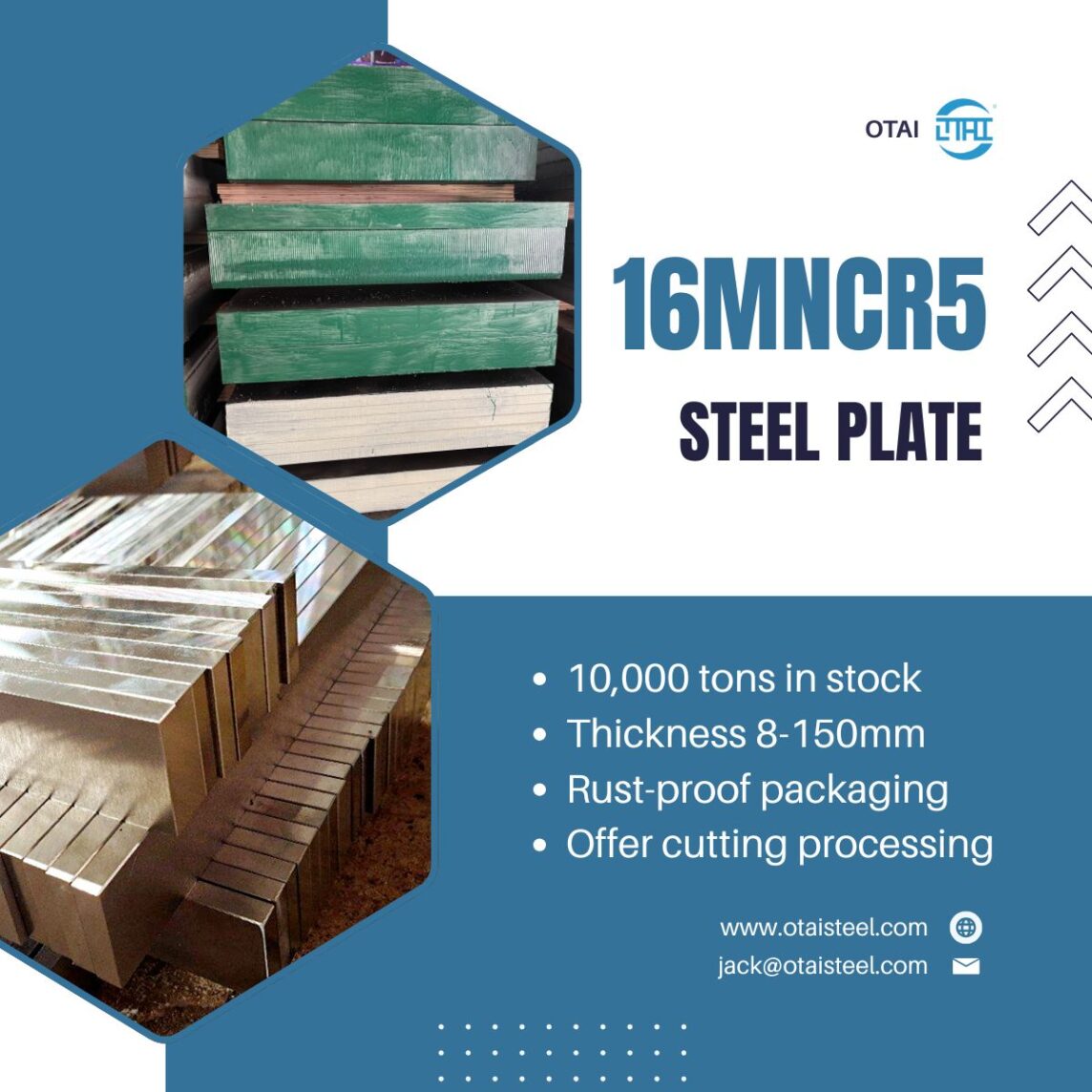
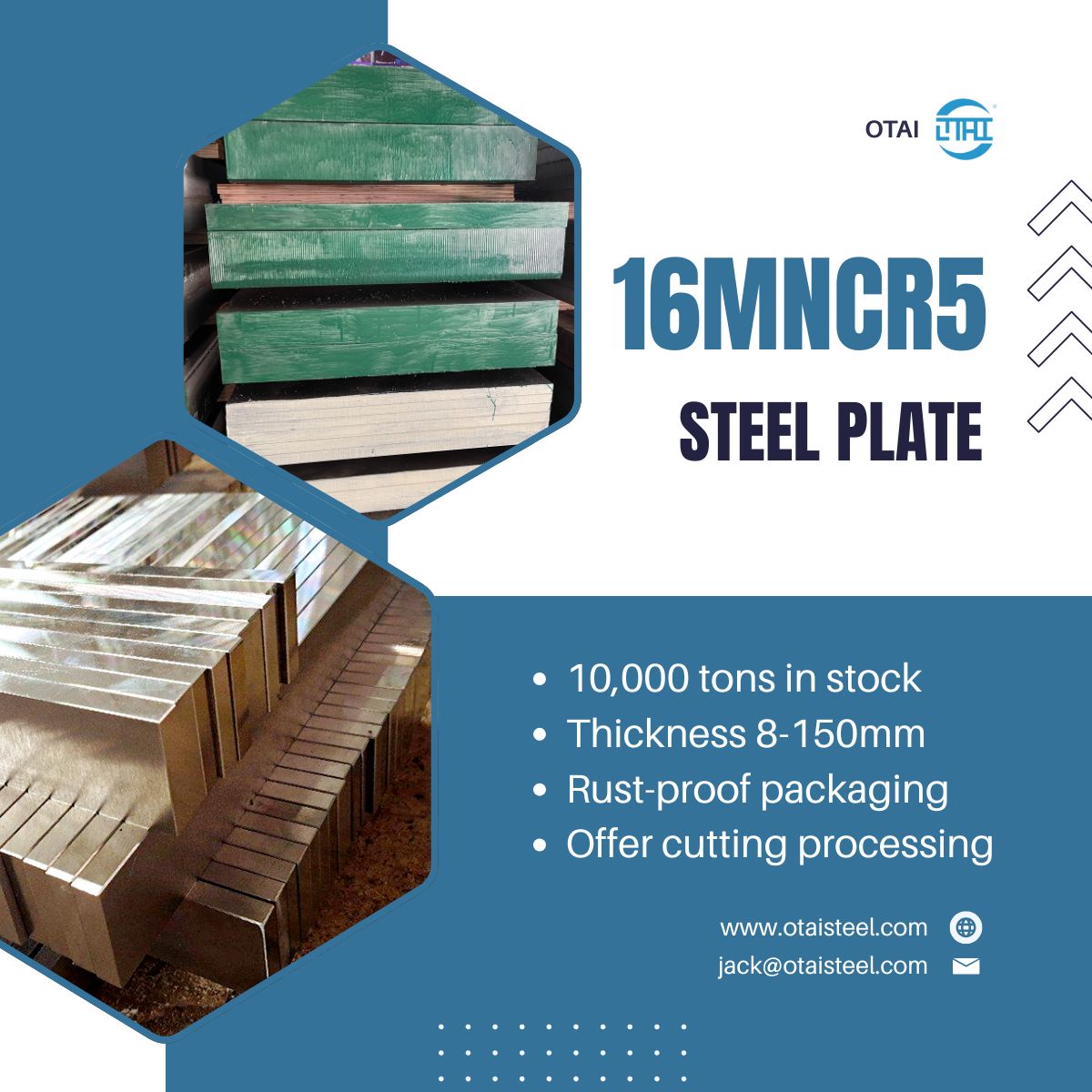
📑 Table of Contents

🔥 1. Introduction: Is 4140 Steel Good for Knife Making?

⚙️ 2. What Is 4140 Alloy Steel?

🔬 3. 4140 Steel Chemical Composition

📊 4. 4140 Steel Hardness and Mechanical Properties

🔥 5. Heat Treatment of 4140 Steel for Knife Applications

🔪 6. Advantages and Disadvantages of 4140 Steel Knives

⚔️ 7. 4140 Steel Compared with Other Knife Steels

🏭 Otai Special Steel Advantages

❓ FAQ About 4140 Steel for Knife Making

🔥 1. Introduction: Is 4140 Steel Good for Knife Making?

Many knife makers and steel enthusiasts ask: is 4140 steel good for knife making? The answer depends on the type of knife, expected performance, and heat treatment process.

4140 steel is a chromium-molybdenum alloy steel known for its excellent strength, toughness, and impact resistance.

Although 4140 is not traditionally classified as a dedicated knife steel like D2, 1095, or CPM steels, it can still produce functional and durable blades when properly heat treated.

The biggest advantage of 4140 steel for knife making is its outstanding toughness. A knife made from 4140 can resist shock loads, bending forces, and impact better than many high-carbon blade steels.

However, 4140 does not provide extremely high edge retention because its carbon content is lower than many specialized knife steels.

Therefore, 4140 works better for heavy-duty knives, outdoor tools, chopping blades, and applications where toughness is more important than maximum cutting performance.

Basic Characteristics of 4140 Steel for Knife Making

Property Description
Steel Type Chromium-molybdenum alloy steel
Standard ASTM A29 / SAE 4140
Carbon Content Approximately 0.40%
Main Alloy Elements Chromium and molybdenum
Main Advantage High toughness and strength
Main Limitation Lower edge retention compared with premium knife steels

For makers who need a tough working blade rather than a competition cutting knife, 4140 steel for knife making can be a practical and economical choice.

⚙️ 2. What Is 4140 Alloy Steel?

4140 is a medium-carbon chromium-molybdenum alloy steel widely used in mechanical engineering, automotive components, shafts, gears, and heavy-duty machinery parts.

The steel belongs to the family of low-alloy steels and achieves excellent mechanical properties after heat treatment.

The combination of chromium and molybdenum improves hardenability, strength, and resistance to fatigue.

Unlike stainless knife steels, 4140 does not contain enough chromium to resist corrosion. Therefore, knife makers must apply proper surface protection and maintenance.

Why Some Knife Makers Choose 4140 Steel

  • Excellent impact resistance for heavy-duty blades.
  • Good toughness even under high stress.
  • Easy availability and affordable cost.
  • Good machinability before heat treatment.
  • Suitable for large knives and outdoor tools.

The main question is not simply whether 4140 can make a knife, but whether its properties match the intended application.

For survival knives, machetes, chopping tools, and utility blades, toughness often matters more than extreme hardness.

Common Applications of 4140 Steel

Industry Applications
Automotive Axles, shafts, gears
Mechanical Engineering Heavy-duty machine parts
Tool Manufacturing Wear-resistant components
Knife Making Large utility blades, chopping tools

Because 4140 combines strength and toughness, many makers consider it when designing knives that must survive harsh working environments.

🔬 3. 4140 Steel Chemical Composition

The chemical composition of 4140 determines its performance in knife applications.

The steel contains around 0.40% carbon, which provides a balance between hardness and toughness.

Chromium improves hardenability and wear resistance, while molybdenum increases strength and high-temperature performance.

4140 Steel Chemical Composition

Element Content (%) Function
Carbon (C) 0.38–0.43 Provides hardness and strength
Silicon (Si) 0.15–0.35 Improves strength and deoxidation
Manganese (Mn) 0.75–1.00 Improves toughness and hardenability
Chromium (Cr) 0.80–1.10 Improves wear resistance and hardening
Molybdenum (Mo) 0.15–0.25 Improves strength and toughness

How Alloy Elements Affect Knife Performance

Element Effect on Knife Blade
Carbon Controls hardness and edge holding ability
Chromium Improves hardenability and wear resistance
Molybdenum Improves toughness and strength
Manganese Improves overall mechanical performance

The balanced alloy design explains why 4140 performs well in applications requiring strength and impact resistance.

However, because its carbon content is lower than many dedicated blade steels, manufacturers should carefully control heat treatment to achieve the desired hardness.

For this reason, understanding 4140 alloy steel hardness for knives is essential before selecting this material for blade production.

⬆️ Back to Table of Contents

📊 4. 4140 Steel Hardness and Mechanical Properties

The performance of a knife depends heavily on the hardness, toughness, and microstructure of the steel.

When people ask is 4140 steel good for knife making, hardness is one of the most important factors to consider.

4140 can achieve good hardness after proper heat treatment, but its greatest advantage remains toughness rather than extreme edge retention.

A properly treated 4140 blade can resist bending, impact, and cracking, making it suitable for demanding outdoor and industrial applications.

Typical Mechanical Properties of 4140 Steel

Property Typical Value
Tensile Strength 655–1080 MPa (depending on heat treatment)
Yield Strength 415–950 MPa
Elongation 15–25%
Impact Toughness Excellent
Machinability Good
Wear Resistance Moderate to Good

4140 Steel Hardness Range for Knife Applications

Condition Hardness Knife Performance
Annealed Approximately 200 HB Easy machining but low cutting performance
Quenched 50–55 HRC High hardness but increased brittleness
Quenched and Tempered 40–50 HRC Excellent toughness
Optimized Knife Treatment 45–55 HRC Balanced strength and durability

For knife making, many makers prefer a hardness range that balances edge retention and toughness.

If the blade becomes too hard, it may lose impact resistance and become more likely to chip or crack.

If the blade remains too soft, it may lose edge holding ability and require frequent sharpening.

Therefore, the correct heat treatment determines whether 4140 steel knife blade performance meets practical requirements.

🔥 5. Heat Treatment of 4140 Steel for Knife Applications

Heat treatment is the key step that transforms 4140 from a general engineering steel into a functional knife material.

Without proper heat treatment, 4140 will not achieve the hardness and performance required for a durable blade.

The typical process includes heating, quenching, and tempering.

Best Heat Treatment for 4140 Knife Steel

Process Temperature Range Purpose
Heat Treatment Preparation 840–870°C Create uniform austenite structure
Quenching Oil or suitable cooling medium Increase hardness by forming martensite
Tempering 200–650°C depending on target properties Improve toughness and reduce brittleness

Effect of Tempering Temperature on 4140

Tempering Condition Result
Low Temperature Tempering Higher hardness and better edge retention
Medium Temperature Tempering Balanced hardness and toughness
High Temperature Tempering Maximum toughness and impact resistance

Recommended Heat Treatment Approach for Different Knife Types

Knife Type Recommended Property Balance
Outdoor Survival Knife Higher toughness
Chopping Blade Maximum impact resistance
Utility Knife Balanced hardness and toughness
Heavy Work Knife Strength-focused treatment

Compared with specialized blade steels, 4140 requires more attention during heat treatment because it does not naturally achieve very high hardness levels.

However, when properly treated, it provides outstanding durability for heavy-use knives.

Advantages of Proper Heat Treatment

  • Improves blade strength.
  • Enhances resistance against impact damage.
  • Creates a stable martensitic structure.
  • Improves service life under harsh conditions.
  • Balances hardness and toughness.

This is why experienced makers focus on the entire manufacturing process rather than only the steel grade.

A well-treated 4140 knife can outperform poorly treated blades made from more expensive steels.

⬆️ Back to Table of Contents

🔪 6. Advantages and Disadvantages of 4140 Steel Knives

Before choosing 4140 for a blade project, knife makers should understand both its advantages and limitations.

The question is 4140 steel good for knife making does not have a simple yes or no answer. It depends on whether the user needs toughness, edge retention, corrosion resistance, or easy maintenance.

Advantages of 4140 Steel for Knife Making

Advantage Explanation
Excellent Toughness 4140 can absorb strong impacts without easily cracking.
High Strength Suitable for large and heavy-duty blades.
Good Hardening Ability Chromium and molybdenum improve heat treatment performance.
Easy Availability Common industrial steel with stable supply.
Cost Efficiency Provides good performance at a reasonable material cost.

Disadvantages of 4140 Steel Knives

Limitation Explanation
Lower Edge Retention Lower carbon content compared with premium knife steels.
Poor Corrosion Resistance Not a stainless steel and requires maintenance.
Requires Careful Heat Treatment Performance depends strongly on processing quality.
Not Ideal for Fine Cutting Less suitable for razor-sharp precision blades.

Best Knife Applications for 4140 Steel

  • Heavy-duty outdoor knives.
  • Bushcraft knives.
  • Chopping tools.
  • Survival blades.
  • Industrial cutting tools.
  • Large utility knives.

For applications where a knife must survive impact and abuse, 4140 offers a strong advantage because toughness becomes more important than maximum sharpness.

⚔️ 7. 4140 Steel Compared with Other Knife Steels

Many knife makers compare 4140 with traditional blade steels such as 1095, D2, and A2.

Each steel has different strengths, so the best choice depends on the intended use.

4140 vs Common Knife Steels

Steel Grade Main Feature Knife Performance
4140 High toughness and strength Excellent for heavy-duty knives
1095 High carbon content Excellent edge retention and easy sharpening
D2 High wear resistance Excellent cutting performance
A2 Balanced tool steel Good toughness and edge holding

Detailed Comparison: 4140 vs 1095 vs D2

Property 4140 1095 D2
Carbon Content 0.40% 0.95% 1.50%+
Toughness Excellent Very Good Good
Edge Retention Moderate Good Excellent
Corrosion Resistance Low Low Better
Heavy Impact Use Excellent Good Fair

When Should You Choose 4140 Instead of Knife-Specific Steels?

Choose 4140 when your priority is:

  • Maximum toughness.
  • Resistance to bending and impact.
  • Large blade construction.
  • Affordable material selection.
  • Industrial or outdoor applications.

Choose specialized knife steels when your priority is:

  • Long-lasting sharp edges.
  • Fine cutting performance.
  • High corrosion resistance.
  • Premium knife production.

Therefore, 4140 steel for knife making is a practical option for functional blades where durability is more important than extreme cutting performance.

🏭 Otai Special Steel Advantages

Otai Special Steel is a professional supplier of alloy steel materials, including 4140 steel plates and bars for industrial applications.

  • Large inventory: Otai maintains approximately 10,000 tons of steel inventory with different sizes available for customer requirements.
  • 4140 steel supply capability: Various thicknesses and dimensions of 4140 alloy steel are available for machining and manufacturing projects.
  • Processing services: Cutting, machining support, heat treatment, and customized processing services are available.
  • Quality assurance: Ultrasonic testing and third-party inspection can be provided according to customer requirements.
  • Export experience: Otai has supplied steel materials to Fortune Global 500 companies and understands strict international standards.
  • Professional packaging: Anti-rust packaging, steel strapping, and wooden box packaging ensure safe transportation.

With reliable stock availability and professional technical support, Otai provides suitable 4140 alloy steel solutions for knife makers and industrial customers.

❓ FAQ About 4140 Steel for Knife Making

Q1: Is 4140 steel good for knife making?
Yes. 4140 can make durable knives, especially heavy-duty blades that require excellent toughness and impact resistance.

Q2: Can 4140 steel hold a sharp edge?
4140 can hold an edge reasonably well, but it does not match high-carbon or premium knife steels designed specifically for edge retention.

Q3: What hardness should a 4140 knife have?
A properly heat-treated 4140 knife usually performs well around 45–55 HRC, depending on the application.

Q4: Is 4140 better than 1095 for knives?
Neither steel is universally better. 4140 provides higher toughness, while 1095 usually provides better edge retention.

Q5: Does 4140 steel rust?
Yes. 4140 is not stainless steel, so it requires proper maintenance and surface protection to prevent corrosion.

Q6: Does Otai supply 4140 steel?
Yes. Otai supplies 4140 alloy steel with stock availability, cutting services, heat treatment support, and inspection services.

⬆️ Back to Table of Contents

0 0 Continue Reading →

16MnCr5 Equivalent SAE: Comparing European and American Carburizing Steels

16MnCr5 Equivalent SAE: Comparing European and American Carburizing Steels16MnCr5 Equivalent SAE: Comparing European and American Carburizing Steels
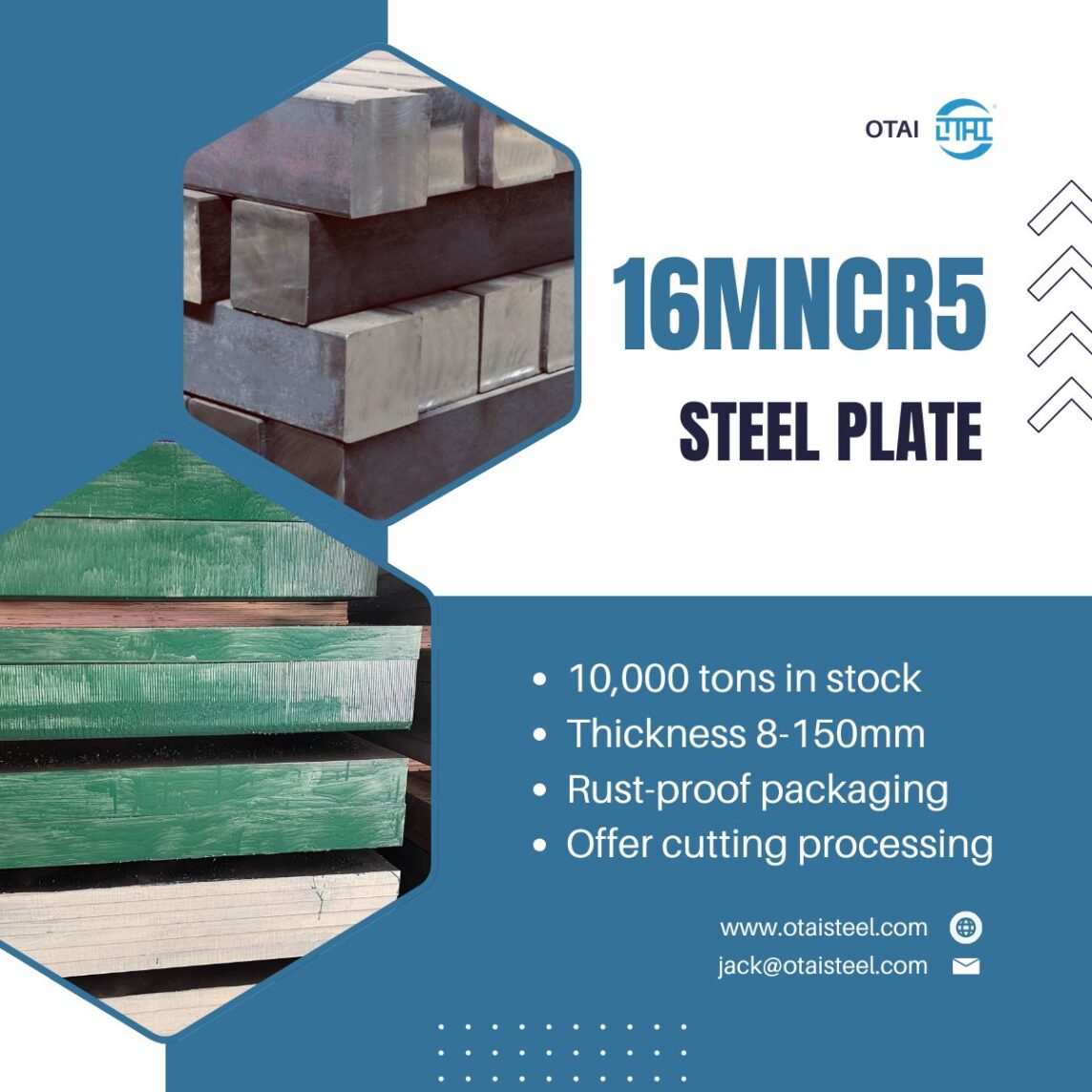
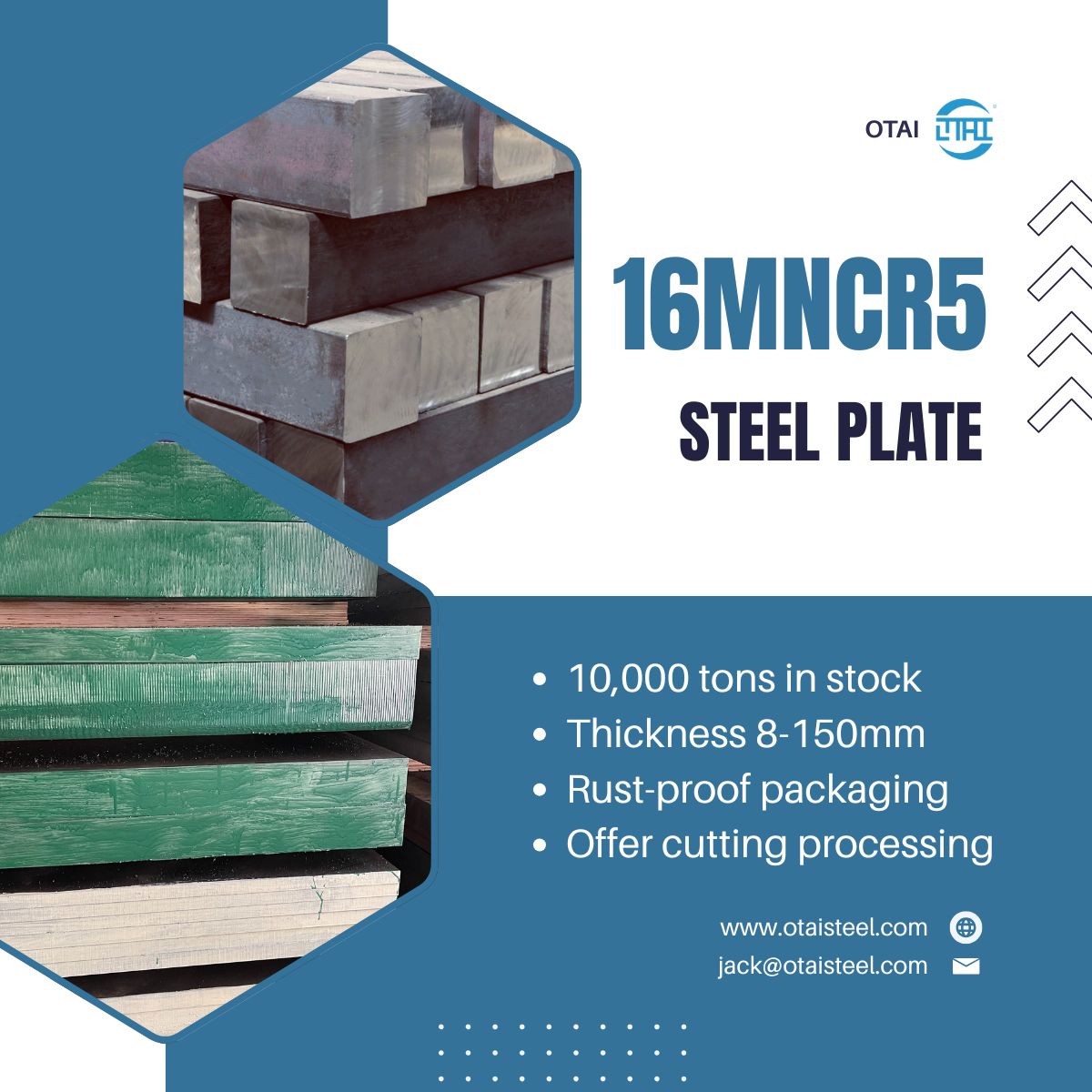
📑 Table of Contents

🔥 1. Introduction: Understanding 16MnCr5 Equivalent SAE Grades

⚙️ 2. What Is 16MnCr5 Carburizing Steel?

📊 3. 16MnCr5 Equivalent SAE Grade Comparison

🔬 4. Chemical Composition Comparison

🔥 5. Mechanical Properties and Heat Treatment

🏭 6. Applications of 16MnCr5 and SAE Equivalent Steels

🔍 7. How to Choose the Right Equivalent Grade

🏭 Otai Special Steel Advantages

❓ FAQ About 16MnCr5 Equivalent SAE

🔥 1. Introduction: Understanding 16MnCr5 Equivalent SAE Grades

When engineers search for 16MnCr5 equivalent SAE, they usually want to find an American steel grade with similar chemical composition, mechanical properties, and carburizing performance.

16MnCr5 is a popular European alloy carburizing steel defined under the EN standard. It is widely used for gears, shafts, and other components that require a hard wear-resistant surface with a tough core.

However, different countries use different steel naming systems. European grades follow EN and DIN standards, while the United States commonly uses SAE and AISI designations.

Because of these differences, engineers often need to identify suitable alternatives when purchasing steel internationally.

The most commonly compared SAE grade for 16MnCr5 is SAE 8620. Both steels belong to the carburizing steel family and provide excellent surface hardness after carburizing treatment.

However, they are not exactly identical. Their alloying elements, hardenability, toughness, and application advantages are slightly different.

Basic Comparison Between 16MnCr5 and SAE Equivalent Grades

Steel Grade Standard Steel Type Main Feature
16MnCr5 EN 10084 / DIN Low alloy carburizing steel Excellent surface hardness and wear resistance
SAE 8620 SAE / AISI Nickel-chromium-molybdenum carburizing steel Higher toughness and hardenability
SAE 5120 SAE / AISI Chromium carburizing steel Similar carburizing applications

In many engineering projects, 16MnCr5 equivalent to SAE 8620 is the most common comparison because both grades are designed for carburized gears and mechanical transmission components.

Selecting the correct equivalent grade requires more than checking the material name. Engineers should consider chemical composition, component size, heat treatment requirements, and final working conditions.

⚙️ 2. What Is 16MnCr5 Carburizing Steel?

16MnCr5 is a low-alloy carburizing steel mainly used for components that require a hard surface and strong internal toughness.

The material contains carbon, manganese, and chromium as the main alloying elements. This combination allows the steel to achieve excellent surface hardness after carburizing.

During carburizing, carbon diffuses into the surface layer of the steel. After quenching and tempering, the surface becomes extremely hard while the core maintains good toughness.

Main Characteristics of 16MnCr5 Steel

Property Description
Steel Type Low alloy carburizing steel
Standard EN 10084
Common Use Gears, shafts, transmission parts
Heat Treatment Carburizing, quenching, tempering
Main Advantage Hard surface with tough core

Why Is 16MnCr5 Used for Gears?

Gear components require different properties in different areas.

  • The surface must resist wear caused by repeated contact.
  • The core must absorb impact loads without cracking.
  • The material must maintain dimensional stability after heat treatment.

16MnCr5 meets these requirements, which makes it one of the most common European gear steels.

Typical applications include:

  • Automotive transmission gears
  • Industrial gearbox components
  • Sprockets and shafts
  • Precision mechanical parts

When customers cannot source DIN or EN materials, finding a suitable SAE equivalent grade for 16MnCr5 steel becomes important for maintaining production efficiency.

📊 3. 16MnCr5 Equivalent SAE Grade Comparison

The most widely recognized SAE equivalent for 16MnCr5 is SAE 8620, but engineers should understand the differences before substitution.

16MnCr5 vs SAE 8620 Comparison

Property 16MnCr5 SAE 8620
Standard System European EN/DIN American SAE/AISI
Steel Type Low alloy carburizing steel Nickel-chromium-molybdenum carburizing steel
Main Alloy Elements Manganese + Chromium Nickel + Chromium + Molybdenum
Carburizing Performance Excellent Excellent
Core Toughness Very Good Higher
Hardenability Good Better

SAE 8620 contains nickel and molybdenum, which improve toughness and hardenability compared with 16MnCr5.

However, 16MnCr5 remains a highly competitive option because it provides excellent carburizing performance and is widely available in European markets.

For many standard gear applications, 16MnCr5 carburizing steel equivalent selection depends on production requirements, availability, and design specifications.

⬆️ Back to Table of Contents

🔬 4. Chemical Composition Comparison

Chemical composition is one of the most important factors when evaluating a 16MnCr5 equivalent SAE grade.

Although 16MnCr5 and SAE 8620 belong to the same carburizing steel family, their alloying systems are different.

16MnCr5 mainly uses manganese and chromium to achieve good hardenability, while SAE 8620 adds nickel and molybdenum to improve toughness and deeper hardening capability.

Chemical Composition: 16MnCr5 vs SAE 8620

Element 16MnCr5 (%) SAE 8620 (%) Effect on Steel Performance
Carbon (C) 0.14–0.19 0.18–0.23 Provides carburizing response and core strength
Silicon (Si) ≤0.40 0.15–0.35 Improves strength and deoxidation
Manganese (Mn) 1.00–1.30 0.70–0.90 Improves strength and hardenability
Chromium (Cr) 0.80–1.10 0.40–0.60 Improves wear resistance and hardening
Nickel (Ni) – 0.40–0.70 Improves toughness
Molybdenum (Mo) – 0.15–0.25 Improves deep hardening capability

How Alloy Elements Affect Performance

Alloy Element 16MnCr5 Performance SAE 8620 Advantage
Chromium Excellent surface hardness after carburizing Provides wear resistance
Manganese Improves hardenability Provides good strength
Nickel Not included Improves impact toughness
Molybdenum Not included Improves core strength and hardening depth

From a chemical perspective, SAE 8620 offers additional alloying elements, especially nickel and molybdenum.

However, 16MnCr5 provides excellent performance for many gear and transmission applications where extreme toughness is not the primary requirement.

Therefore, engineers should not simply replace one grade with another. They should evaluate the complete application requirements.

🔥 5. Mechanical Properties and Heat Treatment

The final performance of carburizing steels depends heavily on heat treatment.

Both 16MnCr5 and SAE 8620 achieve their best properties after carburizing, quenching, and tempering.

The carburizing process creates a hard outer layer while maintaining a tough internal structure.

Mechanical Properties Comparison

Property 16MnCr5 SAE 8620
Tensile Strength After Heat Treatment Approximately 800–1200 MPa Approximately 900–1300 MPa
Core Toughness Very Good Excellent
Surface Hardness After Carburizing 58–62 HRC 58–62 HRC
Wear Resistance Excellent Excellent
Fatigue Resistance Very Good Excellent

Heat Treatment Comparison

Process Purpose Effect on Material
Carburizing Increase surface carbon content Creates hard wear-resistant surface
Quenching Form martensitic structure Increases hardness and strength
Tempering Reduce brittleness Improves toughness

After carburizing treatment, both steels can provide excellent gear performance.

The main difference is that SAE 8620 usually provides better core toughness because nickel and molybdenum improve internal strength.

Hardness Comparison After Carburizing

Property 16MnCr5 SAE 8620
Surface Hardness 58–62 HRC 58–62 HRC
Case Depth Suitable for standard gears Excellent for deeper sections
Core Strength Good Higher
Impact Resistance Very Good Excellent

For small and medium-sized gears, 16MnCr5 can provide excellent service performance.

For larger gears or components exposed to heavy impact loads, SAE 8620 may offer additional advantages.

Which Grade Is Better for Gear Manufacturing?

Application Requirement Recommended Grade
Standard automotive gears 16MnCr5
Heavy-duty transmission gears SAE 8620
Industrial gearbox components Both grades suitable
High impact applications SAE 8620
Cost-effective carburizing parts 16MnCr5

The choice between these steels depends on the actual operating environment, component size, and required service life.

Understanding the differences between DIN 16MnCr5 vs SAE steel grade helps engineers make better material decisions for international projects.

⬆️ Back to Table of Contents

🏭 6. Applications of 16MnCr5 and SAE Equivalent Steels

Both 16MnCr5 and SAE equivalent carburizing steels are widely used in industries that require high surface hardness, wear resistance, and reliable core toughness.

Although their chemical compositions are different, both materials provide excellent performance for gears, shafts, and transmission components.

Choosing between these grades depends mainly on load conditions, component size, production standards, and availability.

Common Applications of 16MnCr5 and SAE 8620

Application 16MnCr5 SAE 8620
Automotive Gears Excellent for standard transmission gears Excellent for high-performance gears
Industrial Gearboxes Suitable for medium-load applications Better for heavy-load systems
Shaft Components Good wear resistance and strength Higher toughness under impact loads
Mechanical Transmission Parts Widely used in Europe Widely used internationally
Precision Machine Components Very suitable Very suitable

Typical Components Manufactured with These Steels

Component Recommended Grade Main Reason
Small and medium gears 16MnCr5 Excellent carburizing performance
Heavy-duty gears SAE 8620 Higher core toughness
Gear shafts Both Good combination of hardness and strength
Sprockets 16MnCr5 Good wear resistance
Power transmission components SAE 8620 Better impact resistance

Why 16MnCr5 Remains Popular Worldwide

Although SAE 8620 offers higher toughness, 16MnCr5 continues to be widely selected because it provides an excellent balance between performance, availability, and cost efficiency.

  • Excellent carburizing response.
  • High surface hardness after treatment.
  • Good dimensional stability.
  • Reliable performance for gear applications.
  • Wide acceptance under European standards.

For many engineering projects, 16MnCr5 gear steel alternative selection depends on whether the customer needs European standard materials or SAE-based materials.

🔍 7. How to Choose the Right Equivalent Grade

Selecting an equivalent steel grade requires more than simply matching the material name.

Engineers should evaluate the complete working environment before replacing 16MnCr5 with an SAE grade.

Important Factors When Selecting a 16MnCr5 Equivalent SAE Grade

Factor Why It Matters
Component Size Larger parts may require better hardenability
Load Conditions Heavy impact requires higher toughness
Heat Treatment Process Determines final hardness and strength
Industry Standard European and American projects may require different grades
Material Availability Affects purchasing efficiency and delivery time

When to Choose 16MnCr5

  • When EN or DIN standards are required.
  • For general carburized gears and shafts.
  • When excellent wear resistance is needed.
  • For small and medium-sized components.
  • When cost-effective performance is important.

When to Choose SAE 8620

  • When higher core toughness is required.
  • For large-section components.
  • For heavy impact working conditions.
  • When SAE/AISI standards are specified.

Summary Comparison: 16MnCr5 vs SAE 8620

Requirement Better Choice
European gear manufacturing 16MnCr5
High toughness applications SAE 8620
Standard carburizing parts Both suitable
Heavy-duty transmission systems SAE 8620
Cost-effective gear steel 16MnCr5

A professional steel supplier can help customers choose the most suitable grade according to technical requirements and application conditions.

⬆️ Back to Table of Contents

🏭 Otai Special Steel Advantages

Otai Special Steel is a professional supplier of alloy steels and carburizing steels, providing reliable material solutions for global customers.

  • Professional 16MnCr5 supply: Otai provides 8–150mm thickness 16MnCr5 steel plates available in stock for different engineering applications.
  • Processing services: Cutting, machining, heat treatment support, and customized processing solutions are available.
  • Quality assurance: Ultrasonic testing and third-party inspection services can be provided according to customer requirements.
  • International supply experience: Otai has supplied steel materials to Fortune Global 500 companies and understands strict technical standards.
  • Professional packaging: Anti-rust packaging, steel strapping, and wooden box packaging ensure safe international transportation.

Whether customers need 16MnCr5 steel, SAE equivalent carburizing steel, or other alloy steel materials, Otai provides professional support from stock supply to processing.

❓ FAQ About 16MnCr5 Equivalent SAE

Q1: What is the SAE equivalent of 16MnCr5 steel?
The most commonly compared SAE equivalent for 16MnCr5 is SAE 8620 because both are carburizing steels used for gears and mechanical components.

Q2: Is 16MnCr5 the same as SAE 8620?
No. They have similar applications but different chemical compositions. SAE 8620 contains nickel and molybdenum, which improve toughness and hardenability.

Q3: Can SAE 8620 replace 16MnCr5?
In many applications, SAE 8620 can replace 16MnCr5, but engineers should check design requirements, heat treatment conditions, and mechanical properties first.

Q4: Which is better for gears, 16MnCr5 or SAE 8620?
Both are suitable for gears. 16MnCr5 is widely used for standard gear applications, while SAE 8620 is preferred for heavy-duty applications requiring higher toughness.

Q5: What is the main advantage of 16MnCr5 steel?
16MnCr5 provides excellent carburizing performance, high surface hardness, good wear resistance, and reliable core toughness.

Q6: Does Otai supply 16MnCr5 steel?
Yes. Otai supplies 16MnCr5 steel plates with stock availability, processing services, inspection support, and international export experience.

⬆️ Back to Table of Contents

0 0 Continue Reading →

16MnCr5 vs SAE 8620: Chemical Composition, Properties and Gear Applications

16MnCr5 vs SAE 8620: Chemical Composition, Properties and Gear Applications16MnCr5 vs SAE 8620: Chemical Composition, Properties and Gear Applications
When engineers select carburizing steel for gears, shafts, and transmission components, the comparison of 16MnCr5 vs SAE 8620 is a common topic.

Both grades are low-alloy carburizing steels designed to provide a hard wear-resistant surface with a tough internal core after carburizing and heat treatment.

Although these two steels have similar purposes, they come from different standard systems and have differences in chemical composition, alloy design, and mechanical performance.

📑 Table of Contents

🔥 1. Introduction to 16MnCr5 vs SAE 8620 Steel

🧪 2. What Is 16MnCr5 Steel?

📊 3. What Is SAE 8620 Steel?

⚙️ 4. 16MnCr5 vs SAE 8620 Chemical Composition Comparison

🔥 5. Mechanical Properties and Heat Treatment Comparison

🏭 6. Gear and Industrial Applications Comparison

🔍 7. Which Steel Should You Choose?

🏭 Otai Special Steel Advantages

❓ FAQ About 16MnCr5 vs SAE 8620

🔥 1. Introduction to 16MnCr5 vs SAE 8620 Steel

Both 16MnCr5 and SAE 8620 belong to the category of carburizing alloy steels.

They are mainly used when manufacturers need:

  • High surface hardness
  • Excellent wear resistance
  • Strong fatigue strength
  • Good impact toughness

During carburizing, carbon is introduced into the surface layer of the steel.

After quenching and tempering, the surface becomes very hard while the core remains relatively tough.

Feature 16MnCr5 SAE 8620
Standard System European EN standard American SAE/AISI standard
Steel Type Chromium-manganese carburizing steel Nickel-chromium-molybdenum carburizing steel
Main Alloy Elements Mn + Cr Ni + Cr + Mo
Main Application Gears, shafts, mechanical parts Gears, transmission parts, aerospace components

Basic Difference Between 16MnCr5 and SAE 8620

The biggest difference between these two steels is their alloy design.

16MnCr5 mainly uses manganese and chromium to improve hardenability, while SAE 8620 uses nickel, chromium, and molybdenum to achieve higher toughness and deeper hardening capability.

Performance Factor Advantage
Core Toughness SAE 8620 has a slight advantage due to nickel content
Surface Hardness After Carburizing Both grades perform excellently
Availability in Europe 16MnCr5 is more common
Heavy Load Applications SAE 8620 is often preferred

However, the final choice depends on component requirements rather than alloy composition alone.

A detailed understanding of 16MnCr5 vs SAE 8620 helps avoid selecting a steel grade that does not match the working environment.

⬆️ Back to Table of Contents

🧪 2. What Is 16MnCr5 Steel?

16MnCr5 is a European carburizing steel grade defined under EN 10084.

It is widely used in mechanical engineering because it offers a good balance between surface hardness, core toughness, and machinability.

The steel contains moderate carbon content, manganese, and chromium.

This composition allows the material to develop a hard carburized layer while maintaining good impact resistance inside the component.

16MnCr5 Chemical Composition

Element Content (%) Function
Carbon (C) 0.14–0.19 Provides hardness after carburizing
Silicon (Si) ≤0.40 Improves strength
Manganese (Mn) 1.00–1.30 Improves hardenability
Chromium (Cr) 0.80–1.10 Improves wear resistance
Phosphorus (P) ≤0.035 Controlled impurity
Sulfur (S) ≤0.035 Controlled impurity

Advantages of 16MnCr5 Steel

  • Excellent carburizing performance
  • Good machinability before heat treatment
  • Balanced strength and toughness
  • Reliable wear resistance
  • Suitable for precision gears and shafts

Because of these characteristics, 16MnCr5 carburizing steel is widely used in automotive transmission systems, industrial gears, and mechanical components.

⬆️ Back to Table of Contents

📊 3. What Is SAE 8620 Steel?

SAE 8620 is a widely used American carburizing alloy steel defined by the SAE/AISI standard system.

Unlike 16MnCr5, which mainly relies on manganese and chromium, SAE 8620 uses nickel, chromium, and molybdenum to improve hardenability and toughness.

This alloy design makes SAE 8620 especially suitable for components that require deep carburizing, high fatigue resistance, and reliable performance under heavy loads.

SAE 8620 Chemical Composition

Element Content (%) Function
Carbon (C) 0.18–0.23 Provides hardness after carburizing
Silicon (Si) 0.15–0.35 Improves strength and deoxidation
Manganese (Mn) 0.70–0.90 Improves hardenability
Nickel (Ni) 0.40–0.70 Improves toughness and impact resistance
Chromium (Cr) 0.40–0.60 Improves wear resistance
Molybdenum (Mo) 0.15–0.25 Improves hardening depth
Phosphorus (P) ≤0.035 Controlled impurity
Sulfur (S) ≤0.040 Controlled impurity

Main Alloy Element Functions in SAE 8620

Element Effect on Performance
Nickel (Ni) Improves core toughness and impact resistance
Chromium (Cr) Improves wear resistance and hardenability
Molybdenum (Mo) Enhances deep hardening capability
Carbon (C) Controls final hardness after carburizing

The addition of nickel and molybdenum gives SAE 8620 an advantage in applications where components experience severe mechanical stress.

Therefore, SAE 8620 carburizing steel is commonly selected for aerospace parts, automotive gears, and heavy-duty transmission components.

Typical Applications of SAE 8620

Industry Components Reason for Selection
Automotive Transmission gears, shafts High fatigue resistance
Aerospace Precision gears and mechanical parts High toughness requirement
Heavy Machinery Power transmission components Good load resistance
Industrial Equipment Gear systems and drive parts Excellent wear performance

Compared with 16MnCr5, SAE 8620 provides a more complex alloy system, which improves performance in demanding applications.

⬆️ Back to Table of Contents

⚙️ 4. 16MnCr5 vs SAE 8620 Chemical Composition Comparison

The most important difference in the 16MnCr5 vs SAE 8620 chemical composition comparison is the alloy element design.

16MnCr5 mainly uses chromium and manganese, while SAE 8620 contains nickel and molybdenum for improved toughness and hardenability.

Complete Chemical Composition Comparison

Element 16MnCr5 (%) SAE 8620 (%) Difference
Carbon (C) 0.14–0.19 0.18–0.23 SAE 8620 has slightly higher carbon
Silicon (Si) ≤0.40 0.15–0.35 Similar range
Manganese (Mn) 1.00–1.30 0.70–0.90 16MnCr5 contains more manganese
Nickel (Ni) Not specified 0.40–0.70 SAE 8620 contains nickel
Chromium (Cr) 0.80–1.10 0.40–0.60 16MnCr5 contains more chromium
Molybdenum (Mo) Not specified 0.15–0.25 SAE 8620 contains molybdenum

How Alloy Differences Affect Performance

Property 16MnCr5 SAE 8620
Surface Hardness Excellent after carburizing Excellent after carburizing
Core Toughness Very Good Excellent
Deep Hardenability Good Better
Wear Resistance Excellent Excellent
Impact Resistance Good Higher

The nickel and molybdenum content in SAE 8620 improves its ability to maintain strength in larger cross-section components.

Meanwhile, the chromium and manganese balance of 16MnCr5 provides excellent carburizing performance and good cost-effectiveness.

16MnCr5 vs SAE 8620 Equivalent Relationship

Standard Grade
EN Standard 16MnCr5
SAE/AISI Standard 8620
Common Category Carburizing alloy steel

Although these steels are often considered alternatives, they are not completely identical.

Material selection should consider component size, required hardness depth, loading conditions, and heat treatment process.

⬆️ Back to Table of Contents

🔥 5. Mechanical Properties and Heat Treatment Comparison

Both 16MnCr5 and SAE 8620 achieve excellent mechanical properties after carburizing.

However, their different alloy systems create differences in core strength, toughness, and hardenability.

Mechanical Properties Comparison

Property 16MnCr5 SAE 8620
Tensile Strength After Heat Treatment Approx. 900–1200 MPa Approx. 900–1300 MPa
Surface Hardness After Carburizing 58–62 HRC 58–62 HRC
Core Toughness Very Good Excellent
Fatigue Resistance Excellent Excellent
Hardenability Good Higher

Heat Treatment Comparison

Treatment 16MnCr5 SAE 8620
Carburizing Excellent response Excellent response
Quenching Good hardening ability Excellent hardening depth
Core Structure Tough martensitic structure High toughness core structure
Large Components Suitable More suitable

For smaller and medium-sized gears, 16MnCr5 provides excellent performance.

For larger components requiring deeper hardening and higher toughness, SAE 8620 may provide additional advantages.

⬆️ Back to Table of Contents

🏭 6. Gear and Industrial Applications Comparison

The comparison of 16MnCr5 vs SAE 8620 becomes especially important when selecting materials for gears and transmission components.

Both steels are widely used for carburized parts because they can achieve a very hard surface while maintaining a tough core.

However, their alloy composition creates different advantages in practical applications.

Application Comparison Between 16MnCr5 and SAE 8620

Application 16MnCr5 SAE 8620
Automotive Gears Excellent choice for standard transmission gears Excellent for high-performance transmission systems
Industrial Gearboxes Suitable for medium-load applications Better for heavy-load gear systems
Shafts Good wear resistance and toughness Higher impact resistance
Aerospace Components Limited applications Widely used due to high toughness
Large Cross-Section Parts Suitable for moderate sizes Better hardenability for larger sections

Gear Performance Comparison

Performance Requirement Better Choice Reason
Surface wear resistance Both Both achieve high carburized hardness
Heavy impact loading SAE 8620 Nickel improves toughness
General automotive gears 16MnCr5 Excellent balance and availability
Large industrial gears SAE 8620 Better hardenability
Cost-effective carburizing parts 16MnCr5 Efficient performance-to-cost ratio

For manufacturers producing standard gears and mechanical components, 16MnCr5 is often a practical choice.

For components exposed to extreme loads, shock forces, or larger dimensions, SAE 8620 can provide additional safety margins.

Common Components Made from 16MnCr5 and SAE 8620

Component Recommended Grade
Automotive transmission gears 16MnCr5 / SAE 8620
Planetary gears SAE 8620
Small precision gears 16MnCr5
Industrial gearbox shafts Both depending on load
Heavy-duty power transmission parts SAE 8620

Selecting the correct carburizing steel improves gear life, reduces failure risks, and ensures stable operation under demanding conditions.

⬆️ Back to Table of Contents

🔍 7. Which Steel Should You Choose?

Choosing between 16MnCr5 and SAE 8620 depends on the actual working conditions rather than simply comparing chemical composition.

Both steels can provide excellent performance when the correct heat treatment process is applied.

Choose 16MnCr5 When:

  • You need a reliable carburizing steel for gears and shafts.
  • You require a good balance of strength and toughness.
  • The component size is medium or small.
  • Cost-effective performance is important.
  • European EN standards are preferred.

Choose SAE 8620 When:

  • The component requires higher core toughness.
  • The application involves heavy impact loads.
  • Deep hardening capability is important.
  • Large-section components need stable properties.
  • Aerospace or high-performance applications are involved.

Material Selection Guide: 16MnCr5 vs SAE 8620

Requirement Recommended Steel
Standard carburized gears 16MnCr5
Heavy-duty gears SAE 8620
High toughness requirement SAE 8620
General mechanical components 16MnCr5
Deep carburizing requirement SAE 8620

In many engineering projects, both grades can successfully replace each other when design requirements are carefully evaluated.

The final decision should consider chemical composition, heat treatment process, component size, operating stress, and required service life.

A professional steel supplier can help customers select the most suitable grade according to application requirements.

⬆️ Back to Table of Contents

🏭 Otai Special Steel Advantages

Otai Special Steel is a professional supplier of alloy steel and carburizing steel, providing reliable material solutions for global industrial customers.

  • Large inventory: Otai maintains approximately 10,000 tons of steel stock with different sizes available for urgent production needs.
  • 16MnCr5 stock supply: Otai provides 8–150mm thickness 16MnCr5 steel plates available in stock for various engineering applications.
  • Professional processing: Cutting, machining, heat treatment support, and customized processing services are available.
  • Quality control: Ultrasonic testing and third-party inspection services can be provided to ensure material reliability.
  • Global export experience: Otai has supplied steel materials to Fortune Global 500 companies and meets strict technical requirements.
  • Safe packaging: Anti-rust packaging, steel strapping, and wooden box packaging ensure safe international transportation.

Whether customers need 16MnCr5 steel, SAE 8620 carburizing steel, or other alloy steel products, Otai provides professional supply and processing solutions.

⬆️ Back to Table of Contents

❓ FAQ About 16MnCr5 vs SAE 8620

Q1: What is the main difference between 16MnCr5 and SAE 8620?
The main difference is alloy composition. 16MnCr5 uses manganese and chromium, while SAE 8620 contains nickel, chromium, and molybdenum for improved toughness and hardenability.

Q2: Is SAE 8620 stronger than 16MnCr5?
SAE 8620 generally provides higher core toughness and deeper hardening capability. However, 16MnCr5 also offers excellent performance for many carburizing applications.

Q3: Can 16MnCr5 replace SAE 8620?
In some applications, yes. Both steels are carburizing grades, but engineers should consider component size, load conditions, and required mechanical properties before replacement.

Q4: Which steel is better for gears, 16MnCr5 or SAE 8620?
Both are suitable for gears. 16MnCr5 is commonly used for standard gear applications, while SAE 8620 is preferred for heavy-duty and high-performance gears.

Q5: Which steel has better carburizing performance?
Both steels have excellent carburizing performance and can achieve high surface hardness after heat treatment.

⬆️ Back to Table of Contents

0 0 Continue Reading →