Skip to Content

Category Archives: Blog

Welding and Joining of 4140 Steel: Challenges and Solutions

Welding and Joining of 4140 Steel: Challenges and Solutions

4140 steel is a popular alloy steel. Because of its high strength, toughness, and wear resistance, it is widely used in various industries. However, 4140 steel can be challenging to weld and join due to its high hardenability, which can cause cracking and deformation during the welding process.

Challenges

  1. Cracking: One of the biggest challenges of welding 4140 steel is the risk of cracking. This is likely due to the steel’s high carbon content and high hardenability. It makes it prone to cracking during the post-welding cooling process.
  2. Deformation: Another challenge of welding 4140 steel is the risk of deformation. Due to the high thermal conductivity of steel, the heat input in the welding process will cause significant thermal expansion and contraction, resulting in the deformation of the welded part.

Solution

  1. Preheating: Preheating steel before welding helps reduce the risk of cracking and deformation. This is because preheating raises the temperature of the steel and reduces the thermal gradient between the weld and the base metal, reducing the risk of thermal shock.
  2. Post-welding heat treatment: After welding, the steel shall be heat treated to eliminate any residual stress and improve the toughness of the welded joint. Heat treatment should be carried out at temperatures between 800°C and 840°C, followed by slow cooling in the furnace.
  3. Welding techniques: Choosing the right welding techniques also helps to reduce the risk of cracking and deformation. Tungsten gas welding (GTAW) and gas metal arc welding (GMAW) are the most common welding techniques for 4140 steel. These technologies allow precise control of heat input, helping to reduce the risk of cracking and deformation.
  4. Welding materials: The use of appropriate welding materials also helps to improve the quality of welded joints. Low hydrogen welding materials are recommended for welding 4140 steel because they produce low hydrogen content, which can cause cracking.

Welding and joining 4140 steel can be challenging, but the above solutions can help overcome these challenges. Preheating, post-welding heat treatment, choosing the right welding technique, and using the right welding consumables are some of the solutions that help produce high-quality welded joints. With proper welding techniques and precautions, 4140 steel can be successfully welded and joined and used for a wide range of applications. (Welding and Joining of 4140 Steel)

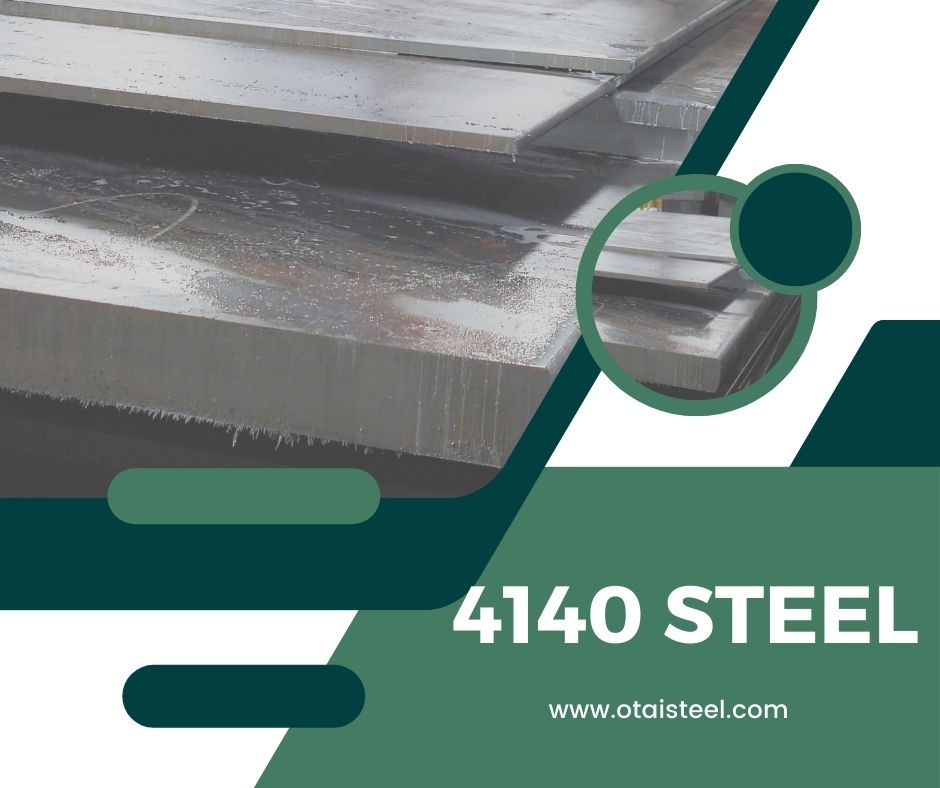
Welding and Joining of 4140 Steel: Challenges and Solutions

0 0 Continue Reading →

Hot Forging and Cold Working of 4140 Steel: Techniques and Applications

Hot Forging and Cold Working of 4140 Steel: Techniques and Applications

4140 steel is a low alloy steel containing chromium, molybdenum, and manganese. Due to its high strength and toughness, it is commonly used in applications such as aerospace, automotive, and machine building. Two common techniques used to process 4140 steel are hot forging and cold working.

Hot forging of 4140 Steel

Hot forging involves heating steel to a temperature above its recrystallization point and then using a press or hammer to shape the steel into the desired shape. The hot forging process is used to create complex shapes and increase the strength of steel. The hot forging process also creates a more uniform grain structure, which improves the strength of the steel.

Hot forging is commonly used to produce components for the automotive and aerospace industries. The hot forging process is used to produce gear, wheel shaft, and crankshaft parts. The uniform grain structure formed by hot forging makes the steel more resistant to fatigue failure, making it ideal for high-stress applications.

Cold working of 4140 Steel

Cold working, on the other hand, involves forming steel at room temperature. This process involves applying pressure to the steel using rolling, bending, or hammering techniques. The cold working process increases the strength and hardness of steel, making it suitable for applications requiring high strength and durability. Cold working can also improve the surface finish of steel, making it more visually appealing.

Cold working is often used in the production of tools and machine parts. The increased strength and hardness of cold working make 4140 steel ideal for tools such as hammers, chisels, and wrenches. The cold process also results in a work-hardened surface that is more resistant to wear and tear.

Both hot forging and cold working techniques can be used to process 4140 steel. Hot forging is a costly process but results in a more uniform grain structure. Cold working can improve the strength, hardness, and surface finish of the steel. 4140 steel is used in a wide range of applications, from aerospace and automotive parts to tool and machine parts. By choosing the right process, manufacturers can produce 4140 steel parts that meet the requirements of their specific applications.

Cold Working of 4140 Steel: Techniques and Applications

0 0 Continue Reading →

The History and Evolution of 4140 Steel: From Military to Manufacturing

The History and Evolution of 4140 Steel: From Military to Manufacturing

4140 steel is a popular alloy steel with a long history dating back to World War II. It was originally developed for military purposes and later became a major material in manufacturing and engineering.

During the war, 4140 steel was used in the manufacture of various parts for military vehicles and aircraft, as well as weapons and ammunition. Its high strength, toughness, and durability make it a valuable material for these applications.

After the war, the use of 4140 steel was extended to commercial applications.

Its strength and durability make it ideal for manufacturing machinery, tools, and equipment that require high performance and reliability.

Over the years, the composition of 4140 steel has changed and other elements have been added to improve its properties. For example, adding molybdenum improves the material’s strength and toughness, while chromium enhances its corrosion resistance.

Today, 4140 steel is used in a wide range of industries, including aerospace, automotive, construction, and oil and gas. Commonly used in the manufacture of gear, shaft, wheel shaft, and other components requiring high strength and durability.

4140 steel’s popularity is due in part to its versatility. It can be heat-treated to obtain a wide range of properties, making it suitable for a variety of applications. In addition, its cost is relatively low compared to other high-performance materials, making it an attractive option for manufacturers.

In recent years, the demand for sustainable materials in the manufacturing industry has been growing. As a result, there has been a shift to using recycled 4140 steel to reduce waste and conserve resources.

The history and evolution of 4140 steel prove its durability and versatility. From its early military applications to its widespread use in modern manufacturing, 4140 steel has proven to be a valuable material that continues to evolve and adapt to the needs of a variety of industries. (The Evolution of 4140 Steel)

The Evolution of 4140 Steel: From Military to Manufacturing

0 0 Continue Reading →

Corrosion Resistance of 4140 Steel: Improving Longevity and Reliability

Corrosion Resistance of 4140 Steel: Improving Longevity and Reliability

Corrosion is a major threat to the life and reliability of many steel components. Several techniques can be used to improve the corrosion resistance of 4140 steel and extend its service life.

A coating is one of the most effective ways to prevent corrosion. Coatings such as paint, zinc, and chromium can form a barrier between the steel and its surroundings. This prevents moisture and other caustics from coming into contact with the steel surface.

Heat treatment is also an effective way to improve 4140 steel’s corrosion resistance. Heat treatment can change the microstructure of the steel and make it more corrosion-resistant.

Another way to improve 4140 steel’s corrosion resistance is to add chromium, nickel, molybdenum, and other alloying elements. These elements form a protective layer on the steel surface to prevent corrosion.

Proper maintenance and cleaning can help prevent corrosion. Regular inspection and cleaning can help identify and resolve any corrosion problems before they become serious problems.

It is important to remember that while these techniques can help improve the corrosion resistance of 4140 steel, they may not make it completely corrosion-resistant.

Therefore, it is important to carefully consider the environment in which the steel is used and take appropriate measures to prevent corrosion from occurring.

By implementing these technologies and taking proactive measures to prevent corrosion, the life and reliability of 4140 steel components can be greatly improved, resulting in significant cost savings and increased productivity in industrial and manufacturing environments.

"</p

0 0 Continue Reading →

4140 steel impact strength:A High-Performance Alloy for Demanding Environments

4140 steel impact strength: A High-Performance Alloy for Demanding Environments

4140 steel is a high-performance alloy commonly used in demanding environments. It is a low-alloy steel containing chromium, molybdenum, and manganese. Adding these elements can improve the strength, toughness, and wear resistance of steel.

4140 steel has high tensile strength and good impact resistance.

4140 is suitable for use in high-stress applications. It also has excellent fatigue strength, making it a popular choice for components subjected to cyclic loading. This steel can obtain different properties through heat treatment, such as increased hardness or improved toughness.

4140 steel is commonly used in the manufacture of machinery, automotive parts, and aerospace components. It is also a popular choice for manufacturing tools and molds, shafts, and gears that require high strength and wear resistance.

One of the benefits of using 4140 steel is its cost-effectiveness.

Compared to other high-performance alloys, 4140 steel is relatively inexpensive and an attractive option for manufacturers. In addition, this steel is available in various sizes and shapes, making it easy to purchase and process.

4140 steel is a versatile and durable alloy that provides high performance at an affordable cost. It is a popular choice for use in demanding environments and is ideal for various applications. (4140 steel impact strength)

4140 steel impact strength:A High-Performance Alloy for Demanding Environments

0 0 Continue Reading →

Environmental considerations and sustainability aspects of 4140 steel production and usage

Environmental considerations and sustainability aspects of 4140 steel production and usage

Environmental factors and sustainability aspects are becoming increasingly important in the production and use of 4140 steel.

Steel production has significant environmental impacts, including air and water pollution, as well as greenhouse gas emissions. It is therefore crucial to consider the environmental impact of steel production and use.

One of the major environmental problems in the production of 4140 steel is the use of energy and resources.

Steel production requires a lot of energy, which can lead to high carbon emissions that contribute to climate change.

To reduce the environmental impact of steel production, manufacturers can adopt sustainable practices, such as using renewable energy and recycling scrap steel.

Another key sustainability aspect of 4140 steel production is the responsible use of resources.

Raw materials such as iron ore and coal are finite resources that must be used responsibly to ensure their availability for future generations.

In addition to the production process, the use of 4140 steel in various applications can also have environmental considerations. For example, steel may be used to produce heavy machinery. Which has a significant impact on the environment because of its size and emissions.

To reduce the environmental impact of 4140 steel use, manufacturers can adopt sustainable design practices. Examples include the use of lightweight materials and energy-efficient designs.

In addition, 4140 steel can be recycled at the end of its useful life, reducing the need for new steel production and saving resources.

Environmental considerations and sustainability aspects are critical to the production and use of 4140 steel. By adopting sustainable practices in steel production and use. We can reduce our impact on the environment and ensure the responsible use of resources. (4140 steel production and usage)

Sustainability aspects of 4140 steel production and usage

0 0 Continue Reading →

A Comprehensive Guide to Welding 4140 alloy Steel

A Comprehensive Guide to Welding 4140 alloy Steel

Welding 4140 steel is a common practice in many industries, including aerospace, automotive, and construction. However, the steel is known for its high hardenability, making it challenging to weld.

To successfully weld 4140 steel, it is very important to choose the correct welding technique and welding material. The most common welding methods for 4140 steel are GTAW, GMAW and SMAW.

The choice of filling metal is also important. For 4140 steel, it is recommended to use a low hydrogen electrode or wire, such as E7018, to reduce the risk of cracking. Preheating the base metal before welding also helps prevent cracking.

Proper joint preparation must be ensured to ensure solid welding.

The joint should be clean and free of any impurities such as rust, oil or grease. The joint should also be properly angled to allow proper penetration and fusion.

During welding, it is important to maintain proper heat input to prevent the formation of brittle microstructure that may lead to cracking. The heat input can be controlled by adjusting the welding speed and current.

The weld shall be inspected after welding to ensure that it meets the necessary strength and quality requirements. This can be done by visual inspection, X-ray examination, or other nondestructive testing methods.

Welding 4140 steel requires careful consideration of welding techniques, filler metal, joint preparation, and heat input. By following these guidelines, you can achieve a strong and durable weld. Proper inspection and testing of welds is also important to ensure their quality and safety. (Welding 4140 alloy Steel)

A Comprehensive Guide to Welding 4140 alloy Steel

0 0 Continue Reading →

Novel processing techniques for 4140 steel to enhance its properties and performance in specific applications

Novel processing techniques for 4140 steel to enhance its properties and performance in specific applications

4140 steel is a widely used alloy steel with excellent strength and toughness properties. However, its characteristics can be further enhanced through new processing techniques to make it suitable for specific applications.

One such technique is heat treatment.

Steel is heated to a specific temperature and then quenched in a cooling medium to obtain the required microstructure and properties. By adjusting heat treatment parameters, the strength and toughness of 4140 steel can be customized for specific applications. Such as high-performance gears or shafts.

Another technology is surface modification.

It involves changing the surface of the steel to improve its wear resistance and fatigue strength. This can be achieved by methods such as nitriding, shot peening, or laser surface treatment, which forms a hardened layer on the surface of the steel.

In addition, alloy elements can be added to 4140 steel to improve its properties. For example, the addition of chromium can enhance the corrosion resistance of steel, making it suitable for applications in harsh environments.

In addition, advances in processing technologies such as additive manufacturing can be used to manufacture complex shapes and geometries using 4140 steel. This allows the production of higher-performance and lighter-weight parts, making them suitable for aerospace and automotive applications.

Overall, new processing technologies can improve the properties and properties of 4140 steel. It makes it suitable for specific applications that require high strength, toughness, wear resistance, or corrosion resistance. By customizing processing technology for specific applications, engineers can design components that are both reliable and cost-effective. (Novel processing techniques for 4140 steel)

Novel processing techniques for 4140 steel

0 0 Continue Reading →

Heat treatment of 4140 steel for optimal strength and toughness

Heat treatment is a key process for optimizing the strength and toughness of 4140 steel.

4140 steel is a low alloy steel commonly used in applications that require high strength and toughness, such as machinery and equipment manufacturing.

The heat treatment process involves heating the steel to a specific temperature. Holding it at that temperature for a period of time, and then cooling it at a controlled rate.

The first step in the heat treatment process is to heat the steel to a temperature of about 800 ° C to 850 ° C.

This is called the austenitizing temperature, which is the temperature at which steel transforms into an austenitic crystal structure.

Once the steel reaches the austenitizing temperature, it is held at that temperature for a period of time to allow the complete transformation of the crystal structure.

The length of time steel remains at the austenitizing temperature depends on the thickness of the steel and the required properties.

After the steel is maintained at the austenitizing temperature, it is cooled at a controlled rate to a temperature of about 500 ° C to 550 ° C.

This process, known as quenching, is crucial to achieving the strength and toughness properties required for steel.

Care must be taken in quenching to avoid cracking or warping of the steel.

After quenching, steel is tempered at a lower temperature, typically around 150 ° C to 200 ° C.

This process helps to reduce the brittleness of the steel and improve its toughness while still maintaining its strength.

The length of time the steel is tempered depends on the required properties.

In summary, heat treatment is a key process for optimizing the strength and toughness of 4140 steel.

It involves heating the steel to the austenitizing temperature, maintaining it at that temperature, and quenching at a controlled rate. And then tempering it at a lower temperature.

Proper heat treatment can make steel both strong and tough, making it an ideal choice for demanding applications. (Heat treatment of 4140 steel)

Heat treatment of 4140 steel for optimal strength and toughness

0 0 Continue Reading →

Welding 4140 steel: challenges and best practices

Welding 4140 steel: challenges and best practices

Welding 4140 steel is a common process in the manufacturing industry due to its high strength and toughness. However, it can be challenging due to its high carbon content and susceptibility to cracking.

Challenges

  1. Cracking: Because of the high carbon content of 4140 steel, it is difficult to weld, which makes it more prone to cracking. If the steel is not properly preheated or cools too quickly, it is prone to cracking.
  2. Hardness: After welding, the heat-affected zone can become very hard, which can lead to cracking or other problems.
  3. Strength: If the welding process is not correct, the strength of the steel will be affected, resulting in potential faults or defects in the finished product.

Best practice

  1. Preheat: Preheat the steel before welding to reduce the possibility of cracking. The preheating temperature will depend on the thickness of the steel and the welding process used.
  2. Welding process: Choosing the right welding process is very important to ensure the success of welding. Gas tungsten welding or gas metal arc welding is commonly used for 4140 steel.
  3. Metal filling: Correct metal filling can significantly improve the quality and strength of the weld. It is recommended to select a filler metal with a similar chemical composition to the base material to ensure proper strength and toughness.
  4. Post-welding heat treatment: post-welding heat treatment helps to reduce the hardness of heat affected zone and increase toughness. This can be done by annealing or tempering the steel, depending on the desired properties.
  5. Quality control: Appropriate quality control measures, such as inspection and testing. This helps to ensure that the weld is of high quality and has no defects or problems.

Welding 4140 steel can be a challenging process, but by following best practices and taking the necessary precautions, successful welding can be achieved. Steel preheating, selecting the correct welding process and filling metal, post-welding heat treatment, and appropriate quality control are all essential elements to be considered when welding 4140 steel.

"</p

0 0 Continue Reading →