Skip to Content

Category Archives: Blog

The Benefits of Quenching and Tempering 4140 Steel

The Benefits of Quenching and Tempering 4140 Steel


Tempering 4140 steel is a heat treatment process that can improve the strength, durability, and properties of materials. Here are some advantages of tempered 4140 steel:

      1. Tempered 4140 steel can significantly improve its strength, suitable for aerospace, automotive, construction, and other industries of high-demand applications.

  1. The heat treatment process can improve the durability of 4140 steel, making it more resistant to wear, corrosion, and fatigue.
  2. Tempering 4140 steel can also improve its machinability, making the manufacturing process more accurate and efficient.

      4. the process can improve the toughness of the material so that it is more difficult to crack and fracture under high stress.

  1. Tempered 4140 steel can also improve its ductility, making it more suitable for molding and shaping processes.
  2. The heat treatment process can improve the dimensional stability of 4140 steel and reduce the risk of warping or deformation in the manufacturing process.

      7. tempering 4140 steel can also improve its impact resistance. So that it is more suitable for the occasion of high-impact resistance requirements.

  1. The process can improve the fatigue life of the material so that it can withstand repeated stress cycles without failure.

      9. tempering 4140 steel can also improve its high-temperature resistance, suitable for high-temperature performance occasions.

  1. By improving the strength, durability, and performance of 4140 steel, quenching and tempering can extend the service life of components and reduce the need for replacement parts, thereby saving costs and improving efficiency.

In conclusion, quenching and tempering of 4140 steel is a heat treatment process with many advantages. Improving the strength, durability, and performance of materials, can extend the life of components and reduce the need to replace parts, thereby saving costs and improving efficiency. The process can also improve machinability, toughness, and ductility. The dimensional stability, impact resistance, high-temperature resistance, and fatigue life of 4140 steel. It makes it suitable for a wide range of industry applications.
The Benefits of Quenching and Tempering 4140 Steel

0 0 Continue Reading →

The Role of Machining 4140 steel in Advancing Sustainable Manufacturing Practices

The Role of Machining 4140 steel in Advancing Sustainable Manufacturing Practices

Machining 4140 steel is a versatile material that plays a key role in advancing sustainable manufacturing practices. Here are some reasons:

  1. 4140 steel is low-alloy steel, durable and recyclable.
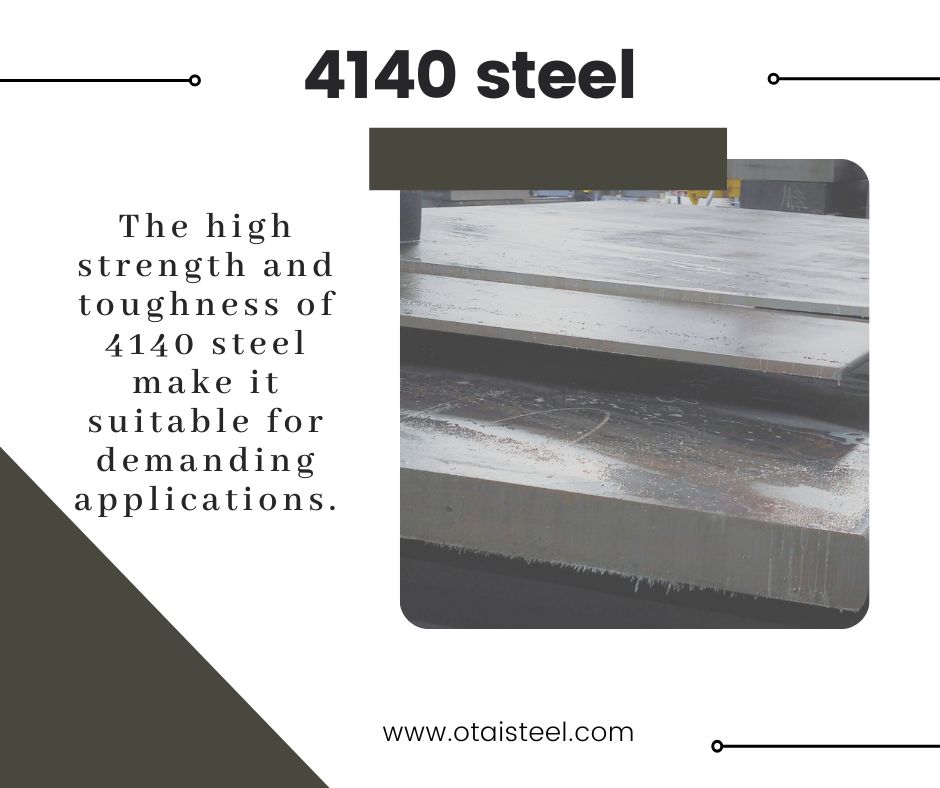
  2. The high strength and toughness of 4140 steel make it suitable for demanding applications. It reduces the need for replacement parts and minimizes waste.
  3. 4140 steel is commonly used in the production of heavy equipment, such as construction and agricultural machinery, which is essential for sustainable infrastructure development.
  4. The use of 4140 steel in manufacturing reduces waste because it can be recycled at the end of its useful life.
  5. 4140 steel is commonly used in the oil and gas industry to build drilling equipment, pipelines, and other components that support sustainable energy development.
  6. The use of 4140 steel in the automobile industry helps to reduce vehicle weight, improve fuel efficiency and reduce emissions.
  7. 4140 steel can also be used in the manufacture of renewable energy equipment, such as wind turbines and solar panels.
  8. By using 4140 steel in the manufacturing process, companies can reduce their environmental impact and support sustainable practices.
  9. The versatility of 4140 steel makes it suitable for a wide range of applications from heavy equipment to renewable energy. It supports sustainable manufacturing practices across industries.
  10. As more companies prioritize sustainability in their manufacturing processes, the role of sheet 4140 will continue to become increasingly important.

4140 plate plays a key role in advancing sustainable manufacturing practices. Its durability, versatility, and recyclability make it an important material for industries that support sustainable infrastructure development, renewable energy, and reduced environmental impact. By incorporating 4140 steel into its manufacturing process, the company can improve its sustainability practices and contribute to a more sustainable future. (Machining 4140 steel)

Machining 4140 steel in Advancing Sustainable Manufacturing Practices

0 0 Continue Reading →

Machining and Welding 4140 Steel: Tips and Techniques for Success

Machining and Welding 4140 Steel: Tips and Techniques for Success

Machining and welding 4140 steel can be challenging, but with the right tips and tricks, you can be successful. Keep the following in mind:

1.4140 steel is a low-alloy steel commonly used in industrial applications because of its high strength and toughness.

2. When machining 4140 steel, it is important to use the right cutting tools and techniques to prevent work hardening and heat build-up.

3. Using low cutting speeds and high feed rates reduces heat buildup and extends tool life.

4. Cooling the workpiece with cooling liquid, lubricating the tool, preventing chip welding, and improving the surface finish.

5. When welding 4140 steel, the workpiece is preheated to reduce the thermal shock and prevent cracking.

6. Using a low hydrogen electrode or filler metal to prevent hydrogen embrittlement.

7. Welding should be done in a well-ventilated area to prevent exposure to smoke.

8. After welding, the workpiece should be allowed to cool slowly to prevent deformation or cracking.

9. To get the best results when machining or welding 4140, it is important to have a clear understanding of the material properties and the processes involved.

10. Follow the correct procedure and use the right tools and techniques that can help you succeed and produce high-quality parts that meet your requirements.

Machining and welding 4140 steel require attention to detail and the use of the right tools and techniques. By following the above tips and guidelines, you can be successful and produce high-quality parts that meet your needs.

"Machining


0 0 Continue Reading →

Exploring the Microstructure of 4140 Steel: How it Affects Properties

Exploring the Microstructure of 4140 Steel: How it Affects Properties

4140 steel is a commonly used material in many industries such as automotive and aerospace. One of the reasons for its popularity is its perfect combination of high strength, high toughness, and wear resistance

However, the properties of 4140 steel are not determined solely by its chemical composition. Another important component is the microstructure of the steel. It refers to the arrangement of its constituent atoms and the resulting crystal structure.

The microstructure of 4140 steel can be controlled through a variety of heat treatments. The common heat treatments are quenching and tempering. It refers to heating steel to a high temperature and then rapidly cooling it in water or oil.

The process produces a microstructure consisting of tempered martensite, a hard and durable crystal structure. The amount of martensite present in the microstructure can be controlled by adjusting the cooling rate during quenching.

Another will affect the microstructure of 4140 alloy steel is annealing heat treatment.

Annealing involves heating steel to a specific temperature and holding it for a period of time, followed by slow cooling. The process produces microscopic structures composed of ferrite and pearlite, which are softer and more malleable than martensite.

4140 steel’s microstructure is also affected by other elements, such as chromium and molybdenum. These elements can form carbides, which are hard particles dispersed in the microscopic structure of the steel. They can improve the wear resistance and toughness of steel.

The grain size of 4140 steel is another factor affecting its properties. Smaller grain sizes can improve the toughness and fatigue resistance of steel, while larger grain sizes can improve its strength.

4140 ‘s microstructure plays an important role in determining its properties. Through the use of all kinds of heat treatment and alloxan elements to control the microstructure, manufacturers can produce is suitable for many different applications of wide characteristics of 4140 steel. Understanding the microstructure of this multifunctional material is important for engineers and designers who use it.

Exploring the Microstructure of 4140 Steel:How it Affects Properties

0 0 Continue Reading →

The Benefits of Using 4140 Steel Plate for Precision Tools and Molds

The Benefits of Using 4140 Steel Plate for Precision Tools and Molds

Precision tools and molds are an important part of every industry. These tools need high accuracy and durability, to ensure consistent performance and quality. In 4140 the production of precision tools and die steel has become more and more popular. The following are the benefits of using 4140 steel:

Machinability

4140 board can be easily processed into complex shapes, but will not affect its strength and toughness. It is an ideal material for the design of complex and high-precision tools and molds.

  • High strength: 4140 steel has a high tensile strength of 655MPa and yield strength of 415MPa.It is an ideal material for precision tools and molds that require high strength and durability.
  • Toughness: 4140 steel can withstand high-impact loads without breaking or fracturing. Suitable for applications requiring high-impact resistance.
  • Wear resistance: The chromium and molybdenum content of 4140 steel provides excellent wear resistance. So it is an ideal material to involve sliding or frictional contact application.
  • Cost-effective: 4140 steel is a cost-effective alternative to other high-performance materials such as titanium and Inconel. It provides high strength, toughness and wear resistance at a lower cost.

4140 steel is an excellent material for precision tools and molds. Its high strength, toughness, wear resistance, machinability, and cost-effectiveness make it requires the application of high-performance materials ideal choice. (Using 4140 Steel Plate)

The Benefits of Using 4140 Steel Plate for Precision Tools and Molds

0 0 Continue Reading →

Why 4140 Steel material is the Preferred Material for Heavy Machinery

Why 4140 Steel material is the Preferred Material for Heavy Machinery

For heavy machinery, the importance of using the right material cannot be overstated. Few materials can match the performance of 4140 alloy steel in terms of strength, durability, and overall performance.

Exceptional Strength

One of the advantages of 4140 alloy steel is its exceptional strength. 4140’s tensile strength can be up to 95,000 PSI. It is able to withstand tremendous amounts of force and stress. This makes it an ideal choice for heavy machinery components. Such as gears, shafts, and axles that are subjected to high levels of stress and wear.

In addition to its high tensile strength, the 4140 steel plate also has a high yield strength, which means it can resist deformation and remain intact even under extreme loads. (4140 Steel material)

Durability

Another advantage of 4140 alloy steel is its durability. It is highly resistant to wear, abrasion, and impact. So it is an ideal choice for heavy machinery components that are exposed to harsh environments and conditions.

4140 steel plate is also highly resistant to fatigue, which allows it to withstand repeated stress cycles without cracking or failure.

Versatility

By the way, 4140 alloy steel has versatility. It can be heat treated to achieve a variety of different hardness levels and properties. It means it can be customized to meet the specific needs of different heavy machinery applications.

Cost-Effectiveness

Finally, the 4140 plate is a cost-effective material for heavy machinery applications. While it’s not the cheapest material on the market, it combines strength, durability, and versatility. It’s a cost-effective choice for many different types of heavy machinery components.

Why 4140 Steel material is the Preferred Material for Heavy Machinery

0 0 Continue Reading →

The Future of 4140 Steel alloy: Innovations and Advancements in Material Science

The Future of 4140 Steel alloy: Innovations and Advancements in Material Science

The future of 4140 alloy steel is bright. With exceptional strength and durability, 4140 has been a popular steel in a wide range of applications for many years. However, the developments in manufacturing techniques and material science may make the 4140 steel plate to be more and more popular.

Advancements in Manufacturing Techniques

By using 3D printing technology, manufacturers can produce very complex parts that could not be done before. This has the potential to change how the 4140 plates are used in industries such as aerospace.

Improvements in Material Properties

Scientists hope to create stronger 4140 steel sheets by adding new alloying elements or changing the microstructure of the material. The new 4140 steel is less prone to wear and tear in harsher conditions.

Applications of 4140 Steel Plate in the Future

As advancements in manufacturing techniques and material science continue to push the boundaries of what is possible with 4140 steel, the potential applications for this material are expanding. Some of the most promising areas for the future of 4140 steel plate include:

  1. Aerospace

With its high strength and durability, the 4140 steel plate is likely to become a more important component in aircraft and spacecraft.

  1. Energy

The energy industry is another area where the properties of 4140 alloy steel are highly valued. The material’s high strength and wear resistance make it ideal for use in drilling equipment, turbines, and other components used in the extraction and production of oil, gas, and other natural resources.

  1. Medical

In recent years, researchers have been exploring the potential of 4140 steel plates in medical applications. It is a promising candidate material for surgical tools, orthopedic implants, and other medical devices.

With continuous progress and breakthroughs in manufacturing technology and material science, the future of 4140 alloy steel is bright. Whether building heavy machinery, precision tools, or high-tech aerospace components, 4140 steel plate is an excellent material. (4140 Steel alloy)

The Future of 4140 Steel alloy: Innovations and Advancements in Material Science

0 0 Continue Reading →

Make Your Projects Stand Out with 4140 Steel Plate

Make Your Projects Stand Out with 4140 Steel alloy Plate

If you’re looking for a material that can be easily machined and formed, the 4140 steel plate maybe your good choice.

What is 4140 steel?

4140 is a chromium-molybdenum alloy steel. It is usually used in manufacturing machinery parts and components. Its flat and stable surface is very suitable for heavy machinery and precision tools.

Why choose 4140 steel plate?

  1. 4140 steel is not easy to deform or break. So it can be used in a different environments. Also, 4140 steel has excellent wear resistance, so it is not easy to wear.
  2. 4140 can be easily machined and formed. If you want to build heavy machinery or precision tools, 4140 steel plate can do it well.

Applications of 4140 Steel Plate

Due to its unique combination of properties, 4140 steel plate is used in a wide variety of applications across many different industries.

  1. Heavy machinery: 4140 steel plate is frequently used in axles, shafts, gears, and couplings.
  2. Precision tools: Because of their excellent wear resistance, 4140 steel plate is often used in dies, molds, and cutting tools.
  3. Automotive industry: 4140 steel plate is also used in crankshafts, transmission gears, and connecting rods.
  4. Aerospace industry: It can be used in the manufacture of aircraft components such as landing gear, engine parts, and structural supports.

With its excellent performance, the 4140 steel alloy plate can help you make the right products to use. Welcome to send an email for more details about the 4140 steel plate.

Make Your Projects Stand Out with 4140 Steel alloy Plate

0 0 Continue Reading →

How is 4140 Steel Formed?

How is 4140 Steel Formed?

The major alloys of 4140 steel are carbon and iron. Apart from these two, there are other elements that are added. These are manganese, chromium, and molybdenum.

These elements are placed in an electric furnace or even in an oxygen furnace. They turn into a molten state and combine to form one solid metal. The hot steel is allowed to cool.

How is 4140 Steel Annealed Hardened and Tampered?

Before 4140 steel is ready for use, it is usually subjected to these three processes; annealing hardening, and tampering. The purpose of these processes is to enhance the physical and mechanical properties of this steel.

4140 steel is annealed at 872°C which is equivalent to 1600°F. After that, the steel is cooled in a furnace.

On the other hand, 4140 steel has been tampered with at temperatures between 200°C and 650°C. The temperature is adjusted depending on the desired level of hardness. (4140 Steel Formed)

What are the Mechanical Properties of 4140 Steel?

The presence of chromium and molybdenum tends to give  4140 steel some extra mechanical advantages over ordinary steel.  It is harder than regular steel.

One of the most outstanding properties of this metal is its high tensile strength. The tensile strength of this metal can be as high as 95,000 PSI. This means that this metal cannot break easily even when subjected to some kind of heavy load.

Another mechanical property of 4140 steel is excellent ductility. This type of steel can be easily drawn into a wire and stretched to form different products. (4140 Steel Formed)

How is 4140 Steel Formed?

0 0 Continue Reading →

What is the hardness of 4140?

What is the hardness of 4140?

Modern steels of powder metallurgy rank highest on the Rockwell scale and boast hardness of around 64 and 68 HRC. These steels are rare (and hence, more expensive) and harder to process, but, when used correctly, they ensure unbelievable and long-lasting sharpness. So What is the hardness of 4140?

***In heat-treated or prehard conditions, it is in the 26-32 Rockwell C range, and stress is relieved to minimize warping during machining. Localized hardness may also be imparted by flame or induction hardening.

***4140 (modified) Cold Finished, Annealed Alloy Bar Stock

Typical hardness is Rockwell “C” 19/24. Typical tensile strength 114,000 PSI. Its wear-resistant properties far exceed that of “cold roll” steels.

Is 4140 steel strong?

4140 is pretty much the “Defacto-Standard” for a good all-around general-purpose maintenance steel for replacement parts.

It has been designed to possess high strength (sometimes referred to as ultra-high strength), along with noticeable resistance to gouging, bending, fatigue, wear, and to an extent even corrosion.

What is harder than 4140 steel?

It is typically made from iron and carbon, as well as other elements. 4140 steel is a type of steel that is used in a variety of applications. It is typically made from iron, carbon, chromium, and manganese.

Tool steel is harder than 4140 steel, making it ideal for cutting and drilling applications.

What is the hardness of 4140?

0 0 Continue Reading →