Skip to Content

Category Archives: Blog

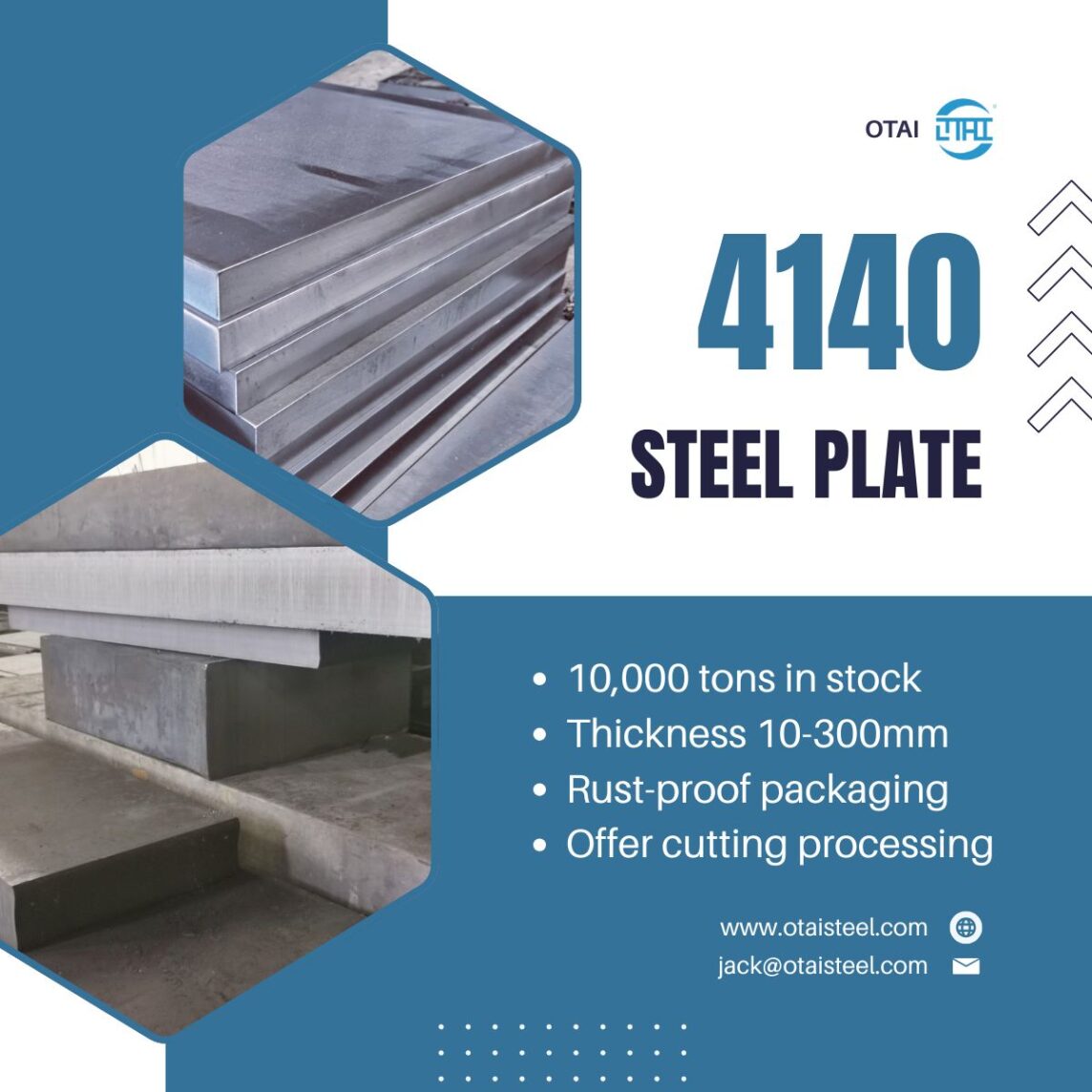
How Does the CTE of 4140 Steel Impact Its Performance?

How Does the CTE of 4140 Steel Impact Its Performance?How Does the CTE of 4140 Steel Impact Its Performance?

4140 steel is a versatile, low-alloy steel that is widely used in the automotive, aerospace, and manufacturing industries due to its strength, toughness, and wear resistance. One critical property that affects the performance of 4140 steel in various applications is its coefficient of thermal expansion (CTE). The CTE refers to how much a material expands or contracts when subjected to temperature changes. Understanding this property is essential for engineers and manufacturers, as it influences how components made from 4140 steel perform under different temperature conditions.

This article explores the coefficient of thermal expansion for 4140 steel, how it impacts the material’s performance, and its relevance in real-world applications.


🏗️ What is the Coefficient of Thermal Expansion (CTE)?

The coefficient of thermal expansion is a material property that measures the fractional change in size (length, area, or volume) of a material per unit change in temperature. In simple terms, it quantifies how much a material will expand or contract when its temperature changes.

The CTE is typically expressed in micrometers per meter per degree Celsius (µm/m·°C) or inches per inch per degree Fahrenheit (in/in·°F). For most metals, including steel, the CTE increases as the temperature rises. Understanding the CTE of a material is crucial for designing components that will experience temperature fluctuations during use.

For 4140 steel, the CTE helps engineers determine how much the material will expand or contract under temperature changes, which can impact the fit, function, and durability of components in various applications.


🔧 The Coefficient of Thermal Expansion of 4140 Steel

The coefficient of thermal expansion of 4140 steel typically ranges from 10.8 to 11.5 µm/m·°C (or 6.0 to 6.4 × 10⁻⁶ in/in·°F) depending on the specific heat treatment and alloy composition. This range means that 4140 steel will expand by approximately 10.8 to 11.5 micrometers for every meter of material length for every 1°C increase in temperature.

Factors Affecting the CTE of 4140 Steel:

  1. Alloying Elements: The presence of chromium (Cr) and molybdenum (Mo) in 4140 steel can slightly affect the CTE compared to other types of steel. These elements impact the way the material responds to heat and can slightly reduce the rate at which it expands.

  2. Heat Treatment: The CTE of 4140 steel can also vary depending on the heat treatment applied to the material. For example, tempering or hardening processes may change the internal microstructure of the steel, which can slightly influence its thermal expansion characteristics.

  3. Temperature Range: The CTE is temperature-dependent, and materials can behave differently at different temperature ranges. 4140 steel may experience a slight increase in CTE at higher temperatures, particularly above its transformation temperature.


🔨 How Does the CTE of 4140 Steel Impact Its Performance?

The coefficient of thermal expansion directly influences how 4140 steel behaves in real-world applications, especially when it undergoes temperature changes during operation. Here are a few key impacts:

1. Dimensional Stability

  • 4140 steel components that are exposed to fluctuating temperatures, such as engine parts or machinery, must maintain dimensional stability. If the material expands or contracts too much, it can result in misalignment or interference fits, leading to reduced performance or premature failure. Understanding the CTE of 4140 steel helps in designing components that maintain their shape and function under varying temperature conditions.

2. Fit and Tolerance Issues

  • Temperature-induced expansion or contraction can affect the fit between 4140 steel parts. For example, gear shafts, bearings, and valves made from 4140 steel may experience changes in size as they heat up or cool down. If the CTE is not considered, these parts might fail to fit correctly, resulting in poor performance or even damage to the parts themselves.

3. Stress and Strain

  • Thermal expansion can introduce internal stresses in 4140 steel components when they are subjected to rapid temperature changes or uneven heating. This can lead to warping, cracking, or deformation. CTE plays an essential role in determining how a material responds to these stresses, especially in critical applications like aerospace or high-performance machinery.

4. Welding and Joining

  • When joining 4140 steel with other materials, such as through welding, the CTE difference between the materials can lead to distortion or stress formation. If the steel expands or contracts differently than the surrounding materials, it can result in cracks or joint failure. For this reason, understanding the CTE of 4140 steel is essential for ensuring successful welding or bonding in multi-material assemblies.


🏭 Applications of 4140 Steel and the Importance of CTE

The CTE of 4140 steel becomes especially important in applications where the material experiences temperature variations during use. Here are some key industries and applications where 4140 steel’s CTE plays a crucial role:

1. Automotive Industry

  • 4140 steel is commonly used in crankshafts, gears, axles, and suspension components. These parts experience changes in temperature during operation, such as engine heating and cooling. A material with a known CTE ensures that these components maintain proper alignment and performance under various temperature conditions.

2. Aerospace Components

  • Parts like landing gear and actuators made from 4140 steel must perform reliably in high-stress environments. Temperature fluctuations during takeoff, landing, or even in-flight maneuvers can affect the performance of these components. Understanding the CTE of 4140 steel ensures that the parts can expand and contract within tolerable limits without compromising safety or performance.

3. Machinery and Heavy Equipment

  • 4140 steel is used in gears, bearings, and hydraulic components in machinery. These components often operate in environments where they are exposed to extreme temperatures, such as engine components or industrial tools. The CTE of 4140 steel determines how the components will behave under thermal stress, ensuring proper fit and function.

4. Tooling and Dies

  • 4140 steel is commonly used to manufacture tooling and dies that undergo high temperatures during operation. The CTE helps predict how the tooling will expand or contract under heat, ensuring that it maintains precise dimensions and performance during repeated use.


📊 Comparison of CTE and Other Properties of 4140 Steel

Property 4140 Steel
Coefficient of Thermal Expansion 10.8 to 11.5 µm/m·°C
Tensile Strength 1500-1600 MPa
Yield Strength 1100-1400 MPa
Hardness 50-60 HRC
Ductility Moderate
Thermal Conductivity 41 W/m·K

🏆 Why Choose Otai Special Steel for Your 4140 Steel Needs?

At Otai Special Steel, we provide premium 4140 steel that is tailored to meet the demands of a variety of industries. With a focus on delivering high-performance materials, we ensure that 4140 steel undergoes the right heat treatments to achieve the required coefficient of thermal expansion, strength, and toughness.

Advantages of Working with Otai Special Steel:

  • High-Quality Materials: We supply 4140 steel that meets stringent quality standards for thermal expansion, tensile strength, and fatigue resistance.

  • Customization: We offer custom cutting, heat treatment, and machining services to meet your exact specifications.

  • Competitive Pricing: Our high-performance steel comes at competitive prices, offering excellent value for your projects.

  • Fast Delivery: With a large inventory, we guarantee fast and reliable delivery to meet your deadlines.


Frequently Asked Questions (FAQ)

Q1: What is the typical coefficient of thermal expansion for 4140 steel?

  • A1: The coefficient of thermal expansion for 4140 steel typically ranges from 10.8 to 11.5 µm/m·°C.

Q2: How does the CTE affect the performance of 4140 steel in high-temperature applications?

  • A2: The CTE of 4140 steel influences how the material expands or contracts under temperature fluctuations, which is crucial in applications like machinery, aerospace, and automotive components where dimensional stability is essential.

Q3: How can the CTE of 4140 steel be optimized for specific applications?

  • A3: The CTE of 4140 steel can be optimized through heat treatment processes like hardening and tempering, which refine the steel’s microstructure and enhance its ability to resist thermal stresses.

0 0 Continue Reading →

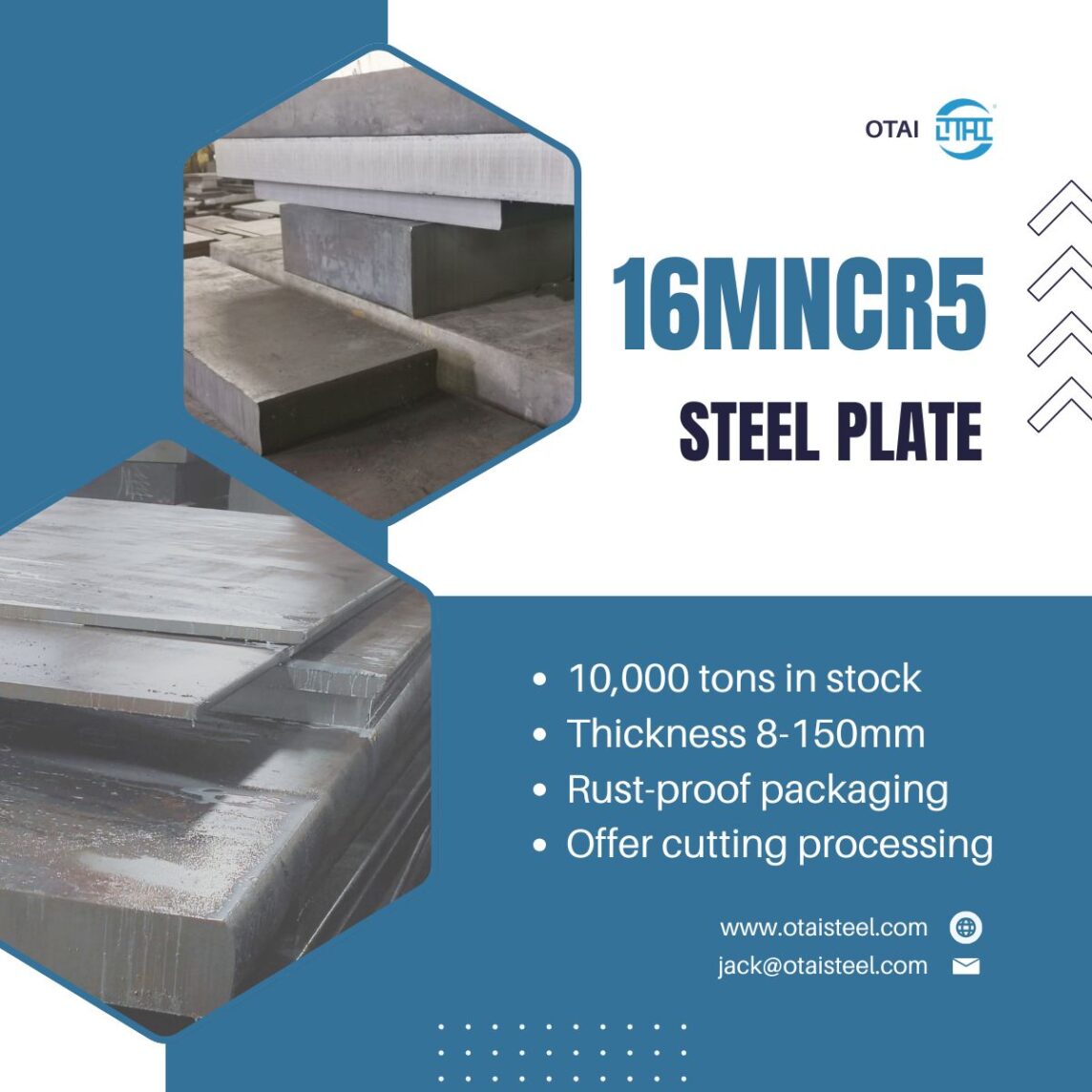
Why Choose 16MnCr5 Flat Bars?

Why Choose 16MnCr5 Flat Bars?Why Choose 16MnCr5 Flat Bars?

16MnCr5 flat bars are an excellent choice in industries that require durable, high-strength materials for manufacturing components exposed to wear and high stress. Known for its toughness, wear resistance, and strength, 16MnCr5 has a wide range of applications, especially in the automotive, aerospace, and industrial machinery sectors. In this article, we will explore the properties, advantages, and applications of 16MnCr5 flat bars.


🔍 What is 16MnCr5 Steel?

16MnCr5 is a medium-carbon alloy steel that combines manganese (Mn) and chromium (Cr) to improve its mechanical properties. The carbon content in this steel is carefully controlled to achieve a good balance between strength and toughness. The 16MnCr5 flat bar is widely used for manufacturing gears, shafts, and other components that require high wear resistance and strength under stress.

Chemical Composition of 16MnCr5 Steel:

Element Percentage (%)
Carbon (C) 0.14–0.20
Manganese (Mn) 1.00–1.30
Chromium (Cr) 0.80–1.10
Silicon (Si) 0.30–0.50
Phosphorus (P) 0.035 max
Sulfur (S) 0.035 max

🧪 Mechanical Properties of 16MnCr5 Flat Bar

The mechanical properties of 16MnCr5 flat bars are what make them ideal for gears, shafts, and machine tools. These properties depend heavily on the steel’s heat treatment and chemical composition. Here are the typical mechanical properties for 16MnCr5:

Property Value
Tensile Strength 700–900 MPa
Yield Strength 450–650 MPa
Elongation 14–20%
Brinell Hardness 170–230 HB
Impact Toughness 40–50 J (at -20°C)

These values can vary based on the heat treatment process, such as quenching, tempering, or carburizing, which helps improve the hardness and toughness of 16MnCr5 flat bars.


🔨 Heat Treatment for 16MnCr5 Flat Bar

To optimize its mechanical properties, 16MnCr5 flat bar can undergo a variety of heat treatments. These processes are crucial for improving the hardness, wear resistance, and toughness of the material. The main heat treatments used for 16MnCr5 include:

  • Quenching: Heating the flat bar to a high temperature and rapidly cooling it in oil or water to increase its hardness and strength.

  • Tempering: This process follows quenching and involves reheating the steel to a lower temperature to relieve internal stresses while maintaining toughness.

  • Carburizing: A heat treatment that adds carbon to the surface of the steel, enhancing its surface hardness while retaining core toughness.

Heat Treatment Process Effect on Material
Quenching Increases hardness and strength
Tempering Relieves stresses and maintains toughness
Carburizing Enhances surface hardness

🧰 Applications of 16MnCr5 Flat Bar

16MnCr5 flat bars are highly versatile and widely used across multiple industries due to their excellent strength, wear resistance, and toughness. Here are some common applications for 16MnCr5 flat bars:

Industry Application
Automotive Axles, crankshafts, gears, and steering components require high strength and wear resistance.
Aerospace Components like turbine shafts, landing gear, and engine parts benefit from the high toughness and resilience of 16MnCr5.
Industrial Machinery Used in the manufacturing of machine tools, gears, and shafts for high-stress applications.
Heavy Equipment Hydraulic pistons, shafts, and crankshafts in heavy machinery require 16MnCr5 flat bars for long-lasting durability.

Because 16MnCr5 flat bars offer exceptional resistance to wear and high stress, they are used in applications where components are exposed to challenging environments, such as gears and machine shafts that need long-lasting strength and performance.


⚙️ Why Choose 16MnCr5 Flat Bar?

The combination of strength, toughness, and wear resistance makes 16MnCr5 flat bars an ideal choice for industries where high-performance materials are essential. Whether for automotive, aerospace, or industrial applications, 16MnCr5 delivers the reliability required for demanding components.

16MnCr5 flat bars offer the following benefits:

  • High tensile strength and wear resistance for high-demand applications

  • Excellent toughness under impact stress

  • Ability to be heat-treated to enhance surface hardness and core toughness

Choosing 16MnCr5 flat bars means selecting a material that provides long-lasting durability and excellent performance in high-stress environments.


🏆 Why Choose Otai Special Steel for 16MnCr5 Flat Bar?

At Otai Special Steel, we provide high-quality 16MnCr5 flat bar that meet the strictest industry standards. Our materials undergo rigorous testing for mechanical properties like Brinell hardness and impact toughness to ensure their suitability for demanding applications.

Company Advantages:

  • Superior Quality: Our products undergo strict quality control checks, ensuring top-notch material properties.

  • Extensive Inventory: We maintain a large inventory, ensuring quick delivery and minimal lead times.

  • Tailored Solutions: We offer customized services, including cutting, heat treatment, and surface finishing, to meet specific requirements.

  • Competitive Pricing: Thanks to our partnerships with leading mills, we offer competitive pricing without compromising quality.


FAQ

Q1: What is the main use of 16MnCr5 flat bar?

  • A1: 16MnCr5 flat bars are ideal for gears, shafts, and machine tools in automotive, aerospace, and industrial machinery applications.

Q2: How does heat treatment affect 16MnCr5 flat bar?

  • A2: Heat treatment processes like quenching and tempering improve the hardness, strength, and toughness of 16MnCr5 flat bars, making them suitable for high-stress and high-wear applications.

Q3: What is the Brinell hardness of 16MnCr5?

  • A3: The Brinell hardness of 16MnCr5 ranges from 170 HB to 230 HB, depending on the heat treatment process used.

Q4: Can 16MnCr5 flat bar be used in the aerospace industry?

  • A4: Yes, 16MnCr5 flat bars are used in the aerospace industry for components like turbine shafts and landing gear, where high impact toughness and resilience are required.

Q5: How can I order 16MnCr5 flat bar?

  • A5: You can contact Otai Special Steel for premium-quality 16MnCr5 flat bars. We offer competitive pricing, customized services, and fast delivery.

0 0 Continue Reading →

How Heat Treatment Affects the Microstructure of 4140 Steel

How Heat Treatment Affects the Microstructure of 4140 SteelHow Heat Treatment Affects the Microstructure of 4140 Steel

The microstructure of 4140 steel plays a crucial role in determining its mechanical properties, such as strength, toughness, and resistance to wear. Understanding how the microstructure of this alloy develops and how it affects the steel’s performance can help manufacturers and engineers optimize its use for various applications. In this article, we will explore the microstructure of 4140 steel, how it contributes to its properties, and why it’s a popular choice in industries requiring high-performance materials.


🏗️ What is 4140 Steel?

4140 steel is a medium-carbon alloy steel containing chromium and molybdenum. These alloying elements enhance the steel’s properties, particularly in terms of hardness, strength, and resistance to wear and fatigue. Commonly used in the automotive, aerospace, and heavy machinery industries, 4140 steel offers a combination of good tensile strength, toughness, and fatigue resistance, which makes it suitable for high-stress applications.


🔬 The Microstructure of 4140 Steel

The microstructure of a material refers to the arrangement of its internal structures, such as grains, phases, and boundaries, on a microscopic scale. For 4140 steel, its microstructure plays a significant role in determining its mechanical properties.

At the core of 4140 steel’s microstructure are three main phases:

1. Ferrite

  • Ferrite is the body-centered cubic (BCC) form of iron that dominates in low-carbon steels. In 4140 steel, ferrite is the softer phase and is responsible for the steel’s ductility and toughness.

  • It is typically found along the grain boundaries and can influence the strength of the material.

2. Pearlite

  • Pearlite is a mixture of ferrite and cementite (Fe₃C), and it forms as 4140 steel cools from a high temperature. This phase is essential for providing the steel with its tensile strength and hardness.

  • The alternating layers of ferrite and cementite in pearlite contribute to the steel’s strength, making it suitable for applications requiring good wear resistance.

3. Martensite

  • Martensite forms when 4140 steel is rapidly cooled (quenched) from the austenitic phase, resulting in a much harder, stronger phase.

  • Martensitic structures provide significant strength, hardness, and wear resistance, though they can make the steel more brittle.

  • Depending on the cooling rate and tempering process, the amount of martensite in the steel can vary, directly influencing its overall properties.

4. Cementite

  • Cementite (Fe₃C) is an iron carbide phase that contributes to the hardness and wear resistance of 4140 steel. The distribution of cementite within the microstructure influences the steel’s strength.

  • In 4140 steel, cementite is often part of the pearlite structure and can provide additional hardness, especially when present in higher amounts.


🔧 How Heat Treatment Affects the Microstructure of 4140 Steel

Heat treatment is critical for modifying the microstructure of 4140 steel and, consequently, its mechanical properties. Different heat treatment processes can alter the proportion of ferrite, pearlite, martensite, and cementite within the material. Here are some common heat treatments used with 4140 steel:

1. Annealing

  • Annealing is a heat treatment process where 4140 steel is heated to a specific temperature and then slowly cooled. This process helps to relieve internal stresses and soften the steel.

  • Annealed 4140 steel typically has a higher proportion of ferrite and pearlite, making it more ductile and easier to machine.

2. Quenching and Tempering

  • Quenching involves heating the steel to its austenitic range and then rapidly cooling it, usually in water or oil, to form a martensitic structure. After quenching, tempering is performed to reduce brittleness by reheating the steel to a lower temperature.

  • The result is a 4140 steel that has a higher hardness, strength, and wear resistance, thanks to the formation of martensite in the microstructure.

3. Normalizing

  • Normalizing involves heating 4140 steel to a temperature above its critical range and then air-cooling it. This process refines the grain structure and makes the steel more uniform, improving its mechanical properties like strength and toughness.


💡 How the Microstructure Affects the Properties of 4140 Steel

The microstructure directly influences the physical properties of 4140 steel. Here’s how each phase affects the material’s overall performance:

1. Strength and Hardness

  • The amount of martensite and cementite in the microstructure increases the hardness and tensile strength of the steel. As 4140 steel cools rapidly during quenching, the formation of martensite significantly increases its hardness, making it suitable for high-stress applications.

2. Toughness and Ductility

  • The ferrite phase enhances the toughness and ductility of the steel. While martensite increases strength, it can make the steel more brittle. Therefore, the presence of ferrite is crucial for balancing strength with toughness.

3. Wear Resistance

  • The pearlite and cementite phases contribute to the wear resistance of 4140 steel, making it a preferred choice for components exposed to abrasive forces, such as gears, shafts, and axles.


📊 Microstructure and Properties Comparison

Here is a quick comparison of the microstructure and properties of 4140 steel compared to other common steels:

Material Primary Microstructure Hardness Tensile Strength Wear Resistance Applications
4140 Steel Martensite, Pearlite, Cementite High 655-1,000 MPa High Automotive, aerospace, industrial machinery
1045 Steel Pearlite, Ferrite Medium 600-800 MPa Medium General engineering, manufacturing
4142 Steel Martensite, Pearlite High 700-950 MPa High Heavy machinery, automotive
AISI 4340 Martensite, Pearlite Very High 850-1,100 MPa Very High Aerospace, military

🏆 Why Choose Otai Special Steel for Your 4140 Steel Needs?

At Otai Special Steel, we specialize in providing top-quality 4140 steel with optimized heat treatments to achieve the ideal microstructure for your specific applications. Our 4140 steel products are available in various forms, including plates, bars, and rods, and can be customized to meet your exact requirements.

Advantages of Working with Otai Special Steel:

  • High-Quality Materials: We ensure that our 4140 steel meets the highest standards of quality, performance, and reliability.

  • Customized Heat Treatments: We offer customized heat treatments to tailor the microstructure of 4140 steel for your specific needs.

  • Competitive Pricing: Our 4140 steel products are offered at competitive prices, ensuring excellent value without compromising on quality.

  • Fast Delivery: We maintain a large inventory and efficient logistics, ensuring timely deliveries to meet your project deadlines.


Frequently Asked Questions (FAQ)

Q1: What is the typical microstructure of 4140 steel?

  • A1: The typical microstructure of 4140 steel consists of martensite, pearlite, and cementite, which contribute to its strength, hardness, and wear resistance.

Q2: How does heat treatment affect the microstructure of 4140 steel?

  • A2: Heat treatment processes like quenching and tempering alter the microstructure of 4140 steel, increasing its hardness and strength while improving its toughness and ductility.

Q3: Can the microstructure of 4140 steel be customized?

  • A3: Yes, the microstructure of 4140 steel can be customized through various heat treatments to achieve specific properties like strength, toughness, and wear resistance, depending on the intended application.

0 0 Continue Reading →

16MnCr5 Steel Equivalents: Exploring Similar Steels

16MnCr5 Steel Equivalents: Exploring Similar Steels16MnCr5 Steel Equivalents: Exploring Similar Steels

16MnCr5 steel is a widely used medium-carbon, low-alloy steel that combines manganese and chromium as its key alloying elements. Engineers prefer this steel for components that must endure high stress, wear, and fatigue. However, several other steels possess similar mechanical properties, making them viable substitutes for 16MnCr5 steel in specific applications. This article explores the equivalent steel to 16MnCr5 steel, their properties, and common uses.


🏗️ What is 16MnCr5 Steel?

16MnCr5 steel is a medium-carbon alloy steel with a composition that includes manganese and chromium to improve toughness, strength, and wear resistance. The “16” in the name refers to the approximate carbon content (0.16%), while Mn stands for manganese, enhancing hardenability, and Cr represents chromium, which improves wear resistance and toughness.

This steel is commonly used in the production of high-performance components, such as gears, shafts, crankshafts, and axles. Its combination of strength, durability, and resistance to fatigue makes it ideal for applications in automotive and industrial machinery.


🔧 Composition of 16MnCr5 Steel

16MnCr5 steel contains the following elements:

  • Carbon (C): 0.14% – 0.20%

  • Manganese (Mn): 0.60% – 0.90%

  • Chromium (Cr): 0.80% – 1.10%

  • Silicon (Si): 0.15% – 0.35%

  • Phosphorus (P): ≤ 0.025%

  • Sulfur (S): ≤ 0.025%

The combination of manganese and chromium gives 16MnCr5 steel excellent toughness, resistance to wear, and hardening properties. These features make it suitable for parts exposed to mechanical stress, fatigue, and high-pressure conditions.


🔨 Mechanical Properties of 16MnCr5 Steel

The mechanical properties of 16MnCr5 steel make it a popular choice in various high-performance applications. Key properties include:

1. Tensile Strength

  • Tensile strength measures the material’s ability to resist pulling forces. 16MnCr5 steel typically has a tensile strength ranging from 600 to 900 MPa, making it ideal for high-stress applications, especially in automotive and industrial machinery.

2. Yield Strength

  • Yield strength indicates the point at which the material begins to deform plastically. 16MnCr5 steel exhibits a yield strength between 450 to 650 MPa, allowing it to endure significant loads without permanent deformation.

3. Hardness

  • 16MnCr5 steel can achieve a hardness range of 55 to 62 HRC (Rockwell C scale) depending on the heat treatment it undergoes. The steel’s hardness makes it resistant to wear, which is particularly useful in components like bearings, gears, and shafts.

4. Fatigue Strength

  • 16MnCr5 steel offers excellent fatigue resistance, enabling it to withstand repeated loading cycles without failure. This property makes it ideal for components like crankshafts and axles that experience cyclic loading during operation.

5. Impact Toughness

  • The steel’s impact toughness ensures it can absorb energy from sudden shocks without fracturing. This makes 16MnCr5 steel suitable for components exposed to high impact, such as automotive parts and industrial machinery.


🔨 Heat Treatment of 16MnCr5 Steel

Heat treatment plays a crucial role in enhancing the mechanical properties of 16MnCr5 steel. By applying specific heat treatment processes, engineers can increase its strength, hardness, and wear resistance.

1. Carburizing

  • Carburizing introduces additional carbon to the surface of 16MnCr5 steel, creating a hardened outer layer while maintaining a tougher core. This process improves wear resistance and is commonly used for parts like gears and sprockets that face high levels of friction.

2. Quenching and Tempering

  • Quenching involves heating 16MnCr5 steel to a high temperature and then cooling it rapidly. This process forms a martensitic structure that increases strength. After quenching, tempering helps reduce brittleness and improves the material’s toughness and ductility.

3. Normalizing

  • Normalizing involves heating the steel to a temperature above its critical range and allowing it to cool in air. This process refines the grain structure, improving the overall toughness and strength of the steel.


🏗️ Applications of 16MnCr5 Steel

Due to its combination of toughness, wear resistance, and strength, 16MnCr5 steel is used in a variety of demanding applications. Some of the common uses include:

1. Automotive Components

  • 16MnCr5 steel is used extensively in the automotive industry for parts like gears, shafts, crankshafts, and axles. These parts require high strength and fatigue resistance to function reliably under extreme operating conditions.

2. Industrial Machinery

  • The industrial machinery sector uses 16MnCr5 steel in components such as bearings, shafts, and sprockets. Its resistance to wear and impact toughness make it a go-to material for heavy-duty machinery that operates under high stress.

3. Heavy Equipment

  • 16MnCr5 steel finds applications in heavy equipment like construction machinery and mining equipment. These components must endure significant stress and harsh environments, making the steel’s toughness and resistance to wear critical.

4. Gears and Shafts

  • Thanks to its excellent hardness and fatigue resistance, 16MnCr5 steel is ideal for producing gears and shafts. These parts need to endure constant friction, wear, and dynamic forces over extended periods of use.


📊 Comparison of 16MnCr5 Steel with Other Materials

Here is a comparison of the tensile strength, yield strength, and hardness of 16MnCr5 steel and some of its key equivalents:

Material Tensile Strength (MPa) Yield Strength (MPa) Hardness (HRC) Applications
16MnCr5 Steel 600–900 450–650 55–62 Automotive parts, gears, shafts, industrial machinery
AISI 5120 Steel 600–850 400–650 28–50 Automotive gears, axles, crankshafts
EN 19 (1.4511) 850–1,100 450–650 30–40 Engine components, industrial machinery
42CrMo4 (1.7225) 900–1,050 600–750 30–50 Gears, axles, crankshafts
AISI 4130 Steel 670–1,000 430–600 28–50 Aerospace, military, automotive
SAE 8620 Steel 600–850 400–550 20–30 Gears, automotive components, shafts

🏆 Why Choose Otai Special Steel for Your 16MnCr5 Steel Needs?

At Otai Special Steel, we specialize in providing high-quality 16MnCr5 steel and its equivalents. We offer precision cutting, heat treatment, and packaging services to meet the specific needs of your project. Whether you need gears, shafts, or custom parts, we provide solutions that enhance the performance and durability of your components.

Advantages of Working with Otai Special Steel:

  • Top-Quality Materials: We provide 16MnCr5 steel with consistent quality and mechanical properties.

  • Customization: We offer custom cutting, heat treatment, and machining tailored to your exact specifications.

  • Competitive Pricing: Our 16MnCr5 steel comes at competitive prices, offering excellent value without compromising quality.

  • Fast Delivery: With our extensive inventory, we guarantee fast and reliable delivery to meet your project deadlines.


Frequently Asked Questions (FAQ)

Q1: What are the main equivalent of 16MnCr5 steel?

  • A1: Some of the main equivalents include AISI 5120, EN 19 (1.4511), 42CrMo4 (1.7225), AISI 4130, and SAE 8620 steel. These materials have similar mechanical properties and are often used as substitutes in specific applications.

Q2: How do I choose between 16MnCr5 steel and its equivalents?

  • A2: The choice between 16MnCr5 and its equivalents depends on factors such as strength, hardness, toughness, and cost. For example, 42CrMo4 offers better fatigue resistance, while AISI 4130 may be more suitable for aerospace applications where weight reduction is important.

Q3: Can 16MnCr5 steel be used for high-temperature applications?

  • A3: 16MnCr5 steel can perform in moderate temperature environments, but for extreme heat conditions, alternatives like 42CrMo4 or AISI 4340 may offer superior performance in high-temperature applications.

0 0 Continue Reading →

How Is Hardness Measured in 4140 Steel?

How Is Hardness Measured in 4140 Steel?How Is Hardness Measured in 4140 Steel?

4140 steel is a highly versatile chromium-molybdenum alloy steel that stands out for its excellent combination of strength, toughness, and wear resistance. The hardness of 4140 steel plays a crucial role in determining its performance. Specifically, the minimum hardness influences the material’s machinability, wear resistance, and ability to withstand stress and fatigue. In this article, we will explore the minimum hardness of 4140 steel, its significance, how to measure it, and how it affects the steel’s performance.


🧪 What is 4140 Steel?

Chromium and molybdenum in 4140 alloy steel boost its hardness, strength, and toughness. Gears, shafts, crankshafts, and machine tools that battle abrasion and fatigue rely on it. Heat treatment tailors its properties, with hardness a key focus. For high-stress, high-wear parts, minimum hardness is crucial.


🔧 What is the Minimum Hardness of 4140 Steel?

The minimum hardness of 4140 steel refers to the lowest achievable hardness value after undergoing heat treatment. This value is critical because it indicates the material’s ability to withstand wear, abrasion, and deformation. In the pre-hardened state, 4140 steel typically exhibits a minimum hardness between 28 HRC and 32 HRC.

Why Minimum Hardness Matters

The minimum hardness directly impacts the material’s resistance to wear and ability to perform under load. While 4140 steel can be heat-treated to higher hardness levels, maintaining a minimum hardness ensures that the material retains strength and toughness for its intended application.


🔥 How Is Hardness Measured in 4140 Steel?

The hardness of 4140 steel is commonly measured using the Rockwell C scale (HRC). The process involves applying a diamond indenter to the material’s surface under a specific load. The resulting depth of the indentation correlates with the material’s hardness. A higher HRC indicates greater hardness.

For 4140 steel, the typical hardness values are:

  • 28 HRC to 32 HRC: The standard range for pre-hardened 4140 steel.

  • 40 HRC to 45 HRC: Achieved after quenching and tempering for higher wear resistance.

  • 50 HRC to 60 HRC: Achieved through carburizing for high-wear applications.


🔧 How Heat Treatment Affects Hardness

Heat treatment plays a significant role in controlling the hardness of 4140 steel. By applying different heat treatments, manufacturers can modify the steel’s hardness to suit specific application requirements.

1. Carburizing and Quenching

Carburizing introduces carbon into the surface of 4140 steel, which increases its surface hardness. After carburizing, the steel undergoes quenching, where rapid cooling enhances the hardness of the outer layer while leaving the interior relatively unaffected. This treatment is ideal for parts that need a hard surface and a tough core, such as gears and bearings.

2. Quenching and Tempering

Quenching involves heating 4140 steel to a high temperature and then rapidly cooling it, resulting in increased hardness but also brittleness. Tempering follows to relieve stress and reduce brittleness while retaining a high degree of strength and toughness.

3. Normalizing

Normalizing involves heating 4140 steel to a specific temperature above the critical range and allowing it to cool in air. This process refines the grain structure, making the material more uniform and improving its machinability. After normalizing, the steel achieves a hardness of 20 HRC to 30 HRC, which is suitable for applications requiring machinability and strength without the need for high surface hardness.


🏗️ Applications of 4140 Steel with Minimum Hardness

The minimum hardness of 4140 steel determines its suitability for different industrial applications. Here are some common uses of 4140 steel based on its hardness:

1. Automotive Industry

4140 steel is frequently used in the automotive industry for manufacturing axles, crankshafts, suspension components, and gears. The minimum hardness of 4140 steel ensures that these components can withstand high mechanical loads and wear without failing.

2. Oil and Gas Industry

In the oil and gas industry, 4140 steel is used for drill rods, pumps, and valves. The minimum hardness helps these components resist abrasion and fatigue when exposed to extreme conditions, such as high pressure and temperature.

3. Industrial Machinery

4140 steel is widely used for machine tools, bearings, shafts, and spindles. The minimum hardness of the steel ensures that these components can withstand continuous mechanical stress while maintaining their integrity.

4. Heavy Equipment

In heavy equipment, 4140 steel is used for manufacturing components like pins, bushings, and crankshafts. The minimum hardness of 4140 steel ensures durability and resistance to impact in demanding environments.


📊 Hardness Comparison of 4140 Steel

Heat Treatment Process Hardness Range Ideal Application
Prehardened 28 – 32 HRC General Machinery Parts
Carburizing + Quenching 50 – 60 HRC Gears, Shafts, High-Wear Parts
Quenching + Tempering 30 – 45 HRC Automotive Components, Industrial Machinery
Normalizing 20 – 30 HRC General Purpose, Machining

🏅 Company Advantages – Otai Special Steel

At Otai Special Steel, we provide 4140 steel with consistent hardness levels and high-quality standards. We offer custom cutting, heat treatment, and precision machining to ensure that your materials meet the specific needs of your application.

Why Choose Otai Special Steel?

  • High-Quality Materials: We offer 4140 steel with reliable hardness and performance.

  • Customization: Custom cutting, machining, and heat treatment services available.

  • Fast Delivery: We maintain a large inventory for timely delivery.

  • Technical Support: Our experts help you select the best materials for your project.


Frequently Asked Questions (FAQ)

Q1: What is the typical hardness of 4140 steel?
A1: 4140 steel typically has a minimum hardness between 28 HRC and 32 HRC in its pre-hardened form. Additional heat treatment can increase its hardness to higher values.

Q2: How can I increase the hardness of 4140 steel?
A2: You can increase the hardness of 4140 steel through quenching and tempering, carburizing, or induction hardening, depending on the required application.

0 0 Continue Reading →

The Importance of Hardness in 16MnCr5 alloy Steel

The Importance of Hardness in 16MnCr5 alloy SteelThe Importance of Hardness in 16MnCr5 alloy Steel

16MnCr5 steel is a widely used low-alloy steel known for its combination of strength, toughness, and wear resistance. A key factor influencing its performance in demanding applications is its hardness. The hardness of 16MnCr5 steel determines its ability to resist wear, deformation, and cracking under stress. Achieving the optimal hardness is essential for ensuring that 16MnCr5 steel performs reliably in components such as gears, shafts, crankshafts, and bearings.

In this article, we will explore the significance of hardness in 16MnCr5 steel, how it is measured, the heat treatment processes that influence it, and its impact on the steel’s overall performance.


🧪 What is 16MnCr5 Steel?

16MnCr5 steel is a low-alloy carburizing steel commonly used for parts requiring high strength, wear resistance, and fatigue resistance. It contains manganese and chromium as its main alloying elements, which enhance its hardenability and overall mechanical properties. This steel grade is commonly used for gears, bearings, axles, and other industrial components that need a combination of high surface hardness and toughness.

Due to its ability to achieve high surface hardness through carburizing, 16MnCr5 steel plays a crucial role in components subjected to heavy wear and stress.


🔧 The Importance of Hardness in 16MnCr5 Steel

Hardness refers to the material’s resistance to indentation, abrasion, and deformation. In 16MnCr5 steel, achieving the right level of hardness improves the material’s ability to perform in high-stress, high-wear conditions. Hardness directly affects:

  • Wear resistance: Harder surfaces resist abrasion and friction, making them ideal for parts exposed to wear and corrosion.

  • Fatigue resistance: The right hardness helps prevent components from fatiguing under cyclic loads, especially in rotating or moving parts.

  • Deformation resistance: Hardness ensures that parts do not deform or warp under heavy loads.

Hardness and Heat Treatment

Heat treatment plays a crucial role in controlling the hardness of 16MnCr5 steel. Through processes such as carburizing, quenching, and tempering, the steel’s surface hardness can be significantly improved, while the core remains tough to withstand dynamic loads and impacts.


🔥 Heat Treatment Processes that Influence Hardness

The hardness of 16MnCr5 steel can be modified using various heat treatment processes, including carburizing, quenching, and tempering. These processes ensure that the material exhibits the necessary balance of surface hardness and core toughness.

1. Carburizing and Quenching

Carburizing is a heat treatment process that introduces carbon into the surface of 16MnCr5 steel, increasing its surface hardness. After carburizing, the steel is quenched (rapidly cooled) in oil or water, which hardens the surface layer. This process creates a hard outer layer with a tough core, providing both wear resistance and impact resistance.

Effects of Carburizing and Quenching on Hardness:

Property Before Carburizing After Carburizing + Quenching
Surface Hardness 170 – 220 HB 56 – 62 HRC
Core Hardness 150 HB 30 – 40 HRC

Carburizing significantly increases the surface hardness, making 16MnCr5 steel ideal for high-wear applications like gears and bearings.

2. Quenching and Tempering

After quenching, the steel becomes very hard but also brittle. To improve its toughness, the steel undergoes tempering, where it is reheated to a lower temperature (usually between 400°C and 650°C) and then slowly cooled. This process reduces brittleness and improves the overall strength and toughness while maintaining the desired hardness.

Effects of Quenching and Tempering on Hardness:

  • Surface Hardness: Remains high after quenching, but can be adjusted through tempering.

  • Core Toughness: Improved while maintaining the strength achieved by quenching.

This combination of hardness and toughness makes quenching and tempering a widely used treatment for components like axles and screws.

3. Normalizing

Normalizing involves heating the steel to a temperature between 850°C and 900°C and then air-cooling it. This process refines the grain structure, ensuring uniform properties throughout the material. While normalizing does not provide as high a surface hardness as carburizing, it is useful for improving the machinability and strength of 16MnCr5 steel.


📊 Hardness and Performance of 16MnCr5 Steel

The hardness of 16MnCr5 steel directly correlates to its performance in various applications. Here is an overview of how different heat treatments influence the material’s performance:

Heat Treatment Process Surface Hardness Core Hardness Ideal Application
Carburizing + Quenching 56 – 62 HRC 30 – 40 HRC Gears, Bearings, Crankshafts
Quenching + Tempering 50 – 55 HRC 30 – 40 HRC Axles, Shafts, Machine Parts
Normalizing 170 – 220 HB 150 HB General Engineering Components

🏗️ Applications of 16MnCr5 Steel

The high surface hardness and tough core of 16MnCr5 steel make it suitable for a wide variety of industrial applications. It is commonly used in:

  • Automotive: Axles, gears, crankshafts, and suspension components that require a combination of wear resistance and toughness.

  • Aerospace: Landing gear components, fasteners, and wheels that must withstand high stress and fatigue.

  • Oil and Gas: Drill rods, pumps, and valves exposed to harsh conditions.

  • Industrial Machinery: Machine tool components, gears, bearings, and spindles that require high strength and fatigue resistance.


🏅 Company Advantages – Otai Special Steel

At Otai Special Steel, we provide high-quality 16MnCr5 steel with tailored hardness for your specific application. Whether you need custom cutting, heat treatment, or material certification, we ensure your order meets the highest quality standards.

Why Choose Otai Special Steel?

  • High-Quality Materials: We offer 16MnCr5 steel with consistent properties to meet your application needs.

  • Customization: Custom cutting, heat treatment, and precision machining available.

  • Fast Delivery: Our large inventory and reliable logistics ensure timely delivery.

  • Technical Support: We provide expert guidance to help you select the right material for your project.


Frequently Asked Questions (FAQ)

Q1: What is the ideal hardness for 16MnCr5 alloy steel?
A1: The ideal hardness depends on the application. For wear resistance, carburizing and quenching provide the highest surface hardness. For strength and toughness, quenching and tempering offer a balanced solution.

Q2: Can I achieve high surface hardness without compromising the core toughness of 16MnCr5 steel?
A2: Yes, carburizing and quenching creates a hard surface while maintaining a tough core, making it suitable for high-wear applications where the material needs both strength and toughness.

Q3: Does 16MnCr5 steel require special treatment to improve fatigue resistance?
A3: Quenching and tempering improve fatigue resistance by balancing hardness with toughness. Carburizing enhances wear resistance while improving fatigue performance.

0 0 Continue Reading →

4140 Steel’s key Characteristics: Understanding its Strength and Versatility

4140 Steel's key Characteristics: Understanding its Strength and Versatility4140 Steel’s key Characteristics: Understanding its Strength and Versatility

4140 steel is a versatile chromium-molybdenum alloy steel known for its strength, hardness, and toughness. With its excellent mechanical properties, it serves a wide range of industrial applications, from automotive to machinery. Understanding the key characteristics of 4140 steel helps engineers optimize its performance in critical applications requiring high strength, fatigue resistance, and durability.

In this article, we’ll explore the key characteristics of 4140 steel, how its composition affects performance, and the processes that enhance its properties. We’ll also discuss common applications and compare 4140 steel to other materials in terms of performance and cost.


🧪 What is 4140 Steel?

4140 steel is a medium-carbon, low-alloy steel containing chromium and molybdenum as its main alloying elements. These elements improve the steel’s hardenability, strength, and toughness. As a chromium-molybdenum (Cr-Mo) alloy, 4140 steel works well in applications demanding both high strength and wear resistance.

The composition typically includes:

  • 0.40% Carbon
  • 0.90% – 1.20% Chromium
  • 0.15% – 0.25% Molybdenum
  • Manganese and Silicon for improved strength and machinability

4140 steel excels in applications where strength and toughness are crucial, making it an ideal choice for parts under high-stress conditions.


🔧 4140 Steel’s key Characteristics

4140 steel is widely known for its high strength, excellent toughness, and good machinability. Below, we outline the main characteristics of 4140 steel:

1. High Strength

The tensile strength of 4140 steel ranges from 850 MPa to 1000 MPa, making it ideal for parts that must endure high mechanical stress.

  • Yield Strength: Typically ranges from 650 MPa to 850 MPa
  • Tensile Strength: Typically ranges from 850 MPa to 1000 MPa

This high strength makes 4140 steel perfect for axles, shafts, and gears that need to withstand significant forces.

2. Excellent Toughness

4140 steel maintains high toughness, allowing it to absorb energy under impact loading without failing. It performs well under both static and dynamic loads, especially when exposed to frequent impacts.

  • Impact Toughness: Typically ranges from 35 J to 55 J at room temperature

This toughness makes 4140 steel suitable for machinery parts and automotive components exposed to frequent impacts.

3. Good Wear Resistance

The alloying elements in 4140 steel, such as chromium, provide it with good wear resistance. This feature is particularly valuable for gears, bearings, and other components subject to abrasive conditions.

  • Chromium significantly enhances its ability to resist wear, making it a top choice for components in rotating machinery.

4. Excellent Hardenability

Thanks to its chromium and molybdenum content, 4140 steel has excellent hardenability, allowing it to form a hardened surface layer while maintaining a ductile and tough core. This makes 4140 steel ideal for parts that need a hard surface and a tough interior.

  • After heat treatment, 4140 steel can achieve a surface hardness between 56 – 62 HRC.

5. Good Machinability and Weldability

Although 4140 steel is a relatively hard material, it machines well, especially in the annealed or normalized condition. It also has weldability, though careful control of the heat-affected zone is necessary to avoid cracking.

  • Welding Tip: Preheat the material before welding to reduce the risk of cracking.

This characteristic makes 4140 steel widely used in precision machining and industrial applications.


🛠️ Heat Treatment of 4140 Steel

One of the main advantages of 4140 steel is its ability to undergo heat treatment to adjust its strength, hardness, and toughness. Heat treatment processes include:

  1. Normalization: Refines the grain structure, improving uniformity and machining.
  2. Quenching and Tempering: Increases strength and hardness while balancing toughness.
  3. Induction Hardening: Hardens the surface without affecting the core.

Heat Treatment Process

Process Resulting Property Trend
Normalization Refines grain structure
Quenching High hardness (surface)
Tempering Balances toughness and strength
Induction Hardening Hardens surface, retains core toughness

4140 steel can be tailored to meet specific mechanical requirements through these processes.


🏗️ Applications of 4140 Steel

The versatile properties of 4140 steel make it suitable for many demanding applications. Some common uses include:

  • Automotive Industry: Axles, gears, drive shafts, crankshafts
  • Aerospace Industry: Landing gear components, wheels, fasteners
  • Industrial Machinery: Machine tool components, shafts, drives
  • Oil & Gas Industry: Drill rods, tubing, valves
  • Heavy Equipment: Pins, bushings, crankshafts

Each of these applications takes advantage of 4140 steel’s strength, toughness, and wear resistance, ensuring long-lasting and reliable performance.


📊 Comparison of 4140 Steel with Other Materials

Property 4140 Steel 1045 Steel 4340 Steel
Tensile Strength 850 – 1000 MPa 600 – 700 MPa 1000 – 1200 MPa
Yield Strength 650 – 850 MPa 400 – 500 MPa 900 – 1100 MPa
Wear Resistance Good Moderate Excellent
Toughness High Moderate Very High
Common Uses Gears, Shafts, Crankshafts General Purpose Parts Aerospace, Heavy-duty Parts

As shown, 4140 steel strikes a balance between strength, toughness, and wear resistance, making it a versatile material. However, if maximum strength is required, 4340 steel may be a better choice.


🏅 Company Advantages – Otai Special Steel

At Otai Special Steel, we provide 4140 steel with consistent quality and performance. We ensure that every batch meets industry standards and specifications, whether for custom cutting, heat treatment, or material certification.

Why Choose Otai Special Steel?

  • High-Quality Materials: We supply 4140 steel that meets international standards.
  • Customization: Custom cutting, heat treatment, and precision machining to meet your needs.
  • Fast Delivery: With a large inventory and reliable supply chain, we deliver your order on time.
  • Technical Expertise: Our team offers engineering support to help you select the right materials for your project.

Frequently Asked Questions (FAQ)

Q1: Can 4140 steel be used for welding?
A1: Yes, 4140 steel is weldable, but the heat-affected zone must be carefully controlled to avoid cracking.

Q2: How does 4140 steel compare to 4340 steel?
A2: While 4340 steel offers higher tensile strength, 4140 steel provides a better balance of strength and toughness, making it ideal for many industrial applications.

Q3: What industries use 4140 steel?
A3: 4140 steel is used in automotive, aerospace, industrial machinery, and oil and gas industries for components like gears, shafts, and drivetrain parts.


Jack Tan


📧 jack@otaisteel.com

📱 WhatsApp: +8676923190193

0 0 Continue Reading →

16MnCr5 Steel Flat Bar: A popular choice in various industries

16MnCr5 Steel Flat Bar: A popular choice in various industries16MnCr5 Steel Flat Bar: A popular choice in various industries

16MnCr5 steel is a low-alloy carburizing steel recognized for its high strength, toughness, and wear resistance. When processed into flat bars, 16MnCr5 steel becomes even more versatile, ideal for precision machining and high-performance components. This article discusses the properties, applications, and advantages of 16MnCr5 steel flat bars, and explains why they are a popular choice in various industries.


🧪 What is 16MnCr5 Steel Flat Bar?

16MnCr5 steel is an alloy steel that contains manganese and chromium. These elements improve the steel’s hardenability, wear resistance, and fatigue resistance. As a carburizing steel, 16MnCr5 steel is ideal for parts that require a hard surface and tough core. When formed into flat bars, this steel becomes even more adaptable and is commonly used in applications requiring strength and machinability.

Manufacturers create 16MnCr5 steel flat bars by rolling or forging the steel into flat, rectangular shapes, providing a reliable material for machining, cutting, and forming.


🔧 Properties of 16MnCr5 Steel Flat Bar

16MnCr5 steel flat bars offer a balanced combination of strength, toughness, and wear resistance. Heat treatment processes further enhance these properties, making the material ideal for various industrial applications.

Key Properties of 16MnCr5 Steel Flat Bar:

  1. Tensile Strength
    16MnCr5 steel flat bars have a tensile strength of 800 MPa to 1000 MPa, which makes them suitable for high-stress components like gears and shafts that undergo significant mechanical loads.

  2. Yield Strength
    The yield strength in its normalized or soft condition typically ranges from 600 MPa to 750 MPa. After heat treatment, especially carburizing, the yield strength significantly increases, enabling the steel to resist deformation under heavy loads.

  3. Wear Resistance
    The chromium content improves the steel’s wear resistance. After carburizing, the surface hardness increases, providing excellent protection against abrasion and wear, making it ideal for parts like bearings, cams, and gears.

  4. Toughness
    16MnCr5 steel retains high toughness, enabling components to withstand impact loading without cracking. Heat treatment ensures the material achieves both a hard surface and a tough core, ensuring durability under dynamic forces.

  5. Fatigue Resistance
    16MnCr5 steel flat bars show excellent fatigue resistance, allowing components to handle cyclic loading without failing over time. This characteristic makes the steel ideal for parts exposed to repeated stress, such as axles and crankshafts.


🔥 Heat Treatment of 16MnCr5 Steel Flat Bar

Heat treatment plays a crucial role in adjusting the mechanical properties of 16MnCr5 steel flat bars, enabling engineers to tailor the material for specific applications.

1. Carburizing and Quenching

Carburizing introduces carbon into the steel’s surface, which hardens the outer layer. The steel is then quenched in oil or water, creating a hardened surface while preserving a tough interior. This process significantly improves wear resistance and is ideal for parts like gears that experience high friction.

2. Quenching and Tempering

In quenching, the steel is heated to a high temperature and quickly cooled, increasing hardness but also making it more brittle. Tempering follows by reheating the steel to a lower temperature and cooling it slowly. This process restores toughness and improves fatigue resistance, making it suitable for parts like fasteners and machine components.

3. Normalizing

Normalizing refines the grain structure and improves the uniformity of 16MnCr5 steel flat bars. This treatment increases machinability and enhances the material’s strength distribution throughout the component.


🏗️ Applications of 16MnCr5 Steel Flat Bar

Thanks to its excellent combination of strength, toughness, and wear resistance, 16MnCr5 steel flat bars are used in various industries, including automotive, aerospace, oil & gas, and industrial machinery. The steel’s ability to withstand abrasion and cyclic loading makes it perfect for high-performance parts.

Common Applications Include:

  1. Automotive Industry
    16MnCr5 steel flat bars are used for manufacturing axles, gears, crankshafts, and suspension components that require high strength and wear resistance to handle the mechanical forces in automotive applications.

  2. Aerospace Industry
    Aerospace components like landing gear parts, fasteners, and wheels benefit from the fatigue resistance and strength of 16MnCr5 steel flat bars, ensuring reliability and performance in high-stress environments.

  3. Oil and Gas Industry
    16MnCr5 steel flat bars are ideal for use in drill rods, pumps, valves, and other components exposed to extreme conditions. Their wear resistance and fatigue strength make them suitable for the oil and gas industry, where parts endure harsh operational conditions.

  4. Industrial Machinery
    Components like machine tools, spindles, bearings, and gears benefit from the strength, machinability, and wear resistance of 16MnCr5 steel flat bars. These bars perform well under continuous, demanding industrial operations.

  5. Heavy Equipment
    16MnCr5 steel flat bars are commonly used for heavy-duty components such as pins, bushings, and crankshafts that require both strength and toughness to withstand heavy loads.


📊 Comparison with Other Steel Grades

Property 16MnCr5 Steel 1045 Steel 42CrMo4 Steel
Tensile Strength 800 – 1000 MPa 600 – 700 MPa 900 – 1100 MPa
Yield Strength 600 – 750 MPa 400 – 500 MPa 850 – 1000 MPa
Wear Resistance Excellent Moderate Very High
Fatigue Resistance High Moderate Very High
Machinability Good Moderate Moderate

16MnCr5 steel flat bars strike a perfect balance between strength, toughness, and wear resistance, outperforming 1045 steel in terms of wear resistance and fatigue strength. While 42CrMo4 steel offers higher strength, 16MnCr5 steel is more adaptable, offering superior machinability.


🏅 Company Advantages – Otai Special Steel

At Otai Special Steel, we provide high-quality 16MnCr5 steel flat bars with tailored mechanical properties for specific applications. We offer custom cutting, heat treatment, and precision machining to meet your exact needs.

Why Choose Otai Special Steel?

  • High-Quality Materials: We offer 16MnCr5 steel with consistent mechanical properties, ideal for a wide range of applications.

  • Customization: We provide custom cutting, heat treatment, and machining services to meet your specific needs.

  • Fast Delivery: With our large inventory and efficient logistics, we ensure timely delivery of your order.

  • Technical Support: Our team provides engineering support to help you select the right material for your project.


Frequently Asked Questions (FAQ)

Q1: Can 16MnCr5 steel flat bars be welded?
A1: Yes, 16MnCr5 steel flat bars are weldable, but preheating is recommended before welding to avoid cracking in the heat-affected zone.

Q2: What is the best heat treatment for 16MnCr5 steel flat bars?
A2: For high wear resistance, carburizing and quenching is the best option. For components requiring a balance of strength and toughness, quenching and tempering delivers optimal results.

Q3: How does 16MnCr5 steel compare to 1045 steel?
A3: 16MnCr5 steel offers better wear resistance and fatigue strength compared to 1045 steel, making it the ideal choice for components exposed to heavy mechanical stress.

0 0 Continue Reading →

Factors Affecting the Compressive Strength of 4140 Steel

Factors Affecting the Compressive Strength of 4140 SteelFactors Affecting the Compressive Strength of 4140 Steel

4140 steel is a widely used alloy steel known for its high tensile strength, toughness, and wear resistance. It is a popular choice in industries like automotive, aerospace, and machinery, especially for manufacturing gears, shafts, axles, and crankshafts. One of the key properties that make 4140 steel highly effective in these applications is its compressive strength, or its ability to withstand compressive forces before failing or deforming.

This article delves into the compressive strength of 4140 steel, factors that affect it, and its importance in various applications.


🏗️ What is Compressive Strength?

Compressive strength measures how much compression (squeezing or pushing) a material can withstand before it deforms or fails. It contrasts with tensile strength, which measures a material’s ability to resist stretching or pulling forces. Compressive strength becomes essential in applications where components are subject to pressing forces, such as in gears, pistons, and bearing housings.

For 4140 steel, compressive strength is determined by its chemical composition, heat treatment, and microstructure.


🔧 Factors Affecting the Compressive Strength of 4140 Steel

Several factors influence the compressive strength of 4140 steel. Understanding these factors helps in selecting the right material for various applications.

1. Material Composition

  • 4140 steel contains chromium (Cr) and molybdenum (Mo), which enhance the steel’s strength, hardness, and wear resistance. These alloying elements increase the steel’s ability to resist deformation under compressive loads.

2. Heat Treatment

  • Heat treatment is one of the most effective ways to improve the compressive strength of 4140 steel. Processes such as quenching and tempering refine the steel’s microstructure, increasing its tensile strength, hardness, and ultimately its compressive strength. Proper heat treatment ensures that the material performs better under compressive stress.

3. Microstructure

  • The microstructure of 4140 steel plays a significant role in its compressive strength. A fine-grain structure allows for better distribution of stress, improving the material’s strength under compressive forces. Heat treatments such as normalizing and hardening enhance the steel’s microstructure, ensuring superior mechanical properties.

4. Work Hardening

  • Work hardening, or strain hardening, occurs when 4140 steel experiences repeated compressive or tensile forces. This process increases the material’s compressive strength by making it harder and stronger with continued use.


🔨 Testing Compressive Strength of 4140 Steel

We test the compressive strength of 4140 steel by applying increasing compressive loads to a specimen until it deforms or fails. Here are two standard testing methods:

1. Direct Compression Test

  • In the direct compression test, a sample of 4140 steel is placed between two plates, and force is applied gradually. The test measures how much force the material can withstand before it experiences permanent deformation or failure.

2. Indentation Test

  • The indentation test involves pressing a hard material (such as a diamond) into the surface of 4140 steel. The depth of indentation indicates the material’s resistance to compression, allowing us to estimate its compressive strength.


🏭 Applications of 4140 Steel with High Compressive Strength

The compressive strength of 4140 steel makes it ideal for various applications where parts are subjected to high compressive forces. Below are some critical applications that benefit from 4140 steel’s high compressive strength:

1. Automotive Components

  • 4140 steel is commonly used in gears, shafts, crankshafts, and axles in the automotive industry. These components experience significant compressive forces during operation. Compressive strength ensures that these parts can withstand high mechanical stress and wear, ensuring long-lasting performance.

2. Bearings and Bearing Housings

  • Bearings and bearing housings made from 4140 steel need to withstand compressive forces and shear stresses during their operation. Compressive strength is crucial for maintaining the integrity of these components and preventing failure due to excessive load.

3. Hydraulic Components

  • Components like hydraulic cylinders and pistons made from 4140 steel operate under high-pressure conditions. Compressive strength ensures that these parts can endure constant force and pressure while maintaining structural integrity.

4. Aerospace Components

  • Aerospace parts such as landing gears, actuators, and turbocharger shafts made from 4140 steel need to perform reliably under compressive stress. The high compressive strength of 4140 steel ensures that these components can withstand the forces they encounter during flight and operation.

5. Heavy Equipment

  • 16MnCr5 steel is also used in heavy machinery and construction equipment like axles, gears, and hydraulic components. These components are exposed to high compressive forces during operation, making 4140 steel’s compressive strength essential for durability.


📊 Comparison of Compressive Strength and Other Mechanical Properties of 4140 Steel

Property 4140 Steel (After Hardening) 4140 Steel (Before Hardening)
Compressive Strength High (depends on heat treatment) Moderate
Tensile Strength High (1500-1600 MPa) Moderate (900-1000 MPa)
Yield Strength High (1100-1400 MPa) Moderate
Hardness 50-60 HRC 20-30 HRC
Ductility Moderate High

🏆 Why Choose Otai Special Steel for Your 4140 Steel Needs?

At Otai Special Steel, we provide high-quality 4140 steel that is optimized for compressive strength, toughness, and wear resistance. We offer custom cutting, heat treatment, and packaging services to meet your exact requirements.

Advantages of Working with Otai Special Steel:

  • Premium Materials: Our 4140 steel undergoes precise heat treatments to ensure excellent compressive strength and performance in demanding applications.

  • Customization: We provide custom cutting, heat treatment, and machining services tailored to your specific project needs.

  • Competitive Pricing: We offer high-performance steel at competitive prices, ensuring great value for your projects.

  • Fast Delivery: With a large inventory, we guarantee fast and reliable delivery to meet your deadlines.


Frequently Asked Questions (FAQ)

Q1: What is the Resistance to Compression of 4140 steel?

  • A1: 4140 steel typically achieves a compressive strength of around 1500-1600 MPa when properly heat treated.

Q2: How does heat treatment affect 4140 steel’s Resistance to Compression?

  • A2: Heat treatments like hardening and tempering increase 4140 steel’s compressive strength by refining its microstructure and improving its tensile strength.

Q3: Why is compressive strength important for 4140 steel in automotive and aerospace applications?

  • A3: Compressive strength ensures that 4140 steel components, such as gears and landing gears, can withstand high-pressure and load-bearing conditions without failure, ensuring durability and reliability.

0 0 Continue Reading →

Common Uses of 16MnCr5 Steel

Common Uses of 16MnCr5 SteelCommon Uses of 16MnCr5 Steel

16MnCr5 steel is a high-performance, medium-carbon alloy steel known for its strength, toughness, and wear resistance. These qualities make it a preferred material for components that must endure high mechanical stress and harsh operating conditions. 16MnCr5 steel excels in applications where toughness, fatigue resistance, and wear resistance are crucial. In this article, we’ll explore its various uses and how it performs across industries.


🏗️ What is 16MnCr5 Steel?

16MnCr5 steel is a low-alloy, medium-carbon steel that includes manganese and chromium as its main alloying elements. Manganese improves its strength and toughness, while chromium enhances its wear resistance and hardness. The combination of these properties makes 16MnCr5 a well-balanced material for a wide range of demanding applications.


🔧 Key Properties of 16MnCr5 Steel

Before we explore its uses, let’s review the key properties of 16MnCr5 steel:

  1. Tensile Strength: 16MnCr5 steel offers high tensile strength, typically ranging from 800 MPa to 1000 MPa, allowing it to withstand substantial mechanical stress.

  2. Hardness: With a Brinell hardness between 200-250 HB, 16MnCr5 steel provides excellent wear resistance, making it ideal for parts exposed to friction and wear.

  3. Ductility and Toughness: This steel has good ductility, allowing it to absorb energy under stress without fracturing. This property makes it suitable for components that undergo impact loading.

  4. Fatigue Resistance: 16MnCr5 steel performs well under cyclic loading and fatigue, making it perfect for parts exposed to repetitive stresses over time.


🔨 Common Uses of 16MnCr5 Steel

Thanks to its high strength and wear resistance, 16MnCr5 steel finds applications in several industries. Here are some of its most common uses:

1. Automotive Industry

  • 16MnCr5 steel is used extensively in the automotive industry to manufacture gears, shafts, crankshafts, and axles. These parts face high torque and dynamic stresses, and 16MnCr5 ensures they remain durable and reliable under tough conditions.

  • 16MnCr5‘s wear resistance makes it an excellent choice for gears in transmissions and differentials, where performance and reliability are essential.

2. Industrial Machinery

  • 16MnCr5 steel is essential in industrial machinery for bearings, gears, and camshafts. These parts endure continuous wear, high torque, and high-speed rotation. The hardness and toughness of 16MnCr5 guarantee long-term performance under demanding conditions.

  • Machine tools like spindles, crankshafts, and levers made from 16MnCr5 withstand abrasive conditions and high mechanical stress, ensuring long-lasting functionality.

3. Mining and Heavy Equipment

  • 16MnCr5 steel plays a vital role in the mining and heavy equipment industries for gears, axles, and drive shafts. These parts need to withstand heavy impact, abrasive wear, and high loads. 16MnCr5 provides the necessary toughness to handle shock loading, making it perfect for harsh environments such as mining and construction equipment.

4. Tooling and Dies

  • 16MnCr5 steel is a go-to material for tooling and dies that require strength, wear resistance, and toughness. Common applications include press tools, molds, and cutting tools.

  • The wear resistance and toughness of 16MnCr5 ensure that tools and dies perform well under high-stress, repetitive conditions, maintaining functionality over time.

5. Oil and Gas Industry

  • 16MnCr5 steel finds use in the oil and gas industry for valves, pumps, and drill bits. These parts must endure high pressures and extreme operating conditions.

  • The fatigue resistance and abrasion resistance of 16MnCr5 make it well-suited for demanding drilling and production environments.

6. Aerospace Industry

  • 16MnCr5 steel is also used in aerospace components such as landing gear parts, connectors, and valves. These components require both high strength and fatigue resistance, qualities that 16MnCr5 provides effectively.


📊 Applications of 16MnCr5 Steel Compared to Other Materials

Property/Use 16MnCr5 Steel Other Steels
Wear Resistance Excellent Moderate
Tensile Strength 800-1000 MPa 600-850 MPa
Common Uses Gears, Shafts, Crankshafts Gears, Bearings
Fatigue Resistance High Moderate
Machinability Good Good to Moderate

🏆 Why Choose Otai Special Steel for 16MnCr5 Steel?

At Otai Special Steel, we provide premium 16MnCr5 steel that undergoes strict quality control to ensure it meets the highest performance standards. Our 16MnCr5 steel offers strength, wear resistance, and fatigue resistance for a wide variety of applications. We also offer custom cutting, heat treatment, and machining services to meet your specific project requirements.

Advantages of Working with Otai Special Steel:

  • High-Quality Materials: Our 16MnCr5 steel ensures high strength, wear resistance, and fatigue resistance for optimal performance.

  • Customization: We offer custom cutting, machining, and heat treatment services tailored to your needs.

  • Competitive Pricing: We provide high-performance steel at competitive prices, delivering excellent value for your projects.

  • Fast Delivery: With an extensive inventory, we guarantee fast and reliable delivery to meet your deadlines.


Frequently Asked Questions (FAQ)

Q1: What are the main uses of 16MnCr5 steel?

  • A1: 16MnCr5 steel is widely used in the automotive, machinery, mining, tooling, and aerospace industries due to its strength, wear resistance, and fatigue resistance.

Q2: How does 16MnCr5 steel compare to other steels in terms of wear resistance?

  • A2: 16MnCr5 steel offers superior wear resistance, making it ideal for gears and bearings that experience constant friction and wear.

Q3: Can 16MnCr5 steel be used for high-stress components?

  • A3: Yes, 16MnCr5 steel offers high tensile strength and fatigue resistance, making it suitable for high-stress components like crankshafts, shafts, and gears.

0 0 Continue Reading →