Skip to Content

Category Archives: Blog

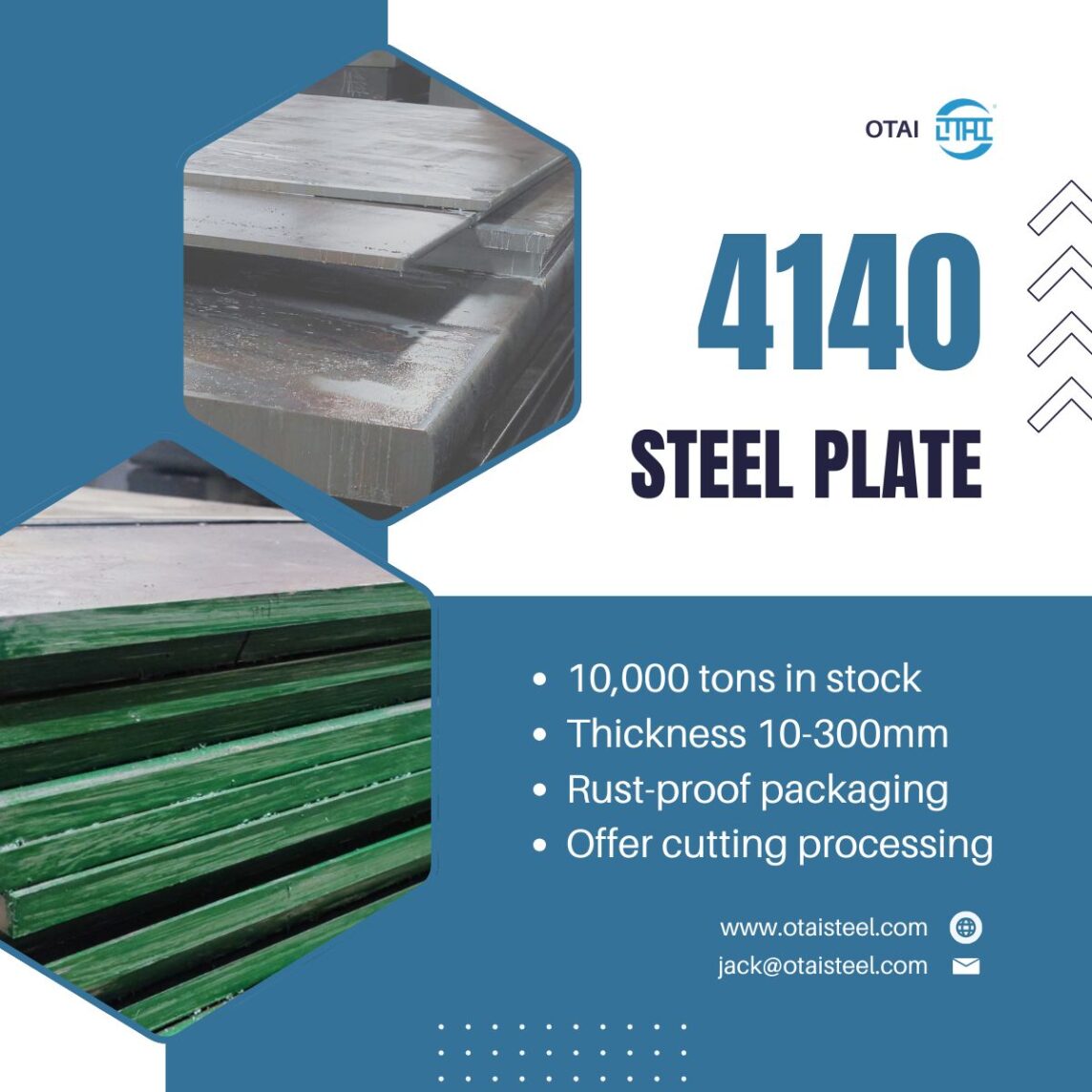
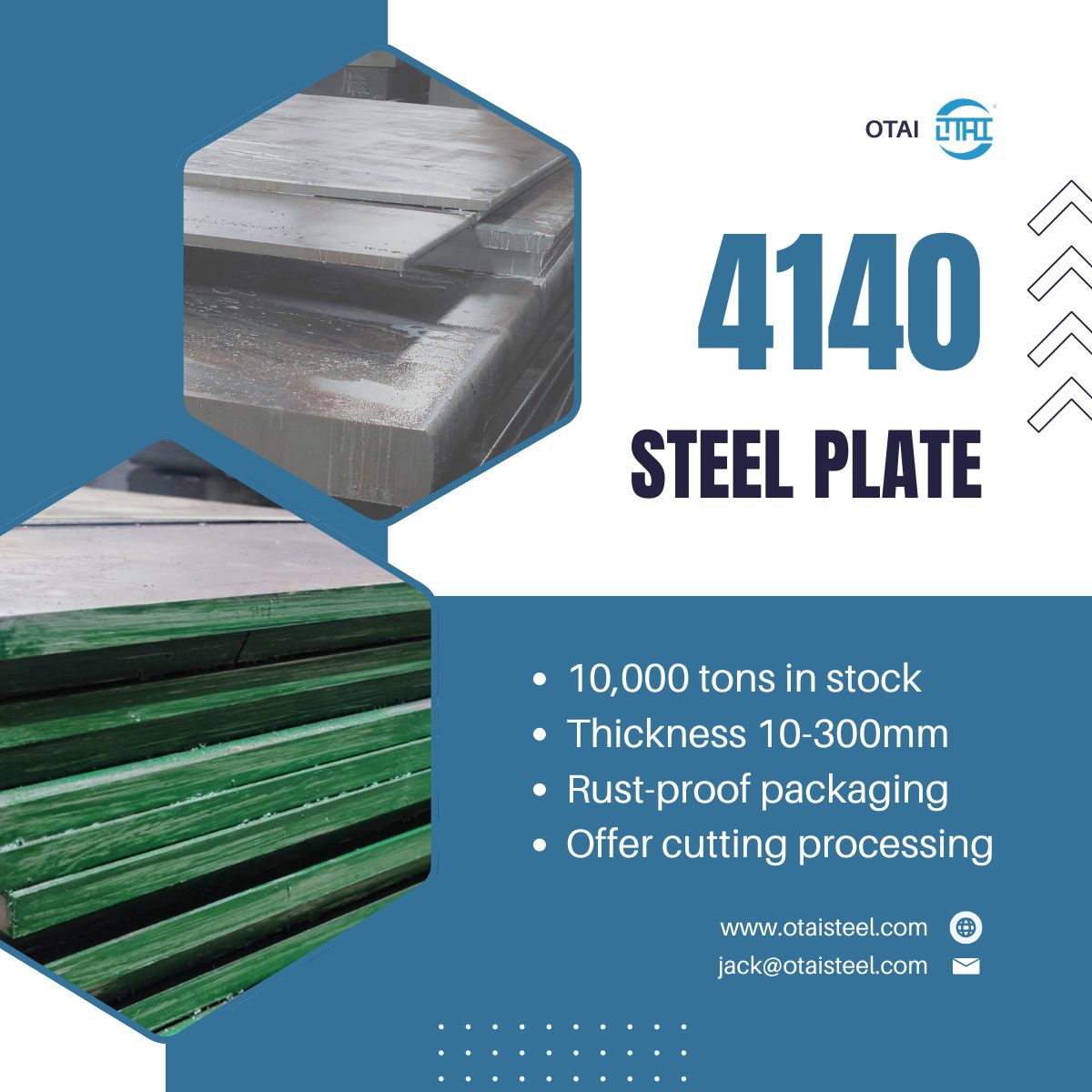
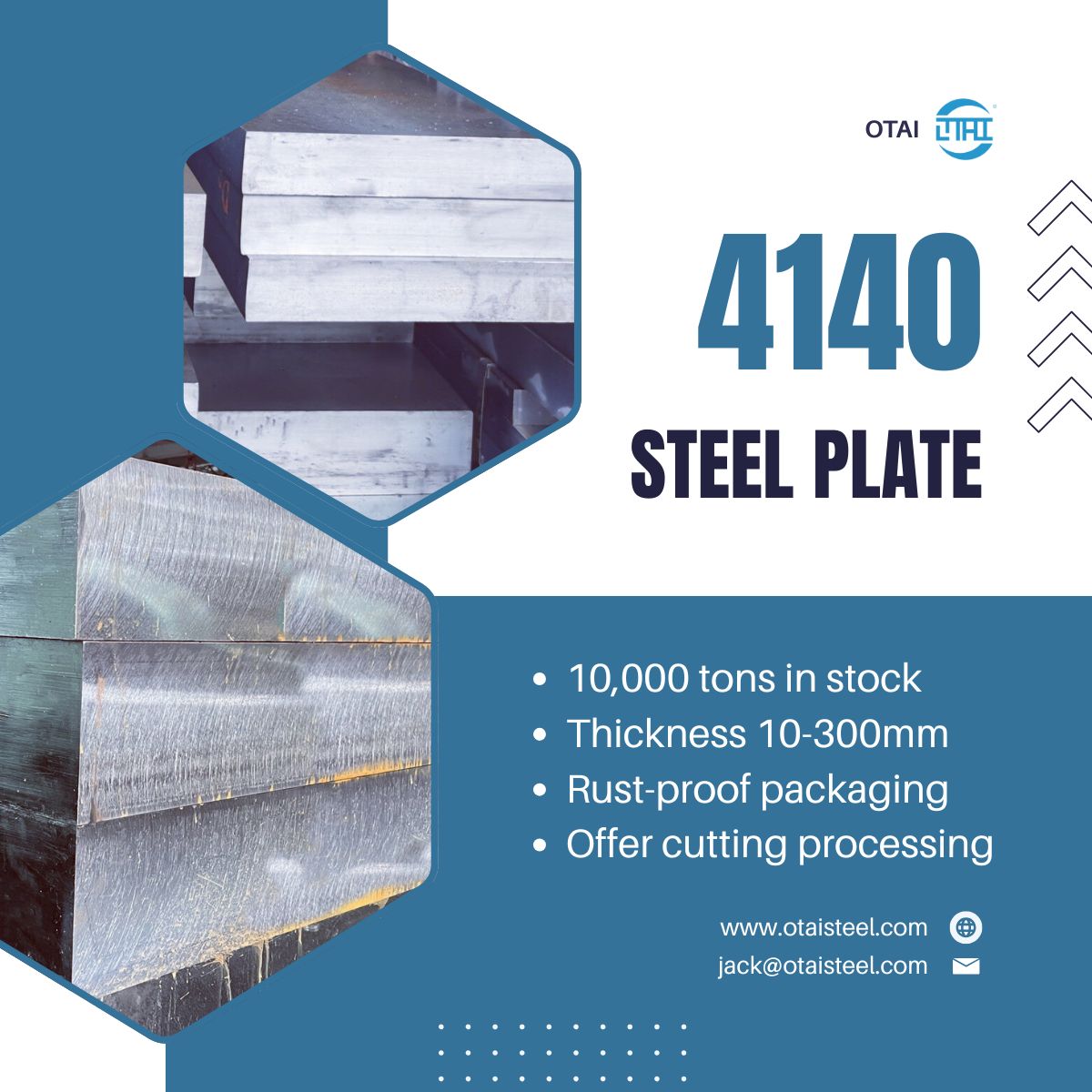
4140 steel Plate Distributor: How to find the right distributor

4140 steel Plate Distributor: How to find the right distributor4140 steel Plate Distributor: How to find the right distributor

When sourcing 4140 steel plate, finding the right distributor is crucial to ensure you receive high-quality material at competitive prices. Whether you’re working on a large-scale industrial project or a smaller custom fabrication, selecting the right 4140 plate distributor can significantly impact the outcome of your project. In this article, we will explore the factors to consider when choosing a 4140 plate distributor, the advantages of working with reliable suppliers, and how to get the best value for your investment.


🛠️ What is 4140 Steel Plate?

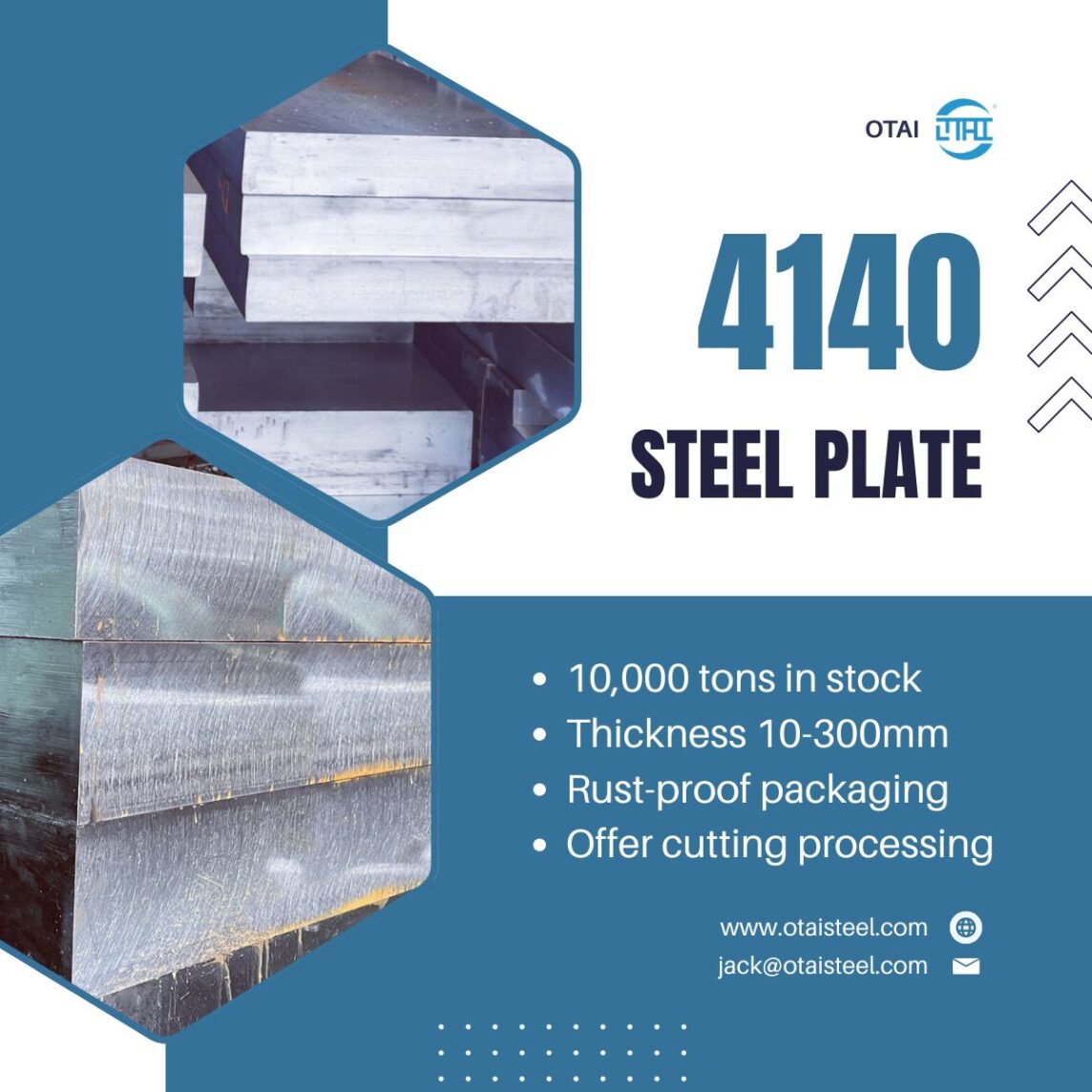
4140 steel is an alloy steel primarily composed of chromium and molybdenum, which provides a combination of strength, toughness, and wear resistance. 4140 steel plates are commonly used in applications such as gears, shafts, crane components, and automotive parts, where strength and durability are essential. These plates typically come in a range of thicknesses, from 6mm to 300mm, and can be heat-treated to enhance properties like hardness and fatigue resistance.


🔍 What to Look for in a 4140 Plate Distributor

Choosing the right distributor for 4140 steel plates is a key decision that affects both the quality of your material and the success of your project. Here are the main factors to consider when evaluating potential 4140 plate suppliers:

1. Product Quality and Consistency

The quality of 4140 steel plates is paramount for the integrity of your project. Reliable distributors will offer products that meet or exceed the necessary industry standards and specifications. Make sure the distributor provides detailed documentation, including chemical composition and material certifications. A good distributor should also offer third-party testing services such as ultrasonic testing (UT) and chemical analysis to ensure the plates meet stringent quality requirements.

Quality Assurance Measures Examples
Ultrasonic Testing (UT) Detects internal flaws and ensures material integrity.
Chemical Composition Analysis Verifies the material meets required specifications.
Third-Party Inspection Provides an independent verification of quality.

2. Delivery Times and Logistics

Time is money, especially in industries like automotive and construction, where tight project timelines are common. A 4140 plate distributor with fast and reliable delivery options can help ensure your project stays on track. It’s important to choose a distributor with local or regional warehouses to reduce shipping times and costs. Some suppliers may even offer just-in-time inventory and custom shipping solutions to meet your specific delivery needs.

Shipping and Delivery Options Examples
Local Warehouses Ensures quick delivery times.
Just-in-Time Delivery Helps optimize inventory and project timelines.
Custom Shipping Solutions Offers flexibility for large and small orders.

3. Customization and Value-Added Services

Many projects require customized solutions, whether it’s cutting, grinding, heat treatment, or special packaging. A distributor offering value-added services can help reduce processing time and costs, making it easier to integrate the steel into your manufacturing processes. Be sure to check if the distributor offers these services and if they have the necessary equipment and expertise to meet your custom requirements.

Value-Added Services Examples
Custom Cutting Cuts steel to your specific dimensions.
Heat Treatment Enhances the hardness and strength of the material.
Special Packaging Ensures safe and secure delivery.

4. Price and Payment Terms

While quality is the top priority, price plays an important role in selecting a distributor. Compare prices from several distributors to ensure you’re getting the best deal, but keep in mind that the cheapest option might not always provide the best value in the long run. In addition to price, consider the payment terms offered by the distributor. Flexible payment options, such as credit terms or bulk order discounts, can be beneficial for large-scale projects.

Cost Considerations Examples
Bulk Order Discounts Discounts for purchasing in large quantities.
Flexible Payment Terms Helps with cash flow management for large projects.
Competitive Pricing Ensures you’re getting a good deal on quality material.

5. Reputation and Customer Service

Lastly, always consider the reputation of the 4140 plate distributor. A distributor with a strong track record of customer satisfaction and reliable support can help ensure that your experience is seamless. Look for distributors with positive customer reviews, strong industry relationships, and excellent customer service that is readily available to answer any questions or concerns.

Customer Support Features Examples
Responsive Service Provides fast responses to inquiries.
Experienced Staff Can offer expert guidance and advice.
Customer Reviews Positive feedback from other clients.

⚙️ Benefits of Working with Reliable 4140 Plate Distributors

Working with a trusted and reliable 4140 plate distributor offers several benefits, including:

1. Consistent Quality

A reputable distributor will offer high-quality 4140 steel plates that meet stringent specifications, ensuring your project is built on a solid foundation.

2. Reliable Delivery

On-time delivery is crucial for staying on schedule. Reliable distributors will offer flexible shipping options and ensure that your steel plates arrive when you need them.

3. Cost-Effective Solutions

Working with an established distributor may allow you to access competitive pricing and bulk order discounts, which can help keep your project within budget.

4. Expert Support

A trustworthy distributor will provide technical assistance, helping you choose the right steel grades, dimensions, and processing services for your specific needs.


🌍 Why Choose Otai Special Steel for Your 4140 Plate Needs?

At Otai Special Steel, we are a trusted 4140 plate distributor offering a wide range of high-quality 4140 steel plates with custom cutting, heat treatment, and delivery services tailored to your needs. Here’s why you should choose us:

Benefit Details
Large Inventory We offer a variety of 4140 steel plates in different thicknesses, ranging from 6mm to 300mm.
Customized Solutions Our customized cutting and heat treatment services ensure that your steel plates meet your exact specifications.
Global Reach We deliver to locations worldwide, ensuring timely and efficient delivery.
Quality Assurance All of our products are rigorously tested for chemical composition and undergo third-party inspections to guarantee their performance.
Expert Consultation Our team of experts is always ready to assist you with technical advice and steel selection for your project.

FAQ: Frequently Asked Questions About 4140 Plate Distributors

Q1: How do I know if a 4140 plate distributor is reliable?
A1: Look for distributors with positive customer reviews, strong industry experience, and a history of on-time delivery. Reputable distributors will also offer quality certifications and third-party inspection reports.

Q2: Do 4140 plate distributors offer custom cutting services?
A2: Yes, many 4140 plate distributors provide custom cutting services to ensure the steel plates are sized to your specifications. Some may also offer machining and heat treatment to meet your exact requirements.

Q3: What should I consider when comparing prices from different distributors?
A3: While price is important, consider other factors like delivery times, quality assurances, and value-added services. Opt for a distributor that offers a balance of quality, service, and cost-effectiveness.

0 0 Continue Reading →

16MnCr5 Welding: Best Practices for Strong, Reliable Joints in Case-Hardening Steel

16MnCr5 Welding: Best Practices for Strong, Reliable Joints in Case-Hardening Steel16MnCr5 Welding: Best Practices for Strong, Reliable Joints in Case-Hardening Steel

Welding 16MnCr5, a case-hardening alloy steel, presents unique challenges and opportunities. Engineers and welders need to understand how to preserve the material’s high wear resistance and core toughness while achieving strong, durable welds. Improper welding methods can compromise the steel’s mechanical properties, leading to issues like cracks, reduced fatigue strength, or poor fusion.

This article explores 16MnCr5 welding in depth—covering the best practices, common challenges, and useful tips to help achieve high-quality welds for 16MnCr5 components used in gears, shafts, and other critical machinery parts.


🔍 What Is 16MnCr5?

16MnCr5 is a low-carbon alloy steel that contains:

  • Carbon: ~0.16%

  • Manganese: ~1.0 – 1.3%

  • Chromium: ~0.8 – 1.1%

  • Molybdenum: ~0.15 – 0.25%

Its composition makes it ideal for case hardening applications, where the surface undergoes carburizing, quenching, and tempering to achieve high hardness, while the core remains tough and ductile.


📊 Welding Challenges with 16MnCr5

Welding 16MnCr5 is different from welding simpler carbon steels. While it has good weldability in some conditions, the following factors complicate the welding process:

1️⃣ Hardening After Welding

Since 16MnCr5 is designed for case hardening, it’s sensitive to heat-affected zones (HAZ), which may harden or crack if not managed properly during welding. The HAZ can cause:

  • Cracking: If the cooling rate is too fast or too high of a heat input is used, cracks can form in the weld area.

  • Loss of Toughness: Improper welding can reduce the toughness of the steel, especially near the weld zone.

2️⃣ Hydrogen Induced Cracking (HIC)

As with many low-carbon steels, hydrogen-induced cracking (HIC) is a concern in 16MnCr5 welding. This issue occurs when moisture in the environment or welding materials causes hydrogen to enter the weld area. When it combines with the heat of the weld, it can lead to cracks.

3️⃣ Preheating and Post-Weld Heat Treatment

For 16MnCr5 welding, preheating and post-weld heat treatment (PWHT) are often necessary to reduce the risk of cracking and distortion, especially for thicker sections.


🔧 Recommended Welding Methods for 16MnCr5

To weld 16MnCr5 successfully, follow these best practices for method selection, filler materials, and post-weld procedures.

1️⃣ Welding Methods

  • MIG Welding (GMAW): This method is ideal for welding 16MnCr5 in the normalized or pre-tempered condition. MIG welding provides good control over heat input, making it suitable for thinner sections. Ensure proper shielding gas, typically a mix of Argon and CO2.

  • TIG Welding (GTAW): Best for high-quality, precise welds on thinner materials. TIG welding produces a cleaner weld and helps in achieving a low heat input. Use pure Argon or an Argon-Helium mixture for shielding.

  • Stick Welding (SMAW): Stick welding can be effective for outdoor or field applications where high flexibility is needed. However, it requires more post-weld cleaning to prevent cracks from hydrogen contamination.


2️⃣ Filler Material Selection

The choice of filler material is crucial to match the properties of 16MnCr5 and avoid weakening the weld. Common filler metals for 16MnCr5 welding include:

  • ER70S-6: A good general-purpose filler wire that provides a solid weld and is commonly used for MIG and TIG welding.

  • E7018: This low-hydrogen electrode is often used in stick welding, especially for thicker sections, to prevent cracking in the heat-affected zone.

Filler metal should match or exceed the mechanical properties of 16MnCr5 to maintain strength and toughness.


3️⃣ Preheating and Post-Weld Heat Treatment (PWHT)

  • Preheating: Preheating is necessary for 16MnCr5 welding to minimize the risk of cracking. A preheat temperature range of 150°C to 250°C is typically recommended, depending on the thickness and geometry of the part.

  • Post-Weld Heat Treatment (PWHT): After welding, PWHT is critical to relieve internal stresses and ensure the weld area maintains the toughness required for heavy-duty applications. The steel is typically heated to 550°C – 650°C and held for a period of time to allow the material to cool slowly.


🏗️ Applications of 16MnCr5 in Welding

16MnCr5 is used in a variety of industrial applications where its ability to undergo carburizing, quenching, and tempering makes it perfect for parts that require:

  • High surface hardness

  • Toughness in the core

  • Wear and fatigue resistance

Common welded 16MnCr5 applications include:

  • Automotive gears and axles

  • Hydraulic cylinders

  • Transmission shafts

  • High-load industrial components

  • Aerospace components

For these critical applications, strong, defect-free welds are essential to ensure long-lasting, reliable performance.


⚙️ Post-Weld Considerations

After welding 16MnCr5, ensure that the material undergoes:

  1. Stress relief: To avoid post-weld cracking, it needs a proper stress relief anneal. This process reduces residual stress and improves the material’s ability to handle cyclic loads.

  2. Non-destructive testing (NDT): After welding, UT (ultrasonic testing) or X-ray inspection can verify the absence of cracks or porosity in the weld.

  3. Surface finishing: After welding, the weld area often requires additional finishing to meet the required surface specifications, such as grinding or polishing.


🧰 Practical Tips for 16MnCr5 Welding Success

To ensure successful welding of 16MnCr5, keep these tips in mind:

  • Maintain clean surfaces: Always clean the material before welding to remove oil, rust, or contaminants that could affect the weld quality.

  • Control heat input: Keep heat input low to prevent overheating and potential damage to the material properties.

  • Use low hydrogen electrodes: Low hydrogen welding rods reduce the risk of cracks caused by hydrogen embrittlement.

  • Monitor cooling rates: Control the cooling rates, especially for thicker sections, to avoid cracking due to rapid cooling.


🏅 Company Advantages – Why Choose Otai Special Steel for 16MnCr5?

At Otai Special Steel, we supply high-quality 16MnCr5 steel with consistent mechanical properties and excellent weldability.

We offer:

  • Large stock of 16MnCr5 plates, bars, and forgings

  • Customized cutting and machining services

  • Pre-welding preparation and material analysis

  • Heat treatment services (pre-weld stress relief and post-weld PWHT)

  • Third-party inspection and testing (SGS, UT, X-ray)

Our team provides expert guidance on material selection, welding methods, and post-weld treatments to meet your engineering specifications.


❓ FAQ – 16MnCr5 Welding

Q1: Can 16MnCr5 be welded without preheating?
To preheat thicker sections of 16MnCr5 to reduce the risk of cracking and improve the quality of the weld.

Q2: Do I need post-weld heat treatment for 16MnCr5?
Yes, post-weld heat treatment (PWHT) is critical to relieve internal stresses and maintain the material’s toughness and hardness.

Q3: What welding method is best for 16MnCr5?
For most applications, TIG welding and MIG welding work well, with preheating and controlled cooling ensuring strong, crack-free welds.

Q4: Can Otai supply 16MnCr5 material with welding certification?
Yes, we provide welding certification and perform non-destructive testing (UT, X-ray) to guarantee the quality of welded parts.

0 0 Continue Reading →

4140 Steel Speeds and Feeds: How to Machine Alloy Steel Efficiently Without Burning Tools

4140 Steel Speeds and Feeds: How to Machine Alloy Steel Efficiently Without Burning Tools

4140 Steel Speeds and Feeds: How to Machine Alloy Steel Efficiently Without Burning Tools

When machinists search for 4140 steel speeds and feeds, they usually face one of these problems:

  • Tools wear too fast

  • Surface finish looks rough

  • Chips turn blue and burn

  • Production efficiency drops

4140 is a chromium-molybdenum alloy steel widely used in shafts, gears, molds, hydraulic components, and heavy-duty structural parts. It offers high strength and toughness, but that same strength makes machining more demanding.

If you select the wrong cutting speed or feed rate, you will lose tool life, increase cost, and reduce dimensional accuracy.

This article explains practical cutting parameters for 4140 in different conditions and machining operations, with real production guidance you can apply immediately.


🔍 Understanding 4140 Steel Before Setting Speeds and Feeds

is a medium carbon alloy steel containing chromium and molybdenum. It can be supplied in:

  • Annealed condition (soft)

  • Normalized condition

  • Pre-hardened (28–32 HRC)

  • Quenched and tempered (32–45 HRC or higher)

Machining performance changes significantly depending on hardness.

Before setting 4140 steel speeds and feeds, confirm:

  • Hardness (HB or HRC)

  • Delivery condition

  • Tool material

  • Machine rigidity


🛠️ Turning 4140 Steel (Lathe Operations)

📌 4140 in Annealed Condition (≤ 220 HB)

Tool Type Cutting Speed (m/min) Feed (mm/rev)
HSS 20–30 0.15–0.30
Carbide 120–180 0.20–0.40
Coated Carbide 150–220 0.20–0.45

Annealed 4140 machines relatively well. Use flood coolant to improve surface finish.


📌 4140 Pre-Hardened (28–32 HRC)

Tool Type Cutting Speed (m/min) Feed (mm/rev)
Carbide 100–150 0.15–0.30
Coated Carbide 120–180 0.20–0.35
CBN 180–250 0.10–0.25

As hardness increases, reduce speed slightly and maintain stable feed to avoid tool chipping.


📌 4140 Hardened (40+ HRC)

For hardened 4140:

  • Use CBN or ceramic tools

  • Reduce feed rate

  • Avoid heavy interrupted cuts

Typical parameters:

  • Cutting speed: 120–200 m/min

  • Feed: 0.08–0.20 mm/rev


🔩 Milling 4140 Steel

When milling 4140 steel speeds and feeds, consider cutter diameter and engagement depth.

End Milling (Carbide Tools)

Condition Speed (m/min) Feed per Tooth (mm)
Annealed 150–200 0.05–0.12
30 HRC 100–150 0.04–0.10
40+ HRC 80–120 0.03–0.08

Keep radial engagement moderate. Too aggressive step-over causes vibration and tool wear.


🕳️ Drilling 4140 Steel

Drilling 4140 requires attention to heat buildup.

HSS Drill

  • Speed: 18–25 m/min

  • Feed: 0.10–0.25 mm/rev

Carbide Drill

  • Speed: 70–110 m/min

  • Feed: 0.15–0.30 mm/rev

Use coolant-through drills when possible. Chip evacuation affects tool life significantly.


⚡ Why 4140 Steel Burns Tools Easily

If your tools fail quickly, check these factors:

1️⃣ Cutting speed too high
2️⃣ Feed too low (rubbing instead of cutting)
3️⃣ Insufficient coolant
4️⃣ Poor tool coating
5️⃣ Work hardening from previous passes

4140 work-hardens under improper machining conditions. Always maintain consistent chip load.


🧮 Practical Formula for RPM Calculation

To calculate spindle speed:

RPM = (1000 × Cutting Speed) ÷ (π × Diameter)

Example:

  • Cutting speed: 150 m/min

  • Workpiece diameter: 50 mm

RPM ≈ 955

Correct calculation ensures accurate 4140 steel speeds and feeds setup.


🔥 Tips to Improve Tool Life on 4140

  • Use TiAlN or AlTiN coated carbide

  • Apply consistent coolant flow

  • Avoid dwell at the bottom of cuts

  • Choose rigid tool holders

  • Maintain positive rake geometry

When machining pre-hardened 4140, tool selection impacts productivity more than minor speed adjustments.


🏭 4140 Steel vs Other Alloy Steels in Machining

Grade Machinability (%) Notes
1045 60–70% Easier than 4140
4140 (annealed) 65% Moderate
4140 (hardened) 45% More difficult
4340 40–50% Tougher

If you require easier machining, order annealed 4140 instead of pre-hardened material.


🏅 Company Advantages – Otai Special Steel

At Otai Special Steel, we supply high-quality 4140 alloy steel with stable mechanical properties to ensure predictable machining performance.

We provide:

  • Large stock inventory

  • Thickness range from 6 mm to 300 mm

  • Pre-hardened and annealed options

  • Custom cutting services

  • Ultrasonic testing (UT)

  • Chemical composition verification

  • EN 10204 3.1 certification

Stable material quality directly improves machining consistency and reduces tool cost.


❓ FAQ – 4140 Steel Speeds and Feeds

1. What is the best cutting speed for annealed 4140?
Carbide tools typically run at 120–180 m/min.

2. Should I reduce feed for harder 4140?
Yes, but avoid going too low. Insufficient feed causes rubbing and heat buildup.

3. Can I machine 4140 without coolant?
You can, but tool life decreases significantly, especially during drilling.

4. Does pre-hardened 4140 machine much harder?
Yes. Hardness above 30 HRC reduces machinability noticeably.

5. How do I increase productivity on 4140?
Optimize tool coating, maintain proper chip load, and use rigid setups.

0 0 Continue Reading →

16MnCr5 Material Rate: What Really Determines the Price of This Case Hardening Steel?

16MnCr5 Material Rate: What Really Determines the Price of This Case Hardening Steel?16MnCr5 Material Rate: What Really Determines the Price of This Case Hardening Steel?

When buyers search for 16mncr5 material rate, they usually want a simple number.
But in reality, the price of 16MnCr5 does not depend on one factor. It depends on multiple technical and commercial variables that directly influence your total procurement cost.

If you import alloy steel for gears, shafts, automotive components, or mechanical transmission parts, understanding how the 16MnCr5 price is structured helps you:

  • Negotiate more effectively

  • Avoid hidden processing costs

  • Compare suppliers correctly

  • Protect your margin

In this article, we break down the real cost structure behind 16MnCr5 from an engineering and sourcing perspective.


🔍 What Is 16MnCr5 and Why Is It Widely Used?

Before discussing the 16mncr5 material rate, it is important to understand what you are paying for.

16MnCr5 is a European case hardening steel grade defined under EN 10084. It contains:

  • Low carbon (~0.16%)

  • Chromium for hardenability

  • Manganese for strength

It is designed for carburizing applications where you need:

  • Hard wear-resistant surface (58–62 HRC after carburizing)

  • Tough core structure

  • High fatigue resistance

Industries that commonly purchase 16MnCr5 include:

  • Automotive manufacturing

  • Heavy machinery

  • Gear production

  • Industrial equipment

Because of its dual-performance structure (hard surface + tough core), it remains in high demand globally.


📊 Key Factors That Influence 16MnCr5 Material Rate

The 16mncr5 material rate changes depending on several technical factors.

1️⃣ Raw Material Cost (Alloy Elements)

The price fluctuates with:

  • Chromium market price

  • Manganese supply

  • Global steel billet cost

When alloy element prices increase, suppliers adjust quotations accordingly.


2️⃣ Product Form and Dimensions

Product Type Price Impact
Round bar Standard pricing
Flat bar Slight premium
Forged block Higher cost
Large diameter (>200 mm) Additional surcharge

Larger cross-sections require more controlled rolling or forging, which increases cost.


3️⃣ Delivery Condition

The 16mncr5 material rate varies by condition:

Condition Price Level
As-rolled Base price
Annealed Slightly higher
Normalized Moderate increase
Pre-machined Higher
UT tested Premium

If you require ultrasonic testing (UT), third-party inspection, or 3.1 certification, the unit price increases.


4️⃣ Order Quantity

  • Small quantity orders → Higher per-ton rate

  • Container load orders → More competitive

  • Long-term contracts → Stable pricing

Volume significantly influences negotiation leverage.


5️⃣ Processing Requirements

Additional services increase final material rate:

  • Cutting to size

  • Rough machining

  • Heat treatment preparation

  • Custom packaging

  • Export documentation

Many buyers compare base price only and ignore processing cost differences.


🌍 Global Market Influence on 16MnCr5 Price

The 16mncr5 material rate also depends on:

  • Regional supply-demand balance

  • Export tariffs

  • Freight costs

  • Currency exchange rates

For example:

  • European mills often quote higher base prices

  • Asian suppliers may offer competitive pricing with longer lead times

  • Local stockists may charge premium for immediate availability

Therefore, “cheap” does not always mean cost-effective.


🔥 Cost Comparison: 16MnCr5 vs 20MnCr5 vs 4140

Buyers often compare materials to reduce cost.

Grade Price Level Application
16MnCr5 Moderate Case hardening gears
20MnCr5 Slightly higher Deeper case hardening
4140 Higher Through hardening applications

If you only need surface hardness, 16MnCr5 offers better cost-performance ratio than 4140.


🧮 Example Cost Structure (Illustrative)

Let’s assume you order 20 tons of 16MnCr5 round bar.

Estimated cost breakdown:

  • Base steel cost: 70–80%

  • Alloy surcharge: 5–10%

  • Processing: 5–10%

  • Testing & certification: 2–5%

  • Logistics: Variable

This breakdown shows why two suppliers may quote different rates even for the same grade.


🧰 How to Get the Best 16MnCr5 Material Rate

To secure a competitive price:

  1. Clearly specify required condition (annealed, normalized, etc.)

  2. Confirm testing standards in advance

  3. Optimize cutting dimensions to reduce waste

  4. Order economical lengths when possible

  5. Combine orders for better negotiation

Professional sourcing reduces total cost more than price bargaining alone.


🏗️ When Price Should NOT Be Your Only Concern

Focusing only on 16mncr5 material rate can create risks:

  • Incorrect chemical composition

  • Poor hardenability

  • Surface defects

  • Internal cracks

  • Inconsistent carburizing performance

These problems cost more than small price differences.

Always evaluate:

  • Mill certification

  • Inspection capability

  • Heat treatment compatibility

  • Supplier stability


🏅 Company Advantages – Otai Special Steel

At Otai Special Steel, we supply competitive and stable 16MnCr5 material rates backed by quality assurance.

We provide:

  • Large inventory stock

  • Thickness range from 6 mm to 300 mm

  • Custom cutting service

  • Ultrasonic testing (UT)

  • Chemical composition verification

  • EN 10204 3.1 certification

  • Third-party inspection (SGS available)

We help traders, distributors, and end users balance price, quality, and supply reliability.


❓ FAQ – 16MnCr5 Material Rate

1. Why does 16MnCr5 price fluctuate?
Because alloy element costs and global steel market conditions change.

2. Is cheaper 16MnCr5 always better?
No. Quality inconsistency can increase processing and rejection costs.

3. Does heat treatment increase price significantly?
Yes. Pre-treated material includes energy and process cost.

4. What affects export pricing most?
Freight cost, exchange rate, and order volume.

5. Can long-term contracts stabilize price?
Yes. Contract agreements reduce market volatility impact.

0 0 Continue Reading →

4140 Hot Rolled Steel Properties: Performance, Strength, and Real Industrial Applications

4140 Hot Rolled Steel Properties: Performance, Strength, and Real Industrial Applications 🔩

When buyers search for 4140 hot rolled steel properties, they usually want clear answers to three practical questions:

What mechanical performance can I expect?

How does hot rolled 4140 behave before and after heat treatment?

Is it suitable for shafts, gears, structural parts, or heavy equipment components?

Hot rolled 4140 remains one of the most widely used alloy steels in machinery manufacturing because it combines good strength, excellent toughness, and strong hardenability at a competitive cost. In this article, we explain the real performance characteristics of hot rolled 4140 from a customer-focused engineering perspective.

🔍 What Is 4140 Hot Rolled Steel?

4140 is a chromium-molybdenum alloy steel. When manufacturers produce it in the hot rolled condition, they roll the steel at high temperature and allow it to cool in air.

Hot rolled 4140 typically features:

Good machinability in annealed or normalized condition

Uniform internal structure

Cost efficiency compared to cold finished steel

Strong response to quenching and tempering

Many customers purchase hot rolled 4140 as round bars, plates, or flat stock before final heat treatment.

📊 4140 Hot Rolled Steel Chemical Composition

The performance of 4140 hot rolled steel properties starts with alloy design.

Element	Typical Range (%)
Carbon (C)	0.38 – 0.43
Manganese (Mn)	0.75 – 1.00
Chromium (Cr)	0.80 – 1.10
Molybdenum (Mo)	0.15 – 0.25
Silicon (Si)	0.15 – 0.35

Carbon provides strength.
Chromium improves hardenability and wear resistance.
Molybdenum increases toughness and high-temperature strength.

This balanced composition explains why 4140 works well in heavy-duty applications.

📈 Mechanical Properties of 4140 Hot Rolled Steel (Annealed / Normalized)

Before quenching and tempering, hot rolled 4140 typically shows the following properties:

Property	Typical Value
Tensile Strength	850 – 1000 MPa
Yield Strength	655 – 850 MPa
Elongation	20 – 25%
Hardness	170 – 220 HB
Modulus of Elasticity	~205 GPa

In this condition, the steel offers:

Good machinability

Stable structure

Moderate strength

Excellent preparation state for heat treatment

Many customers machine components first, then apply Q&T treatment.

🔥 4140 Hot Rolled Steel Properties After Quenching & Tempering

Hot rolled 4140 transforms significantly after heat treatment.

Condition	Hardness	Tensile Strength	Yield Strength
Q&T 28–32 HRC	~30 HRC	900–1050 MPa	~850 MPa
Q&T 32–36 HRC	~34 HRC	1000–1200 MPa	900–1000 MPa

After Q&T, 4140 hot rolled steel properties include:

High fatigue resistance

Improved wear resistance

Strong load-bearing capacity

Excellent toughness compared to plain carbon steel

This flexibility makes 4140 suitable for demanding mechanical components.

🏗️ Common Applications of 4140 Hot Rolled Steel

Because of its balanced strength and toughness, hot rolled 4140 appears in many industries.

Typical Uses:

Transmission shafts

Gear blanks

Hydraulic cylinder rods

Mold bases

Heavy equipment pins

Structural components under dynamic load

Manufacturers prefer 4140 when 1045 steel does not provide enough strength, but ultra-high alloy grades are unnecessary.

⚙️ Advantages of Hot Rolled 4140 Compared to Cold Finished

Some customers ask whether they should choose hot rolled or cold finished 4140.

Hot Rolled Advantages:

Lower cost

Better availability in large sizes

Less internal stress

Suitable for heavy machining

Cold Finished Advantages:

Tighter dimensional tolerance

Better surface finish

Improved straightness

For large structural components, hot rolled 4140 usually offers better value.

🌡️ Performance at Elevated Temperatures

4140 hot rolled steel maintains good strength at moderate temperatures.

Temperature	Strength Retention
200°C	Minor strength reduction
400°C	Moderate reduction
500°C+	Significant reduction

For high-temperature environments, proper tempering selection becomes critical.

🧰 Practical Selection Advice for Buyers

When evaluating 4140 hot rolled steel properties, consider:

Required final hardness

Whether machining occurs before heat treatment

Required impact resistance

Section thickness (affects hardenability)

Operating temperature

If stiffness matters, remember that the modulus (~205 GPa) stays consistent across conditions.

If strength matters, select proper Q&T hardness.

If wear resistance matters, increase hardness but maintain sufficient toughness.

🏅 Company Advantages – Otai Special Steel

At Otai Special Steel, we supply high-quality hot rolled 4140 with reliable performance control.

We offer:

Large stock from 6 mm to 300 mm thickness

Over 10,000 tons annual inventory

Customized cutting services

Heat treatment support (Q&T, annealing, normalizing)

Ultrasonic testing (UT)

Chemical composition testing

Third-party inspection (SGS available)

We support material suppliers, trading companies, and end users worldwide with stable quality and competitive pricing.

❓ FAQ – 4140 Hot Rolled Steel Properties

Q1: Is hot rolled 4140 strong enough without heat treatment?
Yes, for moderate structural use. However, Q&T significantly improves strength.

Q2: Does hot rolling affect mechanical performance negatively?
No. Properly controlled hot rolling produces uniform internal structure.

Q3: Can hot rolled 4140 replace 1045 steel?
Yes. 4140 provides higher strength and better fatigue resistance.

Q4: What hardness can I expect in hot rolled condition?
Typically 170–220 HB before heat treatment.

Q5: Can Otai supply prehardened 4140?
Yes. We provide prehardened and fully Q&T material based on customer requirements.4140 Hot Rolled Steel Properties: Performance, Strength, and Real Industrial Applications

When buyers search for 4140 hot rolled steel properties, they usually want clear answers to three practical questions:

  1. What mechanical performance can I expect?

  2. How does hot rolled 4140 behave before and after heat treatment?

  3. Is it suitable for shafts, gears, structural parts, or heavy equipment components?

Hot rolled 4140 remains one of the most widely used alloy steels in machinery manufacturing because it combines good strength, excellent toughness, and strong hardenability at a competitive cost. In this article, we explain the real performance characteristics of hot rolled 4140 from a customer-focused engineering perspective.


🔍 What Is 4140 Hot Rolled Steel?

4140 is a chromium-molybdenum alloy steel. When manufacturers produce it in the hot rolled condition, they roll the steel at high temperature and allow it to cool in air.

Hot rolled 4140 typically features:

  • Good machinability in annealed or normalized condition

  • Uniform internal structure

  • Cost efficiency compared to cold finished steel

  • Strong response to quenching and tempering

Many customers purchase hot rolled 4140 as round bars, plates, or flat stock before final heat treatment.


📊 4140 Hot Rolled Steel Chemical Composition

The performance of 4140 hot rolled steel properties starts with alloy design.

Element Typical Range (%)
Carbon (C) 0.38 – 0.43
Manganese (Mn) 0.75 – 1.00
Chromium (Cr) 0.80 – 1.10
Molybdenum (Mo) 0.15 – 0.25
Silicon (Si) 0.15 – 0.35

Carbon provides strength.
Chromium improves hardenability and wear resistance.
Molybdenum increases toughness and high-temperature strength.

This balanced composition explains why 4140 works well in heavy-duty applications.


📈 Mechanical Properties of 4140 Hot Rolled Steel (Annealed / Normalized)

Before quenching and tempering, hot rolled 4140 typically shows the following properties:

Property Typical Value
Tensile Strength 850 – 1000 MPa
Yield Strength 655 – 850 MPa
Elongation 20 – 25%
Hardness 170 – 220 HB
Modulus of Elasticity ~205 GPa

In this condition, the steel offers:

  • Good machinability

  • Stable structure

  • Moderate strength

  • Excellent preparation state for heat treatment

Many customers machine components first, then apply Q&T treatment.


🔥 4140 Hot Rolled Steel Properties After Quenching & Tempering

Hot rolled 4140 transforms significantly after heat treatment.

Condition Hardness Tensile Strength Yield Strength
Q&T 28–32 HRC ~30 HRC 900–1050 MPa ~850 MPa
Q&T 32–36 HRC ~34 HRC 1000–1200 MPa 900–1000 MPa

After Q&T, 4140 hot rolled steel properties include:

  • High fatigue resistance

  • Improved wear resistance

  • Strong load-bearing capacity

  • Excellent toughness compared to plain carbon steel

This flexibility makes 4140 suitable for demanding mechanical components.


🏗️ Common Applications of 4140 Hot Rolled Steel

Because of its balanced strength and toughness, hot rolled 4140 appears in many industries.

Typical Uses:

  • Transmission shafts

  • Gear blanks

  • Hydraulic cylinder rods

  • Mold bases

  • Heavy equipment pins

  • Structural components under dynamic load

Manufacturers prefer 4140 when 1045 steel does not provide enough strength, but ultra-high alloy grades are unnecessary.


⚙️ Advantages of Hot Rolled 4140 Compared to Cold Finished

Some customers ask whether they should choose hot rolled or cold finished 4140.

Hot Rolled Advantages:

  • Lower cost

  • Better availability in large sizes

  • Less internal stress

  • Suitable for heavy machining

Cold Finished Advantages:

  • Tighter dimensional tolerance

  • Better surface finish

  • Improved straightness

For large structural components, hot rolled 4140 usually offers better value.


🌡️ Performance at Elevated Temperatures

4140 hot rolled steel maintains good strength at moderate temperatures.

Temperature Strength Retention
200°C Minor strength reduction
400°C Moderate reduction
500°C+ Significant reduction

For high-temperature environments, proper tempering selection becomes critical.


🧰 Practical Selection Advice for Buyers

When evaluating 4140 hot rolled steel properties, consider:

  • Required final hardness

  • Whether machining occurs before heat treatment

  • Required impact resistance

  • Section thickness (affects hardenability)

  • Operating temperature

1)If stiffness matters, remember that the modulus (~205 GPa) stays consistent across conditions.

2)If strength matters, select proper Q&T hardness.

3)If wear resistance matters, increase hardness but maintain sufficient toughness.


🏅 Company Advantages – Otai Special Steel

At Otai Special Steel, we supply high-quality hot rolled 4140 with reliable performance control.

We offer:

  • Large stock from 6 mm to 300 mm thickness

  • Over 10,000 tons annual inventory

  • Customized cutting services

  • Heat treatment support (Q&T, annealing, normalizing)

  • Ultrasonic testing (UT)

  • Chemical composition testing

  • Third-party inspection (SGS available)

We support material suppliers, trading companies, and end users worldwide with stable quality and competitive pricing.


❓ FAQ – 4140 Hot Rolled Steel Properties

Q1: Is hot rolled 4140 strong enough without heat treatment?
Yes, for moderate structural use. However, Q&T significantly improves strength.

Q2: Does hot rolling affect mechanical performance negatively?
No. Properly controlled hot rolling produces uniform internal structure.

Q3: Can hot rolled 4140 replace 1045 steel?
Yes. 4140 provides higher strength and better fatigue resistance.

Q4: What hardness can I expect in hot rolled condition?
Typically 170–220 HB before heat treatment.

Q5: Can Otai supply prehardened 4140?
Yes. We provide prehardened and fully Q&T material based on customer requirements.

0 0 Continue Reading →

16MnCr5 Material Name: International Designations, Standards, and Industrial Identity

16MnCr5 Material Name: International Designations, Standards, and Industrial Identity16MnCr5 Material Name: International Designations, Standards, and Industrial Identity

When buyers search for 16MnCr5 material name, they usually face confusion in global sourcing. One country calls it 16MnCr5. Another market uses a completely different designation. Some suppliers reference European standards, while others use local equivalents.

If you import alloy steel for gears, shafts, or automotive components, you must clearly understand the naming system behind 16MnCr5. Otherwise, you risk purchasing the wrong grade.

This article explains:

  • What 16MnCr5 actually means

  • Its international equivalents

  • How standards define it

  • How to avoid mistakes when sourcing globally


🔍 What Does 16MnCr5 Mean?

The 16MnCr5 material name follows the European alloy steel designation system.

Breakdown of the name:

  • 16 → Approximately 0.16% carbon

  • Mn → Manganese alloying element

  • Cr → Chromium alloying element

  • 5 → Chromium content category within the EN system

In simple terms, 16MnCr5 is a low-carbon chromium alloy steel designed primarily for case hardening.

It offers:

  • Tough core strength

  • Excellent surface hardenability

  • Strong wear resistance after carburizing


📘 Standard Definition of 16MnCr5

The official European standard that defines this steel is:

EN 10084 classifies 16MnCr5 as a case hardening steel for mechanical components.

This standard controls:

  • Chemical composition

  • Mechanical properties

  • Delivery conditions

  • Heat treatment requirements

If a supplier cannot reference EN 10084, you should verify material compliance carefully.


📊 Chemical Composition of 16MnCr5

The composition defines the identity behind the 16MnCr5 material name.

Element Typical Range (%)
Carbon (C) 0.14 – 0.19
Manganese (Mn) 1.00 – 1.30
Chromium (Cr) 0.80 – 1.10
Silicon (Si) ≤ 0.40

Low carbon ensures a tough core.
Chromium improves hardenability.
Manganese enhances strength and wear performance.

This composition makes 16MnCr5 ideal for carburized components.


🌍 International Equivalent Names

One major reason buyers search for 16MnCr5 material name involves international equivalence.

Below are commonly recognized equivalents:

Standard Equivalent Grade
Germany (DIN) 16MnCr5
Europe (EN) 1.7131
AISI / SAE 5115 (approximate equivalent)
China (GB) 20CrMnTi (similar application)
Japan (JIS) SCM415 (application equivalent)

Important note:

Equivalents may show similar applications but slightly different compositions. Always confirm chemical requirements before substitution.


🔥 Mechanical Properties After Case Hardening

The real performance of 16MnCr5 appears after carburizing and quenching.

Typical Case Hardening Results:

  • Surface hardness: 58–62 HRC

  • Core hardness: 30–45 HRC

  • Excellent fatigue resistance

  • Strong wear resistance

In soft condition (before carburizing):

Property Typical Value
Tensile Strength 800–1000 MPa
Hardness 170–220 HB

This dual-structure capability makes 16MnCr5 highly versatile.


🏗️ Why Manufacturers Choose 16MnCr5

Engineers prefer this material because it allows:

  • Hard wear-resistant surface

  • Tough shock-resistant core

  • Excellent machinability before heat treatment

  • Stable dimensional performance

Typical applications include:

  • Automotive gears

  • Transmission shafts

  • Camshafts

  • Differential components

  • Heavy machinery parts

If you need high surface durability without brittle fracture risk, 16MnCr5 performs reliably.


⚠️ Common Mistakes When Identifying 16MnCr5

When sourcing internationally, buyers often make these errors:

  1. Assuming AISI 4140 equals 16MnCr5 (it does not; 4140 is through-hardening steel).

  2. Accepting “equivalent” without chemical verification.

  3. Ignoring carburizing depth requirements.

  4. Purchasing material without proper certification.

To avoid problems:

  • Request mill test certificate (MTC)

  • Confirm EN 10084 compliance

  • Verify chemical composition

  • Clarify heat treatment expectations

Understanding the 16MnCr5 material name prevents costly procurement mistakes.


🧰 Practical Selection Advice

Choose 16MnCr5 when:

  • Surface wear resistance is critical

  • Core toughness must remain high

  • Component experiences cyclic loading

  • Carburizing treatment is planned

Do not choose 16MnCr5 if:

  • You require uniform hardness throughout

  • You need very high through-thickness strength

In those cases, 4140 or 4340 may perform better.


🏅 Company Advantages – Otai Special Steel

At Otai Special Steel, we supply certified 16MnCr5 with strict quality control.

We provide:

  • Large inventory availability

  • Thickness range from 6 mm to 300 mm

  • Custom cutting services

  • Ultrasonic testing (UT)

  • Chemical composition verification

  • Third-party inspection (SGS available)

  • Stable export experience worldwide

We help material suppliers, traders, and end users avoid grade confusion and ensure correct specification compliance.


❓ FAQ – 16MnCr5 Material Name

1. Is 16MnCr5 the same as 1.7131?
Yes. 1.7131 is the European numerical designation for 16MnCr5.

2. Can 16MnCr5 replace 4140?
No. 4140 is a through-hardening alloy steel, while 16MnCr5 is designed for case hardening.

3. What hardness can 16MnCr5 achieve after carburizing?
Typically 58–62 HRC on the surface.

4. What standard defines 16MnCr5?
EN 10084 defines its requirements.

5. Is 16MnCr5 suitable for heavy load gears?
Yes, especially when you require high surface wear resistance with a tough core.

0 0 Continue Reading →

4140 Steel Modulus of Elasticity: Understanding Stiffness in Real Mechanical Design

4140 Steel Modulus of Elasticity: Understanding Stiffness in Real Mechanical Design4140 Steel Modulus of Elasticity: Understanding Stiffness in Real Mechanical Design

When engineers evaluate 4140 steel modulus of elasticity, they focus on stiffness — not strength, not hardness, but how much a component deflects under load.

Many buyers concentrate only on tensile strength or yield strength. However, excessive elastic deformation can cause:

  • Shaft misalignment

  • Gear meshing errors

  • Seal leakage in hydraulic systems

  • Vibration and fatigue problems

Even if the material never reaches yield, too much deflection can still destroy performance. That is why understanding the elastic modulus of 4140 steel is essential for real-world design.


🔍 What Is the Modulus of Elasticity?

The modulus of elasticity (Young’s modulus) measures how resistant a material is to elastic deformation.

In simple terms:

  • Higher modulus → Higher stiffness

  • Lower modulus → More flexibility

Engineers use it in beam bending, shaft deflection, frame rigidity, and vibration calculations.

Basic relationship:

E=Stress/Strain

If you calculate deflection, buckling load, or natural frequency, the 4140 steel Young’s modulus value directly affects your result.


📊 4140 Steel Modulus of Elasticity Values

For most industrial conditions, 4140 steel modulus of elasticity remains very stable.

Property Metric Value Imperial Value
Modulus of Elasticity (E) 205–210 GPa 29,000–30,500 ksi
Shear Modulus (G) ~80 GPa ~11,600 ksi
Poisson’s Ratio 0.27–0.30 0.27–0.30

Most engineers use:

E = 205 GPa (≈29,700 ksi)

This value applies to:

  • Annealed 4140

  • Normalized 4140

  • Quenched & tempered 28–32 HRC

  • Quenched & tempered 32–36 HRC

Unlike strength, the modulus does not significantly change with heat treatment.


🔥 Does Heat Treatment Change Stiffness?

Many customers assume higher hardness means higher stiffness.

That assumption is incorrect.

Heat treatment changes:

  • Yield strength

  • Tensile strength

  • Hardness

  • Toughness

But it does not meaningfully change the 4140 steel modulus of elasticity.

Condition Hardness Yield Strength Modulus (GPa)
Annealed ~20 HRC ~415 MPa 205
Q&T 28–32 ~30 HRC ~850 MPa 205
Q&T 32–36 ~34 HRC 950–1100 MPa 205

If your part bends too much, increasing hardness will not fix the problem. Increasing section size will.


🏗️ Why 4140 Steel Modulus of Elasticity Matters in Applications

Shaft Deflection Control

In rotating shafts:

  • Deflection affects bearing life

  • Gear contact pattern changes

  • Vibration increases

Since 4140 steel modulus of elasticity in ksi equals roughly 29,700 ksi, it provides strong rigidity compared to aluminum (69 GPa).


Hydraulic Cylinder Rods

In long piston rods, Euler buckling depends directly on modulus:

Pcr=π²EI/(KL)²

Higher E increases critical buckling load. 4140 offers predictable stiffness for these calculations.


Mold Bases and Tooling Structures

Mold frames require:

  • Dimensional stability

  • Low elastic deformation

  • Good fatigue resistance

4140 delivers stable modulus combined with high strength and machinability.


⚖️ 4140 vs Other Materials (Stiffness Comparison)

Material Modulus (GPa) Key Characteristic
4140 Alloy Steel 205–210 High strength + stable stiffness
1045 Carbon Steel 200–205 General purpose
4340 Alloy Steel 205–210 Aerospace applications
304 Stainless Steel ~193 Corrosion resistance
Aluminum 6061 ~69 Lightweight

Important insight:

Most alloy steels have similar modulus values. Strength varies widely, stiffness does not.


🌡️ Effect of Temperature on 4140 Elastic Modulus

Temperature reduces stiffness.

Temperature Modulus (GPa)
20°C 205
200°C 195
400°C 170
600°C 130

If your equipment operates in elevated temperatures, you must adjust deflection and stability calculations.


🧰 Practical Design Advice for Buyers

If you face excessive deflection:

  • Increase diameter or section thickness

  • Shorten unsupported span

  • Improve structural support

  • Avoid relying only on hardness upgrades

Geometry affects stiffness far more than heat treatment.

Understanding 4140 steel modulus of elasticity helps prevent overdesign and unnecessary material upgrades.


🏅 Company Advantages – Why Work with Otai Special Steel

At Otai Special Steel, we supply high-quality 4140 steel for structural and mechanical applications where stiffness and strength both matter.

We offer:

  • Large stock (6–300 mm thickness range)

  • Prehardened and Q&T options

  • Ultrasonic testing (UT)

  • Chemical composition verification

  • Third-party inspection (SGS available)

  • Custom cutting and export packaging

We help customers match mechanical parameters to real working conditions, not just catalog data.


❓ FAQ – 4140 Steel Modulus of Elasticity

Q1: What is the standard value of 4140 steel modulus of elasticity?
Approximately 205 GPa or 29,700 ksi.

Q2: Does higher hardness increase modulus?
No. Hardness increases strength, not stiffness.

Q3: Can I use the same modulus for all heat-treated conditions?
Yes. The variation remains negligible for engineering calculations.

Q4: Is 4140 stiffer than stainless steel?
Yes. It is slightly stiffer than 304 stainless.

0 0 Continue Reading →

16MnCr5 Material Hardness: Practical Values After Heat Treatment and Case Hardening

16MnCr5 Material Hardness: Practical Values After Heat Treatment and Case Hardening 🔩

When engineers talk about 16MnCr5 material hardness, they usually care about one thing:
how hard the surface and core actually become after heat treatment, and whether that hardness fits real working conditions such as wear, fatigue, and shock loads.

This article explains 16MnCr5 material hardness from a practical engineering perspective. Instead of theory-heavy explanations, it focuses on hardness ranges, treatment conditions, real applications, and selection tips that buyers and engineers can use directly.

What Is 16MnCr5 Steel?

16MnCr5 is a low-carbon alloy steel designed primarily for case hardening. Engineers use it when components need:

A very hard, wear-resistant surface

A tough and shock-resistant core

Reliable performance under repeated cyclic loads

Typical applications include gears, pinions, shafts, bushings, and transmission components in automotive and industrial machinery.

The hardness of 16MnCr5 depends strongly on heat treatment, not on delivery condition alone.

16MnCr5 Material Hardness in Different Conditions

The hardness of 16MnCr5 material varies widely depending on whether the steel is supplied soft, normalized, quenched and tempered, or case hardened.

Hardness Overview by Condition
Condition	Typical Hardness
Annealed	160 – 190 HB
Normalized	170 – 210 HB
Quenched & tempered (core)	28 – 36 HRC
Case hardened surface	58 – 62 HRC
Case hardened core	30 – 35 HRC

This wide hardness range makes 16MnCr5 extremely flexible for different mechanical requirements.

Case Hardened 16MnCr5 Material Hardness (Most Common Use)

Most customers choose 16MnCr5 specifically for case hardening. In this condition, hardness distribution becomes the key performance factor.

Typical Case Hardening Results
Area	Hardness Range
Surface hardness	58 – 62 HRC
Effective case depth	0.6 – 1.2 mm
Core hardness	30 – 35 HRC

This hardness structure allows the surface to resist wear while the core absorbs impact and bending stress.

Engineers rely on this balance for gear teeth, cam components, and transmission parts.

Why 16MnCr5 Material Hardness Works So Well

The success of 16MnCr5 material hardness comes from how carbon and alloying elements interact during carburizing.

Practical Advantages of Its Hardness Profile

High surface hardness improves abrasion and pitting resistance

Moderate core hardness improves fatigue life

Tough core reduces risk of brittle fracture

Stable hardness after heat treatment improves dimensional control

This combination explains why manufacturers continue to use 16MnCr5 for high-volume, long-life components.

Comparison: 16MnCr5 Material Hardness vs Alternative Steels

Many buyers ask whether other steels can replace 16MnCr5. Hardness comparison helps answer that question.

Hardness Comparison After Case Hardening
Steel Grade	Surface Hardness (HRC)	Core Hardness (HRC)
16MnCr5	58 – 62	30 – 35
AISI 5115	58 – 60	30 – 35
SCM415	58 – 62	30 – 36
20CrMn	56 – 60	28 – 34

16MnCr5 stays competitive because it delivers consistent hardness with good process stability.

How Heat Treatment Controls 16MnCr5 Material Hardness

Hardness does not come automatically. The heat treatment process defines the final performance.

Key Process Steps

Carburizing
Increases surface carbon content for high surface hardness.

Quenching
Locks hardness into the surface and core structure.

Tempering
Improves toughness and reduces internal stress.

When engineers control these steps properly, 16MnCr5 material hardness remains stable and repeatable across batches.

Machining vs Hardness: What Buyers Should Know

Before heat treatment, 16MnCr5 machines easily. After case hardening, machining becomes difficult.

Practical Advice

Perform rough machining before carburizing

Leave finishing allowance for grinding

Avoid heavy machining after hardening

Specify hardness requirements clearly in purchase orders

This approach saves cost and avoids scrap.

Typical Applications Based on 16MnCr5 Material Hardness

The hardness profile of 16MnCr5 fits applications where surface wear and internal stress exist at the same time.

Common Uses

Automotive gears and pinions

Gearbox shafts and sleeves

Industrial transmission systems

Agricultural machinery components

Heavy-duty mechanical drives

Each application benefits directly from the hard surface + tough core structure.

Company Advantages – Why Choose Otai Special Steel

At Otai Special Steel, we understand that material hardness directly affects part performance. We help customers control hardness from steel selection to final delivery.

Large stock of 16MnCr5 steel plates and bars

Controlled chemical composition

Optional heat treatment and hardness verification

Ultrasonic testing (UT) for internal quality

Custom cutting and packaging for export projects

We focus on real working performance, not just standards on paper.

Frequently Asked Questions (FAQ)

Q1: What is the typical 16MnCr5 material hardness after case hardening?
After proper carburizing and quenching, surface hardness reaches 58–62 HRC, while the core stays around 30–35 HRC.

Q2: Can 16MnCr5 reach full hardness through quenching alone?
No. 16MnCr5 requires carburizing to achieve high surface hardness due to its low carbon content.

Q3: Is higher hardness always better for 16MnCr5?
No. Excessive hardness increases brittleness. Engineers aim for balanced hardness, not maximum values.

Q4: How does hardness affect gear life?
Correct surface hardness improves wear resistance, while proper core hardness prevents tooth breakage.

Q5: Can Otai supply hardness-tested 16MnCr5 material?
Yes. We provide hardness testing reports and support custom heat treatment requirements.16MnCr5 Material Hardness: Practical Values After Heat Treatment and Case Hardening

When engineers talk about 16MnCr5 material hardness, they usually care about one thing:
how hard the surface and core actually become after heat treatment, and whether that hardness fits real working conditions such as wear, fatigue, and shock loads.

This article explains 16MnCr5 material hardness from a practical engineering perspective. Instead of theory-heavy explanations, it focuses on hardness ranges, treatment conditions, real applications, and selection tips that buyers and engineers can use directly.


What Is 16MnCr5 Steel?

16MnCr5 is a low-carbon alloy steel designed primarily for case hardening. Engineers use it when components need:

  • A very hard, wear-resistant surface

  • A tough and shock-resistant core

  • Reliable performance under repeated cyclic loads

Typical applications include gears, pinions, shafts, bushings, and transmission components in automotive and industrial machinery.

The hardness of 16MnCr5 depends strongly on heat treatment, not on delivery condition alone.


16MnCr5 Material Hardness in Different Conditions

The hardness of 16MnCr5 material varies widely depending on whether the steel is supplied soft, normalized, quenched and tempered, or case hardened.

Hardness Overview by Condition

Condition Typical Hardness
Annealed 160 – 190 HB
Normalized 170 – 210 HB
Quenched & tempered (core) 28 – 36 HRC
Case hardened surface 58 – 62 HRC
Case hardened core 30 – 35 HRC

This wide hardness range makes 16MnCr5 extremely flexible for different mechanical requirements.


Case Hardened 16MnCr5 Material Hardness (Most Common Use)

Most customers choose 16MnCr5 specifically for case hardening. In this condition, hardness distribution becomes the key performance factor.

Typical Case Hardening Results

Area Hardness Range
Surface hardness 58 – 62 HRC
Effective case depth 0.6 – 1.2 mm
Core hardness 30 – 35 HRC

This hardness structure allows the surface to resist wear while the core absorbs impact and bending stress.

Engineers rely on this balance for gear teeth, cam components, and transmission parts.


Why 16MnCr5 Material Hardness Works So Well

The success of 16MnCr5 material hardness comes from how carbon and alloying elements interact during carburizing.

Practical Advantages of Its Hardness Profile

  • High surface hardness improves abrasion and pitting resistance

  • Moderate core hardness improves fatigue life

  • Tough core reduces risk of brittle fracture

  • Stable hardness after heat treatment improves dimensional control

This combination explains why manufacturers continue to use 16MnCr5 for high-volume, long-life components.


Comparison: 16MnCr5 Material Hardness vs Alternative Steels

Many buyers ask whether other steels can replace 16MnCr5. Hardness comparison helps answer that question.

Hardness Comparison After Case Hardening

Steel Grade Surface Hardness (HRC) Core Hardness (HRC)
16MnCr5 58 – 62 30 – 35
AISI 5115 58 – 60 30 – 35
SCM415 58 – 62 30 – 36
20CrMn 56 – 60 28 – 34

16MnCr5 stays competitive because it delivers consistent hardness with good process stability.


How Heat Treatment Controls 16MnCr5 Material Hardness

Hardness does not come automatically. The heat treatment process defines the final performance.

Key Process Steps

  1. Carburizing
    Increases surface carbon content for high surface hardness.

  2. Quenching
    Locks hardness into the surface and core structure.

  3. Tempering
    Improves toughness and reduces internal stress.

When engineers control these steps properly, 16MnCr5 material hardness remains stable and repeatable across batches.


Machining vs Hardness: What Buyers Should Know

Before heat treatment, 16MnCr5 machines easily. After case hardening, machining becomes difficult.

Practical Advice

  • Perform rough machining before carburizing

  • Leave finishing allowance for grinding

  • Avoid heavy machining after hardening

  • Specify hardness requirements clearly in purchase orders

This approach saves cost and avoids scrap.


Typical Applications Based on 16MnCr5 Material Hardness

The hardness profile of 16MnCr5 fits applications where surface wear and internal stress exist at the same time.

Common Uses

  • Automotive gears and pinions

  • Gearbox shafts and sleeves

  • Industrial transmission systems

  • Agricultural machinery components

  • Heavy-duty mechanical drives

Each application benefits directly from the hard surface + tough core structure.


Company Advantages – Why Choose Otai Special Steel

At Otai Special Steel, we understand that material hardness directly affects part performance. We help customers control hardness from steel selection to final delivery.

  • Large stock of 16MnCr5 steel plates and bars

  • Controlled chemical composition

  • Optional heat treatment and hardness verification

  • Ultrasonic testing (UT) for internal quality

  • Custom cutting and packaging for export projects

We focus on real working performance, not just standards on paper.


Frequently Asked Questions (FAQ)

Q1: What is the typical 16MnCr5 material hardness after case hardening?
After proper carburizing and quenching, surface hardness reaches 58–62 HRC, while the core stays around 30–35 HRC.

Q2: Can 16MnCr5 reach full hardness through quenching alone?
No. 16MnCr5 requires carburizing to achieve high surface hardness due to its low carbon content.

Q3: Is higher hardness always better for 16MnCr5?
No. Excessive hardness increases brittleness. Engineers aim for balanced hardness, not maximum values.

Q4: How does hardness affect gear life?
Correct surface hardness improves wear resistance, while proper core hardness prevents tooth breakage.

Q5: Can Otai supply hardness-tested 16MnCr5 material?
Yes. We provide hardness testing reports and support custom heat treatment requirements.

0 0 Continue Reading →

Why Choose 4140 Steel for Hammers?

Why Choose 4140 Steel for Hammers?Why Choose 4140 Steel for Hammers?

4140 steel is known for its strength, toughness, and versatility, making it a popular choice for manufacturing tools and components in a variety of industries. One area where 4140 steel excels is in the production of hammers. This alloy steel combines hardness, resilience, and shock resistance, which are essential properties for tools that endure heavy impact and repetitive use. In this article, we will explore why 4140 steel is the perfect material for hammers, its advantages, and how its properties enhance tool performance.


🏗️ Why Choose 4140 Steel for Hammers?

Hammers are some of the most critical tools used across industries like construction, manufacturing, automotive repair, and others. They face constant impacts, and the material must resist deformation, cracking, or excessive wear. 4140 steel meets these requirements thanks to its mechanical properties, including:

1. High Strength

  • 4140 steel provides high tensile strength, typically ranging from 850 MPa to 1000 MPa. This ensures the hammer can withstand substantial shock loads and high-impact forces without bending or breaking.

2. Hardness

  • 4140 steel maintains hardness levels between 28-32 HRC (Rockwell Hardness). This hardness gives 4140 steel hammers the ability to resist wear, dents, and scratches while maintaining their functional surface during heavy use.

3. Toughness

  • 4140 steel exhibits excellent toughness, allowing it to absorb impact energy without cracking. 4140 steel hammers are tough enough to handle repetitive strikes, ensuring durability and performance.

4. Impact Resistance

  • 4140 steel provides outstanding impact resistance, enabling hammers to endure continuous heavy blows without failing. This property makes it ideal for tools that face constant stress and heavy impact in industries such as construction and mining.

5. Machinability

  • Despite its high strength and hardness, 4140 steel offers good machinability. Manufacturers can easily machine 4140 steel into precise shapes and sizes, making it easy to craft hammers with tight tolerances.


🔨 How Does 4140 Steel Perform in Hammer Manufacturing?

When 4140 steel is used to produce hammers, its properties come together to create durable, high-performance tools that perform under heavy impact. Here’s how 4140 steel stands out in hammer manufacturing:

1. Heat Treatment

  • Heat treatment is a crucial step in hammer production. 4140 steel is typically hardened by heating it to 850°C to 900°C and then quenching it rapidly in water or oil. This process increases its tensile strength and hardness. After quenching, tempering the steel at lower temperatures improves its toughness and reduces brittleness, making it better suited for repetitive impact tasks.

2. Forging and Shaping

  • Forging 4140 steel aligns the grain structure to maximize strength and toughness. This process ensures that 4140 steel hammers will perform well under high-stress conditions, providing a tool that can withstand constant impacts without compromising on performance.

3. Durability

  • 4140 steel hammers are highly durable. Their excellent wear resistance and toughness ensure that the hammer will last much longer compared to hammers made from other materials. This durability translates into lower maintenance costs and longer service life in tough work environments.


🏭 Applications of 4140 Steel Hammers

Given its exceptional strength, toughness, and impact resistance, 4140 steel hammers are ideal for various demanding applications across multiple industries. Here are some of the primary applications:

1. Construction Industry

  • 4140 steel hammers are widely used in the construction industry for tasks such as driving nails, demolition, and structural work. The material’s resilience allows these hammers to endure frequent high-force impacts and maintain effectiveness for long periods.

2. Automotive Industry

  • In the automotive industry, 4140 steel hammers are used for tasks like auto repair and brake drum work. The steel’s toughness and impact resistance ensure that the hammer can handle high levels of force without breaking, even when used in heavy-duty tasks.

3. Mining and Heavy Equipment

  • 4140 steel hammers are also essential in mining and heavy equipment applications, where they are used for rock breaking and metal forming. The high impact resistance ensures that the hammer can withstand the intense forces generated during mining operations.

4. Metalworking and Tooling

  • 4140 steel hammers are commonly used in metalworking, where they are employed in forging and forming operations. Their ability to handle high-impact forces makes them ideal for blacksmithing, forging tools, and other metal forming applications.


📊 Comparison of 4140 Steel with Other Materials for Hammers

Property 4140 Steel Other Steel Grades
Tensile Strength 850-1000 MPa 700-800 MPa
Hardness 28-32 HRC 25-30 HRC
Impact Resistance High Moderate
Wear Resistance High Moderate
Machinability Good Good

🏆 Why Choose Otai Special Steel for Your 4140 Steel Hammers?

At Otai Special Steel, we provide premium 4140 steel tailored to meet the high demands of hammer manufacturing. We ensure that the steel undergoes rigorous heat treatment and quality control to guarantee maximum performance and durability in every tool we produce.

Advantages of Working with Otai Special Steel:

  • Premium Quality: Our 4140 steel offers exceptional strength, toughness, and impact resistance for your hammer applications.

  • Customization: We provide custom cutting, heat treatment, and machining services to meet your exact specifications.

  • Competitive Pricing: We offer high-performance steel at competitive prices, delivering excellent value for your projects.

  • Fast Delivery: With a large inventory, we guarantee fast and reliable delivery to meet your deadlines.


Frequently Asked Questions (FAQ)

Q1: What is the hardness of 4140 steel in hammers?

  • A1: The hardness of 4140 steel ranges from 28 HRC to 32 HRC, providing an optimal combination of toughness and wear resistance for hammers.

Q2: How does 4140 steel perform under high-impact stress?

  • A2: 4140 steel offers exceptional impact resistance, allowing hammers made from this material to withstand high-force impacts without failure or excessive wear.

0 0 Continue Reading →

How Does Normalizing Work on 16MnCr5 Steel?

How Does Normalizing Work on 16MnCr5 Steel?How Does Normalizing Work on 16MnCr5 Steel?

16MnCr5 steel is a medium-carbon, low-alloy steel known for its excellent balance of strength, toughness, and wear resistance. It is widely used in industries such as automotive, aerospace, and machinery, particularly for parts like gears, shafts, and crankshafts. To improve these properties and ensure consistent performance in critical applications, normalizing is an essential heat treatment process.

Normalizing enhances the microstructure of 16MnCr5 steel, increasing its strength, ductility, and toughness. This article explores the normalizing process for 16MnCr5 steel, the benefits it brings, and how it helps achieve superior performance in demanding applications.


🏗️ What is Normalizing?

Normalizing is a heat treatment process where steel is heated to a temperature above its critical range (typically between 850°C and 950°C or 1562°F and 1742°F) and then air-cooled to room temperature. This process refines the steel’s grain structure, making the material more uniform and improving its mechanical properties. Unlike annealing, which uses slower cooling, normalizing results in a harder and stronger material with enhanced toughness.

The process enhances workability, machinability, and strength while eliminating internal stresses that could lead to cracks or distortion. It is particularly useful when manufacturers need uniformity and strength in the material for high-stress applications.


🔧 How Does Normalizing Work on 16MnCr5 Steel?

During normalizing, 16MnCr5 steel is heated to temperatures between 850°C and 950°C (1562°F and 1742°F). At this point, the carbon content fully dissolves, and the material transforms into austenite. When cooled in air, the austenite transforms into ferrite-pearlite, creating a uniform microstructure that enhances the steel’s mechanical properties.

Key Benefits of Normalizing 16MnCr5 Steel:

  1. Uniform Microstructure: Normalizing eliminates segregation and grain boundary issues, ensuring a consistent and stable microstructure.

  2. Increased Strength: The process refines the grain structure, improving the tensile strength of the steel.

  3. Improved Toughness: Normalizing increases the steel’s impact resistance, making it less prone to failure under stress.

  4. Enhanced Workability: After normalizing, the steel becomes easier to machine, weld, or form, making it suitable for a variety of applications.


🔨 The Normalizing Process for 16MnCr5 Steel

The normalizing process for 16MnCr5 steel involves the following steps:

  1. Heating: The steel is heated to a temperature between 850°C and 950°C (1562°F and 1742°F). This temperature allows the steel to transform into austenite.

  2. Soaking: The steel is held at this temperature for a specific period of time, typically 30 minutes to 1 hour, to ensure that the material reaches uniform temperature and completes the transformation to austenite.

  3. Air Cooling: After soaking, the steel is removed from the furnace and allowed to cool in air. The cooling process is relatively fast, which leads to the formation of a ferrite-pearlite microstructure.

  4. Final Cooling and Inspection: After cooling, the steel is inspected to ensure uniformity, hardness, and strength. The material is now ready for further processing or use in applications.


🔧 Benefits of Normalizing 16MnCr5 Steel

Normalizing enhances the mechanical properties of 16MnCr5 steel, providing the following benefits:

1. Improved Strength and Toughness

  • The process increases the tensile strength of the steel while improving its toughness and resilience under stress. This makes 16MnCr5 steel ideal for parts that must endure high levels of mechanical stress and impact.

2. Enhanced Machinability

  • The uniform microstructure formed after normalizing makes 16MnCr5 steel easier to machine, shape, or weld. This reduces manufacturing time and costs while ensuring precision and accuracy in the final product.

3. Reduced Risk of Cracking

  • By eliminating internal stresses, normalizing reduces the risk of cracks or defects in the material. This helps maintain the integrity of parts during further processing, such as welding or forming.

4. Consistency Across Large Parts

  • Normalizing ensures that large components, such as gears and crankshafts, maintain consistent properties throughout the entire part. This consistency is crucial in ensuring the performance and durability of high-stress components.


🏭 Applications of Normalized 16MnCr5 Steel

The enhanced properties of 16MnCr5 steel after normalizing make it ideal for various applications in industries where strength, toughness, and wear resistance are essential.

1. Automotive Industry

  • 16MnCr5 steel is commonly used for gears, shafts, crankshafts, and axles in the automotive industry. Normalizing enhances the steel’s ability to withstand continuous mechanical stresses and fatigue, making it ideal for high-performance automotive components.

2. Industrial Machinery

  • In industrial machinery, components like gears, bearings, and shafts benefit from the improved strength and machinability provided by normalizing. These components must operate under high loads and wear, and normalizing ensures their durability and reliability.

3. Aerospace Components

  • 16MnCr5 steel is used in aerospace components such as landing gears, actuators, and rotors. Normalizing increases the steel’s fatigue resistance and impact resistance, which are critical in high-stress aerospace applications.

4. Heavy Equipment

  • For heavy machinery and construction equipment, 16MnCr5 steel undergoes normalizing to enhance the toughness and wear resistance of components like hydraulic parts, gears, and shaft assemblies. The increased strength ensures these parts can endure harsh working environments.


📊 Comparison of 16MnCr5 Steel Before and After Normalizing

Property Before Normalizing After Normalizing
Hardness Moderate Increased (higher tensile strength)
Tensile Strength Moderate High (improved uniformity and toughness)
Ductility Moderate Increased (better ductility after normalizing)
Toughness Moderate High (improved impact resistance)
Wear Resistance Moderate Enhanced (higher wear resistance)
Machinability Good Excellent (improved machinability)

🏆 Why Choose Otai Special Steel for Your 16MnCr5 Steel Needs?

At Otai Special Steel, we provide high-quality 16MnCr5 steel that undergoes the normalizing process to achieve the desired strength, toughness, and machinability. We offer custom cutting, heat treatment, and packaging services to meet your specific needs.

Advantages of Working with Otai Special Steel:

  • High-Quality Materials: Our 16MnCr5 steel undergoes normalizing to ensure reliable performance in high-stress applications.

  • Customization: We offer custom cutting, heat treatment, and machining to meet your specific project requirements.

  • Competitive Pricing: Our high-performance steel comes at competitive prices, offering excellent value for your projects.

  • Fast Delivery: With a large inventory, we guarantee fast and reliable delivery to meet your deadlines.


Frequently Asked Questions (FAQ)

Q1: What is the typical hardness of 16MnCr5 steel after normalizing?

  • A1: After normalizing, 16MnCr5 steel achieves a hardness of 240-280 HB, depending on the exact composition and process conditions.

Q2: How does normalizing affect the fatigue strength of 16MnCr5 steel?

  • A2: Normalizing improves the fatigue strength of 16MnCr5 steel by refining its grain structure and increasing its resilience under stress.

Q3: How long does the normalizing process take for 16MnCr5 steel?

  • A3: The normalizing process typically lasts 1 to 2 hours, depending on the material thickness and desired properties.

0 0 Continue Reading →