Skip to Content

Category Archives: Blog

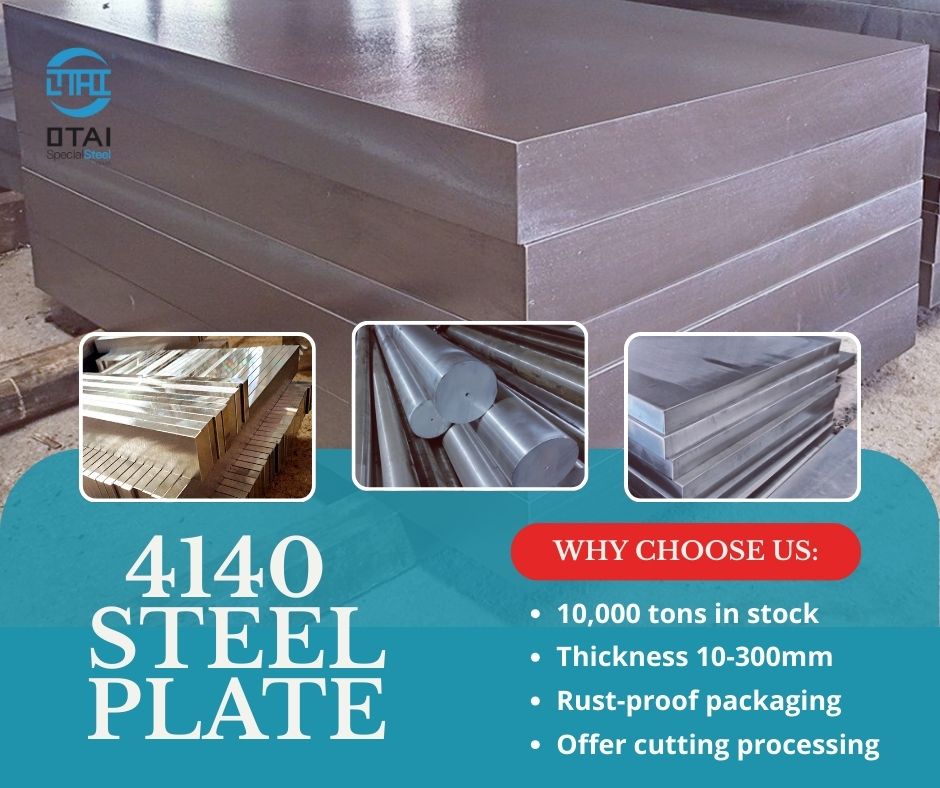
4140 Steel Endurance Limit: Understanding Its Importance in Fatigue Resistance

4140 Steel Endurance Limit: Understanding Its Importance in Fatigue Resistance

4140 alloy steel delivers strength, toughness, and versatility, so automotive, aerospace, and heavy-machinery builders specify it for gears, shafts, and springs that face repeated stress. Knowing its endurance limit lets engineers predict how long the steel will survive cyclic loading before fatigue sets in.

In this article, we will explore the concept of the endurance limit, how it applies to 4140 steel, and why it matters in the design of components that undergo cyclic loads.


🏗️ What is the Endurance Limit?

The endurance limit, also known as the fatigue limit, refers to the maximum stress level that a material can endure for an infinite number of loading cycles without experiencing fatigue failure. Fatigue failure occurs when a material undergoes repeated loading and unloading cycles, which leads to the formation of microcracks. Over time, these cracks can grow and eventually cause the material to fracture, even if the applied stresses are well below the material’s ultimate tensile strength.

The endurance limit is a crucial factor in the design of components that will experience cyclic loading, such as gears, bearings, crankshafts, and axles. These components must be able to endure repeated stresses without failing, and the endurance limit helps engineers select materials that can provide long-lasting performance.


🔧 Endurance Limit of 4140 Steel

The endurance limit of 4140 steel depends on several factors, including its composition, heat treatment, and surface finish. Typically, 4140 alloy has an endurance limit of about 40% to 60% of its ultimate tensile strength. This means that, under ideal conditions, 4140 steel can withstand cyclic stresses up to 40% to 60% of its maximum tensile strength without experiencing fatigue failure.

Factors Affecting the Endurance Limit of 4140 Steel

The endurance limit of 4140 is influenced by several key factors:

  1. Heat Treatment:

    • 4140 steel can undergo various heat treatment processes such as tempering, quenching, and normalizing. These processes affect the material’s microstructure and, consequently, its fatigue resistance. Proper heat treatment can enhance the endurance limit by improving the material’s hardness and toughness.

  2. Surface Finish:

    • A smooth surface finish improves the endurance limit of 4140 steel, as surface defects like scratches or roughness can serve as initiation points for fatigue cracks. Polished or treated surfaces can significantly increase the fatigue life of 4140 steel components.

  3. Stress Concentrations:

    • The presence of stress concentrators such as notches, holes, or sharp corners can reduce the endurance limit of 4140 material. These features can cause localized stress intensification, leading to premature fatigue failure even at lower applied stresses.

  4. Temperature:

    • 4140 steel performs better at lower temperatures. At high temperatures, the endurance limit decreases, and the material becomes more prone to failure due to thermal fatigue. The endurance limit can also be affected by thermal cycling in applications where the material is subjected to alternating hot and cold conditions.


🔨 Endurance Limit and Fatigue Resistance in 4140 Steel

The endurance limit of 4140 steel is particularly important in applications where components are subjected to cyclic loading. These applications require materials that can resist fatigue over time without experiencing failure. Below are some key applications where the endurance limit of 4140 plays a critical role:

1. Automotive Components

  • 4140 steel is commonly used for automotive parts such as gears, axles, and crankshafts. These components undergo constant cyclic loads during operation, and the endurance limit determines how long they can perform without failure. The steel’s fatigue resistance ensures that the components can last throughout the lifetime of the vehicle, even under repetitive stresses.

2. Industrial Machinery

  • In industrial machinery, components like shafts, bearings, and gears experience frequent loading and unloading cycles. The endurance limit of 4140 steel ensures that these components remain durable and functional over time, even when exposed to harsh working conditions.

3. Heavy Equipment

  • 4140 steel is used in heavy equipment parts that are subjected to high loads and vibrations, such as crankshafts, gears, and hydraulic components. The endurance limit of 4140 steel helps ensure that these parts can withstand continuous stress without cracking or failing.

4. Oil and Gas Industry

  • Components in the oil and gas industry, such as drill shafts, wellheads, and valves, are exposed to cyclic loading due to operational stresses and vibrations. The endurance limit of 4140 steel ensures that these components can perform reliably in harsh environments for extended periods.


📊 Comparison of Endurance Limit in 4140 Steel and Other Materials

To better understand the endurance limit of 4140 steel, here is a comparison with other commonly used materials:

Material Ultimate Tensile Strength (MPa) Endurance Limit (MPa) Fatigue Life Applications
4140 Steel 650–900 250–540 High Automotive parts, gears, shafts, machinery
AISI 1045 Steel 600–800 240–480 Moderate General engineering, shafts
AISI 4340 Steel 850–1,100 340–660 Very High Aerospace, heavy machinery, automotive
Titanium 900–1,100 350–700 Very High Aerospace, medical implants, high-performance parts
Stainless Steel 500–1,200 200–600 High Medical devices, marine components, aerospace

As shown in the table, 4140 steel offers a moderate to high endurance limit when compared to other materials. Its ability to withstand cyclic loading makes it an excellent choice for applications where fatigue resistance is critical.


🏆 Why Choose Otai Special Steel for Your 4140 Steel Needs?

At Otai Special Steel, we offer high-quality 4140 steel that meets international standards for strength, fatigue resistance, and endurance limit. We provide custom cutting, heat treatment, and packaging services to ensure that our 4140 steel meets your specific application requirements.

Advantages of Working with Otai Special Steel:

  • Premium Materials: We offer 4140 steel that meets the highest industry standards for strength, toughness, and fatigue resistance.

  • Customization: We provide custom cutting, heat treatment, and machining to suit your exact specifications.

  • Competitive Pricing: We offer high-performance steel at competitive prices, ensuring excellent value.

  • Fast Delivery: With a vast inventory, we guarantee fast and reliable delivery to meet your project deadlines.


Frequently Asked Questions (FAQ)

Q1: What is the endurance limit of 4140 steel?

  • A1: The endurance limit of 4140 steel typically ranges from 250 MPa to 540 MPa, depending on factors like heat treatment and surface finish.

Q2: How does the endurance limit of 4140 steel affect its performance in cyclic loading applications?

  • A2: The endurance limit ensures that 4140 steel can withstand repeated loads without failure. It allows components made from 4140 steel, such as gears and shafts, to perform reliably under constant stress and vibration.

Q3: Can the endurance limit of 4140 steel be improved?

  • A3: Yes, the endurance limit of 4140 steel can be improved through proper heat treatment, surface hardening, and smooth surface finishes. These methods reduce the risk of fatigue cracking and increase the material’s overall fatigue resistance.
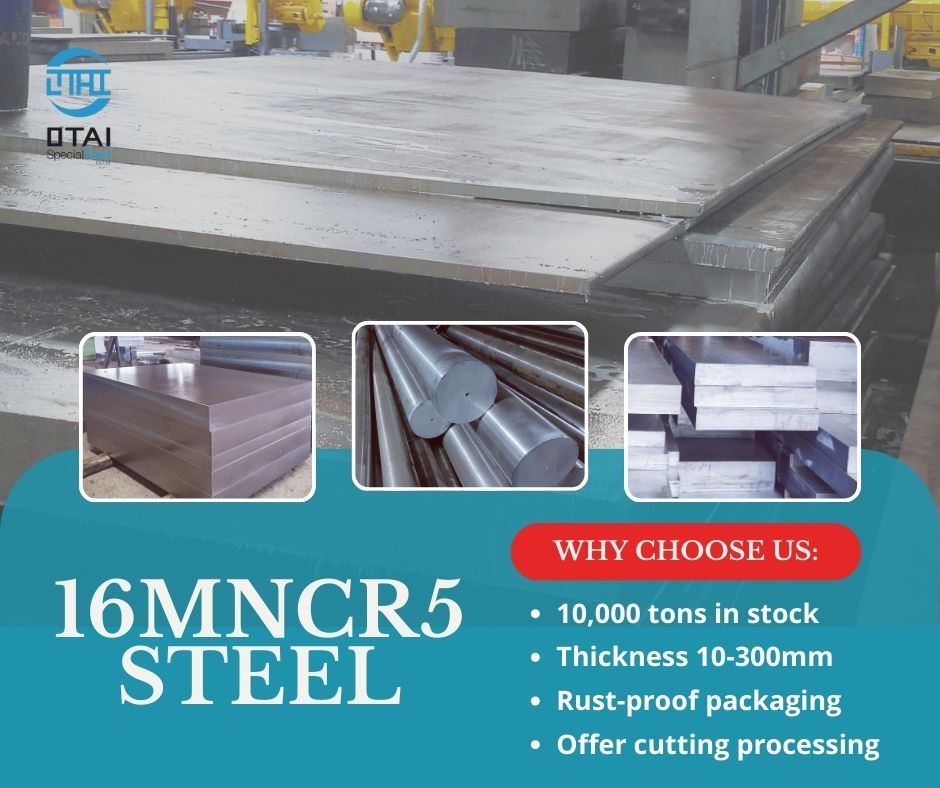
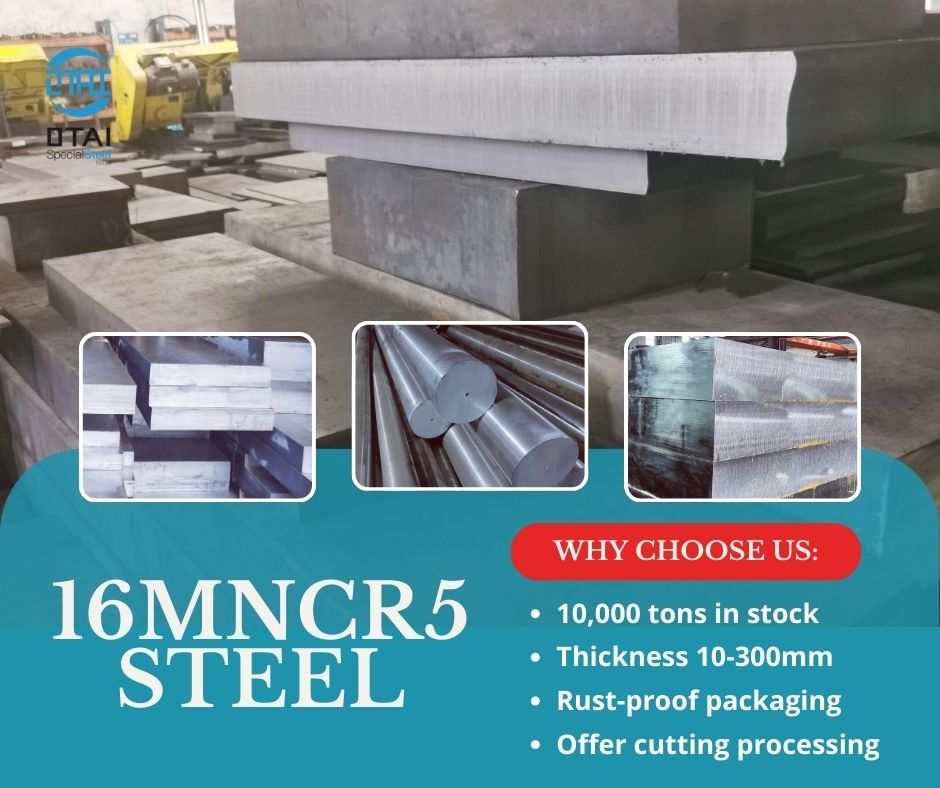
0 0 Continue Reading →

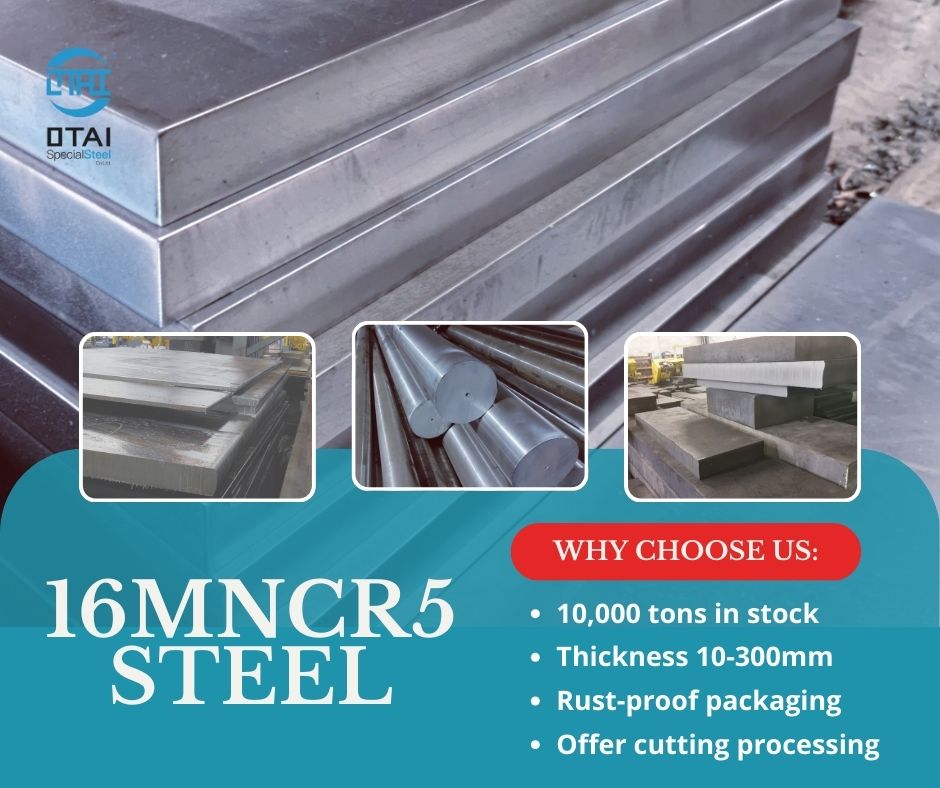
16MnCr5 Chemical Composition: Understanding Its Impact on Steel Properties

16MnCr5 Chemical Composition: Understanding Its Impact on Steel Properties16MnCr5 Chemical Composition: Understanding Its Impact on Steel Properties

16MnCr5 steel is a versatile alloy used in industries such as automotive, aerospace, and heavy machinery. Known for its excellent balance of strength, toughness, and wear resistance, 16MnCr5 steel is the material of choice for components like gears, shafts, and crankshafts. The steel’s performance directly depends on its chemical composition, which determines key properties such as hardness, fatigue resistance, and machinability.

In this article, we will explore the chemical composition of 16MnCr5 steel, discuss how each alloying element affects the steel’s properties, and explain why this steel grade is suitable for demanding applications.


🏗️ What is 16MnCr5 Steel?

16MnCr5 is a medium-carbon, low-alloy steel that contains manganese (Mn) and chromium (Cr) as key alloying elements. The number “16” in the name refers to the carbon content of approximately 0.16%, while MnCr indicates the presence of manganese and chromium. These alloying elements enhance the steel’s hardness, strength, and wear resistance.

The typical chemical composition of 16MnCr5 steel includes:

  • Carbon (C): 0.14% – 0.20%

  • Manganese (Mn): 0.60% – 0.90%

  • Chromium (Cr): 0.80% – 1.10%

  • Silicon (Si): 0.15% – 0.35%

  • Phosphorus (P): ≤ 0.025%

  • Sulfur (S): ≤ 0.025%

These elements work together to give 16MnCr5 steel a balance of strength, ductility, and resistance to wear, making it suitable for applications that demand durability and high performance.


🔧 How the Chemical Composition Affects 16MnCr5 Steel Properties

The chemical composition of 16MnCr5 steel directly influences its mechanical properties. Each alloying element plays a role in determining the steel’s strength, toughness, hardness, and resistance to wear.

1. Carbon (C)

  • Carbon is crucial in determining a steel’s hardness and strength. With a carbon content ranging from 0.14% to 0.20%, 16MnCr5 steel achieves a good balance between strength and ductility. The presence of carbon allows 16MnCr5 to be hardened through heat treatment methods such as tempering and quenching, while maintaining sufficient toughness and fatigue resistance.

2. Manganese (Mn)

  • Manganese enhances hardness, strength, and toughness in 16MnCr5 steel. It also acts as a deoxidizer, helping to remove impurities during the steelmaking process. The manganese content (0.60% – 0.90%) improves tensile strength and wear resistance, making the steel ideal for components like gears and shafts that face friction and mechanical stress. Additionally, manganese increases the hardenability of the steel, allowing it to maintain its strength during heat treatment.

3. Chromium (Cr)

  • Chromium plays an important role in improving hardness and wear resistance in 16MnCr5 steel. With a chromium content of 0.80% to 1.10%, it helps enhance the material’s fatigue strength and allows the steel to endure mechanical loads. Chromium also improves the steel’s ability to resist corrosion and contributes to hardenability, which is important for applications where parts undergo significant wear, such as gears and axles.

4. Silicon (Si)

  • Silicon (0.15% – 0.35%) acts as a deoxidizer during the steelmaking process. It helps to increase the steel’s strength and hardness while contributing to its toughness. Silicon improves the resistance to fracture and makes the material more resistant to deformation under high stress.

5. Phosphorus (P) and Sulfur (S)

  • Phosphorus and sulfur are considered impurities in most steels because they can negatively affect the ductility and toughness of the material. Both elements are kept to low levels in 16MnCr5 steel (≤ 0.025%) to ensure that the material maintains its desirable mechanical properties. Excess phosphorus and sulfur can cause brittleness, making the steel more prone to cracking under stress.


🔨 Why Choose 16MnCr5 Steel for High-Performance Applications?

Thanks to its well-balanced chemical composition, 16MnCr5 steel performs exceptionally well in various high-performance applications. The steel’s combination of strength, toughness, and resistance to wear makes it ideal for components subjected to mechanical loads and harsh conditions.

1. High Wear Resistance

  • The presence of chromium, manganese, and carbon in 16MnCr5 steel improves its wear resistance. This makes it suitable for applications where components, such as gears, shafts, and bearings, experience constant friction and mechanical wear.

2. Fatigue Strength

  • The manganese and chromium content in 16MnCr5 steel increases its fatigue strength, which allows it to withstand repeated loading and unloading cycles without cracking or failing. This property is particularly important in automotive components like crankshafts, axles, and suspension components.

3. Hardenability

  • 16MnCr5 steel exhibits excellent hardenability due to the combined effects of manganese and chromium. This property allows the material to undergo heat treatment and form a hard surface layer that resists wear, while keeping the core tough and ductile to absorb shocks.

4. Good Toughness

  • Despite its high hardness and strength, 16MnCr5 steel maintains good toughness, especially when subjected to the appropriate heat treatment. This ensures that the material can absorb impacts and resist cracking in dynamic loading applications.


📊 Comparison of 16MnCr5 Steel with Other Materials

To better understand how 16MnCr5 steel compares with other materials, here is a comparison of chemical composition and key properties:

Material Carbon (C) Manganese (Mn) Chromium (Cr) Hardness (HRC) Applications
16MnCr5 Steel 0.14% – 0.20% 0.60% – 0.90% 0.80% – 1.10% 55–62 Automotive gears, shafts, industrial machinery
AISI 1045 Steel 0.45% 0.60% – 0.90% 30–50 General engineering, shafts
AISI 4340 Steel 0.38% – 0.43% 0.60% – 0.80% 0.70% – 0.90% 35–55 Aerospace, heavy machinery
EN 19 Steel 0.38% – 0.43% 0.60% – 0.90% 0.80% – 1.10% 40–60 Heavy-duty machinery, automotive components
AISI 4130 Steel 0.28% – 0.33% 0.60% – 0.90% 0.80% – 1.10% 28–50 Aerospace, military, automotive

🏆 Why Choose Otai Special Steel for Your 16MnCr5 Steel Needs?

At Otai Special Steel, we provide high-quality 16MnCr5 steel that meets international standards for strength, toughness, and wear resistance. We offer custom cutting, heat treatment, and packaging services to ensure the material meets your project’s specific needs.

Advantages of Working with Otai Special Steel:

  • Premium Materials: We offer 16MnCr5 steel that meets the highest industry standards for strength, wear resistance, and toughness.

  • Customization: We provide custom cutting, heat treatment, and machining to suit your exact specifications.

  • Competitive Pricing: We deliver high-performance steel at competitive prices, providing excellent value.

  • Fast Delivery: With our extensive inventory, we guarantee fast, reliable delivery to meet your deadlines.


Frequently Asked Questions (FAQ)

Q1: What is 16MnCr5 steel used for?

  • A1: 16MnCr5 steel is used in automotive parts, gears, shafts, and industrial machinery due to its high strength, wear resistance, and fatigue resistance.

Q2: How does the chemical composition of 16MnCr5 steel affect its properties?

  • A2: The manganese, chromium, and carbon content give 16MnCr5 steel its high wear resistance, toughness, and hardenability, making it ideal for high-performance components.

Q3: Is 16MnCr5 steel suitable for high-stress applications?

  • A3: Yes, 16MnCr5 steel is well-suited for high-stress applications due to its fatigue strength, hardness, and toughness.

0 0 Continue Reading →

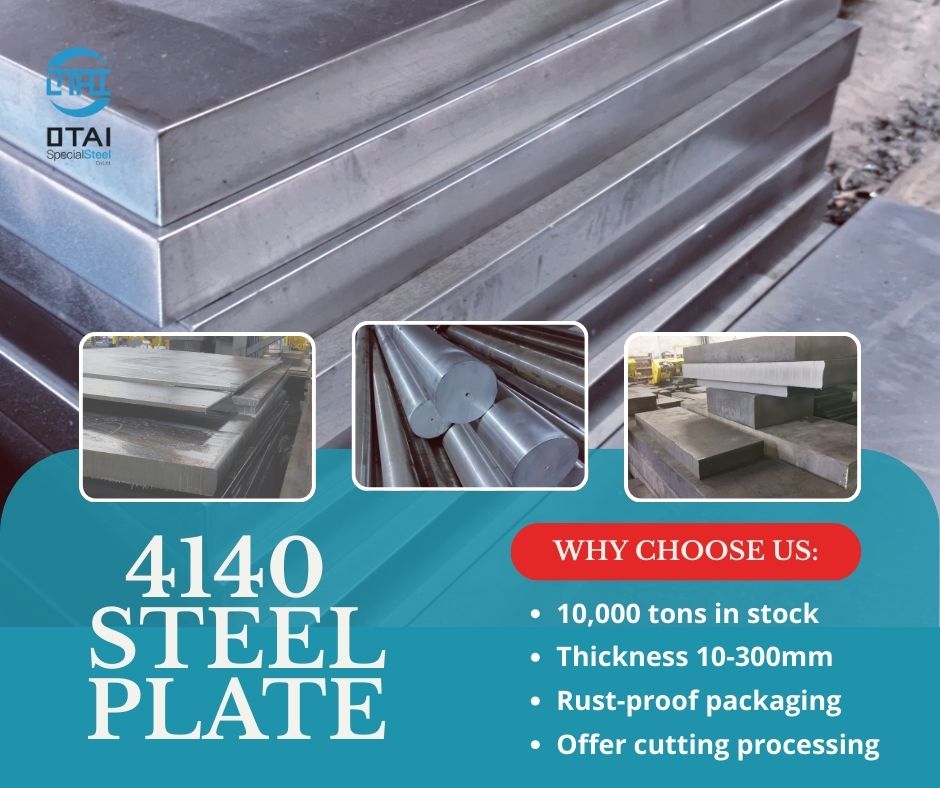
16MnCr5 Heat Treatment: Processes, Effects, and Applications

16MnCr5 Heat Treatment: Processes, Effects, and Applications16MnCr5 Heat Treatment: Processes, Effects, and Applications

16MnCr5 steel is a medium-carbon, low-alloy steel used in a variety of industries that require components to withstand high mechanical stress and wear. Known for its strength, toughness, and wear resistance, 16MnCr5 steel performs well in applications where durability and fatigue resistance are essential. Heat treatment plays a vital role in enhancing the mechanical properties of 16MnCr5 steel. In this article, we will examine the heat treatment processes, the effects on the material’s properties, and the common applications of 16MnCr5 steel.


🏗️ What is 16MnCr5 Steel?

16MnCr5 steel is an alloy steel that includes manganese and chromium to improve its mechanical properties, such as strength, toughness, and wear resistance. The number “16” in the name refers to the carbon content (around 0.16%). The manganese and chromium elements help improve hardenability, fatigue resistance, and wear resistance, which are crucial for parts exposed to high mechanical loads.

The composition of 16MnCr5 steel typically includes:

  • Carbon (C): 0.14% – 0.20%

  • Manganese (Mn): 0.60% – 0.90%

  • Chromium (Cr): 0.80% – 1.10%

  • Silicon (Si): 0.15% – 0.35%

  • Phosphorus (P): ≤ 0.025%

  • Sulfur (S): ≤ 0.025%

This composition gives 16MnCr5 steel a balance of strength, ductility, and resistance to wear, making it ideal for components that must withstand harsh conditions and repetitive stresses.


🔧 Heat Treatment Processes for 16MnCr5 Steel

Heat treatment allows you to modify the mechanical properties of 16MnCr5 steel to meet the specific requirements of various applications. Through heat treatment, you can enhance its strength, hardness, toughness, and wear resistance. Below are the most commonly used heat treatment processes for 16MnCr5 steel:

1. Carburizing

  • Carburizing is a surface-hardening process that adds carbon to the outer layer of 16MnCr5 steel. This process creates a hard surface while keeping the inner core tough and ductile. Carburizing improves the wear resistance and fatigue strength, making it ideal for parts like gears, shafts, and sprockets.

  • Process:

    1. Heat the steel to a temperature of 900°C to 950°C.

    2. Expose the material to a carbon-rich atmosphere, such as carbon monoxide.

    3. Quench the steel to lock in the carbon at the surface.

    4. Optionally, temper the steel to restore some of its ductility.

  • Benefits: Increased surface hardness and wear resistance while maintaining a tough core.

2. Quenching and Tempering

  • Quenching and tempering are often applied together to increase strength and hardness while maintaining ductility. Quenching involves rapidly cooling the steel to lock in its hard martensitic structure, and tempering restores the material’s toughness by reheating it at a lower temperature.

  • Process:

    1. Heat the steel to around 850°C to 900°C.

    2. Quench it in oil or water to form martensite.

    3. Temper the steel at 400°C to 650°C to relieve stresses and improve toughness.

  • Benefits: Improved tensile strength, fatigue resistance, and impact toughness.

3. Normalizing

  • Normalizing is a heat treatment that refines the grain structure of 16MnCr5 steel to improve its toughness and uniformity.

  • Process:

    1. Heat the steel to 850°C to 900°C.

    2. Allow the steel to cool in air, resulting in a more uniform grain structure.

  • Benefits: Enhanced toughness, strength, and improved formability.

4. Annealing

  • Annealing is a heat treatment designed to soften 16MnCr5 steel by relieving internal stresses and improving machinability.

  • Process:

    1. Heat the steel to 750°C to 800°C.

    2. Cool it slowly to reduce internal stresses and soften the material.

  • Benefits: Reduced internal stresses and improved ductility and machinability.


🔨 Effects of Heat Treatment on 16MnCr5 Steel

The heat treatment processes enhance various mechanical properties of 16MnCr5 steel, tailoring it for specific applications. Here’s how each process affects its properties:

1. Hardness

  • Carburizing and quenching increase the surface hardness of 16MnCr5 steel, making it more resistant to wear and abrasion. This is especially useful for components such as gears and bearings that experience high friction.

2. Strength and Toughness

  • Quenching increases the strength but may also make the steel brittle. Tempering after quenching restores the material’s toughness, improving its ability to absorb shocks and resist impact.

3. Ductility

  • Normalizing and annealing improve the ductility of 16MnCr5 steel, making it easier to work with and shape. This is important when the material needs to withstand deformation without cracking or breaking.

4. Wear Resistance

  • Carburizing increases the wear resistance of 16MnCr5 steel, which makes it ideal for parts exposed to continuous friction and abrasive forces.


🏗️ Applications of 16MnCr5 Steel

Due to its excellent mechanical properties and versatile heat treatment options, 16MnCr5 steel is used in a wide variety of applications, particularly in industries that require components to endure high stress, impact, and wear.

1. Automotive Industry

  • 16MnCr5 steel is commonly used in the automotive industry for manufacturing gears, axles, crankshafts, and suspension components. These components require the steel to withstand high mechanical loads while maintaining fatigue strength and impact resistance.

2. Industrial Machinery

  • 16MnCr5 steel is used for bearings, shafts, sprockets, and pulleys in industrial machinery. The material’s wear resistance and toughness make it perfect for heavy-duty machinery exposed to constant friction.

3. Heavy Equipment

  • Parts in heavy equipment, such as those used in construction and mining, benefit from the high strength and toughness of 16MnCr5 steel. This steel can endure harsh working conditions with high mechanical stresses.

4. Gears and Shafts

  • 16MnCr5 steel is particularly suitable for gears and shafts that experience high torque, dynamic loads, and frequent wear. The material’s combination of hardness and ductility makes it durable and reliable in demanding applications.


📊 Comparison of 16MnCr5 Steel with Other Materials

For a clearer understanding of how 16MnCr5 steel compares to other materials, here is a comparison of tensile strength, yield strength, and hardness:

Material Tensile Strength (MPa) Yield Strength (MPa) Hardness (HRC) Applications
16MnCr5 Steel 600–900 450–650 55–62 Automotive parts, gears, shafts, industrial machinery
AISI 5120 Steel 600–850 400–650 28–50 Automotive gears, axles, crankshafts
EN 19 (1.4511) 850–1,100 450–650 30–40 Engine components, industrial machinery
42CrMo4 (1.7225) 900–1,050 600–750 30–50 Gears, axles, crankshafts
AISI 4130 Steel 670–1,000 430–600 28–50 Aerospace, military, automotive

🏆 Why Choose Otai Special Steel for Your 16MnCr5 Steel Needs?

At Otai Special Steel, we offer high-quality 16MnCr5 steel that meets international standards. We provide precision cutting, heat treatment, and packaging services to ensure the material meets your project requirements. Whether you need gears, shafts, or machinery parts, we can help you get the right material for your application.

Advantages of Working with Otai Special Steel:

  • Top-Quality Materials: We offer 16MnCr5 steel that meets industry standards for strength, wear resistance, and toughness.

  • Customization: We provide custom cutting, heat treatment, and machining to meet your exact specifications.

  • Competitive Pricing: We offer high-performance steel at competitive prices, ensuring excellent value.

  • Fast Delivery: With our extensive inventory, we guarantee fast, reliable delivery to meet your deadlines.


Frequently Asked Questions (FAQ)

Q1: What is 16MnCr5 steel used for?

  • A1: 16MnCr5 steel is used in automotive parts, gears, shafts, and industrial machinery components that require high strength, wear resistance, and fatigue resistance.

Q2: How does heat treatment affect 16MnCr5 steel?

  • A2: Heat treatments like carburizing, quenching, and tempering significantly improve the strength, hardness, and wear resistance of 16MnCr5 steel, making it suitable for heavy-duty applications.

Q3: Is 16MnCr5 steel weldable?

  • A3: Yes, 16MnCr5 steel is weldable, but it requires proper preheating and post-weld heat treatment to avoid cracking and ensure the best mechanical properties.

0 0 Continue Reading →

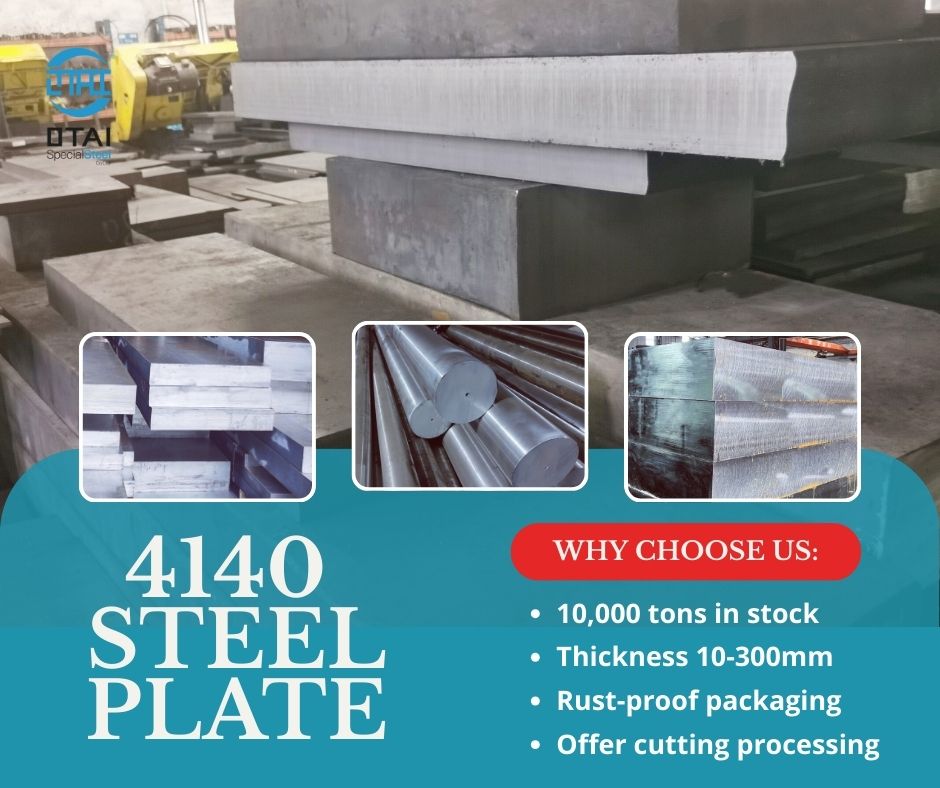
4140 Steel Elastic Modulus: Understanding Its Importance in Mechanical Design

4140 Steel Elastic Modulus: Understanding Its Importance in Mechanical Design

4140 steel is a versatile alloy that combines carbon, chromium, molybdenum, and manganese to deliver a balance of strength, toughness, and wear resistance. It is commonly used in industries that require durable materials for high-stress components, such as automotive, aerospace, and heavy machinery. One of the key mechanical properties of 4140 steel that engineers and designers consider when selecting materials for specific applications is its elastic modulus.


🏗️ What is the Elastic Modulus?

The elastic modulus (also known as the modulus of elasticity) is a material property that describes its ability to deform elastically (i.e., temporarily) when subjected to an applied force. It is a measure of a material’s stiffness and its ability to return to its original shape after the force is removed. Essentially, the elastic modulus defines the relationship between stress (force per unit area) and strain (proportional deformation) in the elastic region of the material’s stress-strain curve.

A higher elastic modulus indicates that the material is stiffer, meaning it resists deformation under stress. Conversely, a lower elastic modulus means the material is more flexible and will deform more easily.

There are several types of elastic moduli, including:

  • Young’s Modulus (E), which measures the stiffness of a material in tension or compression.

  • Shear Modulus (G), which measures the material’s response to shear stress.

  • Bulk Modulus (K), which measures the material’s response to uniform compression.

For the purpose of this article, we will focus primarily on Young’s Modulus, which is the most commonly referenced elastic modulus in structural and mechanical design.


🔧 Elastic Modulus of 4140 Steel

The elastic modulus of 4140 steel refers to the material’s stiffness when subjected to tensile or compressive forces. For 4140 steel, the Young’s Modulus typically ranges between 190 GPa and 210 GPa (gigapascals), depending on the specific alloy composition and heat treatment. This range places 4140 steel in the category of relatively stiff materials, meaning it resists deformation under typical working loads.

The value of Young’s Modulus for 4140 steel is quite high compared to other materials like aluminum (which has an elastic modulus of about 69 GPa) but lower than that of titanium or other high-strength steels.

Factors Affecting the Elastic Modulus of 4140 Steel

While 4140 steel has a relatively consistent elastic modulus, several factors can influence its value, including:

  • Chemical Composition: The exact alloying elements in 4140 alloy, such as the amounts of carbon, chromium, and manganese, can slightly affect the elastic modulus. These alloying elements are chosen to improve the material’s strength and hardness, but they can also influence the stiffness.

  • Heat Treatment: The heat treatment applied to 4140 steel—such as tempering, quenching, or normalizing—can impact its internal structure and, consequently, its elastic modulus. Generally, heat treatment will not drastically alter the elastic modulus, but it can influence other mechanical properties that interact with the material’s stiffness.

  • Temperature: The elastic modulus of 4140 material can decrease as temperature increases. At high temperatures, the material becomes more flexible, which reduces its stiffness. Engineers must consider this change in stiffness when designing components for use in high-temperature environments.


🔨 Why is the Elastic Modulus Important for 4140 Steel?

Understanding the elastic modulus of 4140 steel is crucial for several reasons, especially in mechanical and structural design. The elastic modulus affects the material’s performance in applications that involve stress, strain, and deflection. Below are some reasons why the elastic modulus is essential when working with 4140 steel:

1. Designing for Strength and Stability

  • The elastic modulus helps engineers determine how much 4140 steel will deform under a given load. For example, when designing shafts, axles, or gears, knowing the elastic modulus ensures that the material will not deform excessively under the operational loads, thus maintaining the integrity and performance of the component.

2. Calculating Deflection in Components

  • When 4140 steel is used in structural applications or load-bearing components, the elastic modulus is used to calculate the amount of deflection the material will undergo under a given force. For example, in the design of beams or columns, the elastic modulus allows engineers to ensure that the material will not deform excessively, which could lead to failure or malfunction.

3. Predicting Material Behavior Under Stress

  • The elastic modulus is also vital when predicting how 4140 steel will behave under varying loading conditions. For components that will experience repeated loading, understanding the elastic modulus helps engineers assess the risk of fatigue failure, where material deformation leads to cracks and eventual breakage.


📊 How Does the Elastic Modulus of 4140 Steel Compare to Other Materials?

To better understand how 4140 steel compares in terms of stiffness, here’s a comparison of its elastic modulus with that of other common materials:

Material Young’s Modulus (GPa) Applications
4140 Steel 190–210 Automotive parts, gears, shafts, machinery
AISI 1045 Steel 190–210 General engineering, shafts
Titanium 100–120 Aerospace, medical implants
Aluminum 69 Lightweight structures, aircraft
Copper 110 Electrical wiring, piping
Cast Iron 120–170 Engine blocks, pipes, heavy machinery

As shown in the table, 4140 steel has a relatively high elastic modulus compared to materials like aluminum and copper, which are much more flexible. This stiffness makes 4140 steel a strong candidate for applications requiring strength and resistance to deformation.


🏗️ Applications of 4140 Steel Where Elastic Modulus Matters

The elastic modulus of 4140 steel plays a critical role in the following applications:

1. Automotive Components

  • 4140 steel is often used in automotive components like gears, axles, and suspension parts. The material’s high elastic modulus ensures that it will not deform excessively under high-stress conditions, making it ideal for parts that undergo constant loads and impacts.

2. Industrial Machinery

  • 16MnCr5 steel is commonly used in industrial machinery, including components like shafts, bearings, and gears. The elastic modulus helps ensure that these parts can withstand heavy mechanical stress without excessive deflection.

3. Aerospace and Military

  • 4140 steel is also used in aerospace and military applications. The elastic modulus helps engineers design parts that must withstand high-speed forces and vibrations without failing or losing structural integrity.

4. Heavy Equipment

  • Components in heavy equipment, such as those used in construction and mining, require 4140 steel because of its ability to maintain its shape and strength under constant stress, especially in parts like gears, sprockets, and crankshafts.


🏆 Why Choose Otai Special Steel for Your 4140 Steel Needs?

At Otai Special Steel, we specialize in providing high-quality 4140 steel with consistent mechanical properties. Our inventory of 4140 steel is available in various forms, including plates, bars, round bars, and custom profiles, and we offer tailored services such as cutting, heat treatment, and packaging to meet your specific needs.

Advantages of Working with Otai Special Steel:

  • Premium Materials: We provide top-grade 4140 steel that meets international standards for strength, toughness, and elastic modulus.

  • Customization: We offer custom cutting, heat treatment, and machining to suit your exact specifications.

  • Competitive Pricing: We provide high-performance steel at competitive prices.

  • Fast Delivery: With a large inventory and efficient logistics, we ensure fast delivery to meet your project deadlines.


Frequently Asked Questions (FAQ)

Q1: What is the elastic modulus of 4140 steel?

  • A1: The elastic modulus of 4140 steel typically ranges from 190 GPa to 210 GPa, making it a relatively stiff material suitable for high-stress applications.

Q2: Why is the elastic modulus important for designing with 4140 steel?

  • A2: The elastic modulus helps engineers determine how much 4140 steel will deform under stress, ensuring that the material maintains its shape and function without excessive deflection.

Q3: How does the elastic modulus of 4140 steel compare to other materials?

  • A3: 4140 steel has a higher elastic modulus than materials like aluminum and copper, making it ideal for applications requiring high stiffness and resistance to deformation.

0 0 Continue Reading →

Steel Grade 16MnCr5: Properties, Applications, and Benefits

Steel Grade 16MnCr5: Properties, Applications, and BenefitsSteel Grade 16MnCr5: Properties, Applications, and Benefits

16MnCr5 steel is a medium-carbon, low-alloy steel that combines manganese and chromium to enhance its mechanical properties. In this article, we will explore the composition, properties, heat treatment, and applications of 16MnCr5 steel, highlighting why it’s a preferred material in automotive, aerospace, and heavy machinery industries.


🏗️ What is Steel Grade 16MnCr5?

16MnCr5 is an alloy steel known for its combination of manganese (Mn) and chromium (Cr). The “16” in the name refers to the approximate carbon content, about 0.16%. The MnCr alloying elements provide additional benefits such as better hardenability and fatigue resistance.

The typical chemical composition of 16MnCr5 steel includes:

  • Carbon (C): 0.14% – 0.20%

  • Manganese (Mn): 0.60% – 0.90%

  • Chromium (Cr): 0.80% – 1.10%

  • Silicon (Si): 0.15% – 0.35%

  • Phosphorus (P): ≤ 0.025%

  • Sulfur (S): ≤ 0.025%

This unique composition provides 16MnCr5 with a balance of strength, ductility, and resistance to wear, making it a popular choice for critical components in many industries.


🔧 Mechanical Properties of 16MnCr5 Steel

The mechanical properties of 16MnCr5 steel make it suitable for high-performance applications. Key properties include:

1. Tensile Strength

  • 16MnCr5 steel typically has a tensile strength between 600 MPa and 900 MPa. This high strength allows it to withstand considerable tensile stress without breaking or permanently deforming.

2. Yield Strength

  • The yield strength of 16MnCr5 steel ranges from 450 MPa to 650 MPa, enabling it to resist permanent deformation under heavy mechanical loads.

3. Hardness

  • The hardness of 16MnCr5 steel can reach between 55 and 62 HRC (Rockwell C scale), depending on the heat treatment applied. This makes it highly resistant to wear, abrasions, and deformation.

4. Ductility and Toughness

  • 16MnCr5 steel has good ductility and toughness, which means it can deform slightly under stress without fracturing. This combination helps the steel absorb energy and resist cracking under shock or impact.

5. Fatigue Resistance

  • 16MnCr5 steel exhibits excellent fatigue resistance, making it ideal for components such as gears, shafts, and axles, which experience repetitive loads during operation.


🔨 Heat Treatment of 16MnCr5 Steel

Heat treatment processes can significantly alter the mechanical properties of 16MnCr5 steel. By applying specific treatments, manufacturers can enhance its strength, hardness, and wear resistance. Common heat treatments for 16MnCr5 steel include:

1. Carburizing

  • Carburizing increases the carbon content on the surface of 16MnCr5 steel, forming a hard surface layer while keeping the core ductile. This treatment improves wear resistance and is ideal for components like gears and sprockets.

2. Quenching and Tempering

  • Quenching involves heating the steel to a high temperature and then cooling it rapidly, which increases tensile strength and hardness. After quenching, tempering reduces brittleness and restores some ductility, balancing strength and toughness.

3. Normalizing

  • In normalizing, 16MnCr5 steel is heated above its critical temperature and then allowed to cool in air. This process refines the grain structure, improving the toughness and strength of the material.


🏗️ Applications of 16MnCr5 Steel

Thanks to its excellent mechanical properties, 16MnCr5 steel is used in a wide variety of industrial applications. Some of its common uses include:

1. Automotive Industry

  • 16MnCr5 steel is a popular material for automotive parts such as gears, axles, crankshafts, and suspension components. These parts are subjected to high mechanical stresses and require materials with good fatigue resistance and impact toughness.

2. Industrial Machinery

  • 16MnCr5 steel is widely used in industrial machinery, particularly for parts like bearings, shafts, pulleys, and sprockets. Its wear resistance and toughness make it ideal for high-load, high-stress applications.

3. Heavy Equipment

  • Components for heavy equipment, such as those used in construction and mining, benefit from the strength and toughness of 16MnCr5 steel. This steel can withstand harsh working conditions, including high-impact forces and abrasive environments.

4. Gears and Shafts

  • Due to its high tensile strength, hardness, and fatigue resistance, 16MnCr5 steel is commonly used for gears, shafts, and other mechanical components exposed to dynamic loads and constant friction.


📊 Comparison of 16MnCr5 Steel with Other Steels

To help understand how 16MnCr5 steel compares to other widely used steels, here is a comparison of tensile strength, yield strength, and hardness:

Material Tensile Strength (MPa) Yield Strength (MPa) Hardness (HRC) Applications
16MnCr5 Steel 600–900 450–650 55–62 Automotive parts, gears, shafts, industrial machinery
AISI 5120 Steel 600–850 400–650 28–50 Automotive gears, axles, crankshafts
EN 19 (1.4511) 850–1,100 450–650 30–40 Engine components, industrial machinery
42CrMo4 (1.7225) 900–1,050 600–750 30–50 Gears, axles, crankshafts
AISI 4130 Steel 670–1,000 430–600 28–50 Aerospace, military, automotive
SAE 8620 Steel 600–850 400–550 20–30 Gears, automotive components, shafts

🏆 Why Choose Otai Special Steel for Your 16MnCr5 Steel Needs?

At Otai Special Steel, we specialize in providing high-quality 16MnCr5 steel that meets the highest international standards. Whether you need gears, shafts, or custom components, we offer precision cutting, heat treatment, and packaging services to ensure the material meets your project requirements.

Advantages of Working with Otai Special Steel:

  • Top-Quality Materials: We provide 16MnCr5 steel that meets the highest industry standards for strength, durability, and wear resistance.

  • Customization: We offer custom cutting, heat treatment, and machining to suit your exact specifications.

  • Competitive Pricing: We deliver high-performance steel at competitive prices, providing excellent value.

  • Fast Delivery: With an extensive inventory, we guarantee fast, reliable delivery to meet your deadlines.


Frequently Asked Questions (FAQ)

Q1: What is 16MnCr5 steel used for?

  • A1: 16MnCr5 steel is used in automotive parts, gears, shafts, and industrial machinery components that need high strength, wear resistance, and fatigue resistance.

Q2: How does heat treatment improve the properties of 16MnCr5 steel?

  • A2: Heat treatments like carburizing, quenching, and tempering increase the hardness, toughness, and wear resistance of 16MnCr5 steel, making it ideal for heavy-duty applications.

Q3: Is 16MnCr5 steel weldable?

  • A3: Yes, 16MnCr5 steel is weldable, but it requires proper preheating and post-weld heat treatment to avoid cracking and maintain its mechanical properties.

0 0 Continue Reading →

4140 alloy Sheet: Strength and Versatility for Critical Applications

4140 alloy Sheet: Strength and Versatility for Critical Applications4140 alloy Sheet combines strength, toughness, and wear resistance, making it a top choice for a wide range of industrial applications. Whether you work in automotive manufacturing, aerospace, oil and gas, or heavy machinery, 4140 steel provides the durability and performance required for demanding environments. In this article, we’ll explore the key properties of 4140 steel, its common applications, and why it’s a go-to material for critical projects.


🌟 What is 4140 Steel?

4140 steel belongs to the AISI 4140 family, a low-alloy, medium-carbon steel. It contains chromium, molybdenum, and carbon as its main alloying elements, contributing to its exceptional mechanical properties. Manufacturers often provide 4140 alloy Sheet in sheets, which simplifies its use for various applications requiring high strength and durability.

One significant benefit of 4140 steel is its ability to undergo heat treatment to achieve the desired balance between strength, hardness, and toughness. As a result, manufacturers offer 4140 steel in forms such as cold-rolled, hot-rolled, and quenched and tempered, allowing flexibility for diverse applications.


🔧 Key Properties of 4140 Steel

The mechanical properties of 4140 sheet steel make it ideal for high-performance applications that demand strength, wear resistance, and toughness. Below are the essential properties that define 4140 sheet steel:

1. Tensile Strength

Tensile strength measures how much stress a material can withstand before breaking. 4140 alloy Sheet steel offers high tensile strength, typically ranging from 850 MPa to 1000 MPa when heat-treated. This makes it perfect for applications requiring resistance to stretching or breaking under load.

2. Yield Strength

Yield strength refers to the level of stress at which a material starts to deform permanently. For 4140 sheet steel, yield strength typically ranges from 600 MPa to 900 MPa, depending on heat treatment. Consequently, 4140 sheet steel handles significant stress without permanent deformation, making it ideal for structural components.

3. Hardness

Hardness measures a material’s resistance to indentation, scratching, and wear. 4140 alloy Sheet is known for its high hardness, which can be modified through heat treatment. After quenching and tempering, 4140 sheet typically reaches a hardness of 28 to 35 HRC, providing outstanding wear resistance.

4. Impact Toughness

Impact toughness gauges how well a material can withstand sudden forces or shocks. 4140 sheet steel retains good impact toughness, even under high-stress conditions. This property is essential for parts exposed to severe impacts, such as gears, shafts, and machine components.

5. Ductility

Despite its strength and hardness, 4140 alloy Sheet offers moderate ductility, meaning it can deform before fracturing. This makes 4140 sheet steel suitable for forming, machining, and welding without cracking or breaking.


🏗️ Applications of 4140 Steel

Thanks to its strength, toughness, and wear resistance, 4140 sheet steel is widely used across various industries. Below are some typical applications of 4140 steel:

Industry Applications Reason for Use
Automotive Suspension components, gears, crankshafts High strength and wear resistance
Aerospace Aircraft structural components, landing gear Durability and fatigue resistance
Oil and Gas Drill pipes, valves, downhole tools Wear resistance, high strength
Heavy Machinery Gearboxes, machine frames, industrial equipment Durability under high mechanical loads

1. Automotive Industry

In the automotive industry, 4140 sheet steel is commonly used for parts such as gears, crankshafts, and suspension components. These components experience high mechanical stress and require resistance to wear, impact, and fatigue. Therefore, 4140 alloy Sheet proves ideal for automotive applications due to its high strength and toughness.

2. Aerospace Industry

The aerospace industry demands materials that can withstand extreme stress, temperature fluctuations, and fatigue. 4140 sheet steel is commonly used for critical aircraft structural components and landing gear. Its excellent resistance to impact and high strength make it essential for maintaining the safety and performance of aerospace applications.

3. Oil and Gas Industry

In the oil and gas sector, 4140 sheet steel is ideal for producing durable drill pipes, downhole tools, and valves. These components must endure extreme pressure and temperature variations. Due to its high tensile strength and wear resistance, 4140 alloy Sheet is perfectly suited for these challenging conditions.

4. Heavy Machinery

For heavy machinery, components like gearboxes, machine frames, and crankshafts must withstand heavy mechanical loads. 4140 sheet steel excels in these environments, offering long-lasting durability and reliability under high stress.


🏆 Why Choose Otai Special Steel for 4140 Steel?

Otai Special Steel provides top-quality 4140 sheet steel, offering several advantages:

  • Large Inventory: With over 10,000 tons of steel in stock, we ensure quick and reliable delivery for all your steel needs.

  • Customization: We offer cutting, heat treatment, and packaging services, allowing you to customize 4140 sheet steel to your specific requirements.

  • Quality Assurance: Every batch of 4140 alloy Sheet undergoes strict testing, including chemical composition analysis, ultrasonic testing, and hardness testing to meet industry standards.

  • Global Expertise: With years of experience, Otai Special Steel delivers high-quality materials to clients around the world.


FAQ: Common Questions About 4140 Steel

Q1: What is the difference between 4140 sheet steel and other 4140 forms?
A1: 4140 sheet steel is simply 4140 steel in sheet form. It offers the same high strength, toughness, and wear resistance, but in a sheet form that is easier to handle for flat or sheet applications.

Q2: Can 4140 sheet steel be welded?
A2: Yes, it can. However, preheating the material before welding and conducting post-weld heat treatment can help prevent cracking, especially in the quenched and tempered condition.

Q3: How does heat treatment affect 4140 sheet steel?
A3: Heat treatment enhances the mechanical properties of 4140 steel. After quenching and tempering, the steel exhibits higher tensile strength, hardness, and wear resistance, making it perfect for high-stress applications.

0 0 Continue Reading →

4140 steel pipes – Properties and Engineering Insights

4140 steel pipes – Properties and Engineering Insights4140 steel pipes – Properties and Engineering Insights

When engineers and buyers look for a material that balances strength, toughness, and machinability, the 4140 steel pipe often becomes the preferred choice. Known for its chromium-molybdenum alloy composition, this steel offers outstanding performance in demanding environments. Let’s dive deep into what makes 4140 steel pipe so popular, its key specifications, and how industries apply it.


🔎 What is a 4140 Steel pipe?

A 4140 steel pipe is a hollow cylindrical product manufactured from AISI 4140 alloy steel. With approximately 0.40% carbon, 1% chromium, and 0.2% molybdenum, this steel tube delivers both strength and hardenability.

Unlike standard carbon steel pipes, 4140 alloy steel tubing provides greater resistance to fatigue, wear, and high-pressure conditions. It’s widely available in seamless 4140 steel tubing and 4140 DOM tubing (drawn over mandrel) formats.


🧪 4140 Steel pipe Chemical Composition

The properties of 4140 steel pipes come from their carefully balanced alloy chemistry:

Element Content (%) Role in Tube Properties
Carbon (C) 0.38 – 0.43 Increases hardness and strength
Chromium (Cr) 0.80 – 1.10 Boosts wear resistance and corrosion resistance
Molybdenum (Mo) 0.15 – 0.25 Improves toughness and high-temperature strength
Manganese (Mn) 0.75 – 1.00 Enhances hardenability and strength
Silicon (Si) 0.15 – 0.35 Improves hardness and shock resistance

This chemistry allows 4140 seamless tubing to withstand extreme stress and maintain dimensional stability during machining or heat treatment.


⚡ Mechanical Properties of 4140 steel pipes

The mechanical properties of 4140 steel pipe vary depending on heat treatment. Here’s a quick overview:

Condition Tensile Strength (MPa) Yield Strength (MPa) Hardness (HRC)
Annealed ~655 ~415 18 – 22
Normalized ~965 ~655 28 – 32
Quenched & Tempered 1240 – 1600 1080 – 1300 28 – 55

This flexibility makes 4140 alloy steel tubes ideal for applications requiring customized mechanical performance.


🏗️ Applications of 4140 steel pipes

Industries select 4140 mechanical tubing because it provides strength and wear resistance under load. Common applications include:

  • Oil & Gas Industry → Drill collars, tool joints, and pressure components.

  • Automotive & Aerospace4140 steel pipe for driveshafts, landing gear, and engine components.

  • Industrial Machinery → Hydraulic cylinders, gears, axles, and spindles.

  • Construction Equipment4140 seamless tubing for heavy machinery frames and arms.

  • Tooling Applications → Bushings, bearings, and structural supports.

Because it can be hardened or surface-treated, the tube offers a wide range of performance customization.


🔧 4140 Steel pipe Machinability and Heat Treatment

  • In its annealed condition, the tube machines easily.

  • When hardened beyond 30 HRC, machining becomes more difficult, requiring carbide tools.

  • Engineers often choose 4140 DOM tubing when they need excellent dimensional accuracy and smooth internal finishes.

  • Heat treatment options include quenching, tempering, and nitriding, allowing hardness adjustments between 18–55 HRC.

This makes it possible to tailor 4140 steel tubing mechanical properties precisely to the application.


📏 Sizes and Availability

The 4140 tube sizes are available in a wide range of outside diameters (OD) and wall thicknesses. Standard supply includes:

Outside Diameter (OD) Wall Thickness Range Form Available
10 mm – 600 mm 1 mm – 50 mm Seamless, DOM, Hot Rolled

Large-diameter 4140 seamless tubes are often used in pressure vessels, while smaller DOM tubes serve precision automotive and aerospace parts.


🛡️ Benefits of Using 4140 Steel Pipes

  • High tensile strength and fatigue resistance.

  • Better wear resistance than plain carbon steel.

  • Customizable hardness through heat treatment.

  • Excellent toughness for impact applications.

  • Dimensional accuracy when ordered as 4140 DOM tubing.

These benefits explain why 4140 steel alloy tubes remain a standard choice in critical engineering projects.


💡 Company Advantages – Why Source from Otai Special Steel?

  • Extensive Stock: Over 10,000 tons of 4140 steel products, including bars, plates, and tubes.

  • Range of Tube Types: Seamless, DOM, and hot-rolled 4140 tubes available in multiple sizes.

  • Tailored Processing: Cutting, machining, and custom heat treatment based on your specifications.

  • Certified Quality: Ultrasonic testing, chemical analysis, and SGS third-party inspections.

  • Trusted Globally: Regular supplier for companies like Thyssenkrupp, Borealis, and Schlumberger.

Whether you need 4140 alloy steel tubing for oilfield equipment or 4140 mechanical tubing for automotive use, Otai ensures reliable supply and precision processing.


❓ FAQ

Q1: What’s the difference between seamless 4140 steel tubing and DOM tubing?
Seamless tubing has no weld seam, offering excellent strength under pressure. DOM tubing is drawn over mandrel for higher dimensional accuracy and smoother internal surfaces.

Q2: Can 4140 steel pipe be welded?
Yes, with proper preheating and post-weld stress relief. Without these steps, cracking may occur due to high carbon content.

Q3: What hardness can 4140 steel pipes reach after heat treatment?
Quenched and tempered tubes can achieve up to 55 HRC, while nitrided surfaces may exceed 60 HRC.

Q4: Are 4140 steel pipes corrosion-resistant?
Not naturally. While chromium improves wear resistance, they are not stainless. Coatings, plating, or protective environments are recommended.

Q5: Why is 4140 steel pipe better than carbon steel tube?
It offers higher strength, better wear resistance, and longer service life in demanding applications.

0 0 Continue Reading →

16MnCr5 Material Price: Factors Affecting Cost and How to Get the Best Value

16MnCr5 Material Price: Factors Affecting Cost and How to Get the Best Value16MnCr5 Material Price: Factors Affecting Cost and How to Get the Best Value

16MnCr5 steel is a popular alloy steel known for its excellent mechanical properties, such as high strength, wear resistance, and toughness. This steel is widely used in industries that require components to endure high mechanical stresses, such as automotive, machinery, and aerospace. However, when sourcing 16MnCr5 steel, one of the most important considerations is the material price. The price of 16MnCr5 steel can vary based on multiple factors. In this article, we will discuss the key factors that influence the price of 16MnCr5 steel and provide tips on how to get the best value for your purchase.


🏗️ What is 16MnCr5 Steel?

16MnCr5 steel is a medium-carbon alloy steel that combines manganese and chromium to enhance its strength, toughness, and wear resistance. It is commonly used in applications such as gears, shafts, crankshafts, and other parts that require good fatigue strength and resilience to mechanical stress. The steel’s composition includes the following elements:

  • Carbon (C): 0.14% – 0.20%

  • Manganese (Mn): 0.60% – 0.90%

  • Chromium (Cr): 0.80% – 1.10%

  • Silicon (Si): 0.15% – 0.35%

  • Phosphorus (P): ≤ 0.025%

  • Sulfur (S): ≤ 0.025%

These elements give 16MnCr5 steel its impressive hardenability, resistance to wear, and fatigue resistance, making it a top choice for demanding industrial applications.


🔧 Factors Affecting the Price of 16MnCr5 Steel

The price of 16MnCr5 steel is influenced by several factors. Understanding these factors can help you make a more informed decision when purchasing the material:

1. Raw Material Costs

  • The cost of raw materials used to produce 16MnCr5 steel plays a significant role in its overall price. Elements such as manganese, chromium, and carbon fluctuate in price based on global supply and demand. Since chromium and manganese are critical alloying elements, any changes in their market price can directly impact the price of 16MnCr5 steel.

2. Production Processes

  • The method used to produce 16MnCr5 steel can affect its price. For example, the steel may undergo processes like melting, casting, rolling, and heat treatment. Specialized processes like carburizing, quenching, and tempering further enhance the material’s mechanical properties, but they also add to the cost. If you require custom heat treatments or specific material forms (like round bars, plates, or sheets), these additional processes can increase the overall price.

3. Size and Shape of the Material

  • The size and shape of the 16MnCr5 steel you need will also affect the price. Large sections or custom shapes require more labor, machinery, and material, which increases the cost. Additionally, if the steel needs to be precision-cut to specific dimensions, this adds further processing costs.

4. Quantity Purchased

  • Bulk orders of 16MnCr5 steel often come with lower per-unit costs compared to smaller, single purchases. Manufacturers and suppliers usually offer discounts for larger orders. If your project requires a high volume of steel, negotiating a better price for a bulk order can help reduce costs.

5. Supplier Location and Shipping

  • The location of the supplier plays a crucial role in the cost of 16MnCr5 steel. Steel prices can vary depending on where you are sourcing the material from. Suppliers located in areas with lower production costs may offer better prices. Additionally, shipping costs can add up, especially if the steel needs to be delivered internationally or over long distances.

6. Market Demand and Supply

  • Like all commodities, the price of 16MnCr5 steel is also influenced by market demand and supply chain factors. If there is a high demand for steel in a particular industry, such as automotive or machinery, prices may rise. Similarly, supply chain disruptions, such as transportation delays or shortages in raw materials, can cause prices to increase.


🏷️ Average Price Range for 16MnCr5 Steel

The price of 16MnCr5 steel can vary depending on the factors mentioned above, as well as the supplier and market conditions. It is influenced by the quantity purchased, steel grade, size, and any additional services required, such as cutting, heat treatment, or machining.

  • Smaller Quantities: If you purchase smaller quantities of 16MnCr5 steel, you may expect to pay at the higher end of the range due to additional handling, processing, and shipping costs.

  • Bulk Orders: For larger quantities, you can typically get a better price per ton, especially if you negotiate with suppliers.

It’s important to keep in mind that these prices can fluctuate over time due to changes in the market, raw material costs, and production processes.


💡 How to Get the Best Value for 16MnCr5 Steel

To ensure that you get the best value when purchasing 16MnCr5 steel, consider the following tips:

1. Compare Suppliers

  • Research multiple suppliers and compare their prices, product quality, and service offerings. Some suppliers may offer discounts for bulk orders or provide more competitive prices due to their location or manufacturing capabilities.

2. Negotiate Bulk Discounts

  • If your project requires a large quantity of 16MnCr5 steel, consider negotiating a bulk discount with the supplier. Many suppliers are willing to offer a better price per unit for large orders, which can result in significant savings.

3. Check for Additional Services

  • Some suppliers offer value-added services such as cutting, heat treatment, and packaging. While these services may increase the price, they could save you time and money in the long run by streamlining the supply chain and reducing the need for additional processing.

4. Plan for Long-Term Supply

  • If you expect to use 16MnCr5 steel regularly in your projects, it may be worthwhile to establish a long-term relationship with a supplier. This could lead to favorable pricing, priority access to materials, and better delivery times.

5. Monitor Market Trends

  • Keep an eye on trends in raw material prices and steel market fluctuations. Understanding market dynamics can help you make better purchasing decisions and potentially avoid purchasing when prices are at their highest.


🏆 Why Choose Otai Special Steel for Your 16MnCr5 Steel Needs?

At Otai Special Steel, we provide high-quality 16MnCr5 steel at competitive prices. Our extensive inventory ensures we can meet the needs of any project, whether you need gears, shafts, or custom steel parts. We offer value-added services like precision cutting, heat treatment, and packaging, allowing us to deliver the perfect material for your project requirements.

Advantages of Working with Otai Special Steel:

  • High-Quality Materials: We offer top-grade 16MnCr5 steel that meets international standards.

  • Customization: Our services include custom cutting, heat treatment, and machining to suit your specific needs.

  • Competitive Pricing: We offer competitive prices, ensuring excellent value without compromising on quality.

  • Fast Delivery: With a vast inventory and efficient logistics, we guarantee quick delivery to keep your projects on schedule.


Frequently Asked Questions (FAQ)

Q1: Does buying 16MnCr5 steel in bulk offer any cost benefits?

  • A1: Yes, purchasing 16MnCr5 steel in bulk typically offers cost savings. Many suppliers provide discounts for large orders, reducing the overall price per unit.

Qw: How can I reduce the cost of 16MnCr5 steel?

  • A2: To reduce costs, consider negotiating bulk discounts, comparing prices from different suppliers, and looking for value-added services such as custom cutting or heat treatment.

0 0 Continue Reading →

4140 Steel Ductility: Understanding Its Importance and Applications

4140 Steel Ductility: Understanding Its Importance and Applications4140 Steel Ductility: Understanding Its Importance and Applications

4140 steel is a widely used alloy steel known for its excellent combination of strength, toughness, and wear resistance. These properties make 4140 steel an ideal choice for a wide range of applications, from automotive components to industrial machinery. One of the key mechanical properties of 4140 steel is its ductility, which plays a crucial role in determining the material’s ability to absorb energy, deform under stress, and resist cracking or breaking. In this article, we will dive into the ductility of 4140 steel, its significance in various applications, and how heat treatment can affect this property.


🏗️ What is Ductility in Steel?

Ductility refers to a material’s ability to undergo significant plastic deformation before fracturing. It is a measure of how easily a material can be stretched or deformed without breaking. For steel, ductility is an important property in applications where components need to absorb energy or endure fluctuating stresses without failing. A ductile material will bend or stretch instead of breaking under stress, making it more reliable for dynamic and high-impact applications.

In simple terms, ductility measures how “stretchable” or “bendable” a material is before it fractures. Materials with high ductility can undergo significant deformation without failing, which is particularly important in industries like automotive, machinery, and aerospace.


🔧 Ductility of 4140 Steel

4140 steel is a medium-carbon, low-alloy steel that contains chromium and molybdenum to enhance its hardness, toughness, and wear resistance. The material’s ductility is a result of its specific chemical composition and processing. While 4140 steel is known for its high tensile strength and hardness, it also exhibits good ductility, especially when heat-treated properly.

1. Tensile Strength and Ductility Balance

  • 4140 steel offers a balance between strength and ductility, which makes it suitable for applications that require both high performance and the ability to absorb shocks or stresses. Typically, 4140 steel has ductility levels that allow it to be deformed slightly under high tensile loads without breaking, giving it the ability to withstand high-impact and fatigue conditions.

2. Ductility in Heat-Treated 4140 Steel

  • The ductility of 4140 steel can be influenced by its heat treatment process. When 4140 steel is heated to a high temperature and then rapidly cooled (quenched), it increases its tensile strength and hardness, but this can reduce its ductility, making it more brittle. However, by tempering the steel after quenching, it is possible to restore some of the lost ductility while maintaining the material’s strength and hardness. Tempering reduces the brittleness and enhances the steel’s ability to absorb impact energy.

3. Effect of Carbon Content on Ductility

  • 4140 steel has a carbon content of approximately 0.38% to 0.43%, which provides a good balance between strength and ductility. Steels with higher carbon content tend to have greater hardness and tensile strength but lower ductility. 4140 steel’s moderate carbon content ensures that it maintains a reasonable level of formability and bendability, making it suitable for applications that involve moderate to high stress.


🔨 How Ductility Affects the Performance of 4140 Steel

The ductility of 4140 steel is an important factor in its overall performance, especially in applications where the material needs to resist impact, deformation, and failure. The following are some of the key reasons why ductility matters in 4140 steel:

1. Shock and Impact Resistance

  • Ductility plays a critical role in how well 4140 steel absorbs shock and impact. In industries like automotive and machinery, parts such as gears, shafts, and suspension components experience repeated impacts and shocks. 4140 steel’s ductility helps these parts deform slightly under impact, preventing cracks or fractures, which could otherwise lead to part failure.

2. Fatigue Resistance

  • Components made from 4140 steel, like crankshafts, bearings, and axles, often experience cyclical loading over time. Ductility allows the material to withstand repeated loads without cracking, making 4140 steel an excellent choice for parts exposed to fatigue stresses in automotive and aerospace applications.

3. Deformation Under Load

  • Ductility is especially important for 4140 steel in heavy machinery and industrial equipment that operates under high stress. Parts like gears, sprockets, and shafts must absorb and redistribute stress during operation. 4140 steel’s ductility ensures these components can endure the stresses without breaking or failing, ensuring a longer service life.


📊 How Heat Treatment Affects the Ductility of 4140 Steel

The heat treatment process can significantly alter the ductility of 4140 steel, either enhancing or reducing it, depending on the specific treatment applied. The following heat treatment processes are commonly used to optimize the ductility of 4140 steel:

1. Quenching and Tempering

  • Quenching involves heating 4140 steel to a high temperature and then rapidly cooling it in water or oil. This process increases tensile strength and hardness but may make the steel brittle. Tempering after quenching restores ductility by reheating the steel to a lower temperature, which reduces brittleness while maintaining strength.

2. Normalizing

  • Normalizing involves heating 4140 steel to a temperature above its critical range and allowing it to cool in air. This process refines the grain structure of the steel and improves its toughness and ductility, making it more suitable for applications that require high resistance to impact and stress.

3. Carburizing

  • Carburizing increases the hardness of the surface layer of 4140 steel while keeping the core soft and ductile. This process is often used for parts like gears and shafts, where the surface needs to be hard for wear resistance, but the core needs to remain ductile for shock absorption.


🏗️ Applications of 4140 Steel Where Ductility is Crucial

The ductility of 4140 steel is one of the reasons why it is widely used in automotive, aerospace, and industrial machinery. Some of the common applications where ductility plays a key role include:

1. Automotive Components

  • 4140 steel is used to manufacture crankshafts, axles, gears, and suspension components. The ductility of these parts allows them to absorb shock and fatigue without cracking, making them ideal for high-stress applications in vehicles.

2. Heavy Machinery

  • Parts in heavy machinery, such as bearings, shafts, and gears, often face high mechanical stress. 4140 steel’s ductility helps these components withstand shock, impact, and vibration without breaking, ensuring long-term durability.

3. Aerospace Applications

  • 4140 steel is used in aerospace components such as landing gear, actuators, and drive shafts, where it needs to withstand high dynamic forces and extreme temperatures while maintaining its ductility to prevent failure.

4. Tooling and Dies

  • 4140 steel is a popular choice for tooling and dies due to its hardness and ductility. It ensures that the dies can perform under high stresses while resisting cracking, making them ideal for high-precision applications.


📊 Comparison of 4140 Steel Ductility with Other Steels

Below is a comparison of the ductility of 4140 steel with other common steels:

Material Tensile Strength (MPa) Yield Strength (MPa) Ductility (elongation) Applications
4140 Steel 655–1,000 415–650 Moderate to High Automotive parts, industrial machinery, tooling
1045 Steel 600–800 415–500 Moderate General engineering, shafts
4340 Steel 1,000–1,200 850–1,050 Moderate Aerospace, heavy machinery
8620 Steel 600–850 400–550 Moderate Gears, automotive components
AISI 52100 1,000–1,200 600–800 Low to Moderate Bearings, high-performance components

🏆 Why Choose Otai Special Steel for Your 4140 Steel Needs?

At Otai Special Steel, we offer high-quality 4140 steel that maintains its ductility, toughness, and strength. We provide precision cutting, heat treatment, and packaging services to meet your specific requirements. Whether you need gears, shafts, or machinery parts, we can help you get the right material for your project.

Advantages of Working with Otai Special Steel:

  • Premium Materials: We offer top-grade 4140 steel that meets international standards for strength and ductility.

  • Customization: Our services include custom cutting, heat treatment, and machining to suit your exact specifications.

  • Competitive Pricing: We provide high-performance steel at competitive prices, offering excellent value.

  • Fast Delivery: With a vast inventory, we ensure fast, reliable delivery to meet your deadlines.


Frequently Asked Questions (FAQ)

Q1: How does heat treatment affect the ductility of 4140 steel?

  • A1: Heat treatments like quenching and tempering can alter the ductility of 4140 steel. Tempering restores ductility by reducing brittleness, making it more suitable for dynamic applications.

Q2: What is the best heat treatment for maintaining ductility in 4140 steel?

  • A2: Tempering after quenching is the best heat treatment to maintain a balance between strength and ductility in 4140 steel.

Q3: Is 4140 steel suitable for high-impact applications?

  • A3: Yes, the ductility of 4140 steel makes it ideal for high-impact applications such as automotive parts, gears, and machinery components.

0 0 Continue Reading →

16MnCr5 Equivalent Material: Exploring Similar Steels and Their Applications

16MnCr5 Equivalent Material: Exploring Similar Steels and Their Applications16MnCr5 Equivalent Material: Exploring Similar Steels and Their Applications

16MnCr5 steel is a widely used medium-carbon, low-alloy steel that combines manganese and chromium as its key alloying elements. Engineers prefer this steel for components that must endure high stress, wear, and fatigue. However, several other steels possess similar mechanical properties, making them viable substitutes for 16MnCr5 steel in specific applications. This article explores the equivalent materials to 16MnCr5 steel, their properties, and common uses.


🏗️ What is 16MnCr5 Steel?

16MnCr5 steel is a medium-carbon alloy steel with a composition that includes manganese and chromium to improve toughness, strength, and wear resistance. The “16” in the name refers to the approximate carbon content (0.16%), while Mn stands for manganese, enhancing hardenability, and Cr represents chromium, which improves wear resistance and toughness.

This steel is commonly used in the production of high-performance components, such as gears, shafts, crankshafts, and axles. Its combination of strength, durability, and resistance to fatigue makes it ideal for applications in automotive and industrial machinery.


🔧 Composition of 16MnCr5 Steel

16MnCr5 steel contains the following elements:

  • Carbon (C): 0.14% – 0.20%

  • Manganese (Mn): 0.60% – 0.90%

  • Chromium (Cr): 0.80% – 1.10%

  • Silicon (Si): 0.15% – 0.35%

  • Phosphorus (P): ≤ 0.025%

  • Sulfur (S): ≤ 0.025%

The combination of manganese and chromium gives 16MnCr5 steel excellent toughness, resistance to wear, and hardening properties. These features make it suitable for parts exposed to mechanical stress, fatigue, and high-pressure conditions.


🔨 Mechanical Properties of 16MnCr5 Steel

The mechanical properties of 16MnCr5 steel make it a popular choice in various high-performance applications. Key properties include:

1. Tensile Strength

  • Tensile strength measures the material’s ability to resist pulling forces. 16MnCr5 steel typically has a tensile strength ranging from 600 to 900 MPa, making it ideal for high-stress applications, especially in automotive and industrial machinery.

2. Yield Strength

  • Yield strength indicates the point at which the material begins to deform plastically. 16MnCr5 steel exhibits a yield strength between 450 to 650 MPa, allowing it to endure significant loads without permanent deformation.

3. Hardness

  • 16MnCr5 steel can achieve a hardness range of 55 to 62 HRC (Rockwell C scale) depending on the heat treatment it undergoes. The steel’s hardness makes it resistant to wear, which is particularly useful in components like bearings, gears, and shafts.

4. Fatigue Strength

  • 16MnCr5 steel offers excellent fatigue resistance, enabling it to withstand repeated loading cycles without failure. This property makes it ideal for components like crankshafts and axles that experience cyclic loading during operation.

5. Impact Toughness

  • The steel’s impact toughness ensures it can absorb energy from sudden shocks without fracturing. This makes 16MnCr5 steel suitable for components exposed to high impact, such as automotive parts and industrial machinery.


🔨 Heat Treatment of 16MnCr5 Steel

Heat treatment plays a crucial role in enhancing the mechanical properties of 16MnCr5 steel. By applying specific heat treatment processes, engineers can increase its strength, hardness, and wear resistance.

1. Carburizing

  • Carburizing introduces additional carbon to the surface of 16MnCr5 steel, creating a hardened outer layer while maintaining a tougher core. This process improves wear resistance and is commonly used for parts like gears and sprockets that face high levels of friction.

2. Quenching and Tempering

  • Quenching involves heating 16MnCr5 steel to a high temperature and then cooling it rapidly. This process forms a martensitic structure that increases strength. After quenching, tempering helps reduce brittleness and improves the material’s toughness and ductility.

3. Normalizing

  • Normalizing involves heating the steel to a temperature above its critical range and allowing it to cool in air. This process refines the grain structure, improving the overall toughness and strength of the steel.


🏗️ Applications of 16MnCr5 Steel

Due to its combination of toughness, wear resistance, and strength, 16MnCr5 steel is used in a variety of demanding applications. Some of the common uses include:

1. Automotive Components

  • 16MnCr5 steel is used extensively in the automotive industry for parts like gears, shafts, crankshafts, and axles. These parts require high strength and fatigue resistance to function reliably under extreme operating conditions.

2. Industrial Machinery

  • The industrial machinery sector uses 16MnCr5 steel in components such as bearings, shafts, and sprockets. Its resistance to wear and impact toughness make it a go-to material for heavy-duty machinery that operates under high stress.

3. Heavy Equipment

  • 16MnCr5 steel finds applications in heavy equipment like construction machinery and mining equipment. These components must endure significant stress and harsh environments, making the steel’s toughness and resistance to wear critical.

4. Gears and Shafts

  • Thanks to its excellent hardness and fatigue resistance, 16MnCr5 steel is ideal for producing gears and shafts. These parts need to endure constant friction, wear, and dynamic forces over extended periods of use.


📊 Comparison of 16MnCr5 Steel with Other Materials

Here is a comparison of the tensile strength, yield strength, and hardness of 16MnCr5 steel and some of its key equivalents:

Material Tensile Strength (MPa) Yield Strength (MPa) Hardness (HRC) Applications
16MnCr5 Steel 600–900 450–650 55–62 Automotive parts, gears, shafts, industrial machinery
AISI 5120 Steel 600–850 400–650 28–50 Automotive gears, axles, crankshafts
EN 19 (1.4511) 850–1,100 450–650 30–40 Engine components, industrial machinery
42CrMo4 (1.7225) 900–1,050 600–750 30–50 Gears, axles, crankshafts
AISI 4130 Steel 670–1,000 430–600 28–50 Aerospace, military, automotive
SAE 8620 Steel 600–850 400–550 20–30 Gears, automotive components, shafts

🏆 Why Choose Otai Special Steel for Your 16MnCr5 Steel Needs?

At Otai Special Steel, we specialize in providing high-quality 16MnCr5 steel and its equivalents. We offer precision cutting, heat treatment, and packaging services to meet the specific needs of your project. Whether you need gears, shafts, or custom parts, we provide solutions that enhance the performance and durability of your components.

Advantages of Working with Otai Special Steel:

  • Top-Quality Materials: We provide 16MnCr5 steel with consistent quality and mechanical properties.

  • Customization: We offer custom cutting, heat treatment, and machining tailored to your exact specifications.

  • Competitive Pricing: Our 16MnCr5 steel comes at competitive prices, offering excellent value without compromising quality.

  • Fast Delivery: With our extensive inventory, we guarantee fast and reliable delivery to meet your project deadlines.


Frequently Asked Questions (FAQ)

Q1: What are the main equivalents of 16MnCr5 steel?

  • A1: Some of the main equivalents include AISI 5120, EN 19 (1.4511), 42CrMo4 (1.7225), AISI 4130, and SAE 8620 steel. These materials have similar mechanical properties and are often used as substitutes in specific applications.

Q2: How do I choose between 16MnCr5 steel and its equivalents?

  • A2: The choice between 16MnCr5 and its equivalents depends on factors such as strength, hardness, toughness, and cost. For example, 42CrMo4 offers better fatigue resistance, while AISI 4130 may be more suitable for aerospace applications where weight reduction is important.

Q3: Can 16MnCr5 steel be used for high-temperature applications?

  • A3: 16MnCr5 steel can perform in moderate temperature environments, but for extreme heat conditions, alternatives like 42CrMo4 or AISI 4340 may offer superior performance in high-temperature applications.

0 0 Continue Reading →