Skip to Content

Category Archives: Blog

4140 Steel vs 9310: Which One Should You Really Choose?

4140 Steel vs 9310: Which One Should You Really Choose?4140 Steel vs 9310: Which One Should You Really Choose?

What’s the Real Difference Between 4140 and 9310 Steel?

If you’re stuck deciding between 4140 steel and 9310 steel, you’re not alone.

Every week, we get emails or WhatsApp messages from engineers and buyers asking this exact question. Especially people working on gears, shafts, or high-stress components—they all want to know:

  • “Which steel offers better strength?”
  • “Is 9310 worth the extra cost?”
  • “Can I just stick with 4140?”

So let’s break it down.
Both 4140 alloy steel and 9310 steel are popular in demanding industries. But they’re not the same, and choosing the wrong one could cost you time, money, or even performance.

Here’s what you need to know.


Mechanical Properties: 4140 Steel vs 9310 at a Glance

Let’s start with the numbers. Below is a direct comparison of their key mechanical properties:

Property 4140 Steel 9310 Steel
Type Chromium-Molybdenum Alloy Steel Nickel-Chromium-Molybdenum Steel
Tensile Strength (MPa) 850 – 1000 930 – 1080
Yield Strength (MPa) ~655 ~830
Elongation (%) ~25 ~18
Hardness (HRC, after treatment) 28 – 32 36 – 44
Fatigue Resistance Moderate Excellent
Toughness Good Very High
Cost Lower Higher

As you can see, 9310 steel outperforms 4140 in yield strength, toughness, and fatigue resistance. That’s why it’s used in aerospace gears and aircraft transmission systems.

But 4140 isn’t weak—it’s much cheaper, easier to machine, and available almost everywhere.


Which Performs Better Under Stress or Fatigue?

Let’s say you’re designing a heavy-duty gear or a high-load shaft.

If you expect continuous load, shock, and repeated fatigue, then 9310 is the better choice. It’s used by companies like Boeing and automotive racing teams for a reason. The high nickel content gives it excellent toughness and deeper case hardening.

We had a client in Turkey building industrial gearboxes. They first used 4140 but saw surface pitting and gear wear after a few months. After switching to 9310, the performance improved and downtime dropped to zero.

But here’s the catch—9310 is not always available in stock, and it can be 3 to 5 times more expensive than 4140.

For general shaft applications, support arms, fixtures, or mold bases, 4140 is often “good enough”—especially if it’s heat treated properly.


Machinability and Heat Treatment: Big Differences You Should Know

If you’ve ever worked with 9310, you’ll know—it’s harder to machine than 4140.

9310 steel needs more precise cutting tools, slower speeds, and coolant control. It’s great for finished, precision-machined parts, but definitely not beginner-friendly.

4140, on the other hand, is much easier to machine, even in its hardened form. That’s why many machine shops love it.

Here’s a quick overview:

Feature 4140 Steel 9310 Steel
Machinability Good (relatively easy) Poor to Fair
Heat Treat Options Annealed, QT, Nitrided Carburized + Hardened
Surface Hardness Depth Moderate Deep Case Hardening
Tool Wear During Cutting Low High

If you’re doing small batches or don’t have high-end equipment, 4140 is the safer bet.


Use Case Examples: Where Each Steel Shines

Still not sure which to pick? It helps to look at real-world applications.

Industry 4140 Applications 9310 Applications
Automotive Drive shafts, axles, spindles Racing gear sets, high-performance gears
Aerospace Brackets, fixtures, base plates Helicopter gears, aircraft transmission parts
Oil & Gas Drilling collars, tools Downhole gears, high-stress components
Industrial Machinery Mold bases, lifting arms Precision planetary gears
Defense Gun components, mounts Ballistic systems, advanced gear drives

So, if you’re building general mechanical parts, 4140 does the job and saves you cost.
But if you’re designing for mission-critical stress resistance, go with 9310.


Can 4140 Replace 9310? Or Vice Versa?

Now this is the golden question.

In some applications, yes, 4140 can replace 9310—if strength and fatigue life aren’t mission-critical. We’ve helped clients switch to 4140 in hydraulic cylinder parts and saved them 35% in raw material cost.

However, don’t try to substitute 4140 for 9310 in aerospace or racing gear sets. You’ll risk early failure, especially under repeated loading.

If you’re still unsure, we can help you decide. Just send your drawings or specs to jack@otaisteel.com or WhatsApp us at +8676923190193, and we’ll advise the best match.


Why Choose Otai Steel for 4140 or 9310 Supply?

Here’s why hundreds of companies trust us with their alloy steel sourcing:

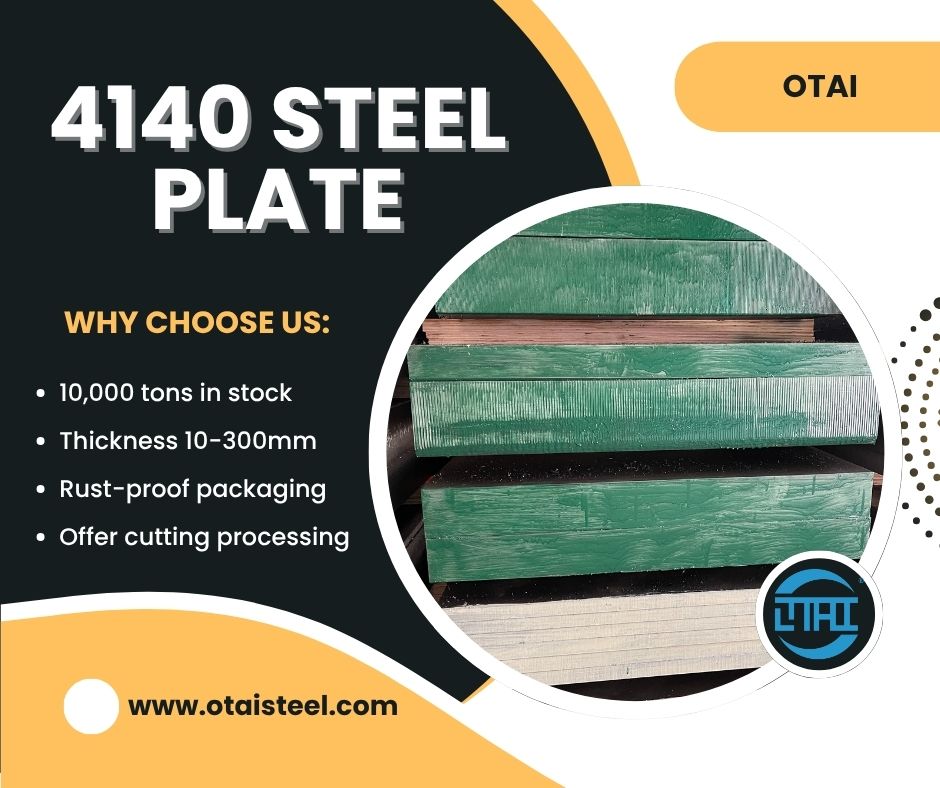
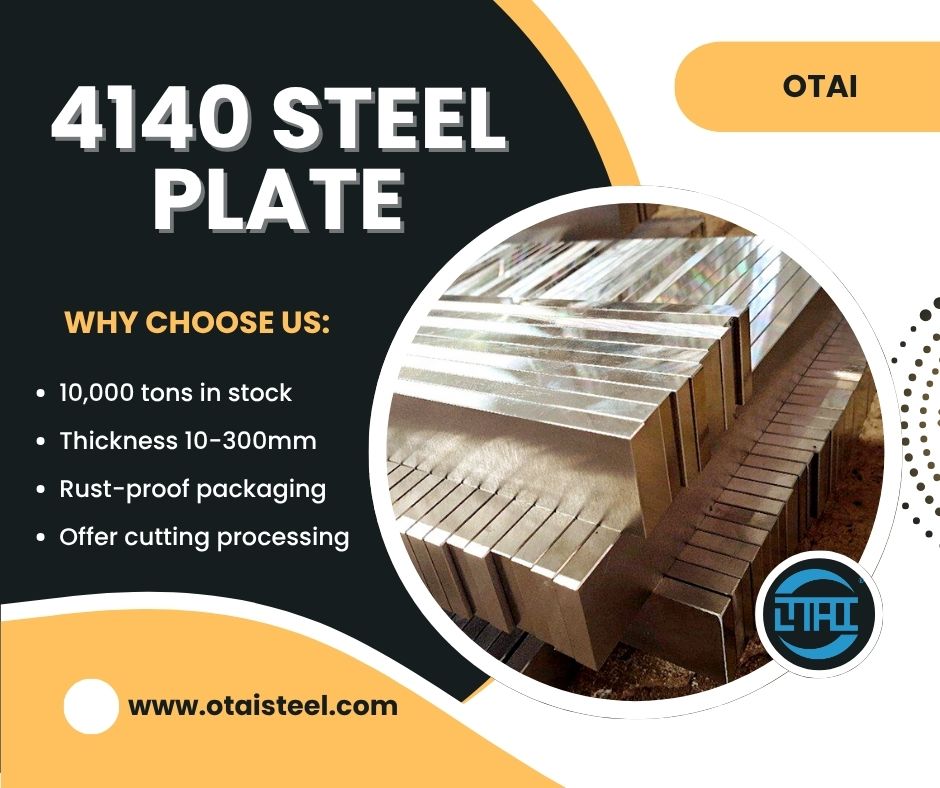
Massive stock — over 10,000 tons in inventory
Thickness range from 6mm to 300mm, cut to your size
UT tested and chemically certified
Custom heat treatment and precision machining available
Rust-proof packaging with wooden boxes or bundles
25+ years of experience with global clients
✅ We supply to Thyssenkrupp, Borealis, Schlumberger, and many others
Fast shipping worldwide

We’re not just a steel trader—we’re your solution partner in steel.


Ready to Choose the Right Steel?

If you’re comparing 4140 and 9310 for your next project, don’t guess.

Contact us today for a free material consultation or a quick quote.

📧 jack@otaisteel.com
📱 +8676923190193 (WhatsApp)

We’ll help you make the right choice, and even suggest cutting, testing, or heat treating options to fit your needs.


FAQs: 4140 Steel vs 9310 – Answers to Common Questions

1. Can I use 4140 instead of 9310 in a gearbox?
If the gearbox is under high stress and long duty cycles, stick with 9310. For lighter loads, 4140 might work fine.

2. Is 9310 steel more expensive than 4140?
Yes—9310 can cost 3 to 5 times more, depending on availability and treatment requirements.

3. Which one is easier to machine, 4140 or 9310?
4140 is much easier to cut and machine. 9310 requires more precise equipment and slower speeds.

4. Can you supply both 4140 and 9310 in customized sizes?
Yes. At Otai, we offer cut-to-size service, down to exact tolerance as required.

5. How fast can I get the steel shipped?
For in-stock sizes, we can ship within 3-5 days internationally. Just share your needed specs.
0 0 Continue Reading →

4140 Steel Rust Prevention: What You Need to Know

4140 Steel Rust Prevention: What You Need to Know4140 Steel Rust Prevention: What You Need to Know

Hi everyone! If you’ve worked with steel, you’ve probably heard of 4140 steel. It’s like the Swiss Army Knife of steels—strong, versatile, and up to almost any task. But I’m often asked: Does this stuff rust? After all, rust is the bane of steel. If you’re not careful, it can have a huge impact on your performance. So, today we’re going to talk about this and see how to keep your 4140 steel in top condition.

**What is 4140 steel? **

4140 steel is a high-quality material known for its strength and durability. It contains a mix of carbon and other alloying elements that contribute to its tough properties. However, it is important to note that 4140 steel is not stainless steel. While stainless steel is naturally resistant to rust due to its chromium content, 4140 steel requires more care to prevent corrosion. Think of 4140 steel as a reliable, hard-working material—just be sure to maintain it properly to avoid rusting.

**Does 4140 steel rust? **

Yes, 4140 steel can rust. While it’s more durable than many other steels, it is still susceptible to rust if not properly protected. Unlike stainless steel, 4140 lacks a natural resistance to corrosion. However, don’t worry—there are several methods to prevent it from rusting.

**What factors affect the rust resistance of 4140 steel? **

The likelihood of 4140 steel rusting depends on several factors, with the environment being one of the most significant. Prolonged exposure to damp conditions increases the risk of rust. Additionally, chemicals, acids, and alkalis can speed up the corrosion process. The good news is that surface treatments can improve rust resistance. For instance, applying a zinc coating acts like a protective raincoat for the steel, effectively blocking moisture and air, and preventing rust.

**How ​​to effectively prevent 4140 steel from rusting? **

So, how to prevent 4140 steel from rusting? In addition to regular cleaning and keeping it dry, sometimes more professional protection methods are required. Zinc coating is a good choice, it can provide a strong protective film for steel, greatly reducing the possibility of rust. Hot-dip galvanizing is also a good choice, it is like a super strong protective cover for steel. And don’t forget the packaging! We have a special anti-rust packaging solution at OTAI, which can provide extra protection for your steel, like putting the steel in a “protective bubble”.

**Rust-proof success case: 4140 Steel Rust Prevention: What You Need to Know**

Let me share two real examples. A customer in the automotive industry once encountered rust problems on 4140 steel parts. We recommended them to carry out zinc coating treatment, and the results were very good. The parts no longer rusted and the service life was greatly extended. Another example comes from the agricultural field. A customer’s agricultural machinery equipment was also troubled by rust. We provided them with customized anti-rust packaging, which was also very effective and greatly improved the condition of their tools.

**Rust-proof comparison of 4140 steel and other steels**

Compared with other common steels, the rust-proof performance of 4140 steel is much better than that of 1045 steel. 1045 steel is just plain carbon steel, and it has a weak rust resistance. 4140 steel is a little less rust-resistant than stainless steel. Stainless steel is naturally very rust-resistant, but 4140 steel needs some extra help.

**Rust-Proofing Solutions from OTAI**

At OTAI, we understand the importance of keeping steel in great shape. To help our customers keep their steel in top shape, we offer custom rust-proofing packages and coatings. We have worked with many large companies and have earned the trust of our customers with our experience and professional services. Our goal is to help you effectively prevent steel from rusting and extend its service life.

**Conclusion: Choose the right steel to meet your needs**

In general, 4140 steel does rust, but with proper care and treatment, it can be kept in great shape. Whether you are working on automotive parts, agricultural equipment, or other applications, it is important to manage the rust protection of your steel. If you need a reliable partner to help you deal with rust protection, OTAI is here to support you. We have the experience, solutions, and confidence to keep your steel in top shape.

0 0 Continue Reading →

4140 Alloy Steel Core Applications

4140 Alloy Steel Core Applications4140 Alloy Steel Core Applications

Introduction

If you’ve been in manufacturing, you’ve likely encountered 4140 alloy steel. But what makes it stand out? This material is far from ordinary—it’s a versatile workhorse that powers numerous industries across the globe. From automotive to aerospace, construction to oil rigs, 4140 alloy steel is an essential part of modern engineering. In this article, we’ll dive into why this steel is a favorite of manufacturers and engineers alike, and why it should be on your radar.

The Core of 4140 Alloy Steel

4140 is more than just a technical term—it’s a symbol of strength, durability, and adaptability. This medium-carbon steel, enhanced with chromium and molybdenum, is designed to be incredibly tough, resistant to wear, and capable of hardening to meet the most demanding requirements. Often overlooked, it’s the reliable material that thrives in tough environments. Its exceptional performance comes from the meticulous care in its production process. Through precise heat treatments, such as quenching and tempering, 4140 strikes the perfect balance between hardness and toughness, allowing it to endure even the harshest conditions.

Where 4140 Alloy Steel Excels:4140 Alloy Steel Core Applications

**Automotive: The Power Behind Performance**

In the automotive industry, strength and lightness are essential. 4140 alloy steel provides the ideal balance between both. Whether used in axles, gears, or shafts, 4140 withstands the powerful forces at play in vehicle movement. Its unique mix of strength and lightweight properties makes it a key material for the drivetrain in high-performance vehicles. Without it, those powerful engines wouldn’t perform nearly as efficiently.

**Industrial Machinery: The Unsung Workhorse**

Industrial machinery runs under constant pressure. Gears and shafts face continuous wear as they operate around the clock. 4140 alloy steel is often the material of choice for these high-stress components, thanks to its resilience to both load-bearing and repetitive motion. A firsthand example I’ve seen involved a factory switching from traditional steel components to 4140. The result? Reduced breakdowns, less downtime, and a significant increase in productivity.

**Construction: Building for the Long Haul**

When it comes to construction, materials need to be as durable as they are strong. 4140 alloy steel answers the call, particularly for structural beams and supports. This steel is capable of handling immense weight and enduring harsh environmental conditions. I’ve seen this material in action during the construction of high-rise buildings where, years later, the support beams remain strong and dependable.

**Aerospace: Precision and Strength in the Skies**

Aerospace components require unmatched performance. 4140 alloy steel is used in parts such as aircraft landing gear, which must withstand high pressure, extreme temperatures, and immense forces. The reliability of 4140 ensures that planes stay safe, even under the most demanding conditions, making it a crucial part of the aerospace industry.

**Oil and Gas: Endurance in Extreme Conditions**

The oil and gas industry faces some of the harshest environments—corrosive chemicals, extreme temperatures, and high pressure. 4140 alloy steel thrives in these conditions, making it indispensable for drilling equipment and pipelines. I’ve witnessed its remarkable performance firsthand on oil rigs, where it holds up against the elements without fail, proving its reliability in the toughest situations.

Why Choose 4140 Alloy Steel?

Strength and durability are just the start. 4140 alloy steel is also highly cost-effective. While not the cheapest option, it delivers an outstanding balance of performance and value, so you won’t have to stretch your budget for long-lasting parts. Its machinability further adds to its appeal, making it a go-to for manufacturers. With the ability to be shaped with precision, it’s perfect for CNC machining, giving engineers the confidence to design complex parts without worrying about material failure.

Real-World Applications:4140 alloy steel uses

**Automotive Gear Manufacturing**

A few years ago, a leading automotive manufacturer faced frequent gear failures in their transmissions, leading to expensive repairs and downtime. By switching to 4140 alloy steel, they saw remarkable improvements—the gears became more durable, and the transmission’s overall efficiency saw a significant boost.

**Industrial Equipment**

A heavy machinery manufacturer was dealing with frequent equipment breakdowns, costing them time and money. After they switched to 4140 alloy steel for their gears and shafts, the results were evident immediately. The equipment saw fewer failures, longer-lasting components, and a boost in overall productivity.

**Construction Projects**

During the construction of a large commercial complex, a company opted for 4140 alloy steel to ensure the reliability of their structural beams. Despite heavy loads and challenging weather, the beams held firm. Even years later, the building still stands as a testament to the material’s durability.

Finding the Right Supplier

Selecting a dependable supplier for 4140 alloy steel is crucial. You need a partner who understands the material and guarantees consistent quality. At OTAI, we specialize in 4140 alloy steel uses, providing a wide range of inventory and custom services such as cutting and packaging. We’re more than just a supplier—we’re your trusted ally in ensuring your success.

Looking Ahead

4140 alloy steel has proven itself time and again as a reliable, high-performance material. As industries continue to advance, its demand will only grow. Whether you’re involved in automotive innovation, construction, aerospace, or oil and gas, 4140 alloy steel is a material you can rely on. It’s time to explore its full potential and see how it can support your projects.

0 0 Continue Reading →

Alloy 4140 composition details:Why They Matter

Alloy 4140 composition details:Why They MatterAlloy 4140 Composition Details: Why They Matter

Introduction to Alloy 4140 Composition

Alloy 4140, commonly referred to as chromoly steel, is widely used across multiple industries because of its superior mechanical properties. A solid understanding of its chemical composition is essential for engineers and manufacturers who depend on this material to create components that require both strength and durability.

Chemical Composition of Alloy 4140

The composition of Alloy 4140 is finely tuned to deliver excellent performance in demanding applications. Below are the key elements and their typical proportions:

  • Carbon (C): 0.38-0.43%
    Carbon is a crucial component of steel, enhancing the strength and hardness of Alloy 4140.
  • Manganese (Mn): 0.75-1.00%
    Manganese improves the material’s hardenability and strength, increasing its resistance to wear.
  • Chromium (Cr): 0.80-1.10%
    Chromium boosts the steel’s hardenability and resistance to corrosion. It also contributes to a finer grain structure, enhancing the overall toughness.
  • Molybdenum (Mo): 0.15-0.25%
    Molybdenum enhances the strength and toughness of the alloy, particularly at elevated temperatures.
  • Silicon (Si): 0.15-0.35%
    Silicon is used primarily for deoxidizing molten metal and improving overall strength.
  • Phosphorus (P): ≤0.035%
    Phosphorus is minimized to prevent brittleness in the final product.
  • Sulfur (S): ≤0.040%
    Sulfur is controlled to minimize hot shortness and enhance machinability.

How Composition Affects Properties

The careful balance of elements in Alloy 4140 leads to a unique set of characteristics that make it highly versatile for a range of applications:

  • Mechanical Properties
    Alloy 4140 offers a tensile strength of approximately 1020 MPa and a yield strength of around 655 MPa. It also demonstrates good elongation and a reduction in area, which enhances its ductility and suitability for various manufacturing processes.
  • Heat Treatment and Hardening
    Alloy 4140 responds well to heat treatment processes. Techniques like quenching and tempering can significantly improve its hardness, achieving a hardness level of up to 302 HB.

Real-World Case Study

A renowned automotive manufacturer successfully used Alloy 4140 for producing high-strength shafts in their vehicles. The composition of the alloy allowed these shafts to handle heavy loads and stress, which resulted in superior vehicle performance and extended durability.

Advantages of Understanding Alloy 4140 Composition

A thorough understanding of Alloy 4140’s chemical makeup brings several benefits:

  • Enhanced Product Performance
    By recognizing how each element affects the alloy’s properties, manufacturers can optimize the material for specific applications, ensuring better performance.
  • Cost Efficiency
    Properly managing the composition of Alloy 4140 can reduce material waste and enhance overall efficiency, which translates into cost savings.

Case Study: Cost Savings through Composition Optimization

One of our clients achieved considerable cost savings by optimizing the heat treatment process based on a detailed analysis of the alloy’s composition. This adjustment allowed them to meet the desired mechanical properties without incurring extra material costs.

Challenges and Considerations

While Alloy 4140 offers numerous benefits, it is not without challenges:

  • Variability in Composition
    Small variations in the chemical composition can impact the consistency of the final product. It’s crucial to maintain strict control over the alloy’s composition to ensure uniformity.
  • Quality Control and Testing
    Regular testing is essential to verify the composition and mechanical properties, ensuring that the material meets industry standards and performs reliably.

Case Study: Overcoming Composition Variability

One client encountered challenges with inconsistent hardness in their Alloy 4140 parts. After conducting thorough testing and quality checks, we pinpointed the issue and made adjustments to the production process, achieving uniform hardness across all components.

Conclusion

A deep understanding of Alloy 4140’s chemical composition is vital for optimizing its performance in various applications. By leveraging the specific properties of this alloy, manufacturers can create components that offer strength, durability, and resistance to wear, making it an ideal choice for industries such as automotive, aerospace, and oil and gas.

0 0 Continue Reading →

4140 Steel Machining: A Complete Guide

4140 Steel Machining: A Comprehensive Guide4140 Steel Machining: A Comprehensive Guide

I. Introduction

In the metalworking industry, selecting the right material is crucial. This guide focuses on 4140 steel, a popular alloy steel known for its balance of strength and toughness. Whether you’re an experienced machinist or a beginner, this guide will help you work effectively with 4140 steel.

II. Understanding 4140 Steel: Core Properties

**Key Properties of 4140 Steel**
4140 steel is an alloy steel with chromium and molybdenum, enhancing its hardenability and combining strength with ductility. It has a Brinell hardness range of 229-285 and a tensile strength up to 85,000 psi. It is durable yet machinable.

**Why 4140 Steel is Popular for Machining**
4140 steel is versatile, used in automotive components and heavy-duty machinery parts. It is cost-effective compared to other materials, offering excellent performance at a lower price.

III. Machining 4140 Steel

**Preparation for Machining**
Ensure you have high-quality 4140 steel and inspect it for defects. Choose carbide tools for their durability and ability to handle high cutting speeds.

**Machining Techniques**
Cutting speeds should be balanced at 100-150 sfm, with feed rates around 0.005-0.015 inches per revolution. Use coolant to manage heat and maintain tool sharpness.

**Case Study: Successful Machining of 4140 Steel**
A client needed 4140 steel shafts for an automotive project. By following best practices, they produced high-quality shafts with minimal tool wear, demonstrating the importance of adhering to basic principles.

IV. Tips and Best Practices for Machining 4140 Steel

**Optimizing Machining Performance**
Tool geometry is crucial. Sharp tools with positive rake angles reduce cutting forces and improve surface finishes. Regularly inspect and replace worn tools to prevent issues.

**Overcoming Challenges**
Common challenges include work hardening and chip management. Use sharp tools and consistent cutting speeds to avoid work hardening, and manage chips with coolant and proper tool geometry.

V. Applications of 4140 Steel Machining

**Industries That Benefit from 4140 Steel**
4140 steel excels in the automotive industry for gears and shafts, the aerospace sector for structural parts, and heavy machinery for durable components. It consistently delivers high performance across these industries.

**Advantages Over Other Materials**
4140 steel is easier to machine than stainless steel and more affordable. It handles heavy loads without compromising performance, making it a cost-effective solution.

VI. Case Studies: Real-World Examples of 4140 Steel Machining

**Case Study 1: Automotive Component Manufacturing**
A client needed custom transmission components. Using carbide tools, optimal cutting speeds, and coolant, we produced high-precision components that performed well in their vehicles.

**Case Study 2: Industrial Gear Production**
We manufactured gears for a conveyor system. By following best practices, we produced durable gears with a smooth surface finish, saving the client time and money.

VII. Conclusion

This guide covers the essentials of machining 4140 steel, from understanding its properties to overcoming challenges. It is a versatile, cost-effective material suitable for various machining tasks. If your project requires strength and durability, consider 4140 steel.

0 0 Continue Reading →

Alloy Steel 4140 UTS: Elements & Effects

Alloy Steel 4140 UTS:Elements & EffectsAlloy Steel 4140 UTS: Elements & Effects

Introduction to Elements Alloy 4140 steel

Alloy 4140, commonly referred to as chromoly steel, is widely used across multiple industries because of its superior mechanical properties. A solid understanding of its chemical composition is essential for engineers and manufacturers who depend on this material to create components that require both strength and durability.

Chemical Composition of Alloy 4140

The composition of Alloy 4140 is finely tuned to deliver excellent performance in demanding applications. Below are the key elements and their typical proportions:

  • Carbon (C): 0.38-0.43%
    Carbon is a crucial component of steel, enhancing the strength and hardness of Alloy 4140.
  • Manganese (Mn): 0.75-1.00%
    Manganese improves the material’s hardenability and strength, increasing its resistance to wear.
  • Chromium (Cr): 0.80-1.10%
    Chromium boosts the steel’s hardenability and resistance to corrosion. It also contributes to a finer grain structure, enhancing the overall toughness.
  • Molybdenum (Mo): 0.15-0.25%
    Molybdenum enhances the strength and toughness of the alloy, particularly at elevated temperatures.
  • Silicon (Si): 0.15-0.35%
    Silicon is used primarily for deoxidizing molten metal and improving overall strength.
  • Phosphorus (P): ≤0.035%
    Phosphorus is minimized to prevent brittleness in the final product.
  • Sulfur (S): ≤0.040%
    Sulfur is controlled to minimize hot shortness and enhance machinability.

How Composition Affects Properties

The careful balance of elements in alloy steel 4140 uts leads to a unique set of characteristics that make it highly versatile for a range of applications:

  • Mechanical Properties
    Alloy 4140 offers a tensile strength of approximately 1020 MPa and a yield strength of around 655 MPa. It also demonstrates good elongation and a reduction in area, which enhances its ductility and suitability for various manufacturing processes.
  • Heat Treatment and Hardening
    Alloy 4140 responds well to heat treatment processes. Techniques like quenching and tempering can significantly improve its hardness, achieving a hardness level of up to 302 HB.

Real-World Case Study

A renowned automotive manufacturer successfully used Alloy 4140 for producing high-strength shafts in their vehicles. The composition of the alloy allowed these shafts to handle heavy loads and stress, which resulted in superior vehicle performance and extended durability.

Advantages of Understanding Alloy 4140 Composition

A thorough understanding of Alloy 4140’s chemical makeup brings several benefits:

  • Enhanced Product Performance
    By recognizing how each element affects the alloy’s properties, manufacturers can optimize the material for specific applications, ensuring better performance.
  • Cost Efficiency
    Properly managing the composition of Alloy 4140 can reduce material waste and enhance overall efficiency, which translates into cost savings.

Case Study: Cost Savings through Composition Optimization

One of our clients achieved considerable cost savings by optimizing the heat treatment process based on a detailed analysis of the alloy’s composition. This adjustment allowed them to meet the desired mechanical properties without incurring extra material costs.

Challenges and Considerations

While Alloy 4140 offers numerous benefits, it is not without challenges:

  • Variability in Composition
    Small variations in the chemical composition can impact the consistency of the final product. It’s crucial to maintain strict control over the alloy’s composition to ensure uniformity.
  • Quality Control and Testing
    Regular testing is essential to verify the composition and mechanical properties, ensuring that the material meets industry standards and performs reliably.

Case Study: Overcoming Composition Variability

One client encountered challenges with inconsistent hardness in their Alloy 4140 parts. After conducting thorough testing and quality checks, we pinpointed the issue and made adjustments to the production process, achieving uniform hardness across all components.

Conclusion

A deep understanding of alloy steel 4140 uts’s chemical composition is vital for optimizing its performance in various applications. By leveraging the specific properties of this alloy, manufacturers can create components that offer strength, durability, and resistance to wear, making it an ideal choice for industries such as automotive, aerospace, and oil and gas.

0 0 Continue Reading →

4140 Steel Part Precision Machining

4140 Steel Part Precision Machining4140 Steel Part Precision Machining

In the intricate realm of metallurgy, 4140 steel distinguishes itself as an exceptionally versatile material, known for its durability and mild magnetic properties. The inquiry extends beyond simply determining if 4140 steel is magnetic. It involves exploring how we can effectively leverage these magnetic characteristics in industrial applications. At OTAI, we not only recognize these features but also embrace and incorporate them into our services with expertise.

The Magnetic Nature of 4140 Steel:

The magnetic properties of 4140 steel are rooted in its composition, particularly due to chromium, which has inherent magnetic tendencies. Yet, the narrative extends beyond its elements to how its magnetism develops. Processes like quenching and tempering enhance these magnetic qualities, tailoring them to meet specific application requirements.

Heat Treatment: Molding Magnetism:

Heat treatment is vital in defining the magnetic properties of 4140 steel. Quenching and tempering not only boost the steel’s strength but also refine its magnetic characteristics. These processes are not just routine; they are crucial for unlocking the steel’s full potential and aligning it with the exact requirements of its applications.

OTAI’s Stock: A Magnetic Appeal:

At OTAI, our inventory goes beyond being a mere assortment of materials; it reflects our dedication to providing a wide range of options. We maintain a substantial stock of 4140 steel, available in sizes from 10mm to 300mm. Ensuring that our clients can access the magnetic properties they require, precisely when they need them. Our inventory acts as a magnetic force, attracting clients with the promise of immediate and varied solutions.

Processing and Packaging: Mastering the Art:

Transforming raw material into a finished product is a process of revelation, and at OTAI, we excel in this transformation. Our cutting and processing services uncover the magnetic potential of the steel. We also package each piece of 4140 steel with care, ensuring it arrives ready for use, meticulously protected and presented.

Fortune 500 Endorsements:

  • A Mark of Excellence

Our reputation stems from both the superior quality of our products and our steadfast dedication to excellence. By supplying 4140 steel to Fortune 500 companies, OTAI showcases how our steel’s magnetic properties are a clear indicator of exceptional performance. Our clients rely on us for steel that meets the highest standards, a trust earned through consistent quality.

The 4140 Steel Part Precision Machining is more than just a feature; it represents a gateway to endless possibilities. At OTAI, we provide not just steel but a partnership grounded in understanding, availability, and an unyielding pursuit of quality. Our narrative is one of magnetism, reflected not only in the steel we offer but in the comprehensive solutions we deliver.

0 0 Continue Reading →

Maching 4140 Steel: From Forge to Precision

Maching 4140 Steel: From Forge to PrecisionMaching 4140 Steel: From Forge to Precision

In the annals of metallurgy, 4140 steel whispers tales of endurance and resilience. It’s not just a substance forged in the fiery pits of industry; it tells a story of strength and precision. The question isn’t whether one is machining 4140 Steel, but how one can etch its story into the annals of engineering excellence. At OTAI, we’re not just machinists; we’re storytellers, crafting the saga of 4140 steel with every turn and cut.

The Call of the Forge

Our story begins where all great tales do—in the heart of the forge. Here, 4140 steel is not merely heated; it’s awakened. The glow of the furnace is the dawn of its transformation, where temperatures dance around 1600°F to 1700°F, setting the stage for its metamorphosis.

The Dance of the Cutters

As the steel steps out of the forge, it meets the artisans of OTAI, whose hands guide the whirring blades of CNC machines. This is not labor but a dance—a ballet of bits and blades, where each movement aligns with the steel’s melody. The art of cutting transforms into a science, as the right tool meets the right material at the right moment.

The Alchemy of Tempering

Post the dance, the steel undergoes an alchemical rite—quenching and tempering. Here, the steel is not just hardened; it’s given a soul. The interplay of rapid cooling and controlled reheating imbues 4140 steel with a character that’s as complex as it is robust.

The Ritual of Quality

In the sanctum of quality, our inspectors scrutinize every piece that bears the OTAI mark with a watchful eye. Here, precision is not a number on a scale, but a standard of perfection. Each dimension, each surface is a verse in the poem of our commitment to excellence.

The Promise of Packaging

The journey of a piece of 4140 steel doesn’t end with its creation. At OTAI, we envelop every product with our packaging services, whether it’s the secure embrace of wooden crates or the protective armor of rust prevention. Our promise is not just in the steel, but in its safe passage to you.

The Legacy of Supply

Our inventory is not a stockpile, but a legacy—a testament to our readiness to serve. With 10,000 tons at our disposal. OTAI stands ready to meet the diverse needs of our clientele, from the bespoke precision of custom cutting to the tailored protection of specialized packaging.

The Pledge of OTAI

In the forge of OTAI, we don’t just machine 4140 steel; we celebrate it. It’s a pledge to our clients, a promise to the material itself, and a dedication to the art of precision. As we continue to write the chapters of our shared story, we invite you to join us in this odyssey, where every machined part is a milestone in the legacy of OTAI.

0 0 Continue Reading →

4140 Steel Plate Costing: Pricing Dynamics and Procurement Strategies

4140 Steel Plate Costing: Pricing Dynamics and Procurement Strategies4140 Steel Plate Costing: Pricing Dynamics and Procurement Strategies

Introduction

4140 steel plate, with its unique alloy composition, plays a crucial role in industries prioritizing strength and durability. Given its importance in manufacturing, fluctuations in its price can significantly affect project budgets. This article explores the complexities of 4140 steel plate pricing, providing insights for strategic procurement.

1. The Essence of 4140 Steel Plate

4140 steel plate is more than just a material; it’s a reliable solution for demanding applications. Its alloy characteristics offer a blend of strength, toughness, and hardness, making it perfect for heavy machinery, automotive components, and construction equipment. Grasping its composition is essential to understanding its market value.

2. Unraveling the Price Factors

The pricing of 4140 steel plate is influenced by several interconnected factors:

  • Metal Market Dynamics: Fluctuations in the global metal market directly impact raw material costs, affecting steel plate pricing.
  • Geopolitical Influences: International trade policies and relations can alter supply chains, leading to changes in steel prices.
  • Economic Indicators: Economic cycles—whether booms or recessions—affect the demand for 4140 steel plate, influencing its cost.
  • Production Costs: Innovations in manufacturing can create efficiencies, potentially lowering the price of 4140 steel plate.

3. Price Trends and Predictions

The cost of 4140 steel plate is dynamic, shaped by market conditions. By examining historical data alongside current trends, we can forecast price movements, offering valuable guidance for budgeting and purchasing decisions.

4. Strategic Procurement in a Dynamic Market

Effective procurement of 4140 steel plate goes beyond mere purchasing; it involves smart strategies. This includes price comparisons, evaluating packaging service costs, and recognizing the long-term value of contracts.

Case Study: Mastering the Art of Procurement

Let’s explore a real-world example where a company utilized market insights to gain a competitive advantage in procuring 4140 steel plate, showcasing how information can drive cost-effective decisions.

How much does 4140 steel cost?

The Costing of 4140 steel plate reflects a complex interplay of supply, demand, and global influences. To navigate this landscape successfully, businesses must understand these factors and remain adaptable. By staying informed and applying strategic procurement practices, they can reduce risks and optimize costs.

0 0 Continue Reading →

Annealed 4140 Steel Hardness: How It Affects Your Tools and Parts

Annealed 4140 Steel Hardness: How It Affects Your Tools and PartsAnnealed 4140 Steel Hardness: How It Affects Your Tools and Parts

If you work with 4140 steel, you’ve probably heard about annealing. But let’s be real—how often do we stop and think about what the annealed hardness really means? Well, if your tools are wearing out too fast or your parts aren’t holding up like they should, this might be the problem.


So, What Is Annealed Hardness Anyway?

When steel is too hard, it’s a pain to machine. Tools wear out fast, cuts aren’t clean, and your machine runs hotter than it should. Annealing is a heat treatment where the steel gets heated up and then cooled down slowly. That makes it softer and easier to work with.

For 4140 steel, once it’s annealed, the hardness usually sits around:

  • Rockwell B: 85–95

  • Brinell: 197–217

That’s the sweet spot—still strong, but soft enough to machine without killing your tooling.


Why You Should Care

Here’s the deal: too hard, and you’ll be replacing inserts or bits all day. Too soft, and your parts won’t last under load. It’s all about balance. Good hardness means easier machining and parts that can actually hold up in the field.


Signs Something’s Off

You don’t need a lab to know something’s wrong. Watch out for:

  • Tools going dull way too fast

  • Blueing or rough finishes after cuts

  • Warping or small cracks showing up in finished parts

  • Uneven wear on gear teeth or shafts

If you’re seeing any of that, there’s a good chance the hardness isn’t where it should be.


What You Can Do About It

It doesn’t have to be complicated. Here’s what we do in the shop:

  • Use a Rockwell or Brinell tester once in a while, especially on new batches of steel

  • Pay attention to how your tools are holding up—if something feels off, it probably is

  • Make sure your annealing process (or your supplier’s) is consistent

Catching this stuff early can save you a ton of time, money, and frustration.


Quick Real-Life Example

I know a guy running a gear shop who had a bunch of 4140 parts wearing out faster than usual. Everything else was the same—machines, tools, setups. Turns out, the steel wasn’t properly annealed. He started checking hardness before machining, fixed the issue with his heat treater, and the problem went away. Simple fix, big results.


Why We Trust Otai Special Steel

We’ve used Otai for years now. Their 4140 steel is reliable, the hardness is consistent, and they ship fast. If you’re tired of guessing or dealing with bad batches, it’s worth giving them a call. Plus, they actually pick up the phone when you have questions.


Bottom Line

If you’re working with 4140, don’t ignore the annealed hardness. It might seem like a small detail, but it can make a big difference. Good hardness = easier machining and stronger, longer-lasting parts.

Need help? You can reach out to jack@otaisteel.com or message them on WhatsApp: +86 769 23190193. They’re easy to talk to and know their stuff.

0 0 Continue Reading →