Skip to Content

Category Archives: Blog

The Importance of Hardness in 16MnCr5 alloy Steel

The Importance of Hardness in 16MnCr5 alloy SteelThe Importance of Hardness in 16MnCr5 alloy Steel

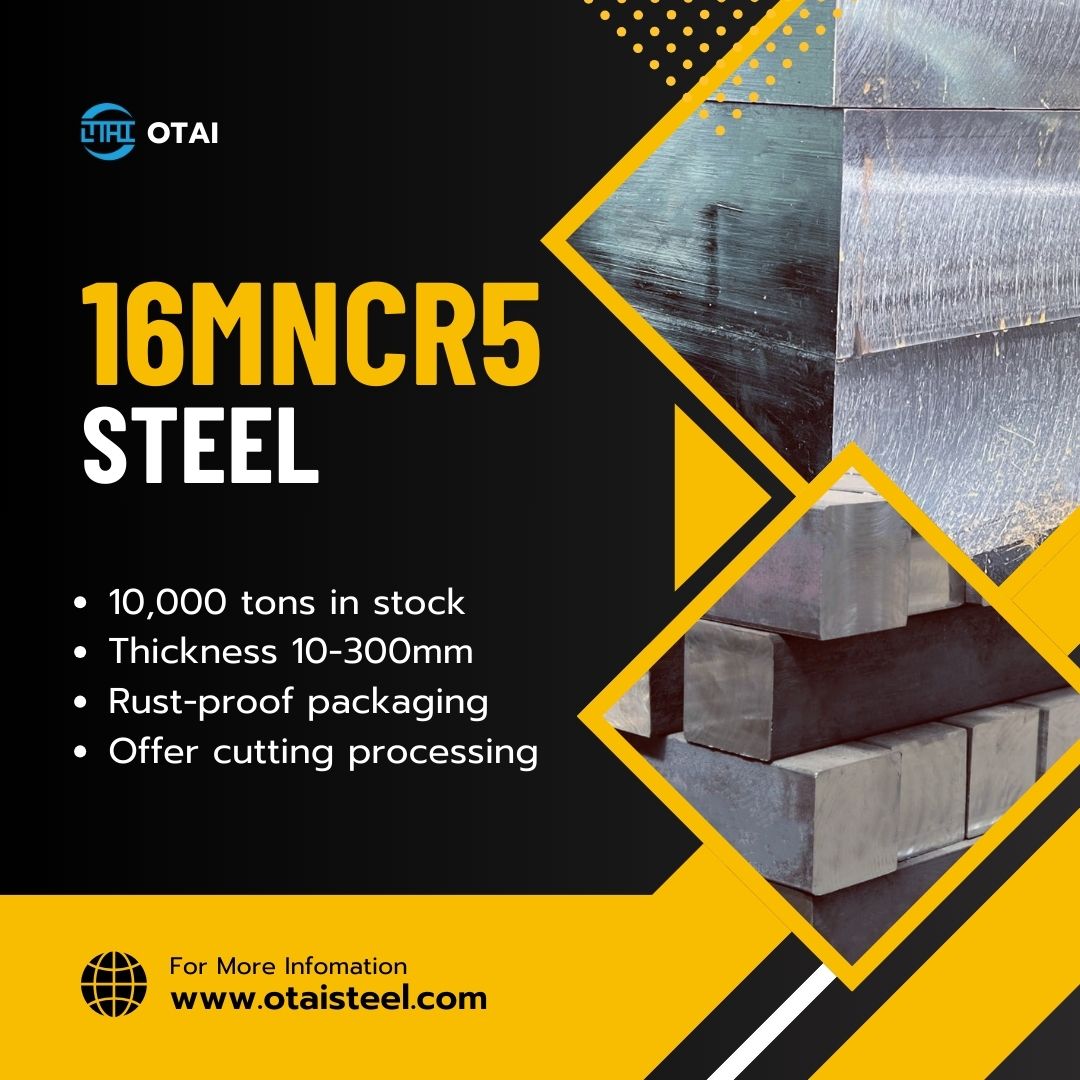
16MnCr5 steel is a widely used low-alloy steel known for its combination of strength, toughness, and wear resistance. A key factor influencing its performance in demanding applications is its hardness. The hardness of 16MnCr5 steel determines its ability to resist wear, deformation, and cracking under stress. Achieving the optimal hardness is essential for ensuring that 16MnCr5 steel performs reliably in components such as gears, shafts, crankshafts, and bearings.

In this article, we will explore the significance of hardness in 16MnCr5 steel, how it is measured, the heat treatment processes that influence it, and its impact on the steel’s overall performance.


🧪 What is 16MnCr5 Steel?

16MnCr5 steel is a low-alloy carburizing steel commonly used for parts requiring high strength, wear resistance, and fatigue resistance. It contains manganese and chromium as its main alloying elements, which enhance its hardenability and overall mechanical properties. This steel grade is commonly used for gears, bearings, axles, and other industrial components that need a combination of high surface hardness and toughness.

Due to its ability to achieve high surface hardness through carburizing, 16MnCr5 steel plays a crucial role in components subjected to heavy wear and stress.


🔧 The Importance of Hardness in 16MnCr5 Steel

Hardness refers to the material’s resistance to indentation, abrasion, and deformation. In 16MnCr5 steel, achieving the right level of hardness improves the material’s ability to perform in high-stress, high-wear conditions. Hardness directly affects:

  • Wear resistance: Harder surfaces resist abrasion and friction, making them ideal for parts exposed to wear and corrosion.

  • Fatigue resistance: The right hardness helps prevent components from fatiguing under cyclic loads, especially in rotating or moving parts.

  • Deformation resistance: Hardness ensures that parts do not deform or warp under heavy loads.

Hardness and Heat Treatment

Heat treatment plays a crucial role in controlling the hardness of 16MnCr5 steel. Through processes such as carburizing, quenching, and tempering, the steel’s surface hardness can be significantly improved, while the core remains tough to withstand dynamic loads and impacts.


🔥 Heat Treatment Processes that Influence Hardness

The hardness of 16MnCr5 steel can be modified using various heat treatment processes, including carburizing, quenching, and tempering. These processes ensure that the material exhibits the necessary balance of surface hardness and core toughness.

1. Carburizing and Quenching

Carburizing is a heat treatment process that introduces carbon into the surface of 16MnCr5 steel, increasing its surface hardness. After carburizing, the steel is quenched (rapidly cooled) in oil or water, which hardens the surface layer. This process creates a hard outer layer with a tough core, providing both wear resistance and impact resistance.

Effects of Carburizing and Quenching on Hardness:

Property Before Carburizing After Carburizing + Quenching
Surface Hardness 170 – 220 HB 56 – 62 HRC
Core Hardness 150 HB 30 – 40 HRC

Carburizing significantly increases the surface hardness, making 16MnCr5 steel ideal for high-wear applications like gears and bearings.

2. Quenching and Tempering

After quenching, the steel becomes very hard but also brittle. To improve its toughness, the steel undergoes tempering, where it is reheated to a lower temperature (usually between 400°C and 650°C) and then slowly cooled. This process reduces brittleness and improves the overall strength and toughness while maintaining the desired hardness.

Effects of Quenching and Tempering on Hardness:

  • Surface Hardness: Remains high after quenching, but can be adjusted through tempering.

  • Core Toughness: Improved while maintaining the strength achieved by quenching.

This combination of hardness and toughness makes quenching and tempering a widely used treatment for components like axles and screws.

3. Normalizing

Normalizing involves heating the steel to a temperature between 850°C and 900°C and then air-cooling it. This process refines the grain structure, ensuring uniform properties throughout the material. While normalizing does not provide as high a surface hardness as carburizing, it is useful for improving the machinability and strength of 16MnCr5 steel.


📊 Hardness and Performance of 16MnCr5 Steel

The hardness of 16MnCr5 steel directly correlates to its performance in various applications. Here is an overview of how different heat treatments influence the material’s performance:

Heat Treatment Process Surface Hardness Core Hardness Ideal Application
Carburizing + Quenching 56 – 62 HRC 30 – 40 HRC Gears, Bearings, Crankshafts
Quenching + Tempering 50 – 55 HRC 30 – 40 HRC Axles, Shafts, Machine Parts
Normalizing 170 – 220 HB 150 HB General Engineering Components

🏗️ Applications of 16MnCr5 Steel

The high surface hardness and tough core of 16MnCr5 steel make it suitable for a wide variety of industrial applications. It is commonly used in:

  • Automotive: Axles, gears, crankshafts, and suspension components that require a combination of wear resistance and toughness.

  • Aerospace: Landing gear components, fasteners, and wheels that must withstand high stress and fatigue.

  • Oil and Gas: Drill rods, pumps, and valves exposed to harsh conditions.

  • Industrial Machinery: Machine tool components, gears, bearings, and spindles that require high strength and fatigue resistance.


🏅 Company Advantages – Otai Special Steel

At Otai Special Steel, we provide high-quality 16MnCr5 steel with tailored hardness for your specific application. Whether you need custom cutting, heat treatment, or material certification, we ensure your order meets the highest quality standards.

Why Choose Otai Special Steel?

  • High-Quality Materials: We offer 16MnCr5 steel with consistent properties to meet your application needs.

  • Customization: Custom cutting, heat treatment, and precision machining available.

  • Fast Delivery: Our large inventory and reliable logistics ensure timely delivery.

  • Technical Support: We provide expert guidance to help you select the right material for your project.


Frequently Asked Questions (FAQ)

Q1: What is the ideal hardness for 16MnCr5 alloy steel?
A1: The ideal hardness depends on the application. For wear resistance, carburizing and quenching provide the highest surface hardness. For strength and toughness, quenching and tempering offer a balanced solution.

Q2: Can I achieve high surface hardness without compromising the core toughness of 16MnCr5 steel?
A2: Yes, carburizing and quenching creates a hard surface while maintaining a tough core, making it suitable for high-wear applications where the material needs both strength and toughness.

Q3: Does 16MnCr5 steel require special treatment to improve fatigue resistance?
A3: Quenching and tempering improve fatigue resistance by balancing hardness with toughness. Carburizing enhances wear resistance while improving fatigue performance.

0 0 Continue Reading →

4140 Steel’s key Characteristics: Understanding its Strength and Versatility

4140 Steel's key Characteristics: Understanding its Strength and Versatility4140 Steel’s key Characteristics: Understanding its Strength and Versatility

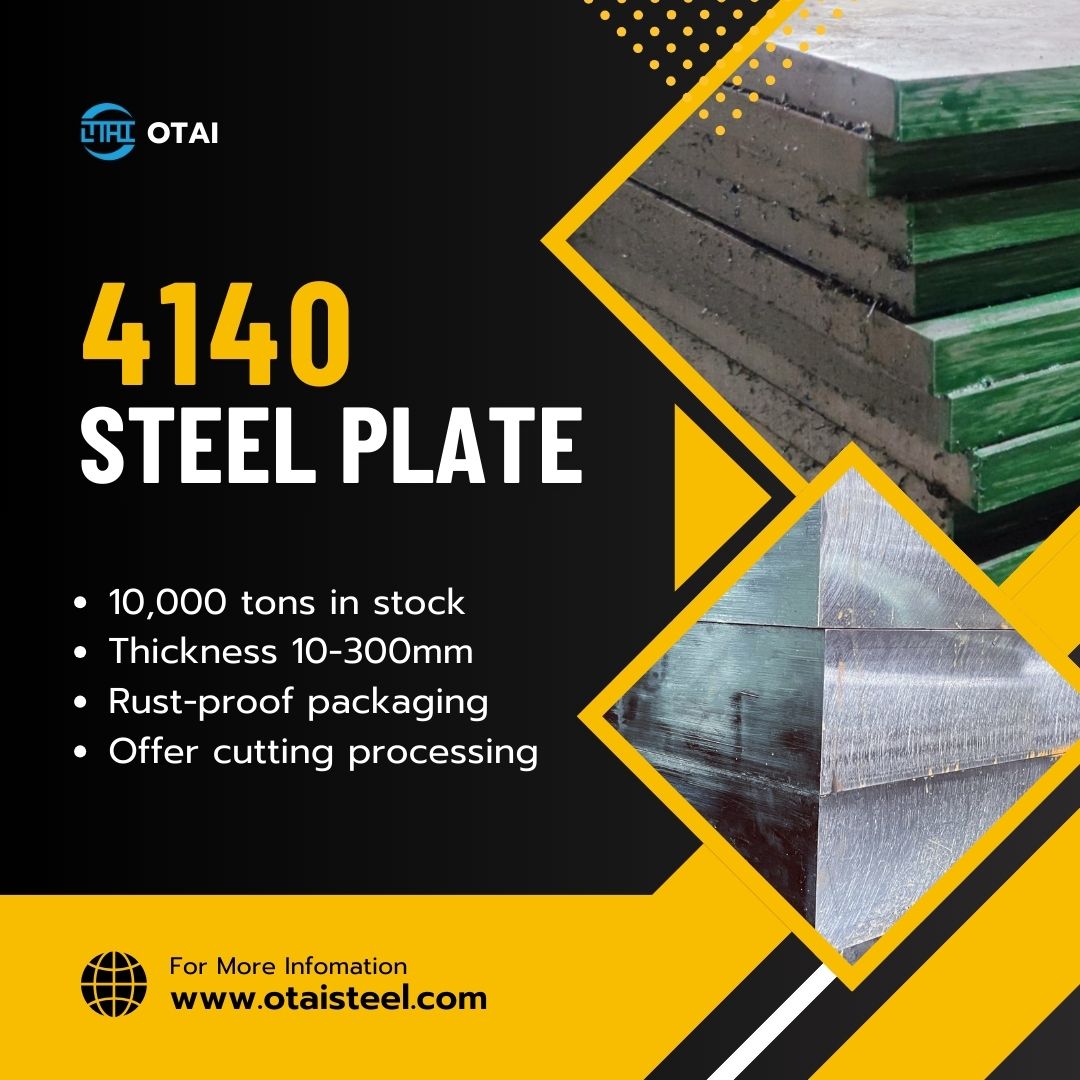
4140 steel is a versatile chromium-molybdenum alloy steel known for its strength, hardness, and toughness. With its excellent mechanical properties, it serves a wide range of industrial applications, from automotive to machinery. Understanding the key characteristics of 4140 steel helps engineers optimize its performance in critical applications requiring high strength, fatigue resistance, and durability.

In this article, we’ll explore the key characteristics of 4140 steel, how its composition affects performance, and the processes that enhance its properties. We’ll also discuss common applications and compare 4140 steel to other materials in terms of performance and cost.


🧪 What is 4140 Steel?

4140 steel is a medium-carbon, low-alloy steel containing chromium and molybdenum as its main alloying elements. These elements improve the steel’s hardenability, strength, and toughness. As a chromium-molybdenum (Cr-Mo) alloy, 4140 steel works well in applications demanding both high strength and wear resistance.

The composition typically includes:

  • 0.40% Carbon
  • 0.90% – 1.20% Chromium
  • 0.15% – 0.25% Molybdenum
  • Manganese and Silicon for improved strength and machinability

4140 steel excels in applications where strength and toughness are crucial, making it an ideal choice for parts under high-stress conditions.


🔧 4140 Steel’s key Characteristics

4140 steel is widely known for its high strength, excellent toughness, and good machinability. Below, we outline the main characteristics of 4140 steel:

1. High Strength

The tensile strength of 4140 steel ranges from 850 MPa to 1000 MPa, making it ideal for parts that must endure high mechanical stress.

  • Yield Strength: Typically ranges from 650 MPa to 850 MPa
  • Tensile Strength: Typically ranges from 850 MPa to 1000 MPa

This high strength makes 4140 steel perfect for axles, shafts, and gears that need to withstand significant forces.

2. Excellent Toughness

4140 steel maintains high toughness, allowing it to absorb energy under impact loading without failing. It performs well under both static and dynamic loads, especially when exposed to frequent impacts.

  • Impact Toughness: Typically ranges from 35 J to 55 J at room temperature

This toughness makes 4140 steel suitable for machinery parts and automotive components exposed to frequent impacts.

3. Good Wear Resistance

The alloying elements in 4140 steel, such as chromium, provide it with good wear resistance. This feature is particularly valuable for gears, bearings, and other components subject to abrasive conditions.

  • Chromium significantly enhances its ability to resist wear, making it a top choice for components in rotating machinery.

4. Excellent Hardenability

Thanks to its chromium and molybdenum content, 4140 steel has excellent hardenability, allowing it to form a hardened surface layer while maintaining a ductile and tough core. This makes 4140 steel ideal for parts that need a hard surface and a tough interior.

  • After heat treatment, 4140 steel can achieve a surface hardness between 56 – 62 HRC.

5. Good Machinability and Weldability

Although 4140 steel is a relatively hard material, it machines well, especially in the annealed or normalized condition. It also has weldability, though careful control of the heat-affected zone is necessary to avoid cracking.

  • Welding Tip: Preheat the material before welding to reduce the risk of cracking.

This characteristic makes 4140 steel widely used in precision machining and industrial applications.


🛠️ Heat Treatment of 4140 Steel

One of the main advantages of 4140 steel is its ability to undergo heat treatment to adjust its strength, hardness, and toughness. Heat treatment processes include:

  1. Normalization: Refines the grain structure, improving uniformity and machining.
  2. Quenching and Tempering: Increases strength and hardness while balancing toughness.
  3. Induction Hardening: Hardens the surface without affecting the core.

Heat Treatment Process

Process Resulting Property Trend
Normalization Refines grain structure
Quenching High hardness (surface)
Tempering Balances toughness and strength
Induction Hardening Hardens surface, retains core toughness

4140 steel can be tailored to meet specific mechanical requirements through these processes.


🏗️ Applications of 4140 Steel

The versatile properties of 4140 steel make it suitable for many demanding applications. Some common uses include:

  • Automotive Industry: Axles, gears, drive shafts, crankshafts
  • Aerospace Industry: Landing gear components, wheels, fasteners
  • Industrial Machinery: Machine tool components, shafts, drives
  • Oil & Gas Industry: Drill rods, tubing, valves
  • Heavy Equipment: Pins, bushings, crankshafts

Each of these applications takes advantage of 4140 steel’s strength, toughness, and wear resistance, ensuring long-lasting and reliable performance.


📊 Comparison of 4140 Steel with Other Materials

Property 4140 Steel 1045 Steel 4340 Steel
Tensile Strength 850 – 1000 MPa 600 – 700 MPa 1000 – 1200 MPa
Yield Strength 650 – 850 MPa 400 – 500 MPa 900 – 1100 MPa
Wear Resistance Good Moderate Excellent
Toughness High Moderate Very High
Common Uses Gears, Shafts, Crankshafts General Purpose Parts Aerospace, Heavy-duty Parts

As shown, 4140 steel strikes a balance between strength, toughness, and wear resistance, making it a versatile material. However, if maximum strength is required, 4340 steel may be a better choice.


🏅 Company Advantages – Otai Special Steel

At Otai Special Steel, we provide 4140 steel with consistent quality and performance. We ensure that every batch meets industry standards and specifications, whether for custom cutting, heat treatment, or material certification.

Why Choose Otai Special Steel?

  • High-Quality Materials: We supply 4140 steel that meets international standards.
  • Customization: Custom cutting, heat treatment, and precision machining to meet your needs.
  • Fast Delivery: With a large inventory and reliable supply chain, we deliver your order on time.
  • Technical Expertise: Our team offers engineering support to help you select the right materials for your project.

Frequently Asked Questions (FAQ)

Q1: Can 4140 steel be used for welding?
A1: Yes, 4140 steel is weldable, but the heat-affected zone must be carefully controlled to avoid cracking.

Q2: How does 4140 steel compare to 4340 steel?
A2: While 4340 steel offers higher tensile strength, 4140 steel provides a better balance of strength and toughness, making it ideal for many industrial applications.

Q3: What industries use 4140 steel?
A3: 4140 steel is used in automotive, aerospace, industrial machinery, and oil and gas industries for components like gears, shafts, and drivetrain parts.


Jack Tan


📧 jack@otaisteel.com

📱 WhatsApp: +8676923190193

0 0 Continue Reading →

16MnCr5 Steel Flat Bar: A popular choice in various industries

16MnCr5 Steel Flat Bar: A popular choice in various industries16MnCr5 Steel Flat Bar: A popular choice in various industries

16MnCr5 steel is a low-alloy carburizing steel recognized for its high strength, toughness, and wear resistance. When processed into flat bars, 16MnCr5 steel becomes even more versatile, ideal for precision machining and high-performance components. This article discusses the properties, applications, and advantages of 16MnCr5 steel flat bars, and explains why they are a popular choice in various industries.


🧪 What is 16MnCr5 Steel Flat Bar?

16MnCr5 steel is an alloy steel that contains manganese and chromium. These elements improve the steel’s hardenability, wear resistance, and fatigue resistance. As a carburizing steel, 16MnCr5 steel is ideal for parts that require a hard surface and tough core. When formed into flat bars, this steel becomes even more adaptable and is commonly used in applications requiring strength and machinability.

Manufacturers create 16MnCr5 steel flat bars by rolling or forging the steel into flat, rectangular shapes, providing a reliable material for machining, cutting, and forming.


🔧 Properties of 16MnCr5 Steel Flat Bar

16MnCr5 steel flat bars offer a balanced combination of strength, toughness, and wear resistance. Heat treatment processes further enhance these properties, making the material ideal for various industrial applications.

Key Properties of 16MnCr5 Steel Flat Bar:

  1. Tensile Strength
    16MnCr5 steel flat bars have a tensile strength of 800 MPa to 1000 MPa, which makes them suitable for high-stress components like gears and shafts that undergo significant mechanical loads.

  2. Yield Strength
    The yield strength in its normalized or soft condition typically ranges from 600 MPa to 750 MPa. After heat treatment, especially carburizing, the yield strength significantly increases, enabling the steel to resist deformation under heavy loads.

  3. Wear Resistance
    The chromium content improves the steel’s wear resistance. After carburizing, the surface hardness increases, providing excellent protection against abrasion and wear, making it ideal for parts like bearings, cams, and gears.

  4. Toughness
    16MnCr5 steel retains high toughness, enabling components to withstand impact loading without cracking. Heat treatment ensures the material achieves both a hard surface and a tough core, ensuring durability under dynamic forces.

  5. Fatigue Resistance
    16MnCr5 steel flat bars show excellent fatigue resistance, allowing components to handle cyclic loading without failing over time. This characteristic makes the steel ideal for parts exposed to repeated stress, such as axles and crankshafts.


🔥 Heat Treatment of 16MnCr5 Steel Flat Bar

Heat treatment plays a crucial role in adjusting the mechanical properties of 16MnCr5 steel flat bars, enabling engineers to tailor the material for specific applications.

1. Carburizing and Quenching

Carburizing introduces carbon into the steel’s surface, which hardens the outer layer. The steel is then quenched in oil or water, creating a hardened surface while preserving a tough interior. This process significantly improves wear resistance and is ideal for parts like gears that experience high friction.

2. Quenching and Tempering

In quenching, the steel is heated to a high temperature and quickly cooled, increasing hardness but also making it more brittle. Tempering follows by reheating the steel to a lower temperature and cooling it slowly. This process restores toughness and improves fatigue resistance, making it suitable for parts like fasteners and machine components.

3. Normalizing

Normalizing refines the grain structure and improves the uniformity of 16MnCr5 steel flat bars. This treatment increases machinability and enhances the material’s strength distribution throughout the component.


🏗️ Applications of 16MnCr5 Steel Flat Bar

Thanks to its excellent combination of strength, toughness, and wear resistance, 16MnCr5 steel flat bars are used in various industries, including automotive, aerospace, oil & gas, and industrial machinery. The steel’s ability to withstand abrasion and cyclic loading makes it perfect for high-performance parts.

Common Applications Include:

  1. Automotive Industry
    16MnCr5 steel flat bars are used for manufacturing axles, gears, crankshafts, and suspension components that require high strength and wear resistance to handle the mechanical forces in automotive applications.

  2. Aerospace Industry
    Aerospace components like landing gear parts, fasteners, and wheels benefit from the fatigue resistance and strength of 16MnCr5 steel flat bars, ensuring reliability and performance in high-stress environments.

  3. Oil and Gas Industry
    16MnCr5 steel flat bars are ideal for use in drill rods, pumps, valves, and other components exposed to extreme conditions. Their wear resistance and fatigue strength make them suitable for the oil and gas industry, where parts endure harsh operational conditions.

  4. Industrial Machinery
    Components like machine tools, spindles, bearings, and gears benefit from the strength, machinability, and wear resistance of 16MnCr5 steel flat bars. These bars perform well under continuous, demanding industrial operations.

  5. Heavy Equipment
    16MnCr5 steel flat bars are commonly used for heavy-duty components such as pins, bushings, and crankshafts that require both strength and toughness to withstand heavy loads.


📊 Comparison with Other Steel Grades

Property 16MnCr5 Steel 1045 Steel 42CrMo4 Steel
Tensile Strength 800 – 1000 MPa 600 – 700 MPa 900 – 1100 MPa
Yield Strength 600 – 750 MPa 400 – 500 MPa 850 – 1000 MPa
Wear Resistance Excellent Moderate Very High
Fatigue Resistance High Moderate Very High
Machinability Good Moderate Moderate

16MnCr5 steel flat bars strike a perfect balance between strength, toughness, and wear resistance, outperforming 1045 steel in terms of wear resistance and fatigue strength. While 42CrMo4 steel offers higher strength, 16MnCr5 steel is more adaptable, offering superior machinability.


🏅 Company Advantages – Otai Special Steel

At Otai Special Steel, we provide high-quality 16MnCr5 steel flat bars with tailored mechanical properties for specific applications. We offer custom cutting, heat treatment, and precision machining to meet your exact needs.

Why Choose Otai Special Steel?

  • High-Quality Materials: We offer 16MnCr5 steel with consistent mechanical properties, ideal for a wide range of applications.

  • Customization: We provide custom cutting, heat treatment, and machining services to meet your specific needs.

  • Fast Delivery: With our large inventory and efficient logistics, we ensure timely delivery of your order.

  • Technical Support: Our team provides engineering support to help you select the right material for your project.


Frequently Asked Questions (FAQ)

Q1: Can 16MnCr5 steel flat bars be welded?
A1: Yes, 16MnCr5 steel flat bars are weldable, but preheating is recommended before welding to avoid cracking in the heat-affected zone.

Q2: What is the best heat treatment for 16MnCr5 steel flat bars?
A2: For high wear resistance, carburizing and quenching is the best option. For components requiring a balance of strength and toughness, quenching and tempering delivers optimal results.

Q3: How does 16MnCr5 steel compare to 1045 steel?
A3: 16MnCr5 steel offers better wear resistance and fatigue strength compared to 1045 steel, making it the ideal choice for components exposed to heavy mechanical stress.

0 0 Continue Reading →

Factors Affecting the Compressive Strength of 4140 Steel

Factors Affecting the Compressive Strength of 4140 SteelFactors Affecting the Compressive Strength of 4140 Steel

4140 steel is a widely used alloy steel known for its high tensile strength, toughness, and wear resistance. It is a popular choice in industries like automotive, aerospace, and machinery, especially for manufacturing gears, shafts, axles, and crankshafts. One of the key properties that make 4140 steel highly effective in these applications is its compressive strength, or its ability to withstand compressive forces before failing or deforming.

This article delves into the compressive strength of 4140 steel, factors that affect it, and its importance in various applications.


🏗️ What is Compressive Strength?

Compressive strength measures how much compression (squeezing or pushing) a material can withstand before it deforms or fails. It contrasts with tensile strength, which measures a material’s ability to resist stretching or pulling forces. Compressive strength becomes essential in applications where components are subject to pressing forces, such as in gears, pistons, and bearing housings.

For 4140 steel, compressive strength is determined by its chemical composition, heat treatment, and microstructure.


🔧 Factors Affecting the Compressive Strength of 4140 Steel

Several factors influence the compressive strength of 4140 steel. Understanding these factors helps in selecting the right material for various applications.

1. Material Composition

  • 4140 steel contains chromium (Cr) and molybdenum (Mo), which enhance the steel’s strength, hardness, and wear resistance. These alloying elements increase the steel’s ability to resist deformation under compressive loads.

2. Heat Treatment

  • Heat treatment is one of the most effective ways to improve the compressive strength of 4140 steel. Processes such as quenching and tempering refine the steel’s microstructure, increasing its tensile strength, hardness, and ultimately its compressive strength. Proper heat treatment ensures that the material performs better under compressive stress.

3. Microstructure

  • The microstructure of 4140 steel plays a significant role in its compressive strength. A fine-grain structure allows for better distribution of stress, improving the material’s strength under compressive forces. Heat treatments such as normalizing and hardening enhance the steel’s microstructure, ensuring superior mechanical properties.

4. Work Hardening

  • Work hardening, or strain hardening, occurs when 4140 steel experiences repeated compressive or tensile forces. This process increases the material’s compressive strength by making it harder and stronger with continued use.


🔨 Testing Compressive Strength of 4140 Steel

We test the compressive strength of 4140 steel by applying increasing compressive loads to a specimen until it deforms or fails. Here are two standard testing methods:

1. Direct Compression Test

  • In the direct compression test, a sample of 4140 steel is placed between two plates, and force is applied gradually. The test measures how much force the material can withstand before it experiences permanent deformation or failure.

2. Indentation Test

  • The indentation test involves pressing a hard material (such as a diamond) into the surface of 4140 steel. The depth of indentation indicates the material’s resistance to compression, allowing us to estimate its compressive strength.


🏭 Applications of 4140 Steel with High Compressive Strength

The compressive strength of 4140 steel makes it ideal for various applications where parts are subjected to high compressive forces. Below are some critical applications that benefit from 4140 steel’s high compressive strength:

1. Automotive Components

  • 4140 steel is commonly used in gears, shafts, crankshafts, and axles in the automotive industry. These components experience significant compressive forces during operation. Compressive strength ensures that these parts can withstand high mechanical stress and wear, ensuring long-lasting performance.

2. Bearings and Bearing Housings

  • Bearings and bearing housings made from 4140 steel need to withstand compressive forces and shear stresses during their operation. Compressive strength is crucial for maintaining the integrity of these components and preventing failure due to excessive load.

3. Hydraulic Components

  • Components like hydraulic cylinders and pistons made from 4140 steel operate under high-pressure conditions. Compressive strength ensures that these parts can endure constant force and pressure while maintaining structural integrity.

4. Aerospace Components

  • Aerospace parts such as landing gears, actuators, and turbocharger shafts made from 4140 steel need to perform reliably under compressive stress. The high compressive strength of 4140 steel ensures that these components can withstand the forces they encounter during flight and operation.

5. Heavy Equipment

  • 16MnCr5 steel is also used in heavy machinery and construction equipment like axles, gears, and hydraulic components. These components are exposed to high compressive forces during operation, making 4140 steel’s compressive strength essential for durability.


📊 Comparison of Compressive Strength and Other Mechanical Properties of 4140 Steel

Property 4140 Steel (After Hardening) 4140 Steel (Before Hardening)
Compressive Strength High (depends on heat treatment) Moderate
Tensile Strength High (1500-1600 MPa) Moderate (900-1000 MPa)
Yield Strength High (1100-1400 MPa) Moderate
Hardness 50-60 HRC 20-30 HRC
Ductility Moderate High

🏆 Why Choose Otai Special Steel for Your 4140 Steel Needs?

At Otai Special Steel, we provide high-quality 4140 steel that is optimized for compressive strength, toughness, and wear resistance. We offer custom cutting, heat treatment, and packaging services to meet your exact requirements.

Advantages of Working with Otai Special Steel:

  • Premium Materials: Our 4140 steel undergoes precise heat treatments to ensure excellent compressive strength and performance in demanding applications.

  • Customization: We provide custom cutting, heat treatment, and machining services tailored to your specific project needs.

  • Competitive Pricing: We offer high-performance steel at competitive prices, ensuring great value for your projects.

  • Fast Delivery: With a large inventory, we guarantee fast and reliable delivery to meet your deadlines.


Frequently Asked Questions (FAQ)

Q1: What is the Resistance to Compression of 4140 steel?

  • A1: 4140 steel typically achieves a compressive strength of around 1500-1600 MPa when properly heat treated.

Q2: How does heat treatment affect 4140 steel’s Resistance to Compression?

  • A2: Heat treatments like hardening and tempering increase 4140 steel’s compressive strength by refining its microstructure and improving its tensile strength.

Q3: Why is compressive strength important for 4140 steel in automotive and aerospace applications?

  • A3: Compressive strength ensures that 4140 steel components, such as gears and landing gears, can withstand high-pressure and load-bearing conditions without failure, ensuring durability and reliability.

0 0 Continue Reading →

Common Uses of 16MnCr5 Steel

Common Uses of 16MnCr5 SteelCommon Uses of 16MnCr5 Steel

16MnCr5 steel is a high-performance, medium-carbon alloy steel known for its strength, toughness, and wear resistance. These qualities make it a preferred material for components that must endure high mechanical stress and harsh operating conditions. 16MnCr5 steel excels in applications where toughness, fatigue resistance, and wear resistance are crucial. In this article, we’ll explore its various uses and how it performs across industries.


🏗️ What is 16MnCr5 Steel?

16MnCr5 steel is a low-alloy, medium-carbon steel that includes manganese and chromium as its main alloying elements. Manganese improves its strength and toughness, while chromium enhances its wear resistance and hardness. The combination of these properties makes 16MnCr5 a well-balanced material for a wide range of demanding applications.


🔧 Key Properties of 16MnCr5 Steel

Before we explore its uses, let’s review the key properties of 16MnCr5 steel:

  1. Tensile Strength: 16MnCr5 steel offers high tensile strength, typically ranging from 800 MPa to 1000 MPa, allowing it to withstand substantial mechanical stress.

  2. Hardness: With a Brinell hardness between 200-250 HB, 16MnCr5 steel provides excellent wear resistance, making it ideal for parts exposed to friction and wear.

  3. Ductility and Toughness: This steel has good ductility, allowing it to absorb energy under stress without fracturing. This property makes it suitable for components that undergo impact loading.

  4. Fatigue Resistance: 16MnCr5 steel performs well under cyclic loading and fatigue, making it perfect for parts exposed to repetitive stresses over time.


🔨 Common Uses of 16MnCr5 Steel

Thanks to its high strength and wear resistance, 16MnCr5 steel finds applications in several industries. Here are some of its most common uses:

1. Automotive Industry

  • 16MnCr5 steel is used extensively in the automotive industry to manufacture gears, shafts, crankshafts, and axles. These parts face high torque and dynamic stresses, and 16MnCr5 ensures they remain durable and reliable under tough conditions.

  • 16MnCr5‘s wear resistance makes it an excellent choice for gears in transmissions and differentials, where performance and reliability are essential.

2. Industrial Machinery

  • 16MnCr5 steel is essential in industrial machinery for bearings, gears, and camshafts. These parts endure continuous wear, high torque, and high-speed rotation. The hardness and toughness of 16MnCr5 guarantee long-term performance under demanding conditions.

  • Machine tools like spindles, crankshafts, and levers made from 16MnCr5 withstand abrasive conditions and high mechanical stress, ensuring long-lasting functionality.

3. Mining and Heavy Equipment

  • 16MnCr5 steel plays a vital role in the mining and heavy equipment industries for gears, axles, and drive shafts. These parts need to withstand heavy impact, abrasive wear, and high loads. 16MnCr5 provides the necessary toughness to handle shock loading, making it perfect for harsh environments such as mining and construction equipment.

4. Tooling and Dies

  • 16MnCr5 steel is a go-to material for tooling and dies that require strength, wear resistance, and toughness. Common applications include press tools, molds, and cutting tools.

  • The wear resistance and toughness of 16MnCr5 ensure that tools and dies perform well under high-stress, repetitive conditions, maintaining functionality over time.

5. Oil and Gas Industry

  • 16MnCr5 steel finds use in the oil and gas industry for valves, pumps, and drill bits. These parts must endure high pressures and extreme operating conditions.

  • The fatigue resistance and abrasion resistance of 16MnCr5 make it well-suited for demanding drilling and production environments.

6. Aerospace Industry

  • 16MnCr5 steel is also used in aerospace components such as landing gear parts, connectors, and valves. These components require both high strength and fatigue resistance, qualities that 16MnCr5 provides effectively.


📊 Applications of 16MnCr5 Steel Compared to Other Materials

Property/Use 16MnCr5 Steel Other Steels
Wear Resistance Excellent Moderate
Tensile Strength 800-1000 MPa 600-850 MPa
Common Uses Gears, Shafts, Crankshafts Gears, Bearings
Fatigue Resistance High Moderate
Machinability Good Good to Moderate

🏆 Why Choose Otai Special Steel for 16MnCr5 Steel?

At Otai Special Steel, we provide premium 16MnCr5 steel that undergoes strict quality control to ensure it meets the highest performance standards. Our 16MnCr5 steel offers strength, wear resistance, and fatigue resistance for a wide variety of applications. We also offer custom cutting, heat treatment, and machining services to meet your specific project requirements.

Advantages of Working with Otai Special Steel:

  • High-Quality Materials: Our 16MnCr5 steel ensures high strength, wear resistance, and fatigue resistance for optimal performance.

  • Customization: We offer custom cutting, machining, and heat treatment services tailored to your needs.

  • Competitive Pricing: We provide high-performance steel at competitive prices, delivering excellent value for your projects.

  • Fast Delivery: With an extensive inventory, we guarantee fast and reliable delivery to meet your deadlines.


Frequently Asked Questions (FAQ)

Q1: What are the main uses of 16MnCr5 steel?

  • A1: 16MnCr5 steel is widely used in the automotive, machinery, mining, tooling, and aerospace industries due to its strength, wear resistance, and fatigue resistance.

Q2: How does 16MnCr5 steel compare to other steels in terms of wear resistance?

  • A2: 16MnCr5 steel offers superior wear resistance, making it ideal for gears and bearings that experience constant friction and wear.

Q3: Can 16MnCr5 steel be used for high-stress components?

  • A3: Yes, 16MnCr5 steel offers high tensile strength and fatigue resistance, making it suitable for high-stress components like crankshafts, shafts, and gears.

0 0 Continue Reading →

4140 steel Plate Distributor: How to find the right distributor

4140 steel Plate Distributor: How to find the right distributor4140 steel Plate Distributor: How to find the right distributor

When sourcing 4140 steel plate, finding the right distributor is crucial to ensure you receive high-quality material at competitive prices. Whether you’re working on a large-scale industrial project or a smaller custom fabrication, selecting the right 4140 plate distributor can significantly impact the outcome of your project. In this article, we will explore the factors to consider when choosing a 4140 plate distributor, the advantages of working with reliable suppliers, and how to get the best value for your investment.


🛠️ What is 4140 Steel Plate?

4140 steel is an alloy steel primarily composed of chromium and molybdenum, which provides a combination of strength, toughness, and wear resistance. 4140 steel plates are commonly used in applications such as gears, shafts, crane components, and automotive parts, where strength and durability are essential. These plates typically come in a range of thicknesses, from 6mm to 300mm, and can be heat-treated to enhance properties like hardness and fatigue resistance.


🔍 What to Look for in a 4140 Plate Distributor

Choosing the right distributor for 4140 steel plates is a key decision that affects both the quality of your material and the success of your project. Here are the main factors to consider when evaluating potential 4140 plate suppliers:

1. Product Quality and Consistency

The quality of 4140 steel plates is paramount for the integrity of your project. Reliable distributors will offer products that meet or exceed the necessary industry standards and specifications. Make sure the distributor provides detailed documentation, including chemical composition and material certifications. A good distributor should also offer third-party testing services such as ultrasonic testing (UT) and chemical analysis to ensure the plates meet stringent quality requirements.

Quality Assurance Measures Examples
Ultrasonic Testing (UT) Detects internal flaws and ensures material integrity.
Chemical Composition Analysis Verifies the material meets required specifications.
Third-Party Inspection Provides an independent verification of quality.

2. Delivery Times and Logistics

Time is money, especially in industries like automotive and construction, where tight project timelines are common. A 4140 plate distributor with fast and reliable delivery options can help ensure your project stays on track. It’s important to choose a distributor with local or regional warehouses to reduce shipping times and costs. Some suppliers may even offer just-in-time inventory and custom shipping solutions to meet your specific delivery needs.

Shipping and Delivery Options Examples
Local Warehouses Ensures quick delivery times.
Just-in-Time Delivery Helps optimize inventory and project timelines.
Custom Shipping Solutions Offers flexibility for large and small orders.

3. Customization and Value-Added Services

Many projects require customized solutions, whether it’s cutting, grinding, heat treatment, or special packaging. A distributor offering value-added services can help reduce processing time and costs, making it easier to integrate the steel into your manufacturing processes. Be sure to check if the distributor offers these services and if they have the necessary equipment and expertise to meet your custom requirements.

Value-Added Services Examples
Custom Cutting Cuts steel to your specific dimensions.
Heat Treatment Enhances the hardness and strength of the material.
Special Packaging Ensures safe and secure delivery.

4. Price and Payment Terms

While quality is the top priority, price plays an important role in selecting a distributor. Compare prices from several distributors to ensure you’re getting the best deal, but keep in mind that the cheapest option might not always provide the best value in the long run. In addition to price, consider the payment terms offered by the distributor. Flexible payment options, such as credit terms or bulk order discounts, can be beneficial for large-scale projects.

Cost Considerations Examples
Bulk Order Discounts Discounts for purchasing in large quantities.
Flexible Payment Terms Helps with cash flow management for large projects.
Competitive Pricing Ensures you’re getting a good deal on quality material.

5. Reputation and Customer Service

Lastly, always consider the reputation of the 4140 plate distributor. A distributor with a strong track record of customer satisfaction and reliable support can help ensure that your experience is seamless. Look for distributors with positive customer reviews, strong industry relationships, and excellent customer service that is readily available to answer any questions or concerns.

Customer Support Features Examples
Responsive Service Provides fast responses to inquiries.
Experienced Staff Can offer expert guidance and advice.
Customer Reviews Positive feedback from other clients.

⚙️ Benefits of Working with Reliable 4140 Plate Distributors

Working with a trusted and reliable 4140 plate distributor offers several benefits, including:

1. Consistent Quality

A reputable distributor will offer high-quality 4140 steel plates that meet stringent specifications, ensuring your project is built on a solid foundation.

2. Reliable Delivery

On-time delivery is crucial for staying on schedule. Reliable distributors will offer flexible shipping options and ensure that your steel plates arrive when you need them.

3. Cost-Effective Solutions

Working with an established distributor may allow you to access competitive pricing and bulk order discounts, which can help keep your project within budget.

4. Expert Support

A trustworthy distributor will provide technical assistance, helping you choose the right steel grades, dimensions, and processing services for your specific needs.


🌍 Why Choose Otai Special Steel for Your 4140 Plate Needs?

At Otai Special Steel, we are a trusted 4140 plate distributor offering a wide range of high-quality 4140 steel plates with custom cutting, heat treatment, and delivery services tailored to your needs. Here’s why you should choose us:

Benefit Details
Large Inventory We offer a variety of 4140 steel plates in different thicknesses, ranging from 6mm to 300mm.
Customized Solutions Our customized cutting and heat treatment services ensure that your steel plates meet your exact specifications.
Global Reach We deliver to locations worldwide, ensuring timely and efficient delivery.
Quality Assurance All of our products are rigorously tested for chemical composition and undergo third-party inspections to guarantee their performance.
Expert Consultation Our team of experts is always ready to assist you with technical advice and steel selection for your project.

FAQ: Frequently Asked Questions About 4140 Plate Distributors

Q1: How do I know if a 4140 plate distributor is reliable?
A1: Look for distributors with positive customer reviews, strong industry experience, and a history of on-time delivery. Reputable distributors will also offer quality certifications and third-party inspection reports.

Q2: Do 4140 plate distributors offer custom cutting services?
A2: Yes, many 4140 plate distributors provide custom cutting services to ensure the steel plates are sized to your specifications. Some may also offer machining and heat treatment to meet your exact requirements.

Q3: What should I consider when comparing prices from different distributors?
A3: While price is important, consider other factors like delivery times, quality assurances, and value-added services. Opt for a distributor that offers a balance of quality, service, and cost-effectiveness.

0 0 Continue Reading →

16MnCr5 Welding: Best Practices for Strong, Reliable Joints in Case-Hardening Steel

16MnCr5 Welding: Best Practices for Strong, Reliable Joints in Case-Hardening Steel16MnCr5 Welding: Best Practices for Strong, Reliable Joints in Case-Hardening Steel

Welding 16MnCr5, a case-hardening alloy steel, presents unique challenges and opportunities. Engineers and welders need to understand how to preserve the material’s high wear resistance and core toughness while achieving strong, durable welds. Improper welding methods can compromise the steel’s mechanical properties, leading to issues like cracks, reduced fatigue strength, or poor fusion.

This article explores 16MnCr5 welding in depth—covering the best practices, common challenges, and useful tips to help achieve high-quality welds for 16MnCr5 components used in gears, shafts, and other critical machinery parts.


🔍 What Is 16MnCr5?

16MnCr5 is a low-carbon alloy steel that contains:

  • Carbon: ~0.16%

  • Manganese: ~1.0 – 1.3%

  • Chromium: ~0.8 – 1.1%

  • Molybdenum: ~0.15 – 0.25%

Its composition makes it ideal for case hardening applications, where the surface undergoes carburizing, quenching, and tempering to achieve high hardness, while the core remains tough and ductile.


📊 Welding Challenges with 16MnCr5

Welding 16MnCr5 is different from welding simpler carbon steels. While it has good weldability in some conditions, the following factors complicate the welding process:

1️⃣ Hardening After Welding

Since 16MnCr5 is designed for case hardening, it’s sensitive to heat-affected zones (HAZ), which may harden or crack if not managed properly during welding. The HAZ can cause:

  • Cracking: If the cooling rate is too fast or too high of a heat input is used, cracks can form in the weld area.

  • Loss of Toughness: Improper welding can reduce the toughness of the steel, especially near the weld zone.

2️⃣ Hydrogen Induced Cracking (HIC)

As with many low-carbon steels, hydrogen-induced cracking (HIC) is a concern in 16MnCr5 welding. This issue occurs when moisture in the environment or welding materials causes hydrogen to enter the weld area. When it combines with the heat of the weld, it can lead to cracks.

3️⃣ Preheating and Post-Weld Heat Treatment

For 16MnCr5 welding, preheating and post-weld heat treatment (PWHT) are often necessary to reduce the risk of cracking and distortion, especially for thicker sections.


🔧 Recommended Welding Methods for 16MnCr5

To weld 16MnCr5 successfully, follow these best practices for method selection, filler materials, and post-weld procedures.

1️⃣ Welding Methods

  • MIG Welding (GMAW): This method is ideal for welding 16MnCr5 in the normalized or pre-tempered condition. MIG welding provides good control over heat input, making it suitable for thinner sections. Ensure proper shielding gas, typically a mix of Argon and CO2.

  • TIG Welding (GTAW): Best for high-quality, precise welds on thinner materials. TIG welding produces a cleaner weld and helps in achieving a low heat input. Use pure Argon or an Argon-Helium mixture for shielding.

  • Stick Welding (SMAW): Stick welding can be effective for outdoor or field applications where high flexibility is needed. However, it requires more post-weld cleaning to prevent cracks from hydrogen contamination.


2️⃣ Filler Material Selection

The choice of filler material is crucial to match the properties of 16MnCr5 and avoid weakening the weld. Common filler metals for 16MnCr5 welding include:

  • ER70S-6: A good general-purpose filler wire that provides a solid weld and is commonly used for MIG and TIG welding.

  • E7018: This low-hydrogen electrode is often used in stick welding, especially for thicker sections, to prevent cracking in the heat-affected zone.

Filler metal should match or exceed the mechanical properties of 16MnCr5 to maintain strength and toughness.


3️⃣ Preheating and Post-Weld Heat Treatment (PWHT)

  • Preheating: Preheating is necessary for 16MnCr5 welding to minimize the risk of cracking. A preheat temperature range of 150°C to 250°C is typically recommended, depending on the thickness and geometry of the part.

  • Post-Weld Heat Treatment (PWHT): After welding, PWHT is critical to relieve internal stresses and ensure the weld area maintains the toughness required for heavy-duty applications. The steel is typically heated to 550°C – 650°C and held for a period of time to allow the material to cool slowly.


🏗️ Applications of 16MnCr5 in Welding

16MnCr5 is used in a variety of industrial applications where its ability to undergo carburizing, quenching, and tempering makes it perfect for parts that require:

  • High surface hardness

  • Toughness in the core

  • Wear and fatigue resistance

Common welded 16MnCr5 applications include:

  • Automotive gears and axles

  • Hydraulic cylinders

  • Transmission shafts

  • High-load industrial components

  • Aerospace components

For these critical applications, strong, defect-free welds are essential to ensure long-lasting, reliable performance.


⚙️ Post-Weld Considerations

After welding 16MnCr5, ensure that the material undergoes:

  1. Stress relief: To avoid post-weld cracking, it needs a proper stress relief anneal. This process reduces residual stress and improves the material’s ability to handle cyclic loads.

  2. Non-destructive testing (NDT): After welding, UT (ultrasonic testing) or X-ray inspection can verify the absence of cracks or porosity in the weld.

  3. Surface finishing: After welding, the weld area often requires additional finishing to meet the required surface specifications, such as grinding or polishing.


🧰 Practical Tips for 16MnCr5 Welding Success

To ensure successful welding of 16MnCr5, keep these tips in mind:

  • Maintain clean surfaces: Always clean the material before welding to remove oil, rust, or contaminants that could affect the weld quality.

  • Control heat input: Keep heat input low to prevent overheating and potential damage to the material properties.

  • Use low hydrogen electrodes: Low hydrogen welding rods reduce the risk of cracks caused by hydrogen embrittlement.

  • Monitor cooling rates: Control the cooling rates, especially for thicker sections, to avoid cracking due to rapid cooling.


🏅 Company Advantages – Why Choose Otai Special Steel for 16MnCr5?

At Otai Special Steel, we supply high-quality 16MnCr5 steel with consistent mechanical properties and excellent weldability.

We offer:

  • Large stock of 16MnCr5 plates, bars, and forgings

  • Customized cutting and machining services

  • Pre-welding preparation and material analysis

  • Heat treatment services (pre-weld stress relief and post-weld PWHT)

  • Third-party inspection and testing (SGS, UT, X-ray)

Our team provides expert guidance on material selection, welding methods, and post-weld treatments to meet your engineering specifications.


❓ FAQ – 16MnCr5 Welding

Q1: Can 16MnCr5 be welded without preheating?
To preheat thicker sections of 16MnCr5 to reduce the risk of cracking and improve the quality of the weld.

Q2: Do I need post-weld heat treatment for 16MnCr5?
Yes, post-weld heat treatment (PWHT) is critical to relieve internal stresses and maintain the material’s toughness and hardness.

Q3: What welding method is best for 16MnCr5?
For most applications, TIG welding and MIG welding work well, with preheating and controlled cooling ensuring strong, crack-free welds.

Q4: Can Otai supply 16MnCr5 material with welding certification?
Yes, we provide welding certification and perform non-destructive testing (UT, X-ray) to guarantee the quality of welded parts.

0 0 Continue Reading →

4140 Steel Speeds and Feeds: How to Machine Alloy Steel Efficiently Without Burning Tools

4140 Steel Speeds and Feeds: How to Machine Alloy Steel Efficiently Without Burning Tools

4140 Steel Speeds and Feeds: How to Machine Alloy Steel Efficiently Without Burning Tools

When machinists search for 4140 steel speeds and feeds, they usually face one of these problems:

  • Tools wear too fast

  • Surface finish looks rough

  • Chips turn blue and burn

  • Production efficiency drops

4140 is a chromium-molybdenum alloy steel widely used in shafts, gears, molds, hydraulic components, and heavy-duty structural parts. It offers high strength and toughness, but that same strength makes machining more demanding.

If you select the wrong cutting speed or feed rate, you will lose tool life, increase cost, and reduce dimensional accuracy.

This article explains practical cutting parameters for 4140 in different conditions and machining operations, with real production guidance you can apply immediately.


🔍 Understanding 4140 Steel Before Setting Speeds and Feeds

is a medium carbon alloy steel containing chromium and molybdenum. It can be supplied in:

  • Annealed condition (soft)

  • Normalized condition

  • Pre-hardened (28–32 HRC)

  • Quenched and tempered (32–45 HRC or higher)

Machining performance changes significantly depending on hardness.

Before setting 4140 steel speeds and feeds, confirm:

  • Hardness (HB or HRC)

  • Delivery condition

  • Tool material

  • Machine rigidity


🛠️ Turning 4140 Steel (Lathe Operations)

📌 4140 in Annealed Condition (≤ 220 HB)

Tool Type Cutting Speed (m/min) Feed (mm/rev)
HSS 20–30 0.15–0.30
Carbide 120–180 0.20–0.40
Coated Carbide 150–220 0.20–0.45

Annealed 4140 machines relatively well. Use flood coolant to improve surface finish.


📌 4140 Pre-Hardened (28–32 HRC)

Tool Type Cutting Speed (m/min) Feed (mm/rev)
Carbide 100–150 0.15–0.30
Coated Carbide 120–180 0.20–0.35
CBN 180–250 0.10–0.25

As hardness increases, reduce speed slightly and maintain stable feed to avoid tool chipping.


📌 4140 Hardened (40+ HRC)

For hardened 4140:

  • Use CBN or ceramic tools

  • Reduce feed rate

  • Avoid heavy interrupted cuts

Typical parameters:

  • Cutting speed: 120–200 m/min

  • Feed: 0.08–0.20 mm/rev


🔩 Milling 4140 Steel

When milling 4140 steel speeds and feeds, consider cutter diameter and engagement depth.

End Milling (Carbide Tools)

Condition Speed (m/min) Feed per Tooth (mm)
Annealed 150–200 0.05–0.12
30 HRC 100–150 0.04–0.10
40+ HRC 80–120 0.03–0.08

Keep radial engagement moderate. Too aggressive step-over causes vibration and tool wear.


🕳️ Drilling 4140 Steel

Drilling 4140 requires attention to heat buildup.

HSS Drill

  • Speed: 18–25 m/min

  • Feed: 0.10–0.25 mm/rev

Carbide Drill

  • Speed: 70–110 m/min

  • Feed: 0.15–0.30 mm/rev

Use coolant-through drills when possible. Chip evacuation affects tool life significantly.


⚡ Why 4140 Steel Burns Tools Easily

If your tools fail quickly, check these factors:

1️⃣ Cutting speed too high
2️⃣ Feed too low (rubbing instead of cutting)
3️⃣ Insufficient coolant
4️⃣ Poor tool coating
5️⃣ Work hardening from previous passes

4140 work-hardens under improper machining conditions. Always maintain consistent chip load.


🧮 Practical Formula for RPM Calculation

To calculate spindle speed:

RPM = (1000 × Cutting Speed) ÷ (π × Diameter)

Example:

  • Cutting speed: 150 m/min

  • Workpiece diameter: 50 mm

RPM ≈ 955

Correct calculation ensures accurate 4140 steel speeds and feeds setup.


🔥 Tips to Improve Tool Life on 4140

  • Use TiAlN or AlTiN coated carbide

  • Apply consistent coolant flow

  • Avoid dwell at the bottom of cuts

  • Choose rigid tool holders

  • Maintain positive rake geometry

When machining pre-hardened 4140, tool selection impacts productivity more than minor speed adjustments.


🏭 4140 Steel vs Other Alloy Steels in Machining

Grade Machinability (%) Notes
1045 60–70% Easier than 4140
4140 (annealed) 65% Moderate
4140 (hardened) 45% More difficult
4340 40–50% Tougher

If you require easier machining, order annealed 4140 instead of pre-hardened material.


🏅 Company Advantages – Otai Special Steel

At Otai Special Steel, we supply high-quality 4140 alloy steel with stable mechanical properties to ensure predictable machining performance.

We provide:

  • Large stock inventory

  • Thickness range from 6 mm to 300 mm

  • Pre-hardened and annealed options

  • Custom cutting services

  • Ultrasonic testing (UT)

  • Chemical composition verification

  • EN 10204 3.1 certification

Stable material quality directly improves machining consistency and reduces tool cost.


❓ FAQ – 4140 Steel Speeds and Feeds

1. What is the best cutting speed for annealed 4140?
Carbide tools typically run at 120–180 m/min.

2. Should I reduce feed for harder 4140?
Yes, but avoid going too low. Insufficient feed causes rubbing and heat buildup.

3. Can I machine 4140 without coolant?
You can, but tool life decreases significantly, especially during drilling.

4. Does pre-hardened 4140 machine much harder?
Yes. Hardness above 30 HRC reduces machinability noticeably.

5. How do I increase productivity on 4140?
Optimize tool coating, maintain proper chip load, and use rigid setups.

0 0 Continue Reading →

16MnCr5 Material Rate: What Really Determines the Price of This Case Hardening Steel?

16MnCr5 Material Rate: What Really Determines the Price of This Case Hardening Steel?16MnCr5 Material Rate: What Really Determines the Price of This Case Hardening Steel?

When buyers search for 16mncr5 material rate, they usually want a simple number.
But in reality, the price of 16MnCr5 does not depend on one factor. It depends on multiple technical and commercial variables that directly influence your total procurement cost.

If you import alloy steel for gears, shafts, automotive components, or mechanical transmission parts, understanding how the 16MnCr5 price is structured helps you:

  • Negotiate more effectively

  • Avoid hidden processing costs

  • Compare suppliers correctly

  • Protect your margin

In this article, we break down the real cost structure behind 16MnCr5 from an engineering and sourcing perspective.


🔍 What Is 16MnCr5 and Why Is It Widely Used?

Before discussing the 16mncr5 material rate, it is important to understand what you are paying for.

16MnCr5 is a European case hardening steel grade defined under EN 10084. It contains:

  • Low carbon (~0.16%)

  • Chromium for hardenability

  • Manganese for strength

It is designed for carburizing applications where you need:

  • Hard wear-resistant surface (58–62 HRC after carburizing)

  • Tough core structure

  • High fatigue resistance

Industries that commonly purchase 16MnCr5 include:

  • Automotive manufacturing

  • Heavy machinery

  • Gear production

  • Industrial equipment

Because of its dual-performance structure (hard surface + tough core), it remains in high demand globally.


📊 Key Factors That Influence 16MnCr5 Material Rate

The 16mncr5 material rate changes depending on several technical factors.

1️⃣ Raw Material Cost (Alloy Elements)

The price fluctuates with:

  • Chromium market price

  • Manganese supply

  • Global steel billet cost

When alloy element prices increase, suppliers adjust quotations accordingly.


2️⃣ Product Form and Dimensions

Product Type Price Impact
Round bar Standard pricing
Flat bar Slight premium
Forged block Higher cost
Large diameter (>200 mm) Additional surcharge

Larger cross-sections require more controlled rolling or forging, which increases cost.


3️⃣ Delivery Condition

The 16mncr5 material rate varies by condition:

Condition Price Level
As-rolled Base price
Annealed Slightly higher
Normalized Moderate increase
Pre-machined Higher
UT tested Premium

If you require ultrasonic testing (UT), third-party inspection, or 3.1 certification, the unit price increases.


4️⃣ Order Quantity

  • Small quantity orders → Higher per-ton rate

  • Container load orders → More competitive

  • Long-term contracts → Stable pricing

Volume significantly influences negotiation leverage.


5️⃣ Processing Requirements

Additional services increase final material rate:

  • Cutting to size

  • Rough machining

  • Heat treatment preparation

  • Custom packaging

  • Export documentation

Many buyers compare base price only and ignore processing cost differences.


🌍 Global Market Influence on 16MnCr5 Price

The 16mncr5 material rate also depends on:

  • Regional supply-demand balance

  • Export tariffs

  • Freight costs

  • Currency exchange rates

For example:

  • European mills often quote higher base prices

  • Asian suppliers may offer competitive pricing with longer lead times

  • Local stockists may charge premium for immediate availability

Therefore, “cheap” does not always mean cost-effective.


🔥 Cost Comparison: 16MnCr5 vs 20MnCr5 vs 4140

Buyers often compare materials to reduce cost.

Grade Price Level Application
16MnCr5 Moderate Case hardening gears
20MnCr5 Slightly higher Deeper case hardening
4140 Higher Through hardening applications

If you only need surface hardness, 16MnCr5 offers better cost-performance ratio than 4140.


🧮 Example Cost Structure (Illustrative)

Let’s assume you order 20 tons of 16MnCr5 round bar.

Estimated cost breakdown:

  • Base steel cost: 70–80%

  • Alloy surcharge: 5–10%

  • Processing: 5–10%

  • Testing & certification: 2–5%

  • Logistics: Variable

This breakdown shows why two suppliers may quote different rates even for the same grade.


🧰 How to Get the Best 16MnCr5 Material Rate

To secure a competitive price:

  1. Clearly specify required condition (annealed, normalized, etc.)

  2. Confirm testing standards in advance

  3. Optimize cutting dimensions to reduce waste

  4. Order economical lengths when possible

  5. Combine orders for better negotiation

Professional sourcing reduces total cost more than price bargaining alone.


🏗️ When Price Should NOT Be Your Only Concern

Focusing only on 16mncr5 material rate can create risks:

  • Incorrect chemical composition

  • Poor hardenability

  • Surface defects

  • Internal cracks

  • Inconsistent carburizing performance

These problems cost more than small price differences.

Always evaluate:

  • Mill certification

  • Inspection capability

  • Heat treatment compatibility

  • Supplier stability


🏅 Company Advantages – Otai Special Steel

At Otai Special Steel, we supply competitive and stable 16MnCr5 material rates backed by quality assurance.

We provide:

  • Large inventory stock

  • Thickness range from 6 mm to 300 mm

  • Custom cutting service

  • Ultrasonic testing (UT)

  • Chemical composition verification

  • EN 10204 3.1 certification

  • Third-party inspection (SGS available)

We help traders, distributors, and end users balance price, quality, and supply reliability.


❓ FAQ – 16MnCr5 Material Rate

1. Why does 16MnCr5 price fluctuate?
Because alloy element costs and global steel market conditions change.

2. Is cheaper 16MnCr5 always better?
No. Quality inconsistency can increase processing and rejection costs.

3. Does heat treatment increase price significantly?
Yes. Pre-treated material includes energy and process cost.

4. What affects export pricing most?
Freight cost, exchange rate, and order volume.

5. Can long-term contracts stabilize price?
Yes. Contract agreements reduce market volatility impact.

0 0 Continue Reading →

4140 Hot Rolled Steel Properties: Performance, Strength, and Real Industrial Applications

4140 Hot Rolled Steel Properties: Performance, Strength, and Real Industrial Applications 🔩

When buyers search for 4140 hot rolled steel properties, they usually want clear answers to three practical questions:

What mechanical performance can I expect?

How does hot rolled 4140 behave before and after heat treatment?

Is it suitable for shafts, gears, structural parts, or heavy equipment components?

Hot rolled 4140 remains one of the most widely used alloy steels in machinery manufacturing because it combines good strength, excellent toughness, and strong hardenability at a competitive cost. In this article, we explain the real performance characteristics of hot rolled 4140 from a customer-focused engineering perspective.

🔍 What Is 4140 Hot Rolled Steel?

4140 is a chromium-molybdenum alloy steel. When manufacturers produce it in the hot rolled condition, they roll the steel at high temperature and allow it to cool in air.

Hot rolled 4140 typically features:

Good machinability in annealed or normalized condition

Uniform internal structure

Cost efficiency compared to cold finished steel

Strong response to quenching and tempering

Many customers purchase hot rolled 4140 as round bars, plates, or flat stock before final heat treatment.

📊 4140 Hot Rolled Steel Chemical Composition

The performance of 4140 hot rolled steel properties starts with alloy design.

Element	Typical Range (%)
Carbon (C)	0.38 – 0.43
Manganese (Mn)	0.75 – 1.00
Chromium (Cr)	0.80 – 1.10
Molybdenum (Mo)	0.15 – 0.25
Silicon (Si)	0.15 – 0.35

Carbon provides strength.
Chromium improves hardenability and wear resistance.
Molybdenum increases toughness and high-temperature strength.

This balanced composition explains why 4140 works well in heavy-duty applications.

📈 Mechanical Properties of 4140 Hot Rolled Steel (Annealed / Normalized)

Before quenching and tempering, hot rolled 4140 typically shows the following properties:

Property	Typical Value
Tensile Strength	850 – 1000 MPa
Yield Strength	655 – 850 MPa
Elongation	20 – 25%
Hardness	170 – 220 HB
Modulus of Elasticity	~205 GPa

In this condition, the steel offers:

Good machinability

Stable structure

Moderate strength

Excellent preparation state for heat treatment

Many customers machine components first, then apply Q&T treatment.

🔥 4140 Hot Rolled Steel Properties After Quenching & Tempering

Hot rolled 4140 transforms significantly after heat treatment.

Condition	Hardness	Tensile Strength	Yield Strength
Q&T 28–32 HRC	~30 HRC	900–1050 MPa	~850 MPa
Q&T 32–36 HRC	~34 HRC	1000–1200 MPa	900–1000 MPa

After Q&T, 4140 hot rolled steel properties include:

High fatigue resistance

Improved wear resistance

Strong load-bearing capacity

Excellent toughness compared to plain carbon steel

This flexibility makes 4140 suitable for demanding mechanical components.

🏗️ Common Applications of 4140 Hot Rolled Steel

Because of its balanced strength and toughness, hot rolled 4140 appears in many industries.

Typical Uses:

Transmission shafts

Gear blanks

Hydraulic cylinder rods

Mold bases

Heavy equipment pins

Structural components under dynamic load

Manufacturers prefer 4140 when 1045 steel does not provide enough strength, but ultra-high alloy grades are unnecessary.

⚙️ Advantages of Hot Rolled 4140 Compared to Cold Finished

Some customers ask whether they should choose hot rolled or cold finished 4140.

Hot Rolled Advantages:

Lower cost

Better availability in large sizes

Less internal stress

Suitable for heavy machining

Cold Finished Advantages:

Tighter dimensional tolerance

Better surface finish

Improved straightness

For large structural components, hot rolled 4140 usually offers better value.

🌡️ Performance at Elevated Temperatures

4140 hot rolled steel maintains good strength at moderate temperatures.

Temperature	Strength Retention
200°C	Minor strength reduction
400°C	Moderate reduction
500°C+	Significant reduction

For high-temperature environments, proper tempering selection becomes critical.

🧰 Practical Selection Advice for Buyers

When evaluating 4140 hot rolled steel properties, consider:

Required final hardness

Whether machining occurs before heat treatment

Required impact resistance

Section thickness (affects hardenability)

Operating temperature

If stiffness matters, remember that the modulus (~205 GPa) stays consistent across conditions.

If strength matters, select proper Q&T hardness.

If wear resistance matters, increase hardness but maintain sufficient toughness.

🏅 Company Advantages – Otai Special Steel

At Otai Special Steel, we supply high-quality hot rolled 4140 with reliable performance control.

We offer:

Large stock from 6 mm to 300 mm thickness

Over 10,000 tons annual inventory

Customized cutting services

Heat treatment support (Q&T, annealing, normalizing)

Ultrasonic testing (UT)

Chemical composition testing

Third-party inspection (SGS available)

We support material suppliers, trading companies, and end users worldwide with stable quality and competitive pricing.

❓ FAQ – 4140 Hot Rolled Steel Properties

Q1: Is hot rolled 4140 strong enough without heat treatment?
Yes, for moderate structural use. However, Q&T significantly improves strength.

Q2: Does hot rolling affect mechanical performance negatively?
No. Properly controlled hot rolling produces uniform internal structure.

Q3: Can hot rolled 4140 replace 1045 steel?
Yes. 4140 provides higher strength and better fatigue resistance.

Q4: What hardness can I expect in hot rolled condition?
Typically 170–220 HB before heat treatment.

Q5: Can Otai supply prehardened 4140?
Yes. We provide prehardened and fully Q&T material based on customer requirements.4140 Hot Rolled Steel Properties: Performance, Strength, and Real Industrial Applications

When buyers search for 4140 hot rolled steel properties, they usually want clear answers to three practical questions:

  1. What mechanical performance can I expect?

  2. How does hot rolled 4140 behave before and after heat treatment?

  3. Is it suitable for shafts, gears, structural parts, or heavy equipment components?

Hot rolled 4140 remains one of the most widely used alloy steels in machinery manufacturing because it combines good strength, excellent toughness, and strong hardenability at a competitive cost. In this article, we explain the real performance characteristics of hot rolled 4140 from a customer-focused engineering perspective.


🔍 What Is 4140 Hot Rolled Steel?

4140 is a chromium-molybdenum alloy steel. When manufacturers produce it in the hot rolled condition, they roll the steel at high temperature and allow it to cool in air.

Hot rolled 4140 typically features:

  • Good machinability in annealed or normalized condition

  • Uniform internal structure

  • Cost efficiency compared to cold finished steel

  • Strong response to quenching and tempering

Many customers purchase hot rolled 4140 as round bars, plates, or flat stock before final heat treatment.


📊 4140 Hot Rolled Steel Chemical Composition

The performance of 4140 hot rolled steel properties starts with alloy design.

Element Typical Range (%)
Carbon (C) 0.38 – 0.43
Manganese (Mn) 0.75 – 1.00
Chromium (Cr) 0.80 – 1.10
Molybdenum (Mo) 0.15 – 0.25
Silicon (Si) 0.15 – 0.35

Carbon provides strength.
Chromium improves hardenability and wear resistance.
Molybdenum increases toughness and high-temperature strength.

This balanced composition explains why 4140 works well in heavy-duty applications.


📈 Mechanical Properties of 4140 Hot Rolled Steel (Annealed / Normalized)

Before quenching and tempering, hot rolled 4140 typically shows the following properties:

Property Typical Value
Tensile Strength 850 – 1000 MPa
Yield Strength 655 – 850 MPa
Elongation 20 – 25%
Hardness 170 – 220 HB
Modulus of Elasticity ~205 GPa

In this condition, the steel offers:

  • Good machinability

  • Stable structure

  • Moderate strength

  • Excellent preparation state for heat treatment

Many customers machine components first, then apply Q&T treatment.


🔥 4140 Hot Rolled Steel Properties After Quenching & Tempering

Hot rolled 4140 transforms significantly after heat treatment.

Condition Hardness Tensile Strength Yield Strength
Q&T 28–32 HRC ~30 HRC 900–1050 MPa ~850 MPa
Q&T 32–36 HRC ~34 HRC 1000–1200 MPa 900–1000 MPa

After Q&T, 4140 hot rolled steel properties include:

  • High fatigue resistance

  • Improved wear resistance

  • Strong load-bearing capacity

  • Excellent toughness compared to plain carbon steel

This flexibility makes 4140 suitable for demanding mechanical components.


🏗️ Common Applications of 4140 Hot Rolled Steel

Because of its balanced strength and toughness, hot rolled 4140 appears in many industries.

Typical Uses:

  • Transmission shafts

  • Gear blanks

  • Hydraulic cylinder rods

  • Mold bases

  • Heavy equipment pins

  • Structural components under dynamic load

Manufacturers prefer 4140 when 1045 steel does not provide enough strength, but ultra-high alloy grades are unnecessary.


⚙️ Advantages of Hot Rolled 4140 Compared to Cold Finished

Some customers ask whether they should choose hot rolled or cold finished 4140.

Hot Rolled Advantages:

  • Lower cost

  • Better availability in large sizes

  • Less internal stress

  • Suitable for heavy machining

Cold Finished Advantages:

  • Tighter dimensional tolerance

  • Better surface finish

  • Improved straightness

For large structural components, hot rolled 4140 usually offers better value.


🌡️ Performance at Elevated Temperatures

4140 hot rolled steel maintains good strength at moderate temperatures.

Temperature Strength Retention
200°C Minor strength reduction
400°C Moderate reduction
500°C+ Significant reduction

For high-temperature environments, proper tempering selection becomes critical.


🧰 Practical Selection Advice for Buyers

When evaluating 4140 hot rolled steel properties, consider:

  • Required final hardness

  • Whether machining occurs before heat treatment

  • Required impact resistance

  • Section thickness (affects hardenability)

  • Operating temperature

1)If stiffness matters, remember that the modulus (~205 GPa) stays consistent across conditions.

2)If strength matters, select proper Q&T hardness.

3)If wear resistance matters, increase hardness but maintain sufficient toughness.


🏅 Company Advantages – Otai Special Steel

At Otai Special Steel, we supply high-quality hot rolled 4140 with reliable performance control.

We offer:

  • Large stock from 6 mm to 300 mm thickness

  • Over 10,000 tons annual inventory

  • Customized cutting services

  • Heat treatment support (Q&T, annealing, normalizing)

  • Ultrasonic testing (UT)

  • Chemical composition testing

  • Third-party inspection (SGS available)

We support material suppliers, trading companies, and end users worldwide with stable quality and competitive pricing.


❓ FAQ – 4140 Hot Rolled Steel Properties

Q1: Is hot rolled 4140 strong enough without heat treatment?
Yes, for moderate structural use. However, Q&T significantly improves strength.

Q2: Does hot rolling affect mechanical performance negatively?
No. Properly controlled hot rolling produces uniform internal structure.

Q3: Can hot rolled 4140 replace 1045 steel?
Yes. 4140 provides higher strength and better fatigue resistance.

Q4: What hardness can I expect in hot rolled condition?
Typically 170–220 HB before heat treatment.

Q5: Can Otai supply prehardened 4140?
Yes. We provide prehardened and fully Q&T material based on customer requirements.

0 0 Continue Reading →