 Steel Grade 4140 Chemical Composition: Elements, Roles, and Performance Impact
Understanding the steel grade 4140 chemical composition is essential for engineers, buyers, and machinists who require consistent performance in demanding applications. Each alloying element in 4140 steel plays a specific role in defining strength, hardness, toughness, and wear resistance.
This article explains the composition in detail and shows how it influences real-world performance.
🛠️ What is 4140 Steel?
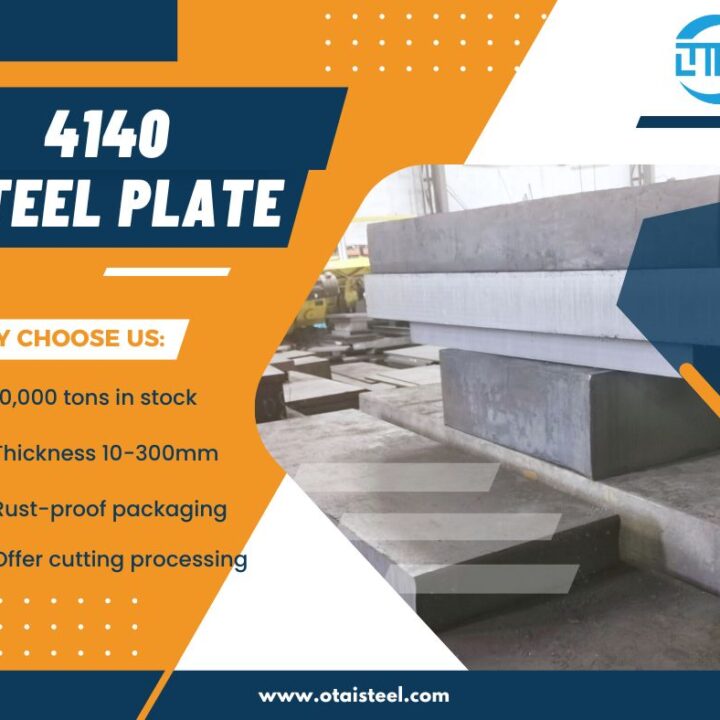
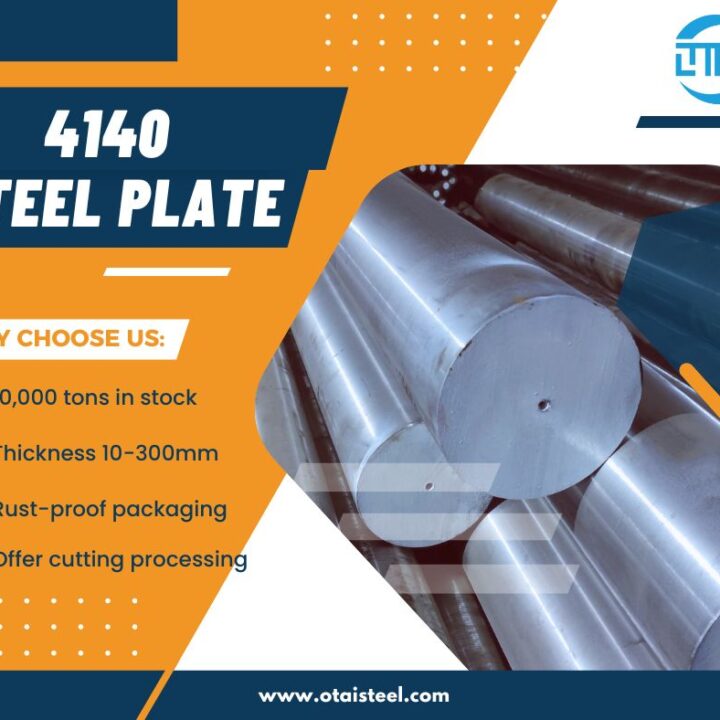
4140 steel is a chromium-molybdenum alloy steel widely used in industries that demand high strength and fatigue resistance. Manufacturers rely on this grade for components such as shafts, gears, bolts, and heavy-duty machinery parts.
The balanced composition of steel grade 4140 allows it to perform well in both heat-treated and pre-hardened conditions.
⚙️ Steel Grade 4140 Chemical Composition
The steel grade 4140 chemical composition follows strict standards such as ASTM A29 and SAE J404. The table below shows the typical composition range:
| Element | Content (%) |
|---|---|
| Carbon (C) | 0.38 – 0.43 |
| Silicon (Si) | 0.15 – 0.35 |
| Manganese (Mn) | 0.75 – 1.00 |
| Chromium (Cr) | 0.80 – 1.10 |
| Molybdenum (Mo) | 0.15 – 0.25 |
| Phosphorus (P) | ≤ 0.035 |
| Sulfur (S) | ≤ 0.040 |
This carefully controlled steel grade 4140 chemical composition ensures stable mechanical properties and reliable performance across different applications.
🔬 Role of Each Element in 4140 Steel
Each element in the steel grade 4140 chemical composition contributes to specific material properties:
- Carbon (C): Increases hardness and strength. Higher carbon improves wear resistance but reduces ductility.
- Chromium (Cr): Enhances hardenability, corrosion resistance, and wear resistance.
- Molybdenum (Mo): Improves strength at high temperatures and increases resistance to softening during tempering.
- Manganese (Mn): Boosts hardenability and tensile strength while improving toughness.
- Silicon (Si): Strengthens the steel and improves resistance to deformation.
- Phosphorus (P) and Sulfur (S): Present in small amounts. Excess levels can reduce toughness and weldability.
This combination makes 4140 steel suitable for high-stress environments.
🔧 Mechanical Properties Influenced by Composition
The steel grade 4140 chemical composition directly affects mechanical performance. The table below shows typical properties after heat treatment:
| Property | Typical Value |
|---|---|
| Tensile Strength | 850 – 1000 MPa |
| Yield Strength | 650 – 850 MPa |
| Hardness | 28 – 32 HRC (Q&T) |
| Elongation | 20 – 25% |
| Impact Toughness | High |
These properties make 4140 steel a reliable choice for structural and mechanical components.
🧰 Heat Treatment and Its Effect on Composition
Heat treatment enhances the benefits of the steel grade 4140 chemical composition. The alloy responds well to quenching and tempering.
| Process | Temperature Range | Effect |
|---|---|---|
| Austenitizing | 850 – 880°C | Prepares structure for hardening |
| Quenching | Oil cooling | Increases hardness and strength |
| Tempering | 200 – 600°C | Adjusts toughness and hardness |
Proper heat treatment allows 4140 steel to achieve a wide range of mechanical properties.
🌍 Applications Based on Chemical Composition
The balanced steel grade 4140 chemical composition supports a wide range of applications:
- Automotive Components: Shafts, gears, and crankshafts
- Oil and Gas Industry: Drill collars and tool joints
- Machinery Manufacturing: Heavy-duty structural parts
- Construction Equipment: High-strength load-bearing components
These applications require a combination of strength, toughness, and wear resistance.
💡 Advantages of 4140 Steel Composition
Using steel grade 4140 chemical composition offers several benefits:
- Provides excellent strength-to-weight ratio
- Supports versatile heat treatment options
- Delivers consistent mechanical performance
- Offers good machinability in annealed condition
- Ensures reliable fatigue resistance
These advantages explain why 4140 steel remains a popular engineering material worldwide.
🏆 Company Advantages
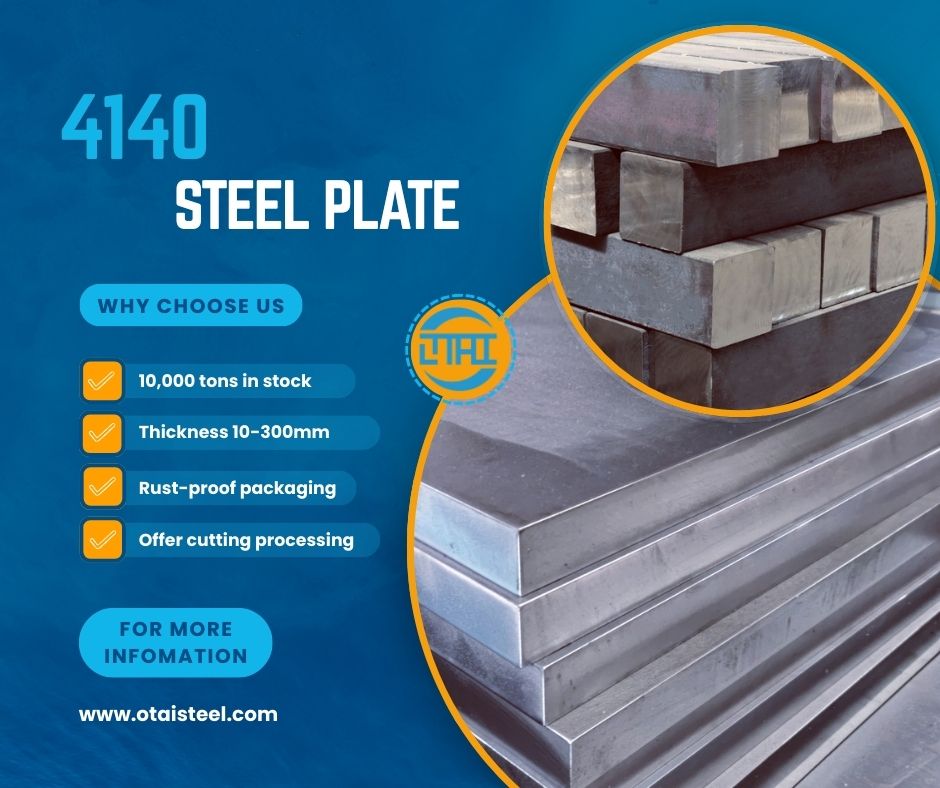
At Otai Special Steel, we supply premium 4140 steel with strictly controlled chemical composition and stable quality. Our advantages include:
- Large Inventory: Over 10,000 tons of alloy steel available for immediate delivery.
- Custom Processing: Cutting, heat treatment, and machining services tailored to your needs.
- Strict Quality Control: Ultrasonic testing (UT) and chemical analysis ensure consistent performance.
- Global Supply Experience: Reliable export service for international customers.
- Competitive Pricing: Cost-effective solutions without compromising quality.
🤔 FAQ
Q1: What is the carbon content of 4140 steel?
A1: The steel grade 4140 chemical composition includes 0.38% to 0.43% carbon, which provides strength and hardness.
Q2: Why is molybdenum added to 4140 steel?
A2: Molybdenum improves high-temperature strength and prevents softening during tempering.
Q3: Is 4140 steel suitable for heat treatment?
A3: Yes, the steel grade 4140 chemical composition allows excellent response to quenching and tempering, enabling a wide range of mechanical properties.