Skip to Content

Blog Archives

16MnCr5 Brinell Hardness: Key Characteristics and Applications

16MnCr5 Brinell Hardness: Key Characteristics and Applications16MnCr5 Brinell Hardness: Key Characteristics and Applications

16MnCr5 steel is widely used in industries that require high strength, toughness, and wear resistance. One of its key properties is its Brinell hardness, which affects its performance in demanding applications. This article explores the Brinell hardness of 16MnCr5, its significance, and its applications.


🔍 What is 16MnCr5 Steel?

16MnCr5 is a low-alloy, medium-carbon steel that contains manganese (Mn) and chromium (Cr) as its main alloying elements. This composition makes it ideal for gears, shafts, and axles that require a balance of strength and wear resistance. The steel can undergo heat treatment to enhance its mechanical properties.

Chemical Composition of 16MnCr5 Steel:

Element Percentage (%)
Carbon (C) 0.14–0.20
Manganese (Mn) 1.00–1.30
Chromium (Cr) 0.80–1.10
Silicon (Si) 0.30–0.50
Phosphorus (P) 0.035 max
Sulfur (S) 0.035 max

This composition gives 16MnCr5 a unique combination of properties, such as high strength, good toughness, and wear resistance, which makes it ideal for use in components that undergo significant stress and wear.


🧪 Brinell Hardness of 16MnCr5 Steel

The Brinell hardness test measures a material’s resistance to indentation. A steel ball is pressed into the material under a specific load, and the diameter of the resulting indentation determines the hardness. For 16MnCr5, the Brinell hardness typically ranges from 170 to 230 HB, depending on the heat treatment applied.

Brinell Hardness Ranges for 16MnCr5 Steel:

Condition Brinell Hardness (HB)
Normal Condition 170–210
Carburized and Quenched 230 or higher

This hardness level indicates that 16MnCr5 has sufficient resistance to wear, while maintaining good toughness for high-stress applications.


🔨 Importance of Brinell Hardness in 16MnCr5 Steel

Brinell hardness is crucial because it directly impacts how 16MnCr5 steel performs in demanding environments. A higher hardness means better wear resistance, which is vital for components subjected to abrasion and friction. Let’s examine the importance of Brinell hardness in different aspects:

Property Impact of Brinell Hardness
Wear Resistance Higher hardness = better resistance to abrasion. Ideal for gears, shafts, and bearings.
Impact Toughness Maintains toughness while increasing hardness, making it ideal for high-stress applications.
Surface Durability Heat treatment increases surface hardness, enhancing durability while maintaining core strength.

🧰 Applications of 16MnCr5 Steel Based on Brinell Hardness

Given its Brinell hardness, 16MnCr5 is highly versatile and is commonly used in industries that require materials with high wear resistance, strength, and toughness. Below are some of the primary applications of 16MnCr5 steel:

Industry Application
Automotive Gears, axles, shafts, and crankshafts require wear resistance and high strength.
Aerospace Turbine shafts, landing gears, and other parts require high impact resistance and fatigue strength.
Industrial Machinery Used for gears, crankshafts, and camshafts in high-stress machinery.
Marine Propeller shafts and marine gears need high durability and resistance to wear in harsh environments.
Heavy Equipment Components like bearings, gears, and shafts in construction machinery require durability under heavy loads.

⚙️ Why 16MnCr5 Steel is a Top Choice

The Brinell hardness of 16MnCr5 makes it a top choice for applications where components face significant wear and stress. Its resistance to wear combined with impact toughness makes it ideal for high-stress environments, such as in automotive, aerospace, and industrial machinery applications. When heat treated, it achieves superior surface hardness while maintaining core toughness, ensuring long-lasting performance.

The steel’s versatility across industries comes from its ability to withstand both abrasion and impact. Moreover, its strength ensures that it can endure heavy loads without deformation. Whether you need it for gears, shafts, or bearing components, 16MnCr5 offers an ideal combination of mechanical properties for demanding applications.


🏆 Why Choose Otai Special Steel for 16MnCr5 Steel?

At Otai Special Steel, we provide high-quality 16MnCr5 steel for various applications. Our products undergo strict quality control and Brinell hardness testing to ensure top performance. Whether you need gears, shafts, or industrial parts, we can provide the right material for your needs.


Frequently Asked Questions (FAQ)

Q1: What is the Brinell hardness range for 16MnCr5 steel?
A1: The typical Brinell hardness for 16MnCr5 steel ranges from 170 to 230 HB depending on its heat treatment.

Q2: How does heat treatment affect the hardness of 16MnCr5?
A2: Heat treatment, like carburizing and quenching, increases the Brinell hardness of 16MnCr5, making it more wear-resistant.

Q3: What are the common applications of 16MnCr5 steel?
A3: 16MnCr5 steel is used in the automotive, aerospace, industrial machinery, and marine industries for parts like gears, shafts, and crankshafts.
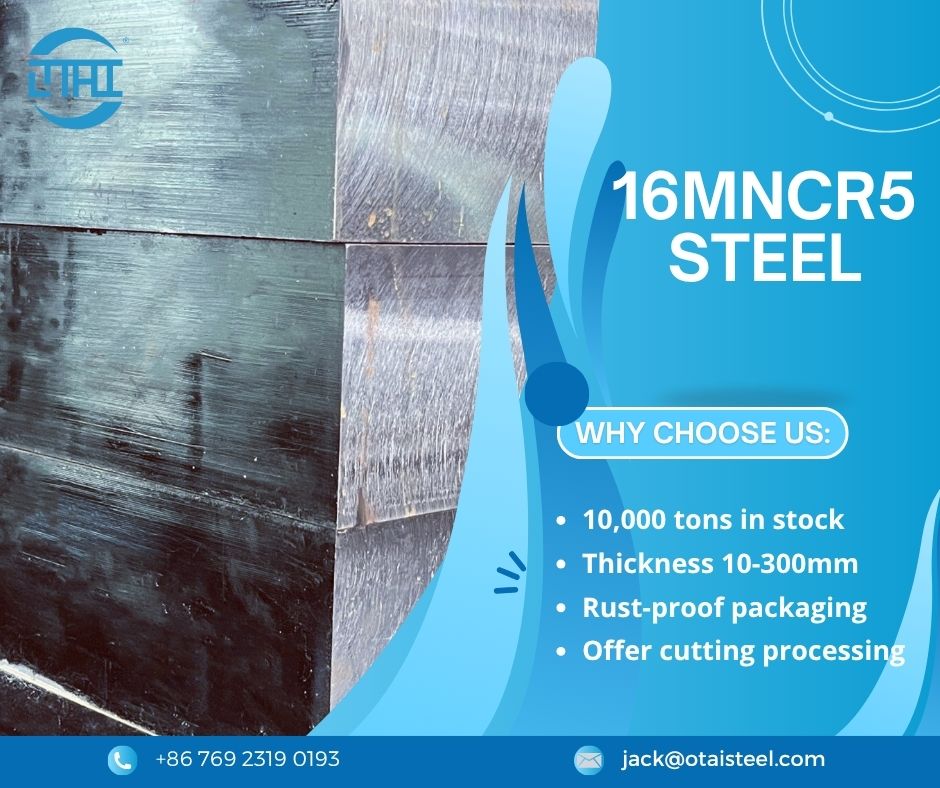
0 0 Continue Reading →

16MnCr5 Sheet Metal: Properties, Applications, and Benefits

16MnCr5 Sheet Metal: Properties, Applications, and Benefits16MnCr5 Sheet Metal: Properties, Applications, and Benefits

16MnCr5 is a medium-carbon, low-alloy steel that performs well in industrial applications that require high wear resistance, toughness, and strength. As sheet metal, it offers a combination of good hardenability, high wear resistance, and durability, making it perfect for engineering and automotive applications. In this article, we will explore the properties, applications, and key benefits of 16MnCr5 sheet metal.


🔍 What is 16MnCr5 Steel?

16MnCr5 is a manganese-chromium alloy steel. Manufacturers use it in applications where components need to withstand high stresses, fatigue, and wear. Due to its toughness, hardness, and hardenability, it is suitable for components like gears, shafts, axles, and crankshafts. In sheet metal form, 16MnCr5 offers flexibility in manufacturing, with the ability to shape and cut the material into precise dimensions, making it a versatile choice for many industries.


🧪 Chemical Composition of 16MnCr5 Sheet Metal

The chemical composition of 16MnCr5 greatly influences its mechanical properties. Here’s a breakdown of the alloy:

Element Percentage Role in Steel
Carbon (C) 0.14-0.20% Increases strength and hardness, but too much can lead to brittleness.
Manganese (Mn) 0.60-0.90% Improves hardenability, strength, and toughness, enhancing wear resistance.
Chromium (Cr) 0.80-1.10% Increases wear resistance, corrosion resistance, and overall strength.
Silicon (Si) 0.20-0.35% Acts as a deoxidizer, increasing strength and improving heat resistance.
Phosphorus (P) ≤ 0.035% Enhances hardness but excessive amounts reduce toughness and ductility.
Sulfur (S) ≤ 0.035% Improves machinability but can reduce overall toughness if too high.

⚙️ Mechanical Properties of 16MnCr5 Sheet Metal

The mechanical properties of 16MnCr5 sheet metal depend on its composition and treatment. Below are some key properties:

Property Value for 16MnCr5 Description
Tensile Strength 800-1000 MPa Offers high tensile strength, resisting deformation under stress.
Yield Strength 500-700 MPa Resists permanent deformation, maintaining performance under heavy load.
Hardness (As Rolled) 190-220 HB Moderate hardness in the as-rolled state, suitable for machining.
Hardness (Heat Treated) 50-55 HRC Achieves higher hardness after heat treatment, making it ideal for heavy-duty applications.
Impact Toughness Medium-High Good toughness, resisting shock loads and fatigue.

🔥 Heat Treatment for 16MnCr5 Sheet Metal

16MnCr5 sheet metal benefits significantly from heat treatment, which enhances its hardness and toughness. The common processes are quenching and tempering:

  • Quenching: The steel is heated to around 850-900°C and rapidly cooled, usually in oil or water, to increase hardness to 50-55 HRC.

  • Tempering: After quenching, the material is reheated to a lower temperature (150-200°C) to improve toughness and reduce brittleness.


🧰 Applications of 16MnCr5 Sheet Metal

Due to its strength and durability, 16MnCr5 sheet metal finds use in a wide variety of industrial applications:

  • Automotive Components: Parts like gears, axles, and crankshafts benefit from 16MnCr5’s resistance to wear and fatigue.

  • Industrial Machinery: Used for shafts, bearings, and gears, components subjected to high stress and wear.

  • Aerospace: Ideal for high-performance components like landing gears and engine parts due to its fatigue resistance.

  • Power Transmission: Commonly found in gearing systems, shafts, and transmission components that need to withstand heavy loads and high stress.


💡 Why Choose 16MnCr5 Sheet Metal?

Choosing 16MnCr5 sheet metal offers several distinct advantages:

  • High Wear Resistance: Thanks to manganese and chromium, 16MnCr5 resists wear and abrasion, making it ideal for components exposed to friction.

  • Excellent Hardenability: The material can be hardened to high levels, providing superior surface hardness while maintaining internal toughness.

  • Fatigue Resistance: The steel performs well under repetitive stress, making it ideal for parts exposed to cyclic loading.

  • Cost-Effective: 16MnCr5 provides a cost-effective solution with superior performance, making it more affordable than other high-alloy steels.


🏆 Why Choose Otai Special Steel for 16MnCr5 Sheet Metal?

At Otai Special Steel, we offer top-quality 16MnCr5 sheet metal that meets the exacting standards of industries such as automotive, aerospace, and machinery. Here’s why we’re your best choice:

  • Wide Variety: We offer 16MnCr5 sheet metal in various sizes and thicknesses to meet your specific needs.

  • Custom Solutions: Our services include cutting, heat treatment, and custom packaging to fit your precise requirements.

  • Strict Quality Control: We perform chemical analysis, ultrasonic testing, and third-party inspections to ensure high-quality products.

  • Global Reach: We supply 16MnCr5 sheet metal to clients worldwide, with a reputation for reliability and quality.


Frequently Asked Questions (FAQ)

Q1: Why is 16MnCr5 sheet metal used in automotive applications?
A1: 16MnCr5 offers excellent wear resistance, strength, and fatigue resistance, making it perfect for components like gears and crankshafts that experience high stresses and wear.

Q2: How can I ensure I’m buying high-quality 16MnCr5 sheet metal?
A2: Look for a distributor who performs rigorous quality checks, such as chemical analysis and third-party inspections. At Otai Special Steel, we provide these services for all our products.

Q3: Can I use 16MnCr5 sheet metal for high-temperature applications?
A3: Yes, 16MnCr5 performs well under higher temperatures, especially after appropriate heat treatment that enhances its strength and toughness.

0 0 Continue Reading →

Steel 16MnCr5 Specifications: Understanding Its Key Properties

Steel 16MnCr5 Specifications: Understanding Its Key PropertiesSteel 16MnCr5 Specifications: Understanding Its Key Properties and Applications

16MnCr5 is a high-performance alloy steel widely used in industries such as automotive and machinery manufacturing. Its strong mechanical properties make it ideal for critical applications, especially where wear resistance, toughness, and high strength are needed. In this article, we will dive into the specifications of 16MnCr5 steel, covering its chemical composition, mechanical properties, and heat treatment processes.


🔍 What Is 16MnCr5 Steel?

16MnCr5 is a medium-carbon alloy steel that contains manganese (Mn) and chromium (Cr) as its primary alloying elements. These additions enhance the material’s overall strength, wear resistance, and hardenability, making it suitable for demanding applications like gears, shafts, and crankshafts.
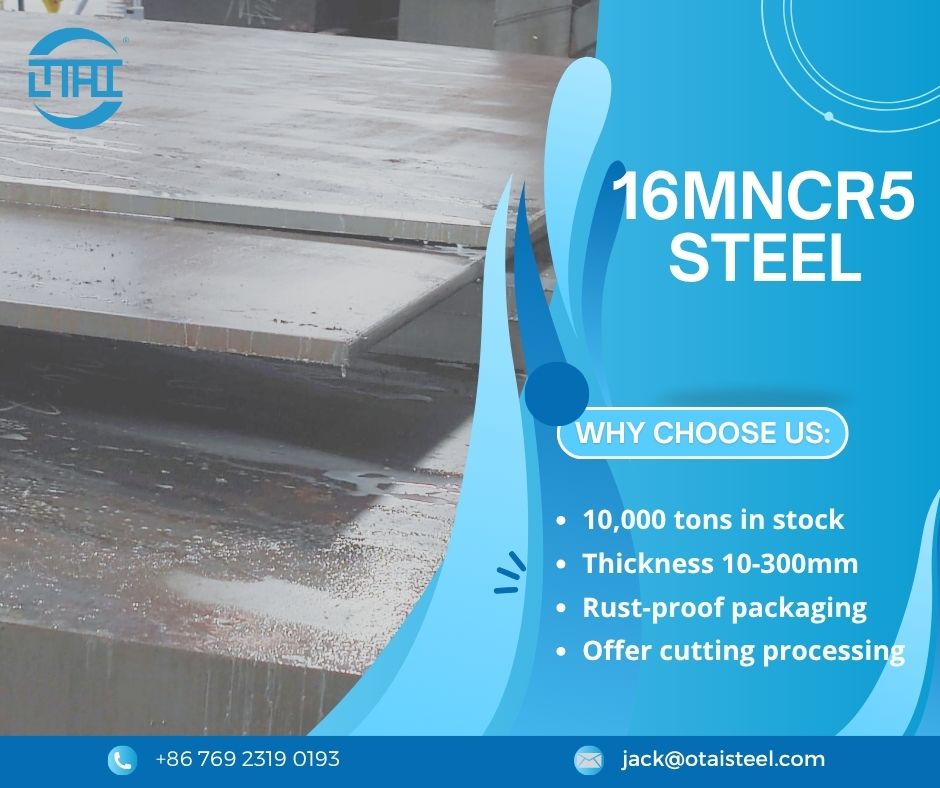
Here’s a quick breakdown of its chemical composition:

  • Manganese (Mn): 0.60-0.90% (increases strength and wear resistance)

  • Chromium (Cr): 0.80-1.10% (improves hardness and corrosion resistance)

  • Carbon (C): 0.14-0.19% (medium-carbon content for toughness)

  • Iron (Fe): The remaining percentage, serving as the base metal.


🧪 Chemical Composition of 16MnCr5 Steel

Element Composition Range
Carbon (C) 0.14-0.19%
Manganese (Mn) 0.60-0.90%
Chromium (Cr) 0.80-1.10%
Silicon (Si) 0.15-0.35%
Phosphorus (P) ≤ 0.025%
Sulfur (S) ≤ 0.025%

⚙️ Mechanical Properties of 16MnCr5 Steel

16MnCr5 combines high strength, toughness, and wear resistance. Its mechanical properties make it ideal for components like gears, shafts, and crankshafts that undergo continuous mechanical stress.

Here’s an overview of the key mechanical properties of 16MnCr5:

Property Value
Tensile Strength 800-1000 MPa
Yield Strength 550 MPa
Elongation 12-18%
Hardness (as quenched) 58-62 HRC (depending on heat treatment)
Impact Toughness High (especially in carburized conditions)

Highlights:

  • Tensile Strength: 16MnCr5 offers 800-1000 MPa, which makes it suitable for high-load components.

  • Yield Strength: It can withstand 550 MPa of stress without permanent deformation.

  • Elongation: With an elongation of 12-18%, it remains ductile and resistant to cracking under stress.


🛠️ Heat Treatment of 16MnCr5

The heat treatment of 16MnCr5 significantly enhances its mechanical properties. By applying specific processes, the steel can achieve high surface hardness while maintaining a tough, ductile core.

Carburizing and Quenching:

  • Carburizing increases the carbon content on the steel surface at high temperatures, improving wear resistance.

  • Quenching rapidly cools the steel, locking in the surface hardness at 58-62 HRC.

  • Tempering follows to relieve internal stresses, improving toughness without losing the hardened surface.

These heat treatments allow 16MnCr5 to be highly resistant to wear while maintaining toughness in applications such as gears and shafts.


🏭 Applications of 16MnCr5 Steel

16MnCr5 excels in high-stress, high-wear applications. It is used widely in industries like automotive and machinery manufacturing. Key applications include:

  • Automotive: Crankshafts, camshafts, drive shafts, and gears.

  • Heavy Machinery: Bearings, shafts, and gears.

  • Industrial Equipment: Structural components, molds, and valves.

  • Tooling: Cutting tools, dies, and blades.

These applications require high wear resistance, toughness, and strength, all of which 16MnCr5 provides in abundance.


⚖️ Comparison: 16MnCr5 Steel vs. Other Steel Grades

Steel Grade Carbon Content Alloy Elements Primary Properties
16MnCr5 0.14-0.19% Manganese, Chromium High hardness, wear resistance, toughness, and good machinability
AISI 1045 0.45% Manganese Medium strength, good machinability, lower wear resistance
AISI 4130 0.30% Chromium, Molybdenum High strength, toughness, and excellent hardenability
AISI 4340 0.40-0.50% Nickel, Chromium High toughness, used in aerospace and heavy-duty applications

As the table shows, 16MnCr5 offers a unique combination of strength, toughness, and wear resistance, which makes it well-suited for a variety of high-performance applications.


Frequently Asked Questions (FAQ)

Q1: What is the hardness of 16MnCr5 steel after heat treatment?
A1: After carburizing and quenching, 16MnCr5 achieves a surface hardness between 58-62 HRC.

Q2: Can 16MnCr5 be welded?
A2: Yes, 16MnCr5 can be welded, but it requires careful handling due to its medium-carbon content. Preheating and post-weld heat treatment can help avoid cracking.

Q3: Why is 16MnCr5 used in automotive applications?
A3: 16MnCr5 is ideal for automotive components like crankshafts and gears because of its excellent combination of strength, wear resistance, and toughness.


🏁 Conclusion

In conclusion, 16MnCr5 is a medium-carbon alloy steel that offers excellent mechanical properties for demanding applications. Its unique balance of toughness, wear resistance, and high strength makes it perfect for components in the automotive, machinery, and industrial sectors. It is not low-carbon steel, but its carburizing capability enhances its performance in high-stress conditions.

For premium 16MnCr5 steel and expert advice on heat treatment and applications, reach out to Otai Special Steel for reliable materials and personalized service.


💪 Company Advantages

At Otai Special Steel, we provide top-quality materials to meet your needs. Here’s why you should choose us:

  • Extensive Inventory: We carry over 10,000 tons of various steel products, ensuring quick and reliable supply.

  • Customized Solutions: We offer cutting, heat treatment, and packaging services tailored to your specifications.

  • Rigorous Testing: Our products undergo chemical composition analysis, ultrasonic testing (UT), and third-party inspections to guarantee top-quality steel.

  • Global Presence: We supply to major international clients across various industries, offering high-quality steel products worldwide.

0 0 Continue Reading →

Is 16MnCr5 Low Carbon Steel?

Is 16MnCr5 Low Carbon Steel?Is 16MnCr5 Low Carbon Steel?

16MnCr5 is a versatile alloy steel known for its excellent mechanical properties, making it a popular choice in industries such as automotive and machinery manufacturing. However, there’s a common question that arises: Is 16MnCr5 considered low carbon steel? In this article, we will explore the carbon content of 16MnCr5, its properties, and how it compares to other steel grades, particularly in relation to carbon content and strength.


🔍 What Is 16MnCr5 Steel?

16MnCr5 is an alloy steel containing a combination of manganese (Mn) and chromium (Cr). This combination makes it ideal for high-strength, wear-resistant applications. It is widely used for components like gears, shafts, crankshafts, and more, which endure high stress and wear. Its carbon content significantly affects its mechanical properties.

Basic Composition:

  • Manganese (Mn): Improves strength and wear resistance.

  • Chromium (Cr): Increases hardness, toughness, and corrosion resistance.

  • Carbon (C): The key element affecting hardness and strength.

  • Iron (Fe): The base element of the alloy.


🧪 Carbon Content in 16MnCr5

To directly answer: No, 16MnCr5 is not low-carbon steel.

What is Low Carbon Steel?

Low-carbon steels typically contain less than 0.30% carbon. These steels are relatively soft, have good ductility, and are easy to weld. On the other hand, 16MnCr5 contains 0.14-0.19% carbon, which places it in the category of medium-carbon steel.

Carbon Content Breakdown:

  • Low-carbon steel: < 0.30% carbon

  • Medium-carbon steel: 0.30% – 0.60% carbon (16MnCr5 falls into this category)

  • High-carbon steel: > 0.60% carbon

The relatively low carbon content of 16MnCr5 contributes to its toughness and formability, but the presence of chromium and manganese ensures that it retains high strength and hardness, especially after heat treatment.


🛠️ Properties of 16MnCr5 Steel

As a medium-carbon steel, 16MnCr5 combines excellent mechanical properties, making it suitable for various high-performance applications. Let’s dive into the key characteristics:

1. Strength and Hardness

The carbon content and alloying elements like chromium and manganese give 16MnCr5 high tensile strength and excellent resistance to stress. These characteristics make it ideal for mechanical components subject to high loads and forces.

  • Tensile Strength: Around 800-1000 MPa.

  • Yield Strength: Around 550 MPa.

  • Hardness (after heat treatment): Surface hardness can reach 58-62 HRC after carburizing and quenching.

2. Wear Resistance

The presence of chromium in 16MnCr5 boosts its wear resistance, making it an excellent material for gears and other parts exposed to constant friction and wear. This is why it is ideal for automotive and industrial machinery applications.

3. Good Toughness and Ductility

Despite its medium carbon content, 16MnCr5 maintains a solid balance of toughness and ductility. This combination allows it to absorb shock, resist cracking, and endure mechanical stress, which is vital in components like crankshafts and axles.

4. Hardenability

Manganese and chromium enhance the hardenability of 16MnCr5. This means the steel can achieve deep hardening during processes like carburizing and quenching, allowing for a tough core with a hard surface that resists wear.


⚙️ Heat Treatment and Hardenability of 16MnCr5

16MnCr5 undergoes various heat treatment processes, which are essential for achieving optimal hardness and wear resistance. These treatments enable the steel to meet specific demands in high-performance applications.

Carburizing and Tempering:

  • Carburizing increases the surface hardness of 16MnCr5 by introducing carbon into the steel at high temperatures.

  • Quenching, or rapid cooling, after carburizing ensures a hard surface, reaching 58-62 HRC.

  • Tempering follows to relieve internal stresses, improving the toughness of the steel without compromising its hardness.

These heat treatments make 16MnCr5 suitable for components that endure both high wear and high mechanical stress, such as gears and axles.


🏭 Applications of 16MnCr5 Steel

Due to its outstanding mechanical properties, 16MnCr5 is widely used in the following applications:

  • Automotive parts: Crankshafts, camshafts, gears, and drive shafts.

  • Heavy machinery: Bearings, shafts, and gears.

  • Industrial equipment: Structural components, valves, and molds.

  • Tooling applications: Cutting tools, dies, and blades.

The steel’s combination of strength, toughness, and wear resistance makes it the material of choice for components exposed to mechanical stresses in demanding environments.


📊 Comparison: 16MnCr5 Steel vs. Other Steel Grades

Steel Grade Carbon Content Main Elements Properties
16MnCr5 0.14-0.19% Manganese, Chromium High strength, wear resistance, good toughness, and hardenability
AISI 1045 0.45% Manganese Medium strength, good machinability
AISI 4130 0.30% Chromium, Molybdenum High strength, toughness, and hardenability
AISI 4340 0.40-0.50% Nickel, Chromium High toughness, used in aerospace and heavy-duty applications

As shown, 16MnCr5 provides a unique balance of hardness, strength, and toughness, making it well-suited for demanding applications in automotive and heavy machinery.

💪 Company Advantages

At Otai Special Steel, we ensure you get the best materials for your needs. Here’s why you should choose us:

  • Extensive Inventory: We stock over 10,000 tons of various steel products, ensuring fast delivery.

  • Custom Solutions: We offer services like custom cutting, heat treatment, and packaging tailored to your specifications.

  • Quality Assurance: Our products undergo rigorous testing, including chemical composition analysis, ultrasonic testing (UT), and third-party inspections.

  • Global Reach: We supply high-quality steel to major international clients across a range of industries.


Frequently Asked Questions (FAQ)

Q1: Why isn’t 16MnCr5 considered low carbon steel?
A1: 16MnCr5 is medium-carbon steel because it contains between 0.14-0.19% carbon, which is higher than low-carbon steels, typically below 0.30%.

Q2: What makes 16MnCr5 ideal for gears and shafts?
A2: Its high wear resistance, good hardenability, and ability to withstand fatigue make 16MnCr5 perfect for components like gears and shafts that experience mechanical stresses.

Q3: Can 16MnCr5 be welded?
A3: Yes, 16MnCr5 can be welded, but due to its medium-carbon content, welding requires care to avoid cracking. Preheating and post-weld heat treatment are often necessary.

0 0 Continue Reading →

16MnCr5 Alloy Steel: Properties, Applications, and Benefits

16MnCr5 Alloy Steel: Properties, Applications, and Benefits16MnCr5 Alloy Steel: Properties, Applications, and Benefits

16MnCr5 is a highly versatile low-alloy steel that is renowned for its outstanding mechanical properties. It is extensively used in automotive, machinery, and engineering sectors, where durability, wear resistance, and strength are essential. By combining manganese and chromium, 16MnCr5 delivers enhanced mechanical performance, making it a popular choice for various industrial applications.

This article covers the key properties, heat treatment processes, applications, and benefits of 16MnCr5 alloy steel, as well as some potential alternatives.


🧪 Key Properties of 16MnCr5 Alloy Steel

16MnCr5 steel stands out due to several key properties that make it suitable for demanding applications. Let’s take a closer look at them:

1. High Strength

The high tensile strength of 16MnCr5 makes it ideal for components that need to withstand heavy loads and mechanical stresses. The manganese increases strength, while chromium improves wear resistance, making the steel even more reliable in challenging environments.

2. Good Hardenability

With the addition of chromium and manganese, 16MnCr5 boasts excellent hardenability. This means that the steel can achieve the desired hardness and strength even after heat treatment, including quenching and tempering processes.

3. Improved Wear Resistance

Thanks to the chromium content, 16MnCr5 offers superior wear resistance. This makes it especially useful for parts exposed to high friction and abrasive conditions, such as gears, shafts, and bearings.

4. Toughness and Ductility

Despite its strength, 16MnCr5 maintains a good balance of toughness and ductility. This balance helps it resist cracking and failure under dynamic loading or cyclic stresses, making it suitable for components subject to impact or vibration.

5. Machinability

16MnCr5 remains easy to machine even after heat treatment. The manganese content helps improve the steel’s machinability, allowing for efficient manufacturing processes and reducing production time.


⚙️ Heat Treatment of 16MnCr5 Alloy Steel

To unlock the full potential of 16MnCr5, specific heat treatment processes are essential. Here are the primary methods used:

1. Carburizing

Carburizing is a widely used method for 16MnCr5. It increases the surface hardness of the steel while maintaining a tough, ductile core. In this process, 16MnCr5 is exposed to a carbon-rich environment at high temperatures (900°C-950°C). This results in a surface hardness of around 58-62 HRC while preserving the toughness of the interior.

2. Quenching and Tempering

The quenching and tempering process significantly enhances the steel’s strength and toughness. The steel is heated to approximately 850-900°C, then rapidly cooled in oil or water (quenched). After this, it undergoes tempering at lower temperatures (150-200°C) to reduce brittleness and adjust hardness for the final application.

3. Annealing

Annealing softens 16MnCr5 steel, improving its machinability. The steel is heated to 750-800°C and then cooled slowly. This relieves internal stresses and makes the steel easier to work with.


🛠️ Applications of 16MnCr5 Alloy Steel

Thanks to its excellent combination of strength, wear resistance, and toughness, 16MnCr5 finds extensive use in various industrial sectors. Here are some common applications:

1. Automotive Industry

In the automotive sector, 16MnCr5 is widely used for manufacturing gears, axles, crankshafts, and transmission components. These parts experience heavy loads and wear, making 16MnCr5 the perfect material due to its high wear resistance and strength.

2. Machinery Manufacturing

16MnCr5 is essential in producing machine components like shafts, gears, and camshafts. These parts require high strength to withstand continuous mechanical stress. The wear resistance of 16MnCr5 makes it ideal for such applications.

3. Heavy Machinery

For heavy-duty equipment, 16MnCr5 is used in bearings, gears, and clutch parts where durability and toughness are critical. The steel performs well under harsh conditions, such as in earth-moving machinery and industrial presses.

4. Engineering Components

In the engineering field, 16MnCr5 is commonly found in valves, pistons, structural parts, and shafting. Its strength, toughness, and machinability make it suitable for components that require precision and high durability.


⚖️ Advantages of Using 16MnCr5 Alloy Steel

Here are the key reasons why 16MnCr5 is a preferred material for various industrial applications:

✔️ Cost-Effectiveness

Compared to other high-performance steels, 16MnCr5 offers a great balance of strength, wear resistance, and machinability at a relatively low cost, making it a cost-effective choice for many industries.

✔️ Excellent Wear Resistance

The chromium in 16MnCr5 significantly boosts its wear resistance, making it ideal for parts exposed to friction and abrasion. This property is essential for components like gears, shafts, and bearings.

✔️ Versatility

With its combination of high strength and wear resistance, 16MnCr5 is highly versatile. It is commonly used in many different applications, ranging from automotive parts to machinery components.

✔️ Improved Performance

16MnCr5 can withstand heavy-duty conditions, which improves the performance and longevity of the parts made from it. Its ability to handle mechanical stresses and wear makes it a reliable material for high-performance components.


🔄 Alternatives to 16MnCr5 Alloy Steel

While 16MnCr5 is widely used, several other materials offer similar mechanical properties and could be considered for specific applications:

Material Key Properties Applications
18CrNiMo7-6 Increased carbon content, better fatigue resistance Gears, crankshafts, axles
20CrNiMo Higher toughness, similar alloying elements Automotive components, shafts
AISI 4140 High strength, toughness, improved machinability Shafts, gears, machinery parts
SAE 8620 Carburizing steel, high surface hardness Gears, shafts, bearings

Frequently Asked Questions (FAQ)

Q1: Is 16MnCr5 suitable for heavy-duty applications?
A1: Yes, 16MnCr5 is an excellent choice for heavy-duty applications. It offers a combination of high strength, wear resistance, and toughness, making it perfect for components subjected to heavy mechanical stresses, such as axles, gears, and bearings.

Q2: What makes 16MnCr5 different from other alloy steels like 4140?
A2: 16MnCr5 generally has higher chromium content than 4140, which improves its wear resistance. However, 4140 offers better strength and toughness, especially in applications involving high stress.

Q3: Can 16MnCr5 withstand high-temperature environments?
A3: 16MnCr5 is not designed for high-temperature environments. While it performs well under mechanical stress and wear, it may not maintain its properties at extreme temperatures. For such applications, high-temperature alloys may be more suitable.

0 0 Continue Reading →

16MnCr5 Steel Hardness: Understanding Its Properties and Applications

16MnCr5 Steel Hardness: Understanding Its Properties and Applications16MnCr5 Steel Hardness: Understanding Its Properties and Applications

The 16MnCr5 steel is widely used in the automotive and manufacturing industries for components that require both strength and toughness. One of its standout features is its hardness, which makes it highly durable in demanding applications. Understanding the hardness of 16MnCr5 steel is crucial for selecting the right material for specific projects, ensuring optimal performance in parts like gears, shafts, and other mechanical components.

In this article, we’ll dive into the hardness of 16MnCr5 steel, how it’s measured, and the factors that influence its hardness.


🧪 What is 16MnCr5 Steel?

16MnCr5 is a low-alloy, medium-carbon steel. It contains manganese and chromium, which enhance its hardness, wear resistance, and strength, making it suitable for carburizing (a heat treatment process). This process increases the surface hardness of the material, allowing it to withstand greater stress while maintaining toughness in the core.

Here’s a breakdown of its composition:

Element Composition (%)
Carbon (C) 0.14 – 0.19%
Manganese (Mn) 0.60 – 0.90%
Chromium (Cr) 0.80 – 1.10%
Silicon (Si) 0.20 – 0.35%
Molybdenum (Mo) 0.15 – 0.25%

The inclusion of manganese and chromium is what makes 16MnCr5 steel particularly hard and suitable for high-stress applications. These elements increase the resistance to wear and fatigue, which is essential in many engineering applications.


🔍 How is the Hardness of 16MnCr5 Steel Measured?

Hardness is a measure of a material’s resistance to deformation, particularly indentation. The hardness of 16MnCr5 steel is typically measured using different scales, such as the Brinell, Rockwell, or Vickers hardness tests.

Here’s a comparison of the typical hardness values for 16MnCr5 steel under different testing methods:

Hardness Test Hardness Value (approx.)
Brinell (HB) 180 – 220 HB
Rockwell C (HRC) 28 – 35 HRC
Vickers (HV) 250 – 350 HV

These values vary depending on factors such as the heat treatment process and the final application of the steel. For example, carburized 16MnCr5 steel can have a surface hardness of up to 58-62 HRC, making it ideal for gears, shafts, and bearings.


🏗️ How Hardness Affects the Properties of 16MnCr5 Steel

Hardness is a key factor that impacts the performance and durability of materials in real-world applications. Here’s how the hardness of 16MnCr5 steel plays a role in its effectiveness:

✔️ Improved Wear Resistance

The higher the hardness, the better the steel resists abrasion and wear, making it a great choice for parts that experience friction or sliding contact. 16MnCr5 steel’s hard surface makes it ideal for gears, valves, and bearings, where wear resistance is crucial.

✔️ Enhanced Strength

A harder material can withstand higher stress and forces without failing. The high hardness of 16MnCr5 steel improves the fatigue strength, allowing components to perform well under fluctuating loads, such as in automotive axles or crankshafts.

✔️ Increased Durability

Hardness contributes to a material’s longevity and resistance to deformation. In parts like sprockets or piston rods, where high impact and abrasive conditions are common, the hardness of 16MnCr5 ensures longer service life.

However, there’s a balance to strike. If steel becomes too hard, it may become brittle and prone to cracking under shock or impact. This is why heat treatment and carburizing play such an important role in optimizing 16MnCr5 steel’s hardness for different applications.


🛠️ Applications of 16MnCr5 Steel Based on Hardness

Given its impressive hardness, 16MnCr5 is used in various industries for components that must endure high mechanical stress, fatigue, and wear. Here are some of the most common uses:

Application Hardness Requirement
Gears and Pinions High surface hardness (55 – 60 HRC) for wear resistance
Shafts and Crankshafts Moderate hardness for strength and fatigue resistance
Bearings High hardness for reduced wear and long-lasting operation
Automotive Components Toughness with wear resistance for parts like axles and valves
Heavy Machinery Parts Excellent resistance to fatigue and wear for high-stress components

The carburizing process, often applied to 16MnCr5 steel, increases surface hardness while maintaining toughness in the core, making it ideal for components that are subjected to high loads and abrasive environments.


📊 Hardness Comparison with Other Steels

Let’s compare the hardness of 16MnCr5 with other similar steels to understand its position in terms of wear resistance and strength:

Steel Grade Carbon Content Hardness (HRC) Application
16MnCr5 0.14 – 0.19% 28 – 35 HRC Automotive gears, shafts, bearings
AISI 8620 0.18% 25 – 30 HRC Automotive components, shafts, gears
AISI 5140 0.40% 35 – 45 HRC Crankshafts, axles, high-strength components
AISI 4340 0.38% 35 – 50 HRC Aerospace, heavy-duty components
AISI 4130 0.28% 25 – 35 HRC Aircraft components, structural parts

As shown, 16MnCr5 provides a balanced level of hardness suitable for high-performance applications without becoming excessively brittle, unlike some higher-carbon steels.


🏅 Why Choose Otai Special Steel for 16MnCr5 Steel?

When you need 16MnCr5 steel with the right hardness for your application, Otai Special Steel is here to meet your needs. Here’s why you should trust us:

Feature Details
Premium Quality We offer high-quality 16MnCr5 steel that meets global standards.
Custom Services We provide cutting, heat treatment, and machining services.
Reliable Delivery We ensure timely delivery worldwide to support your projects.
Competitive Pricing Get cost-effective solutions without compromising on quality.

With Otai Special Steel, you can be confident that your 16MnCr5 steel will have the optimal hardness for its intended use, ensuring reliability and durability in demanding conditions.


FAQ: Frequently Asked Questions

Q1: What hardness should I aim for when selecting 16MnCr5 steel?
A1: The desired hardness depends on the specific application. For gears and bearings, 58-62 HRC (after carburizing) is recommended, while for shafts and crankshafts, a hardness around 28-35 HRC is typical.

Q2: Can I improve the hardness of 16MnCr5 steel?
A2: Yes, carburizing is a common method to increase the surface hardness of 16MnCr5 steel, making it suitable for wear-resistant applications.

Q3: What makes 16MnCr5 steel a good choice for high-stress components?
A3: Its combination of medium carbon content, chromium, and manganese provides excellent wear resistance, toughness, and fatigue strength, making it ideal for components subjected to dynamic loads.

0 0 Continue Reading →