Skip to Content

Blog Archives

4140 Steel Definition: An Overview of Its Composition, Properties, and Applications

4140 Steel Definition: An Overview of Its Composition, Properties, and Applications4140 Steel Definition: An Overview of Its Composition, Properties, and Applications

4140 steel is a medium-carbon alloy steel that stands out for its versatility, used across industries that demand high performance, such as automotive, aerospace, and heavy machinery. Known for its strength, durability, and resistance to wear, 4140 steel serves as an essential material for manufacturing components that must endure high stress, extreme temperatures, and abrasive conditions. In this article, we will define 4140 steel, explore its Definition, properties, and common applications, and highlight why it remains a popular choice for engineers and manufacturers.


🏗️ What is 4140 Steel?

4140 steel is an alloy steel that includes chromium (Cr) and molybdenum (Mo) as its key alloying elements. These elements enhance the steel’s strength, hardness, wear resistance, and toughness. The name 4140 refers to its composition:

  • Carbon (C): 0.38% – 0.43%

  • Manganese (Mn): 0.75% – 1.00%

  • Chromium (Cr): 0.80% – 1.10%

  • Molybdenum (Mo): 0.15% – 0.25%

This combination results in high tensile strength, good hardening ability, and excellent resistance to wear, making 4140 steel suitable for applications that require strength and durability.


🔧 Key Properties of 4140 Steel

The mechanical properties of 4140 steel make it one of the most reliable and widely used alloys. Here are the primary properties of 4140 steel:

1. Tensile Strength

  • Tensile strength indicates the material’s ability to resist forces that attempt to pull it apart. 4140 steel typically ranges from 655 to 1,000 MPa for tensile strength, making it highly resistant to tension and perfect for demanding applications in industries such as automotive and aerospace.

2. Yield Strength

  • Yield strength marks the point at which the material begins to deform plastically. 4140 steel maintains a yield strength ranging from 415 MPa to 650 MPa, enabling it to resist deformation under heavy loads, ideal for gears and shafts exposed to stress.

3. Hardness

  • 4140 steel offers good hardness, typically ranging from 28 to 50 HRC (Rockwell C scale). Heat treatments such as quenching and tempering increase its hardness, providing excellent wear resistance for components like bearings, tools, and machine parts.

4. Ductility and Toughness

  • Ductility describes the material’s ability to stretch or bend without breaking. 4140 steel features moderate ductility, which ensures that components like automotive suspension systems and machinery parts absorb shock and stress without cracking. It also boasts toughness, making it ideal for applications subject to sudden shocks.

5. Fatigue Strength

  • Fatigue strength refers to the material’s ability to withstand cyclic loading over time. 4140 steel offers excellent fatigue resistance, which makes it a solid choice for parts such as axles and crankshafts that experience repeated loading cycles.

6. Wear Resistance

  • The high carbon and alloy content in 4140 steel provide it with superior wear resistance, which is why it is often used in components that endure high friction and abrasive environments, such as gears and drivetrain parts.


🔨 How is 4140 Steel Used?

Due to its outstanding mechanical properties, 4140 steel has a wide range of industrial applications. Here are some of the most common uses for 4140 steel:

1. Automotive Industry

  • 4140 steel is used in automotive parts like crankshafts, gears, axles, and suspension components that need to withstand high levels of mechanical stress. Its high strength and fatigue resistance ensure that these components perform reliably even in extreme conditions.

2. Industrial Machinery

  • 4140 steel is found in industrial machinery for components such as shafts, bearings, and pumps. Its wear resistance and toughness make it ideal for parts that must endure continuous friction and high mechanical loads.

3. Oil and Gas Industry

  • The oil and gas sector uses 4140 steel for demanding components like drill pipes, valves, and flanges. The steel’s ability to endure harsh environments and high pressures makes it a reliable material for these applications.

4. Tooling and Dies

  • 4140 steel is widely used in the production of tooling and dies due to its exceptional hardness and wear resistance, making it suitable for use in high-production environments where tools must perform consistently under pressure.


⚙️ Heat Treatment of 4140 Steel

One of the key advantages of 4140 steel is its ability to undergo various heat treatments to enhance its mechanical properties. Heat treatments like quenching, tempering, and carburizing allow 4140 steel to be customized for specific applications.

1. Quenching and Tempering

  • Quenching involves heating 4140 steel to a high temperature and rapidly cooling it, forming martensite, a structure that increases strength and hardness. After quenching, the steel undergoes tempering, which improves toughness and reduces brittleness.

2. Carburizing

  • Carburizing introduces additional carbon to the surface of 4140 steel, creating a hard surface layer while keeping the core of the material ductile and tough. This process is perfect for parts like gears and sprockets that experience high levels of friction.

3. Normalizing

  • Normalizing involves heating 4140 steel to a temperature above its critical range and cooling it in air. This process refines the grain structure and improves the steel’s overall strength and toughness.


📊 Comparison of 4140 Steel with Other Alloys

To help you understand how 4140 steel compares to other alloys, here is a chart comparing tensile strength, yield strength, and hardness:

Material Tensile Strength (MPa) Yield Strength (MPa) Hardness (HRC) Applications
4140 Steel 655–1,000 415–650 28–50 Automotive, industrial machinery, tools
1045 Steel 600–800 415–500 18–28 General engineering, shafts
4340 Steel 1,000–1,200 850–1,050 40–60 Aerospace, military, heavy machinery
8620 Steel 600–850 400–550 20–30 Gears, automotive components
AISI 52100 1,000–1,200 600–800 60–65 Bearings, high-performance components

🏆 Why Choose Otai Special Steel for Your 4140 Steel Needs?

At Otai Special Steel, we specialize in providing high-quality 4140 steel with customizable heat treatment options to meet your specific needs. Our precision cutting, heat treatment, and packaging services ensure the steel performs optimally for your application.

Advantages of Working with Otai Special Steel:

  • Premium Materials: We offer only the highest-quality 4140 steel that meets international standards for performance and reliability.

  • Custom Solutions: We provide custom cutting, heat treatment, and machining to meet your exact specifications.

  • Competitive Pricing: Our 4140 steel products offer excellent value at competitive prices without compromising quality.

  • Fast Delivery: With an extensive inventory, we guarantee fast and reliable delivery to meet your project deadlines.


Frequently Asked Questions (FAQ)

Q1: What is 4140 steel best used for?

  • A1: 4140 steel is best used for automotive, industrial, and aerospace applications such as gears, shafts, bearings, and tooling, due to its high strength, wear resistance, and toughness.

Q2: How does heat treatment affect 4140 steel?

  • A2: Heat treatments like quenching and tempering significantly improve 4140 steel’s hardness, strength, and toughness, making it ideal for demanding applications.

0 0 Continue Reading →

4140 Grade Steel Properties: Understanding Its Strength, Durability, and Applications

4140 Grade Steel Properties: Understanding Its Strength, Durability, and Applications4140 Grade Steel Properties: Understanding Its Strength, Durability, and Applications

4140 grade steel is a versatile alloy widely used in industries that demand high performance, such as automotive, aerospace, and heavy machinery. This steel is known for its excellent strength, wear resistance, and toughness, making it a top choice for manufacturing components that need to withstand high stress, extreme temperatures, and abrasive environments. In this article, we will explore the properties of 4140 grade steel, how it performs in different applications, and why it’s a go-to material for high-demand projects.


🏗️ What is 4140 Grade Steel?

4140 grade steel is a medium-carbon alloy steel that contains chromium (Cr) and molybdenum (Mo) as its key alloying elements. These elements enhance the steel’s strength, hardness, wear resistance, and resilience. The name 4140 refers to its composition:

  • Carbon (C): 0.38% – 0.43%

  • Manganese (Mn): 0.75% – 1.00%

  • Chromium (Cr): 0.80% – 1.10%

  • Molybdenum (Mo): 0.15% – 0.25%

Engineers and manufacturers commonly use 4140 steel for applications that require high tensile strength, toughness, and wear resistance, such as gears, shafts, crankshafts, and machine parts exposed to high stresses and heavy loads.


🔧 Key Properties of 4140 Grade Steel

The mechanical properties of 4140 steel make it one of the most widely used alloy steels. Below are the key properties of 4140 steel:

1. Tensile Strength

  • Tensile strength refers to the steel’s ability to resist forces that try to pull it apart. 4140 steel has a tensile strength that typically ranges from 655 to 1,000 MPa, allowing it to resist high levels of stress and making it ideal for demanding applications in automotive and aerospace industries.

2. Yield Strength

  • Yield strength is the point where the material starts to deform plastically. For 4140 steel, the yield strength typically ranges from 415 MPa to 650 MPa. This ensures that components made from 4140 steel can endure heavy loads without permanent deformation.

3. Hardness

  • 4140 steel exhibits high hardness and typically ranges from 28 to 50 HRC (Rockwell C scale). Heat treatments such as quenching and tempering increase the hardness of 4140 steel, making it highly resistant to wear and abrasion. Components subjected to friction, such as bearings and tools, benefit from this property.

4. Impact Toughness

  • Impact toughness measures how well the material absorbs energy during a sudden impact. 4140 steel offers excellent impact toughness, which helps it resist breaking or fracturing under shock loads. This makes 4140 steel an ideal material for automotive parts, machinery components, and industrial equipment that frequently experience sudden stresses.

5. Ductility

  • Ductility refers to the ability of the material to stretch or bend without breaking. 4140 steel has moderate ductility, which is useful for components such as automotive suspension systems and machinery parts that need to absorb shock and stress without cracking.

6. Fatigue Resistance

  • Fatigue strength is the ability of 4140 steel to withstand repeated loading and unloading cycles without failure. Its excellent fatigue resistance makes it suitable for parts that experience continuous cyclic stresses over time, such as gears and shafts in engine systems.

7. Weldability

  • 4140 steel can be welded, but proper preheating and post-weld heat treatment are necessary to avoid cracks. Although 4140 steel is more challenging to weld than lower-carbon steels, it remains a reliable choice for fabricated structures and industrial machinery.


🔨 How Heat Treatment Affects 4140 Steel

The mechanical properties of 4140 grade steel can change significantly with various heat treatment processes. Below are some common treatments that affect the performance of 4140 steel:

1. Quenching and Tempering

  • Quenching involves heating 4140 steel to a high temperature and rapidly cooling it in oil or water. This process forms martensite, a very hard phase that increases the steel’s strength. After quenching, tempering reheats the steel to a lower temperature to relieve internal stresses and improve toughness and ductility.

2. Carburizing

  • In carburizing, 4140 steel absorbs additional carbon on the surface, creating a hard outer layer while maintaining a ductile core. This process enhances the wear resistance of 4140 steel, making it ideal for components such as gears, sprockets, and shafts that experience high friction.

3. Normalizing

  • Normalizing involves heating 4140 steel to a temperature above its critical range and then allowing it to cool in air. This process improves the grain structure, resulting in better toughness and resilience of the steel.


🏗️ Applications of 4140 Grade Steel

The superior mechanical properties of 4140 steel make it suitable for a wide range of industrial applications. Some of the common uses include:

1. Automotive Components

  • 4140 steel is frequently used in automotive components such as crankshafts, gears, axles, and suspension parts. These parts must withstand high levels of mechanical stress and perform reliably in harsh conditions.

2. Industrial Machinery

  • 4140 steel is used in industrial machinery such as bearings, shafts, cylinders, and pumps. Its high strength, wear resistance, and fatigue resistance make it ideal for equipment that operates under continuous use.

3. Oil and Gas Industry

  • Components like drill pipes, valves, and flanges used in the oil and gas industry rely on 4140 steel due to its excellent performance under high pressure and extreme environments.

4. Aerospace Components

  • 4140 steel is used in aerospace components, including landing gear, actuators, and drive shafts, where strength and toughness are critical at high operating pressures and temperatures.

5. Tooling and Dies

  • 4140 steel is a popular choice for tooling and dies due to its high hardness and wear resistance, which ensures that tools last longer even under heavy use.


📊 Comparison of 4140 Steel with Other Alloys

To understand how 4140 steel compares to other common alloys, here is a comparison of tensile strength and hardness:

Material Tensile Strength (MPa) Hardness (HRC) Applications
4140 Steel 655–1,000 28–50 Automotive, industrial machinery, tools
1045 Steel 600–800 18–28 General engineering, shafts
4340 Steel 1,000–1,200 40–60 Aerospace, military, heavy machinery
8620 Steel 600–850 20–30 Gears, automotive components
AISI 52100 1,000–1,200 60–65 Bearings, high-performance components

🏆 Why Choose Otai Special Steel for Your 4140 Steel Needs?

At Otai Special Steel, we specialize in providing high-quality 4140 steel that meets the highest international standards. Our steel products undergo precision cutting, heat treatments, and packaging services to ensure they perform optimally for your project.

Advantages of Working with Otai Special Steel:

  • Premium Materials: We ensure that our 4140 steel meets the highest quality standards for strength, durability, and performance.

  • Custom Solutions: We provide custom cutting, heat treatment, and machining to meet your exact specifications.

  • Competitive Pricing: We offer high-performance steel at competitive rates, providing excellent value without compromising on quality.

  • Fast Delivery: With our large inventory, we ensure quick and reliable delivery for all your steel needs.


Frequently Asked Questions (FAQ)

Q1: What is the typical tensile strength of 4140 steel?

  • A1: The tensile strength of 4140 steel typically ranges from 655–1,000 MPa, depending on the heat treatment.

Q2: Can 4140 steel be used for high-temperature applications?

  • A2: Yes, 4140 steel can withstand moderate to high temperatures, making it suitable for industries like automotive, aerospace, and oil and gas.

Q3: How does heat treatment affect the hardness of 4140 steel?

  • A3: Heat treatments such as quenching and tempering can significantly increase the hardness of 4140 steel, typically ranging from 28 to 50 HRC depending on the treatment process.

0 0 Continue Reading →

Steel Grade 4140 Equivalent: Exploring Similar Steels and Their Applications

Steel Grade 4140 Equivalent: Exploring Similar Steels and Their ApplicationsSteel Grade 4140 Equivalent: Exploring Similar Steels and Their Applications

When selecting materials for industrial applications, it’s essential to understand the different types of steel and their equivalencies. 4140 steel is a versatile, medium-carbon alloy steel commonly used in manufacturing components that require high strength, durability, and resistance to wear. However, many other steels share similar properties and can be used as alternatives in specific applications. In this article, we will explore the equivalents of 4140 steel, including their properties and applications.


🏗️ What is 4140 Steel?

4140 steel is an alloy steel that contains chromium and molybdenum as its primary alloying elements. These elements enhance the steel’s hardness, strength, and ability to resist wear, making 4140 steel highly suitable for applications such as gears, shafts, and machine parts. The alloy typically contains the following:

  • Carbon (C): 0.38–0.43%

  • Manganese (Mn): 0.75–1.00%

  • Chromium (Cr): 0.80–1.10%

  • Molybdenum (Mo): 0.15–0.25%

This combination results in excellent mechanical properties such as high tensile strength, good hardenability, and resistance to impact, making 4140 steel a popular choice in the automotive, aerospace, and oil and gas industries.


🔧 Equivalents of 4140 Steel

Several other steel grades are similar to 4140 steel in terms of composition and mechanical properties. These steels are often used as substitutes depending on the specific requirements of a project. Below are some common equivalents to 4140 steel and their key characteristics:

1. AISI 4142 Steel

  • AISI 4142 steel is almost identical to 4140 steel, with slightly higher carbon content (around 0.40%). This steel also contains chromium and molybdenum, resulting in similar mechanical properties. The main difference is the slightly improved hardenability of 4142 compared to 4140.

  • Applications: Like 4140, 4142 steel is used in the manufacturing of gears, shafts, and crankshafts in industries that require high strength and wear resistance.

2. AISI 4150 Steel

  • AISI 4150 is another close equivalent to 4140 steel. The key difference is that 4150 contains slightly higher carbon content (0.45%), providing better wear resistance and improved hardness.

  • Applications: 4150 steel is commonly used in automotive and military applications, particularly for firearms, gun barrels, and high-performance machinery.

3. EN 19 (DIN 1.4511)

  • EN 19 is a high-quality alloy steel that is widely used as an equivalent to 4140 steel. It contains similar alloying elements, including chromium and molybdenum, and offers excellent strength and toughness.

  • Applications: EN 19 is used in the production of gears, shafts, engine components, and diesel engine parts due to its high strength and ability to withstand wear.

4. 42CrMo4 (DIN 1.7225)

  • 42CrMo4 is a German steel equivalent to 4140 with similar mechanical properties. It offers excellent hardenability, strength, and resistance to fatigue, making it suitable for heavy-duty components.

  • Applications: 42CrMo4 is commonly used in automotive and machine tool manufacturing where components need to endure high-stress environments, such as gears, axles, and crankshafts.

5. SAE 4130 Steel

  • SAE 4130 is a chromium-molybdenum steel that is frequently compared to 4140 steel due to its similar chemical composition. The carbon content in 4130 is slightly lower than 4140, which can result in slightly lower hardness but increased ductility and toughness.

  • Applications: 4130 steel is often used in aircraft structures, chassis, and military applications, where the balance of strength and weight is crucial.

6. AISI 4340 Steel

  • AISI 4340 is a high-strength, low-alloy steel containing nickel, chromium, and molybdenum. It has higher toughness and strength than 4140, but it is also more expensive. It is often used in highly demanding applications.

  • Applications: 4340 steel is used for aircraft components, gears, and heavy-duty machinery where extreme tensile strength and fatigue resistance are required.


🔍 Comparison of Mechanical Properties

Here’s a quick comparison of the mechanical properties of 4140 steel and its key equivalents:

Steel Grade Tensile Strength (MPa) Yield Strength (MPa) Hardness (HRC) Applications
4140 Steel 655–1,000 415–650 28–50 Automotive, industrial machinery, tools
4142 Steel 675–1,050 450–675 28–50 Gears, shafts, crankshafts
4150 Steel 850–1,200 450–700 32–50 Firearms, automotive, aerospace
EN 19 (1.4511) 850–1,100 450–650 30–40 Engine components, machine parts
42CrMo4 (1.7225) 900–1,050 600–750 30–50 Gears, axles, crankshafts
SAE 4130 670–1,000 430–600 28–50 Aircraft, military, structural components
4340 Steel 1,000–1,200 850–1,050 40–60 Aerospace, military, heavy machinery

🏆 Why Choose Otai Special Steel for Your Steel Needs?

At Otai Special Steel, we specialize in providing high-quality alloy steels, including 4140 steel and its equivalents. Our expertise in sourcing, cutting, heat treatment, and packaging ensures that you receive precisely what you need for your project, with reliable delivery and competitive pricing.

Advantages of Working with Otai Special Steel:

  • Top-Quality Materials: We provide only the highest-quality 4140 steel and its equivalents with consistent mechanical properties.

  • Customization: We offer custom cutting, heat treatments, and machining to meet your exact project requirements.

  • Cost-Effective Solutions: Our pricing ensures that you get high-performance steel at competitive rates without compromising quality.

  • Fast Delivery: With an extensive inventory and efficient logistics, we guarantee prompt delivery for all your steel requirements.


Frequently Asked Questions (FAQ)

Q1: What are the primary equivalents of 4140 steel?

  • A1: Some of the main equivalents of 4140 steel include 4142 steel, 4150 steel, EN 19, 42CrMo4, and SAE 4130 steel. These materials share similar mechanical properties and are used in similar applications.

Q2: How do I choose between 4140 steel and its equivalents?

  • A2: The choice between 4140 steel and its equivalents depends on factors such as strength, ductility, hardness, and cost. For example, 4340 steel offers superior strength and is ideal for more demanding applications, while SAE 4130 is better for applications requiring lighter weight and more ductility.

Q3: Can I use 4140 steel in high-temperature environments?

  • A3: 4140 steel is suitable for applications that involve high temperatures, but its performance at very high temperatures may be limited compared to steels like 4340. For extreme temperatures, consider materials specifically designed for high-heat environments.

0 0 Continue Reading →

Microstructure of 4140 Steel: Key Insights for Strength and Durability

Microstructure of 4140 Steel: Key Insights for Strength and DurabilityMicrostructure of 4140 Steel: Key Insights for Strength and Durability

The microstructure of 4140 steel plays a crucial role in determining its mechanical properties, such as strength, toughness, and resistance to wear. Understanding how the microstructure of this alloy develops and how it affects the steel’s performance can help manufacturers and engineers optimize its use for various applications. In this article, we will explore the microstructure of 4140 steel, how it contributes to its properties, and why it’s a popular choice in industries requiring high-performance materials.


🏗️ What is 4140 Steel?

4140 steel is a medium-carbon alloy steel containing chromium and molybdenum. These alloying elements enhance the steel’s properties, particularly in terms of hardness, strength, and resistance to wear and fatigue. Commonly used in the automotive, aerospace, and heavy machinery industries, 4140 steel offers a combination of good tensile strength, toughness, and fatigue resistance, which makes it suitable for high-stress applications.


🔬 The Microstructure of 4140 Steel

The microstructure of a material refers to the arrangement of its internal structures, such as grains, phases, and boundaries, on a microscopic scale. For 4140 steel, its microstructure plays a significant role in determining its mechanical properties.

At the core of 4140 steel’s microstructure are three main phases:

1. Ferrite

  • Ferrite is the body-centered cubic (BCC) form of iron that dominates in low-carbon steels. In 4140 steel, ferrite is the softer phase and is responsible for the steel’s ductility and toughness.

  • It is typically found along the grain boundaries and can influence the strength of the material.

2. Pearlite

  • Pearlite is a mixture of ferrite and cementite (Fe₃C), and it forms as 4140 steel cools from a high temperature. This phase is essential for providing the steel with its tensile strength and hardness.

  • The alternating layers of ferrite and cementite in pearlite contribute to the steel’s strength, making it suitable for applications requiring good wear resistance.

3. Martensite

  • Martensite forms when 4140 steel is rapidly cooled (quenched) from the austenitic phase, resulting in a much harder, stronger phase.

  • Martensitic structures provide significant strength, hardness, and wear resistance, though they can make the steel more brittle.

  • Depending on the cooling rate and tempering process, the amount of martensite in the steel can vary, directly influencing its overall properties.

4. Cementite

  • Cementite (Fe₃C) is an iron carbide phase that contributes to the hardness and wear resistance of 4140 steel. The distribution of cementite within the microstructure influences the steel’s strength.

  • In 4140 steel, cementite is often part of the pearlite structure and can provide additional hardness, especially when present in higher amounts.


🔧 How Heat Treatment Affects the Microstructure of 4140 Steel

Heat treatment is critical for modifying the microstructure of 4140 steel and, consequently, its mechanical properties. Different heat treatment processes can alter the proportion of ferrite, pearlite, martensite, and cementite within the material. Here are some common heat treatments used with 4140 steel:

1. Annealing

  • Annealing is a heat treatment process where 4140 steel is heated to a specific temperature and then slowly cooled. This process helps to relieve internal stresses and soften the steel.

  • Annealed 4140 steel typically has a higher proportion of ferrite and pearlite, making it more ductile and easier to machine.

2. Quenching and Tempering

  • Quenching involves heating the steel to its austenitic range and then rapidly cooling it, usually in water or oil, to form a martensitic structure. After quenching, tempering is performed to reduce brittleness by reheating the steel to a lower temperature.

  • The result is a 4140 steel that has a higher hardness, strength, and wear resistance, thanks to the formation of martensite in the microstructure.

3. Normalizing

  • Normalizing involves heating 4140 steel to a temperature above its critical range and then air-cooling it. This process refines the grain structure and makes the steel more uniform, improving its mechanical properties like strength and toughness.


💡 How the Microstructure Affects the Properties of 4140 Steel

The microstructure directly influences the physical properties of 4140 steel. Here’s how each phase affects the material’s overall performance:

1. Strength and Hardness

  • The amount of martensite and cementite in the microstructure increases the hardness and tensile strength of the steel. As 4140 steel cools rapidly during quenching, the formation of martensite significantly increases its hardness, making it suitable for high-stress applications.

2. Toughness and Ductility

  • The ferrite phase enhances the toughness and ductility of the steel. While martensite increases strength, it can make the steel more brittle. Therefore, the presence of ferrite is crucial for balancing strength with toughness.

3. Wear Resistance

  • The pearlite and cementite phases contribute to the wear resistance of 4140 steel, making it a preferred choice for components exposed to abrasive forces, such as gears, shafts, and axles.


📊 Microstructure and Properties Comparison

Here is a quick comparison of the microstructure and properties of 4140 steel compared to other common steels:

Material Primary Microstructure Hardness Tensile Strength Wear Resistance Applications
4140 Steel Martensite, Pearlite, Cementite High 655-1,000 MPa High Automotive, aerospace, industrial machinery
1045 Steel Pearlite, Ferrite Medium 600-800 MPa Medium General engineering, manufacturing
4142 Steel Martensite, Pearlite High 700-950 MPa High Heavy machinery, automotive
AISI 4340 Martensite, Pearlite Very High 850-1,100 MPa Very High Aerospace, military

🏆 Why Choose Otai Special Steel for Your 4140 Steel Needs?

At Otai Special Steel, we specialize in providing top-quality 4140 steel with optimized heat treatments to achieve the ideal microstructure for your specific applications. Our 4140 steel products are available in various forms, including plates, bars, and rods, and can be customized to meet your exact requirements.

Advantages of Working with Otai Special Steel:

  • High-Quality Materials: We ensure that our 4140 steel meets the highest standards of quality, performance, and reliability.

  • Customized Heat Treatments: We offer customized heat treatments to tailor the microstructure of 4140 steel for your specific needs.

  • Competitive Pricing: Our 4140 steel products are offered at competitive prices, ensuring excellent value without compromising on quality.

  • Fast Delivery: We maintain a large inventory and efficient logistics, ensuring timely deliveries to meet your project deadlines.


Frequently Asked Questions (FAQ)

Q1: What is the typical microstructure of 4140 steel?

  • A1: The typical microstructure of 4140 steel consists of martensite, pearlite, and cementite, which contribute to its strength, hardness, and wear resistance.

Q2: How does heat treatment affect the microstructure of 4140 steel?

  • A2: Heat treatment processes like quenching and tempering alter the microstructure of 4140 steel, increasing its hardness and strength while improving its toughness and ductility.

Q3: Can the microstructure of 4140 steel be customized?

  • A3: Yes, the microstructure of 4140 steel can be customized through various heat treatments to achieve specific properties like strength, toughness, and wear resistance, depending on the intended application.

0 0 Continue Reading →

Passivating 4140 Steel: Enhancing Corrosion Resistance for Critical Applications

Passivating 4140 Steel: Enhancing Corrosion Resistance for Critical ApplicationsPassivating 4140 Steel: Enhancing Corrosion Resistance for Critical Applications

Passivation is a vital process for improving the corrosion resistance of 4140 steel, a versatile alloy used across many industries. 4140 steel offers exceptional strength, toughness, and wear resistance but is susceptible to corrosion under certain conditions. Passivation enhances the natural oxide layer on its surface, making it more resistant to rust and other forms of corrosion. In this article, we will explore how passivating 4140 steel works, its benefits, and why it is a critical treatment for this steel.


🛠️ What Is Passivation and Why Is It Important for 4140 Steel?

Passivation is a chemical process that creates a protective oxide layer on the surface of metals. For 4140 steel, this involves immersing it in an acid solution, such as nitric acid, to remove contaminants and strengthen the oxide layer. This process acts as a barrier, preventing moisture, oxygen, and other corrosive elements from attacking the steel underneath.

The passivation process helps 4140 steel by:

  1. Reducing corrosion: It significantly improves the steel’s resistance to rust and other corrosive elements.

  2. Enhancing durability: The process helps the steel resist wear, making it ideal for high-performance applications.

  3. Improving performance: Passivation makes 4140 steel more suitable for demanding environments that require high corrosion resistance.


⚙️ Passivation Process for 4140 Steel

To passivate 4140 steel, the following steps are typically involved:

  1. Cleaning: Begin by cleaning the steel to remove any oils, grease, or contaminants. This step ensures the acid can interact directly with the steel surface.

  2. Acid Treatment: Immerse 4140 steel in an acid bath, typically containing nitric acid. The acid removes free iron and other contaminants from the surface, which could promote corrosion.

  3. Rinsing and Drying: After the acid treatment, rinse the steel thoroughly in water to remove any remaining acid. Dry the steel immediately to prevent moisture from causing new corrosion.

  4. Oxide Formation: The treatment leaves a thin, inert oxide layer on the surface, improving the steel’s resistance to corrosion.


💪 Benefits of Passivating 4140 Steel

Passivating 4140 steel provides several key benefits that enhance its performance and longevity:

1. Improved Corrosion Resistance

  • Passivation dramatically enhances 4140 steel’s resistance to rust and corrosion, particularly in environments with high moisture or chemical exposure.

2. Extended Service Life

  • Passivated 4140 steel lasts longer and performs better than untreated steel. The protective layer shields the material from harsh conditions, helping parts stay functional for extended periods.

3. Better Wear Resistance

  • Passivation improves the wear resistance of 4140 steel, making it ideal for applications that involve high friction or abrasive environments.

4. Aesthetic Improvement

  • The passivation process also improves the appearance of 4140 steel, offering a more uniform and attractive surface.


🏗️ Applications of Passivated 4140 Steel

Passivated 4140 steel is suitable for numerous applications where durability, corrosion resistance, and strength are crucial. Some of the most common applications include:

1. Automotive Components

  • Passivated 4140 steel is perfect for axles, gears, and shafts that must endure high stresses while resisting corrosion, especially in automotive systems.

2. Oil and Gas Industry

  • In the oil and gas sector, passivated 4140 steel serves in parts like drill pipes, valves, and flanges, which face exposure to harsh fluids and high pressure.

3. Aerospace Components

  • 4140 steel is used for critical aerospace components like landing gear and actuators. Passivating ensures these parts maintain structural integrity under extreme conditions.

4. Industrial Machinery

  • The steel is widely used in industrial applications such as pumps, bearings, and rollers, where resistance to wear and corrosion is essential for long-term function.


📊 Comparing Passivated 4140 Steel to Other Materials

Here’s a comparison between 4140 steel and other materials in terms of corrosion resistance and wear resistance:

Material Corrosion Resistance Wear Resistance Typical Applications
4140 Steel (Passivated) High High Automotive, aerospace, oil and gas
Stainless Steel 304 Very High Medium Food processing, medical equipment
Carbon Steel (A36) Low Low Construction, general engineering
Alloy Steel (4340) Medium Very High Aerospace, military, heavy machinery
AISI 52100 Very High Very High Bearings, high-performance mechanical parts

As seen in the table, passivated 4140 steel offers a balanced mix of corrosion and wear resistance, making it ideal for heavy-duty and critical applications.


🏆 Why Choose Otai Special Steel for Your 4140 Steel Needs?

At Otai Special Steel, we specialize in providing high-quality 4140 steel, including passivated options, to meet the needs of various industries. Our passivated 4140 steel is available in different shapes such as plates, bars, and rods and can be customized to your specifications.

Advantages of Working with Otai Special Steel:

  • Premium Materials: We ensure that our 4140 steel meets the highest standards of quality, strength, and performance.

  • Passivation Services: We offer specialized passivation treatments to enhance the performance of your 4140 steel products.

  • Competitive Pricing: Get excellent value with competitive pricing for high-quality steel.

  • Timely Delivery: Our extensive inventory and efficient logistics ensure that we meet your project deadlines without delay.


Frequently Asked Questions (FAQ)

Q1: What is the passivation process for 4140 steel?

  • A1: The passivation process for 4140 steel involves cleaning the steel, treating it with an acid solution, and then rinsing it to remove contaminants and strengthen its oxide layer for enhanced corrosion resistance.

Q2: Can passivated 4140 steel be used outdoors?

  • A2: Yes, passivated 4140 steel performs well in outdoor environments, especially in industries such as automotive, oil and gas, and construction, where it is exposed to moisture and corrosive elements.

Q3: Does passivation affect the hardness of 4140 steel?

  • A3: Passivation does not significantly affect the hardness of 4140 steel, but it improves its corrosion resistance and wear resistance, which enhances its overall performance.

0 0 Continue Reading →

4140 Steel Type: Properties, Uses, and Key Advantages

4140 Steel Type: Properties, Uses, and Key Advantages4140 Steel Type: Properties, Uses, and Key Advantages

4140 steel is a highly versatile alloy steel known for its strength, toughness, and hardness. As part of the chrome-molybdenum (Cr-Mo) family, it is widely used across a variety of industries. Known for offering a reliable balance of properties, 4140 steel finds applications in machinery, automotive, and oil & gas industries. This article explores the types of 4140 steel, its composition, uses, and the advantages it offers for high-performance applications.


🧰 What is 4140 Steel?

4140 steel is a low-alloy, medium-carbon steel that contains chromium (Cr) and molybdenum (Mo) as its primary alloying elements. The chromium enhances its hardness, wear resistance, and corrosion resistance, while molybdenum boosts its strength, hardness at high temperatures, and toughness.

This combination of alloying elements provides 4140 steel with an ideal balance of strength, durability, and resilience under harsh conditions.


⚙️ Types of 4140 Steel

The term 4140 steel encompasses several grades, each characterized by different processing methods and heat treatments. The most common types of 4140 steel include:

1. 4140 Normalized Steel

  • 4140 normalized steel undergoes heating to a specific temperature followed by cooling in air. This process refines the grain structure, enhancing the material’s overall strength and toughness.

  • Applications: 4140 normalized steel is suitable for general manufacturing, automotive parts, and tools that require high tensile strength and toughness.

2. 4140 Annealed Steel

  • 4140 annealed steel is softened through the annealing process, making it easier to machine and form. This type is ideal for parts that need extensive machining before heat treatment.

  • Applications: Commonly used in gears, shafts, and crankshafts, 4140 annealed steel is perfect for components that will undergo further processing.

3. 4140 Quenched and Tempered Steel

  • 4140 quenched and tempered steel undergoes a heat treatment where the steel is heated to a high temperature, then rapidly cooled (quenched) and tempered to achieve the desired hardness. This process provides a balance of hardness, strength, and toughness.

  • Applications: Used for components like tools, heavy-duty machinery, and oilfield equipment, this type of 4140 steel performs well under demanding conditions.


🔨 Chemical Composition of 4140 Steel

The chemical composition of 4140 steel plays a significant role in determining its properties. Here’s a breakdown of its key elements:

Element Percentage (%)
Carbon (C) 0.38–0.43
Manganese (Mn) 0.75–1.00
Chromium (Cr) 0.80–1.10
Molybdenum (Mo) 0.15–0.25
Silicon (Si) 0.20–0.35
Phosphorus (P) ≤0.035
Sulfur (S) ≤0.040
Iron (Fe) Balance

These elements work together to give 4140 steel its desirable strength, durability, and resilience.


⚙️ Key Properties of 4140 Steel

The composition of 4140 steel provides several critical properties, making it suitable for a wide range of applications.

1. High Strength

  • 4140 steel offers impressive tensile strength (ranging from 655–1,000 MPa), making it perfect for components subjected to heavy loads and mechanical stress.

2. Hardness

  • With proper heat treatment, 4140 steel can achieve hardness levels between 28–50 HRC, offering great wear resistance and performance in demanding conditions.

3. Toughness and Ductility

  • Even in highly stressed environments, 4140 steel maintains excellent toughness and ductility, preventing brittle failure and ensuring longevity.

4. Fatigue Resistance

  • 4140 steel resists fatigue from repetitive stress, making it a top choice for components like gears and shafts exposed to cyclic loading.


🏗️ Applications of 4140 Steel

Due to its strength and versatility, 4140 steel has found applications in several industries. Here’s a look at its primary uses:

1. Automotive Components

  • 4140 steel is essential in manufacturing high-performance automotive parts such as crankshafts, axles, gears, and drive shafts. Its high tensile strength and fatigue resistance make it ideal for automotive applications.

2. Industrial Machinery

  • 4140 steel is often used in machinery for parts such as shafts, gears, cylinders, and bearings, where strength and wear resistance are critical.

3. Oil & Gas Equipment

  • In the oil and gas industry, 4140 steel is used for drill pipes, couplings, and valves, all of which must withstand extreme pressures and harsh environments.

4. Tooling Applications

  • 4140 steel is widely used in the manufacturing of molds, dies, and cutting tools, where its hardness and wear resistance are particularly beneficial.


📊 Comparison of 4140 Steel with Other Steels

Let’s compare 4140 steel with other commonly used materials in terms of tensile strength and hardness:

Material Tensile Strength (MPa) Hardness (HRC) Applications
4140 Steel 655–1,000 28–50 Automotive, machinery, tooling, oilfield
4340 Steel 1,050–1,200 30–40 Aerospace, military applications
1045 Steel 570–700 18–28 General engineering, shafts
8620 Steel 600–850 20–30 Gears, automotive parts
AISI 52100 1,000–1,200 60–65 Bearings, high-performance mechanical parts

4140 steel sits comfortably in the middle of the spectrum, providing a solid balance between strength and hardness.


🏆 Why Choose Otai Special Steel for 4140 Steel?

At Otai Special Steel, we offer top-quality 4140 steel that meets international standards. Our strong partnerships with the best steel mills allow us to offer customized cutting, heat treatment, and packaging services tailored to your exact needs.

Advantages of Working with Otai Special Steel:

  • High-Quality Materials: We rigorously test all our 4140 steel to meet chemical and mechanical property standards.

  • Customization: We provide custom cutting and heat treatment to meet your specific project requirements.

  • Competitive Pricing: Our 4140 steel comes at a competitive price, offering you cost-effective solutions without compromising quality.

  • Timely Delivery: With our vast inventory, we ensure quick delivery to meet your deadlines.


Frequently Asked Questions (FAQ)

Q1: What is the tensile strength of 4140 steel?

  • A1: The tensile strength of 4140 steel ranges from 655–1,000 MPa, depending on heat treatment.

Q2: How does 4140 steel perform in automotive applications?

  • A2: 4140 steel is ideal for automotive parts such as crankshafts and axles due to its excellent strength and fatigue resistance.

0 0 Continue Reading →

SolidWorks & 4140 Steel: Designing for Strength and Precision

SolidWorks & 4140 Steel: Designing for Strength and PrecisionSolidWorks & 4140 Steel: Designing for Strength and Precision

When engineers select materials for high-stress applications, 1-inch 4140 steel rod stands out for its strength, versatility, and durability. SolidWorks, a leading 3D CAD software, allows designers to simulate how 4140 steel will perform in real-world conditions. In this article, we will explore how 4140 steel and SolidWorks come together to create high-performance designs for industries like automotive, aerospace, and machinery.


🔧 What is SolidWorks?

SolidWorks is a popular 3D CAD (Computer-Aided Design) software that engineers use to design parts and simulate their behavior under real-world conditions. Whether designing components for automotive, aerospace, or machinery, SolidWorks allows engineers to test the performance of their designs before manufacturing.

Key Features of SolidWorks:

  • 3D Modeling: Designers can create precise 3D models of parts and assemblies.

  • Simulation: The software simulates real-world conditions, including stress tests and motion analysis.

  • Interoperability: It works seamlessly with other CAD tools and manufacturing processes.

  • Sheet Metal Design: SolidWorks makes it easy to design complex metal parts, including those made from 4140 steel.


🏗️ What is 4140 Steel?

4140 steel is a chromium-molybdenum alloy that provides an excellent combination of strength, toughness, and wear resistance. This material is widely used for heavy-duty applications that demand both durability and performance. Its high tensile strength and impact resistance make it ideal for components exposed to high stress, such as gears, shafts, and axles.

Chemical Composition of 4140 Steel:

Element Percentage (%)
Carbon (C) 0.38–0.43
Manganese (Mn) 0.60–0.90
Chromium (Cr) 0.80–1.10
Molybdenum (Mo) 0.15–0.25
Silicon (Si) 0.20–0.35
Iron (Fe) Balance

🧪 Using 4140 Steel in SolidWorks Designs

Designing parts made from 4140 steel in SolidWorks offers engineers the ability to simulate how the material will behave under various loads. This allows them to optimize their designs for strength, toughness, and durability. Here’s how SolidWorks can help when working with 4140 steel:

  1. Material Library: SolidWorks has an extensive material library that includes 4140 steel. Engineers can select 4140 steel from the list, and the software will automatically apply its mechanical properties, such as tensile strength and hardness.

  2. Stress Analysis: Engineers can run finite element analysis (FEA) to simulate how the 4140 steel components will perform under real-world conditions. For example, SolidWorks Simulation can predict how a 1-inch 4140 steel rod will react to forces such as compression, torsion, and bending.

  3. Design Optimization: SolidWorks allows designers to refine the geometry and thickness of 4140 steel components to achieve the best possible balance of strength and material efficiency.

  4. Tolerance and Fit: With SolidWorks, engineers can ensure that 4140 steel parts will fit and function correctly in assemblies by checking tolerances and fits during the design process.


🔥 Heat Treatment and SolidWorks Simulation

Heat treatment is a crucial process for 4140 steel, as it can significantly affect the material’s strength, hardness, and toughness. SolidWorks Simulation can also model how heat treatment affects the steel’s performance, allowing engineers to understand how quenching, tempering, and normalizing will change its properties.

Common Heat Treatments for 4140 Steel:

  • Annealing: Softens the material, making it easier to machine and shape.

  • Tempering: Increases hardness while reducing brittleness.

  • Quenching: Enhances hardness and wear resistance by rapidly cooling the steel.

By simulating these treatments, SolidWorks helps engineers determine the optimal heat treatment process to enhance the material’s performance.


⚙️ Applications of 4140 Steel in SolidWorks Designs

Due to its excellent mechanical properties, 4140 steel is used in many high-performance applications. Here are some of the most common uses for 4140 steel in SolidWorks designs:

Application SolidWorks Design Role
Automotive Components Drive shafts, suspension arms
Aerospace Aircraft frames, landing gear
Heavy Machinery Machine components, shafts
Oil & Gas Pump shafts, drill bits
  • Automotive: Engineers use SolidWorks to design drive shafts and suspension arms from 4140 steel, ensuring they can withstand high-stress loads and heavy impacts.

  • Aerospace: In aerospace, 4140 steel is used for landing gear and aircraft frames, where both strength and lightweight are critical.

  • Heavy Machinery: SolidWorks is employed to design machine components and shafts made from 4140 steel for heavy-duty applications.

  • Oil & Gas: Engineers design drill bits and pump shafts using 4140 steel, ensuring high wear resistance and impact resistance.


🏗️ Why Choose Otai Special Steel for 4140 Steel?

At Otai Special Steel, we offer top-quality 4140 steel products for industries like automotive, aerospace, and machinery manufacturing. With over 20 years of experience in the steel industry, we guarantee reliable, high-performance materials tailored to your project requirements.

Company Advantages:

  • Top Quality: Our 4140 steel meets strict international standards and undergoes rigorous quality control.

  • Custom Services: We provide custom cutting, heat treatment, and machining services tailored to your specific needs.

  • Competitive Prices: Thanks to strong relationships with steel mills, we offer competitive pricing for 4140 steel products.

  • Fast Delivery: With a large inventory and efficient supply chain, we ensure timely delivery to meet your deadlines.


FAQ

Q1: What makes 4140 steel ideal for high-stress applications?

  • A1: 4140 steel offers a combination of high tensile strength, toughness, and wear resistance, making it perfect for applications subjected to high mechanical stress, such as gears and shafts.

Q2: Can SolidWorks help simulate how 4140 steel will behave under stress?

  • A2: Yes, SolidWorks allows engineers to simulate real-world stress conditions, enabling them to predict how 4140 steel will perform under various loads.

Q3: What is the effect of heat treatment on 4140 steel?

  • A3: Heat treatment, such as tempering or quenching, increases the hardness and strength of 4140 steel, making it suitable for applications that require durability and resistance to wear.

Q4: Can I get 1-inch 4140 steel rod from Otai Special Steel?

  • A4: Yes, we supply 1-inch 4140 steel rods in various grades and custom sizes to meet your project needs.

0 0 Continue Reading →

1 Inch 4140 Steel Rod – Strength, Performance, and Industrial Value

1 Inch 4140 Steel Rod – Strength, Performance, and Industrial Value1 Inch 4140 Steel Rod – Strength, Performance, and Industrial Value

When it comes to selecting the right material for heavy-duty applications, 1 inch 4140 steel rod stands out as an excellent choice due to its remarkable strength, versatility, and durability. This steel alloy, often used in high-stress environments, is favored in industries such as automotive, aerospace, and machinery. In this article, we will delve into the key attributes of 4140 steel rod, explore its applications, and discuss the benefits of using 1 inch 4140 steel rod in various industrial settings.


🛠️ What is 4140 Steel?

4140 steel, also known as chrome-moly steel, is an alloy steel containing chromium and molybdenum. The combination of these elements improves strength, hardness, and resistance to wear. In its 1 inch rod form, 4140 delivers high tensile strength and impact resistance, making it suitable for applications requiring both strength and ductility.

  • Chromium (Cr) increases hardness and resistance to corrosion.

  • Molybdenum (Mo) boosts strength, particularly at higher temperatures, and enhances toughness.

Chemical Composition of 4140 Steel:

Element Percentage (%)
Carbon (C) 0.38–0.43
Manganese (Mn) 0.60–0.90
Chromium (Cr) 0.80–1.10
Molybdenum (Mo) 0.15–0.25
Silicon (Si) 0.20–0.35
Iron (Fe) Balance

🔧 1 Inch 4140 Steel Rod Properties

The 1 inch 4140 steel rod is known for its mechanical properties, which include a high tensile strength, hardness, and toughness. These attributes make it an ideal material for manufacturing components that need to endure high mechanical stresses, fatigue, and abrasion.

Mechanical Properties of 1 Inch 4140 Steel Rod:

Property 1 Inch 4140 Steel Rod
Tensile Strength 660–850 MPa
Yield Strength 450–750 MPa
Hardness (HB) 220–285 HB (Annealed)
Elongation 15%
Impact Toughness Excellent
  • Tensile Strength: The 1 inch 4140 rod can withstand significant force before breaking, making it ideal for high-stress applications like gears, shafts, and crankshafts.

  • Yield Strength: 4140 steel in 1 inch rods exhibits substantial resistance to deformation under stress, which is essential for heavy machinery and automotive parts.

  • Hardness: 4140 steel rods maintain impressive hardness, making them suitable for components subject to abrasion and wear.

  • Elongation: The 15% elongation indicates good ductility, allowing the material to absorb energy during impact without cracking.


🔥 Heat Treatment of 4140 Steel Rod

One of the most significant advantages of 4140 steel is its ability to undergo heat treatment to modify its properties. By subjecting the 1 inch 4140 steel rod to processes like quenching and tempering, manufacturers can fine-tune the rod’s hardness, strength, and toughness to suit specific requirements.

Heat Treatment Process for 4140 Steel:

  • Annealing: Softens the material, making it easier to machine and shape.

  • Normalizing: Refines the grain structure, increasing the strength and toughness of the steel.

  • Tempering and Quenching: Increases hardness and wear resistance while maintaining a balance with toughness.

The heat treatment process will vary based on the specific needs of the 1 inch 4140 steel rod, whether it’s used for high-strength applications or toughness-critical components.


⚙️ Applications of 4140 Steel Rod

The 1 inch 4140 steel rod is used across a wide range of industries due to its excellent combination of strength, toughness, and wear resistance. Here are some of the most common applications for this versatile material:

Industry Application
Automotive Axles, suspension components, drive shafts
Aerospace Landing gear, aircraft components
Oil and Gas Drill bits, valves, pump shafts
Machinery Manufacturing Machine parts, gears, shafts
Tooling Cutting tools, jigs, fixtures
  • Automotive Industry: The 1 inch 4140 steel rod is commonly used in the production of axles, drive shafts, and suspension components due to its ability to withstand high mechanical stresses.

  • Aerospace Industry: It is also used in landing gear and aircraft components, where both strength and light weight are crucial.

  • Oil & Gas: Drill bits and pump shafts made from 4140 steel rods are vital in the oil extraction process due to their abrasion resistance and toughness.

  • Machinery Manufacturing: The 1 inch 4140 rod is ideal for gears, shafts, and machine parts that experience heavy wear.


🏗️ Advantages of Using 4140 Steel Rod

At Otai Special Steel, we take pride in providing 1 inch 4140 steel rods that are customized to meet your specific needs. With more than 20 years of experience in supplying high-quality steel, we offer a reliable and efficient source for your industrial requirements.

Company Advantages:

  • High-Quality Materials: We provide 1 inch 4140 steel rods that meet international standards and pass extensive quality control tests.

  • Custom Services: We offer custom cutting, heat treatment, and machining services to ensure your specific project requirements are met.

  • Competitive Pricing: With direct access to steel mills, we are able to offer competitive pricing on 4140 steel products.

  • Timely Delivery: With our extensive inventory, we guarantee quick delivery on all 1 inch 4140 steel rod orders.


FAQ

Q1: What makes 1 inch 4140 steel rod ideal for high-stress applications?

  • A1: 4140 steel rods are ideal for high-stress applications due to their high tensile strength, toughness, and abrasion resistance.

Q2: Can 1 inch 4140 steel rod be used for aerospace applications?

  • A2: Yes, 4140 steel rods are widely used in aerospace for applications such as landing gear and aircraft components due to their strength and resistance to fatigue.

Q3: How does heat treatment affect 1 inch 4140 steel rods?

  • A3: Heat treatment enhances the hardness and strength of the 1 inch 4140 steel rod, making it more suitable for heavy-duty applications while maintaining toughness.

Q4: What industries use 1 inch 4140 steel rods?

  • A4: 1 inch 4140 steel rods are used in industries such as automotive, aerospace, oil and gas, and machinery manufacturing, where high strength and wear resistance are critical.

0 0 Continue Reading →

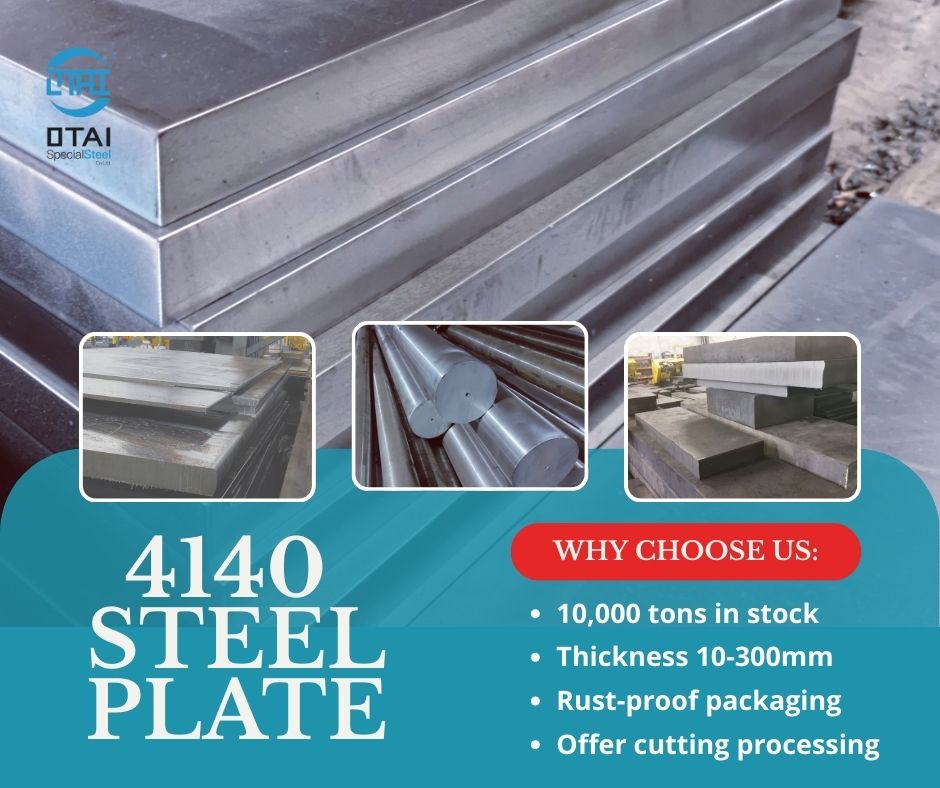
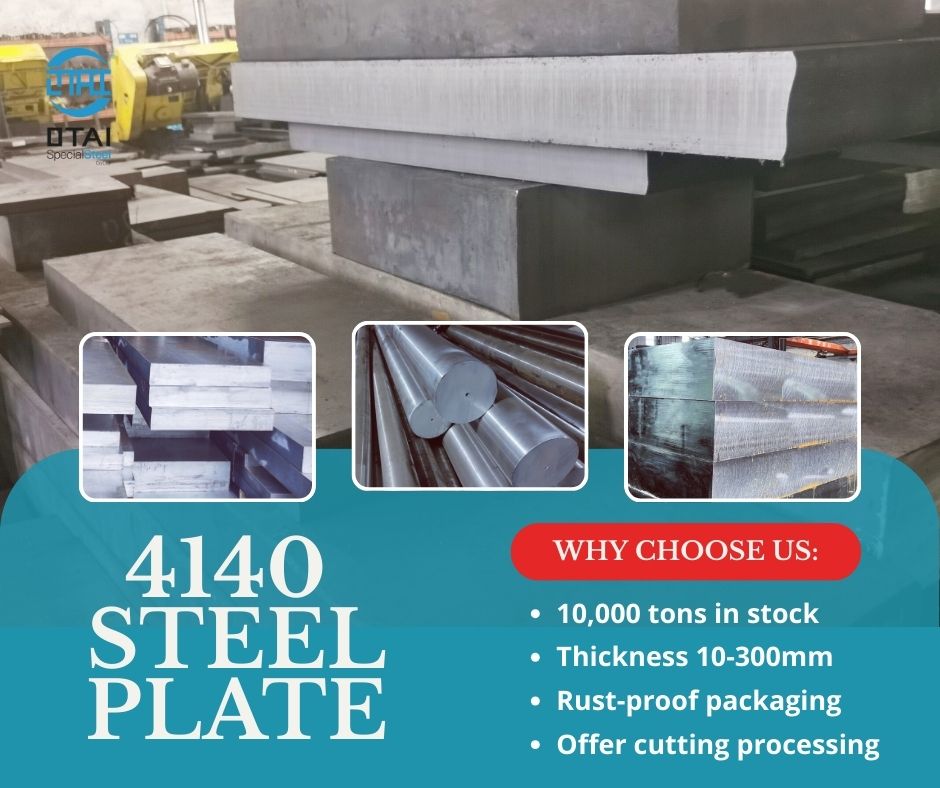
Does 4140 come in steel plate?

Does 4140 come in steel plateWhen selecting materials for high-stress applications, one of the common questions is, “Does 4140 come in steel plate?” The answer is yes! 4140 steel is available in multiple forms, including plates, bars, rods, and tubes, offering versatility for various industries. This article will discuss 4140 steel plate, its properties, uses, and how it benefits different applications.


🧪 What is 4140 Steel?

4140 steel is a chromium-molybdenum alloy steel recognized for its excellent strength, toughness, and wear resistance. The steel’s composition includes carbon (0.38% to 0.43%), chromium (0.80% to 1.10%), and molybdenum (0.15% to 0.25%), which work together to improve its mechanical properties. You can find 4140 steel in various forms like plates, bars, rods, and tubes, and manufacturers often use it in making gears, shafts, axles, and tooling.


🔍 Does 4140 Come in Plate?

Yes, 4140 steel is available in plate form, and it is one of the most popular forms for industrial applications. 4140 steel plate typically comes in thicknesses ranging from 1/4 inch to 6 inches, and you can also customize it to suit specific project needs.

Manufacturers often heat-treat or anneal 4140 steel plate to enhance its mechanical properties. This makes it ideal for high-stress components, heavy-duty equipment, and tool manufacturing.


🏗️ Common Applications of 4140 Steel Plate

4140 steel plate has a wide range of applications due to its strength, toughness, and wear resistance. Let’s take a look at the most common uses:

1. Automotive Industry

4140 steel plate is commonly used for manufacturing crankshafts, axles, drive shafts, and gears. Its high impact resistance and strength make it an ideal choice for performance parts in production vehicles and racing vehicles.

2. Aerospace Industry

The aerospace sector uses 4140 steel plate for parts like landing gear, aircraft structural components, and engine components. The material’s strength-to-weight ratio makes it ideal for lightweight yet durable parts.

3. Heavy Equipment

For heavy machinery such as excavators, presses, and machines, 4140 steel plate provides strength and resilience. Manufacturers use it to create parts that can endure harsh conditions, like molds, dies, and press plates.

4. Tool Manufacturing

Thanks to its wear resistance and machinability, 4140 steel plate is an excellent choice for producing molds, dies, and cutting tools. Industries like metalworking, plastic molding, and casting commonly use it.

5. Oil & Gas Industry

4140 steel plate serves as an essential material in the oil and gas industry, where it is used in drill rods, couplings, and valves. Its ability to withstand high pressure and extreme temperatures makes it perfect for these critical applications.


🧬 Properties of 4140 Steel Plate

4140 steel plate offers several key properties that make it stand out in various applications. Here are some of its essential properties:

Property 4140 Steel
Tensile Strength 95,000 – 110,000 PSI
Hardness 28-32 HRC (can increase with heat treatment)
Yield Strength 60,000 – 80,000 PSI
Elongation 20% (in 8 inches)
Machinability Good (after heat treatment)
Weldability Fair (requires preheating for thick sections)

🔧 How is 4140 Steel Processed?

You can process 4140 steel using standard machining techniques, but the plate may require specific tools, especially when hardened or heat-treated. Some common processing methods include:

  • Cutting: You can cut 4140 steel using plasma cutting, water jet cutting, or laser cutting.

  • Heat Treatment: 4140 steel often undergoes heat treatment (annealing, normalizing, or quenching) to enhance its hardness and strength.

  • Drilling & Milling: Machinists can drill, mill, and turn 4140 using conventional machining methods.

  • Welding: Welding 4140 steel is possible, but it may require preheating, especially for thick sections.


💰 Cost of 4140 Steel Plate

The cost of 4140 steel plate depends on several factors, including thickness, quantity, and any special processing requirements. While 4140 plate is highly durable and cost-effective, pricing can vary based on customization.

To determine an accurate price for 4140 plate, provide specifications such as:

  • Plate thickness

  • Desired hardness or heat treatment

  • Quantity needed

  • Custom cutting or processing services

You can obtain competitive pricing by contacting a trusted steel supplier for 4140 steel plate</strong> based on your project’s needs.


🏅 Why Choose Otai Special Steel for Your 4140 Steel Plate Needs?

At Otai Special Steel, we offer high-quality 4140 steel plates in various sizes and thicknesses. Whether you need annealed, normalized, or quenched plates, we can customize the product to meet your specific needs. We also provide custom cutting, heat treatment, and packaging services, along with global shipping to ensure fast delivery.

Here are a few reasons why you should choose Otai Special Steel:

Benefit Details
Extensive Inventory We keep a large stock of 4140 steel plates in various sizes and thicknesses.
Custom Solutions We offer custom cutting and heat treatment services to fit your requirements.
Global Shipping We ensure timely delivery of 4140 steel plates worldwide.
Quality Assurance Our 4140 steel undergoes strict testing to meet industry standards.

FAQ

Q1: Does 4140 steel come in different grades?
A1: Yes, 4140 steel is available in different grades, such as 4140 annealed, 4140 normalized, and 4140 quenched and tempered, depending on the strength and hardness required for your project.

Q2: Can I machine 4140 steel easily?
A2: ata-end=”6966″>4140 steel plate</strong> is machinable, especially in its annealed condition. However, if it’s heat-treated, it may require more specialized tools.

Q3: How does 4140 compare to other alloy steels?
A3: 4140 steel offers a great balance of strength, toughness, and wear resistance at a lower cost compared to other alloy steels like 4340 or 1045.

0 0 Continue Reading →

Reason for Using Induction-Hardened 4140 Steel

Reason for Using Induction-Hardened 4140 SteelReason for Using Induction-Hardened 4140 Steel

4140 steel is a versatile alloy steel widely used in various industries, including automotive, aerospace, and machinery. Known for its excellent strength, toughness, and hardness, 4140 steel undergoes several heat treatment processes to enhance its properties. One of the most common processes used to improve the surface hardness of 4140 steel is induction hardening.

In this article, we’ll explore what induction hardening is, how it works with 4140 steel, and the benefits it brings to industrial applications.


🧪 What is Induction Hardening?

Induction hardening heats targeted areas of a steel part instantly with electromagnetic induction, then quenches the hot zone to forge a hard martensitic shell. The shell out-hardens the core, armoring the surface with superior wear, fatigue, and impact resistance.
Manufacturers choose induction hardening for shafts, gears, bearings, and crankshafts that must survive heavy stress, abrasion, and cyclic loading while keeping a tough, shock-absorbing core.

🏗️ How Does Induction Hardening Work with 4140 Steel?

4140 steel is a low-alloy, medium-carbon steel that contains chromium, molybdenum, and manganese. These elements enhance its hardenability, making it an ideal candidate for induction hardening. When subjected to this process, 4140 steel can achieve a hard surface with a tough core.

Steps in the Induction Hardening Process for 4140 Steel:

  1. Preheating: The part is first preheated to a specific temperature to reduce thermal stress during the induction process. This step helps avoid distortion and ensures more uniform heating.

  2. Induction Heating: A high-frequency induction coil is placed around the area to be hardened. The coil generates an electromagnetic field, which induces a current in the 4140 steel, causing it to heat up rapidly. The heating is highly localized, allowing precise control over which areas of the part are hardened.

  3. Quenching: Once the desired temperature is reached (typically between 850-950°C for 4140 steel), the heated part is quickly quenched in water, oil, or polymer solutions. The rapid cooling causes the steel to undergo a phase transformation, forming a martensitic structure that is hard and wear-resistant.

  4. Tempering (Optional): In some cases, the part may undergo tempering after hardening. This step involves reheating the part to a lower temperature (around 200-300°C) to relieve internal stresses and reduce brittleness while maintaining the hardness.


🏅 Benefits of Induction Hardening for 4140 Steel

Induction hardening provides several advantages to 4140 steel, particularly for parts that require high surface hardness while maintaining strength and toughness in the core. Some of the key benefits include:

✔️ Improved Surface Hardness

The primary benefit of induction hardening is the significant increase in surface hardness. 4140 steel can achieve hardness levels of 50-60 HRC on the surface, making it highly resistant to abrasion and wear.

✔️ Increased Wear Resistance

The hard martensitic surface produced by induction hardening significantly improves wear resistance, which is crucial for components subjected to friction, such as gears and shafts. This wear resistance extends the lifespan of the parts and reduces maintenance costs.

✔️ Enhanced Fatigue Strength

Induction hardening improves the fatigue strength of 4140 steel by creating a hard surface that resists deformation under cyclic loads. This makes induction-hardened 4140 steel ideal for parts like crankshafts, axles, and pins that undergo repeated loading and unloading cycles.

✔️ Localized Hardening

Unlike conventional heat treatment methods, induction hardening allows for localized hardening. This means you can harden specific areas of the part, such as shafts or gears, while keeping the core relatively soft and tough. This combination of a hard surface and tough core makes 4140 steel suitable for high-performance applications.

✔️ Minimal Distortion

Because induction hardening involves rapid and localized heating, it causes minimal distortion compared to other heat treatment processes. This makes it an ideal choice for precision components where maintaining the part’s shape is crucial.


🏗️ Applications of Induction-Hardened 4140 Steel

Induction-hardened 4140 steel is used in a wide variety of industries, thanks to its superior wear resistance, strength, and fatigue resistance. Some common applications include:

Application Reason for Using Induction-Hardened 4140 Steel
Gears High wear resistance and strength for components subjected to friction and stress.
Shafts Tough core and hard surface for improved fatigue strength and wear resistance.
Crankshafts Excellent fatigue resistance to handle dynamic and repetitive loads.
Bearings Hard, wear-resistant surface that ensures long operational life in high-stress applications.
Pins and Bushings Wear resistance and reduced maintenance due to hard surface.

These applications demonstrate the versatility of induction-hardened 4140 steel across a range of industries where durability and performance are key.


📊 Hardness Comparison of Induction-Hardened 4140 Steel vs Other Steels

To better understand how 4140 steel compares to other materials, here’s a table showing the hardness levels of induction-hardened steel grades:

Steel Grade Heat Treatment Surface Hardness (HRC) Applications
4140 Induction Hardened 50-60 HRC Gears, shafts, crankshafts, bearings
AISI 8620 Induction Hardened 50-55 HRC Automotive components, gears, shafts
AISI 1045 Induction Hardened 45-55 HRC General machinery parts, shafts
AISI 4145 Induction Hardened 55-60 HRC High-performance components, aerospace

As shown, 4140 steel provides excellent hardness after induction hardening, making it suitable for high-stress, high-wear applications.


🏅 Why Choose Otai Special Steel for Induction-Hardened 4140 Steel?

At Otai Special Steel, we provide high-quality 4140 steel that undergoes precise induction hardening to meet your application needs. Here’s why you should choose us:

Feature Details
Premium Quality We offer 4140 steel with excellent hardness and durability.
Customized Services We provide cutting, heat treatment, and machining services to meet your specifications.
Global Delivery We ensure timely worldwide delivery to support your projects.
Competitive Pricing Get cost-effective solutions without compromising on quality.

We guarantee that your induction-hardened 4140 steel will meet your specific requirements for strength, hardness, and durability.


FAQ: Frequently Asked Questions

Q1: What is the typical surface hardness of 4140 steel after induction hardening?
A1: The surface hardness of induction-hardened 4140 steel typically ranges between 50-60 HRC, making it highly resistant to wear and abrasion.

Q2: Can induction hardening be applied to other steel grades?
A2: Induction hardening treats many steel grades, yet 4140’s alloy chemistry and high hardenability let it respond best, delivering superior case hardness and core toughness.

Q3: What are the main benefits of using induction hardening over other heat treatments?
A3: Induction hardening offers localized heating, minimal distortion, and the ability to achieve high surface hardness without compromising the toughness of the core, making it ideal for high-performance parts.
0 0 Continue Reading →