Skip to Content

Blog Archives

4140 Prehardened Flat Stock: Properties, Applications, and Advantages

4140 Prehardened Flat Stock: Properties, Applications, and Advantages4140 Prehardened Flat Stock: Properties, Applications, and Advantages

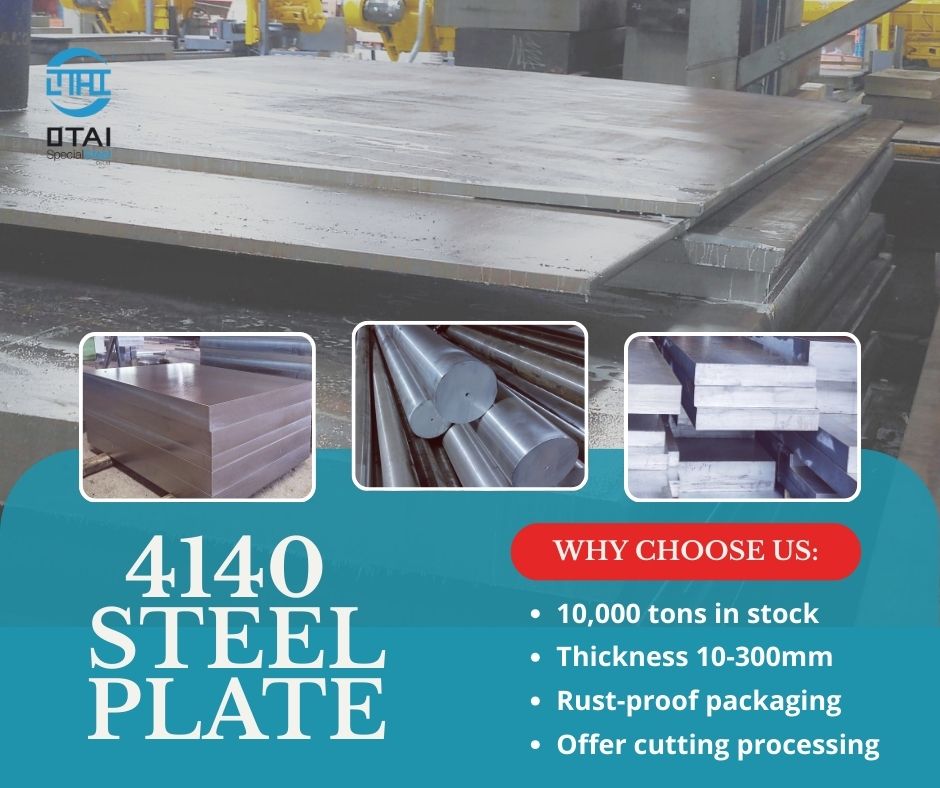
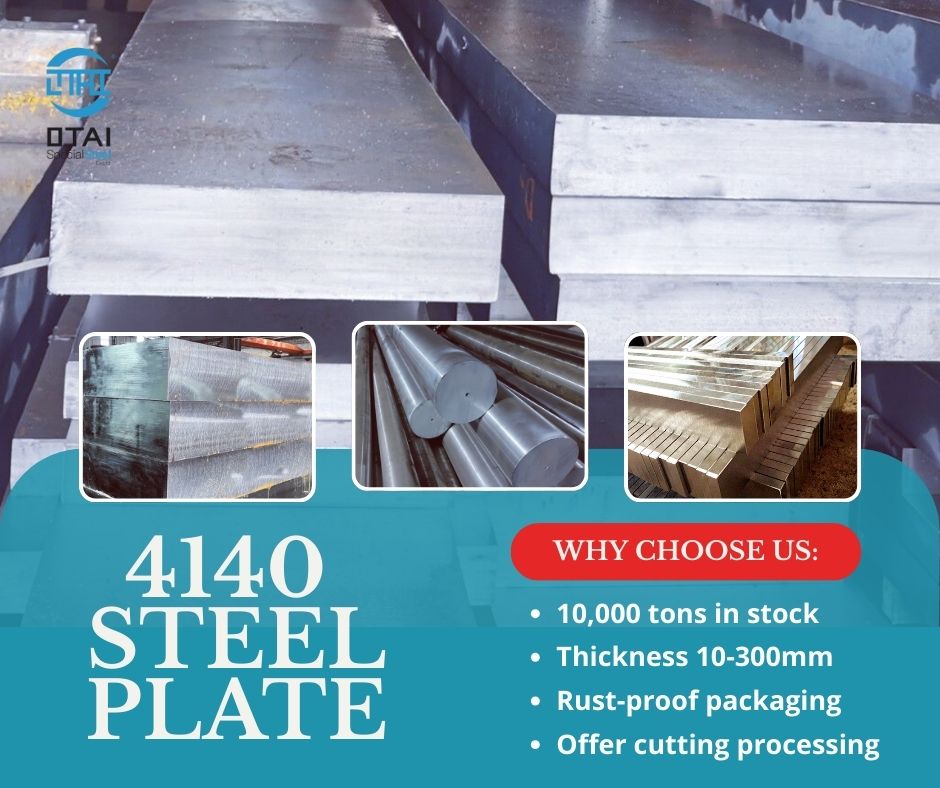
4140 prehardened flat stock is a versatile alloy steel that has undergone heat treatment to achieve a specific hardness. This prehardened steel offers strength, wear resistance, and toughness, making it ideal for various industrial applications. Since it arrives pre-hardened, it requires no additional heat treatment, saving time and cost in manufacturing.

In this article, we will explore the properties, advantages, and applications of 4140 prehardened flat stock and explain why it is a preferred material in many industries.


🧪 What is 4140 Prehardened Flat Stock?

4140 prehardened flat stock is a chromium-molybdenum alloy steel that has undergone heat treatment to achieve a specific hardness. This steel is perfect for applications that demand high strength, wear resistance, and toughness but do not require further processing after receiving the material. 4140 prehardened flat stock allows manufacturers to bypass additional heat treatment steps, reducing production time and cost.

The steel’s composition includes:

  • 0.40% Carbon
  • 0.90% – 1.10% Chromium
  • 0.15% – 0.25% Molybdenum
  • Manganese and Silicon for additional strength and toughness

The material’s pre-established properties make it suitable for immediate use in machining, cutting, and forming operations.


🔧 Properties of 4140 Prehardened Flat Stock

4140 prehardened flat stock delivers excellent strength, toughness, and wear resistance, making it ideal for demanding applications in various industries. Its pre-hardened state makes it easy to work with and immediately ready for use.

Key Properties of 4140 Prehardened Flat Stock:

  1. High Strength
    4140 prehardened flat stock offers tensile strength ranging from 850 MPa to 1000 MPa. This strength makes it suitable for parts that must endure high mechanical loads, such as gears, shafts, and crankshafts.
  2. Wear Resistance
    Thanks to its chromium content, 4140 prehardened flat stock excels in wear resistance. The pre-hardened surface helps protect parts from abrasion and friction, making it ideal for tooling and machinery components.
  3. Toughness
    4140 prehardened flat stock offers superior toughness, which allows components to absorb shock and impact without cracking. This characteristic is essential for parts exposed to dynamic loading.
  4. Machinability
    Since 4140 prehardened flat stock is heat-treated before delivery, manufacturers can machine, cut, and form it right away. This reduces the time spent on machining processes and provides more precise parts.
  5. Fatigue Resistance
    The material’s fatigue resistance ensures long-term durability in parts exposed to cyclic loading, like crankshafts and axles.

🔥 Heat Treatment of 4140 Prehardened Flat Stock

While 4140 prehardened flat stock arrives with a specific hardness, manufacturers can still apply additional heat treatments to adjust specific properties. Some common heat treatments include quenching and tempering, carburizing, and induction hardening.

1. Quenching and Tempering

In quenching, the steel is heated to a high temperature and then rapidly cooled. This process increases the material’s hardness but also causes brittleness. Tempering follows, where the steel is reheated to a lower temperature and cooled slowly. This improves toughness while maintaining high strength and resilience.

2. Carburizing

Carburizing introduces carbon into the surface of the steel, increasing its surface hardness. The material is heated in a carbon-rich environment and then rapidly cooled. This process creates a hard outer layer while maintaining a tough core, ideal for parts like gears exposed to high friction.

3. Induction Hardening

Induction hardening uses high-frequency electrical currents to heat the surface of the steel, followed by rapid cooling. This increases the surface hardness while preserving the toughness of the core. It is commonly used for parts like shafts and gears that require a hardened surface but need to maintain a tough interior.


🏗️ Applications of 4140 Prehardened Flat Stock

The excellent strength, wear resistance, and toughness of 4140 prehardened flat stock make it ideal for a wide range of industrial applications. Some of the most common uses include:

1. Automotive Industry

4140 prehardened flat stock is used for parts like axles, gears, crankshafts, and suspension components. These parts need to withstand high mechanical stress and wear, and 4140 prehardened steel provides the necessary durability.

2. Aerospace Industry

In the aerospace industry, 4140 prehardened flat stock is used for landing gear components, fasteners, and wheels. These components need to endure high mechanical stress, and 4140 prehardened steel ensures reliable performance in these demanding applications.

3. Oil and Gas Industry

The oil and gas industry uses 4140 prehardened flat stock for components like drill rods, pumps, and valves. The material’s wear resistance and toughness make it ideal for parts exposed to extreme conditions.

4. Industrial Machinery

4140 prehardened flat stock is used in machine tools, bearings, spindles, and shafts. These parts need to maintain high strength and durability while operating under continuous stress, and 4140 prehardened steel ensures they perform optimally.

5. Heavy Equipment

In the heavy equipment sector, 4140 prehardened flat stock is used for pins, bushings, and crankshafts. These components require high impact resistance and long-term durability, and 4140 prehardened flat stock delivers both.


📊 Comparison with Other Steel Grades

Property 4140 Prehardened Flat Stock 1045 Steel 4340 Steel
Tensile Strength 850 – 1000 MPa 600 – 700 MPa 1000 – 1200 MPa
Yield Strength 650 – 850 MPa 400 – 500 MPa 900 – 1100 MPa
Wear Resistance High Moderate Very High
Toughness High Moderate Very High
Common Uses Gears, Shafts, Crankshafts General Purpose Parts Aerospace, Heavy-duty Parts

4140 prehardened flat stock provides a balance of strength, wear resistance, and toughness, making it a versatile option for industries that require reliable and durable materials. When compared to 1045 steel, 4140 prehardened flat stock performs better in terms of wear resistance and fatigue strength. In comparison to 4340 steel, 4140 prehardened flat stock offers better machinability and is more cost-effective for many applications.


🏅 Company Advantages – Otai Special Steel

At Otai Special Steel, we offer high-quality 4140 prehardened flat stock with consistent mechanical properties and precise dimensions. Our custom cutting, heat treatment, and engineering support services ensure that your project receives the best material for its specific needs.

Why Choose Otai Special Steel?

  • High-Quality Materials: We supply 4140 prehardened flat stock with reliable performance.
  • Customization: Custom cutting, heat treatment, and machining services available.
  • Fast Delivery: Our large inventory allows us to deliver orders on time.
  • Technical Support: Our experts assist in selecting the ideal material for your application.

Frequently Asked Questions (FAQ)

Q1: What is the hardness of 4140 prehardened flat stock?
A1: 4140 prehardened flat stock typically has a hardness between 28 HRC and 32 HRC.

Q2: Can 4140 prehardened flat stock be welded?
A2: Yes, 4140 prehardened flat stock can be welded, but it is recommended to preheat the material before welding to prevent cracking.

Q3: What industries use 4140 prehardened flat stock?
A3: 4140 prehardened flat stock is used in industries such as automotive, aerospace, oil and gas, and industrial machinery for parts like gears, crankshafts, and bearings.

Jack Tan


📧 jack@otaisteel.com

📱 WhatsApp: +8676923190193

0 0 Continue Reading →

4140 Steel Characteristics: Understanding its Strength and Versatility

4140 Steel Characteristics: Understanding its Strength and Versatility4140 Steel Characteristics: Understanding its Strength and Versatility

4140 steel is a versatile chromium-molybdenum alloy steel known for its strength, hardness, and toughness. With its excellent mechanical properties, it serves a wide range of industrial applications, from automotive to machinery. Understanding the key characteristics of 4140 steel helps engineers optimize its performance in critical applications requiring high strength, fatigue resistance, and durability.

In this article, we’ll explore the key characteristics of 4140 steel, how its composition affects performance, and the processes that enhance its properties. We’ll also discuss common applications and compare 4140 steel to other materials in terms of performance and cost.


🧪 What is 4140 Steel?

4140 steel is a medium-carbon, low-alloy steel containing chromium and molybdenum as its main alloying elements. These elements improve the steel’s hardenability, strength, and toughness. As a chromium-molybdenum (Cr-Mo) alloy, 4140 steel works well in applications demanding both high strength and wear resistance.

The composition typically includes:

  • 0.40% Carbon
  • 0.90% – 1.20% Chromium
  • 0.15% – 0.25% Molybdenum
  • Manganese and Silicon for improved strength and machinability

4140 steel excels in applications where strength and toughness are crucial, making it an ideal choice for parts under high-stress conditions.


🔧 Key Characteristics of 4140 Steel

4140 steel is widely known for its high strength, excellent toughness, and good machinability. Below, we outline the main characteristics of 4140 steel:

1. High Strength

The tensile strength of 4140 steel ranges from 850 MPa to 1000 MPa, making it ideal for parts that must endure high mechanical stress.

  • Yield Strength: Typically ranges from 650 MPa to 850 MPa
  • Tensile Strength: Typically ranges from 850 MPa to 1000 MPa

This high strength makes 4140 steel perfect for axles, shafts, and gears that need to withstand significant forces.

2. Excellent Toughness

4140 steel maintains high toughness, allowing it to absorb energy under impact loading without failing. It performs well under both static and dynamic loads, especially when exposed to frequent impacts.

  • Impact Toughness: Typically ranges from 35 J to 55 J at room temperature

This toughness makes 4140 steel suitable for machinery parts and automotive components exposed to frequent impacts.

3. Good Wear Resistance

The alloying elements in 4140 steel, such as chromium, provide it with good wear resistance. This feature is particularly valuable for gears, bearings, and other components subject to abrasive conditions.

  • Chromium significantly enhances its ability to resist wear, making it a top choice for components in rotating machinery.

4. Excellent Hardenability

Thanks to its chromium and molybdenum content, 4140 steel has excellent hardenability, allowing it to form a hardened surface layer while maintaining a ductile and tough core. This makes 4140 steel ideal for parts that need a hard surface and a tough interior.

  • After heat treatment, 4140 steel can achieve a surface hardness between 56 – 62 HRC.

5. Good Machinability and Weldability

Although 4140 steel is a relatively hard material, it machines well, especially in the annealed or normalized condition. It also has weldability, though careful control of the heat-affected zone is necessary to avoid cracking.

  • Welding Tip: Preheat the material before welding to reduce the risk of cracking.

This characteristic makes 4140 steel widely used in precision machining and industrial applications.


🛠️ Heat Treatment of 4140 Steel

One of the main advantages of 4140 steel is its ability to undergo heat treatment to adjust its strength, hardness, and toughness. Heat treatment processes include:

  1. Normalization: Refines the grain structure, improving uniformity and machining.
  2. Quenching and Tempering: Increases strength and hardness while balancing toughness.
  3. Induction Hardening: Hardens the surface without affecting the core.

Heat Treatment Process

Process Resulting Property Trend
Normalization Refines grain structure
Quenching High hardness (surface)
Tempering Balances toughness and strength
Induction Hardening Hardens surface, retains core toughness

4140 steel can be tailored to meet specific mechanical requirements through these processes.


🏗️ Applications of 4140 Steel

The versatile properties of 4140 steel make it suitable for many demanding applications. Some common uses include:

  • Automotive Industry: Axles, gears, drive shafts, crankshafts
  • Aerospace Industry: Landing gear components, wheels, fasteners
  • Industrial Machinery: Machine tool components, shafts, drives
  • Oil & Gas Industry: Drill rods, tubing, valves
  • Heavy Equipment: Pins, bushings, crankshafts

Each of these applications takes advantage of 4140 steel’s strength, toughness, and wear resistance, ensuring long-lasting and reliable performance.


📊 Comparison of 4140 Steel with Other Materials

Property 4140 Steel 1045 Steel 4340 Steel
Tensile Strength 850 – 1000 MPa 600 – 700 MPa 1000 – 1200 MPa
Yield Strength 650 – 850 MPa 400 – 500 MPa 900 – 1100 MPa
Wear Resistance Good Moderate Excellent
Toughness High Moderate Very High
Common Uses Gears, Shafts, Crankshafts General Purpose Parts Aerospace, Heavy-duty Parts

As shown, 4140 steel strikes a balance between strength, toughness, and wear resistance, making it a versatile material. However, if maximum strength is required, 4340 steel may be a better choice.


🏅 Company Advantages – Otai Special Steel

At Otai Special Steel, we provide 4140 steel with consistent quality and performance. We ensure that every batch meets industry standards and specifications, whether for custom cutting, heat treatment, or material certification.

Why Choose Otai Special Steel?

  • High-Quality Materials: We supply 4140 steel that meets international standards.
  • Customization: Custom cutting, heat treatment, and precision machining to meet your needs.
  • Fast Delivery: With a large inventory and reliable supply chain, we deliver your order on time.
  • Technical Expertise: Our team offers engineering support to help you select the right materials for your project.

Frequently Asked Questions (FAQ)

Q1: Can 4140 steel be used for welding?
A1: Yes, 4140 steel is weldable, but the heat-affected zone must be carefully controlled to avoid cracking.

Q2: How does 4140 steel compare to 4340 steel?
A2: While 4340 steel offers higher tensile strength, 4140 steel provides a better balance of strength and toughness, making it ideal for many industrial applications.

Q3: What industries use 4140 steel?
A3: 4140 steel is used in automotive, aerospace, industrial machinery, and oil and gas industries for components like gears, shafts, and drivetrain parts.


Jack Tan


📧 jack@otaisteel.com

📱 WhatsApp: +8676923190193

0 0 Continue Reading →

4140 Steel Chemical Passivation: Enhancing Durability

4140 Steel Chemical Passivation: Enhancing Durability4140 Steel Chemical Passivation: Enhancing Durability

In industrial applications, steel components often face harsh environments, where corrosion and wear can lead to premature failure. For 4140 steel, a chromium-molybdenum alloy steel, chemical passivation serves as a crucial process to improve its resistance to corrosion and extend its service life. This treatment forms a thin oxide layer on the surface of the steel, which acts as a protective barrier against environmental factors.

This article will dive into the chemical passivation process, its benefits for 4140 steel, and how it enhances its performance, particularly in demanding industrial applications. We will also explore the steps involved, potential issues, and the key factors to consider when passivating 4140 steel.


🧪 What is Chemical Passivation?

Chemical passivation refers to a process that improves the corrosion resistance of metals by creating a protective oxide layer on their surface. The passivation process involves treating the steel with acidic solutions (such as nitric acid) to remove contaminants, oxides, and iron particles that may lead to corrosion. In the case of 4140 steel, passivation increases its resistance to oxidation and environmental damage, making it more suitable for use in aggressive environments.

While corrosion resistance is not typically a major concern for 4140 steel in normal conditions, the passivation process is particularly beneficial in applications exposed to harsh chemicals, high humidity, or elevated temperatures.


🔧 The Chemical Passivation Process for 4140 Steel

Passivating 4140 steel involves several steps to ensure an effective, durable oxide layer forms. The process typically includes:

  1. Surface Preparation:
    Before passivation, it is crucial to clean the steel surface to remove any contaminants such as oils, dirt, and rust. This step can involve abrasive cleaning methods like grinding or blasting.

  2. Acidic Solution Treatment:
    The steel is immersed in a nitric acid bath or similar acidic solution. The acid reacts with the steel’s surface, removing free iron particles and forming a thin oxide layer (typically chromium oxide).

  3. Rinsing and Drying:
    After treatment, the steel is rinsed to remove residual acid, then dried to prevent further oxidation.

  4. Inspection and Testing:
    Finally, the passivated surface is inspected for uniformity and effectiveness. Some common tests include water break tests and contact angle measurements to evaluate the protective layer’s quality.

This process improves the overall durability of 4140 steel, making it more resistant to environmental stressors like humidity, chlorides, and heat.


💪 Benefits of Passivation for 4140 Steel

Chemical passivation of 4140 steel offers several key benefits that can significantly enhance its performance, especially in demanding applications.

1. Improved Corrosion Resistance

Passivating 4140 steel increases its resistance to oxidation and corrosion, especially in environments that involve exposure to moisture, salt, or chemicals. The protective oxide layer prevents rust from forming, even under extreme environmental conditions.

2. Increased Durability

By preventing corrosion, passivation extends the service life of components. This is particularly useful for parts exposed to cyclic stress, fatigue, or environments where other metals would degrade quickly.

3. Enhanced Cleanliness and Surface Quality

The passivation process also improves the cleanliness of the 4140 steel surface by removing iron contaminants. A cleaner surface improves paint adhesion, coating performance, and overall aesthetic appeal of the steel.

4. Reduction in Wear and Tear

The passivated surface reduces friction and wear on parts that experience sliding contact or abrasion. This leads to longer-lasting components, especially in high-stress applications like gears and shafts.


🛠️ Applications of Passivated 4140 Steel

After passivation, 4140 steel becomes even more versatile and is suited for applications that demand both strength and corrosion resistance. Some common uses of passivated 4140 steel include:

1. Automotive and Aerospace Industries

  • In automotive and aerospace applications, passivated 4140 steel is used for gears, drive shafts, transmission parts, and suspension components. These parts are often exposed to corrosive elements such as brake fluids, road salts, and airborne contaminants. Passivating 4140 helps improve the reliability and service life of these components.

2. Oil and Gas Industry

  • 4140 steel is used in oilfield equipment, drill rods, pumps, and valves. These components are regularly exposed to high pressures, corrosive chemicals, and extreme temperatures. The passivation process ensures they remain effective and corrosion-resistant over long periods of operation.

3. Heavy Equipment and Machinery

  • Heavy-duty machinery parts such as gears, bearings, crankshafts, and axles benefit from passivated 4140 steel. These components need high strength and resistance to wear while maintaining performance in challenging environments, where regular steel would corrode or wear out too quickly.

4. Industrial Tools and Molds

  • Industrial tools, cutting tools, and molds made from 4140 steel are frequently passivated to enhance their resistance to chemicals and abrasion. This treatment helps increase the longevity of molds and tooling, which are essential in high-precision manufacturing.


🏗️ Comparison of Passivated 4140 Steel with Non-Passivated 4140 Steel

Property Passivated 4140 Steel Non-Passivated 4140 Steel
Corrosion Resistance High Moderate
Durability Extended Limited
Surface Quality Clean and smooth May have contaminants
Wear Resistance Higher Standard
Cost Higher due to additional process Lower

As demonstrated in the table, passivated 4140 steel outperforms non-passivated 4140 steel in several important areas, including corrosion resistance, wear resistance, and surface quality. While the passivation process adds cost, the extended service life and improved performance justify the investment in many industrial applications.


🏅 Company Advantages – Otai Special Steel

At Otai Special Steel, we provide high-quality 4140 steel with expert chemical passivation services to meet your specific requirements. We ensure that each batch of passivated steel meets industry standards, providing you with reliable and durable materials.

Why Choose Otai Special Steel?

  • High-quality materials: We supply 4140 steel with consistent quality for a wide range of applications.

  • Customization: Our services include custom cutting, chemical passivation, and heat treatment to meet your unique needs.

  • Competitive pricing: We offer cost-effective solutions without compromising on quality.

  • Fast delivery: Our efficient inventory management ensures timely delivery to meet your deadlines.


Frequently Asked Questions (FAQ)

Q1: Why is chemical passivation important for 4140 steel?
A1: Chemical passivation improves corrosion resistance, enhances surface cleanliness, and prolongs the service life of 4140 steel, especially in aggressive environments.

Q2: Does passivation affect the strength of 4140 steel?
A2: No, the passivation process does not affect the strength of 4140 steel. It primarily enhances corrosion resistance and wear resistance.

Q3: How does chemical passivation improve wear resistance?
A3: The passivation process creates a smooth, uniform oxide layer that reduces surface friction, leading to improved wear resistance over time.

0 0 Continue Reading →

Microstructure of 4140 alloy Steel: Key Insights for Strength and Durability

Microstructure of 4140 alloy Steel: Key Insights for Strength and DurabilityMicrostructure of 4140 alloy Steel: Key Insights for Strength and Durability

The microstructure of 4140 steel plays a crucial role in determining its mechanical properties, such as strength, toughness, and resistance to wear. Understanding how the microstructure of this alloy develops and how it affects the steel’s performance can help manufacturers and engineers optimize its use for various applications. In this article, we will explore the microstructure of 4140 steel, how it contributes to its properties, and why it’s a popular choice in industries requiring high-performance materials.


🏗️ What is 4140 Steel?

4140 steel is a medium-carbon alloy steel containing chromium and molybdenum. These alloying elements enhance the steel’s properties, particularly in terms of hardness, strength, and resistance to wear and fatigue. Commonly used in the automotive, aerospace, and heavy machinery industries, 4140 steel offers a combination of good tensile strength, toughness, and fatigue resistance, which makes it suitable for high-stress applications.


🔬 The Microstructure of 4140 Steel

The microstructure of a material refers to the arrangement of its internal structures, such as grains, phases, and boundaries, on a microscopic scale. For 4140 steel, its microstructure plays a significant role in determining its mechanical properties.

At the core of 4140 steel’s microstructure are three main phases:

1. Ferrite

  • Ferrite is the body-centered cubic (BCC) form of iron that dominates in low-carbon steels. In 4140 steel, ferrite is the softer phase and is responsible for the steel’s ductility and toughness.

  • It is typically found along the grain boundaries and can influence the strength of the material.

2. Pearlite

  • Pearlite is a mixture of ferrite and cementite (Fe₃C), and it forms as 4140 steel cools from a high temperature. This phase is essential for providing the steel with its tensile strength and hardness.

  • The alternating layers of ferrite and cementite in pearlite contribute to the steel’s strength, making it suitable for applications requiring good wear resistance.

3. Martensite

  • Martensite forms when 4140 steel is rapidly cooled (quenched) from the austenitic phase, resulting in a much harder, stronger phase.

  • Martensitic structures provide significant strength, hardness, and wear resistance, though they can make the steel more brittle.

  • Depending on the cooling rate and tempering process, the amount of martensite in the steel can vary, directly influencing its overall properties.

4. Cementite

  • Cementite (Fe₃C) is an iron carbide phase that contributes to the hardness and wear resistance of 4140 steel. The distribution of cementite within the microstructure influences the steel’s strength.

  • In 4140 steel, cementite is often part of the pearlite structure and can provide additional hardness, especially when present in higher amounts.


🔧 How Heat Treatment Affects the Microstructure of 4140 Steel

Heat treatment is critical for modifying the microstructure of 4140 steel and, consequently, its mechanical properties. Different heat treatment processes can alter the proportion of ferrite, pearlite, martensite, and cementite within the material. Here are some common heat treatments used with 4140 steel:

1. Annealing

  • Annealing is a heat treatment process where 4140 steel is heated to a specific temperature and then slowly cooled. This process helps to relieve internal stresses and soften the steel.

  • Annealed 4140 steel typically has a higher proportion of ferrite and pearlite, making it more ductile and easier to machine.

2. Quenching and Tempering

  • Quenching involves heating the steel to its austenitic range and then rapidly cooling it, usually in water or oil, to form a martensitic structure. After quenching, tempering is performed to reduce brittleness by reheating the steel to a lower temperature.

  • The result is a 4140 steel that has a higher hardness, strength, and wear resistance, thanks to the formation of martensite in the microstructure.

3. Normalizing

  • Normalizing involves heating 4140 steel to a temperature above its critical range and then air-cooling it. This process refines the grain structure and makes the steel more uniform, improving its mechanical properties like strength and toughness.


💡 How the Microstructure Affects the Properties of 4140 Steel

The microstructure directly influences the physical properties of 4140 steel. Here’s how each phase affects the material’s overall performance:

1. Strength and Hardness

  • The amount of martensite and cementite in the microstructure increases the hardness and tensile strength of the steel. As 4140 steel cools rapidly during quenching, the formation of martensite significantly increases its hardness, making it suitable for high-stress applications.

2. Toughness and Ductility

  • The ferrite phase enhances the toughness and ductility of the steel. While martensite increases strength, it can make the steel more brittle. Therefore, the presence of ferrite is crucial for balancing strength with toughness.

3. Wear Resistance

  • The pearlite and cementite phases contribute to the wear resistance of 4140 steel, making it a preferred choice for components exposed to abrasive forces, such as gears, shafts, and axles.


📊 Microstructure and Properties Comparison

Here is a quick comparison of the microstructure and properties of 4140 steel compared to other common steels:

Material Primary Microstructure Hardness Tensile Strength Wear Resistance Applications
4140 Steel Martensite, Pearlite, Cementite High 655-1,000 MPa High Automotive, aerospace, industrial machinery
1045 Steel Pearlite, Ferrite Medium 600-800 MPa Medium General engineering, manufacturing
4142 Steel Martensite, Pearlite High 700-950 MPa High Heavy machinery, automotive
AISI 4340 Martensite, Pearlite Very High 850-1,100 MPa Very High Aerospace, military

🏆 Why Choose Otai Special Steel for Your 4140 Steel Needs?

At Otai Special Steel, we specialize in providing top-quality 4140 steel with optimized heat treatments to achieve the ideal microstructure for your specific applications. Our 4140 steel products are available in various forms, including plates, bars, and rods, and can be customized to meet your exact requirements.

Advantages of Working with Otai Special Steel:

  • High-Quality Materials: We ensure that our 4140 steel meets the highest standards of quality, performance, and reliability.

  • Customized Heat Treatments: We offer customized heat treatments to tailor the microstructure of 4140 steel for your specific needs.

  • Competitive Pricing: Our 4140 steel products are offered at competitive prices, ensuring excellent value without compromising on quality.

  • Fast Delivery: We maintain a large inventory and efficient logistics, ensuring timely deliveries to meet your project deadlines.


Frequently Asked Questions (FAQ)

Q1: What is the typical microstructure of 4140 steel?

  • A1: The typical microstructure of 4140 steel consists of martensite, pearlite, and cementite, which contribute to its strength, hardness, and wear resistance.

Q2: How does heat treatment affect the microstructure of 4140 steel?

  • A2: Heat treatment processes like quenching and tempering alter the microstructure of 4140 steel, increasing its hardness and strength while improving its toughness and ductility.

Q3: Can the microstructure of 4140 steel be customized?

  • A3: Yes, the microstructure of 4140 steel can be customized through various heat treatments to achieve specific properties like strength, toughness, and wear resistance, depending on the intended application.

0 0 Continue Reading →

4140 Steel’s Definition: An Overview of Its Composition and Properties

4140 Steel's Definition: An Overview of Its Composition and Properties4140 Steel’s Definition: An Overview of Its Composition and Properties

4140 steel is a medium-carbon alloy steel that stands out for its versatility, used across industries that demand high performance, such as automotive, aerospace, and heavy machinery. Known for its strength, durability, and resistance to wear, 4140 steel serves as an essential material for manufacturing components that must endure high stress, extreme temperatures, and abrasive conditions. In this article, we will define 4140 steel, explore its Definition, properties, and common applications, and highlight why it remains a popular choice for engineers and manufacturers.


🏗️ What is 4140 Steel?

4140 steel is an alloy steel that includes chromium (Cr) and molybdenum (Mo) as its key alloying elements. These elements enhance the steel’s strength, hardness, wear resistance, and toughness. The name 4140 refers to its composition:

  • Carbon (C): 0.38% – 0.43%

  • Manganese (Mn): 0.75% – 1.00%

  • Chromium (Cr): 0.80% – 1.10%

  • Molybdenum (Mo): 0.15% – 0.25%

This combination results in high tensile strength, good hardening ability, and excellent resistance to wear, making 4140 steel suitable for applications that require strength and durability.


🔧 Key Properties of 4140 Steel

The mechanical properties of 4140 steel make it one of the most reliable and widely used alloys. Here are the primary properties of 4140 steel:

1. Tensile Strength

  • Tensile strength indicates the material’s ability to resist forces that attempt to pull it apart. 4140 steel typically ranges from 655 to 1,000 MPa for tensile strength, making it highly resistant to tension and perfect for demanding applications in industries such as automotive and aerospace.

2. Yield Strength

  • Yield strength marks the point at which the material begins to deform plastically. 4140 steel maintains a yield strength ranging from 415 MPa to 650 MPa, enabling it to resist deformation under heavy loads, ideal for gears and shafts exposed to stress.

3. Hardness

  • 4140 steel offers good hardness, typically ranging from 28 to 50 HRC (Rockwell C scale). Heat treatments such as quenching and tempering increase its hardness, providing excellent wear resistance for components like bearings, tools, and machine parts.

4. Ductility and Toughness

  • Ductility describes the material’s ability to stretch or bend without breaking. 4140 steel features moderate ductility, which ensures that components like automotive suspension systems and machinery parts absorb shock and stress without cracking. It also boasts toughness, making it ideal for applications subject to sudden shocks.

5. Fatigue Strength

  • Fatigue strength refers to the material’s ability to withstand cyclic loading over time. 4140 steel offers excellent fatigue resistance, which makes it a solid choice for parts such as axles and crankshafts that experience repeated loading cycles.

6. Wear Resistance

  • The high carbon and alloy content in 4140 steel provide it with superior wear resistance, which is why it is often used in components that endure high friction and abrasive environments, such as gears and drivetrain parts.


🔨 How is 4140 Steel Used?

Due to its outstanding mechanical properties, 4140 steel has a wide range of industrial applications. Here are some of the most common uses for 4140 steel:

1. Automotive Industry

  • 4140 steel is used in automotive parts like crankshafts, gears, axles, and suspension components that need to withstand high levels of mechanical stress. Its high strength and fatigue resistance ensure that these components perform reliably even in extreme conditions.

2. Industrial Machinery

  • 4140 steel is found in industrial machinery for components such as shafts, bearings, and pumps. Its wear resistance and toughness make it ideal for parts that must endure continuous friction and high mechanical loads.

3. Oil and Gas Industry

  • The oil and gas sector uses 4140 steel for demanding components like drill pipes, valves, and flanges. The steel’s ability to endure harsh environments and high pressures makes it a reliable material for these applications.

4. Tooling and Dies

  • 4140 steel is widely used in the production of tooling and dies due to its exceptional hardness and wear resistance, making it suitable for use in high-production environments where tools must perform consistently under pressure.


⚙️ Heat Treatment of 4140 Steel

One of the key advantages of 4140 steel is its ability to undergo various heat treatments to enhance its mechanical properties. Heat treatments like quenching, tempering, and carburizing allow 4140 steel to be customized for specific applications.

1. Quenching and Tempering

  • Quenching involves heating 4140 steel to a high temperature and rapidly cooling it, forming martensite, a structure that increases strength and hardness. After quenching, the steel undergoes tempering, which improves toughness and reduces brittleness.

2. Carburizing

  • Carburizing introduces additional carbon to the surface of 4140 steel, creating a hard surface layer while keeping the core of the material ductile and tough. This process is perfect for parts like gears and sprockets that experience high levels of friction.

3. Normalizing

  • Normalizing involves heating 4140 steel to a temperature above its critical range and cooling it in air. This process refines the grain structure and improves the steel’s overall strength and toughness.


📊 Comparison of 4140 Steel with Other Alloys

To help you understand how 4140 steel compares to other alloys, here is a chart comparing tensile strength, yield strength, and hardness:

Material Tensile Strength (MPa) Yield Strength (MPa) Hardness (HRC) Applications
4140 Steel 655–1,000 415–650 28–50 Automotive, industrial machinery, tools
1045 Steel 600–800 415–500 18–28 General engineering, shafts
4340 Steel 1,000–1,200 850–1,050 40–60 Aerospace, military, heavy machinery
8620 Steel 600–850 400–550 20–30 Gears, automotive components
AISI 52100 1,000–1,200 600–800 60–65 Bearings, high-performance components

🏆 Why Choose Otai Special Steel for Your 4140 Steel Needs?

At Otai Special Steel, we specialize in providing high-quality 4140 steel with customizable heat treatment options to meet your specific needs. Our precision cutting, heat treatment, and packaging services ensure the steel performs optimally for your application.

Advantages of Working with Otai Special Steel:

  • Premium Materials: We offer only the highest-quality 4140 steel that meets international standards for performance and reliability.

  • Custom Solutions: We provide custom cutting, heat treatment, and machining to meet your exact specifications.

  • Competitive Pricing: Our 4140 steel products offer excellent value at competitive prices without compromising quality.

  • Fast Delivery: With an extensive inventory, we guarantee fast and reliable delivery to meet your project deadlines.


Frequently Asked Questions (FAQ)

Q1: What is 4140 steel best used for?

  • A1: 4140 steel is best used for automotive, industrial, and aerospace applications such as gears, shafts, bearings, and tooling, due to its high strength, wear resistance, and toughness.

Q2: How does heat treatment affect 4140 steel?

  • A2: Heat treatments like quenching and tempering significantly improve 4140 steel’s hardness, strength, and toughness, making it ideal for demanding applications.

0 0 Continue Reading →

4140 Steel in SolidWorks: Designing for Strength and Precision

4140 Steel in SolidWorks: Designing for Strength and Precision4140 Steel in SolidWorks: Designing for Strength and Precision

When engineers select materials for high-stress applications, 1-inch 4140 steel rod stands out for its strength, versatility, and durability. SolidWorks, a leading 3D CAD software, allows designers to simulate how 4140 steel will perform in real-world conditions. In this article, we will explore how 4140 steel and SolidWorks come together to create high-performance designs for industries like automotive, aerospace, and machinery.


🔧 What is SolidWorks?

SolidWorks is a popular 3D CAD (Computer-Aided Design) software that engineers use to design parts and simulate their behavior under real-world conditions. Whether designing components for automotive, aerospace, or machinery, SolidWorks allows engineers to test the performance of their designs before manufacturing.

Key Features of SolidWorks:

  • 3D Modeling: Designers can create precise 3D models of parts and assemblies.

  • Simulation: The software simulates real-world conditions, including stress tests and motion analysis.

  • Interoperability: It works seamlessly with other CAD tools and manufacturing processes.

  • Sheet Metal Design: SolidWorks makes it easy to design complex metal parts, including those made from 4140 steel.


🏗️ What is 4140 Steel?

4140 steel is a chromium-molybdenum alloy that provides an excellent combination of strength, toughness, and wear resistance. This material is widely used for heavy-duty applications that demand both durability and performance. Its high tensile strength and impact resistance make it ideal for components exposed to high stress, such as gears, shafts, and axles.

Chemical Composition of 4140 Steel:

Element Percentage (%)
Carbon (C) 0.38–0.43
Manganese (Mn) 0.60–0.90
Chromium (Cr) 0.80–1.10
Molybdenum (Mo) 0.15–0.25
Silicon (Si) 0.20–0.35
Iron (Fe) Balance

🧪 Using 4140 Steel in SolidWorks Designs

Designing parts made from 4140 steel in SolidWorks offers engineers the ability to simulate how the material will behave under various loads. This allows them to optimize their designs for strength, toughness, and durability. Here’s how SolidWorks can help when working with 4140 steel:

  1. Material Library: SolidWorks has an extensive material library that includes 4140 steel. Engineers can select 4140 steel from the list, and the software will automatically apply its mechanical properties, such as tensile strength and hardness.

  2. Stress Analysis: Engineers can run finite element analysis (FEA) to simulate how the 4140 steel components will perform under real-world conditions. For example, SolidWorks Simulation can predict how a 1-inch 4140 steel rod will react to forces such as compression, torsion, and bending.

  3. Design Optimization: SolidWorks allows designers to refine the geometry and thickness of 4140 steel components to achieve the best possible balance of strength and material efficiency.

  4. Tolerance and Fit: With SolidWorks, engineers can ensure that 4140 steel parts will fit and function correctly in assemblies by checking tolerances and fits during the design process.


🔥 Heat Treatment and SolidWorks Simulation

Heat treatment is a crucial process for 4140 steel, as it can significantly affect the material’s strength, hardness, and toughness. SolidWorks Simulation can also model how heat treatment affects the steel’s performance, allowing engineers to understand how quenching, tempering, and normalizing will change its properties.

Common Heat Treatments for 4140 Steel:

  • Annealing: Softens the material, making it easier to machine and shape.

  • Tempering: Increases hardness while reducing brittleness.

  • Quenching: Enhances hardness and wear resistance by rapidly cooling the steel.

By simulating these treatments, SolidWorks helps engineers determine the optimal heat treatment process to enhance the material’s performance.


⚙️ Applications of 4140 Steel in SolidWorks Designs

Due to its excellent mechanical properties, 4140 steel is used in many high-performance applications. Here are some of the most common uses for 4140 steel in SolidWorks designs:

Application SolidWorks Design Role
Automotive Components Drive shafts, suspension arms
Aerospace Aircraft frames, landing gear
Heavy Machinery Machine components, shafts
Oil & Gas Pump shafts, drill bits
  • Automotive: Engineers use SolidWorks to design drive shafts and suspension arms from 4140 steel, ensuring they can withstand high-stress loads and heavy impacts.

  • Aerospace: In aerospace, 4140 steel is used for landing gear and aircraft frames, where both strength and lightweight are critical.

  • Heavy Machinery: SolidWorks is employed to design machine components and shafts made from 4140 steel for heavy-duty applications.

  • Oil & Gas: Engineers design drill bits and pump shafts using 4140 steel, ensuring high wear resistance and impact resistance.


🏗️ Why Choose Otai Special Steel for 4140 Steel?

At Otai Special Steel, we offer top-quality 4140 steel products for industries like automotive, aerospace, and machinery manufacturing. With over 20 years of experience in the steel industry, we guarantee reliable, high-performance materials tailored to your project requirements.

Company Advantages:

  • Top Quality: Our 4140 steel meets strict international standards and undergoes rigorous quality control.

  • Custom Services: We provide custom cutting, heat treatment, and machining services tailored to your specific needs.

  • Competitive Prices: Thanks to strong relationships with steel mills, we offer competitive pricing for 4140 steel products.

  • Fast Delivery: With a large inventory and efficient supply chain, we ensure timely delivery to meet your deadlines.


FAQ

Q1: What makes 4140 steel ideal for high-stress applications?

  • A1: 4140 steel offers a combination of high tensile strength, toughness, and wear resistance, making it perfect for applications subjected to high mechanical stress, such as gears and shafts.

Q2: Can SolidWorks help simulate how 4140 steel will behave under stress?

  • A2: Yes, SolidWorks allows engineers to simulate real-world stress conditions, enabling them to predict how 4140 steel will perform under various loads.

Q3: What is the effect of heat treatment on 4140 steel?

  • A3: Heat treatment, such as tempering or quenching, increases the hardness and strength of 4140 steel, making it suitable for applications that require durability and resistance to wear.

Q4: Can I get 1-inch 4140 steel rod from Otai Special Steel?

  • A4: Yes, we supply 1-inch 4140 steel rods in various grades and custom sizes to meet your project needs.

0 0 Continue Reading →

4140 alloy Steel Induction Hardening: A Comprehensive Guide

4140 alloy Steel Induction Hardening: A Comprehensive Guide4140 alloy Steel Induction Hardening: A Comprehensive Guide

4140 steel is a versatile alloy steel widely used in various industries, including automotive, aerospace, and machinery. Known for its excellent strength, toughness, and hardness, 4140 steel undergoes several heat treatment processes to enhance its properties. One of the most common processes used to improve the surface hardness of 4140 steel is induction hardening.

In this article, we’ll explore what induction hardening is, how it works with 4140 steel, and the benefits it brings to industrial applications.


🧪 What is Induction Hardening?

Induction hardening heats targeted areas of a steel part instantly with electromagnetic induction, then quenches the hot zone to forge a hard martensitic shell. The shell out-hardens the core, armoring the surface with superior wear, fatigue, and impact resistance.
Manufacturers choose induction hardening for shafts, gears, bearings, and crankshafts that must survive heavy stress, abrasion, and cyclic loading while keeping a tough, shock-absorbing core.

🏗️ How Does Induction Hardening Work with 4140 Steel?

4140 steel is a low-alloy, medium-carbon steel that contains chromium, molybdenum, and manganese. These elements enhance its hardenability, making it an ideal candidate for induction hardening. When subjected to this process, 4140 steel can achieve a hard surface with a tough core.

Steps in the Induction Hardening Process for 4140 Steel:

  1. Preheating: The part is first preheated to a specific temperature to reduce thermal stress during the induction process. This step helps avoid distortion and ensures more uniform heating.

  2. Induction Heating: A high-frequency induction coil is placed around the area to be hardened. The coil generates an electromagnetic field, which induces a current in the 4140 steel, causing it to heat up rapidly. The heating is highly localized, allowing precise control over which areas of the part are hardened.

  3. Quenching: Once the desired temperature is reached (typically between 850-950°C for 4140 steel), the heated part is quickly quenched in water, oil, or polymer solutions. The rapid cooling causes the steel to undergo a phase transformation, forming a martensitic structure that is hard and wear-resistant.

  4. Tempering (Optional): In some cases, the part may undergo tempering after hardening. This step involves reheating the part to a lower temperature (around 200-300°C) to relieve internal stresses and reduce brittleness while maintaining the hardness.


🏅 Benefits of Induction Hardening for 4140 Steel

Induction hardening provides several advantages to 4140 steel, particularly for parts that require high surface hardness while maintaining strength and toughness in the core. Some of the key benefits include:

✔️ Improved Surface Hardness

The primary benefit of induction hardening is the significant increase in surface hardness. 4140 steel can achieve hardness levels of 50-60 HRC on the surface, making it highly resistant to abrasion and wear.

✔️ Increased Wear Resistance

The hard martensitic surface produced by induction hardening significantly improves wear resistance, which is crucial for components subjected to friction, such as gears and shafts. This wear resistance extends the lifespan of the parts and reduces maintenance costs.

✔️ Enhanced Fatigue Strength

Induction hardening improves the fatigue strength of 4140 steel by creating a hard surface that resists deformation under cyclic loads. This makes induction-hardened 4140 steel ideal for parts like crankshafts, axles, and pins that undergo repeated loading and unloading cycles.

✔️ Localized Hardening

Unlike conventional heat treatment methods, induction hardening allows for localized hardening. This means you can harden specific areas of the part, such as shafts or gears, while keeping the core relatively soft and tough. This combination of a hard surface and tough core makes 4140 steel suitable for high-performance applications.

✔️ Minimal Distortion

Because induction hardening involves rapid and localized heating, it causes minimal distortion compared to other heat treatment processes. This makes it an ideal choice for precision components where maintaining the part’s shape is crucial.


🏗️ Applications of Induction-Hardened 4140 Steel

Induction-hardened 4140 steel is used in a wide variety of industries, thanks to its superior wear resistance, strength, and fatigue resistance. Some common applications include:

Application Reason for Using Induction-Hardened 4140 Steel
Gears High wear resistance and strength for components subjected to friction and stress.
Shafts Tough core and hard surface for improved fatigue strength and wear resistance.
Crankshafts Excellent fatigue resistance to handle dynamic and repetitive loads.
Bearings Hard, wear-resistant surface that ensures long operational life in high-stress applications.
Pins and Bushings Wear resistance and reduced maintenance due to hard surface.

These applications demonstrate the versatility of induction-hardened 4140 steel across a range of industries where durability and performance are key.


📊 Hardness Comparison of Induction-Hardened 4140 Steel vs Other Steels

To better understand how 4140 steel compares to other materials, here’s a table showing the hardness levels of induction-hardened steel grades:

Steel Grade Heat Treatment Surface Hardness (HRC) Applications
4140 Induction Hardened 50-60 HRC Gears, shafts, crankshafts, bearings
AISI 8620 Induction Hardened 50-55 HRC Automotive components, gears, shafts
AISI 1045 Induction Hardened 45-55 HRC General machinery parts, shafts
AISI 4145 Induction Hardened 55-60 HRC High-performance components, aerospace

As shown, 4140 steel provides excellent hardness after induction hardening, making it suitable for high-stress, high-wear applications.


🏅 Why Choose Otai Special Steel for Induction-Hardened 4140 Steel?

At Otai Special Steel, we provide high-quality 4140 steel that undergoes precise induction hardening to meet your application needs. Here’s why you should choose us:

Feature Details
Premium Quality We offer 4140 steel with excellent hardness and durability.
Customized Services We provide cutting, heat treatment, and machining services to meet your specifications.
Global Delivery We ensure timely worldwide delivery to support your projects.
Competitive Pricing Get cost-effective solutions without compromising on quality.

We guarantee that your induction-hardened 4140 steel will meet your specific requirements for strength, hardness, and durability.


FAQ: Frequently Asked Questions

Q1: What is the typical surface hardness of 4140 alloy steel after induction hardening?
A1: The surface hardness of induction-hardened 4140 steel typically ranges between 50-60 HRC, making it highly resistant to wear and abrasion.

Q2: Can induction hardening be applied to other steel grades?
A2: Induction hardening treats many steel grades, yet 4140’s alloy chemistry and high hardenability let it respond best, delivering superior case hardness and core toughness.

Q3: What are the main benefits of using induction hardening over other heat treatments?
A3: Induction hardening offers localized heating, minimal distortion, and the ability to achieve high surface hardness without compromising the toughness of the core, making it ideal for high-performance parts.

0 0 Continue Reading →

Similar steel to 4140: Which Steel Should You Choose?

Similar steel to 4140: Which Steel Should You Choose?Similar steel to 4140: Which Steel Should You Choose?

4140 steel is known for its excellent balance of strength, toughness, and wear resistance, making it a popular choice in industries like automotive, aerospace, and manufacturing. But what if you need a steel with similar properties but with slight variations to meet specific application requirements? In this article, we’ll explore some steel alloys similar to 4140 that provide comparable or enhanced properties, making them ideal alternatives for demanding industrial uses.


🌟 What Makes 4140 Steel Special?

Before diving into its alternatives, it’s essential to understand what makes 4140 steel unique. As an alloy steel, it contains:

Element Percentage
Carbon (C) 0.38–0.43%
Chromium (Cr) 0.80–1.10%
Molybdenum (Mo) 0.15–0.25%
Manganese (Mn) 0.60–0.90%
Silicon (Si) 0.20–0.35%

These elements provide 4140 steel with the ability to maintain high tensile strength, impact resistance, and fatigue resistance, even under harsh conditions. It also responds well to heat treatment, offering versatility in applications like gears, axles, crankshafts, and more.

But what if you need a steel that is almost as strong or offers specific enhancements, such as higher corrosion resistance or improved hardenability? Let’s look at some alternatives that share similar characteristics with 4140 steel.


🔧 1. 4340 Steel: A Stronger Alternative

4340 steel is often considered one of the closest alternatives to 4140 steel. It shares many of the same alloying elements but with higher nickel content, which increases its toughness and strength, especially at low temperatures.

Key Features of 4340 Steel:

Property 4340 Steel
Tensile Strength 1080–1200 MPa
Nickel Content 1.65–2.00%
Impact Toughness Very high
Fatigue Resistance Excellent

4340 steel is commonly used in industries where superior toughness and fatigue resistance are critical, such as aerospace, automotive, and marine applications.


🔨 2. 4130 Steel: A More Cost-Effective Choice

While 4130 steel is slightly lower in strength compared to 4140 steel, it is an affordable alternative that still offers good toughness, weldability, and machinability. The lower carbon content (0.28–0.33%) gives it better weldability and lower hardness, making it an excellent choice for projects where welding is necessary.

Key Features of 4130 Steel:

Property 4130 Steel
Tensile Strength 700–900 MPa
Carbon Content 0.28–0.33%
Weldability Excellent
Cost More affordable

4130 steel is widely used in aircraft frames, racing car chassis, and bicycles—where strength is important, but weldability and cost play a larger role.


⚙️ 3. 8620 Steel: Ideal for Gears and Shafts

8620 steel is another close alternative to 4140 steel, particularly when dealing with gears, shafts, and crankshafts that require high toughness and wear resistance. The key difference is in the nickel content, which provides improved hardenability.

Key Features of 8620 Steel:

Property 8620 Steel
Tensile Strength 950–1100 MPa
Nickel Content 0.30–0.60%
Case Hardening Excellent
Wear Resistance High

With its strong case-hardened surface, 8620 steel is a popular choice for manufacturing gears and machine components that undergo high levels of wear but do not require through-hardening.


🛠️ 4. 4150 Steel: A High-Strength Alternative

4150 steel is very similar to 4140 steel, but it contains slightly higher carbon content and can be alloyed with vanadium to further increase its strength and wear resistance. As a result, 4150 steel often has higher tensile strength and hardness, making it suitable for heavy-duty applications.

Key Features of 4150 Steel:

Property 4150 Steel
Tensile Strength 1000–1200 MPa
Carbon Content 0.48–0.53%
Vanadium Content 0.10–0.20%
Wear Resistance Very high

4150 steel is a great choice for military, construction, and oilfield equipment where extreme strength and wear resistance are required.


🌍 5. 4142 Steel: Strong and Tough

4142 steel is another strong alternative that offers higher strength and wear resistance compared to 4140 steel. It also has good machinability and weldability, making it ideal for applications requiring a combination of both strength and ease of processing.

Key Features of 4142 Steel:

Property 4142 Steel
Tensile Strength 1000–1100 MPa
Carbon Content 0.42–0.50%
Machinability Good
Weldability Good

4142 steel works well in automotive, manufacturing, and hydraulic components where a higher strength-to-weight ratio is needed.


🏗️ Which Steel Should You Choose?

When selecting a steel similar to 4140, the choice ultimately depends on your application’s specific needs:

Steel Key Strength Ideal Use Case
4340 Steel Higher toughness and fatigue resistance Aerospace, automotive, heavy-duty machinery
4130 Steel Lower strength, better weldability Aircraft frames, racing car chassis, bicycles
8620 Steel Excellent case hardening properties Gears, shafts, pistons
4150 Steel Higher strength and wear resistance Military vehicles, construction, oilfield equipment
4142 Steel Strong and tough with good machinability Automotive, hydraulic components

🏆 Why Choose Otai Special Steel for Your Steel Needs?

At Otai Special Steel, we specialize in providing high-quality alloy steels like 4140 and its alternatives. Here’s why you should consider working with us:

  • Large Inventory: We maintain a large stock of 4140 steel and similar alloys, ready to meet your specific requirements.

  • Customization: We offer cutting, heat treatment, and surface finishing services to ensure our steel meets your exact specifications.

  • Quality Assurance: Every product undergoes strict quality testing, ensuring superior performance and durability.

  • Global Reach: With experience supplying top-quality steel globally, we provide reliable materials for demanding applications.


FAQ: Common Questions About Steel Similar to 4140

Q1: What is the main difference between 4140 steel and 4340 steel?
A1: The main difference is that 4340 steel contains higher nickel content, which enhances toughness and fatigue resistance, making it ideal for more demanding applications like aerospace.

Q2: Is 4130 steel a good substitute for 4140 steel?
A2: 4130 steel is a lower-strength alternative, but it offers better weldability and is more cost-effective, making it ideal for lighter-duty applications.

Q3: Can 8620 steel be used for applications requiring high wear resistance?
A3: Yes, 8620 steel offers excellent case-hardening properties, making it a great choice for gears and shafts that need to withstand wear without sacrificing toughness.

0 0 Continue Reading →

Low Alloy 4140 Steel – Properties and Engineering Applications

Low Alloy 4140 Steel – Properties and Engineering Applications

In mechanical engineering and industrial manufacturing, material selection often determines whether a component achieves long service life or fails prematurely. Among widely used engineering steels, low alloy 4140 steel occupies a unique position. It combines solid strength, good toughness, and reliable heat treatment response without excessive alloy content.

Instead of focusing on extreme hardness or ultra-high tensile strength, low alloy 4140 steel delivers balanced mechanical performance. Therefore, engineers frequently select it for shafts, gears, bolts, and structural components that operate under combined loads. Moreover, its availability in plate, bar, and forging forms makes it adaptable across industries.

This article explores low alloy 4140 steel from a practical engineering perspective, covering its alloy design, mechanical behavior, heat treatment response, and real-world applications.


1. What Is Low Alloy 4140 Steel?

Low alloy 4140 steel is a chromium-molybdenum alloy steel defined under ASTM A29 / A322 and equivalent international standards. The term “low alloy” indicates that the total alloying content remains relatively modest, typically below 5%. However, even small additions of chromium and molybdenum significantly enhance performance.

Unlike plain carbon steels, low alloy 4140 steel offers:

  • Improved hardenability

  • Better strength-to-weight ratio

  • More stable mechanical properties after heat treatment

As a result, it bridges the gap between basic carbon steels and high-alloy specialty steels.


2. Chemical Composition and Alloying Logic

The performance of low alloy 4140 steel begins with its carefully controlled composition.

Typical Chemical Composition (wt.%)

Element Content Range
Carbon (C) 0.38 – 0.43
Chromium (Cr) 0.80 – 1.10
Molybdenum (Mo) 0.15 – 0.25
Manganese (Mn) 0.75 – 1.00
Silicon (Si) 0.15 – 0.35
Phosphorus (P) ≤ 0.035
Sulfur (S) ≤ 0.040

Each element serves a specific role:

  • Carbon provides base strength and hardness potential

  • Chromium improves wear resistance and hardenability

  • Molybdenum enhances toughness and high-temperature strength

  • Manganese supports strength and uniform microstructure

Therefore, low alloy 4140 steel maintains predictable behavior during quenching and tempering.


3. Mechanical Properties of Low Alloy 4140 Steel

Mechanical performance defines the engineering value of low alloy 4140 steel. These properties vary depending on heat treatment condition.

Mechanical Properties (Quenched and Tempered Condition)

Property Typical Range
Tensile strength 850 – 1000 MPa
Yield strength 650 – 850 MPa
Elongation (A5) 12 – 16%
Impact toughness (Charpy, +20 °C) 35 – 55 J
Hardness 28 – 32 HRC

This combination allows components to withstand high stress while maintaining adequate ductility. Consequently, engineers rely on low alloy 4140 steel for parts exposed to shock and cyclic loading.


4. Strength–Toughness Balance

Strength alone does not guarantee durability. In fact, excessive hardness often increases brittleness. Low alloy 4140 steel addresses this issue by offering a balanced strength–toughness profile.

  • Yield strength controls elastic deformation

  • Tensile strength defines overload resistance

  • Toughness absorbs impact energy

Therefore, shafts and fasteners made from 4140 steel resist cracking under sudden load changes. Moreover, designers can fine-tune properties by adjusting tempering temperature.


5. Heat Treatment Response

One major advantage of low alloy 4140 steel lies in its excellent heat treatment flexibility.

Common heat treatment routes include:

  • Normalizing for grain refinement

  • Quenching and tempering for strength control

  • Induction hardening for localized surface hardness

Effect of Tempering Temperature

Tempering Temperature Resulting Property Trend
Low (200–300 °C) Higher hardness, lower toughness
Medium (400–500 °C) Balanced strength and toughness
High (550–650 °C) Lower strength, higher ductility

As a result, engineers can match material behavior precisely to service requirements.


6. Fatigue Performance and Load Behavior

Fatigue failure often governs the service life of rotating components. Low alloy 4140 steel performs well under cyclic loading due to:

  • Uniform tempered martensitic structure

  • Good surface finish capability

  • Stable residual stress distribution

Moreover, induction-hardened surfaces further improve fatigue resistance without compromising core toughness. Therefore, 4140 steel often outperforms plain carbon steels in real-world fatigue conditions.


7. Comparison with Other Common Steels

To understand where low alloy 4140 steel fits best, a comparison with alternative grades helps.

Comparison with Similar Engineering Steels

Steel Grade Strength Level Toughness Typical Use
4140 High Good Shafts, bolts, gears
1045 Medium Medium General-purpose parts
4340 Very high Very high Aerospace, heavy-duty shafts
42CrMo4 High Good Machinery components

Compared with 4340, low alloy 4140 steel offers lower cost and easier processing. Compared with 1045, it delivers superior strength and fatigue life.


8. Typical Applications of Low Alloy 4140 Steel

Thanks to its balanced properties, low alloy 4140 steel serves many industries:

  • Power transmission shafts

  • Automotive axles and spindles

  • High-strength bolts and studs

  • Industrial gears

  • Oil and gas tooling components

In these applications, engineers value reliability, machinability, and predictable performance over extreme alloying.


Company Advantages – Otai Special Steel

Otai Special Steel supplies alloy 4140 steel with stable quality and consistent mechanical performance.

Why customers work with us:

  • Large stock of 4140 plates, bars, and forgings

  • Thickness range from 6 mm to 300 mm

  • UT testing and chemical composition verification

  • Custom cutting and heat-treatment coordination

  • Long-term supply experience for global clients

We focus on solving material selection and supply challenges, not just delivering steel.


FAQ

Q1: Is alloy 4140 steel suitable for high-stress shafts?
Yes. Its strength and toughness balance suits shafts under combined bending and torsion.

Q2: Can 4140 steel replace 4340 in all applications?
No. For extreme load or low-temperature service, 4340 may perform better. However, 4140 often meets requirements at lower cost.

Q3: Does alloy 4140 steel machine well?
Yes. In the annealed or normalized condition, it offers good machinability.

0 0 Continue Reading →

Brinell Hardness of 4140 Steel: Understanding Its Impact on Performance

Brinell Hardness of 4140 Steel: Understanding Its Impact on Performance

4140 steel is well-known for its strength, toughness, and versatility. Industries like automotive, machinery, and aerospace rely on 4140 steel for making components that must endure high mechanical stresses. One of the most important properties of 4140 steel is its Brinell hardness, which significantly impacts its performance and suitability for different applications. This article explores the Brinell hardness of 4140 steel, its effects on the material’s characteristics, and why it’s crucial in selecting steel for various uses.


🏗️ What is Brinell Hardness?

Brinell hardness measures a material’s resistance to indentation. A hard steel or carbide ball presses into the material under a specified load, and the Brinell hardness number (BHN) is calculated by measuring the size of the indentation left behind.

This test is commonly used for metals, especially those with coarse grains. It helps gauge a material’s strength, wear resistance, and durability. For 4140 steel, understanding its Brinell hardness is essential to assess how well it will perform in different applications.


🔧 Brinell Hardness of 4140 Steel

The Brinell hardness of 4140 steel typically ranges from 200 to 250 HB, depending on the heat treatment and condition of the steel. Several factors, including carbon content, manganese, chromium, and the steel’s processing method, affect this value.

Here’s how the Brinell hardness influences the performance of 4140 steel:

1. Tensile Strength and Durability

  • 4140 steel offers a tensile strength ranging from 850 MPa to 1000 MPa. The Brinell hardness of 200-250 HB enhances its ability to withstand mechanical stresses, making it ideal for manufacturing parts like gears, shafts, and crankshafts.

2. Wear Resistance

  • A higher Brinell hardness improves wear resistance, enabling 4140 alloy to resist surface damage caused by friction. This makes it suitable for applications that experience frequent wear, such as gears, bearings, and cutting tools.

3. Impact Resistance

  • The Brinell hardness also influences impact resistance. 4140 material with a Brinell hardness of 200-250 HB balances hardness with toughness, making it durable in both high-wear and impact-prone environments. It excels in applications like automotive components and machinery parts.

4. Heat Treatment and Hardness

  • The Brinell hardness of 4140 steel is closely tied to its heat treatment. For example:

    • Normalized 4140 steel typically achieves 200-250 HB.

    • Tempering and quenching increase the hardness but may decrease toughness.

    • Annealing lowers the hardness for applications requiring more ductility and toughness.


🔨 How Brinell Hardness Affects 4140 Steel’s Applications

The Brinell hardness of 4140 steel plays a significant role in determining its suitability for various applications. Here’s how it impacts its use in different industries:

1. Automotive and Aerospace

  • 4140 steel with a Brinell hardness of 200-250 HB is commonly used for gears, shafts, and crankshafts. The hardness ensures these components can endure high mechanical loads while maintaining their strength and durability under stress.

2. Industrial Machinery

  • 4140 steel is frequently used in gears, bearings, and shafts within industrial machinery. The Brinell hardness ensures that these parts withstand abrasion and retain their integrity under high-stress operations.

3. Tools and Dies

  • 4140 steel is a popular material for cutting tools, dies, and press tools. The wear resistance and toughness provided by the Brinell hardness make it ideal for tooling applications that require high strength and resilience.

4. Heavy Equipment

  • In heavy equipment, 4140 material is used in axles, gears, and hydraulic parts. The Brinell hardness helps resist wear and maintain toughness under extreme operational conditions.


📊 Brinell Hardness Comparison for 4140 Steel

Steel Condition Brinell Hardness (HB) Applications
Normalized 4140 Steel 200-250 HB General engineering components like gears, shafts, crankshafts
Quenched and Tempered 4140 250-300 HB Heavy-duty parts, automotive, machinery
Annealed 4140 Steel 150-200 HB Components requiring high ductility and toughness

🏆 Why Choose Otai Special Steel for Your 4140 Steel Needs?

At Otai Special Steel, we supply high-quality 4140 steel that meets the desired Brinell hardness for various industrial applications. Our custom cutting, heat treatment, and machining services ensure that the steel fits your specific needs.

Advantages of Working with Otai Special Steel:

  • High-Quality Materials: Our 4140 steel offers consistent Brinell hardness and meets high-performance standards.

  • Customization: We offer custom cutting, heat treatment, and machining services tailored to your needs.

  • Competitive Pricing: We provide high-performance steel at competitive prices, ensuring excellent value for your projects.

  • Fast Delivery: With an extensive inventory, we guarantee fast and reliable delivery to meet your deadlines.


Frequently Asked Questions (FAQ)

Q1: What is the typical Brinell hardness of 4140 steel?

  • A1: The typical Brinell hardness of 4140 steel ranges from 200 to 250 HB, depending on the heat treatment and steel condition.

Q2: How does Brinell hardness affect the performance of 4140 steel?

  • A2: Brinell hardness determines the wear resistance and strength of 4140 steel. A higher Brinell hardness improves wear resistance but may decrease ductility.

Q3: Can 4140 steel be used for high-wear components?

  • A3: Yes, 4140 steel’s Brinell hardness makes it suitable for applications like gears, bearings, and cutting tools where wear resistance is crucial.

0 0 Continue Reading →