 16MnCr5 Hardening and Tempering: Key Techniques for Improved Performance
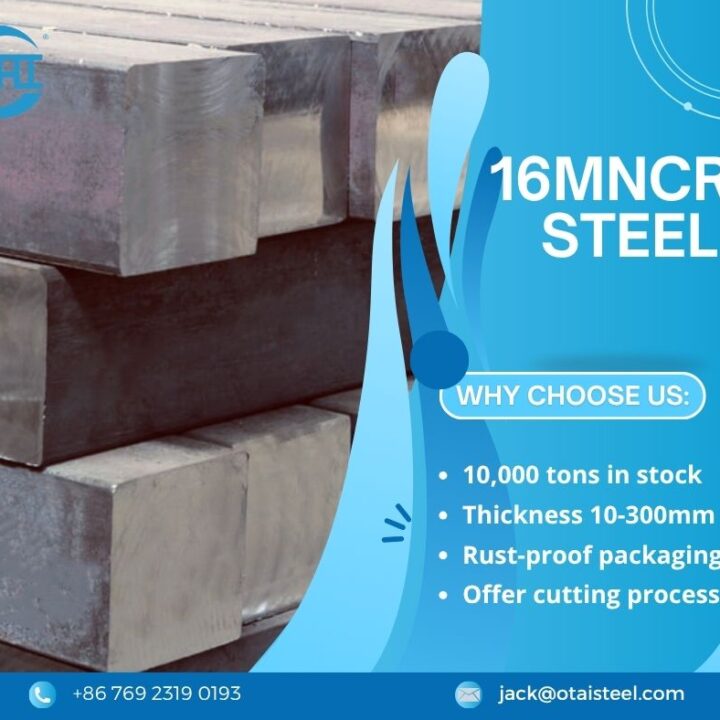
16MnCr5 steel is a medium-carbon, low-alloy steel known for its strength, wear resistance, and toughness. These characteristics make it ideal for critical components in industries like automotive, aerospace, and machinery, especially for parts like gears, shafts, and bearings. To optimize its performance, 16MnCr5 steel undergoes hardening and tempering, two essential heat treatment processes that enhance its durability and resilience in demanding applications.
In this article, we will explore the hardening and tempering processes for 16MnCr5 steel, how they improve its properties, and why they are essential for achieving high performance in tough environments.
🏗️ What is 16MnCr5 Steel?
16MnCr5 is a medium-carbon alloy steel that contains manganese (Mn) and chromium (Cr), which significantly enhance its mechanical properties. The typical composition includes:
-
Carbon (C): 0.14% – 0.20%
-
Manganese (Mn): 0.60% – 0.90%
-
Chromium (Cr): 0.80% – 1.10%
-
Silicon (Si): 0.15% – 0.35%
-
Phosphorus (P): ≤ 0.025%
-
Sulfur (S): ≤ 0.025%
These elements give 16MnCr5 steel its excellent strength, toughness, and wear resistance. However, without proper heat treatment, its mechanical properties may not be fully optimized. This is where hardening and tempering come in.
🔧 What is Hardening?
Hardening is a heat treatment process that increases the hardness and strength of 16MnCr5 steel. The process involves heating the steel to a temperature of 850°C to 880°C (1562°F to 1616°F) and then quenching it in oil, water, or air. The rapid cooling forms a hard structure known as martensite, which significantly improves the steel’s strength and wear resistance.
Effects of Hardening on 16MnCr5 Steel
-
Increased Hardness: Hardening transforms the microstructure into martensite, which gives the steel a high hardness and wear resistance. This is essential for components like gears and bearings, which must endure continuous friction and heavy loads.
-
Increased Strength: Hardening enhances the tensile strength, allowing the material to resist deformation under high stress.
-
Brittleness: Hardening can make the steel more brittle, meaning it may fracture or crack under impact if not properly tempered afterward.
🔨 What is Tempering?
Tempering is the heat treatment process applied after hardening to adjust the steel’s properties by reducing its brittleness and increasing its toughness. After quenching, the steel is heated again to a lower temperature (typically between 200°C to 650°C, or 392°F to 1202°F), held at this temperature for a period of time, and then allowed to cool slowly.
Effects of Tempering on 16MnCr5 Steel
-
Reduced Brittleness: Tempering decreases the brittleness that results from hardening, improving the material’s ability to absorb shock without cracking.
-
Improved Toughness: Tempering enhances the impact toughness of the steel, making it more resistant to sudden impacts or stresses.
-
Controlled Hardness: By adjusting the tempering temperature, manufacturers can fine-tune the hardness to achieve the desired balance between strength and toughness.
🔧 The Hardening and Tempering Process for 16MnCr5 Steel
The process of hardening and tempering 16MnCr5 steel involves the following steps:
-
Heating: The steel is heated to 850°C to 880°C (1562°F to 1616°F), which allows the carbon atoms to diffuse and prepare the material for quenching.
-
Quenching: After reaching the desired temperature, the steel is rapidly cooled in a medium such as oil, water, or air, forming martensite in the process.
-
Tempering: After quenching, the steel is heated again to a lower temperature (usually between 200°C to 650°C) to adjust its properties and relieve internal stresses.
This two-step process increases the wear resistance, strength, and toughness of 16MnCr5 steel, making it suitable for high-performance applications.
🏭 Applications of Hardened and Tempered 16MnCr5 Steel
After hardening and tempering, 16MnCr5 steel becomes an excellent choice for parts that need to withstand high mechanical stresses and harsh operating conditions. The combination of increased strength and toughness makes 16MnCr5 ideal for several critical applications:
1. Automotive Components
-
16MnCr5 steel is commonly used for gears, crankshafts, axles, and suspension components in the automotive industry. These components need to endure significant mechanical stress and wear over long periods, making the properties achieved through hardening and tempering essential for their longevity.
2. Industrial Machinery
-
Bearings, shafts, and gears used in industrial machinery also require the high wear resistance and strength provided by hardening and tempering. These processes ensure that the components perform reliably under continuous load and stress.
3. Aerospace Applications
-
In the aerospace industry, components like landing gear, actuators, and turbocharger shafts must exhibit both high fatigue resistance and toughness. Hardening and tempering enhance these properties, ensuring these parts can withstand extreme forces during operation.
4. Heavy Equipment
-
16MnCr5 steel is also used in heavy equipment components such as gears, cylinders, and hydraulic components. These parts need to endure harsh conditions, including heavy impacts and high wear, which makes the hardened and tempered material a suitable choice.
📊 Comparison of 16MnCr5 Steel Before and After Hardening and Tempering
| Property | Before Hardening and Tempering | After Hardening and Tempering |
|---|---|---|
| Hardness | Moderate to low | High (due to martensite formation) |
| Tensile Strength | Moderate | High (increased after hardening) |
| Ductility | Good | Reduced (due to martensite) |
| Toughness | Moderate | Improved after tempering |
| Wear Resistance | Moderate | Very High (increased due to hardness) |
| Brittleness | Low | High (post-hardening, reduced post-tempering) |
🏆 Why Choose Otai Special Steel for Your 16MnCr5 Steel Needs?
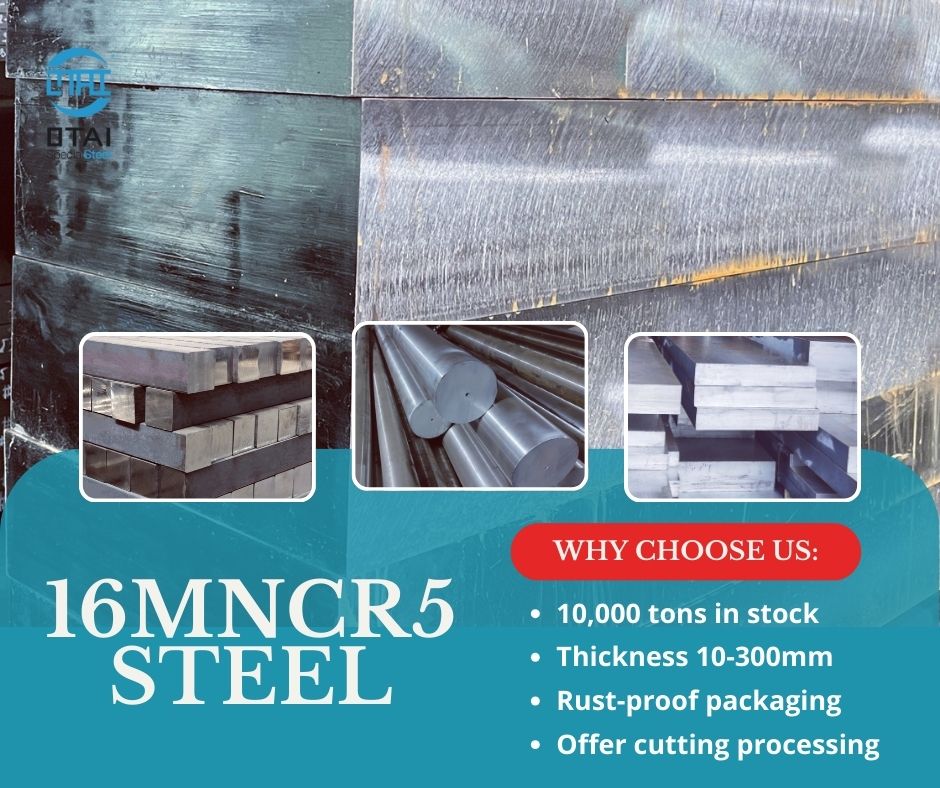
At Otai Special Steel, we offer high-quality 16MnCr5 steel that undergoes careful hardening and tempering to achieve the desired strength, toughness, and wear resistance. We provide custom cutting, heat treatment, and packaging services to meet your specific application needs.
Advantages of Working with Otai Special Steel:
-
Premium Materials: We supply 16MnCr5 steel that has undergone proper hardening and tempering processes to ensure optimal performance in high-stress applications.
-
Customization: We offer custom cutting, heat treatment, and machining to meet your exact specifications.
-
Competitive Pricing: Our high-performance steel comes at competitive prices, offering excellent value for your projects.
-
Fast Delivery: With our extensive inventory, we guarantee fast and reliable delivery to meet your deadlines.
❓ Frequently Asked Questions (FAQ)
Q1: What is the typical hardness of 16MnCr5 steel after hardening and tempering?
-
A1: After hardening, 16MnCr5 steel typically reaches a hardness of 58-62 HRC, which is adjusted after tempering to achieve the desired level, usually between 50-55 HRC.
Q2: Can 16MnCr5 steel be used for both high strength and wear-resistant applications?
-
A2: Yes, 16MnCr5 steel is ideal for high-strength and wear-resistant applications. Hardening and tempering improve its durability and make it suitable for gears, shafts, and bearings that experience significant wear and high stresses.
Q3: How do I select the appropriate tempering temperature for 16MnCr5 steel?
-
A3: The tempering temperature for 16MnCr5 steel depends on the desired balance between hardness and toughness. Higher temperatures increase toughness but decrease hardness, while lower temperatures preserve hardness at the expense of toughness.