 16MnCr5 Material Composition: Understanding the Key Elements and Their Role
16MnCr5 is a widely used alloy steel known for its wear resistance, high toughness, and fatigue strength. It plays a critical role in manufacturing components for industries such as automotive, aerospace, and machinery. The material composition of 16MnCr5 steel is one of the key factors that make it a preferred choice for high-performance applications. Let’s explore the composition of 16MnCr5 steel, the role of each element, and how they enhance its overall performance.
🧪 What is 16MnCr5 Steel?
16MnCr5 is a low-alloy steel containing manganese (Mn) and chromium (Cr), along with smaller amounts of other alloying elements. It is widely used for parts requiring a combination of strength, toughness, and wear resistance, such as gears, axles, and crankshafts. The steel’s composition directly impacts its ability to perform under high-stress and high-wear conditions.
The name 16MnCr5 represents:
- 16: Approximately 0.16% Carbon
- Mn: Manganese
- Cr: Chromium
🔍 Key Elements in 16MnCr5 Material Composition
The material composition of 16MnCr5 steel consists of several key elements, each contributing to its overall mechanical properties:
1. Carbon (C) – 0.14% to 0.20%
Carbon is the primary element responsible for increasing hardness and strength in steel. In 16MnCr5, the carbon content is optimized to provide good hardenability while maintaining adequate toughness. This balance makes 16MnCr5 suitable for parts that need both strength and resistance to wear without becoming too brittle.
- Role of Carbon: Increases hardness, strength, and helps the steel withstand stress.
2. Manganese (Mn) – 0.70% to 1.00%
Manganese plays a critical role in improving the hardenability of steel, making it easier to harden through heat treatment. It also enhances strength, toughness, and resistance to oxidation. Manganese aids in improving machinability and impact resistance.
- Role of Manganese: Enhances hardenability, strength, and machinability, and contributes to the steel’s toughness and oxidation resistance.
3. Chromium (Cr) – 0.90% to 1.20%
Chromium significantly enhances the wear resistance, corrosion resistance, and fatigue resistance of 16MnCr5 steel. It forms chromium carbides, improving the steel’s performance under high-stress and high-temperature conditions.
- Role of Chromium: Improves wear resistance, corrosion resistance, and toughness, making 16MnCr5 ideal for high-performance applications exposed to harsh environments.
4. Molybdenum (Mo) – 0.15% to 0.25%
Molybdenum is responsible for improving the high-temperature strength and toughness of 16MnCr5 steel. It increases the material’s resistance to heat and creep and makes the steel more durable under elevated temperatures.
- Role of Molybdenum: Enhances high-temperature strength, toughness, and creep resistance, making the steel ideal for use in applications with high thermal demands.
5. Silicon (Si) – 0.15% to 0.35%
Silicon improves the hardness and shock resistance of 16MnCr5 steel. It is also an effective deoxidizing agent during steel production, helping remove impurities. Silicon enhances resilience to impacts and improves machinability.
- Role of Silicon: Increases hardness, shock resistance, and contributes to machinability.
6. Sulfur (S) and Phosphorus (P) – Trace Amounts
Sulfur and phosphorus are considered impurities in 16MnCr5 steel. Their presence can decrease ductility and toughness, so they are kept to a minimum during production.
- Role of Sulfur and Phosphorus: Minimized to maintain ductility, impact resistance, and overall toughness.
🔧 Impact of 16MnCr5 Steel Composition on Its Properties
The combination of these alloying elements gives 16MnCr5 steel its excellent strength, wear resistance, and toughness.
Mechanical Properties
The material composition of 16MnCr5 steel allows it to achieve the following mechanical properties:
- Tensile Strength: Typically ranges from 900 MPa to 1100 MPa, providing strong resistance to stress.
- Yield Strength: Around 600 MPa to 800 MPa, allowing it to endure deformation under heavy loads.
- Hardness: Depending on the heat treatment, the hardness can range from 200 HB to 250 HB in the normalized state, and can increase up to 55 HRC after carburizing and quenching.
These properties make 16MnCr5 steel suitable for a variety of high-performance applications.
🏗️ Applications of 16MnCr5 Steel
Due to its balanced composition, 16MnCr5 steel is widely used in industries that require components with a combination of strength, toughness, and wear resistance. Some common applications include:
- Automotive Industry: Gears, axles, crankshafts, and camshafts.
- Aerospace Industry: Landing gear components, fasteners, and structural parts.
- Heavy Machinery: Bearings, shafts, and spindles.
- General Engineering: Machine tools, valves, and hydraulic components.
📊 Comparison of 16MnCr5 with Other Steels
| Steel Grade | Composition | Key Features | Applications |
|---|---|---|---|
| 16MnCr5 | 0.16% C, 0.9-1.2% Cr, 0.7-1% Mn, 0.15-0.25% Mo | Good strength, wear resistance, toughness | Gears, shafts, axles |
| 1045 Steel | 0.45% C | Moderate strength, toughness | General purpose parts |
| 4140 Steel | 0.40% C, 0.90-1.10% Cr, 0.15-0.25% Mo | Higher strength and fatigue resistance | Heavy machinery, automotive |
🏅 Company Advantages – Otai Special Steel
At Otai Special Steel, we offer 16MnCr5 steel with customized material composition and heat treatment options to meet your specific needs. Our precision cutting, machining, and material certification ensure that the steel meets the highest quality standards for your engineering projects.
Why Choose Otai Special Steel?
- Custom Alloying: We provide custom chemical compositions tailored to your requirements.
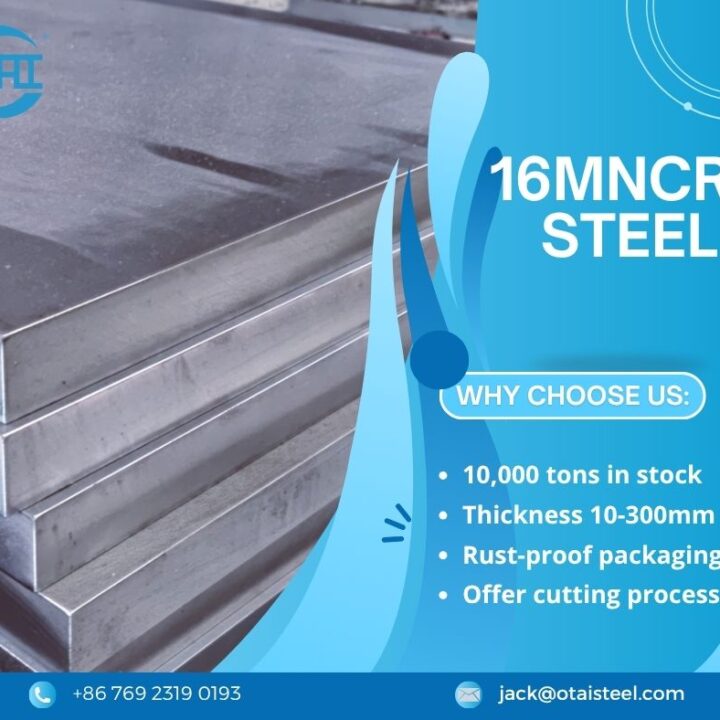
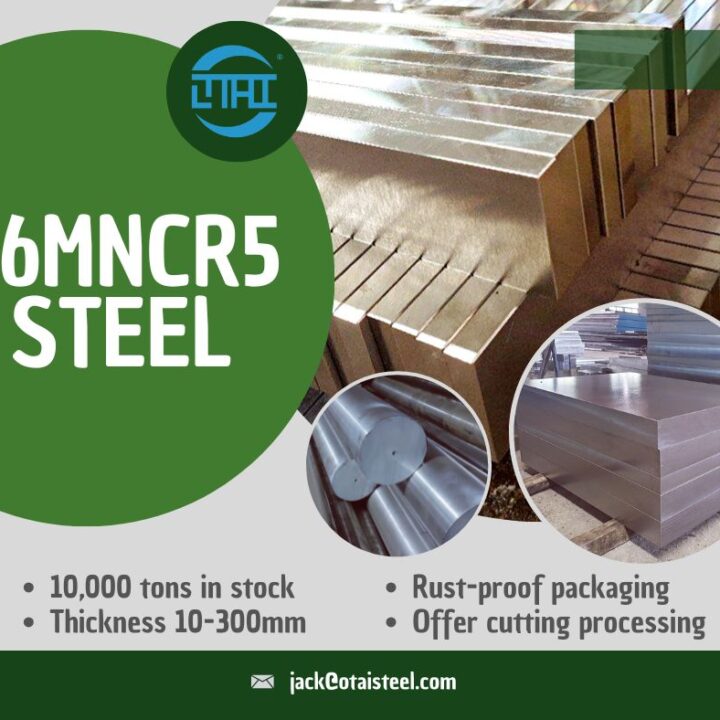
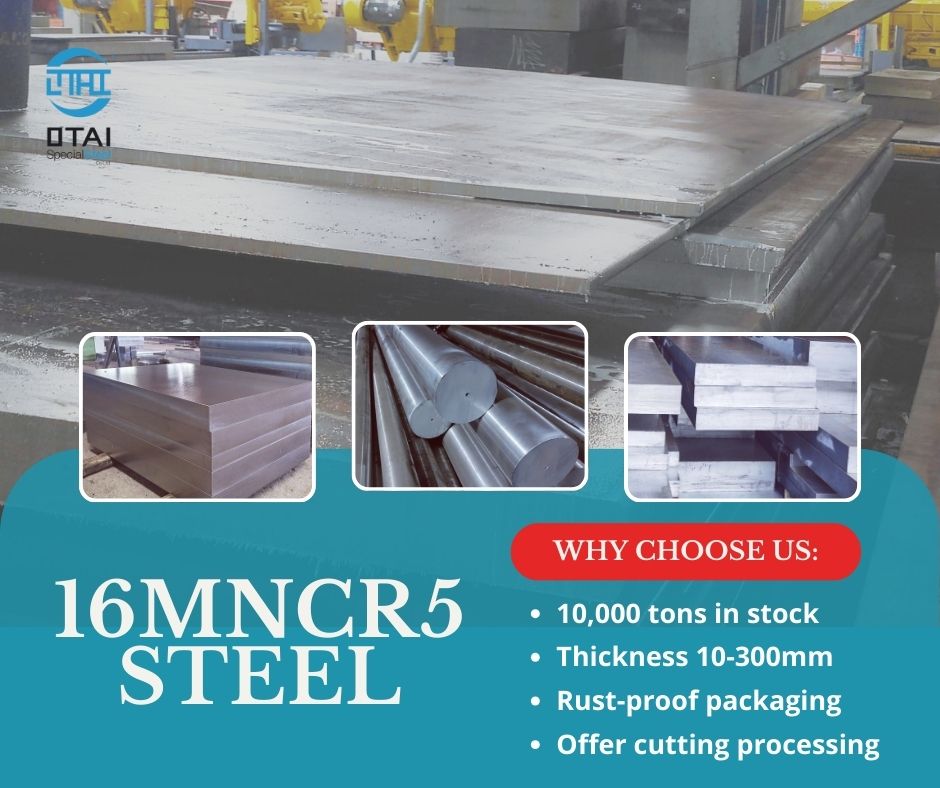
- Large Inventory: We stock a wide range of 16MnCr5 steel products, including bars, plates, and tubes.
- Precision Processing: Cutting, machining, and heat treatment services available.
- Global Supplier: Trusted by companies like Thyssenkrupp, Borealis, and Schlumberger.
❓ Frequently Asked Questions (FAQ)
Q1: What is the main use of 16MnCr5 steel?
A1: 16MnCr5 steel is commonly used for gears, axles, crankshafts, and other mechanical components that require high strength, wear resistance, and toughness.
Q2: How does 16MnCr5 steel compare to other alloy steels?
A2: 16MnCr5 steel provides a balanced combination of strength, wear resistance, and toughness, making it ideal for parts exposed to high-stress conditions in automotive, aerospace, and heavy machinery applications.
Q3: What heat treatment processes can be applied to 16MnCr5 steel?
A3: 16MnCr5 steel can undergo various heat treatments, such as normalizing, quenching, tempering, and carburizing, to achieve different mechanical properties.