 16MnCr5 Steel Composition: Key Elements and Their Impact on Properties
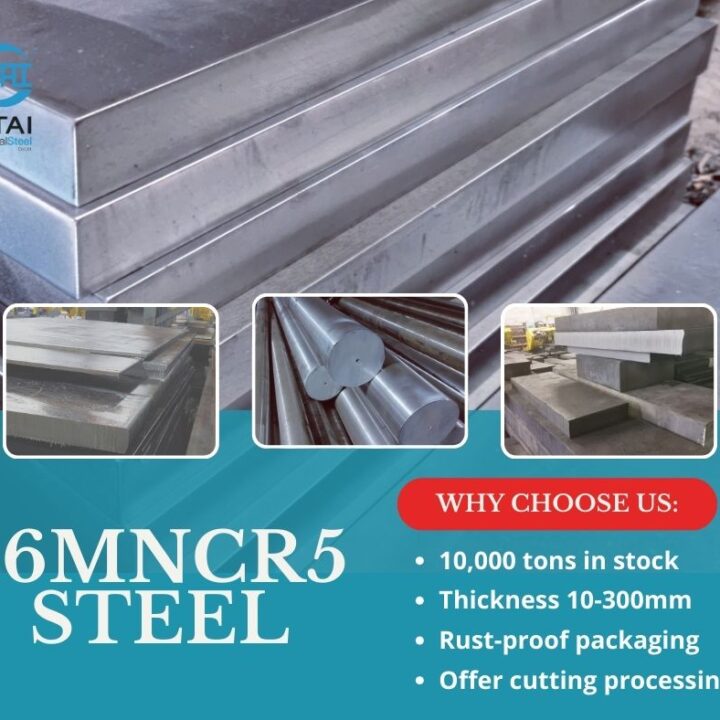
16MnCr5 is a widely used alloy steel that combines manganese (Mn) and chromium (Cr) with a small percentage of carbon (C) to enhance its mechanical properties. It’s known for its good hardenability, wear resistance, and high strength, making it ideal for use in a wide variety of industrial applications, particularly in the automotive and machinery sectors.
In this article, we’ll explore the chemical composition of 16MnCr5 steel, how each alloying element contributes to its overall performance, and the key properties that make this steel so valuable.
🔬 What is 16MnCr5 Steel?
16MnCr5 is a low-alloy steel with a medium-carbon composition. It is classified according to the ISO and DIN standards and is particularly known for its use in the manufacturing of gears, shafts, and crankshafts. Due to its manganese and chromium content, it displays excellent wear resistance, toughness, and the ability to withstand high stresses. The steel can be hardened to high levels, providing excellent surface properties for industrial components that undergo frequent contact or movement.
🧪 16MnCr5 Chemical Composition
The chemical composition of 16MnCr5 steel is crucial to understanding its properties. Here’s a breakdown of the key alloying elements and their roles:
| Element | Percentage in 16MnCr5 | Role in Steel |
|---|---|---|
| Carbon (C) | 0.14-0.20% | Responsible for increasing strength and hardness, but too much carbon can reduce toughness. |
| Manganese (Mn) | 0.60-0.90% | Enhances strength, toughness, and hardenability. It also improves wear resistance. |
| Chromium (Cr) | 0.80-1.10% | Increases hardness, corrosion resistance, and overall strength. Improves the steel’s wear resistance. |
| Silicon (Si) | 0.20-0.35% | Improves the steel’s strength and hardness, and enhances the overall toughness of the material. |
| Phosphorus (P) | ≤ 0.035% | Increases hardness but can reduce the ductility of the steel. |
| Sulfur (S) | ≤ 0.035% | Affects machinability but reduces overall toughness and ductility. |
🔍 How Each Element Affects the Steel’s Properties
-
Carbon (C): The carbon content in 16MnCr5 provides the necessary hardness to withstand wear, while also contributing to its strength. However, too much carbon can lead to brittleness, making heat treatment crucial to achieve a balanced hardness and toughness.
-
Manganese (Mn): Manganese is essential for enhancing the hardenability of steel. In 16MnCr5, manganese ensures the steel’s ability to be hardened to higher levels and increases its resistance to impact and fatigue. It also improves the tensile strength and toughness, which are essential for components that undergo significant wear or stress.
-
Chromium (Cr): Chromium enhances the hardness and wear resistance of 16MnCr5. It also contributes to improving the corrosion resistance, making it more durable in harsh environments. Furthermore, chromium increases the steel’s strength by improving its resistance to high temperatures.
-
Silicon (Si): Silicon helps to increase the steel’s strength, particularly when exposed to high temperatures. It is a deoxidizer in the steelmaking process, helping to eliminate oxygen that could otherwise affect the properties of the steel.
-
Phosphorus (P): Phosphorus improves the hardness of steel, but in high quantities, it can reduce the ductility and cause brittleness, which is why the limit is controlled.
-
Sulfur (S): Although sulfur improves machinability, it decreases the toughness of the steel. Hence, the sulfur content in 16MnCr5 is controlled to maintain a balance between machinability and mechanical properties.
🧰 Mechanical Properties of 16MnCr5 Steel
The mechanical properties of 16MnCr5 are greatly influenced by its chemical composition. It is known for being highly durable, tough, and able to withstand significant stress. Here’s a quick overview of its typical mechanical properties:
| Property | Value for 16MnCr5 | Description |
|---|---|---|
| Tensile Strength | 800-1,000 MPa | High tensile strength, making it suitable for high-load applications. |
| Yield Strength | 500-700 MPa | Can resist permanent deformation under high stress. |
| Hardness (as rolled) | 190-220 HB | Moderately hard in its as-rolled state. |
| Hardness (after heat treatment) | 50-55 HRC | Can achieve very high hardness after quenching and tempering. |
| Impact Toughness | Medium-High | High toughness under dynamic loads. |
🔥 Heat Treatment of 16MnCr5 Steel
One of the most critical factors in determining the performance of 16MnCr5 steel is heat treatment. Quenching and tempering processes allow the steel to achieve high levels of hardness and strength. Here’s a brief guide:
-
Quenching: This involves heating the steel to a high temperature (around 850-900°C) and then rapidly cooling it, usually in oil or water, to lock in the hardness. After this process, the steel can reach a hardness of 50-55 HRC.
-
Tempering: After quenching, the steel is reheated to a lower temperature (typically 150-200°C) to relieve any internal stresses and adjust the hardness to the desired level. Tempering increases toughness and ensures the steel doesn’t become too brittle.
🏗️ Applications of 16MnCr5 Steel
Given its high hardness and wear resistance, 16MnCr5 steel is commonly used in industries where components are subjected to significant stress, wear, and fatigue. Some of the most common applications include:
-
Gears: Used in both automotive and industrial machinery due to their ability to withstand high-impact loads.
-
Crankshafts and Shafts: Highly durable and able to bear heavy loads without permanent deformation.
-
Pinions: Used in the manufacturing of pinion gears, where high wear resistance is essential.
-
Axles and Rollers: Components subjected to friction, requiring both toughness and wear resistance.
-
Forged Parts: Components that need to be forged and hardened, such as transmission parts and automotive gear sets.
⚖️ Comparison with Other Steels
16MnCr5 has similar properties to other low-alloy steels such as AISI 5120 or 20CrNiMo. However, it stands out due to its higher toughness and fatigue resistance, making it an excellent choice for automotive and high-performance engineering applications.
❓ Frequently Asked Questions (FAQ)
Q1: What makes 16MnCr5 suitable for automotive applications?
A1: The high wear resistance, hardness, and fatigue resistance of 16MnCr5 make it ideal for components like gears, shafts, and crankshafts, which are subjected to continuous stress and wear.
Q2: How is the heat treatment process important for 16MnCr5 steel?
A2: Heat treatment enhances the hardness and toughness of 16MnCr5, ensuring that it performs optimally under high-stress and high-wear conditions.
Q3: Can 16MnCr5 be used in high-temperature applications?
A3: Yes, 16MnCr5 exhibits good resistance to high temperatures, especially after proper heat treatment, making it suitable for parts like engine components and machinery parts.
💪 Why Choose Otai Special Steel?
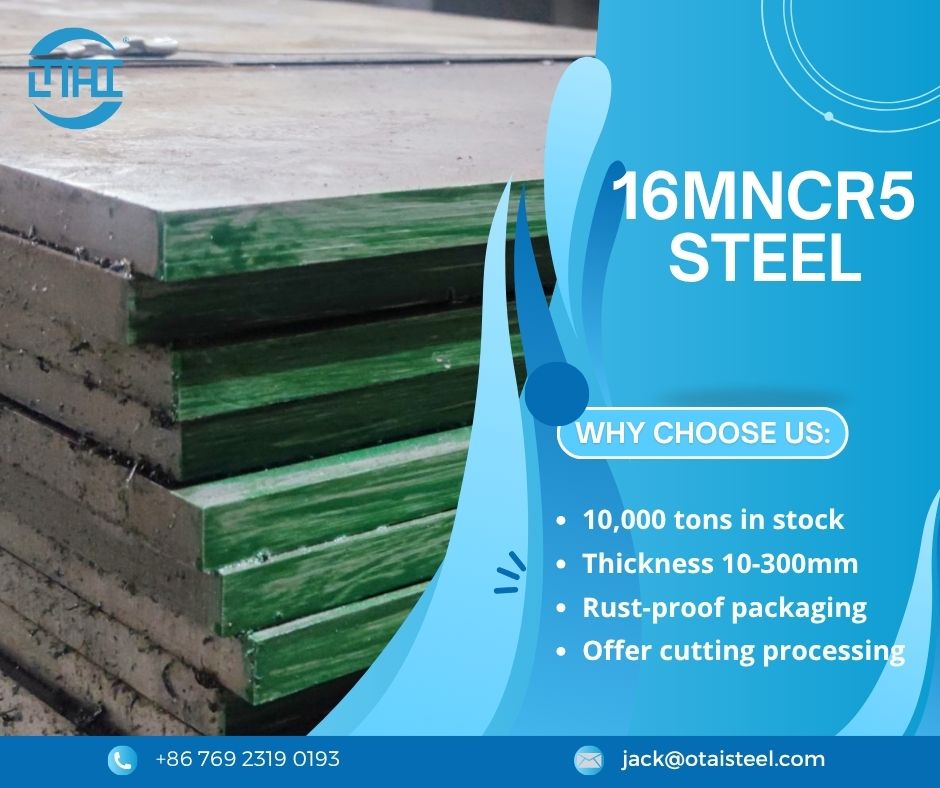
At Otai Special Steel, we offer 16MnCr5 and a wide range of alloy steels with excellent mechanical properties. Here’s why you should choose us:
-
Extensive Inventory: Over 10,000 tons of high-quality steel products available year-round.
-
Customized Services: We provide cutting, heat treatment, and packaging services tailored to your needs.
-
Rigorous Testing: We ensure top-quality products with ultrasonic testing, chemical analysis, and third-party inspections.
-
Global Supplier: Trusted by clients worldwide in industries like automotive, machinery, and energy.