 4140 Steel Ductility: Understanding Its Importance and Applications
4140 steel is a widely used alloy steel known for its excellent combination of strength, toughness, and wear resistance. These properties make 4140 steel an ideal choice for a wide range of applications, from automotive components to industrial machinery. One of the key mechanical properties of 4140 steel is its ductility, which plays a crucial role in determining the material’s ability to absorb energy, deform under stress, and resist cracking or breaking. In this article, we will dive into the ductility of 4140 steel, its significance in various applications, and how heat treatment can affect this property.
🏗️ What is Ductility in Steel?
Ductility refers to a material’s ability to undergo significant plastic deformation before fracturing. It is a measure of how easily a material can be stretched or deformed without breaking. For steel, ductility is an important property in applications where components need to absorb energy or endure fluctuating stresses without failing. A ductile material will bend or stretch instead of breaking under stress, making it more reliable for dynamic and high-impact applications.
In simple terms, ductility measures how “stretchable” or “bendable” a material is before it fractures. Materials with high ductility can undergo significant deformation without failing, which is particularly important in industries like automotive, machinery, and aerospace.
🔧 Ductility of 4140 Steel
4140 steel is a medium-carbon, low-alloy steel that contains chromium and molybdenum to enhance its hardness, toughness, and wear resistance. The material’s ductility is a result of its specific chemical composition and processing. While 4140 steel is known for its high tensile strength and hardness, it also exhibits good ductility, especially when heat-treated properly.
1. Tensile Strength and Ductility Balance
-
4140 steel offers a balance between strength and ductility, which makes it suitable for applications that require both high performance and the ability to absorb shocks or stresses. Typically, 4140 steel has ductility levels that allow it to be deformed slightly under high tensile loads without breaking, giving it the ability to withstand high-impact and fatigue conditions.
2. Ductility in Heat-Treated 4140 Steel
-
The ductility of 4140 steel can be influenced by its heat treatment process. When 4140 steel is heated to a high temperature and then rapidly cooled (quenched), it increases its tensile strength and hardness, but this can reduce its ductility, making it more brittle. However, by tempering the steel after quenching, it is possible to restore some of the lost ductility while maintaining the material’s strength and hardness. Tempering reduces the brittleness and enhances the steel’s ability to absorb impact energy.
3. Effect of Carbon Content on Ductility
-
4140 steel has a carbon content of approximately 0.38% to 0.43%, which provides a good balance between strength and ductility. Steels with higher carbon content tend to have greater hardness and tensile strength but lower ductility. 4140 steel’s moderate carbon content ensures that it maintains a reasonable level of formability and bendability, making it suitable for applications that involve moderate to high stress.
🔨 How Ductility Affects the Performance of 4140 Steel
The ductility of 4140 steel is an important factor in its overall performance, especially in applications where the material needs to resist impact, deformation, and failure. The following are some of the key reasons why ductility matters in 4140 steel:
1. Shock and Impact Resistance
-
Ductility plays a critical role in how well 4140 steel absorbs shock and impact. In industries like automotive and machinery, parts such as gears, shafts, and suspension components experience repeated impacts and shocks. 4140 steel’s ductility helps these parts deform slightly under impact, preventing cracks or fractures, which could otherwise lead to part failure.
2. Fatigue Resistance
-
Components made from 4140 steel, like crankshafts, bearings, and axles, often experience cyclical loading over time. Ductility allows the material to withstand repeated loads without cracking, making 4140 steel an excellent choice for parts exposed to fatigue stresses in automotive and aerospace applications.
3. Deformation Under Load
-
Ductility is especially important for 4140 steel in heavy machinery and industrial equipment that operates under high stress. Parts like gears, sprockets, and shafts must absorb and redistribute stress during operation. 4140 steel’s ductility ensures these components can endure the stresses without breaking or failing, ensuring a longer service life.
📊 How Heat Treatment Affects the Ductility of 4140 Steel
The heat treatment process can significantly alter the ductility of 4140 steel, either enhancing or reducing it, depending on the specific treatment applied. The following heat treatment processes are commonly used to optimize the ductility of 4140 steel:
1. Quenching and Tempering
-
Quenching involves heating 4140 steel to a high temperature and then rapidly cooling it in water or oil. This process increases tensile strength and hardness but may make the steel brittle. Tempering after quenching restores ductility by reheating the steel to a lower temperature, which reduces brittleness while maintaining strength.
2. Normalizing
-
Normalizing involves heating 4140 steel to a temperature above its critical range and allowing it to cool in air. This process refines the grain structure of the steel and improves its toughness and ductility, making it more suitable for applications that require high resistance to impact and stress.
3. Carburizing
-
Carburizing increases the hardness of the surface layer of 4140 steel while keeping the core soft and ductile. This process is often used for parts like gears and shafts, where the surface needs to be hard for wear resistance, but the core needs to remain ductile for shock absorption.
🏗️ Applications of 4140 Steel Where Ductility is Crucial
The ductility of 4140 steel is one of the reasons why it is widely used in automotive, aerospace, and industrial machinery. Some of the common applications where ductility plays a key role include:
1. Automotive Components
-
4140 steel is used to manufacture crankshafts, axles, gears, and suspension components. The ductility of these parts allows them to absorb shock and fatigue without cracking, making them ideal for high-stress applications in vehicles.
2. Heavy Machinery
-
Parts in heavy machinery, such as bearings, shafts, and gears, often face high mechanical stress. 4140 steel’s ductility helps these components withstand shock, impact, and vibration without breaking, ensuring long-term durability.
3. Aerospace Applications
-
4140 steel is used in aerospace components such as landing gear, actuators, and drive shafts, where it needs to withstand high dynamic forces and extreme temperatures while maintaining its ductility to prevent failure.
4. Tooling and Dies
-
4140 steel is a popular choice for tooling and dies due to its hardness and ductility. It ensures that the dies can perform under high stresses while resisting cracking, making them ideal for high-precision applications.
📊 Comparison of 4140 Steel Ductility with Other Steels
Below is a comparison of the ductility of 4140 steel with other common steels:
| Material | Tensile Strength (MPa) | Yield Strength (MPa) | Ductility (elongation) | Applications |
|---|---|---|---|---|
| 4140 Steel | 655–1,000 | 415–650 | Moderate to High | Automotive parts, industrial machinery, tooling |
| 1045 Steel | 600–800 | 415–500 | Moderate | General engineering, shafts |
| 4340 Steel | 1,000–1,200 | 850–1,050 | Moderate | Aerospace, heavy machinery |
| 8620 Steel | 600–850 | 400–550 | Moderate | Gears, automotive components |
| AISI 52100 | 1,000–1,200 | 600–800 | Low to Moderate | Bearings, high-performance components |
🏆 Why Choose Otai Special Steel for Your 4140 Steel Needs?
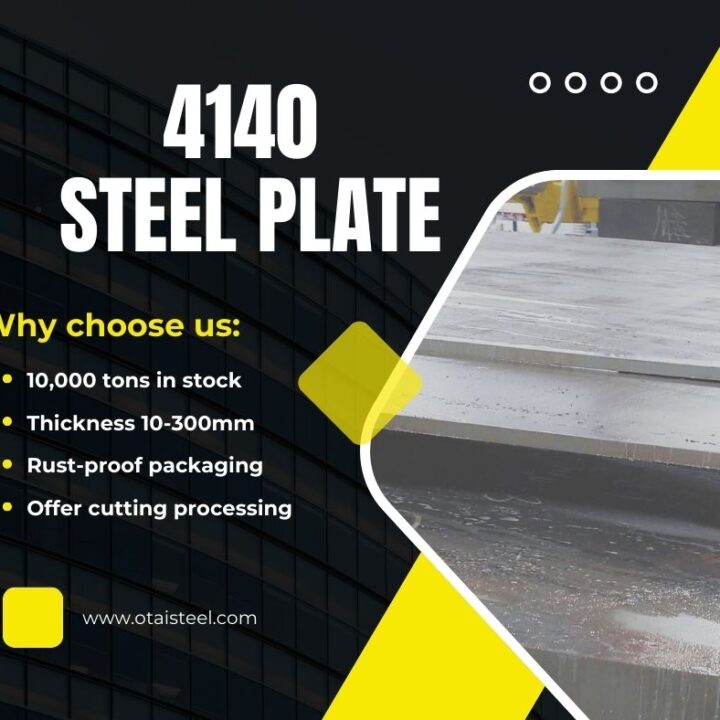
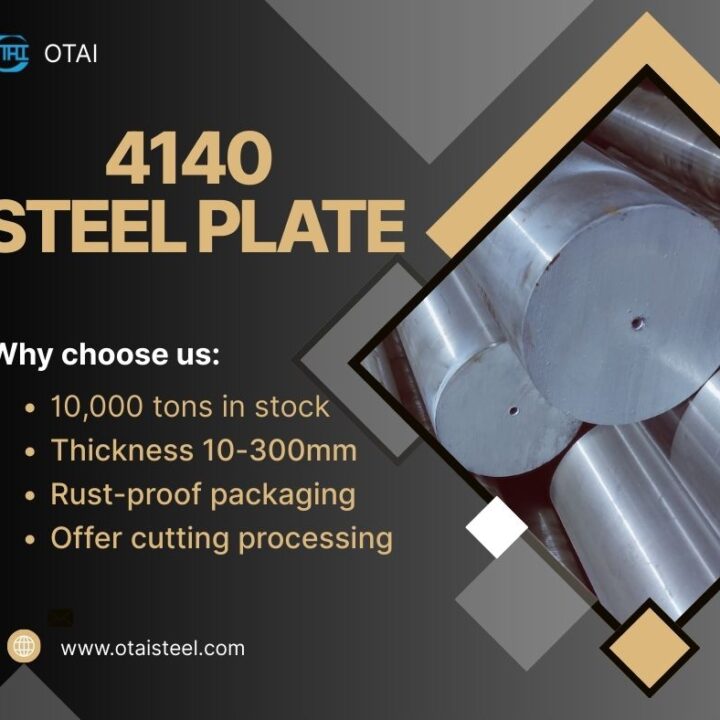
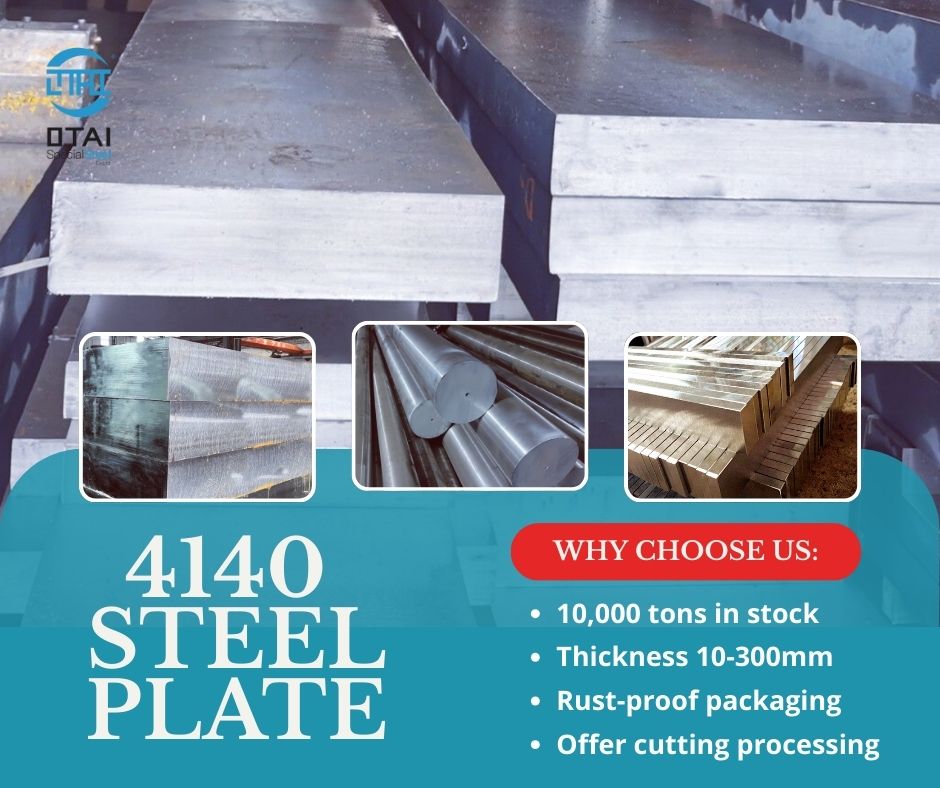
At Otai Special Steel, we offer high-quality 4140 steel that maintains its ductility, toughness, and strength. We provide precision cutting, heat treatment, and packaging services to meet your specific requirements. Whether you need gears, shafts, or machinery parts, we can help you get the right material for your project.
Advantages of Working with Otai Special Steel:
-
Premium Materials: We offer top-grade 4140 steel that meets international standards for strength and ductility.
-
Customization: Our services include custom cutting, heat treatment, and machining to suit your exact specifications.
-
Competitive Pricing: We provide high-performance steel at competitive prices, offering excellent value.
-
Fast Delivery: With a vast inventory, we ensure fast, reliable delivery to meet your deadlines.
❓ Frequently Asked Questions (FAQ)
Q1: How does heat treatment affect the ductility of 4140 steel?
-
A1: Heat treatments like quenching and tempering can alter the ductility of 4140 steel. Tempering restores ductility by reducing brittleness, making it more suitable for dynamic applications.
Q2: What is the best heat treatment for maintaining ductility in 4140 steel?
-
A2: Tempering after quenching is the best heat treatment to maintain a balance between strength and ductility in 4140 steel.
Q3: Is 4140 steel suitable for high-impact applications?
-
A3: Yes, the ductility of 4140 steel makes it ideal for high-impact applications such as automotive parts, gears, and machinery components.