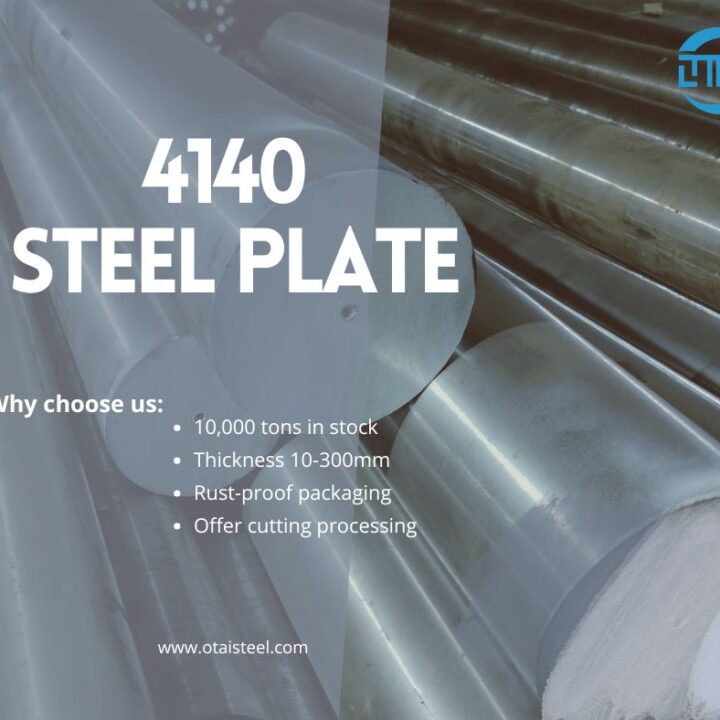
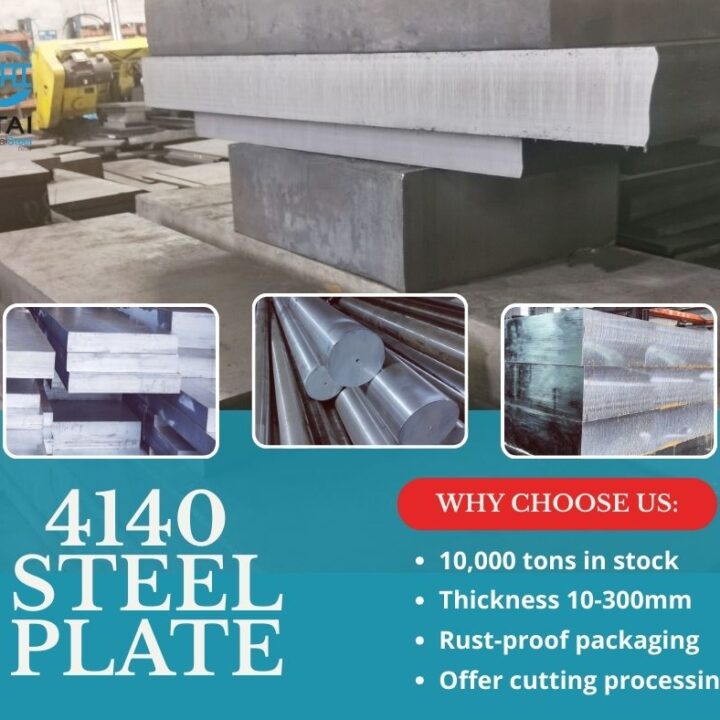
4140 alloy steel delivers strength, toughness, and versatility, so automotive, aerospace, and heavy-machinery builders specify it for gears, shafts, and springs that face repeated stress. Knowing its endurance limit lets engineers predict how long the steel will survive cyclic loading before fatigue sets in.
In this article, we will explore the concept of the endurance limit, how it applies to 4140 steel, and why it matters in the design of components that undergo cyclic loads.
🏗️ What is the Endurance Limit?
The endurance limit, also known as the fatigue limit, refers to the maximum stress level that a material can endure for an infinite number of loading cycles without experiencing fatigue failure. Fatigue failure occurs when a material undergoes repeated loading and unloading cycles, which leads to the formation of microcracks. Over time, these cracks can grow and eventually cause the material to fracture, even if the applied stresses are well below the material’s ultimate tensile strength.
The endurance limit is a crucial factor in the design of components that will experience cyclic loading, such as gears, bearings, crankshafts, and axles. These components must be able to endure repeated stresses without failing, and the endurance limit helps engineers select materials that can provide long-lasting performance.
🔧 Endurance Limit of 4140 Steel
The endurance limit of 4140 steel depends on several factors, including its composition, heat treatment, and surface finish. Typically, 4140 alloy has an endurance limit of about 40% to 60% of its ultimate tensile strength. This means that, under ideal conditions, 4140 steel can withstand cyclic stresses up to 40% to 60% of its maximum tensile strength without experiencing fatigue failure.
Factors Affecting the Endurance Limit of 4140 Steel
The endurance limit of 4140 is influenced by several key factors:
-
Heat Treatment:
-
4140 steel can undergo various heat treatment processes such as tempering, quenching, and normalizing. These processes affect the material’s microstructure and, consequently, its fatigue resistance. Proper heat treatment can enhance the endurance limit by improving the material’s hardness and toughness.
-
-
Surface Finish:
-
A smooth surface finish improves the endurance limit of 4140 steel, as surface defects like scratches or roughness can serve as initiation points for fatigue cracks. Polished or treated surfaces can significantly increase the fatigue life of 4140 steel components.
-
-
Stress Concentrations:
-
The presence of stress concentrators such as notches, holes, or sharp corners can reduce the endurance limit of 4140 material. These features can cause localized stress intensification, leading to premature fatigue failure even at lower applied stresses.
-
-
Temperature:
-
4140 steel performs better at lower temperatures. At high temperatures, the endurance limit decreases, and the material becomes more prone to failure due to thermal fatigue. The endurance limit can also be affected by thermal cycling in applications where the material is subjected to alternating hot and cold conditions.
-
🔨 Endurance Limit and Fatigue Resistance in 4140 Steel
The endurance limit of 4140 steel is particularly important in applications where components are subjected to cyclic loading. These applications require materials that can resist fatigue over time without experiencing failure. Below are some key applications where the endurance limit of 4140 plays a critical role:
1. Automotive Components
-
4140 steel is commonly used for automotive parts such as gears, axles, and crankshafts. These components undergo constant cyclic loads during operation, and the endurance limit determines how long they can perform without failure. The steel’s fatigue resistance ensures that the components can last throughout the lifetime of the vehicle, even under repetitive stresses.
2. Industrial Machinery
-
In industrial machinery, components like shafts, bearings, and gears experience frequent loading and unloading cycles. The endurance limit of 4140 steel ensures that these components remain durable and functional over time, even when exposed to harsh working conditions.
3. Heavy Equipment
-
4140 steel is used in heavy equipment parts that are subjected to high loads and vibrations, such as crankshafts, gears, and hydraulic components. The endurance limit of 4140 steel helps ensure that these parts can withstand continuous stress without cracking or failing.
4. Oil and Gas Industry
-
Components in the oil and gas industry, such as drill shafts, wellheads, and valves, are exposed to cyclic loading due to operational stresses and vibrations. The endurance limit of 4140 steel ensures that these components can perform reliably in harsh environments for extended periods.
📊 Comparison of Endurance Limit in 4140 Steel and Other Materials
To better understand the endurance limit of 4140 steel, here is a comparison with other commonly used materials:
| Material | Ultimate Tensile Strength (MPa) | Endurance Limit (MPa) | Fatigue Life | Applications |
|---|---|---|---|---|
| 4140 Steel | 650–900 | 250–540 | High | Automotive parts, gears, shafts, machinery |
| AISI 1045 Steel | 600–800 | 240–480 | Moderate | General engineering, shafts |
| AISI 4340 Steel | 850–1,100 | 340–660 | Very High | Aerospace, heavy machinery, automotive |
| Titanium | 900–1,100 | 350–700 | Very High | Aerospace, medical implants, high-performance parts |
| Stainless Steel | 500–1,200 | 200–600 | High | Medical devices, marine components, aerospace |
As shown in the table, 4140 steel offers a moderate to high endurance limit when compared to other materials. Its ability to withstand cyclic loading makes it an excellent choice for applications where fatigue resistance is critical.
🏆 Why Choose Otai Special Steel for Your 4140 Steel Needs?
At Otai Special Steel, we offer high-quality 4140 steel that meets international standards for strength, fatigue resistance, and endurance limit. We provide custom cutting, heat treatment, and packaging services to ensure that our 4140 steel meets your specific application requirements.
Advantages of Working with Otai Special Steel:
-
Premium Materials: We offer 4140 steel that meets the highest industry standards for strength, toughness, and fatigue resistance.
-
Customization: We provide custom cutting, heat treatment, and machining to suit your exact specifications.
-
Competitive Pricing: We offer high-performance steel at competitive prices, ensuring excellent value.
-
Fast Delivery: With a vast inventory, we guarantee fast and reliable delivery to meet your project deadlines.
❓ Frequently Asked Questions (FAQ)
Q1: What is the endurance limit of 4140 steel?
-
A1: The endurance limit of 4140 steel typically ranges from 250 MPa to 540 MPa, depending on factors like heat treatment and surface finish.
Q2: How does the endurance limit of 4140 steel affect its performance in cyclic loading applications?
-
A2: The endurance limit ensures that 4140 steel can withstand repeated loads without failure. It allows components made from 4140 steel, such as gears and shafts, to perform reliably under constant stress and vibration.
Q3: Can the endurance limit of 4140 steel be improved?
-
A3: Yes, the endurance limit of 4140 steel can be improved through proper heat treatment, surface hardening, and smooth surface finishes. These methods reduce the risk of fatigue cracking and increase the material’s overall fatigue resistance.