 4140 Steel for Axe: The Ultimate Guide for Makers and Users
When it comes to forging or buying an axe, one of the biggest decisions is the choice of steel. An axe needs to withstand repeated impact, maintain a sharp edge, and resist chipping even in tough conditions. Among the many steel grades available, 4140 steel for axe has gained popularity among blacksmiths, outdoorsmen, and tool manufacturers.
In this article, we’ll explore why 4140 is considered a strong candidate for axes, its strengths and limitations, how it compares to other steels, and practical advice for makers and users.
🪓 Why 4140 Steel Works for Axes
4140 is a chromium-molybdenum low alloy steel, well-known for its balance of toughness, strength, and hardenability. These traits make it suitable for impact tools like hammers, tomahawks, and axes.
Key reasons why axe makers use 4140 steel:
-
Toughness under impact – Reduces the chance of cracking or breaking when chopping hardwood.
-
Good edge stability – Holds a working edge reasonably well, though not as long as high-carbon tool steels.
-
Versatile heat treatment – Can be hardened for wear resistance while maintaining a ductile core.
-
Availability and cost – More economical and widely available than tool steels.
🔬 Mechanical Properties of 4140 Steel for Axe Heads
| Property | Typical Range |
|---|---|
| Carbon Content | 0.38–0.43% |
| Hardness (after heat treatment) | 28–32 HRC (core), up to 55 HRC (surface) |
| Yield Strength | ~655 MPa |
| Tensile Strength | ~950–1100 MPa |
| Impact Toughness | High (suitable for repeated striking) |
These numbers show that 4140 axe heads can be both durable and shock-resistant. Unlike brittle steels, they can handle abuse in outdoor conditions.
🔥 Heat Treatment for Axe Performance
To get the best results from 4140 steel axes, heat treatment is crucial:
-
Quenching and tempering – Gives a strong yet tough structure.
-
Differential hardening – Common in blacksmith-forged axes, where the edge is hardened (50–55 HRC) while the body remains softer.
-
Surface hardening (induction or flame) – Provides extra wear resistance on the cutting edge.
👉 A well-treated 4140 steel axe head can take a razor-sharp edge and endure hard chopping without deforming.
⚔️ 4140 vs Other Steels for Axes
Not all steels behave the same in axe applications. Here’s how 4140 axe steel compares with other popular choices:
| Steel | Advantages | Disadvantages |
|---|---|---|
| 4140 Steel | Excellent toughness, economical, widely available | Edge retention not as high as tool steels |
| 1055 Carbon Steel | Tough, affordable, easy to sharpen | Lower wear resistance |
| 5160 Spring Steel | Great balance of toughness and hardness, good for large axes | Harder to forge, more expensive |
| High Carbon Tool Steels (O1, D2) | Very sharp edges, great wear resistance | Brittle under impact, higher cost |
Result: 4140 steel is excellent for impact resistance, making it great for utility axes, splitting mauls, and throwing axes, but not the absolute best for fine woodworking axes where edge retention is critical.
🛠️ Forging 4140 Steel into Axes
Many blacksmiths choose 4140 steel bars for axe forging because it forges well at high temperatures and can be shaped without cracking.
Tips for forging:
-
Forge between 900–1200°C.
-
Avoid overheating, as 4140 is prone to grain growth.
-
Normalize after forging to refine the grain.
-
Apply a tailored heat treatment to get a hard edge and tough body.
The result? A reliable, tough axe that can last for years with proper care.
🌲 Real-World Applications of 4140 Axes
Axes made from 4140 steel are often used for:
-
Camping and bushcraft axes – Strong enough for chopping wood and clearing paths.
-
Throwing axes and tomahawks – Excellent toughness against repeated impact.
-
Utility axes for construction – Withstand abuse in job sites.
-
Splitting mauls and sledge axes – Handle high shock loads without fracturing.
👉 This versatility explains why axe makers often prefer 4140 steel for general-purpose tools.
🏭 Company Advantages – Why Buy 4140 Steel from OTAI
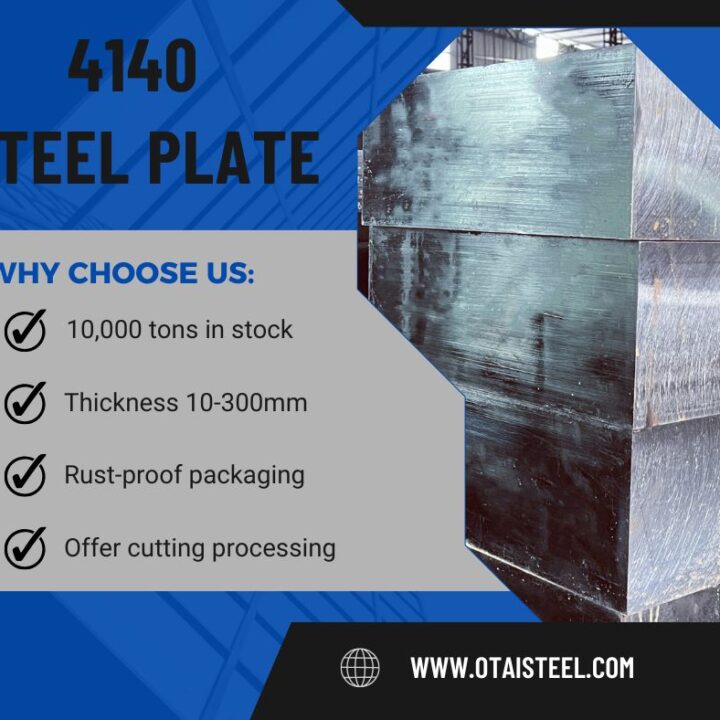
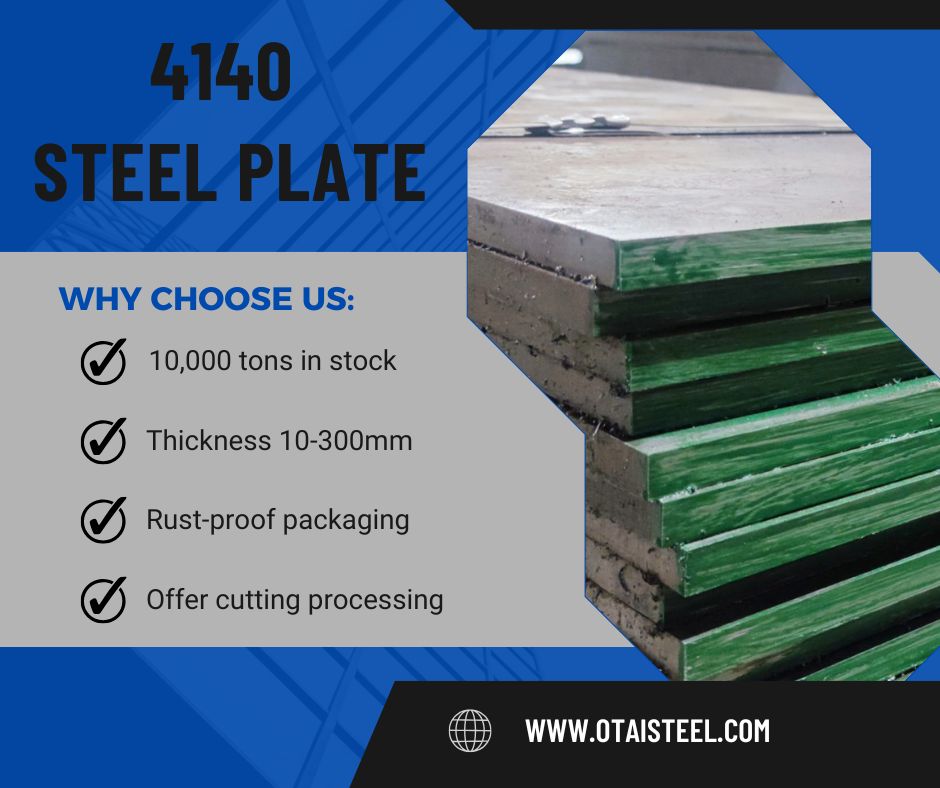
At OTAI Special Steel, we provide high-quality 4140 alloy steel bars and plates suitable for forging axe heads.
-
✅ Inventory of over 10,000 tons of 4140 steel in various sizes.
-
✅ Professional heat treatment services to achieve the right hardness for axes.
-
✅ Precision cutting and forging support for blacksmiths and tool manufacturers.
-
✅ Strict testing: ultrasonic inspection and chemical analysis for consistent quality.
Whether you’re a custom axe maker or a tool manufacturer, we can supply the right steel for your projects.
❓ FAQ – 4140 Steel for Axe
Q1: Is 4140 steel good for axes?
Yes. It offers toughness and shock resistance, making it suitable for chopping and throwing axes.
Q2: Can 4140 steel hold a sharp edge?
It holds a decent edge but not as long as high-carbon tool steels. Regular sharpening is recommended.
Q3: What hardness is best for a 4140 axe?
Around 50–55 HRC at the edge provides the best balance of sharpness and durability.
Q4: Is forging an axe from 4140 difficult?
No. 4140 forges well at high temperatures but needs proper heat treatment to unlock its potential.
Q5: Can 4140 steel be used for fine woodworking axes?
It can, but steels like 5160 or O1 may perform better for tasks needing maximum edge retention.
📌 Conclusion:
4140 steel for axe is a smart choice for anyone looking for toughness, durability, and reliability. While it may not hold the sharpest edge as long as tool steels, its impact resistance makes it ideal for chopping, splitting, and throwing applications.