 4140 Steel vs 1045 Steel: What’s the Real Difference?
Are 4140 Steel and 1045 Steel the Same Thing?
A lot of buyers, engineers, and manufacturers often ask:
-
“Is 4140 steel the same as 1045 steel?”
-
“Can I use 4140 steel instead of 1045 for my application?”
The short answer? No, they are not the same thing.
Here’s why:
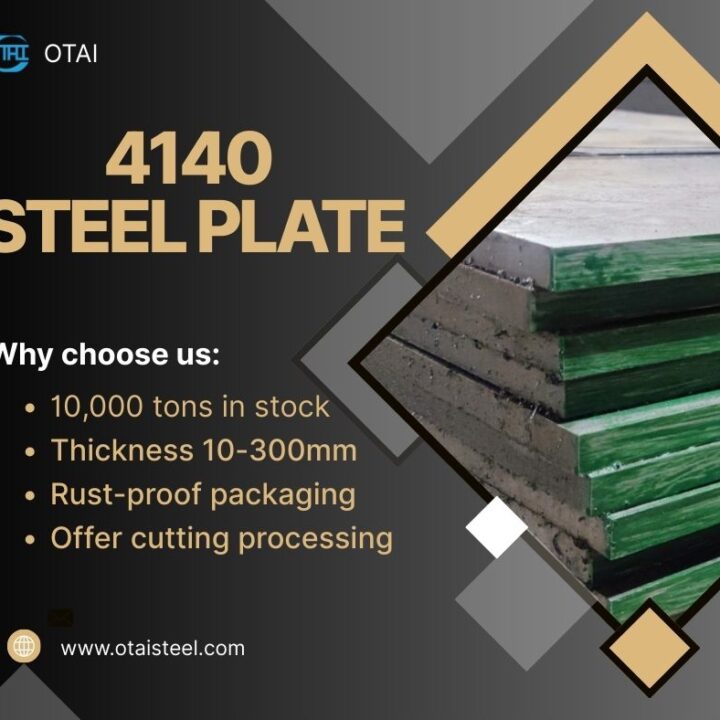
4140 steel is a chromium-molybdenum alloy steel known for its excellent toughness, strength, and resistance to wear. It’s commonly used in demanding applications, such as heavy-duty machinery, automotive parts, and tools that require high performance.
1045 steel, on the other hand, is a medium carbon steel with higher carbon content than low-carbon steels but without any significant alloying elements like chromium or molybdenum. While it’s strong, it doesn’t have the same level of wear resistance or toughness as 4140.
Understanding these differences can help you make the right decision based on your specific project needs.
Mechanical Properties: 4140 Steel vs 1045 Steel
Let’s break down the key mechanical properties of 4140 steel and 1045 steel:
| Property | 4140 Steel | 1045 Steel |
|---|---|---|
| Material Type | Chromium-Molybdenum Alloy Steel | Medium Carbon Steel |
| Tensile Strength (MPa) | 850 – 1000 | 600 – 700 |
| Yield Strength (MPa) | ~655 | ~450 |
| Hardness (HRC) | 28 – 32 | 170 – 190 (untreated) |
| Elongation (%) | ~25 | ~16 |
| Heat Treatment | Optional (QT or Annealed) | Annealed |
| Cost | Moderate | Low |
As you can see, 4140 steel is far stronger and tougher than 1045 steel, making it ideal for applications that require high strength and resistance to fatigue. On the other hand, 1045 steel is more affordable and easier to work with, making it suitable for less demanding applications.
Can You Use 4140 Steel Instead of 1045 Steel?
In some cases, 4140 steel can be used instead of 1045 steel, but it depends on the application.
-
Cost: 4140 steel is significantly more expensive than 1045 steel, and if your application doesn’t require the added strength and toughness of 4140, it might not be cost-effective to use it.
-
Machining: 4140 steel is harder and requires more advanced tools to machine, while 1045 steel is easier to machine and process, making it a better choice for projects that require quick turnaround times.
If you’re working on parts that don’t experience heavy loads, stress, or wear, 1045 steel will likely meet your needs at a much lower cost. But if your project requires parts that need higher strength or resistance to fatigue, 4140 steel is the superior option.
When to Choose 4140 Steel vs 1045 Steel
The choice between 4140 and 1045 really comes down to the application and performance requirements. Here’s a quick guide to help you decide:
| Application Type | Recommended Material | Why? |
|---|---|---|
| Heavy-duty parts (shafts, gears) | 4140 Steel | High strength, toughness, and wear resistance |
| Medium load components (brackets, frames) | 1045 Steel | Cost-effective, easier to machine, good strength |
| Automotive parts (high-stress) | 4140 Steel | Better fatigue resistance, high tensile strength |
| Non-critical machinery parts | 1045 Steel | Good for general-purpose components |
| Industrial tools and machinery | 4140 Steel | Superior resistance to wear and fatigue |
For instance, we helped a client in the automotive sector who initially used 1045 steel for suspension components. After experiencing some failures under heavy load, they switched to 4140 steel, and the performance drastically improved with fewer replacements.
However, for applications like simple brackets, 1045 steel is more than sufficient and more affordable.
Machinability and Heat Treatment: Key Differences
Both 4140 steel and 1045 steel have different machining characteristics:
-
1045 steel is relatively easy to machine, even in its as-rolled or annealed state. It’s great for general machining applications and is often chosen for simple parts.
-
4140 steel, being an alloy steel, is more challenging to machine. It requires more advanced tools and slower cutting speeds. However, when heat treated (quenched and tempered), it offers excellent mechanical properties that are worth the effort for high-performance parts.
Here’s a quick overview:
| Feature | 4140 Steel | 1045 Steel |
|---|---|---|
| Machinability | Moderate (requires advanced tools) | Easy (can be machined with standard tools) |
| Heat Treatment | Quenched and tempered, nitrided | Annealed |
| Surface Hardness Depth | Deep case hardening | Shallow (surface hardened) |
| Tool Wear | Moderate | Low |
If you’re working with small batches or need quick-turnaround parts, 1045 steel will be easier to handle. But for critical, high-load components that need precise machining, 4140 steel is the way to go.
Why Choose Otai Steel for 4140 and 1045 Steel?
Here’s why companies rely on Otai Steel for their steel material needs:
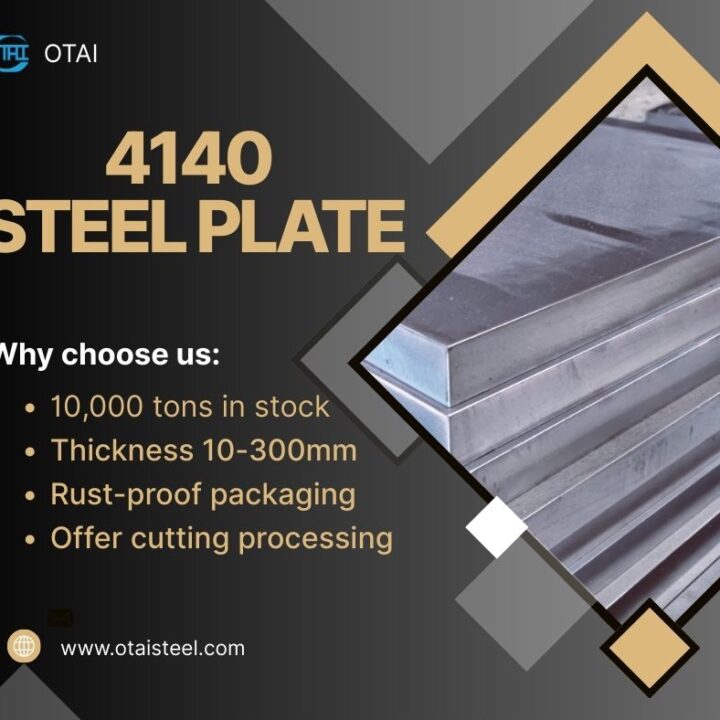
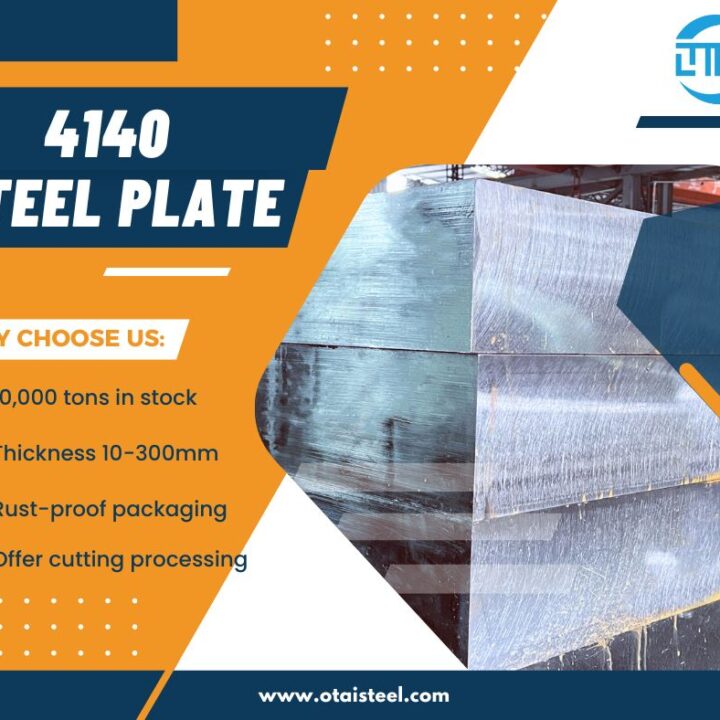
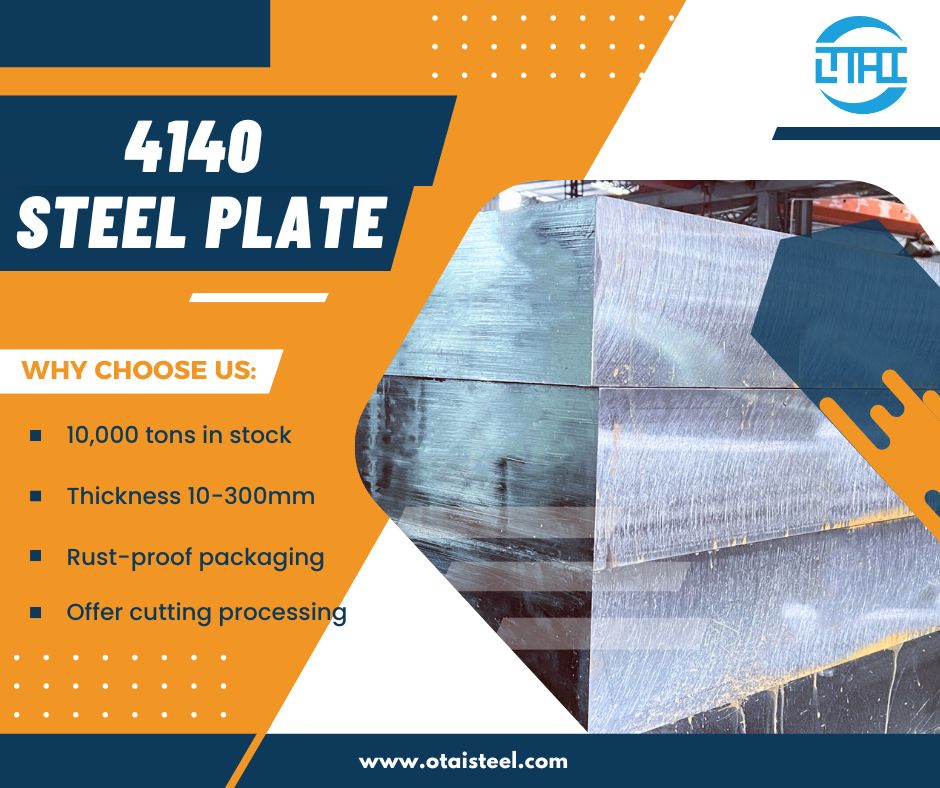
- Large inventory — over 10,000 tons of steel available
- Custom solutions — cut-to-size, heat treated, and finished to your exact specifications
- Top-quality assurance — UT testing, chemical composition certifications
- Fast shipping — quick delivery worldwide
We don’t just sell steel—we provide tailored solutions that meet your performance and budget requirements.
Ready to Choose the Right Steel?
If you’re stuck deciding between 4140 and 1045 steel, we can help.
Contact us today for a free material consultation or to get a quick quote.
📧 jack@otaisteel.com
📱 +8676923190193 (WhatsApp)
FAQs – 4140 Steel vs 1045 Steel:
-
Can I use 4140 instead of 1045 for non-critical parts?
Not necessary. 1045 steel is sufficient for low-stress parts and much more affordable than 4140. -
Is 4140 stronger than 1045?
Yes, 4140 steel has much higher tensile strength and toughness compared to 1045 steel. -
Which steel is easier to machine?
1045 steel is much easier to machine and process than 4140 steel. -
Do you offer 4140 and 1045 steel in custom sizes?
Yes, we offer cut-to-size and heat-treated solutions for both 4140 and 1045 steel. -
How fast can I get my steel order?
For in-stock materials, we can ship within 3-5 days worldwide.