In mechanical engineering and industrial manufacturing, material selection often determines whether a component achieves long service life or fails prematurely. Among widely used engineering steels, low alloy 4140 steel occupies a unique position. It combines solid strength, good toughness, and reliable heat treatment response without excessive alloy content.
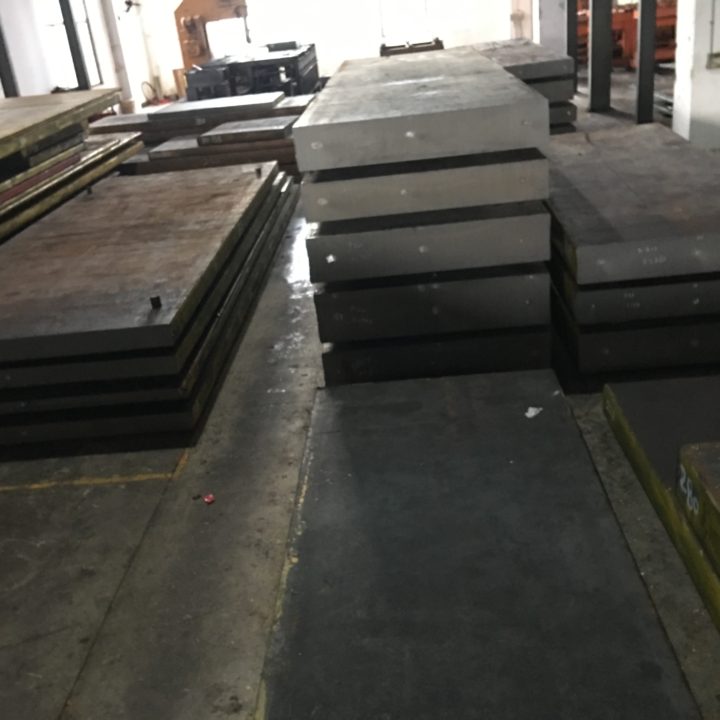
Instead of focusing on extreme hardness or ultra-high tensile strength, low alloy 4140 steel delivers balanced mechanical performance. Therefore, engineers frequently select it for shafts, gears, bolts, and structural components that operate under combined loads. Moreover, its availability in plate, bar, and forging forms makes it adaptable across industries.
This article explores low alloy 4140 steel from a practical engineering perspective, covering its alloy design, mechanical behavior, heat treatment response, and real-world applications.
1. What Is Low Alloy 4140 Steel?
Low alloy 4140 steel is a chromium-molybdenum alloy steel defined under ASTM A29 / A322 and equivalent international standards. The term “low alloy” indicates that the total alloying content remains relatively modest, typically below 5%. However, even small additions of chromium and molybdenum significantly enhance performance.
Unlike plain carbon steels, low alloy 4140 steel offers:
-
Improved hardenability
-
Better strength-to-weight ratio
-
More stable mechanical properties after heat treatment
As a result, it bridges the gap between basic carbon steels and high-alloy specialty steels.
2. Chemical Composition and Alloying Logic
The performance of low alloy 4140 steel begins with its carefully controlled composition.
Typical Chemical Composition (wt.%)
| Element | Content Range |
|---|---|
| Carbon (C) | 0.38 – 0.43 |
| Chromium (Cr) | 0.80 – 1.10 |
| Molybdenum (Mo) | 0.15 – 0.25 |
| Manganese (Mn) | 0.75 – 1.00 |
| Silicon (Si) | 0.15 – 0.35 |
| Phosphorus (P) | ≤ 0.035 |
| Sulfur (S) | ≤ 0.040 |
Each element serves a specific role:
-
Carbon provides base strength and hardness potential
-
Chromium improves wear resistance and hardenability
-
Molybdenum enhances toughness and high-temperature strength
-
Manganese supports strength and uniform microstructure
Therefore, low alloy 4140 steel maintains predictable behavior during quenching and tempering.
3. Mechanical Properties of Low Alloy 4140 Steel
Mechanical performance defines the engineering value of low alloy 4140 steel. These properties vary depending on heat treatment condition.
Mechanical Properties (Quenched and Tempered Condition)
| Property | Typical Range |
|---|---|
| Tensile strength | 850 – 1000 MPa |
| Yield strength | 650 – 850 MPa |
| Elongation (A5) | 12 – 16% |
| Impact toughness (Charpy, +20 °C) | 35 – 55 J |
| Hardness | 28 – 32 HRC |
This combination allows components to withstand high stress while maintaining adequate ductility. Consequently, engineers rely on low alloy 4140 steel for parts exposed to shock and cyclic loading.
4. Strength–Toughness Balance
Strength alone does not guarantee durability. In fact, excessive hardness often increases brittleness. Low alloy 4140 steel addresses this issue by offering a balanced strength–toughness profile.
-
Yield strength controls elastic deformation
-
Tensile strength defines overload resistance
-
Toughness absorbs impact energy
Therefore, shafts and fasteners made from 4140 steel resist cracking under sudden load changes. Moreover, designers can fine-tune properties by adjusting tempering temperature.
5. Heat Treatment Response
One major advantage of low alloy 4140 steel lies in its excellent heat treatment flexibility.
Common heat treatment routes include:
-
Normalizing for grain refinement
-
Quenching and tempering for strength control
-
Induction hardening for localized surface hardness
Effect of Tempering Temperature
| Tempering Temperature | Resulting Property Trend |
|---|---|
| Low (200–300 °C) | Higher hardness, lower toughness |
| Medium (400–500 °C) | Balanced strength and toughness |
| High (550–650 °C) | Lower strength, higher ductility |
As a result, engineers can match material behavior precisely to service requirements.
6. Fatigue Performance and Load Behavior
Fatigue failure often governs the service life of rotating components. Low alloy 4140 steel performs well under cyclic loading due to:
-
Uniform tempered martensitic structure
-
Good surface finish capability
-
Stable residual stress distribution
Moreover, induction-hardened surfaces further improve fatigue resistance without compromising core toughness. Therefore, 4140 steel often outperforms plain carbon steels in real-world fatigue conditions.
7. Comparison with Other Common Steels
To understand where low alloy 4140 steel fits best, a comparison with alternative grades helps.
Comparison with Similar Engineering Steels
| Steel Grade | Strength Level | Toughness | Typical Use |
|---|---|---|---|
| 4140 | High | Good | Shafts, bolts, gears |
| 1045 | Medium | Medium | General-purpose parts |
| 4340 | Very high | Very high | Aerospace, heavy-duty shafts |
| 42CrMo4 | High | Good | Machinery components |
Compared with 4340, low alloy 4140 steel offers lower cost and easier processing. Compared with 1045, it delivers superior strength and fatigue life.
8. Typical Applications of Low Alloy 4140 Steel
Thanks to its balanced properties, low alloy 4140 steel serves many industries:
-
Power transmission shafts
-
Automotive axles and spindles
-
High-strength bolts and studs
-
Industrial gears
-
Oil and gas tooling components
In these applications, engineers value reliability, machinability, and predictable performance over extreme alloying.
Company Advantages – Otai Special Steel
Otai Special Steel supplies alloy 4140 steel with stable quality and consistent mechanical performance.
Why customers work with us:
-
Large stock of 4140 plates, bars, and forgings
-
Thickness range from 6 mm to 300 mm
-
UT testing and chemical composition verification
-
Custom cutting and heat-treatment coordination
-
Long-term supply experience for global clients
We focus on solving material selection and supply challenges, not just delivering steel.
FAQ
Q1: Is alloy 4140 steel suitable for high-stress shafts?
Yes. Its strength and toughness balance suits shafts under combined bending and torsion.
Q2: Can 4140 steel replace 4340 in all applications?
No. For extreme load or low-temperature service, 4340 may perform better. However, 4140 often meets requirements at lower cost.
Q3: Does alloy 4140 steel machine well?
Yes. In the annealed or normalized condition, it offers good machinability.