 Annealing 4140 Steel: The Complete Heat Treatment Guide
If you work with alloy steels in machining, fabrication, or heat treatment, you’ve probably come across annealing 4140 steel. This process is one of the most effective ways to soften the steel, improve machinability, and prepare it for further forming or heat treatment. But to get it right, you need to understand the temperatures, cooling rates, and metallurgical changes that happen during annealing.
In this guide, we’ll break down what annealing does to 4140 steel, why it’s essential for certain projects, and how to perform it step by step—backed with technical data and practical shop tips.
🌟 What Is Annealing 4140 Steel?
4140 steel is a chromium-molybdenum alloy steel known for its high strength, wear resistance, and toughness. In its hardened state, it can be difficult to machine or bend. Annealing is a heat treatment process that reduces hardness, increases ductility, and relieves internal stresses.
When you perform annealing 4140 steel, you heat the material to a specific range (above its critical temperature), hold it to allow transformation, and then cool it slowly—typically in a furnace or insulating medium. This allows the microstructure to convert into a softer, more machinable form called ferrite-pearlite.
🔍 Chemical Composition of 4140 Steel
Before diving into the process, here’s the typical chemical makeup of 4140 alloy steel:
| Element | Percentage (%) |
|---|---|
| Carbon (C) | 0.38–0.43 |
| Chromium (Cr) | 0.80–1.10 |
| Molybdenum (Mo) | 0.15–0.25 |
| Manganese (Mn) | 0.75–1.00 |
| Silicon (Si) | 0.15–0.35 |
| Phosphorus (P) | ≤ 0.035 |
| Sulfur (S) | ≤ 0.04 |
This alloy combination gives 4140 pre-annealed steel its balance of strength and hardenability.
🔥 Annealing Process for 4140 Steel – Step by Step
Here’s the typical cycle used by heat treatment shops when annealing 4140 steel:
| Step | Temperature (°C / °F) | Time | Cooling Method | Purpose |
|---|---|---|---|---|
| Preheat | 400–500°C / 750–930°F | — | Furnace | Reduce thermal shock |
| Full Heat | 815–845°C / 1500–1550°F | 1 hour per inch thickness | Furnace | Transform microstructure |
| Hold | Same as full heat | As required | Furnace | Uniform temperature throughout |
| Controlled Cooling | ≤ 28°C/hour to 540°C (≤ 50°F/hour to 1000°F) | — | Furnace or sand bed | Prevent hardening during cooling |
| Final Cool | Room temperature | — | Air | Complete cycle |
📈 Effects of Annealing on Mechanical Properties
Annealing 4140 steel has a significant effect on hardness, tensile strength, and elongation:
| Property | Before Annealing (Q&T) | After Annealing |
|---|---|---|
| Hardness (HRC) | 28–32 | 18–22 |
| Tensile Strength (MPa) | 850–1100 | 620–700 |
| Yield Strength (MPa) | 650–950 | 415–500 |
| Elongation (%) | 12–18 | 20–25 |
| Machinability (%) | 60 | 80 |
💡 The increase in ductility and machinability is why many machinists prefer machining annealed 4140 steel over hardened stock.
🧪 Microstructural Changes During Annealing
When annealing 4140 alloy steel, the structure changes from tempered martensite or bainite to ferrite-pearlite. This transformation:
-
Relieves residual stresses from forging or machining
-
Improves toughness by eliminating brittleness
-
Prepares steel for carburizing or nitriding if needed later
-
Enhances cold forming capability such as bending or rolling
🛠️ When to Anneal 4140 Steel
You should consider annealing 4140 steel in situations like:
-
Before extensive cold forming 4140 steel
-
When high machinability is needed for precision components
-
To remove stresses after heavy welding or forging
-
Before applying surface hardening treatments like nitriding or carburizing
⚠️ Common Mistakes to Avoid
-
Overheating above 870°C (1600°F) – causes grain growth and reduces toughness
-
Cooling too quickly – may result in partial hardening
-
Skipping preheat – can cause thermal shock and cracking in large sections
-
Not holding long enough – results in incomplete transformation
🔍 Annealed 4140 Steel vs Normalized 4140 Steel
| Feature | Annealed 4140 | Normalized 4140 |
|---|---|---|
| Hardness | Lower (softer) | Slightly higher |
| Machinability | Higher | Lower |
| Grain Structure | Ferrite-pearlite | Finer pearlite |
| Stress Relief | Excellent | Good |
| Common Use | Machining, cold forming | General structural parts |
🧠 Pro Tips from the Heat Treatment Floor
-
Always measure core temperature, not just surface, before holding time starts.
-
Use furnace charts to track exact cooling rates.
-
If annealing thick 4140 steel plate, allow extra soak time to avoid uneven properties.
-
Combine annealing with a later quench and temper cycle for optimal strength.
🏭 Company Advantages – Why Choose Otai Special Steel for Annealed 4140
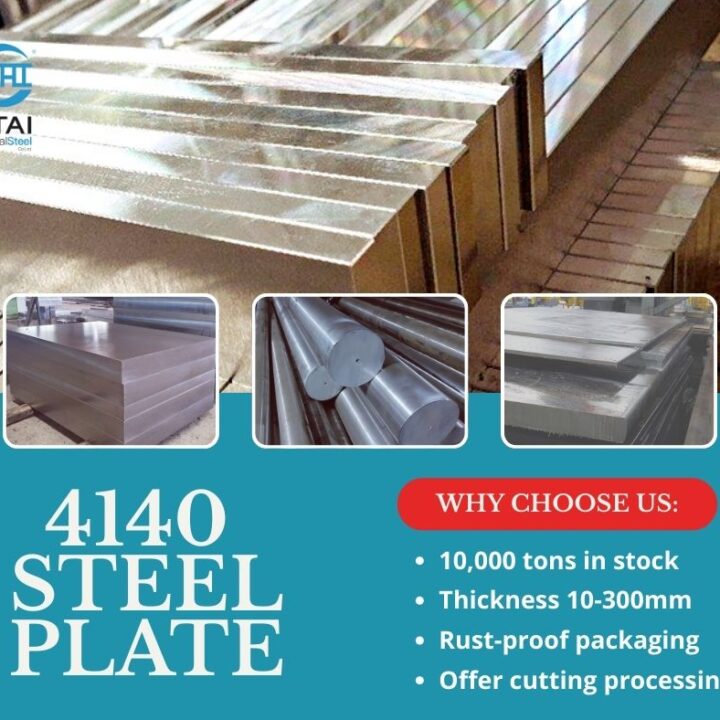
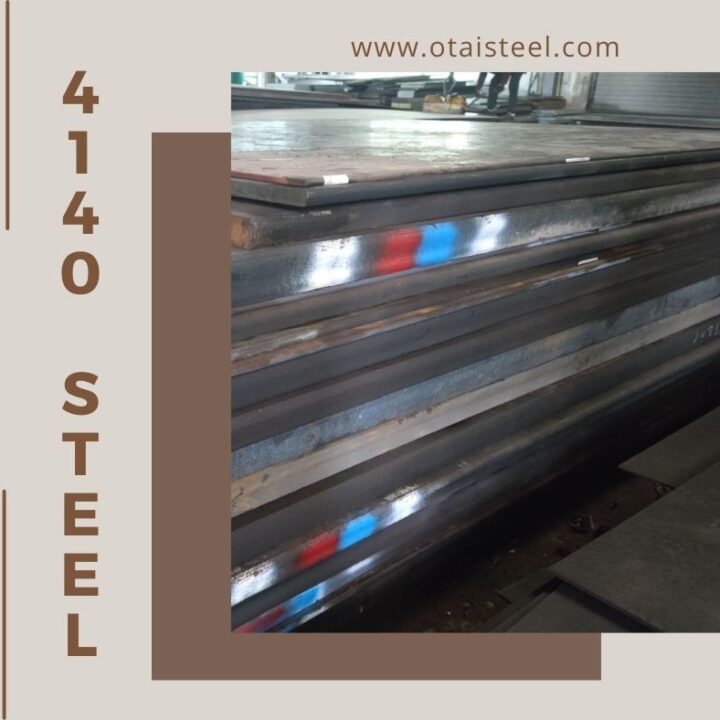
At Otai Special Steel, we specialize in supplying 4140 steel in all heat treatment conditions, including fully annealed stock ready for machining or forming.
Our Advantages:
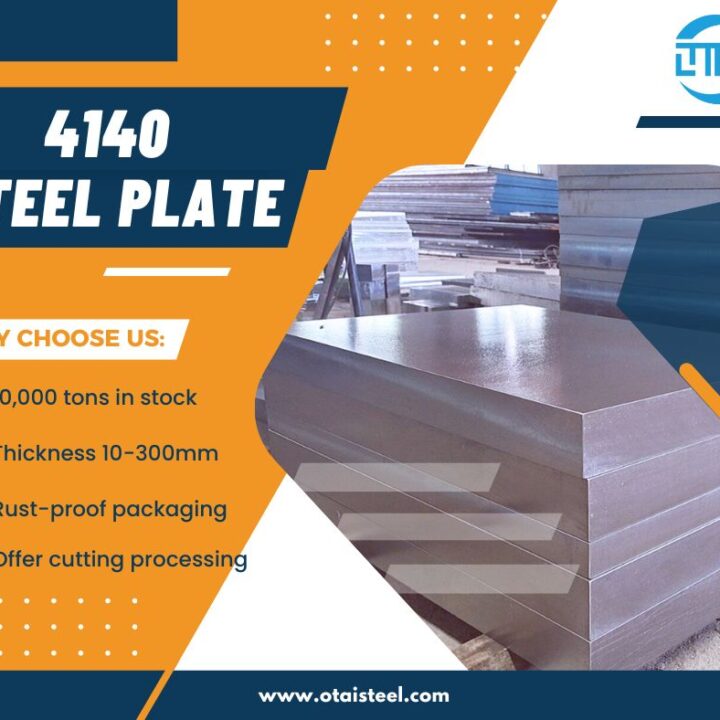
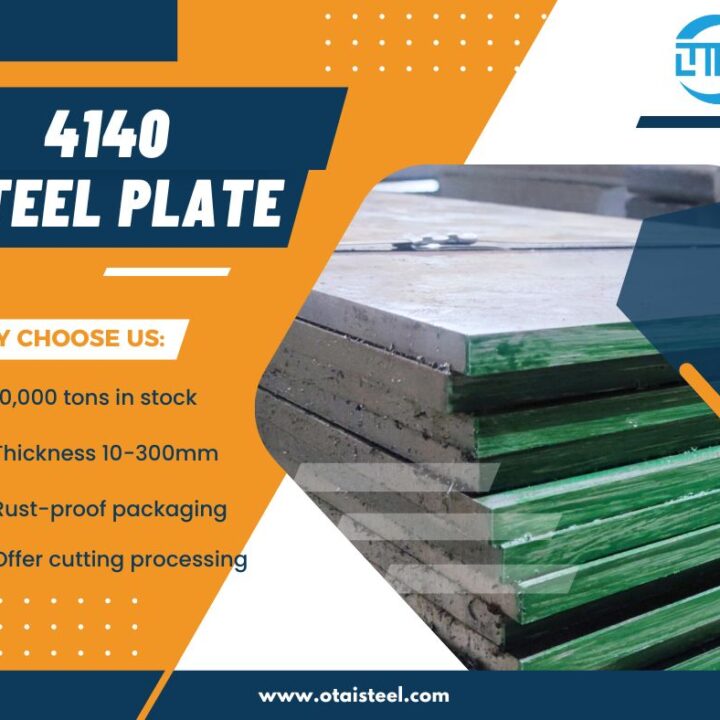
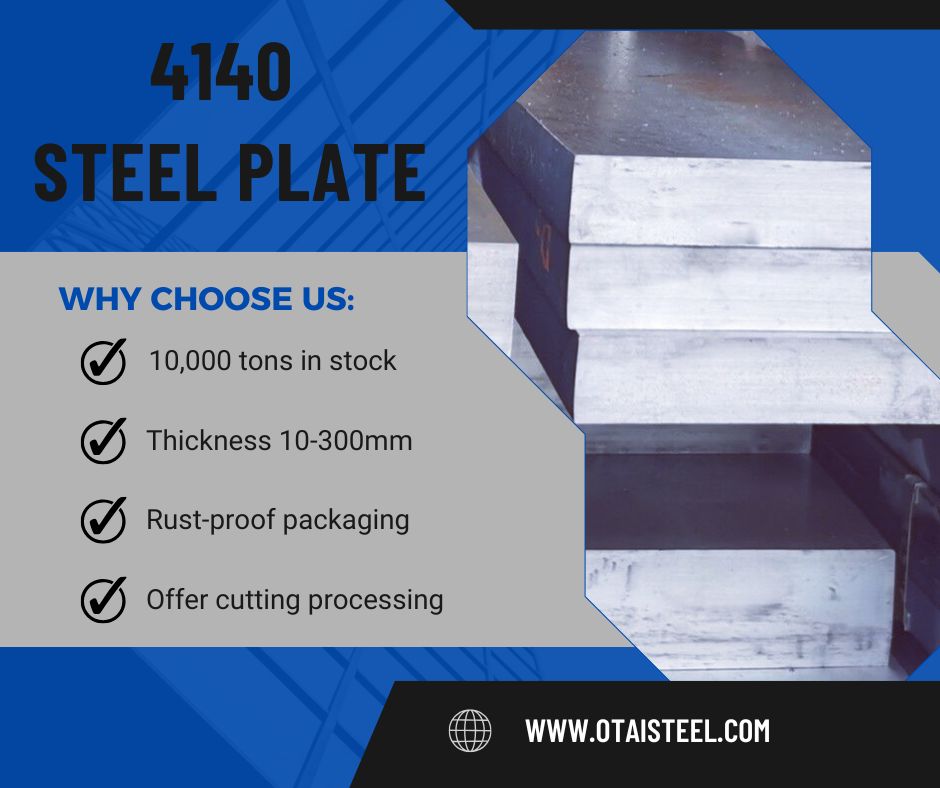
- ✅ 10,000+ tons of 4140 steel in stock (6mm–300mm thick)
- ✅ Available in annealed, normalized, Q&T, and nitrided states
- ✅ Precision cutting service for your exact sizes
- ✅ Heat treatment and technical support included
- ✅ SGS/BV inspection and full material certificates
- ✅ Global export with on-time delivery
- ✅ Long-term supply partnerships with Thyssenkrupp, Borealis, Schlumberger
📧 Contact us: jack@otaisteel.com
📱 WhatsApp: +8676923190193
❓ FAQ – Annealing 4140 Steel
Q1: Can I anneal 4140 steel at home?
Yes, small parts can be annealed with a controlled furnace, but precision industrial annealing ensures better results.
Q2: Does annealing reduce strength?
Yes, but it increases ductility and machinability. Strength can be restored with later heat treatments.
Q3: How long should I hold at annealing temperature?
A general rule is 1 hour per inch of thickness after reaching target temperature.
Q4: Can I machine 4140 steel right after annealing?
Yes, in fact, annealed 4140 is much easier to machine.
Q5: What’s the difference between full annealing and subcritical annealing?
Full annealing transforms the entire microstructure; subcritical annealing focuses on stress relief without full softening.