 What Does Fracture Toughness Mean for 4140 Steel?
In real industrial environments, components rarely fail because of simple overload. Instead, cracks initiate, grow, and finally cause sudden fracture. That is why engineers care deeply about the fracture toughness of 4140 steel, not just its tensile strength or hardness.
4140 steel delivers a rare balance: high strength with reliable resistance to crack propagation. This combination makes it a preferred material for shafts, gears, pressure-containing parts, and heavy-duty machinery.
🔍 What Does Fracture Toughness Mean for 4140 Steel?
Fracture toughness describes a material’s ability to resist crack growth once a crack already exists. In practical terms, it answers a critical question:
Will this part fail suddenly, or will it tolerate damage and give warning?
For 4140 steel, fracture toughness depends strongly on:
-
Heat treatment condition
-
Strength level (hardness)
-
Section thickness
-
Operating temperature
Unlike brittle steels, properly treated 4140 steel absorbs energy and slows crack propagation.
⚙️ Why 4140 Steel Shows Good Fracture Toughness
4140 steel combines chromium and molybdenum with medium carbon content. This alloy design creates a tough martensitic or tempered martensitic structure after heat treatment.
Key contributors include:
-
Chromium improves hardenability and crack resistance
-
Molybdenum reduces temper embrittlement
-
Controlled carbon content maintains toughness
As a result, 4140 steel resists catastrophic fracture even under dynamic loading.
📊 Typical Fracture Toughness Values of 4140 Steel
Engineers often express fracture toughness as K<sub>IC</sub>, measured in MPa·√m.
📏 Typical Fracture Toughness Ranges
| Heat Treatment Condition | Hardness (HRC) | Fracture Toughness (MPa·√m) |
|---|---|---|
| Annealed | 18 – 22 | 80 – 100 |
| Quenched & Tempered (Low strength) | 28 – 32 | 70 – 85 |
| Quenched & Tempered (Medium strength) | 32 – 36 | 55 – 70 |
| Quenched & Tempered (High strength) | 38 – 42 | 40 – 55 |
As strength increases, fracture toughness decreases. Engineers must balance these two properties carefully.
🔥 Effect of Heat Treatment on Fracture Toughness
Heat treatment plays the dominant role in controlling the fracture toughness of 4140 steel.
🔧 Practical Heat Treatment Insights
-
Lower tempering temperatures raise strength but reduce toughness
-
Higher tempering temperatures sacrifice some strength to gain crack resistance
-
Uniform quenching reduces internal stress and improves toughness
For critical parts, engineers often select 30–36 HRC as the best compromise.
🧪 Fracture Toughness vs Hardness: Finding the Right Balance
Many failures occur because designers push hardness too far.
⚖️ Practical Trade-Off
| Design Goal | Recommended Hardness |
|---|---|
| Maximum wear resistance | 38 – 42 HRC |
| Balanced strength & toughness | 30 – 36 HRC |
| High impact resistance | 26 – 30 HRC |
For rotating shafts and pressure-loaded components, fracture toughness matters more than peak hardness.
🏗️ How Fracture Toughness Impacts Real Applications
The fracture toughness of 4140 steel directly influences component reliability in demanding environments.
Common Applications Where Toughness Matters
-
Shafts → Prevents sudden torsional fracture
-
Gears → Reduces crack propagation at tooth roots
-
Oil & gas components → Handles pressure fluctuations safely
-
Heavy machinery → Absorbs shock loads and vibration
-
Structural pins and bolts → Maintains integrity under fatigue
In these applications, toughness often defines service life more than tensile strength.
❄️ Temperature Effects on Fracture Toughness
4140 steel maintains good toughness at room temperature. However, toughness decreases as temperature drops.
Temperature Considerations
-
Room temperature → Stable and predictable behavior
-
Sub-zero conditions → Reduced fracture toughness
-
Cryogenic environments → Not recommended without modification
For low-temperature service, engineers often specify controlled chemistry and higher tempering temperatures.
🆚 4140 Steel vs Higher-Strength Alloy Steels
📊 Toughness Comparison Overview
| Steel Grade | Strength Level | Fracture Toughness Trend |
|---|---|---|
| 4140 | Medium–High | Excellent balance |
| 4340 | Very High | Higher toughness at same strength |
| Tool steels | Very High | Lower toughness |
| Carbon steels | Medium | Lower crack resistance |
4140 steel remains a cost-effective choice when toughness and strength must coexist.
🏅 Company Advantages – Otai Special Steel
At Otai Special Steel, we understand that fracture toughness starts with consistent material quality.
-
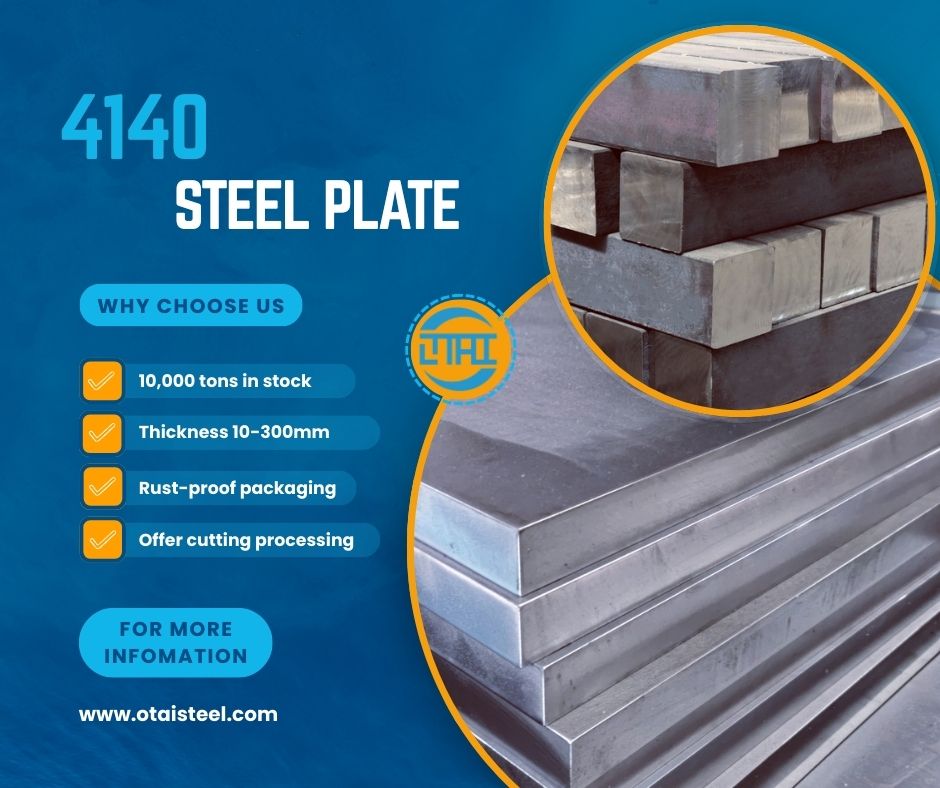
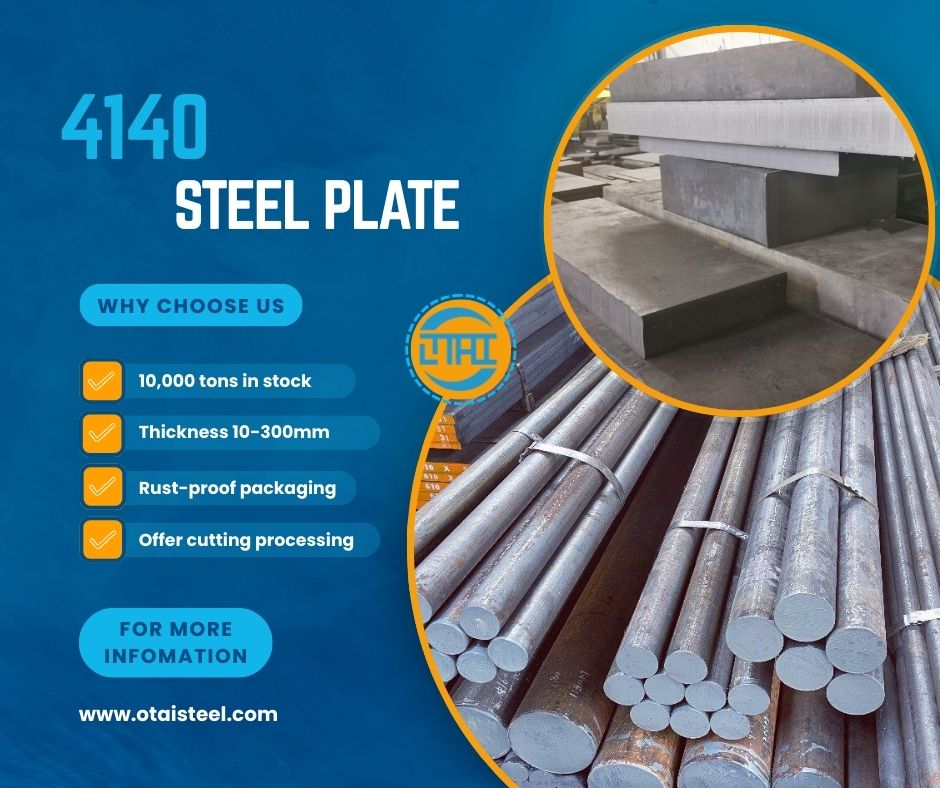
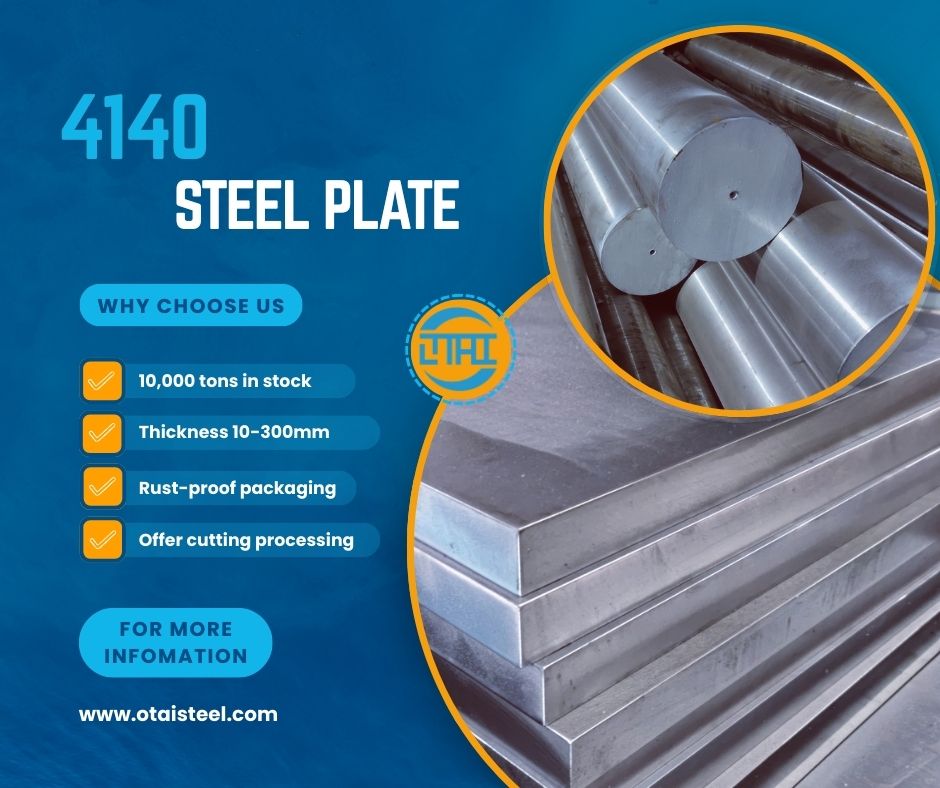
Large stock of 4140 steel plates and bars
-
Thickness range from 6 mm to 300 mm
-
Controlled chemistry for stable heat treatment response
-
UT testing and chemical analysis available
-
Experience supplying critical load-bearing components
We help customers choose hardness levels that protect both performance and safety.
❓ FAQ – Fracture Toughness of 4140 Steel
Q1: Is 4140 steel considered tough or brittle?
4140 steel is tough when properly quenched and tempered. Brittle behavior only appears at excessive hardness or poor heat treatment.
Q2: Does higher hardness always mean lower fracture toughness?
Yes. Increasing hardness improves strength but reduces resistance to crack growth.
Q3: What hardness gives the best fracture toughness for 4140 steel?
Around 28–32 HRC provides an excellent toughness–strength balance.
Q4: Can 4140 steel handle impact loading?
Yes. Its fracture toughness makes it suitable for moderate to high impact conditions.
Q5: Is fracture toughness more important than tensile strength?
For safety-critical parts, fracture toughness often matters more than peak strength.

 The Normalizing Process for 16MnCr5 Steel