 Can 4140 Steel Be Hardened?
When it comes to versatile alloy steels, 4140 steel often tops the list. Known for its excellent balance of strength, toughness, and wear resistance, 4140 is widely used in industries ranging from automotive to heavy machinery. But one question that frequently comes up is: Can 4140 steel be hardened? The answer is a clear yes — and not only can it be hardened, but it also responds exceptionally well to different heat treatment processes.
In this detailed guide, we’ll explore the hardenability of 4140 steel, how the process works, the factors influencing hardness, and practical tips for achieving optimal results.
🛠️ What Is 4140 Steel?
4140 steel is a chromium-molybdenum alloy steel containing about 0.38–0.43% carbon, 0.75–1.00% chromium, and 0.15–0.25% molybdenum. This composition gives it:
-
Good tensile strength
-
Excellent fatigue resistance
-
High toughness
-
Ability to withstand moderate wear
4140 is supplied in various forms — as annealed, normalized, pre-hardened, or quenched and tempered — which directly affects how hard it is before additional processing.
🔍 Hardenability Explained
Hardenability refers to the steel’s ability to form martensite when quenched from its austenitizing temperature. This is not the same as hardness — rather, it’s about how deep into the material the hardness can be achieved.
4140 steel has high hardenability because of its alloying elements:
-
Chromium slows down the transformation from austenite to pearlite, allowing deeper hardening.
-
Molybdenum reduces the risk of temper embrittlement and improves toughness at high hardness levels.
🔥 How to Harden 4140 Steel
There are several methods to harden 4140 steel, but the most common process is quenching and tempering.
Step 1 – Austenitizing
-
Heat the steel to 830–880°C (1525–1615°F).
-
Hold at temperature until the core is fully heated.
Step 2 – Quenching
-
Cool rapidly in oil or water (oil is preferred to reduce distortion and cracking).
-
This transforms the microstructure into martensite, a very hard but brittle phase.
Step 3 – Tempering
-
Reheat to 200–650°C (390–1200°F) depending on desired properties.
-
Tempering reduces brittleness while retaining strength.
📊 Hardness Levels Achievable
| Condition | Rockwell Hardness (HRC) |
|---|---|
| Annealed | ~ 18–22 HRC |
| Pre-hardened | ~ 28–32 HRC |
| Quenched and tempered (low temp) | 50–55 HRC |
| Quenched and tempered (high temp) | 28–40 HRC |
With proper heat treatment, 4140 can reach up to 55 HRC, making it suitable for high-wear applications.
⚙️ Factors That Affect Hardening Results
-
Section Size – Larger cross-sections cool slower and may not achieve full hardness to the core.
-
Quench Medium – Oil quenching is slower and safer for distortion; water quenching gives higher hardness but higher crack risk.
-
Initial Condition – Annealed vs. pre-hardened stock changes the final result.
-
Post-Heat Treatment Stress Relief – Reduces distortion after machining.
🧪 Applications That Benefit from Hardening
Hardened 4140 steel is widely used in:
-
Drive shafts
-
Gears
-
Crankshafts
-
Mold bases
-
Tooling components
-
High-strength bolts
These parts require both surface hardness for wear resistance and core toughness to absorb shock.
💡 Tips for Best Results
-
Always normalize before hardening large sections to reduce internal stresses.
-
Use controlled quenching to prevent warping.
-
For induction hardening, target surfaces can reach 58–60 HRC while keeping a tough core.
-
Perform nondestructive testing (like ultrasonic testing) after heat treatment for critical components.
📈 Why 4140 Steel Is a Heat Treater’s Favorite
Compared to plain carbon steels, 4140 offers better hardenability, meaning even thick sections can be hardened effectively. Its chromium and molybdenum content make it more resistant to soft spots and distortion during treatment.
🏭 Company Advantages – Otai Special Steel
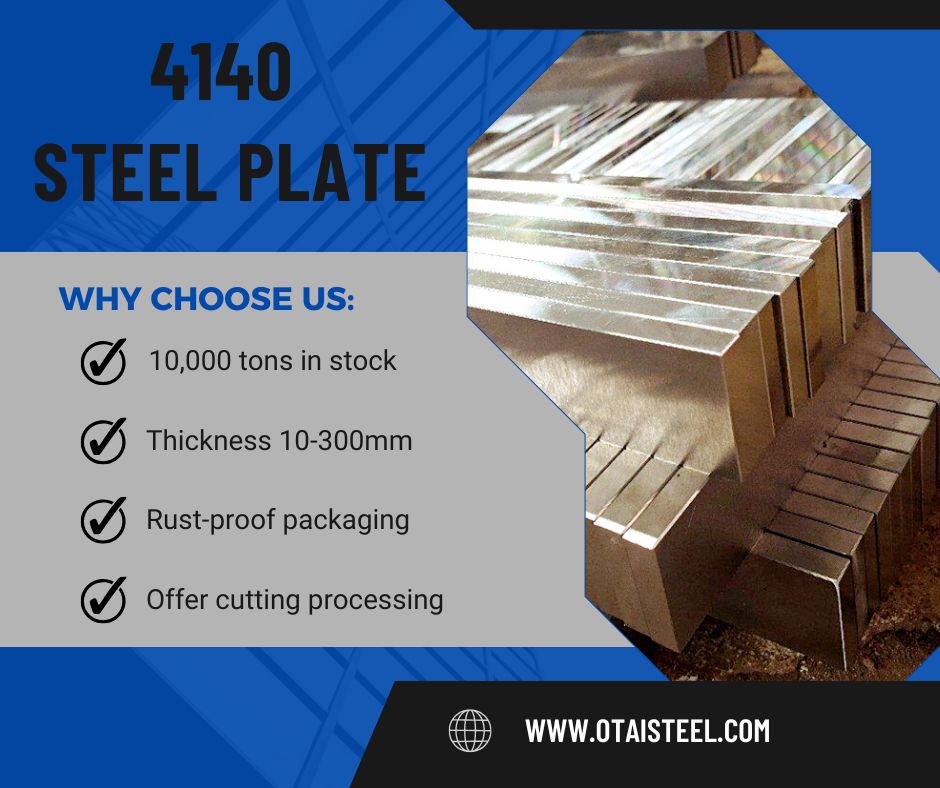
At Otai Special Steel, we have over 20 years of experience supplying and processing 4140 steel for global clients.
Our advantages include:
-
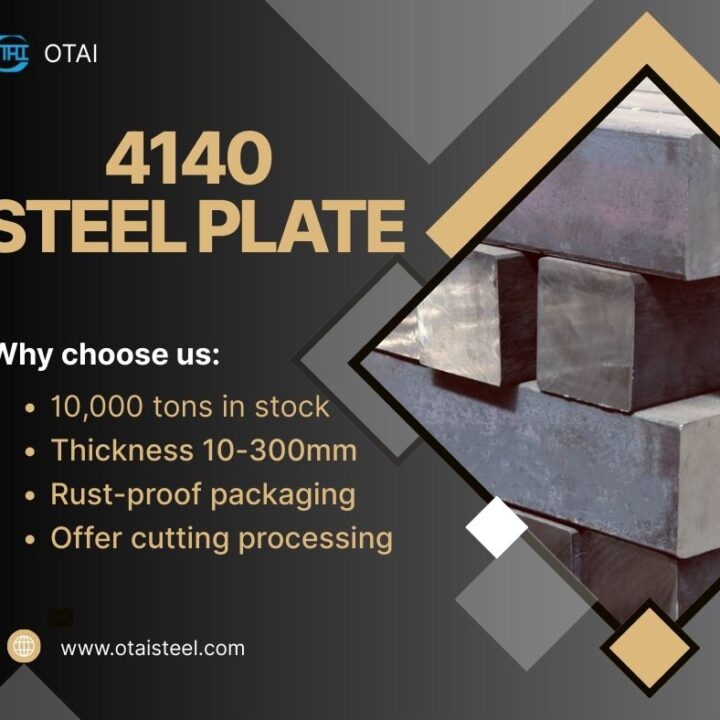
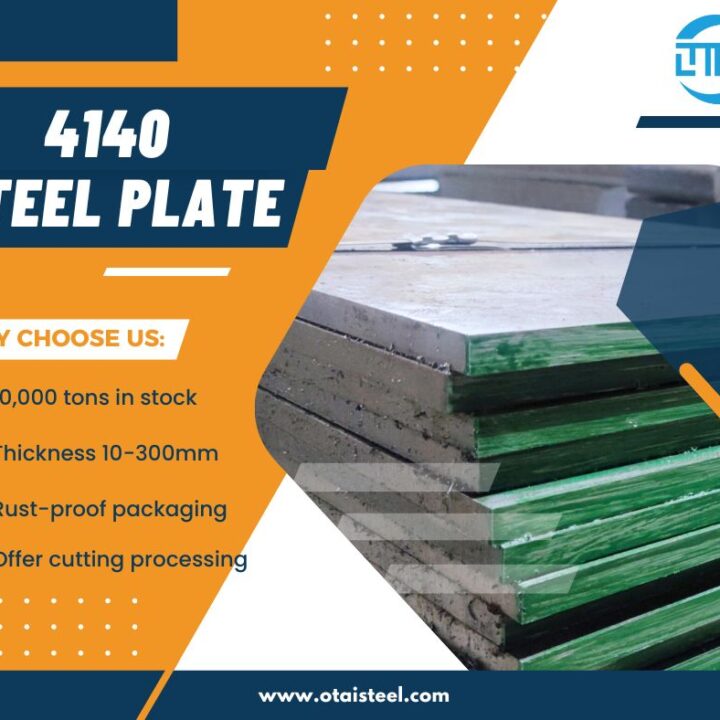
Large inventory (over 10,000 tons in stock)
-
Customized cutting, heat treatment, and surface finishing
-
Ultrasonic testing and third-party inspection (SGS, etc.)
-
Fast delivery to international markets
-
Competitive pricing without compromising quality
❓ FAQ
Q1: Can 4140 steel be through-hardened?
Yes. With proper heat treatment, it can be hardened through the cross-section, especially in smaller sizes.
Q2: Is water quenching recommended for 4140?
It’s possible but not recommended for thick sections due to cracking risk; oil is safer.
Q3: Can 4140 be surface hardened only?
Yes. Processes like induction hardening can give a very hard outer layer with a tough core.
Q4: What’s the max hardness 4140 can achieve?
Around 55 HRC with standard quench and temper.
Q5: Does hardening affect machinability?
Yes. Hardened 4140 is more difficult to machine and often requires carbide tooling.