4140 steel is a widely used alloy steel known for its high tensile strength, toughness, and wear resistance. It is a popular choice in industries like automotive, aerospace, and machinery, especially for manufacturing gears, shafts, axles, and crankshafts. One of the key properties that make 4140 steel highly effective in these applications is its compressive strength, or its ability to withstand compressive forces before failing or deforming.
This article delves into the compressive strength of 4140 steel, factors that affect it, and its importance in various applications.
🏗️ What is Compressive Strength?
Compressive strength measures how much compression (squeezing or pushing) a material can withstand before it deforms or fails. It contrasts with tensile strength, which measures a material’s ability to resist stretching or pulling forces. Compressive strength becomes essential in applications where components are subject to pressing forces, such as in gears, pistons, and bearing housings.
For 4140 steel, compressive strength is determined by its chemical composition, heat treatment, and microstructure.
🔧 Factors Affecting the Compressive Strength of 4140 Steel
Several factors influence the compressive strength of 4140 steel. Understanding these factors helps in selecting the right material for various applications.
1. Material Composition
-
4140 steel contains chromium (Cr) and molybdenum (Mo), which enhance the steel’s strength, hardness, and wear resistance. These alloying elements increase the steel’s ability to resist deformation under compressive loads.
2. Heat Treatment
-
Heat treatment is one of the most effective ways to improve the compressive strength of 4140 steel. Processes such as quenching and tempering refine the steel’s microstructure, increasing its tensile strength, hardness, and ultimately its compressive strength. Proper heat treatment ensures that the material performs better under compressive stress.
3. Microstructure
-
The microstructure of 4140 steel plays a significant role in its compressive strength. A fine-grain structure allows for better distribution of stress, improving the material’s strength under compressive forces. Heat treatments such as normalizing and hardening enhance the steel’s microstructure, ensuring superior mechanical properties.
4. Work Hardening
-
Work hardening, or strain hardening, occurs when 4140 steel experiences repeated compressive or tensile forces. This process increases the material’s compressive strength by making it harder and stronger with continued use.
🔨 Testing Compressive Strength of 4140 Steel
We test the compressive strength of 4140 steel by applying increasing compressive loads to a specimen until it deforms or fails. Here are two standard testing methods:
1. Direct Compression Test
-
In the direct compression test, a sample of 4140 steel is placed between two plates, and force is applied gradually. The test measures how much force the material can withstand before it experiences permanent deformation or failure.
2. Indentation Test
-
The indentation test involves pressing a hard material (such as a diamond) into the surface of 4140 steel. The depth of indentation indicates the material’s resistance to compression, allowing us to estimate its compressive strength.
🏭 Applications of 4140 Steel with High Compressive Strength
The compressive strength of 4140 steel makes it ideal for various applications where parts are subjected to high compressive forces. Below are some critical applications that benefit from 4140 steel’s high compressive strength:
1. Automotive Components
-
4140 steel is commonly used in gears, shafts, crankshafts, and axles in the automotive industry. These components experience significant compressive forces during operation. Compressive strength ensures that these parts can withstand high mechanical stress and wear, ensuring long-lasting performance.
2. Bearings and Bearing Housings
-
Bearings and bearing housings made from 4140 steel need to withstand compressive forces and shear stresses during their operation. Compressive strength is crucial for maintaining the integrity of these components and preventing failure due to excessive load.
3. Hydraulic Components
-
Components like hydraulic cylinders and pistons made from 4140 steel operate under high-pressure conditions. Compressive strength ensures that these parts can endure constant force and pressure while maintaining structural integrity.
4. Aerospace Components
-
Aerospace parts such as landing gears, actuators, and turbocharger shafts made from 4140 steel need to perform reliably under compressive stress. The high compressive strength of 4140 steel ensures that these components can withstand the forces they encounter during flight and operation.
5. Heavy Equipment
-
16MnCr5 steel is also used in heavy machinery and construction equipment like axles, gears, and hydraulic components. These components are exposed to high compressive forces during operation, making 4140 steel’s compressive strength essential for durability.
📊 Comparison of Compressive Strength and Other Mechanical Properties of 4140 Steel
| Property | 4140 Steel (After Hardening) | 4140 Steel (Before Hardening) |
|---|---|---|
| Compressive Strength | High (depends on heat treatment) | Moderate |
| Tensile Strength | High (1500-1600 MPa) | Moderate (900-1000 MPa) |
| Yield Strength | High (1100-1400 MPa) | Moderate |
| Hardness | 50-60 HRC | 20-30 HRC |
| Ductility | Moderate | High |
🏆 Why Choose Otai Special Steel for Your 4140 Steel Needs?
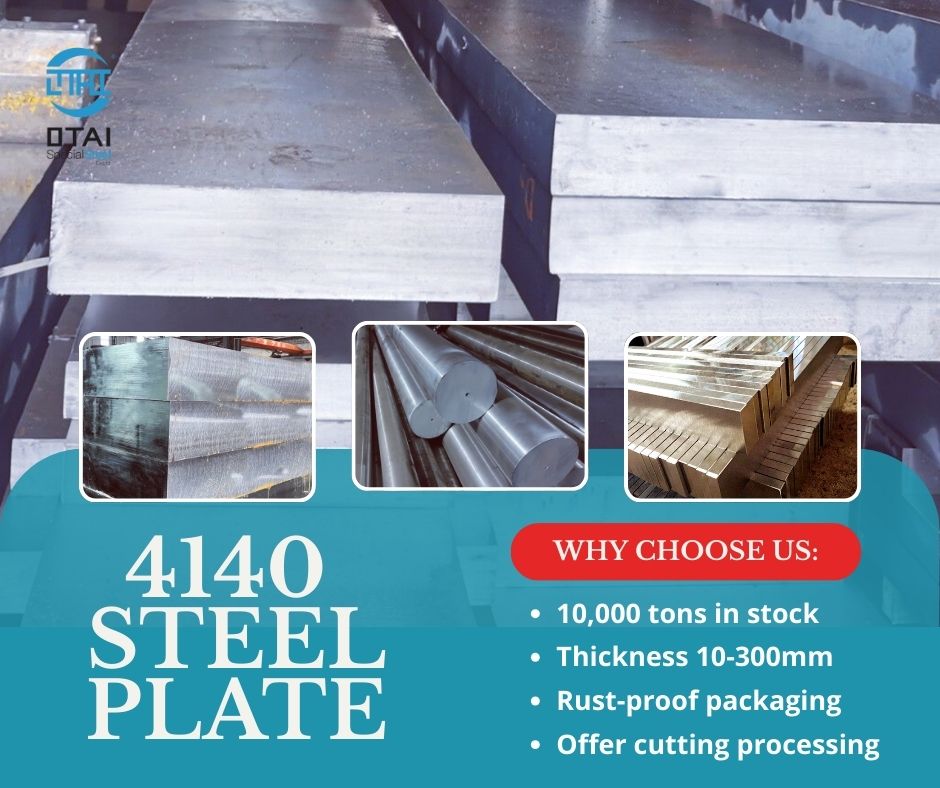
At Otai Special Steel, we provide high-quality 4140 steel that is optimized for compressive strength, toughness, and wear resistance. We offer custom cutting, heat treatment, and packaging services to meet your exact requirements.
Advantages of Working with Otai Special Steel:
-
Premium Materials: Our 4140 steel undergoes precise heat treatments to ensure excellent compressive strength and performance in demanding applications.
-
Customization: We provide custom cutting, heat treatment, and machining services tailored to your specific project needs.
-
Competitive Pricing: We offer high-performance steel at competitive prices, ensuring great value for your projects.
-
Fast Delivery: With a large inventory, we guarantee fast and reliable delivery to meet your deadlines.
❓ Frequently Asked Questions (FAQ)
Q1: What is the compressive strength of 4140 steel?
-
A1: 4140 steel typically achieves a compressive strength of around 1500-1600 MPa when properly heat treated.
Q2: How does heat treatment affect 4140 steel’s compressive strength?
-
A2: Heat treatments like hardening and tempering increase 4140 steel’s compressive strength by refining its microstructure and improving its tensile strength.
Q3: Why is compressive strength important for 4140 steel in automotive and aerospace applications?
-
A3: Compressive strength ensures that 4140 steel components, such as gears and landing gears, can withstand high-pressure and load-bearing conditions without failure, ensuring durability and reliability.