 How Much Does 4140 Steel Weight? A Practical Guide for Engineers & Buyers
When you’re working with structural alloy steels, weight isn’t just a number—it’s a key factor in cost, machining, and logistics. So let’s dive into the question: how much does 4140 steel weight per meter, per inch, or per sheet? Whether you’re ordering for shafts, plates, or bars, this guide will help you calculate precisely what you need. 💡
⚙️ What Is 4140 Steel?
Before we jump into the weight, a quick recap. 4140 steel is a low-alloy steel containing chromium, molybdenum, and manganese. It offers excellent strength, toughness, and wear resistance, making it ideal for high-stress applications like axles, crankshafts, and gears.
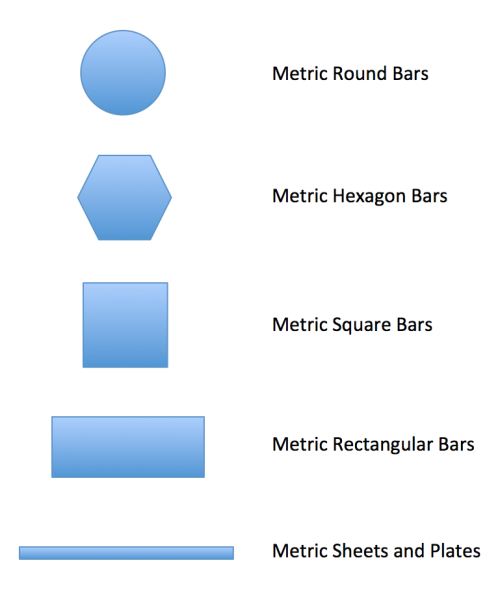
Common forms include:
-
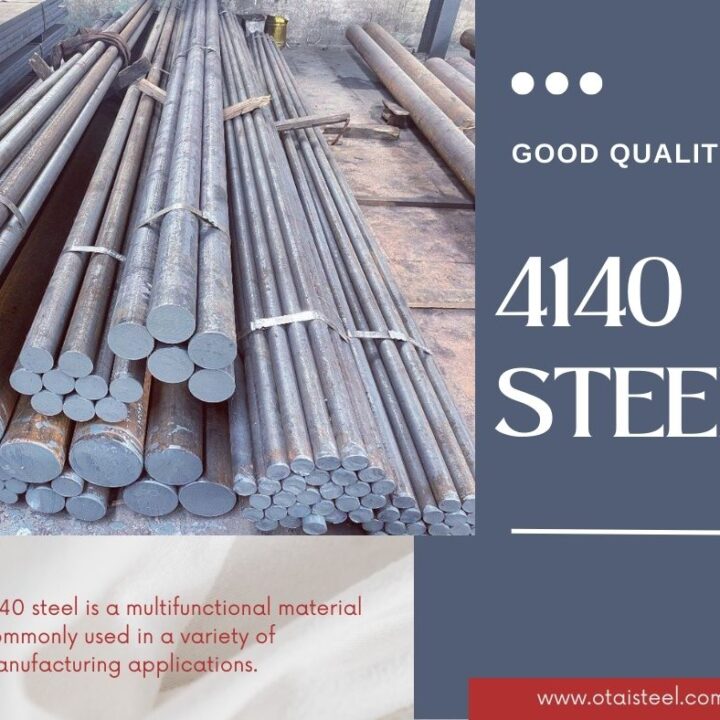
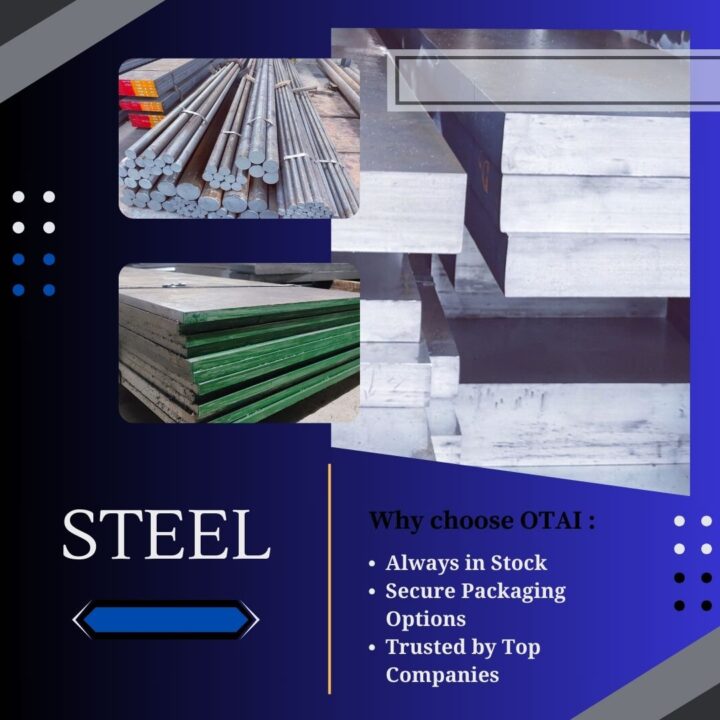
4140 round bars
-
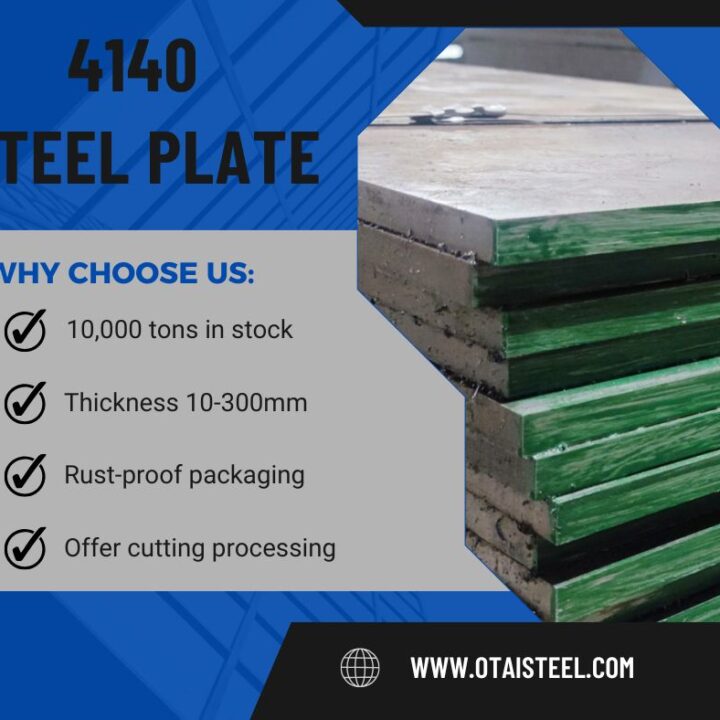
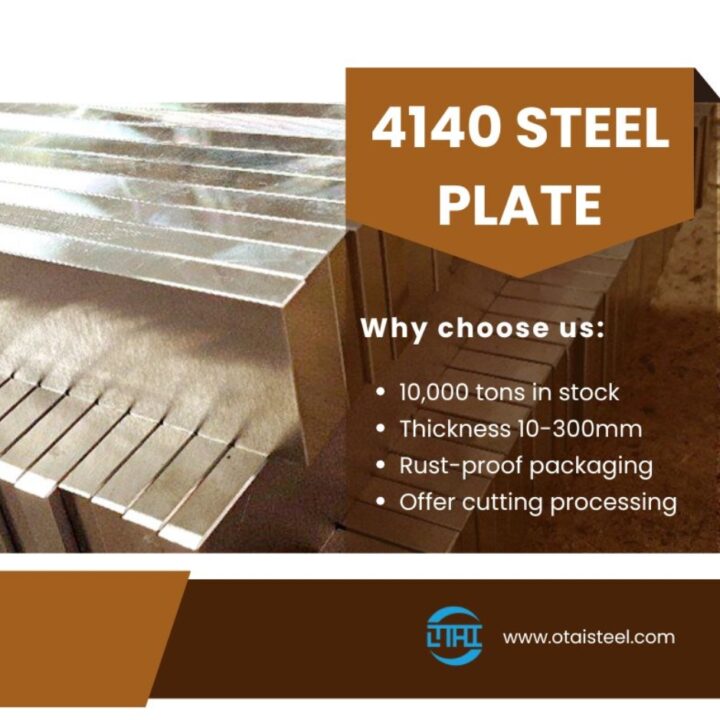
4140 steel plates
-
4140 tubing and pipes
-
4140 forged blocks
📦 Density of 4140 Steel (Key to Weight Calculation)
To calculate how much 4140 steel weighs, you need to know its density, which is approximately:
| Unit | Density |
|---|---|
| g/cm³ | 7.85 |
| kg/m³ | 7850 |
| lb/in³ | 0.284 |
This value is very close to mild steel, making it easy to estimate unless alloy content slightly changes.
🧮 How to Calculate Weight of 4140 Steel
Let’s say you want to calculate the weight of a 1-meter-long round bar or a square plate. Use the standard formula:
For round bars:
For plates:
📊 Weight Chart for Common 4140 Steel Forms
To make life easier, here’s a quick 4140 steel weight chart based on standard dimensions.
1. 📏 4140 Round Bar Weight (in kg/m)
| Diameter (mm) | Weight per meter (kg) |
|---|---|
| 20 | 2.47 |
| 25 | 3.85 |
| 30 | 5.55 |
| 40 | 9.86 |
| 50 | 15.41 |
| 60 | 22.19 |
2. 📐 4140 Plate Weight (in kg/m²)
| Thickness (mm) | Weight per m² (kg) |
|---|---|
| 10 | 78.5 |
| 20 | 157.0 |
| 30 | 235.5 |
| 50 | 392.5 |
| 100 | 785.0 |
These weights assume cold drawn or normalized 4140 material with standard density.
🚚 Why 4140 Steel Weight Matters
Weight plays a crucial role in:
-
Shipping costs: Heavier parts increase logistics expenses.
-
Design safety: Accurate weight ensures your parts won’t overload systems.
-
Cost estimation: More weight = more material cost.
-
Machining: Heavier billets may need slower feed rates or larger tooling setups.
🔍 Related Long-Tail Search Questions
To help you get more value out of this topic, we’ll answer some common questions users search for along with how much does 4140 steel weight:
-
Weight of 4140 alloy plate per square foot
→ Simply multiply the weight per m² by 0.0929 to get kg/ft². -
What is the weight of 4140 steel per inch?
→ Convert from metric to imperial: 1 inch = 25.4 mm. -
Does heat treatment affect 4140 steel weight?
→ Not significantly. 4140 steel weight after heat treatment may vary slightly due to scaling, but density remains nearly unchanged. -
How heavy is 4140 steel tubing?
→ Depends on outer diameter, wall thickness, and length. Use the formula for hollow cylinders. -
4140 steel vs mild steel
→ The difference is negligible. Both have nearly the same density (~7.85 g/cm³).
🏭 Why Choose Otai Special Steel?
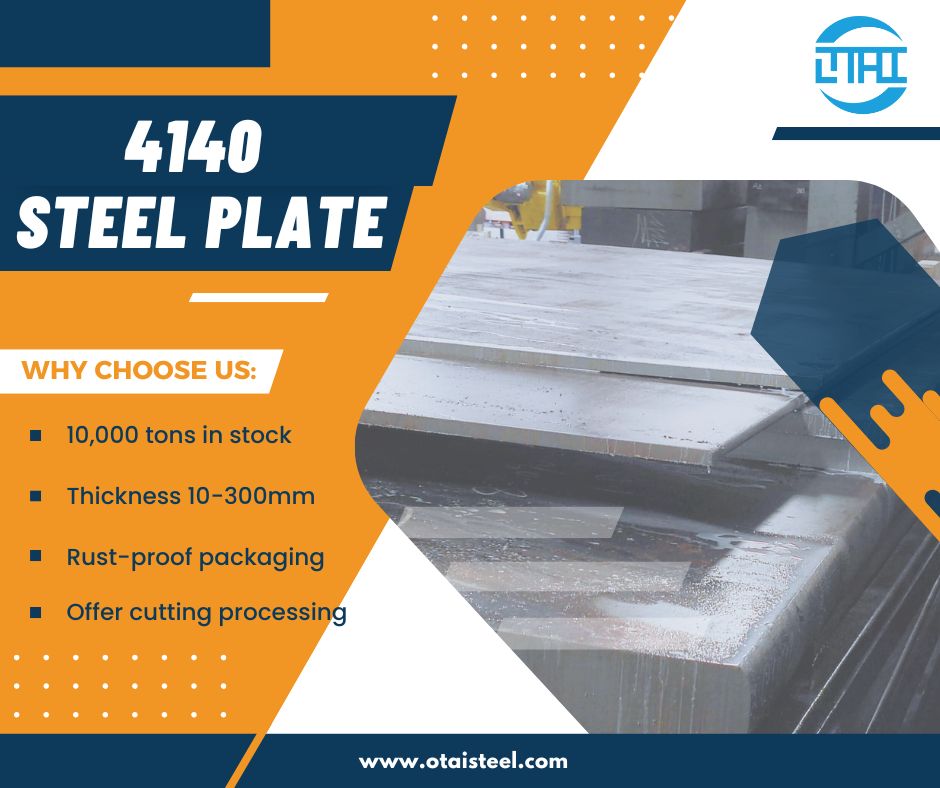
At Otai Special Steel, we stock a wide range of 4140 steel bars, plates, and tubes in sizes from 6mm to 300mm thick. Here’s why engineers and buyers worldwide choose us:
-
🌍 Over 10,000 tons in stock—quick delivery guaranteed
-
🔍 Ultrasonic testing & composition certificates
-
🛠️ Custom cutting, heat treatment, and packaging
-
💬 Expert technical support in both English and Spanish
-
🚢 Exporting to 50+ countries, trusted by global brands like Thyssenkrupp, Borealis, and Schlumberger
Need a quote on 4140 steel? Contact us now for competitive pricing and fast service!
📧 Contact us: jack@otaisteel.com
📱 WhatsApp: +8676923190193
❓ FAQ: How Much Does 4140 Steel Weight
Q1: How do I calculate the weight of a 4140 round bar?
A: Use the formula π × (D/2)² × L × density (7.85 g/cm³), or refer to our weight chart.
Q2: Does heat treating change the steel’s weight?
A: Not meaningfully. Minor scaling can occur, but the core density stays the same.
Q3: What units are best for calculating steel weight?
A: Typically kg/m for round bar, kg/m² for plates. For the U.S. market, lb/ft is common.
Q4: What if I need to estimate weight for irregular shapes?
A: Use 3D CAD software or break it into geometric sections for approximation.
Q5: Can Otai provide custom weight estimates?
A: Yes! Send us your dimensions, and we’ll calculate it for you—accurate and fast.