 Is 4140 Alloy Steel Magnetic?
When engineers and buyers search for materials with high strength and reliability, 4140 alloy steel is often at the top of the list. But one common question is: is 4140 alloy steel magnetic? The answer matters because magnetic behavior influences how a material can be used in industries like automotive, oil & gas, tool manufacturing, and even in applications where magnetic interference needs to be avoided.
In this detailed guide, we’ll break down the magnetic properties of 4140 steel, how its composition and heat treatment affect magnetism, and what industries should know before choosing it.
✨ What Makes Steel Magnetic?
Before we answer is 4140 alloy steel magnetic, let’s look at why steel can or cannot be magnetic. The magnetism of steel is determined by:
-
Iron Content – The higher the iron content, the stronger the material’s ability to be attracted to magnets.
-
Crystal Structure – Steels with a body-centered cubic (BCC) structure (like ferrite) are magnetic, while those with a face-centered cubic (FCC) structure (like austenite) are not.
-
Heat Treatment – Different thermal processes can change the steel’s microstructure, affecting whether it remains magnetic.
🔎 So, Is 4140 Alloy Steel Magnetic?
Yes, 4140 alloy steel is magnetic in most of its common conditions, such as annealed, quenched, or tempered states.
That’s because 4140 is a chromium-molybdenum alloy steel with a high percentage of iron, which dominates its behavior. Its microstructure is typically ferritic-pearlitic or martensitic after heat treatment, both of which are ferromagnetic.
However, its magnetic strength can vary depending on how the steel is processed.
⚙️ How Composition Affects Magnetism
The chemical makeup of 4140 alloy steel plays a major role in answering the question: is 4140 alloy steel magnetic?
| Element | Typical % in 4140 | Role in Magnetism |
|---|---|---|
| Iron (Fe) | ~97% | Main source of magnetism |
| Carbon (C) | 0.38–0.43% | Strengthens structure but does not remove magnetism |
| Chromium (Cr) | 0.8–1.1% | Adds corrosion resistance, minor effect on magnetism |
| Molybdenum (Mo) | 0.15–0.25% | Increases toughness, negligible impact on magnetism |
| Manganese (Mn) | 0.75–1.0% | Improves hardenability, slight effect on magnetism |
Since iron remains the dominant element, 4140 retains its ferromagnetic behavior even with alloying additions.
🔥 Effect of Heat Treatment on Magnetism
One interesting aspect is how thermal treatment alters the answer to is 4140 alloy steel magnetic:
-
Annealed Condition – Mostly ferritic-pearlitic, magnetic.
-
Normalized Condition – Fine-grain pearlite and ferrite, still magnetic.
-
Quenched & Tempered – Martensitic structure, magnetic, but hardness increases.
-
Austenitized (during heating) – At high temperatures, steel enters an austenitic phase (FCC), which is non-magnetic. But as soon as it cools back to ferrite/martensite, magnetism returns.
So, the only time 4140 steel temporarily loses magnetism is during austenitizing at high temperatures.
🛠️ Applications Where Magnetism Matters
Now that we know 4140 alloy steel is magnetic, let’s see why this property is important in real-world uses:
-
Gears & Shafts – Magnetic testing methods (like magnetic particle inspection) can detect cracks and defects.
-
Oilfield Tools – Some drilling tools require non-magnetic alloys, so knowing 4140’s behavior helps in selection.
-
Machine Components – Magnetic lifting and clamping equipment works with 4140 parts.
-
Knives & Axes – While strength is key, magnetism helps in automated handling during production.
However, if an application requires non-magnetic materials (like in MRI machines or sensitive electronic environments), 4140 steel would not be suitable.
📊 Comparison with Other Steels
To better understand is 4140 alloy steel magnetic, let’s compare it with a few other common steels:
| Steel Grade | Magnetism | Notes |
|---|---|---|
| 4140 Alloy Steel | Magnetic | Strong ferromagnetic behavior in most states |
| AISI 304 Stainless | Non-magnetic | Austenitic structure |
| 316 Stainless | Non-magnetic | Preferred for MRI & chemical uses |
| 1018 Carbon Steel | Magnetic | Similar to 4140, but with lower strength |
This comparison shows why 4140 is magnetic like most carbon and alloy steels, but unlike common stainless steels.
✅ Key Takeaways
-
Is 4140 alloy steel magnetic? → Yes, in almost all practical conditions.
-
Heat treatment changes the degree of magnetism but does not eliminate it permanently.
-
The high iron content ensures strong magnetic response.
-
Applications requiring non-magnetic steel should look at alternatives like austenitic stainless steels.
🌟 Company Advantages – Why Choose Otai Special Steel?
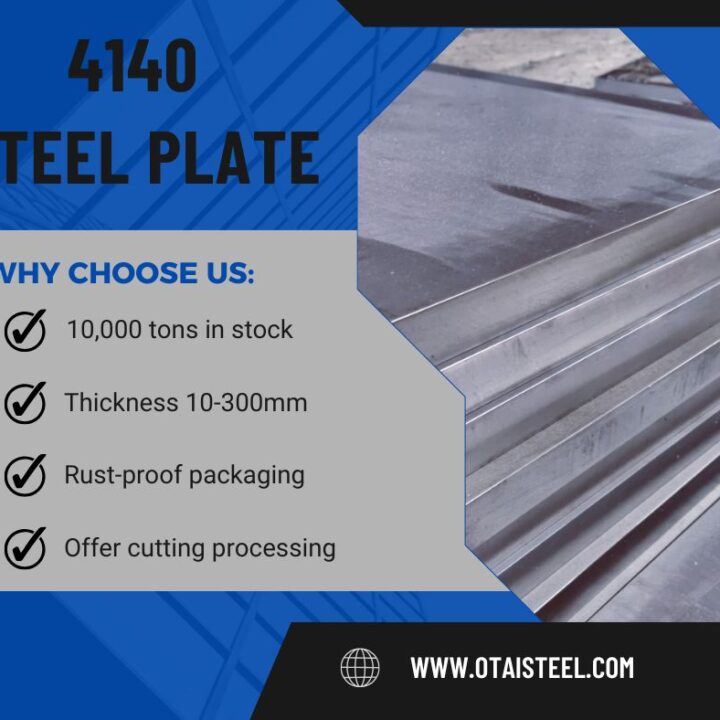
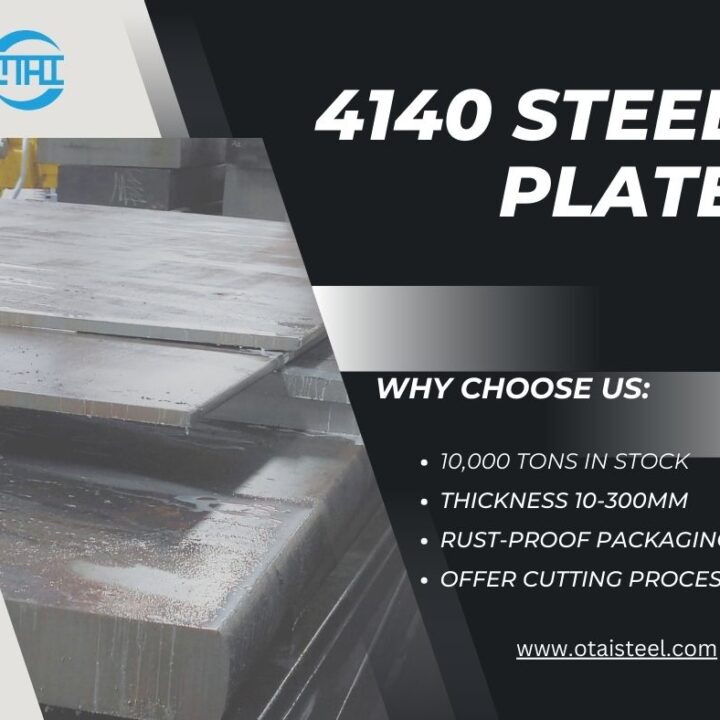
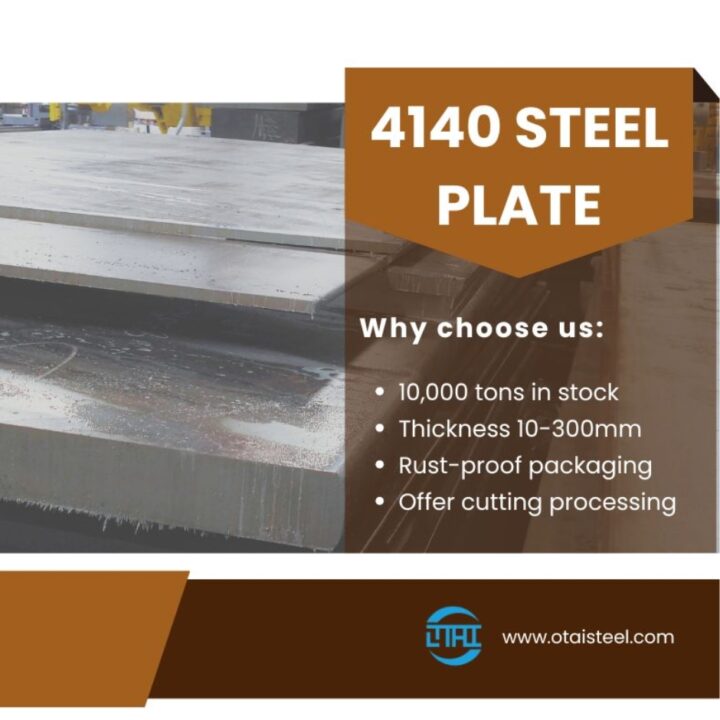
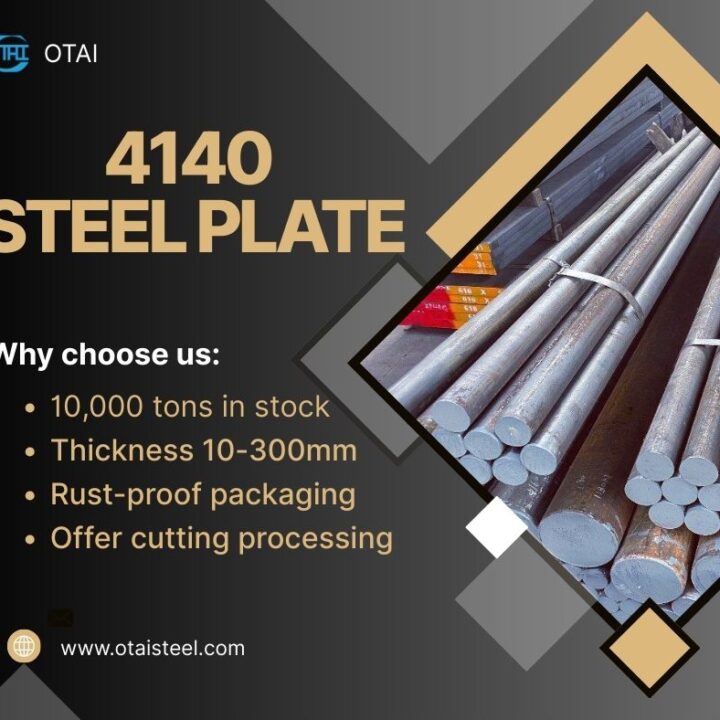
At Otai Special Steel, we are proud to be a trusted global supplier of 4140 alloy steel in plates, bars, and custom-cut formats.
-
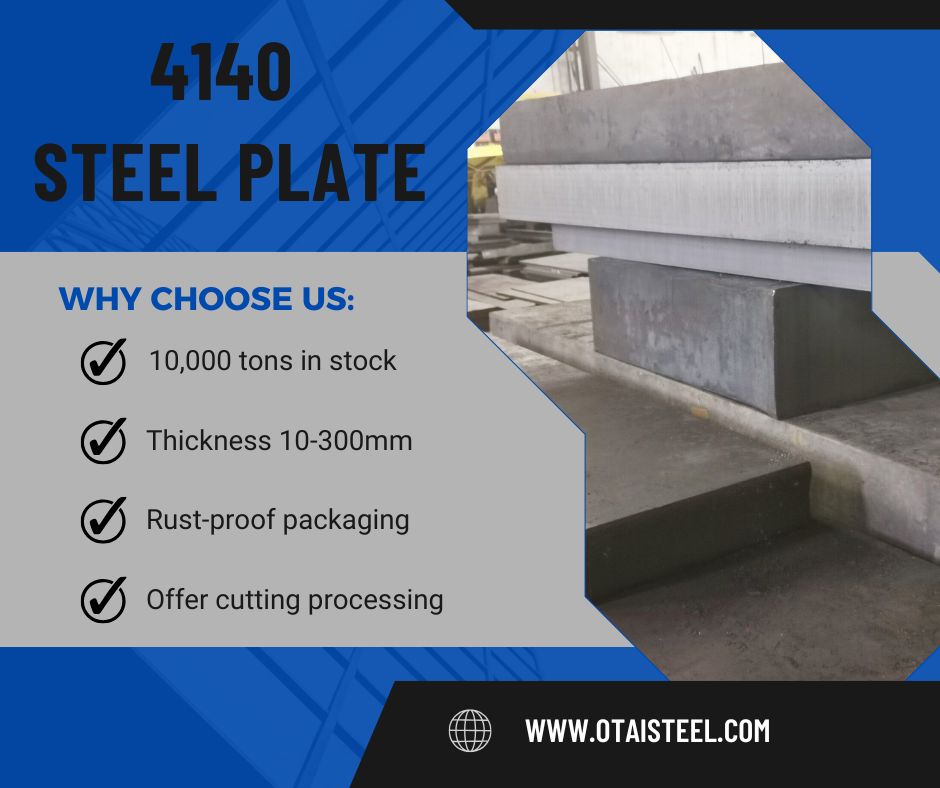
📦 Large Inventory – Over 10,000 tons in stock with sizes from 6mm to 300mm.
-
⚙️ Processing Services – Precision cutting, heat treatment, and machining available.
-
🧪 Quality Assurance – UT testing, chemical analysis, and third-party inspection (SGS, etc.).
-
🌍 Global Clients – Supplying leading companies like Thyssenkrupp, Schlumberger, and Borealis.
-
💰 Competitive Pricing – Stable supply chain and cost-effective solutions for trade companies and end-users.
If you’re sourcing 4140 steel distributors, we are here to support your projects with reliability and expertise.
❓ FAQ
Q1: Is 4140 alloy steel always magnetic?
Yes, except when heated above critical temperatures into the austenitic range, where it becomes temporarily non-magnetic.
Q2: Can magnetism be used to test defects in 4140 steel?
Absolutely. Magnetic particle inspection (MPI) is commonly used to check for cracks and flaws in 4140 components.
Q3: How does magnetism affect machining of 4140 steel?
It doesn’t impact machining directly, but magnetic clamping systems can be used efficiently.
Q4: Is 4140 suitable for non-magnetic applications?
No, industries needing non-magnetic materials (like medical or electronic equipment) should use austenitic stainless steels instead.
Q5: Does quenching or tempering remove magnetism?
No, quenching and tempering change hardness and toughness but keep 4140 magnetic.