Is 4140 an Alloy Steel? Everything You Need to Know
If you’ve worked in machining, manufacturing, or metal fabrication, you’ve probably heard of 4140 steel. But one question still pops up from time to time: Is 4140 an alloy steel? The short answer is—yes, it is. But the real story is far more interesting, especially when you look at its composition, properties, and why so many industries rely on it.
Let’s break it down into practical, shop-floor-level knowledge.
🌟 What Makes 4140 an Alloy Steel?
4140 steel is indeed a chromium-molybdenum alloy steel, meaning it contains significant amounts of alloying elements in addition to iron and carbon. These alloying elements—primarily chromium and molybdenum—are intentionally added to improve strength, toughness, and wear resistance.
Here’s the typical chemical composition of 4140 steel:
| Element | Percentage (%) | Function |
|---|---|---|
| Carbon (C) | 0.38–0.43 | Strength, hardness potential |
| Chromium (Cr) | 0.80–1.10 | Wear resistance, hardenability |
| Molybdenum (Mo) | 0.15–0.25 | High-temperature strength, toughness |
| Manganese (Mn) | 0.75–1.00 | Strength, hardness, machinability |
| Silicon (Si) | 0.15–0.35 | Deoxidizer, improves toughness |
| Phosphorus (P) | ≤0.035 | Kept low to avoid brittleness |
| Sulfur (S) | ≤0.040 | Improves machinability in small amounts |
These alloying elements set 4140 apart from plain carbon steels like 1045 steel, making it far more versatile for demanding applications.
🏋️♂️ Mechanical Properties – Why It’s Trusted in Industry
4140 alloy steel properties are the reason it’s so widely used. It delivers a combination of strength, ductility, and fatigue resistance that’s hard to beat.
| Property | Typical Range (Q&T) |
|---|---|
| Tensile Strength | 850–1000 MPa (123–145 ksi) |
| Yield Strength | 655–850 MPa (95–123 ksi) |
| Hardness (HRC) | 28–32 |
| Elongation (%) | 18–25 |
| Impact Toughness | High |
| Fatigue Resistance | Excellent |
This balance means it can handle shock loads, cyclic stresses, and abrasion without breaking or wearing out quickly.
🔥 Heat Treatment and Hardenability
One of the biggest advantages of 4140 chromium molybdenum steel is its excellent response to heat treatment. It can be:
-
Annealed for easier machining
-
Quenched and tempered for high strength and toughness
-
Nitrided for exceptional surface hardness without sacrificing core ductility
Thanks to the chromium and molybdenum, 4140 steel hardenability is much higher than that of plain carbon steels, allowing for deep, uniform hardening even in thicker sections.
🔄 4140 Alloy Steel vs Carbon Steel
| Feature | 4140 Alloy Steel | 1045 Carbon Steel |
|---|---|---|
| Alloying Elements | Cr, Mo, Mn, Si | Mn only |
| Hardenability | High | Moderate |
| Wear Resistance | High | Medium |
| Toughness | High | Medium |
| Heat Treat Flexibility | Excellent | Limited |
If you need higher performance for demanding parts—especially those under high stress or wear—4140 is almost always the better choice.
🏭 Common Applications of 4140 Alloy Steel
Because of its strength, toughness, and machinability, 4140 steel uses span across:
-
Oil & Gas: drill collars, couplings, valve bodies
-
Automotive: crankshafts, gear shafts, axles
-
Aerospace: landing gear components
-
Heavy Machinery: pins, shafts, bushings
-
Defense: firearm barrels, armor components
Its versatility comes from being able to adapt to various heat treatments and surface finishes.
🧰 Machining and Fabrication Notes
4140 alloy steel machinability is good in the annealed condition, but it becomes more challenging after hardening. Use sharp tools, adequate lubrication, and slower speeds for best results. It also welds well if preheated to 200–300°C to avoid cracking.
🌍 Why 4140’s Alloy Nature Matters
Because 4140 is an alloy steel, it delivers more consistent performance across large cross-sections, resists wear better, and can achieve a wider range of properties through heat treatment than plain steels. This makes it ideal for industries where downtime costs money and reliability is essential.
🏭 Company Advantages – Why Choose Otai Special Steel
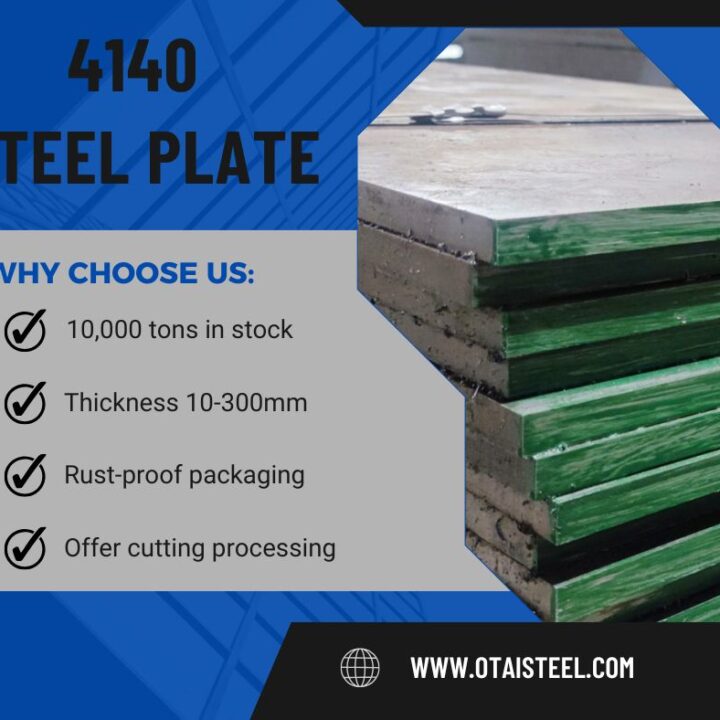
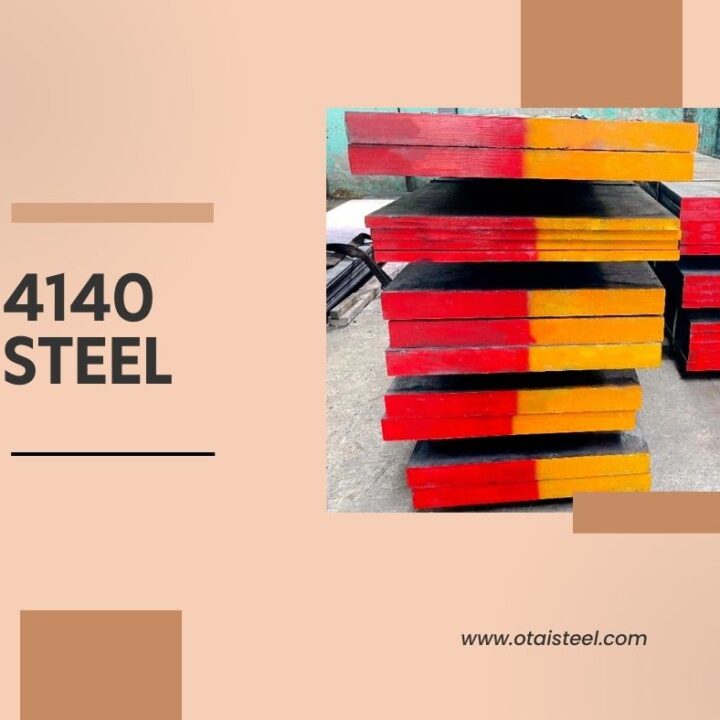
At Otai Special Steel, we supply 4140 alloy steel in plate, bar, and cut-to-size formats, tailored to your project needs.
- ✅ 10,000+ tons of stock (thickness 6mm–300mm)
- ✅ Annealed, normalized, quenched & tempered, or nitrided supply
- ✅ Precision cutting for fast production
- ✅ Full chemical and mechanical testing for guaranteed quality
- ✅ SGS/BV inspection available
- ✅ Global export to 50+ countries
- ✅ Trusted by Thyssenkrupp, Borealis, Schlumberger
❓ FAQ – Is 4140 an Alloy Steel?
Q1: What type of alloy is 4140 steel?
A: It’s a chromium-molybdenum alloy steel with medium carbon content.
Q2: Is 4140 better than carbon steel?
A: Yes, in terms of hardenability, wear resistance, and toughness.
Q3: Can you weld 4140 steel?
A: Yes, with proper preheat and post-weld heat treatment.
Q4: Does 4140 rust?
A: Yes, it’s not stainless—protective coatings or oiling are recommended.
Q5: What industries use 4140?
A: Oil & gas, automotive, aerospace, defense, and heavy machinery.