 Machinability of 4140 Steel: What You Need to Know
When engineers or manufacturers choose a steel grade, one of the first questions they ask is: “How easy is it to machine?” The machinability of 4140 steel is a critical factor in industries like automotive, oil & gas, tooling, and aerospace. Known for its excellent balance of strength, toughness, and workability, 4140 alloy steel is widely used for components that must be strong yet still machinable.
In this guide, we’ll break down what affects machinability, how 4140 compares to other steels, recommended machining practices, and what you can do to ensure the best results when working with this versatile alloy.
🔎 What Defines the Machinability of 4140 Steel?
The machinability of a steel grade refers to how easily it can be cut, shaped, or drilled without excessive tool wear or production delays. For 4140 alloy steel, machinability depends on:
-
Condition of the steel – whether it’s annealed, normalized, or quenched & tempered.
-
Hardness level – higher hardness makes machining more difficult.
-
Tooling selection – carbide tools perform better for hardened 4140.
-
Cutting speed and feed rates – optimized settings extend tool life.
-
Coolant usage – helps reduce heat and prevents tool damage.
⚙️ Machinability Ratings of 4140 Steel
Machinability is usually expressed as a percentage relative to AISI 1112 steel, which is rated at 100%.
| Steel Grade | Condition | Machinability Rating (%) |
|---|---|---|
| 4140 Annealed | ~20 – 25% | Good machinability for alloy steel |
| 4140 Quenched & Tempered | ~50 – 60% | Tougher, requires carbide tooling |
| 4140 Pre-Hardened (28-32 HRC) | ~55% | Acceptable machinability with proper tools |
This means that 4140 annealed steel machining is significantly easier than machining hardened 4140, which requires slower speeds and stronger tools.
🛠 Recommended Machining Practices for 4140 Steel
-
Cutting Tools
-
For annealed 4140: HSS (high-speed steel) tools are sufficient.
-
For hardened 4140: carbide or ceramic tools are recommended.
-
-
Cutting Speeds
-
Annealed: 150 – 200 SFM (surface feet per minute).
-
Hardened: 60 – 100 SFM.
-
-
Coolants
-
Always use cutting fluids or coolants to reduce heat buildup.
-
-
Drilling and Milling
-
Drill with cobalt or carbide drills for longer tool life.
-
Use rigid setups to minimize vibration.
-
-
Turning
-
Use negative rake carbide inserts for hardened 4140.
-
Optimize depth of cut to balance tool wear and surface finish.
-
📊 Machinability Comparison: 4140 vs Other Steels
| Steel Grade | Machinability (%) | Comments |
|---|---|---|
| 1112 Steel | 100 | Standard reference material |
| 1018 Steel | 70 – 80 | Easier to machine than 4140 |
| 4140 Steel (annealed) | 20 – 25 | Harder, tougher, slower machining |
| 4340 Steel | 15 – 20 | Even harder, lower machinability |
| Tool Steels (D2, O1) | 10 – 20 | Very difficult, requires advanced tooling |
This shows why many industries prefer 4140 machinability over 4340 steel, since it offers a balance of toughness and workability.
🚀 Applications Requiring Machinability of 4140 Steel
Industries choose 4140 steel when they need both strength and workable machinability:
-
Automotive: gears, shafts, crankshafts.
-
Oil & Gas: drill collars, tool joints.
-
Aerospace: landing gear, engine mounts.
-
Heavy Machinery: spindles, dies, press tools.
For these applications, machinability of quenched 4140 steel becomes a decisive factor for cost and production efficiency.
✅ Tips to Improve Machinability of 4140 Steel
-
Use pre-hardened 4140 steel for better tool life in moderate machining.
-
Perform stress relief annealing before final machining to reduce distortion.
-
Apply coated carbide inserts to withstand high temperatures.
-
Consider CNC machining of 4140 steel for precision and efficiency.
-
Always balance cutting speed, feed rate, and tool life.
💎 Company Advantage – Why Otai Special Steel?
At Otai Special Steel, we supply high-quality 4140 steel with guaranteed machinability. Our advantages include:
-
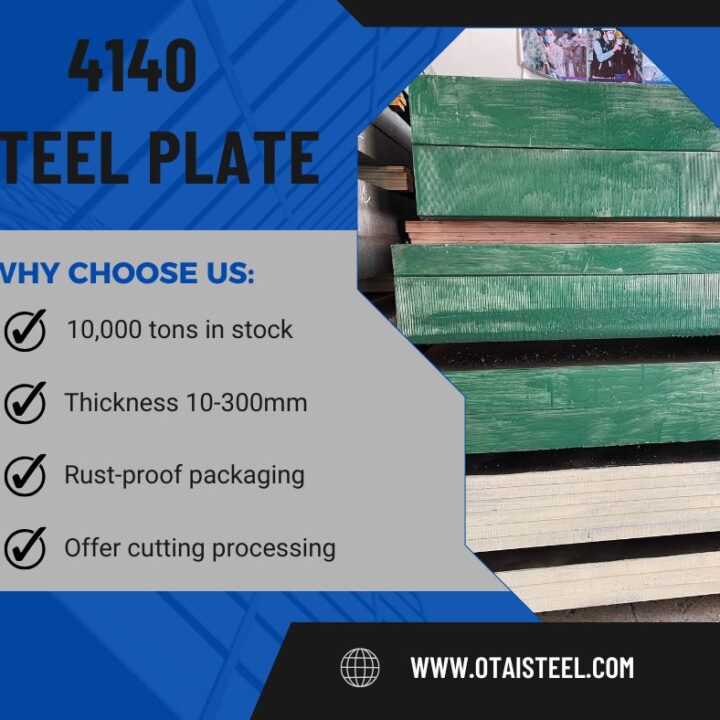
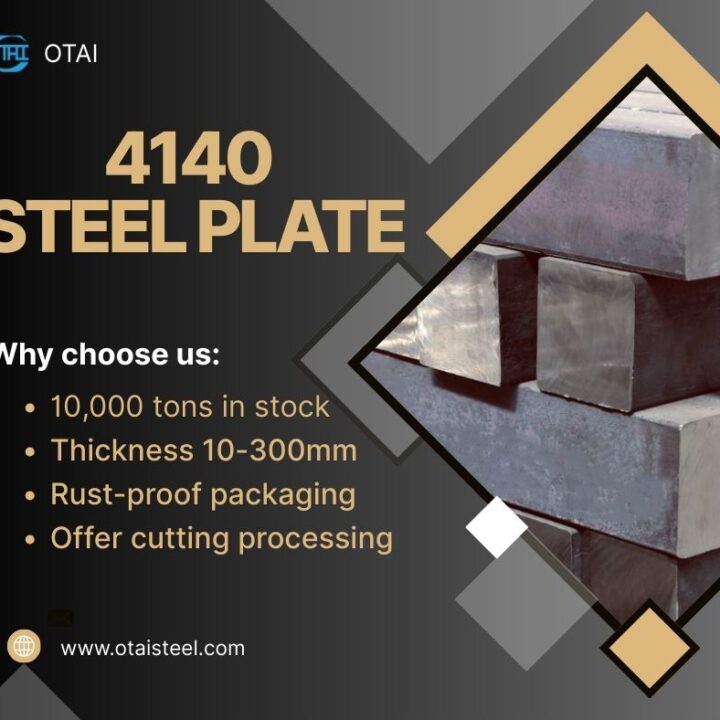
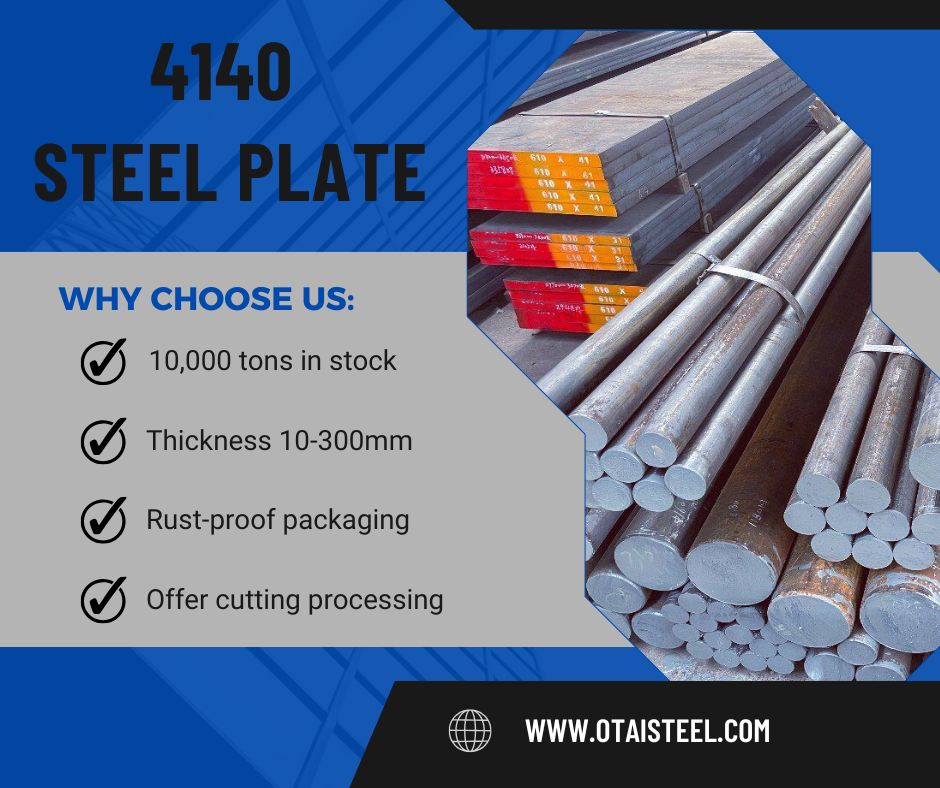
✅ Over 10,000 tons in stock covering annealed, pre-hardened, and quenched & tempered conditions.
-
✅ Custom cutting services to reduce machining costs for clients.
-
✅ Full range: plates, round bars, flat bars, from 6mm to 300mm thickness.
-
✅ Quality assurance: UT test, chemical composition test, third-party inspection.
-
✅ Long-term partners include Thyssenkrupp, Borealis, and Schlumberger.
We help customers minimize waste, reduce machining challenges, and ensure stable supply.
❓ FAQ
1. Is 4140 steel easy to machine?
In annealed condition, yes; in hardened condition, it requires carbide tooling.
2. What is the machinability rating of 4140 steel?
20–25% in annealed state, ~55% when pre-hardened.
3. Can I machine 4140 with HSS tools?
Yes, but only in annealed condition. For hardened steel, carbide tools are better.
4. Is 4140 steel machinability better than 4340?
Yes, 4140 offers better machinability while still being strong.
5. Does Otai offer pre-cut 4140 steel to save machining time?
Yes, we provide cutting services tailored to customer needs.