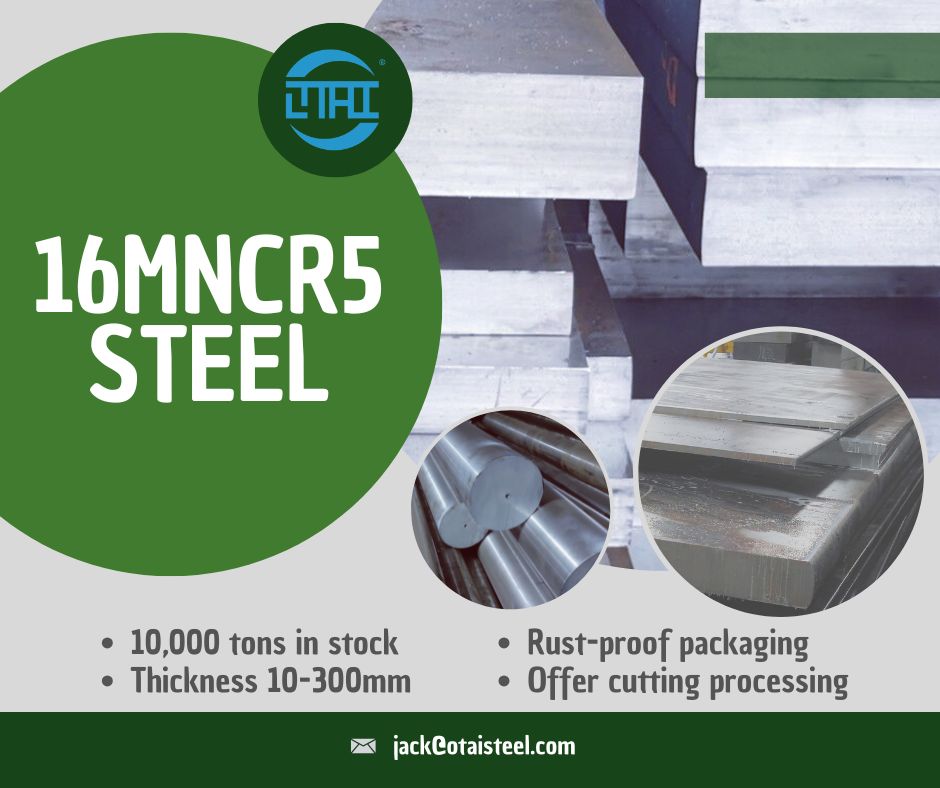
 Understanding 16MnCr5 Steel Specification
When selecting steel for industrial applications, understanding its specification is crucial to ensure optimal performance and longevity. 16MnCr5 steel is a high-performance alloy steel that delivers strength, wear resistance, and toughness. It’s a popular choice for gears, shafts, and various mechanical components. In this article, we will explore the 16MnCr5 specification, including its chemical composition, mechanical properties, heat treatment processes, and applications.
🔍 What is 16MnCr5 Steel?
16MnCr5 steel is a medium-carbon alloy steel that contains manganese and chromium as its primary alloying elements. These additions provide excellent toughness, strength, and wear resistance, making the steel suitable for components subjected to high stress and wear conditions.
-
Manganese (Mn) improves hardness and toughness.
-
Chromium (Cr) increases corrosion resistance and wear resistance, ensuring the steel performs well under demanding environments.
The designation 16MnCr5 breaks down as follows:
-
16 refers to the approximate carbon content of 0.16%.
-
Mn stands for manganese.
-
Cr stands for chromium.
-
5 indicates the average chromium content of 0.5%.
🧪 Chemical Composition of 16MnCr5
The chemical composition of 16MnCr5 steel is essential in determining its mechanical properties. Here’s a breakdown of its typical composition:
| Element | Percentage (%) |
|---|---|
| Carbon (C) | 0.14–0.19 |
| Manganese (Mn) | 0.60–0.90 |
| Chromium (Cr) | 0.40–0.60 |
| Silicon (Si) | 0.10–0.35 |
| Phosphorus (P) | ≤0.025 |
| Sulfur (S) | ≤0.025 |
| Iron (Fe) | Balance |
The carbon content in 16MnCr5 steel provides a good balance between strength and ductility, while manganese and chromium enhance wear resistance and corrosion resistance.
🧰 Mechanical Properties of 16MnCr5
The mechanical properties of 16MnCr5 steel are key to its performance in demanding applications. Below are the core properties:
| Property | Value |
|---|---|
| Tensile Strength | 700–900 MPa |
| Yield Strength | 450–700 MPa |
| Elongation | 12–20% |
| Hardness | 200–250 HB (Annealed) |
| 250–300 HB (Quenched and Tempered) | |
| Impact Toughness | 40–60 J (at -20°C) |
-
Tensile Strength: 16MnCr5 displays impressive tensile strength, allowing it to withstand stretching and deformation under load.
-
Yield Strength: The steel’s high yield strength ensures it performs well under heavy load without permanent deformation.
-
Hardness: After normalizing, the hardness is between 200–250 HB, and after quenching and tempering, it increases to 250–300 HB.
-
Impact Toughness: Despite its hardness, the steel retains high impact toughness, making it resistant to fracture under impact loads.
🔨 Heat Treatment of 16MnCr5
The heat treatment process significantly enhances the steel’s mechanical properties, such as hardness, strength, and toughness. The most common heat treatments for 16MnCr5 include:
Annealing:
-
Annealing softens the steel, making it easier to machine and reducing internal stresses.
Normalizing:
-
In normalizing, the steel is heated to a high temperature and air-cooled, refining its grain structure and increasing tensile strength.
Quenching and Tempering:
-
During quenching, the steel is heated and rapidly cooled to increase hardness. Then, tempering restores some toughness, resulting in a balance between hardness and strength.
🏗️ Applications of 16MnCr5 Steel
Given its mechanical properties, 16MnCr5 steel excels in applications that require high strength and wear resistance. Typical uses include:
| Industry | Common Uses |
|---|---|
| Automotive | Gears, shafts, camshafts |
| Machinery | Axles, bearings, machine parts |
| Tooling and Dies | Press dies, punches, molds |
-
Automotive: Components like gears and shafts need to withstand high stress. 16MnCr5 is ideal due to its tensile strength and wear resistance.
-
Machinery: 16MnCr5 is used in axles and bearings, where it resists wear and performs under heavy loads.
-
Tooling: The steel’s wear resistance makes it suitable for press dies, punches, and molds in tooling.
⚙️ Why Choose Otai Special Steel for 16MnCr5 Steel?
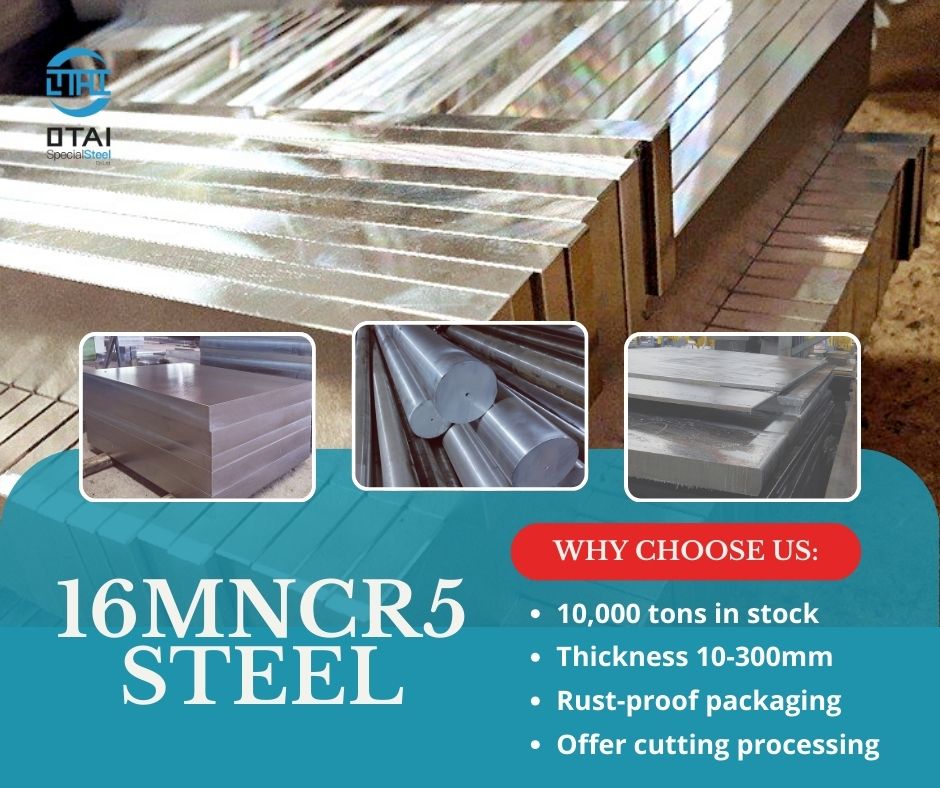
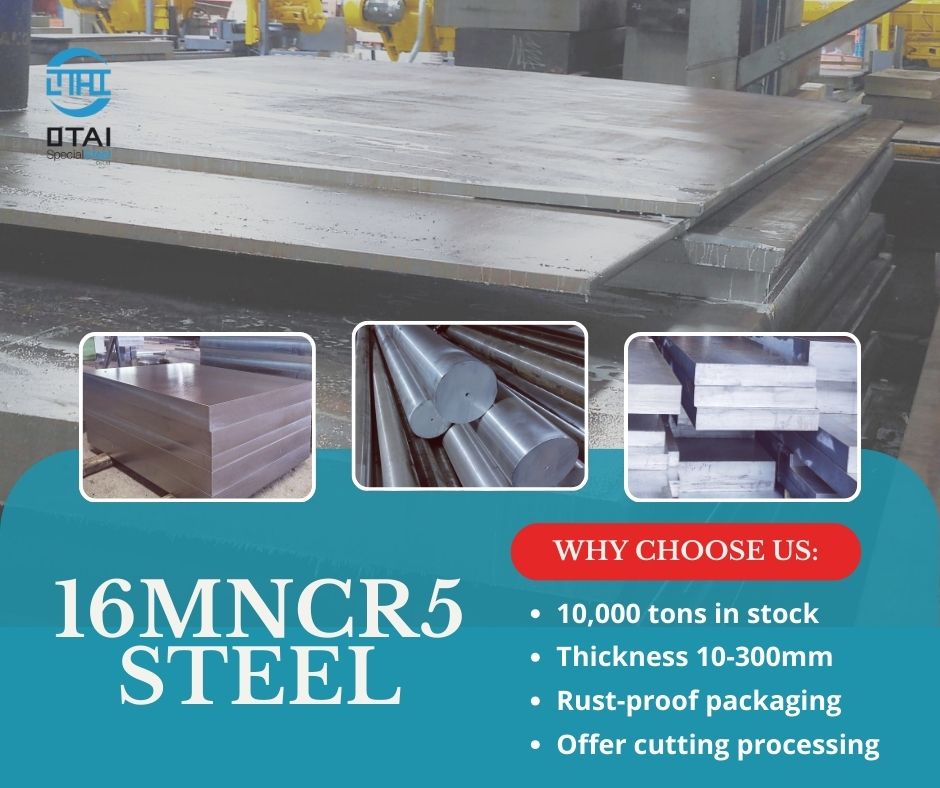
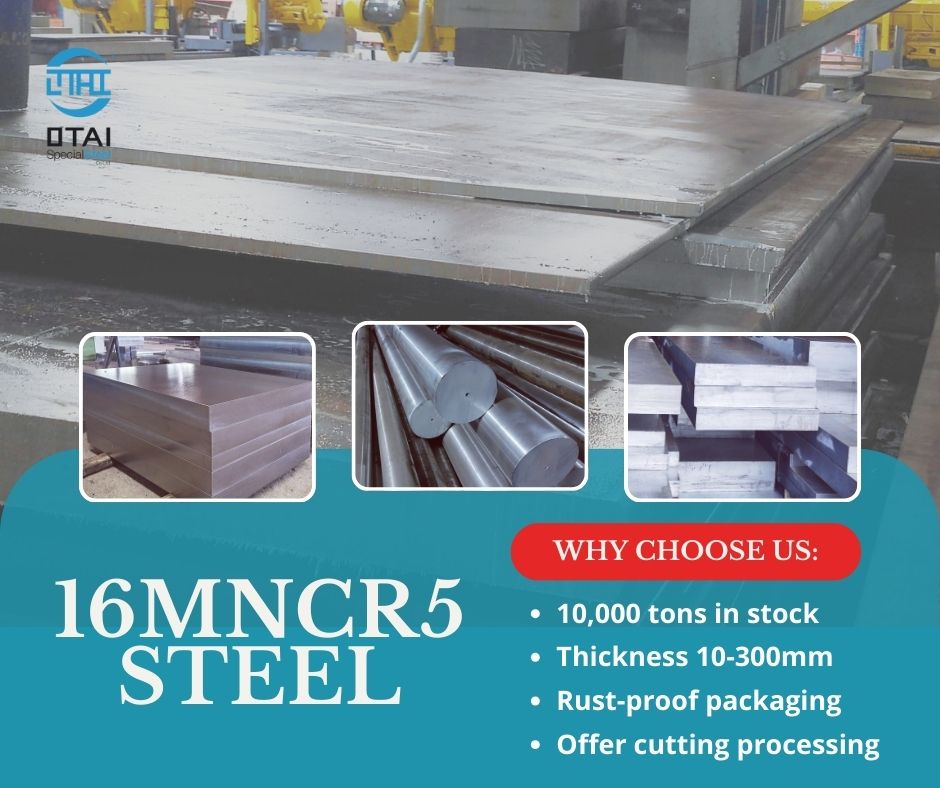
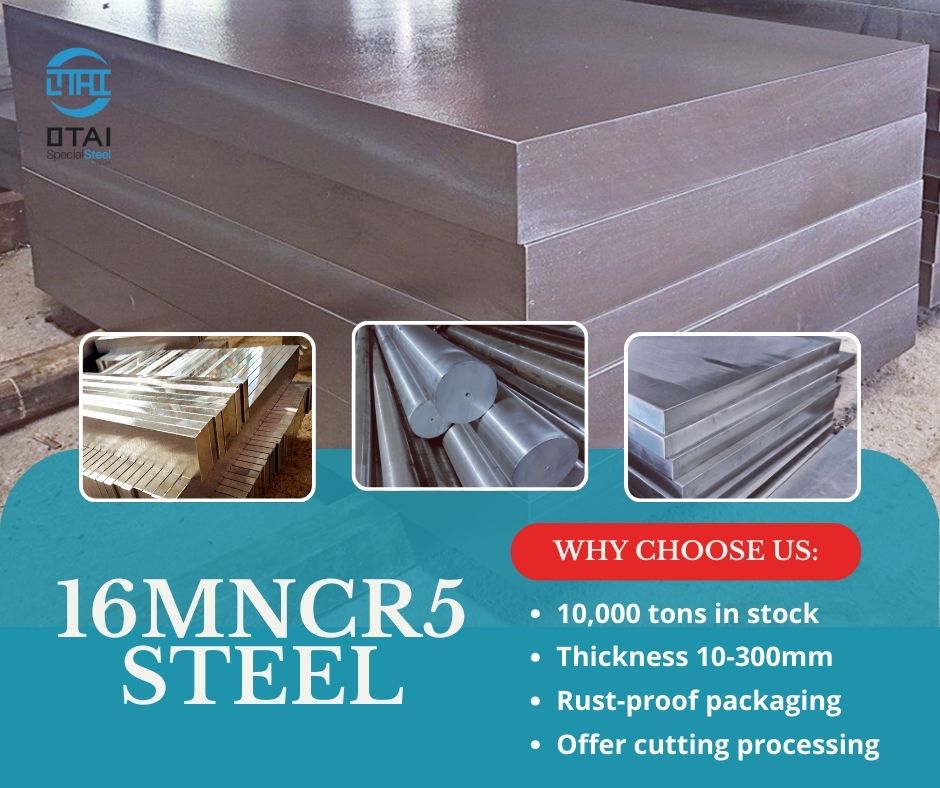
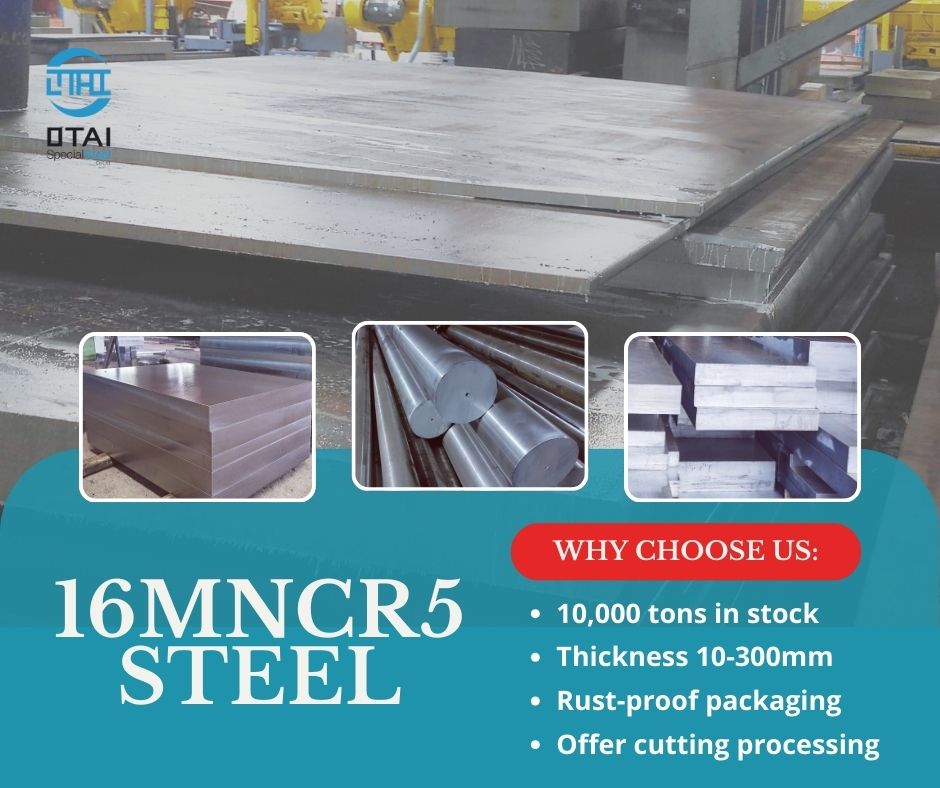
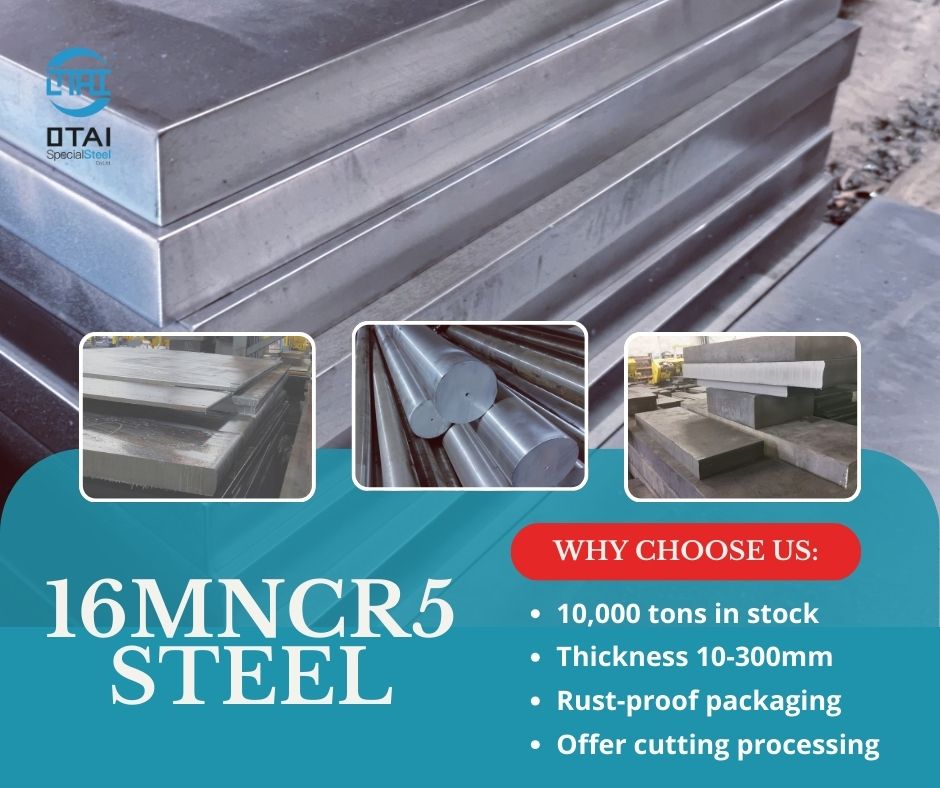
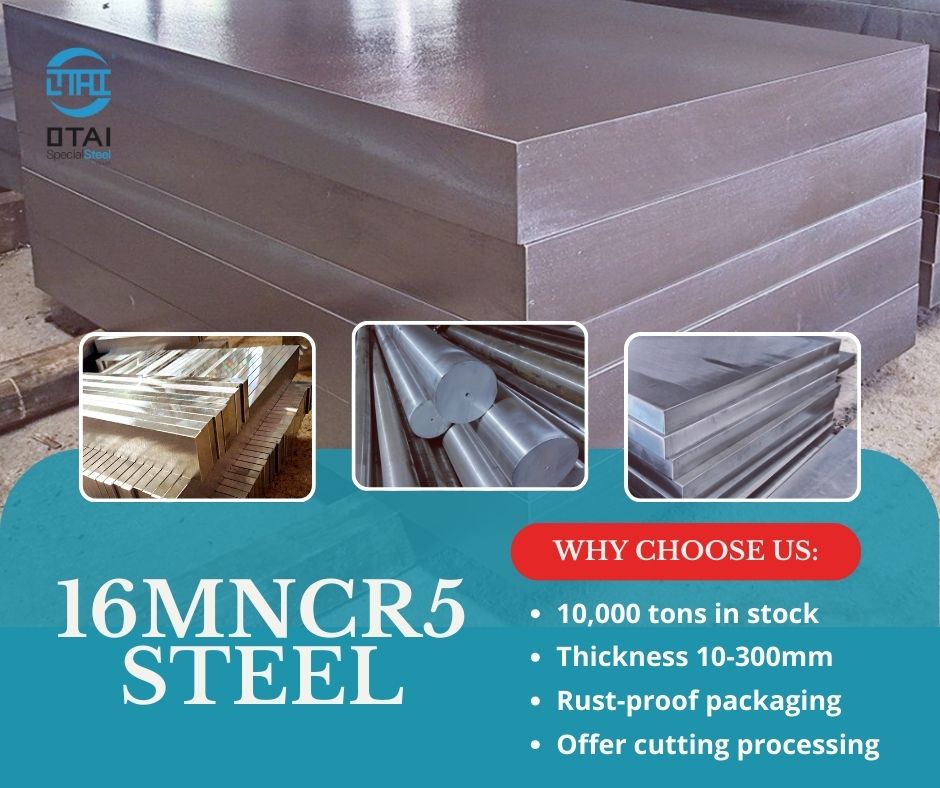
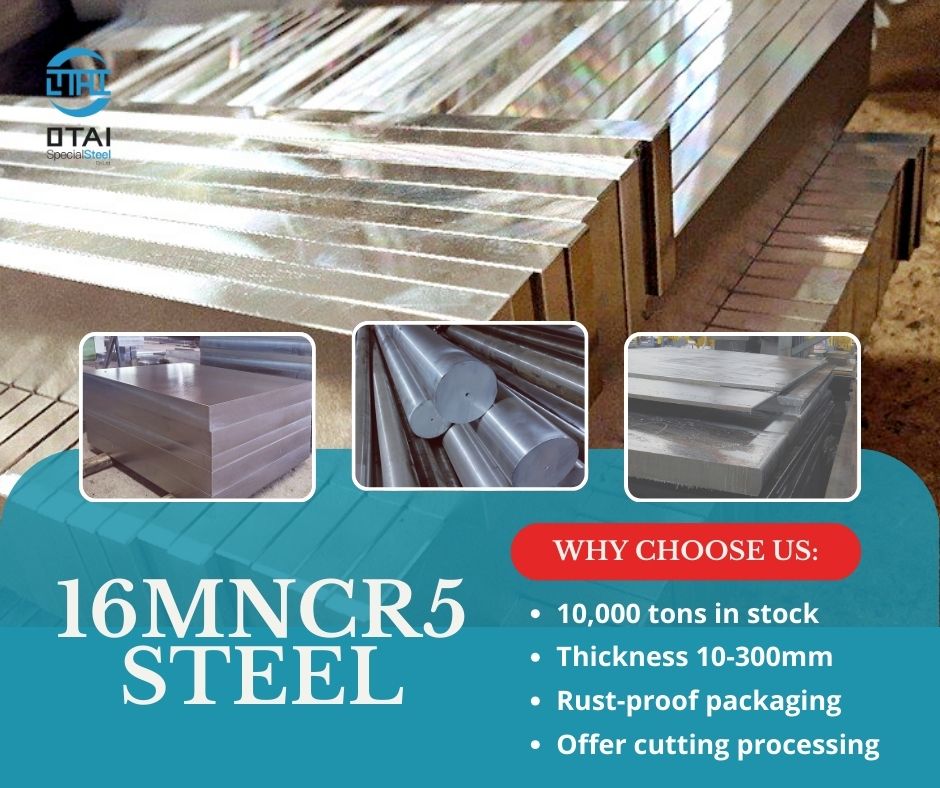
At Otai Special Steel, we specialize in providing high-quality 16MnCr5 steel that meets the requirements of your industrial applications. With years of experience, we have built a reputation as a trusted supplier in the industry.
Company Advantages:
-
High Quality: Our 16MnCr5 steel undergoes rigorous testing to ensure compliance with global standards.
-
Custom Solutions: We offer services such as cutting, heat treatment, and machining to meet your specific needs.
-
Quick Delivery: We maintain a large stock, ensuring fast shipping and reliable delivery.
-
Competitive Pricing: We provide affordable pricing while maintaining high quality.
❓ FAQ
Q1: What is the hardness of 16MnCr5 steel?
-
A1: 16MnCr5 steel typically achieves 200–250 HB after normalizing and can reach up to 300 HB after quenching and tempering.
Q2: What industries use 16MnCr5 steel?
-
A2: 16MnCr5 steel is commonly used in the automotive, machinery, and tooling industries for components like gears, shafts, and bearings.
Q3: Can the hardness of 16MnCr5 steel be increased?
-
A3: Yes, 16MnCr5 can be hardened through quenching and tempering, resulting in higher hardness.
Q4: Does Otai Special Steel offer customized 16MnCr5 steel?
-
A4: Yes, we provide custom cutting, heat treatment, and machining services for 16MnCr5 steel to meet your specific requirements.