 Weight of 4140 Steel: How to Calculate on Your Projects
When working with steel, especially in industries like manufacturing, automotive, or aerospace, understanding the weight of 4140 steel is crucial for designing components, estimating costs, and ensuring the overall efficiency of the project. Whether you’re dealing with steel plates, bars, or pipes, knowing how to calculate the weight of 4140 steel can make a significant difference in your planning process.
This article explores how to calculate the weight of 4140 steel, factors affecting its weight, and why it matters in practical applications.
🌟 What is 4140 Steel and Why Does Its Weight Matter?
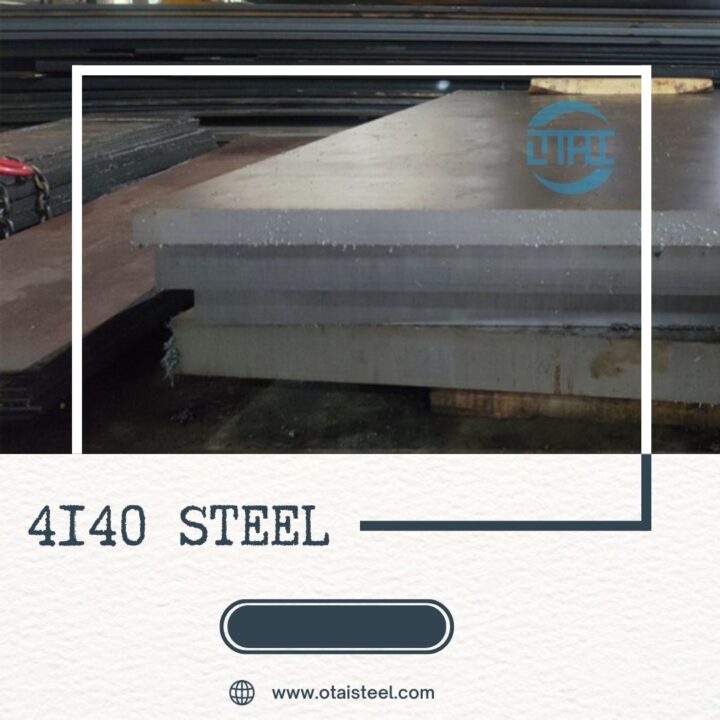
4140 steel is a high-strength, low-alloy steel that contains chromium, molybdenum, and carbon. It’s widely used for components that need excellent strength, toughness, and wear resistance, such as gears, crankshafts, and heavy machinery parts.
The weight of 4140 steel matters for several reasons:
-
Shipping Costs: The heavier the steel, the higher the transportation cost.
-
Structural Integrity: In large constructions, knowing the weight is essential to ensure that the structure can handle the load.
-
Manufacturing Efficiency: Accurate weight calculations help optimize material usage and avoid waste.
-
Machining and Fabrication: Weight affects how steel is handled during machining, welding, and forming processes.
Now, let’s dive into how to calculate the weight of 4140 steel.
🧮 How to Calculate the Weight of 4140 Steel
To calculate the weight of 4140 steel, you need to know its density and the dimensions of the steel piece. The density of 4140 steel is approximately 7.85 g/cm³ (or 7850 kg/m³), which is typical for alloy steels. Here’s the formula to calculate the weight:
Weight (kg)=Volume (m³)×Density (kg/m³)\text{Weight (kg)} = \text{Volume (m³)} \times \text{Density (kg/m³)}
For a more practical approach, the volume can be calculated based on the dimensions of the steel, such as the length, width, and thickness for a plate, or the radius and length for a rod.
For Steel Plates:
Weight (kg)=Length (m)×Width (m)×Thickness (m)×7850\text{Weight (kg)} = \text{Length (m)} \times \text{Width (m)} \times \text{Thickness (m)} \times 7850
For Steel Bars:
Weight (kg)=π×(Radius2)×Length (m)×7850\text{Weight (kg)} = \pi \times (\text{Radius}^2) \times \text{Length (m)} \times 7850
For Steel Pipes:
Weight (kg)=π×(Outer Radius2−Inner Radius2)×Length (m)×7850\text{Weight (kg)} = \pi \times \left( \text{Outer Radius}^2 – \text{Inner Radius}^2 \right) \times \text{Length (m)} \times 7850
🔢 Weight Calculation Examples
1. Weight of a 4140 Steel Plate
Let’s say you have a 4140 steel plate that is 2 meters long, 1 meter wide, and 0.05 meters thick. The calculation would look like this:
Weight (kg)=2×1×0.05×7850=785 kg\text{Weight (kg)} = 2 \times 1 \times 0.05 \times 7850 = 785 \, \text{kg}
So, this 4140 steel plate would weigh 785 kg.
2. Weight of a 4140 Steel Bar
For a 4140 steel bar with a diameter of 0.1 meters (10 cm) and a length of 3 meters, the weight would be calculated as:
Weight (kg)=π×(0.052)×3×7850≈184.8 kg\text{Weight (kg)} = \pi \times (0.05^2) \times 3 \times 7850 \approx 184.8 \, \text{kg}
So, the 4140 steel bar would weigh approximately 184.8 kg.
⚖️ Factors Affecting the Weight of 4140 Steel
While the density of 4140 steel is constant, several factors can influence the weight of a specific piece:
-
Dimensions: Larger or thicker sections will naturally weigh more.
-
Shape: Complex shapes, such as pipes or custom profiles, require more detailed calculations (like the ones mentioned above for pipes or bars).
-
Alloy Variations: Minor variations in the alloy composition can slightly alter the density, though this has a negligible effect on weight in most cases.
📊 Comparison of Weight for Different 4140 Steel Forms
Here’s a table comparing the weight of 4140 steel for different common forms based on typical dimensions:
| Form | Dimensions (L × W × T) | Weight (per meter) | Approximate Weight for 5 meters |
|---|---|---|---|
| Steel Plate | 2m × 1m × 0.05m | 785 kg | 3,925 kg |
| Steel Bar | Ø 0.1m, L 3m | 184.8 kg | 924 kg |
| Steel Pipe | Ø 0.2m (outer), Ø 0.15m (inner), L 4m | 550.5 kg | 2,202 kg |
This table helps illustrate how the weight can vary significantly depending on the form and size of the steel piece.
💡 Why Knowing the Weight of 4140 Steel is Important
-
Cost Efficiency: Accurate weight calculations allow for better cost estimation for material procurement and transportation.
-
Structural Design: In construction or machinery, knowing the weight of components helps ensure proper support and load-bearing capacity.
-
Manufacturing Planning: Understanding the weight can help optimize the use of raw materials, reducing waste and improving efficiency.
🏆 Why Choose Otai Special Steel for Your 4140 Steel Needs?
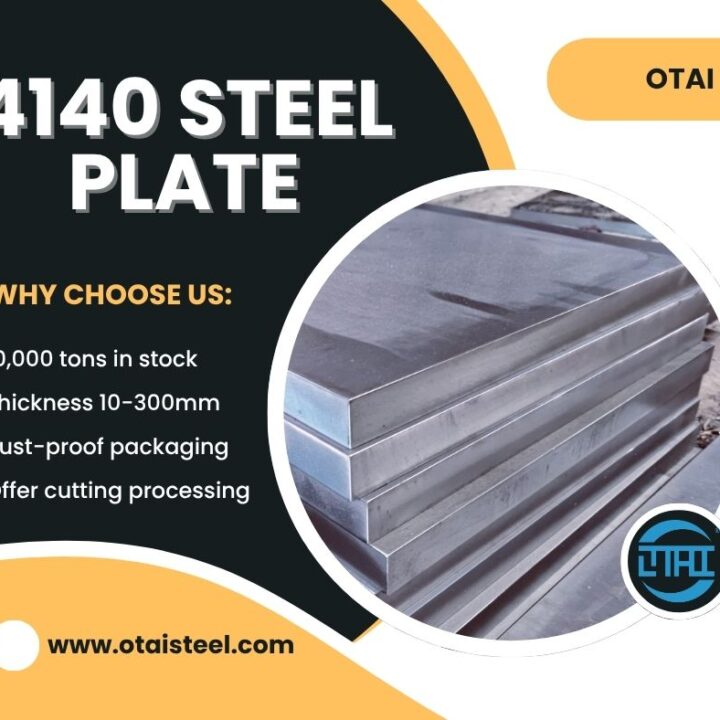
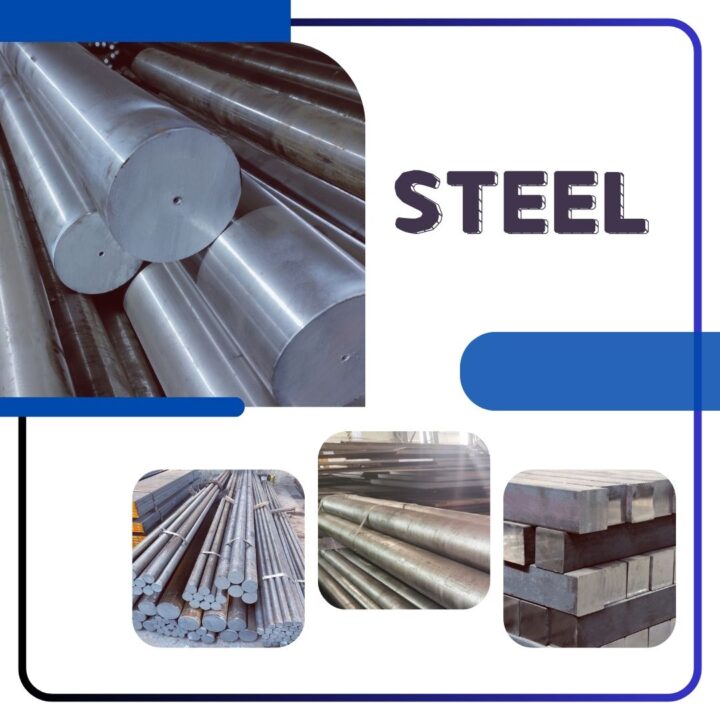
At Otai Special Steel, we offer high-quality 4140 steel in various forms, including plates, bars, and custom sizes, to meet the specific requirements of your project. Here’s why you should choose us:
-
Extensive Inventory: Over 10,000 tons of 4140 steel available year-round, in various conditions.
-
Customization: We offer cutting, heat treatment, and packaging to suit your exact dimensions and weight requirements.
-
Quality Assurance: With rigorous testing procedures, including ultrasonic and chemical composition testing, we ensure that every piece meets the highest standards.
-
Global Reach: Serving international clients like Thyssenkrupp, Borealis, and Schlumberger, we guarantee reliable and timely delivery.
❓ FAQ: Common Questions About the Weight of 4140 Steel
Q1: How do I calculate the weight of a 4140 steel rod with a non-circular cross-section?
A1: For non-circular cross-sections, you need to break down the shape into simpler components (e.g., rectangles or circles) and calculate the weight of each part separately, then add them together.
Q2: Does the weight of 4140 steel vary by alloy type?
A2: The density of 4140 steel is consistent across different alloy types within the same category. However, slight variations can exist based on the exact composition.
Q3: How do I calculate the weight of a 4140 steel pipe?
A3: To calculate the weight of a pipe, use the formula π×(Outer Radius2−Inner Radius2)×Length×7850\pi \times (\text{Outer Radius}^2 – \text{Inner Radius}^2) \times \text{Length} \times 7850, which accounts for the hollow center of the pipe.